What Happens After We Chew?
Food and Macronutrients
What is a Macronutrient?
• A component of food that an organism
(human) uses to survive and grow. They
provide the bulk of energy for metabolic
functions within the body.
• Macronutrients are used to calculate total
calories of a food item. Calories are units of
energy. More calories = more energy
3 Major Macronutrients
• Protein
• Carbohydrates
• Fats
• What foods come to mind when thinking of
each macronutrient?
Protein
• Builds muscle and repairs cells
• Breaks down into amino acids
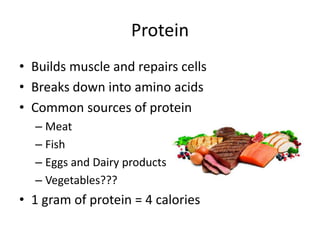
• Common sources of protein
– Meat
– Fish
– Eggs and Dairy products
– Vegetables???
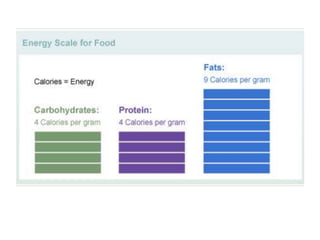
• 1 gram of protein = 4 calories
Carbohydrates
• Primary source of energy for the body
• Breaks down into glucose and other sugars
• Act as a transporter within the body
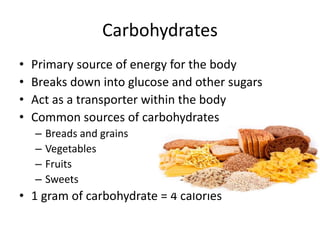
• Common sources of carbohydrates
– Breads and grains
– Vegetables
– Fruits
– Sweets
• 1 gram of carbohydrate = 4 calories
Fats
• Biggest energy source, primarily used for cell
energy and central nervous system function
• Breaks down into fatty acids
• Common sources of fats
– Fish
– Oil
– Nuts
• 1 gram of fat = 9 calories
Macronutrients Video Explanation
Fat Energy vs Carb Energy
• If fat provides more energy per gram than
carbs, what is the point of eating carbs?
• While fats provide more energy per gram,
they are primarily used for “slow” functions
(walking, talking, sitting, breathing, etc)
• Carbohydrate energy is stored in the muscles
and blood and used for “fast and strong”
movements (running, lifting, jumping, etc)
Common Myths
• Fats make you fat
– False, excess calories cause weight gain. Fats are
essential to a healthy diet and need to be
consumed.
• I should eat a diet of mostly protein
– Even though protein and carbohydrates have the
same amount of calories, they are stored and used
differently. A diet consisting of mostly protein will
leave you worn out and in a “fog”
How many grams should I eat?
This is the most basic way to calculate daily
nutrients. It can and should be adjusted based on
needs. I highly recommend a body fat scan.
• Total Calories = lean body mass x 20
• Protein = anywhere from .5- 1 gram of protein
per pound of LEAN body mass Carbohydrates =
typically 1-2 grams per pound of lean body mass
• Fats = Total Calories – (calories from protein +
calories from carbohydrates)
What does your diet look like?
• How many calories are in your favorite foods?
• What kind of meals do you typically eat at
certain points in the day (breakfast, lunch,
dinner)?
• Do athletes need different diets than non-
athletes? Do different sports have different
energy requirements?
In Your Groups
• Begin brainstorming your daily meal plans.
Make a list of at least 4 of your favorite foods
that are a primary source of each
macronutrient.

Food and macronutrients lecture

  • 1.
    What Happens AfterWe Chew? Food and Macronutrients
  • 2.
    What is aMacronutrient? • A component of food that an organism (human) uses to survive and grow. They provide the bulk of energy for metabolic functions within the body. • Macronutrients are used to calculate total calories of a food item. Calories are units of energy. More calories = more energy
  • 3.
    3 Major Macronutrients •Protein • Carbohydrates • Fats • What foods come to mind when thinking of each macronutrient?
  • 4.
    Protein • Builds muscleand repairs cells • Breaks down into amino acids • Common sources of protein – Meat – Fish – Eggs and Dairy products – Vegetables??? • 1 gram of protein = 4 calories
  • 5.
    Carbohydrates • Primary sourceof energy for the body • Breaks down into glucose and other sugars • Act as a transporter within the body • Common sources of carbohydrates – Breads and grains – Vegetables – Fruits – Sweets • 1 gram of carbohydrate = 4 calories
  • 6.
    Fats • Biggest energysource, primarily used for cell energy and central nervous system function • Breaks down into fatty acids • Common sources of fats – Fish – Oil – Nuts • 1 gram of fat = 9 calories
  • 7.
  • 9.
    Fat Energy vsCarb Energy • If fat provides more energy per gram than carbs, what is the point of eating carbs? • While fats provide more energy per gram, they are primarily used for “slow” functions (walking, talking, sitting, breathing, etc) • Carbohydrate energy is stored in the muscles and blood and used for “fast and strong” movements (running, lifting, jumping, etc)
  • 10.
    Common Myths • Fatsmake you fat – False, excess calories cause weight gain. Fats are essential to a healthy diet and need to be consumed. • I should eat a diet of mostly protein – Even though protein and carbohydrates have the same amount of calories, they are stored and used differently. A diet consisting of mostly protein will leave you worn out and in a “fog”
  • 11.
    How many gramsshould I eat? This is the most basic way to calculate daily nutrients. It can and should be adjusted based on needs. I highly recommend a body fat scan. • Total Calories = lean body mass x 20 • Protein = anywhere from .5- 1 gram of protein per pound of LEAN body mass Carbohydrates = typically 1-2 grams per pound of lean body mass • Fats = Total Calories – (calories from protein + calories from carbohydrates)
  • 12.
    What does yourdiet look like? • How many calories are in your favorite foods? • What kind of meals do you typically eat at certain points in the day (breakfast, lunch, dinner)? • Do athletes need different diets than non- athletes? Do different sports have different energy requirements?
  • 13.
    In Your Groups •Begin brainstorming your daily meal plans. Make a list of at least 4 of your favorite foods that are a primary source of each macronutrient.