MOOCs for business education
The Maastricht Innovation in
Higher Education Days 2018 (MID2018)
Maastricht, 13 December 2018
Massive Open Online Courses.
2
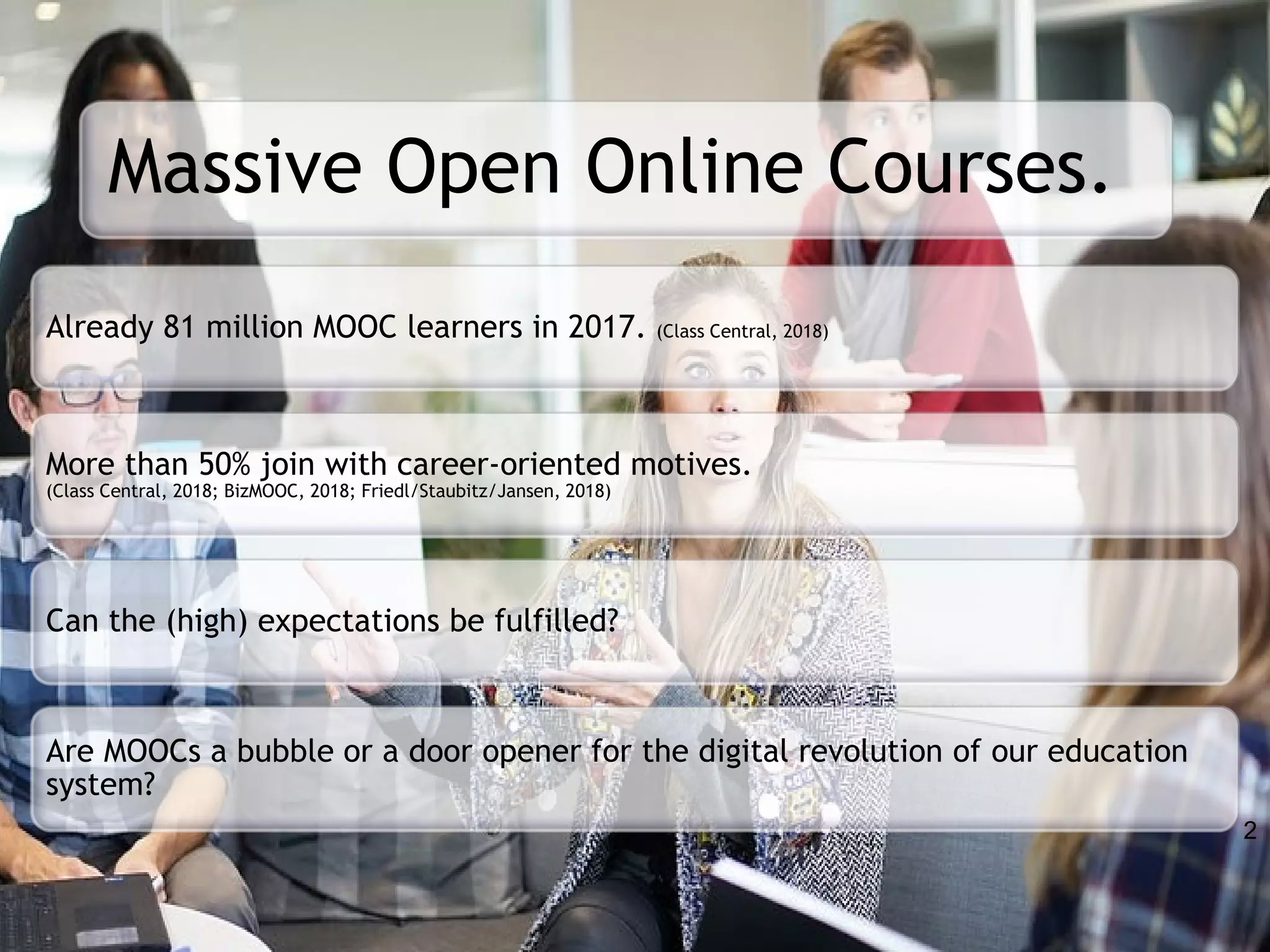
Already 81 million MOOC learners in 2017. (Class Central, 2018)
More than 50% join with career-oriented motives.
(Class Central, 2018; BizMOOC, 2018; Friedl/Staubitz/Jansen, 2018)
Can the (high) expectations be fulfilled?
Are MOOCs a bubble or a door opener for the digital revolution of our education
system?
Objective
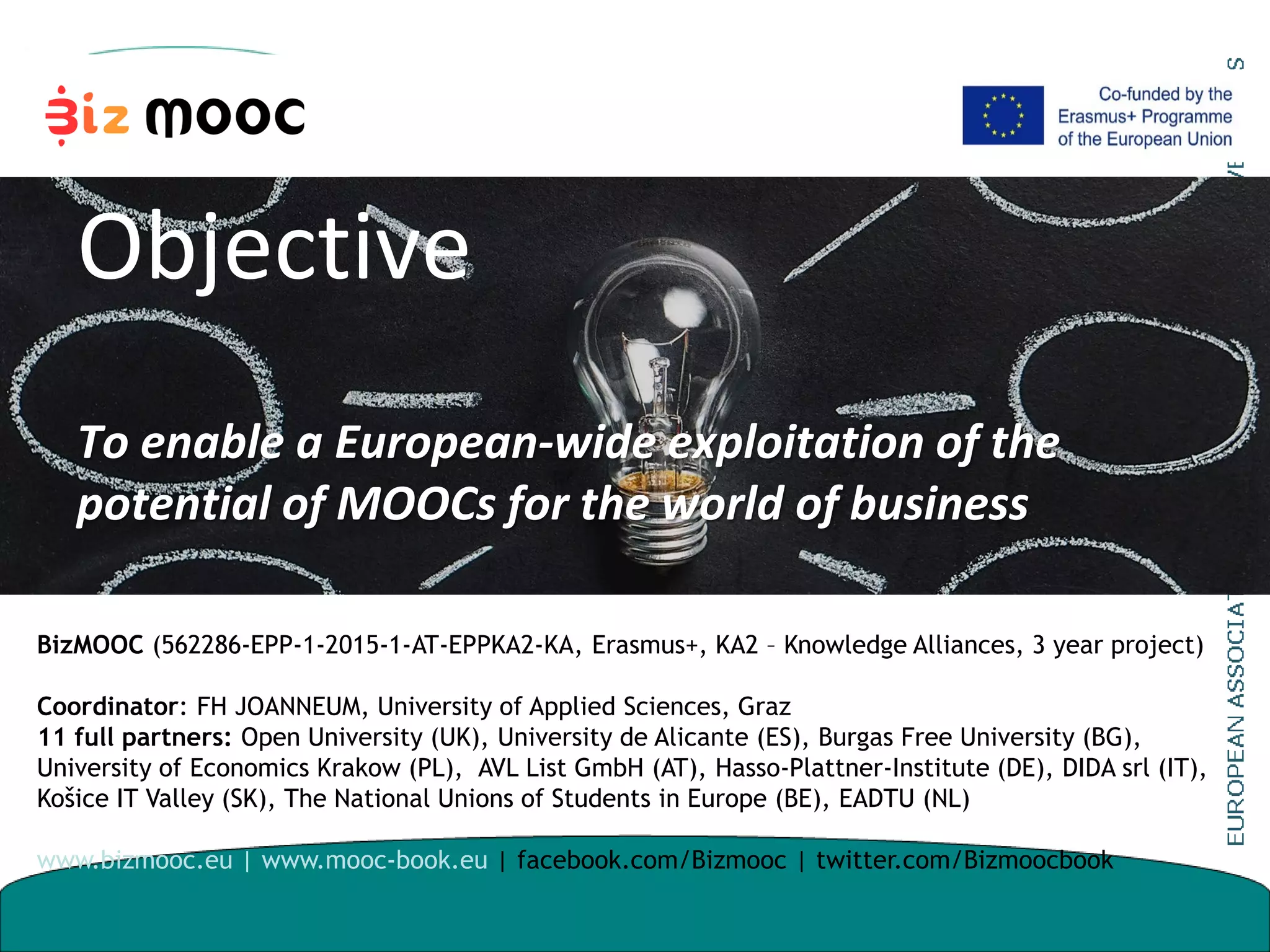
To enable a European-wide exploitation of the
potential of MOOCs for the world of business
BizMOOC (562286-EPP-1-2015-1-AT-EPPKA2-KA, Erasmus+, KA2 – Knowledge Alliances, 3 year project)
Coordinator: FH JOANNEUM, University of Applied Sciences, Graz
11 full partners: Open University (UK), University de Alicante (ES), Burgas Free University (BG),
University of Economics Krakow (PL), AVL List GmbH (AT), Hasso-Plattner-Institute (DE), DIDA srl (IT),
Košice IT Valley (SK), The National Unions of Students in Europe (BE), EADTU (NL)
www.bizmooc.eu | www.mooc-book.eu | facebook.com/Bizmooc | twitter.com/Bizmoocbook
How?
4
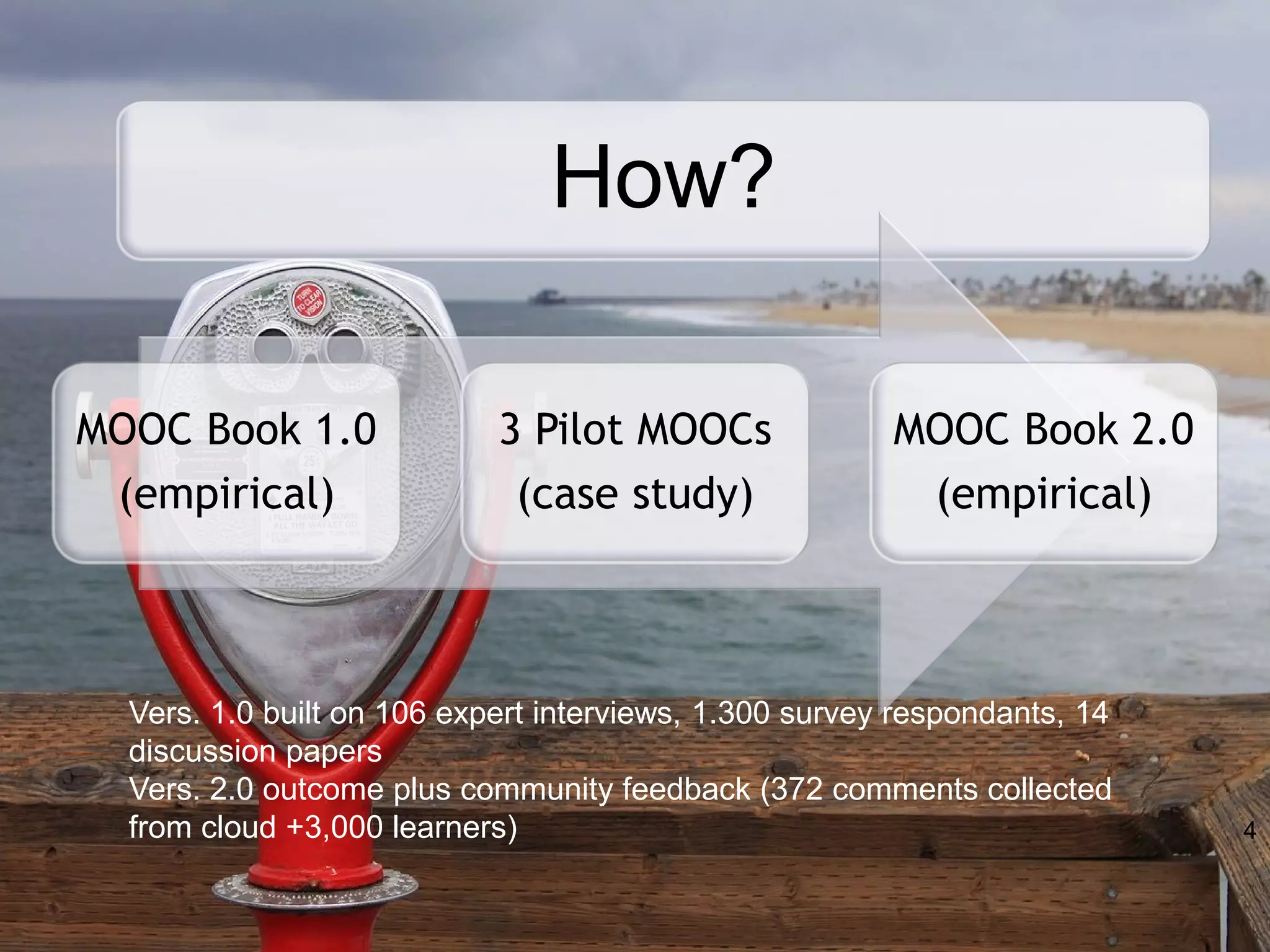
MOOC Book 1.0
(empirical)
3 Pilot MOOCs
(case study)
MOOC Book 2.0
(empirical)
Vers. 1.0 built on 106 expert interviews, 1.300 survey respondants, 14
discussion papers
Vers. 2.0 outcome plus community feedback (372 comments collected
from cloud +3,000 learners)
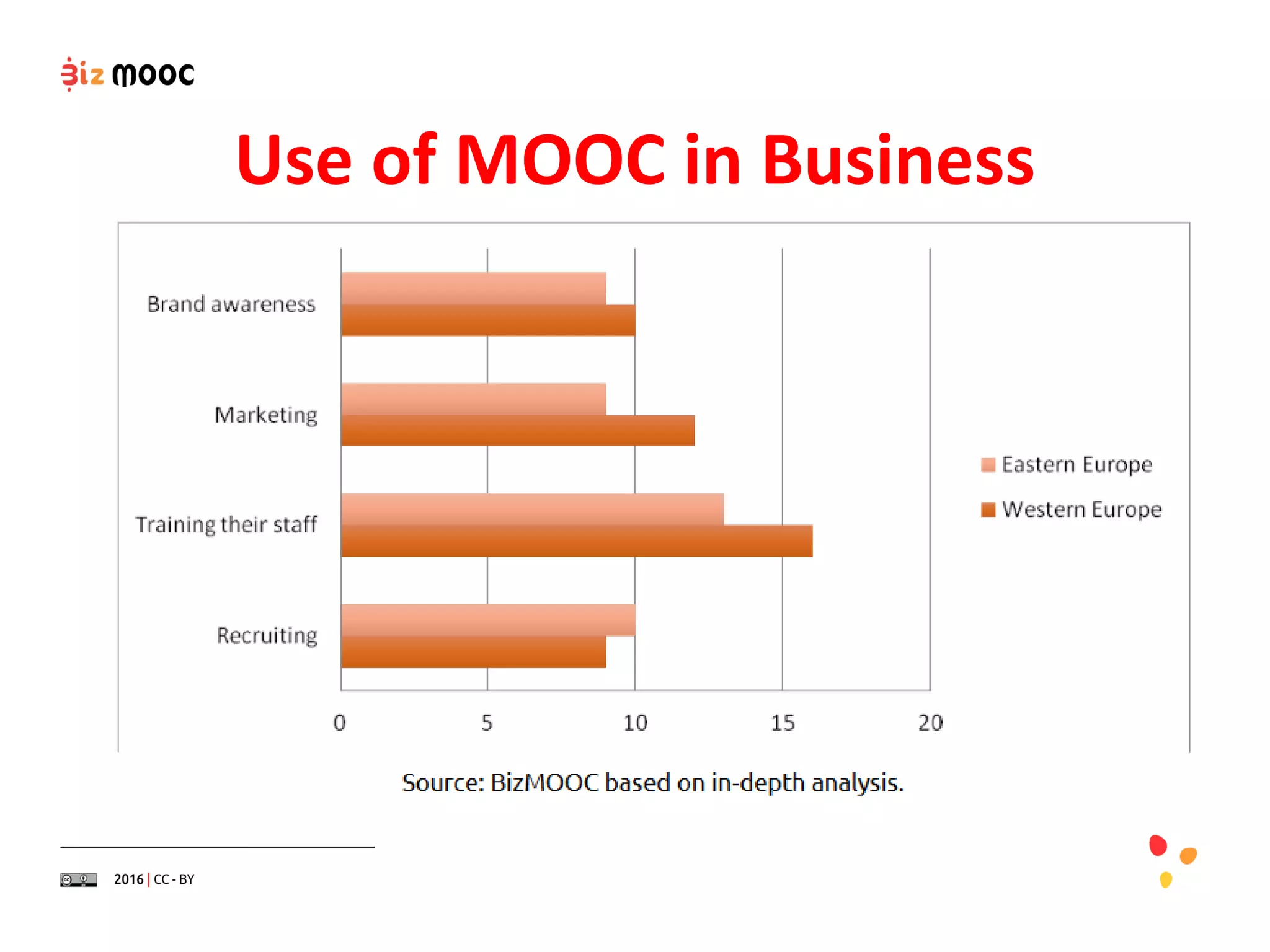
Use of MOOC in Business
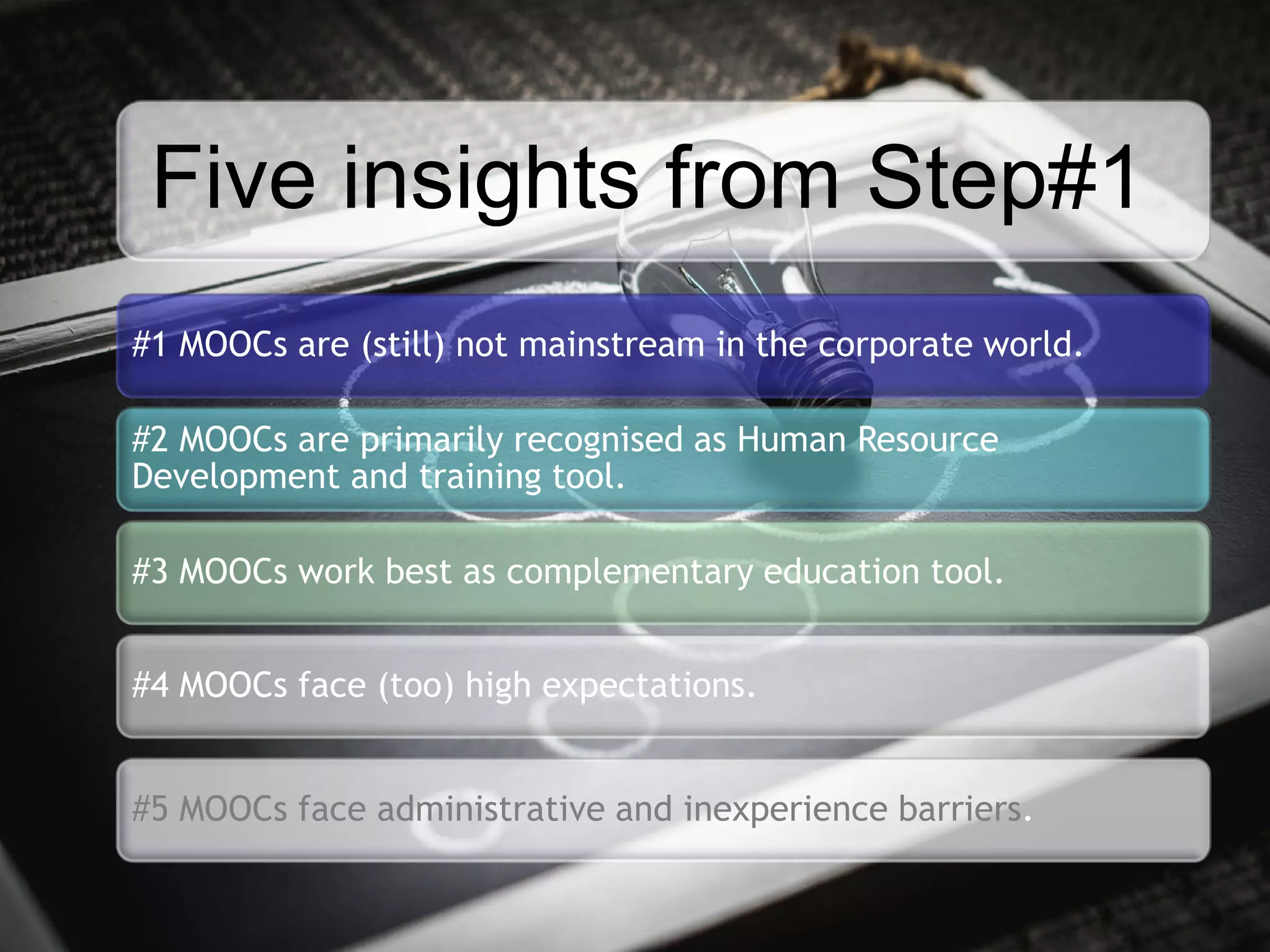
Five insights from Step#1
#1 MOOCs are (still) not mainstream in the corporate world.
#2 MOOCs are primarily recognised as Human Resource
Development and training tool.
#3 MOOCs work best as complementary education tool.
#4 MOOCs face (too) high expectations.
#5 MOOCs face administrative and inexperience barriers.
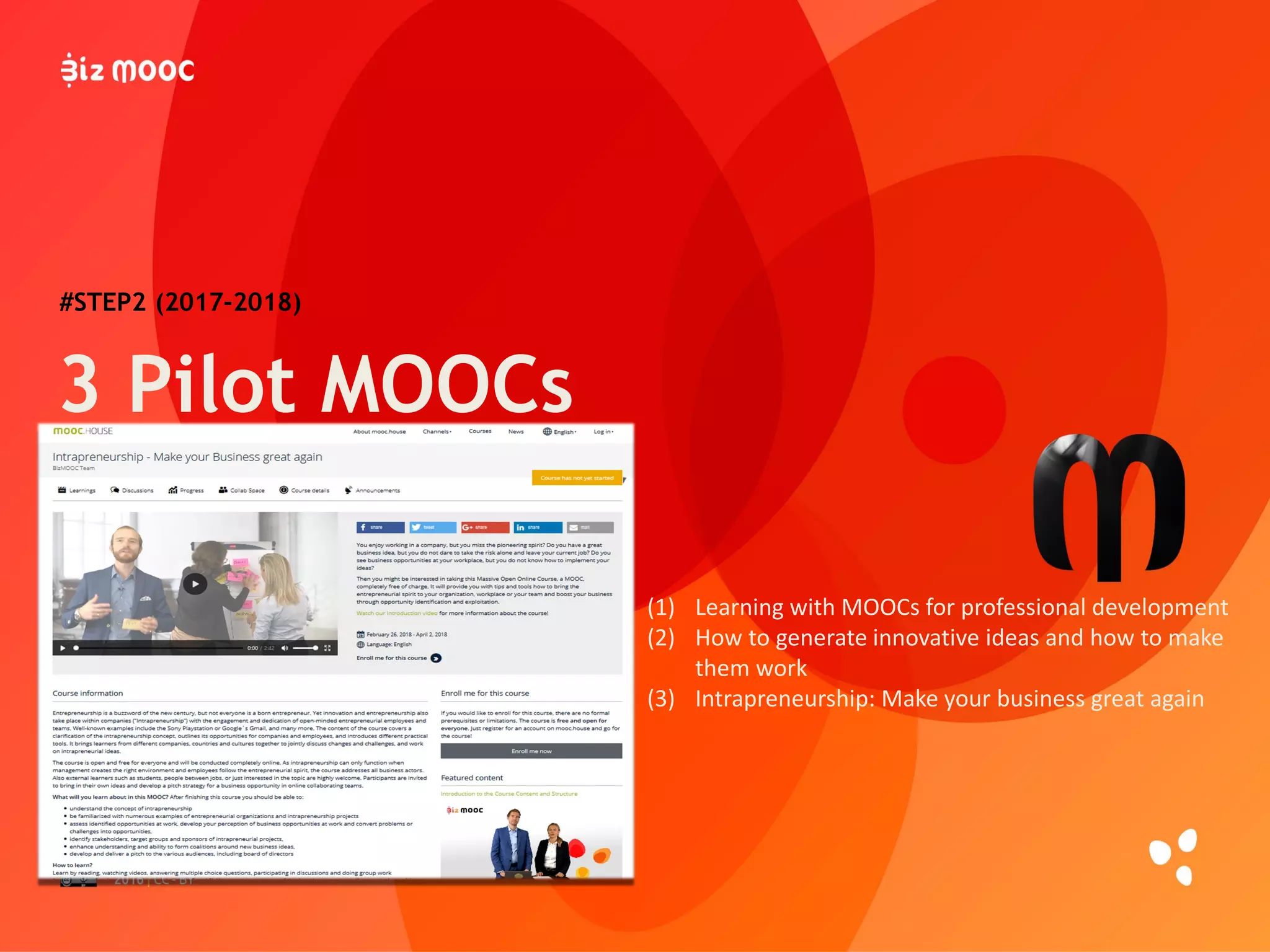
3 Pilot MOOCs
#STEP2 (2017-2018)
(1) Learning with MOOCs for professional development
(2) How to generate innovative ideas and how to make
them work
(3) Intrapreneurship: Make your business great again
Three key discussions for the corporate MOOC
avenue from Step#2 of our research
#1 Employees prefer
to stay private and
self-determined when
it comes to learning.
9
Three key discussions for the corporate MOOC
avenue from Step#2 of our research
#2 The unsolved barries are
solved by moving the the
ownership & responsibility
to the employees.
10
Three key discussions for the corporate MOOC
avenue from Step#2 of our research
#3 Are employees over-
taking their HR
departments with MOOCs?
Do they loose control?
11
YOUR ONLINE GUIDE TO MASSIVE OPEN ONLINE COURSES
MOOC BOOK 2.0
STEP#3 (2018): mooc-book.eu
Answers to KEY QUESTIONS in the MOOC domain
INSIGHTS with 50 recommendations, 25 lessons learnt & 20
good practices
LEARN MORE about MOOC key areas, explore recent research
outcomes and download useful resources.
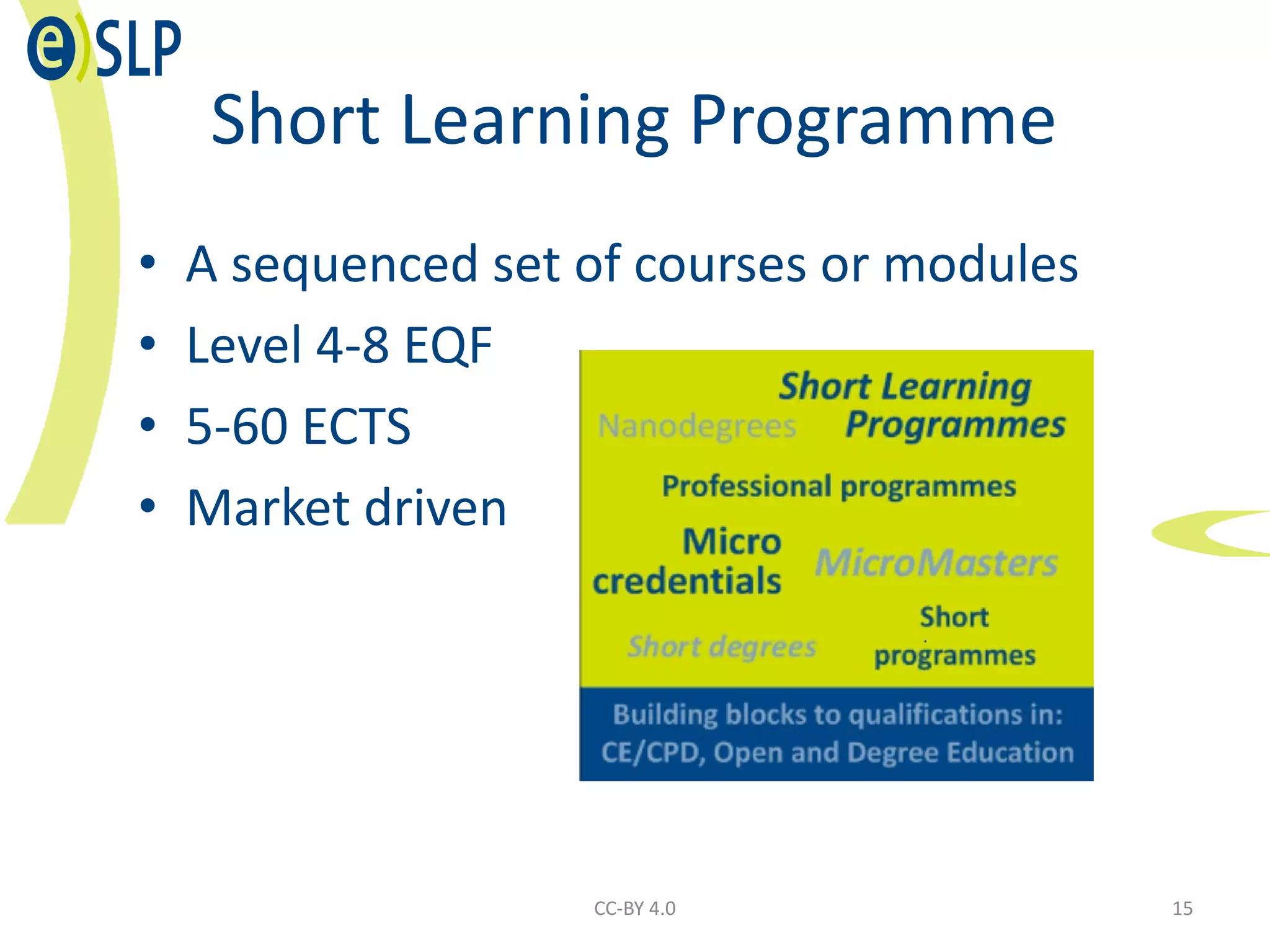
Short Learning Programme
• A sequenced set of courses or modules
• Level 4-8 EQF
• 5-60 ECTS
• Market driven
CC-BY 4.0 15
CC-BY 4.0 16
SLPs
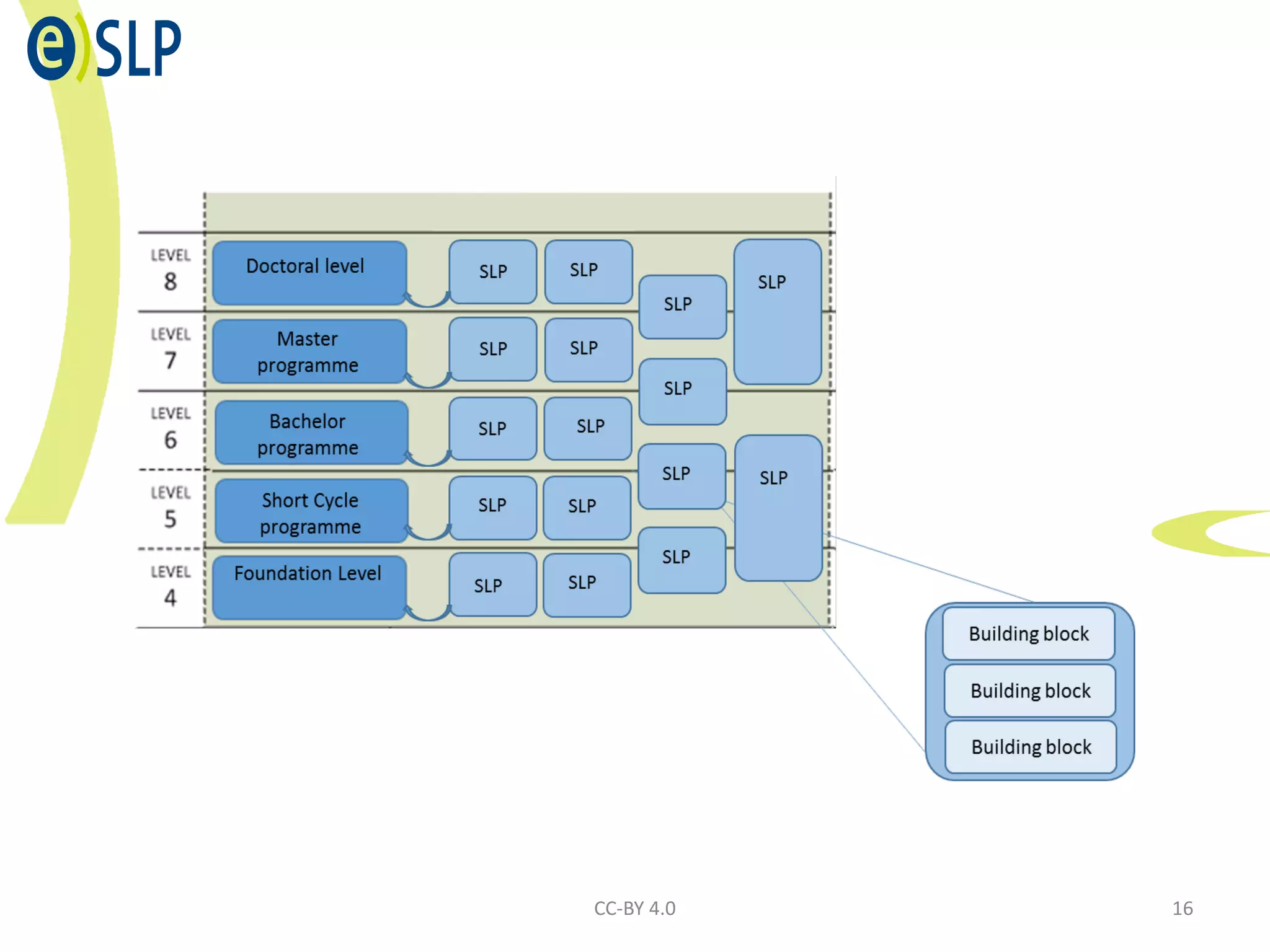
• a group of courses (units, modules or
other learning building blocks)
• with a common subject focusing on
specific needs in society
• which are usually awarded with a micro-
credential and can be used as stackable
elements of larger formal degrees
• targeting non-traditional and adult
learners
CC-BY 4.0 17
EUROPEAN
SHORT
LEARNING
PROGRAMMES
Erasmus+ Forward looking
cooperation projects: 590202-
EPP-1-2017-1-NL-EPPKA3-PI-
FORWARD
Coordinator: EADTU
Partners: FernUni Hagen,
OUUK, OUNL, UNED, OUC, HOU,
UNINETTUNO, AU, Uab, UOC,
JYU, KUL, NADE, AGH
CC-BY 4.0 18
Roundtable
“MOOCs for the world
of Business”
Concluding Reflections & Next Steps
Massive dimension MOOCs not that important for companies
Most training are incompany and specific to company goals and products
No specific interest including single online courses into company offering
In the end it is also a question who invest in training
The employees themselves in their own time
The employers as part of company training during working hours
Concluding Reflections 1/3
Policy of companies differ
only investing in small specific internal training to
supporting employees in their continuous professional development
Need for cluster of MOOCs in short programs
Recognition by a) companies (related CE-point, skills and competencies),
by b) universities (ECTS, EQF, credentials)
c) no needed (personal development / personal needs)
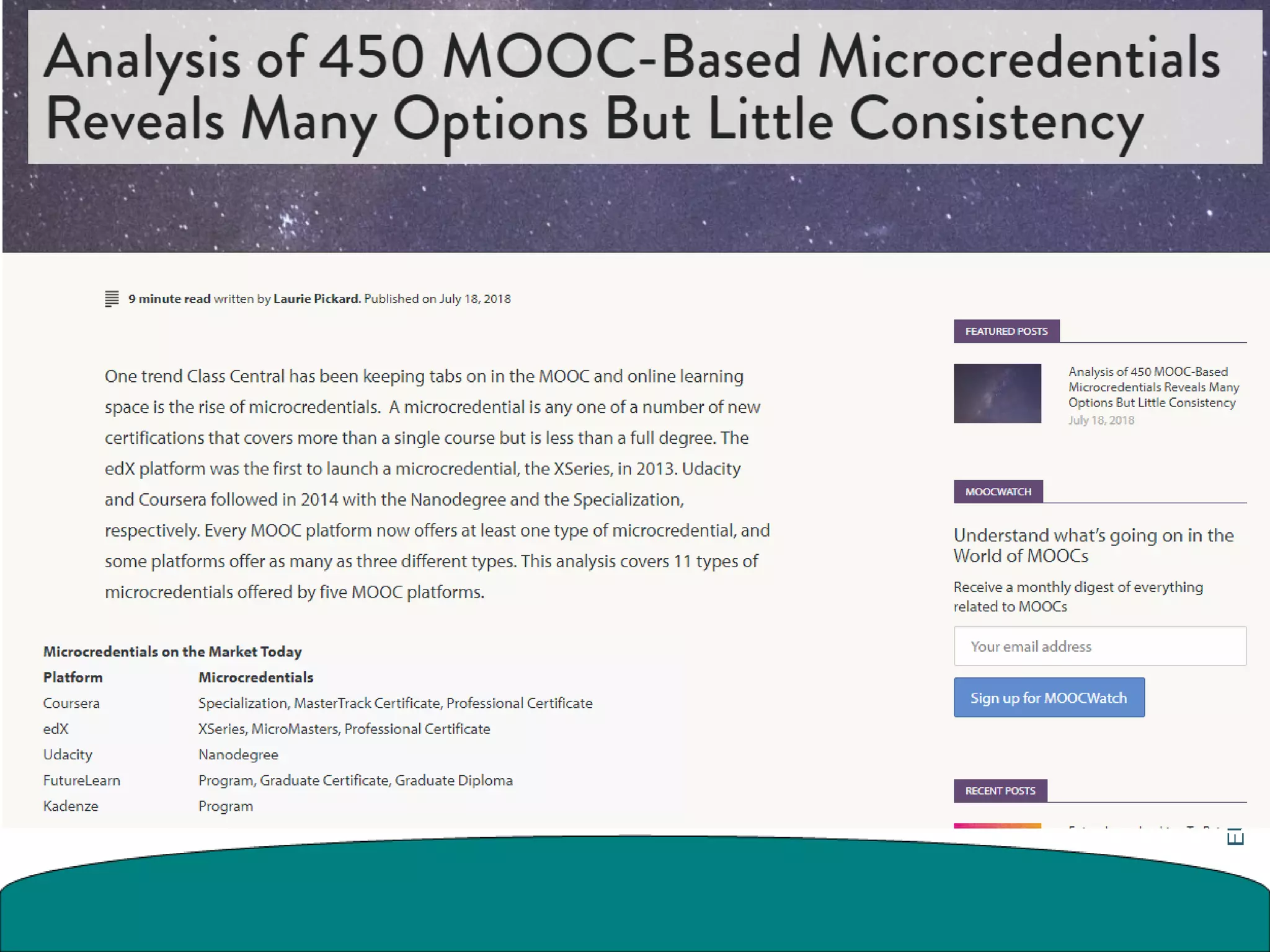
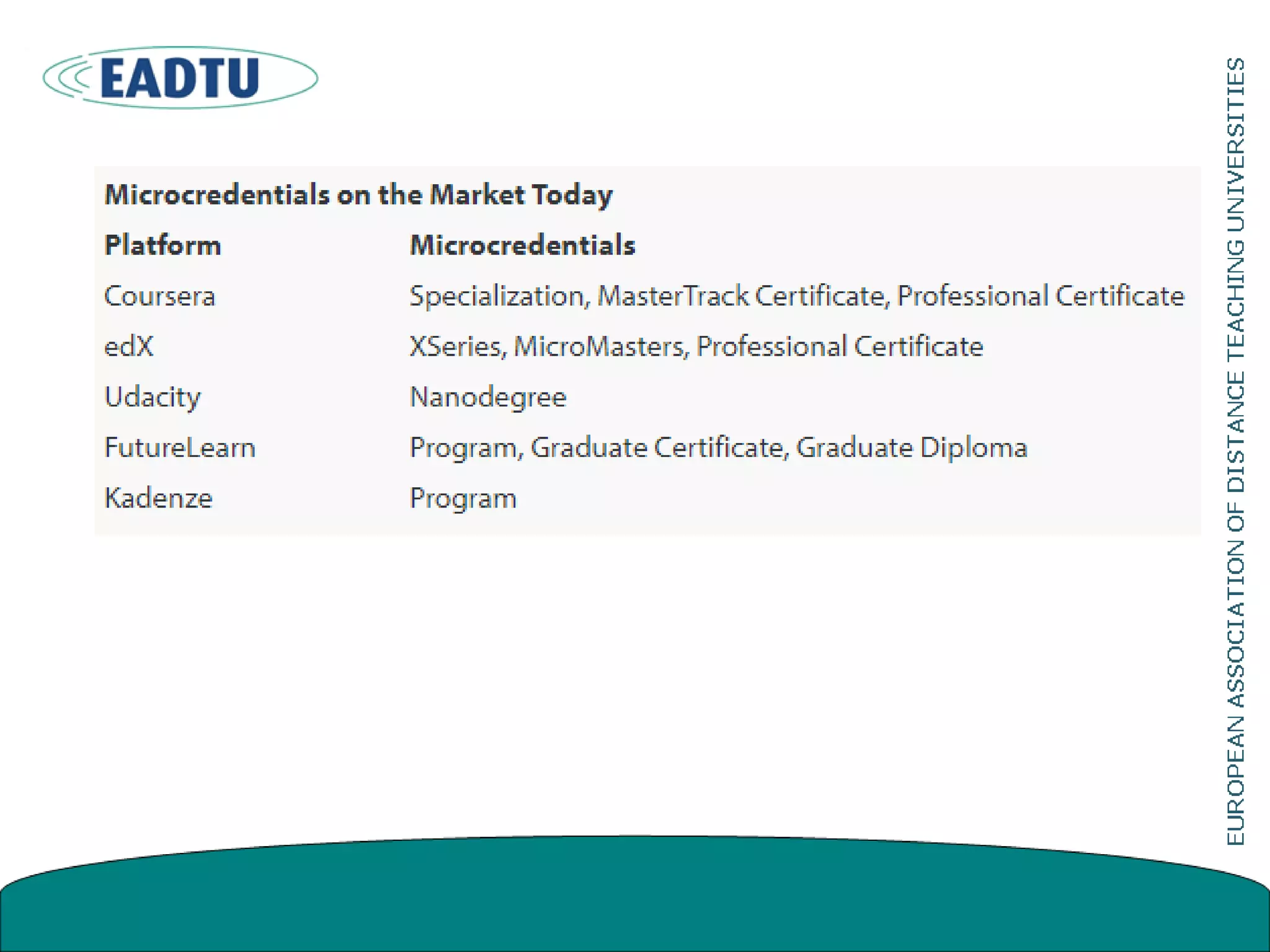
Now very chaotic in names, terminology, certificates, diploma-
supplements -> needs for harmonisation both in company-track and
academic track
Concluding Reflections 2/3
Strengthen collaboration universities and companies in developing MOOCs
and SLPs
1. Companies are involved in development on topics/didactic
2. Company as co-developer (sharing expertise employees in MOOC, linking
to product of company)
3. Collaboration with sectors / clusters with joined investments
4. CE / LLL by employees but jointly facilitated on specific skills /
competences and on prioritised themes/topics needed for Europe
Concluding Reflections 3/3
[MID2018] Presentation of Darco Jansen (EADTU) during MID2018 in Maastricht

[MID2018] Presentation of Darco Jansen (EADTU) during MID2018 in Maastricht

  • 1.
    MOOCs for businesseducation The Maastricht Innovation in Higher Education Days 2018 (MID2018) Maastricht, 13 December 2018
  • 2.
    Massive Open OnlineCourses. 2 Already 81 million MOOC learners in 2017. (Class Central, 2018) More than 50% join with career-oriented motives. (Class Central, 2018; BizMOOC, 2018; Friedl/Staubitz/Jansen, 2018) Can the (high) expectations be fulfilled? Are MOOCs a bubble or a door opener for the digital revolution of our education system?
  • 3.
    Objective To enable aEuropean-wide exploitation of the potential of MOOCs for the world of business BizMOOC (562286-EPP-1-2015-1-AT-EPPKA2-KA, Erasmus+, KA2 – Knowledge Alliances, 3 year project) Coordinator: FH JOANNEUM, University of Applied Sciences, Graz 11 full partners: Open University (UK), University de Alicante (ES), Burgas Free University (BG), University of Economics Krakow (PL), AVL List GmbH (AT), Hasso-Plattner-Institute (DE), DIDA srl (IT), Košice IT Valley (SK), The National Unions of Students in Europe (BE), EADTU (NL) www.bizmooc.eu | www.mooc-book.eu | facebook.com/Bizmooc | twitter.com/Bizmoocbook
  • 4.
    How? 4 MOOC Book 1.0 (empirical) 3Pilot MOOCs (case study) MOOC Book 2.0 (empirical) Vers. 1.0 built on 106 expert interviews, 1.300 survey respondants, 14 discussion papers Vers. 2.0 outcome plus community feedback (372 comments collected from cloud +3,000 learners)
  • 5.
    Use of MOOCin Business
  • 6.
    Five insights fromStep#1 #1 MOOCs are (still) not mainstream in the corporate world. #2 MOOCs are primarily recognised as Human Resource Development and training tool. #3 MOOCs work best as complementary education tool. #4 MOOCs face (too) high expectations. #5 MOOCs face administrative and inexperience barriers.
  • 7.
    3 Pilot MOOCs #STEP2(2017-2018) (1) Learning with MOOCs for professional development (2) How to generate innovative ideas and how to make them work (3) Intrapreneurship: Make your business great again
  • 9.
    Three key discussionsfor the corporate MOOC avenue from Step#2 of our research #1 Employees prefer to stay private and self-determined when it comes to learning. 9
  • 10.
    Three key discussionsfor the corporate MOOC avenue from Step#2 of our research #2 The unsolved barries are solved by moving the the ownership & responsibility to the employees. 10
  • 11.
    Three key discussionsfor the corporate MOOC avenue from Step#2 of our research #3 Are employees over- taking their HR departments with MOOCs? Do they loose control? 11
  • 12.
    YOUR ONLINE GUIDETO MASSIVE OPEN ONLINE COURSES MOOC BOOK 2.0 STEP#3 (2018): mooc-book.eu Answers to KEY QUESTIONS in the MOOC domain INSIGHTS with 50 recommendations, 25 lessons learnt & 20 good practices LEARN MORE about MOOC key areas, explore recent research outcomes and download useful resources.
  • 15.
    Short Learning Programme •A sequenced set of courses or modules • Level 4-8 EQF • 5-60 ECTS • Market driven CC-BY 4.0 15
  • 16.
  • 17.
    SLPs • a groupof courses (units, modules or other learning building blocks) • with a common subject focusing on specific needs in society • which are usually awarded with a micro- credential and can be used as stackable elements of larger formal degrees • targeting non-traditional and adult learners CC-BY 4.0 17
  • 18.
    EUROPEAN SHORT LEARNING PROGRAMMES Erasmus+ Forward looking cooperationprojects: 590202- EPP-1-2017-1-NL-EPPKA3-PI- FORWARD Coordinator: EADTU Partners: FernUni Hagen, OUUK, OUNL, UNED, OUC, HOU, UNINETTUNO, AU, Uab, UOC, JYU, KUL, NADE, AGH CC-BY 4.0 18
  • 19.
    Roundtable “MOOCs for theworld of Business” Concluding Reflections & Next Steps
  • 20.
    Massive dimension MOOCsnot that important for companies Most training are incompany and specific to company goals and products No specific interest including single online courses into company offering In the end it is also a question who invest in training The employees themselves in their own time The employers as part of company training during working hours Concluding Reflections 1/3
  • 21.
    Policy of companiesdiffer only investing in small specific internal training to supporting employees in their continuous professional development Need for cluster of MOOCs in short programs Recognition by a) companies (related CE-point, skills and competencies), by b) universities (ECTS, EQF, credentials) c) no needed (personal development / personal needs) Now very chaotic in names, terminology, certificates, diploma- supplements -> needs for harmonisation both in company-track and academic track Concluding Reflections 2/3
  • 22.
    Strengthen collaboration universitiesand companies in developing MOOCs and SLPs 1. Companies are involved in development on topics/didactic 2. Company as co-developer (sharing expertise employees in MOOC, linking to product of company) 3. Collaboration with sectors / clusters with joined investments 4. CE / LLL by employees but jointly facilitated on specific skills / competences and on prioritised themes/topics needed for Europe Concluding Reflections 3/3