Objectives for
L E N S
L E N Searnabout photographyto further personal knowledge, development and growth.
LE N Sxperience andunderstand how your camera settings work for composing better images and have fun in the process.
LEN Setworkwith other shutterbugs and professionals in the field of photography.
LENShareyour photography knowledge with other group members to practice new techniques, styles, themes and ideas in outings and photo ops.

Group Discussion #1
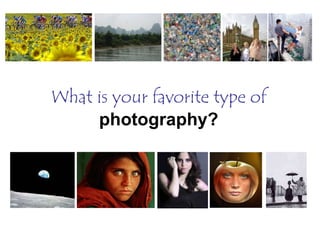
What is your favorite type of  photography?
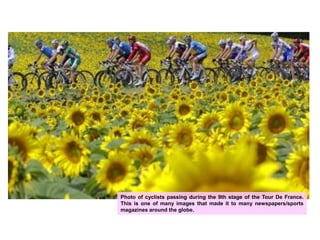
Photo of cyclists passing during the 9th stage of the Tour De France. This is one of many images that made it to many newspapers/sports magazines around the globe.
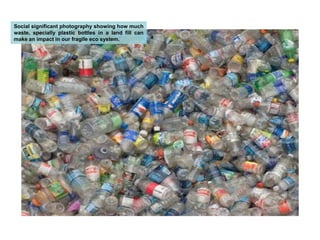
Social significant photography showing how much waste, specially plastic bottles in a land fill can make an impact in our fragile eco system.
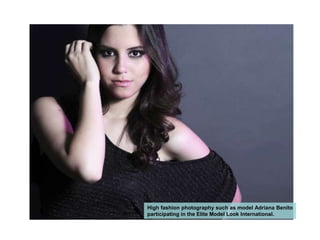
High fashion photography such as model Adriana Benito participating in the Elite Model Look International.
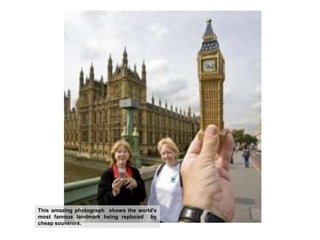
This amazing photograph  shows the world's most famous landmark being replaced  by cheap souvenirs.
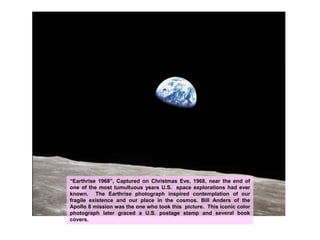
“Earthrise 1968”, Captured on Christmas Eve, 1968, near the end of one of the most tumultuous years U.S.  space explorations had ever known.  The Earthrise photograph inspired contemplation of our fragile existence and our place in the cosmos. Bill Anders of the Apollo 8 mission was the one who took this  picture.  This iconic color photograph later graced a U.S. postage stamp and several book covers.
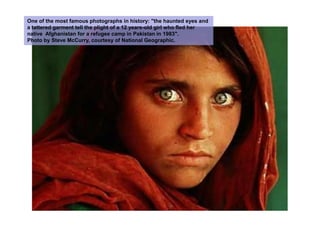
One of the most famous photographs in history: "the haunted eyes and a tattered garment tell the plight of a 12 years-old girl who fled her native  Afghanistan for a refugee camp in Pakistan in 1983". Photo by Steve McCurry, courtesy of National Geographic.
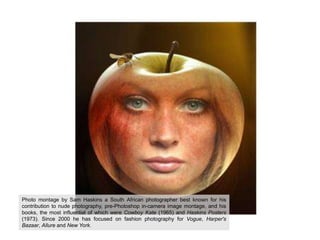
Photo montage by Sam Haskins a South African photographer best known for his contribution to nude photography, pre-Photoshop in-camera image montage, and his books, the most influential of which were Cowboy Kate (1965) and Haskins Posters (1973). Since 2000 he has focused on fashion photography for Vogue, Harper's Bazaar, Allure and New York.
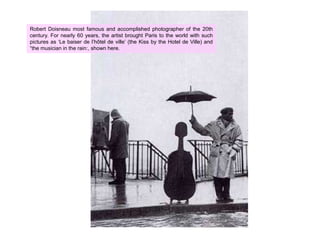
Robert Doisneau most famous and accomplished photographer of the 20th century. For nearly 60 years, the artist brought Paris to the world with such pictures as ‘Le baiser de l’hôtel de ville’ (the Kiss by the Hotel de Ville) and “the musician in the rain:, shown here.
Group Presentation #1
Be Best Buddies with your camera equipment…
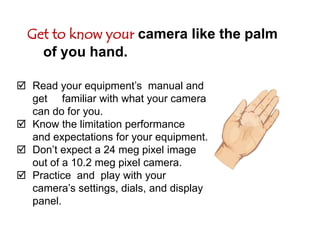
Get to know your camera like the palm of you hand.Read your equipment’s  manual and get     familiar with what your camera can do for you.
Know the limitation performance   and expectations for your equipment.
Don’t expect a 24 meg pixel image out of a 10.2 meg pixel camera.
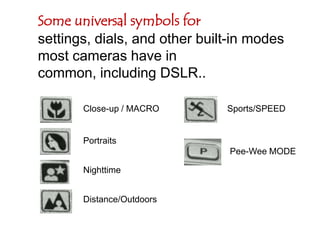
Practice  and  play with your camera’s settings, dials, and display panel. Some universal symbols for settings, dials, and other built-in modes most cameras have in common, including DSLR..Close-up / MACROSports/SPEEDPortraitsPee-Wee MODENighttimeDistance/Outdoors
Group Presentation # 2
TRUTHor MYTHS aboutdigital photography…
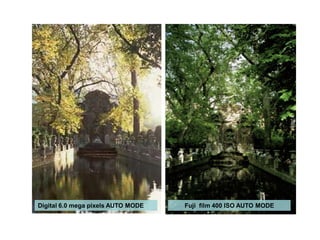
Digital photos are pixilated or fuzzy.TRUTH  or  MYTHMYTHMost people say that they have never seen a photo produced by a professional grade digital camera. The quality of modern digital cameras is equal or greater than film cameras.
Fuji  film 400 ISO AUTO MODEDigital 6.0 mega pixels AUTO MODE
Digital photos don’t last. They tend to fade in a couple of years.TRUTH  or  MYTHMYTHOnly the photo capture part is digital. The printing is done using traditional photo paper on the same paper and chemistry used to print film photos. So, both will last the same.
Digital photos are too dangerous.  You can lose your photos forever and your memories are gone.TRUTH  or  MYTHMYTHNowadays most photos are stored using Flash Cards as the most reliable form of digital storage.  After the photos are downloaded to the computer and additional backups are created on CD or DVD allowing several copies of the same event to reside on different locations.
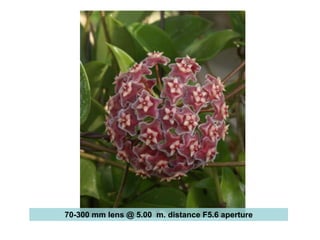
Digital photos lack much detail. TRUTH  or  MYTHMYTHMost cameras have a minimum of 6 meg pixels, allowing details to be shown; however, professional grade cameras, can produce stunning results.
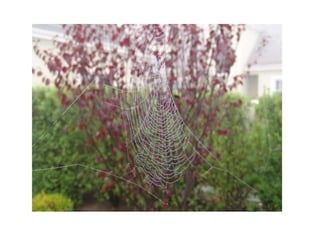
70-300 mm lens @ 5.00  m. distance F5.6 aperture
Digital photography is cheaper. There is no film to develop or use chemicals to process the images. TRUTH  or  MYTHMYTHProfessional grade digital cameras and lens are very expensive. In addition the professional photographer has to invest on computer equipment and software to process the photos.
I got a digital camera that takes great photos, now I can start a career as a wedding photographer.TRUTH  or  MYTHMYTHWedding photography requires that you have artistic talent and that you learn photography including composition, lighting, etc. A wedding is an uncontrolled event that requires technical and artistic skill. It is not the place to learn photography.
I don’t have to give it much care  or thought when I take photos anymore.  I can fix it later in Photoshop or other photo-editing program.TRUTH  or  MYTHMYTHGarbage in and garbage out. There is no magical fix for badly composed photos, out of focus, bad lighting, etc.
Megapixels are not the alpha and omega of digital cameras.  However, they do account for something when considering upgrading your current equipment.TRUTH  or  MYTHTRUTHAs a general rule of thumb, it all depends on how you use your pictures. If you do a lot of photo editing, and cropping of your pictures, the more megapixels the better. However, if you only plan to save them to your hard drive, and view them as your screen saver, then anything over 5 megapixels is a god-send bonus.
I am afraid that the photographer will do weird effects with my photos. TRUTH  or  MYTHMYTHThe purpose of the editing software is to enhance the quality of the photos. It is not a license to create weird stuff. Talk to your photographer about your expectations.
I got a bigger fancier camera with more mega pixels than yours; my photos will be better and awesome than any of youTRUTH  or  MYTHMYTHUnless you have the technical and artistic skill the camera that you use will have minimal impact on the quality of the photos that you produce. A great camera in the right hands will produce great results. Some of the greatest photos in history were produced using mechanical cameras.
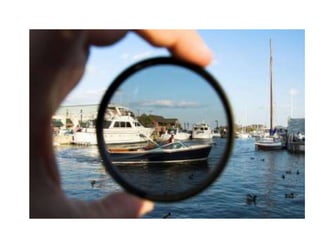
Having an A CPOL (circular polarizing filter) is the most effective tool to use when you’re outdoors, specially in the bright sun.TRUTH  or  MYTHTRUTHThe truth about polarizing filters is that every photographer should have one in his/her bag at all times. It is possibly THE single most important and  useful photo accessory you’ll own.
Group Discussion #2

Pg Pb Photography Objectives 120909

  • 1.
  • 2.
  • 3.
    L E NSearnabout photographyto further personal knowledge, development and growth.
  • 4.
    LE N Sxperienceandunderstand how your camera settings work for composing better images and have fun in the process.
  • 5.
    LEN Setworkwith othershutterbugs and professionals in the field of photography.
  • 6.
    LENShareyour photography knowledgewith other group members to practice new techniques, styles, themes and ideas in outings and photo ops.
  • 7.
  • 8.
    What is yourfavorite type of photography?
  • 9.
    Photo of cyclistspassing during the 9th stage of the Tour De France. This is one of many images that made it to many newspapers/sports magazines around the globe.
  • 10.
    Social significant photographyshowing how much waste, specially plastic bottles in a land fill can make an impact in our fragile eco system.
  • 11.
    High fashion photographysuch as model Adriana Benito participating in the Elite Model Look International.
  • 12.
    This amazing photograph shows the world's most famous landmark being replaced by cheap souvenirs.
  • 13.
    “Earthrise 1968”, Capturedon Christmas Eve, 1968, near the end of one of the most tumultuous years U.S. space explorations had ever known. The Earthrise photograph inspired contemplation of our fragile existence and our place in the cosmos. Bill Anders of the Apollo 8 mission was the one who took this picture. This iconic color photograph later graced a U.S. postage stamp and several book covers.
  • 14.
    One of themost famous photographs in history: "the haunted eyes and a tattered garment tell the plight of a 12 years-old girl who fled her native Afghanistan for a refugee camp in Pakistan in 1983". Photo by Steve McCurry, courtesy of National Geographic.
  • 15.
    Photo montage bySam Haskins a South African photographer best known for his contribution to nude photography, pre-Photoshop in-camera image montage, and his books, the most influential of which were Cowboy Kate (1965) and Haskins Posters (1973). Since 2000 he has focused on fashion photography for Vogue, Harper's Bazaar, Allure and New York.
  • 16.
    Robert Doisneau mostfamous and accomplished photographer of the 20th century. For nearly 60 years, the artist brought Paris to the world with such pictures as ‘Le baiser de l’hôtel de ville’ (the Kiss by the Hotel de Ville) and “the musician in the rain:, shown here.
  • 17.
  • 18.
    Be Best Buddieswith your camera equipment…
  • 19.
    Get to knowyour camera like the palm of you hand.Read your equipment’s manual and get familiar with what your camera can do for you.
  • 20.
    Know the limitationperformance and expectations for your equipment.
  • 21.
    Don’t expect a24 meg pixel image out of a 10.2 meg pixel camera.
  • 22.
    Practice and play with your camera’s settings, dials, and display panel. Some universal symbols for settings, dials, and other built-in modes most cameras have in common, including DSLR..Close-up / MACROSports/SPEEDPortraitsPee-Wee MODENighttimeDistance/Outdoors
  • 23.
  • 24.
  • 25.
    Digital photos arepixilated or fuzzy.TRUTH or MYTHMYTHMost people say that they have never seen a photo produced by a professional grade digital camera. The quality of modern digital cameras is equal or greater than film cameras.
  • 26.
    Fuji film400 ISO AUTO MODEDigital 6.0 mega pixels AUTO MODE
  • 27.
    Digital photos don’tlast. They tend to fade in a couple of years.TRUTH or MYTHMYTHOnly the photo capture part is digital. The printing is done using traditional photo paper on the same paper and chemistry used to print film photos. So, both will last the same.
  • 28.
    Digital photos aretoo dangerous. You can lose your photos forever and your memories are gone.TRUTH or MYTHMYTHNowadays most photos are stored using Flash Cards as the most reliable form of digital storage. After the photos are downloaded to the computer and additional backups are created on CD or DVD allowing several copies of the same event to reside on different locations.
  • 29.
    Digital photos lackmuch detail. TRUTH or MYTHMYTHMost cameras have a minimum of 6 meg pixels, allowing details to be shown; however, professional grade cameras, can produce stunning results.
  • 30.
    70-300 mm lens@ 5.00 m. distance F5.6 aperture
  • 31.
    Digital photography ischeaper. There is no film to develop or use chemicals to process the images. TRUTH or MYTHMYTHProfessional grade digital cameras and lens are very expensive. In addition the professional photographer has to invest on computer equipment and software to process the photos.
  • 33.
    I got adigital camera that takes great photos, now I can start a career as a wedding photographer.TRUTH or MYTHMYTHWedding photography requires that you have artistic talent and that you learn photography including composition, lighting, etc. A wedding is an uncontrolled event that requires technical and artistic skill. It is not the place to learn photography.
  • 34.
    I don’t haveto give it much care or thought when I take photos anymore. I can fix it later in Photoshop or other photo-editing program.TRUTH or MYTHMYTHGarbage in and garbage out. There is no magical fix for badly composed photos, out of focus, bad lighting, etc.
  • 36.
    Megapixels are notthe alpha and omega of digital cameras. However, they do account for something when considering upgrading your current equipment.TRUTH or MYTHTRUTHAs a general rule of thumb, it all depends on how you use your pictures. If you do a lot of photo editing, and cropping of your pictures, the more megapixels the better. However, if you only plan to save them to your hard drive, and view them as your screen saver, then anything over 5 megapixels is a god-send bonus.
  • 37.
    I am afraidthat the photographer will do weird effects with my photos. TRUTH or MYTHMYTHThe purpose of the editing software is to enhance the quality of the photos. It is not a license to create weird stuff. Talk to your photographer about your expectations.
  • 38.
    I got abigger fancier camera with more mega pixels than yours; my photos will be better and awesome than any of youTRUTH or MYTHMYTHUnless you have the technical and artistic skill the camera that you use will have minimal impact on the quality of the photos that you produce. A great camera in the right hands will produce great results. Some of the greatest photos in history were produced using mechanical cameras.
  • 39.
    Having an ACPOL (circular polarizing filter) is the most effective tool to use when you’re outdoors, specially in the bright sun.TRUTH or MYTHTRUTHThe truth about polarizing filters is that every photographer should have one in his/her bag at all times. It is possibly THE single most important and  useful photo accessory you’ll own.
  • 41.