
Microservice 
Architecture 
Engin Yöyen 
November, 2014
What is a microservice? 
… is a small, discrete, isolated, lightweight 
application that is stateless service and can be 
deployed separately.
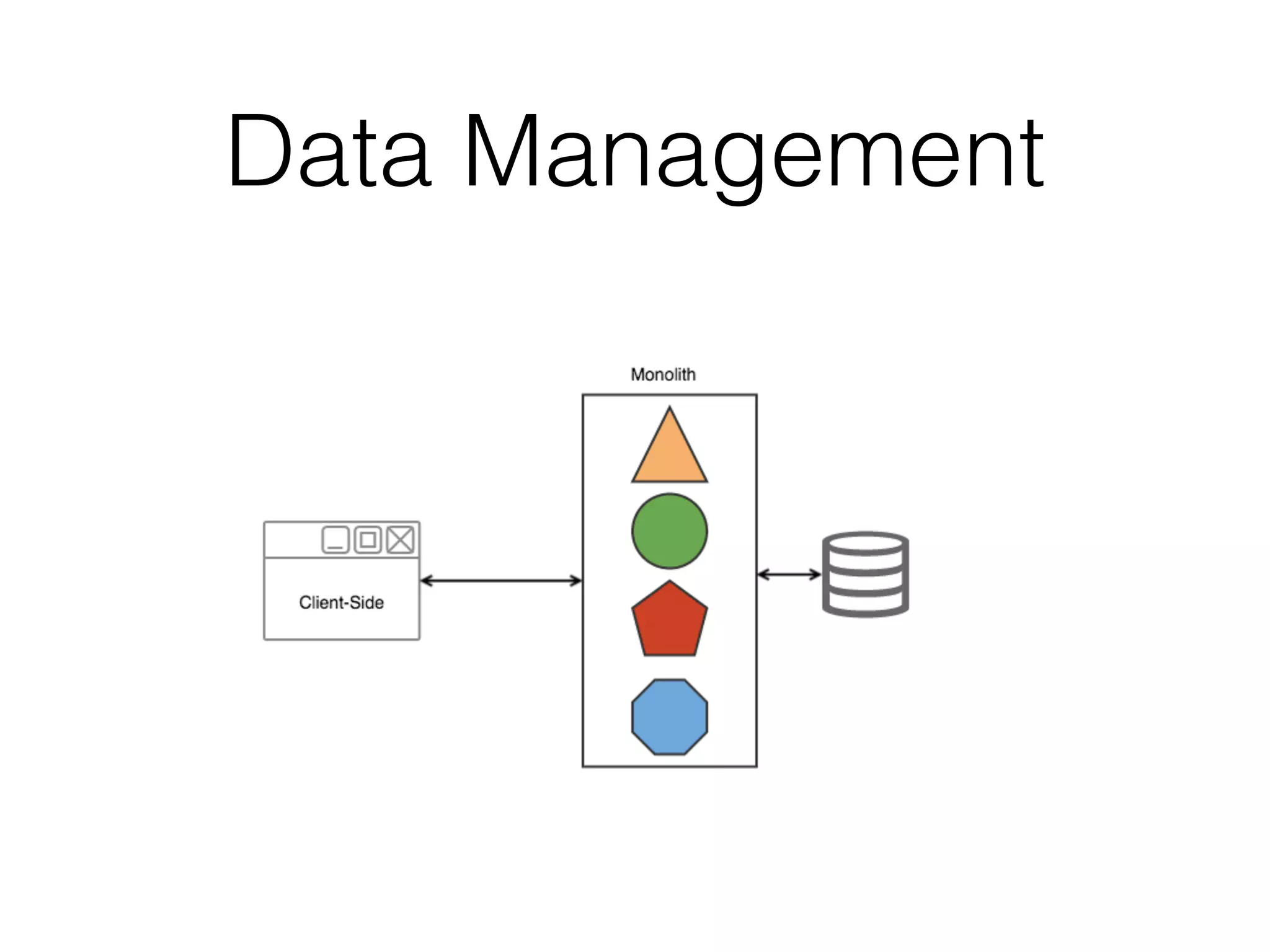
What is a monolith? 
… is a single unit of application, which all the 
business logic and data access code are combined 
into a single application.
Microservice vs Monolith?
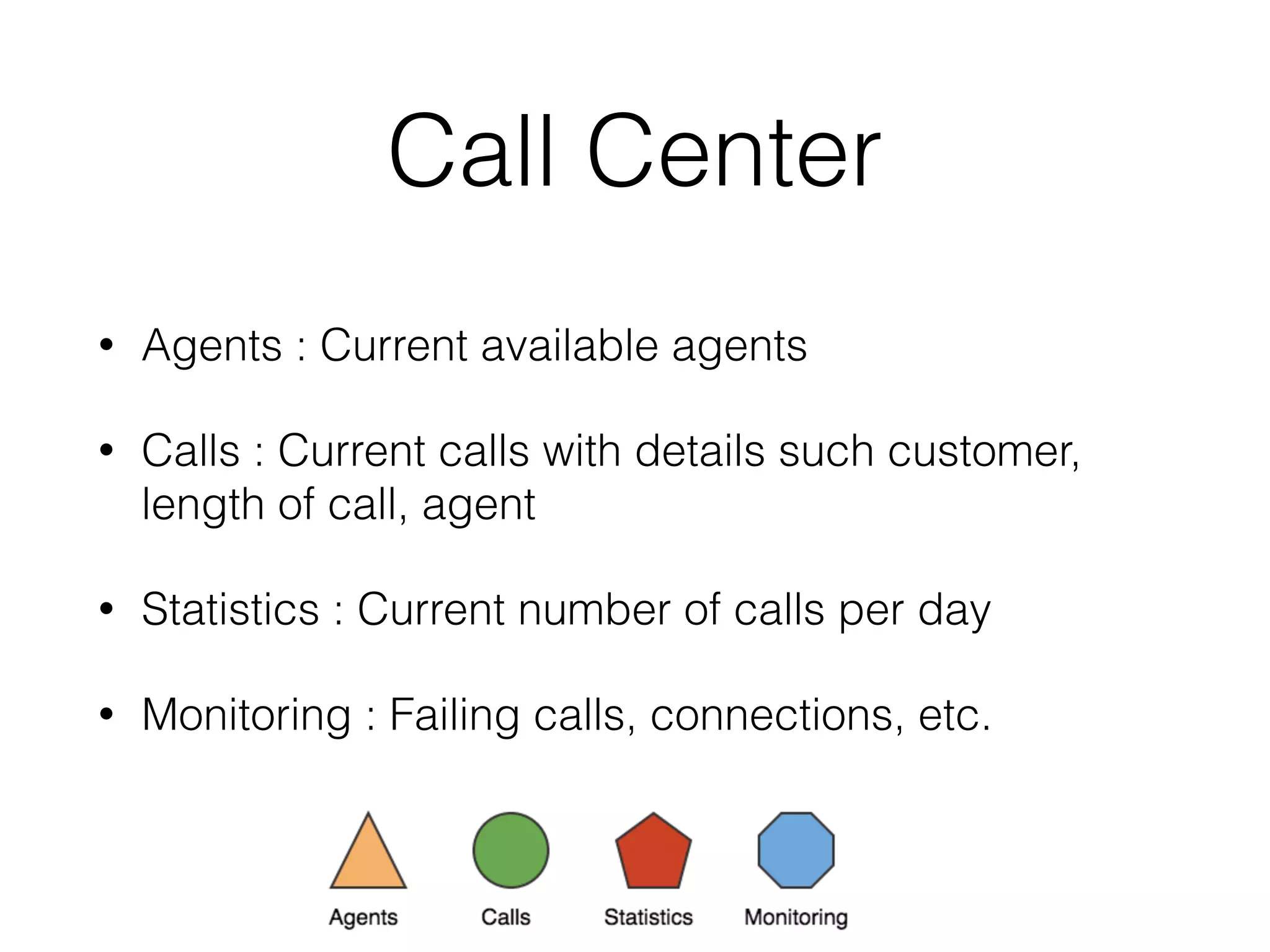
Call Center 
• Agents : Current available agents 
• Calls : Current calls with details such customer, 
length of call, agent 
• Statistics : Current number of calls per day 
• Monitoring : Failing calls, connections, etc.
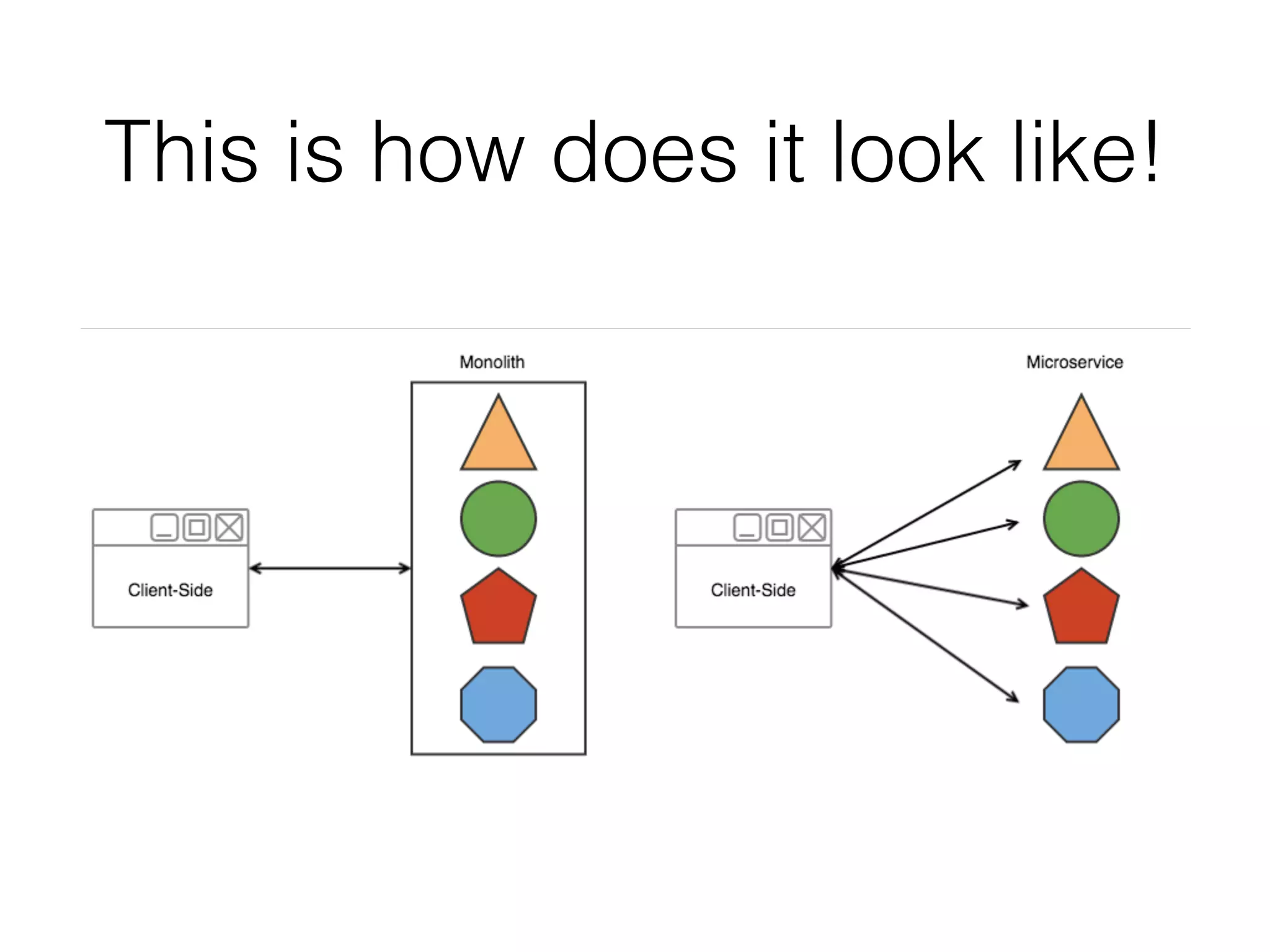
This is how does it look like!
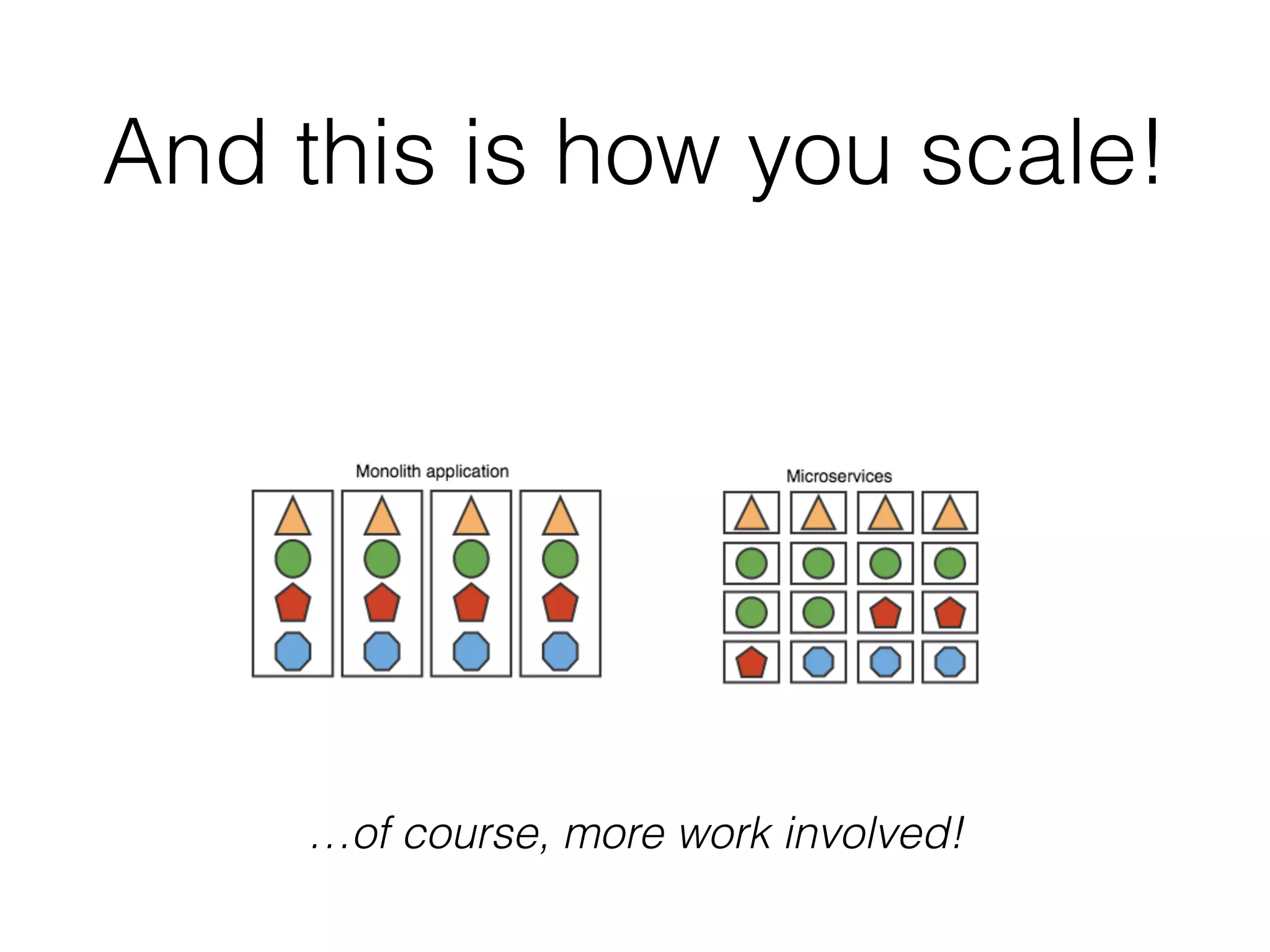
And this is how you scale! 
…of course, more work involved!
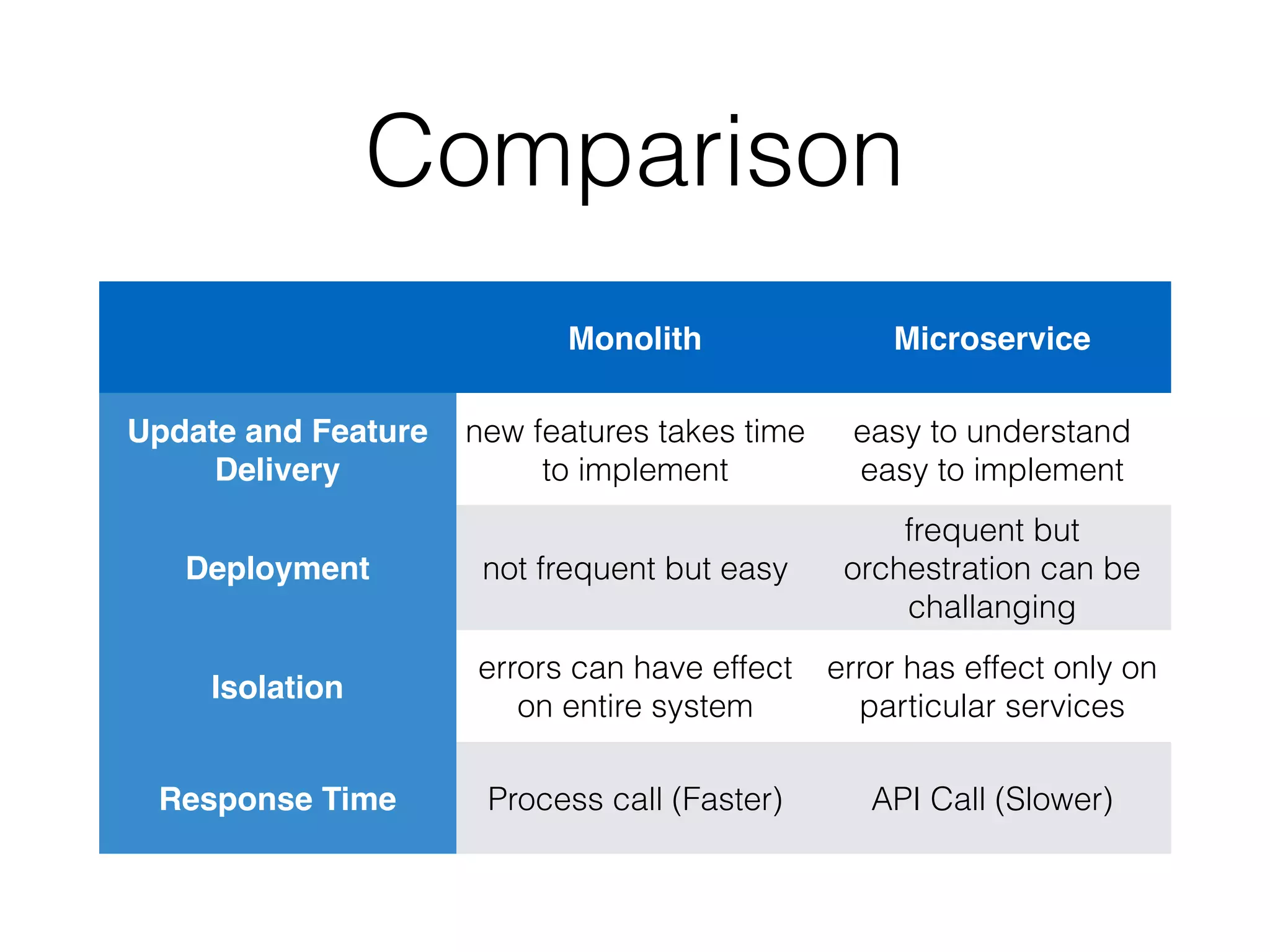
Comparison 
Monolith Microservice 
Update and Feature 
Delivery 
new features takes time 
to implement 
easy to understand 
easy to implement 
Deployment not frequent but easy 
frequent but 
orchestration can be 
challanging 
Isolation 
errors can have effect 
on entire system 
error has effect only on 
particular services 
Response Time Process call (Faster) API Call (Slower)
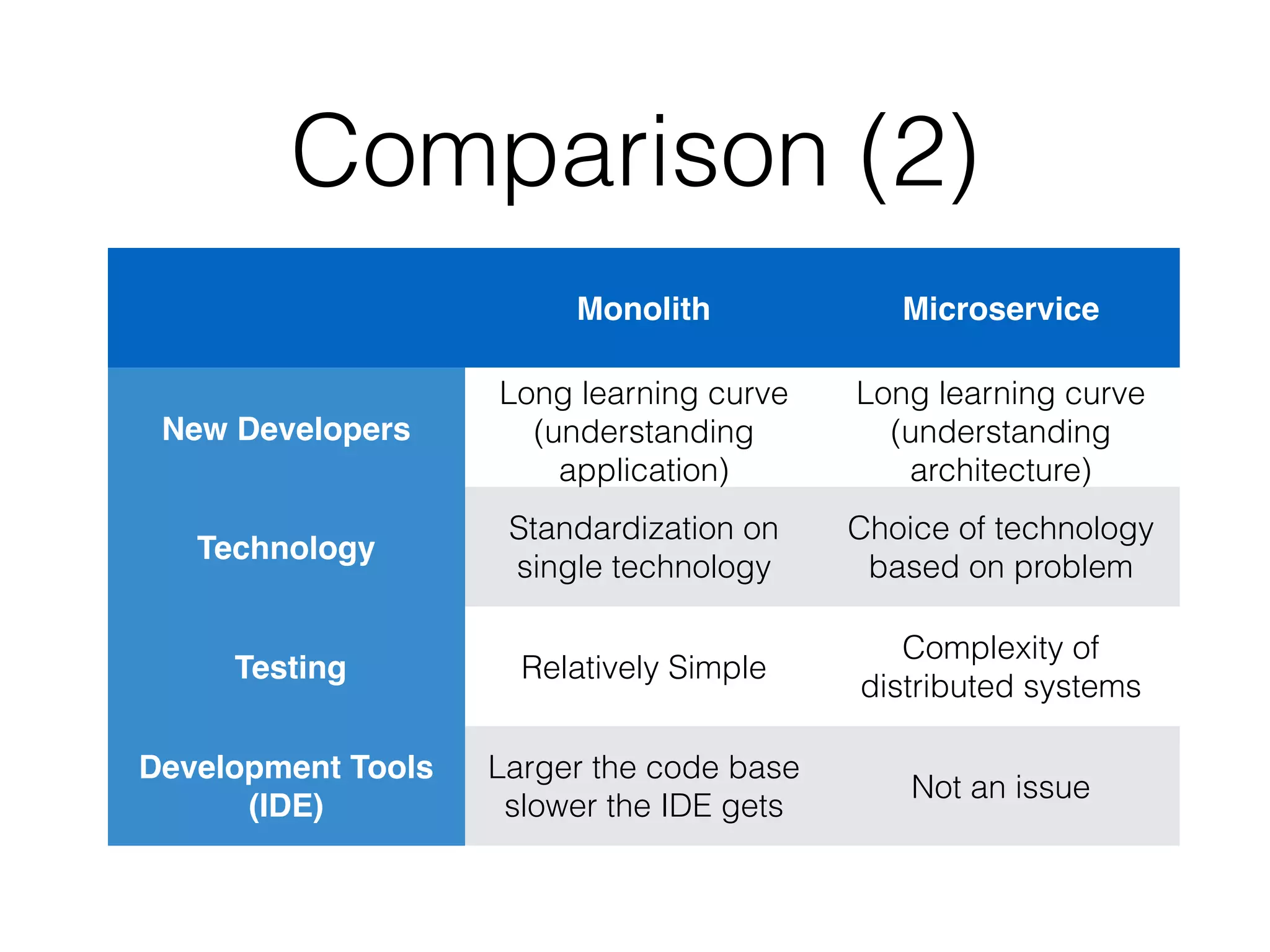
Comparison (2) 
Monolith Microservice 
New Developers 
Long learning curve 
(understanding 
application) 
Long learning curve 
(understanding 
architecture) 
Technology 
Standardization on 
single technology 
Choice of technology 
based on problem 
Testing Relatively Simple 
Complexity of 
distributed systems 
Development Tools 
(IDE) 
Larger the code base 
slower the IDE gets 
Not an issue
Characteristics of 
Microservice Architecture
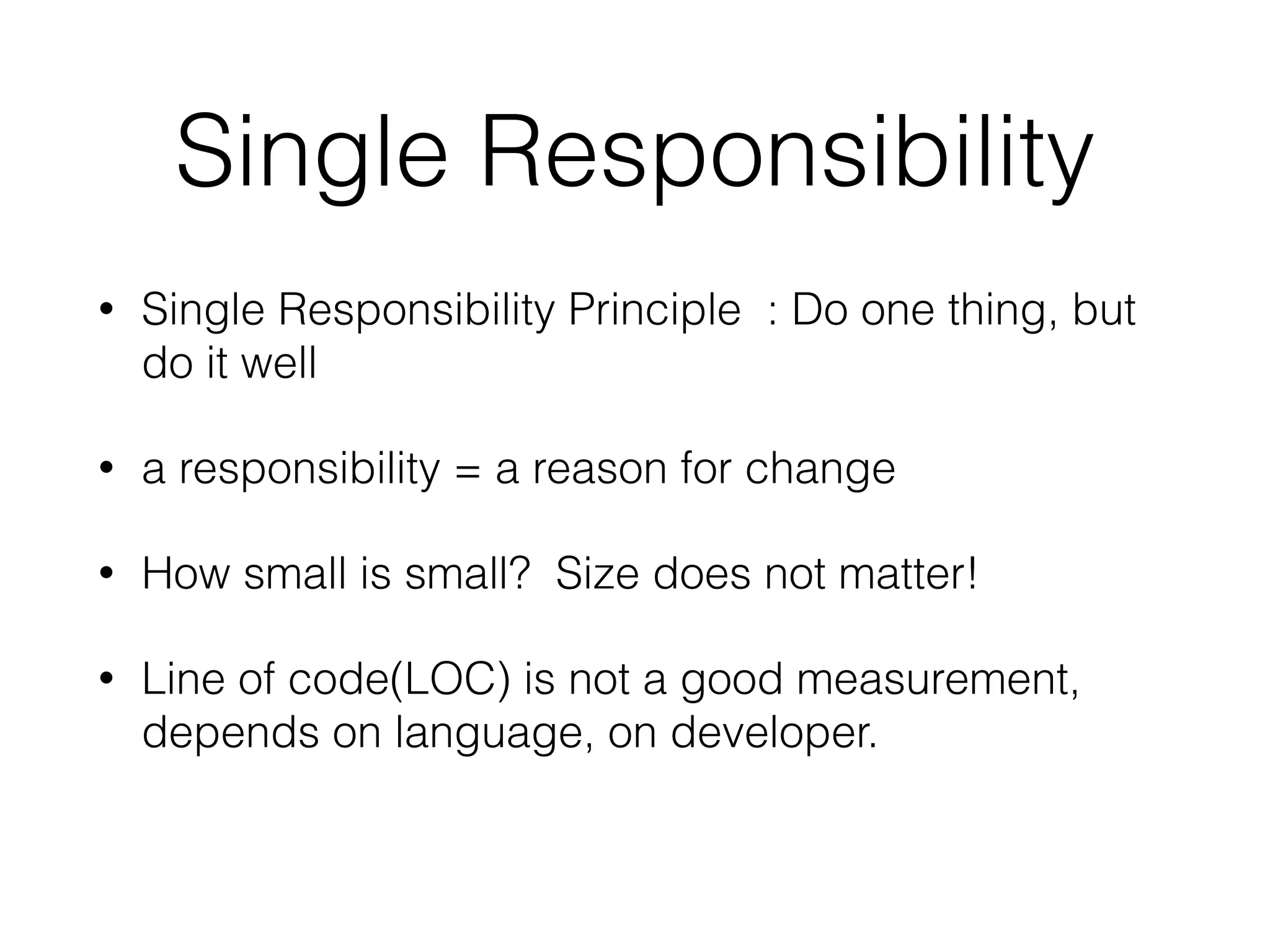
Single Responsibility 
• Single Responsibility Principle : Do one thing, but 
do it well 
• a responsibility = a reason for change 
• How small is small? Size does not matter! 
• Line of code(LOC) is not a good measurement, 
depends on language, on developer.
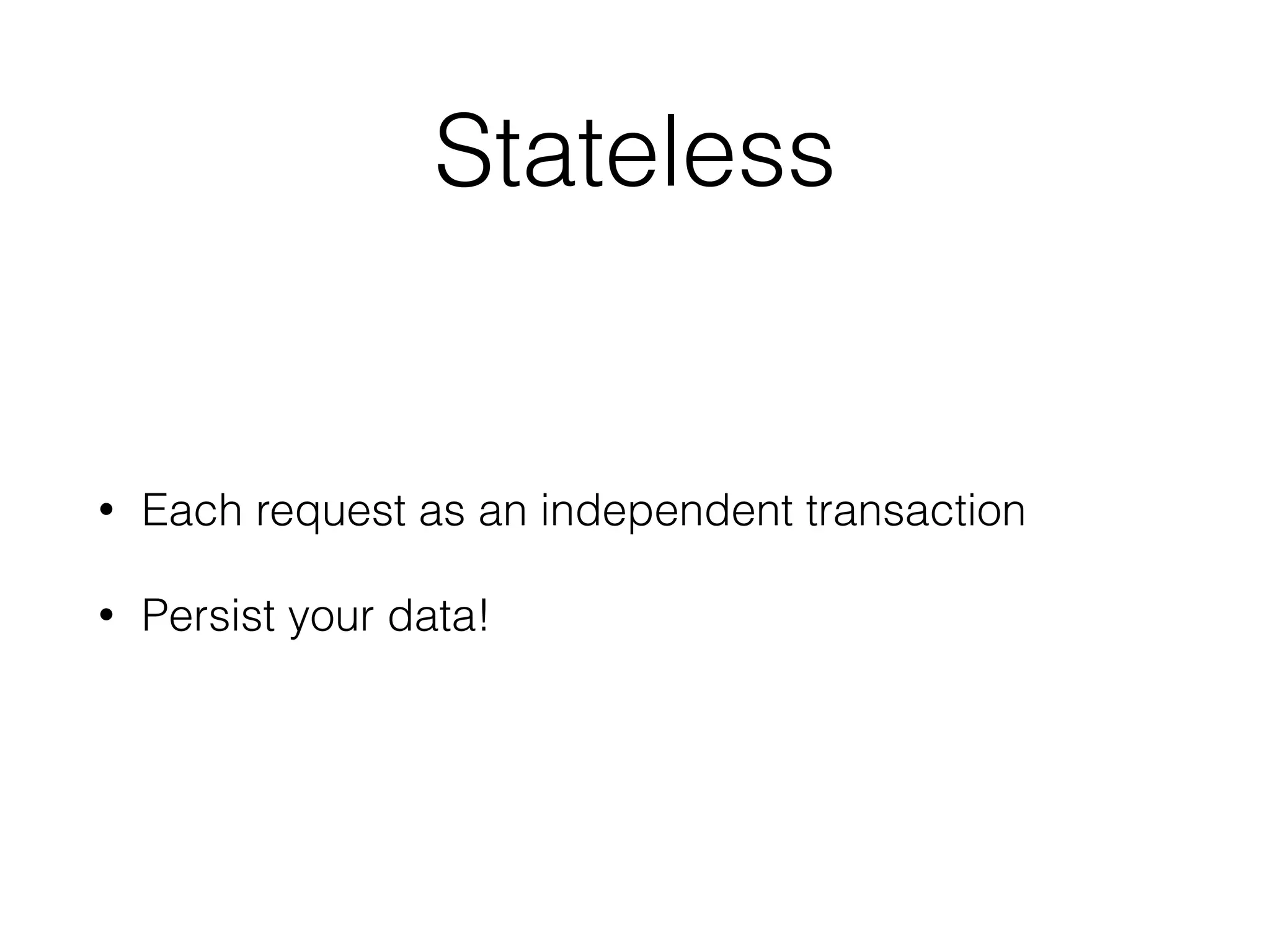
Stateless 
• Each request as an independent transaction 
• Persist your data!
Data Management
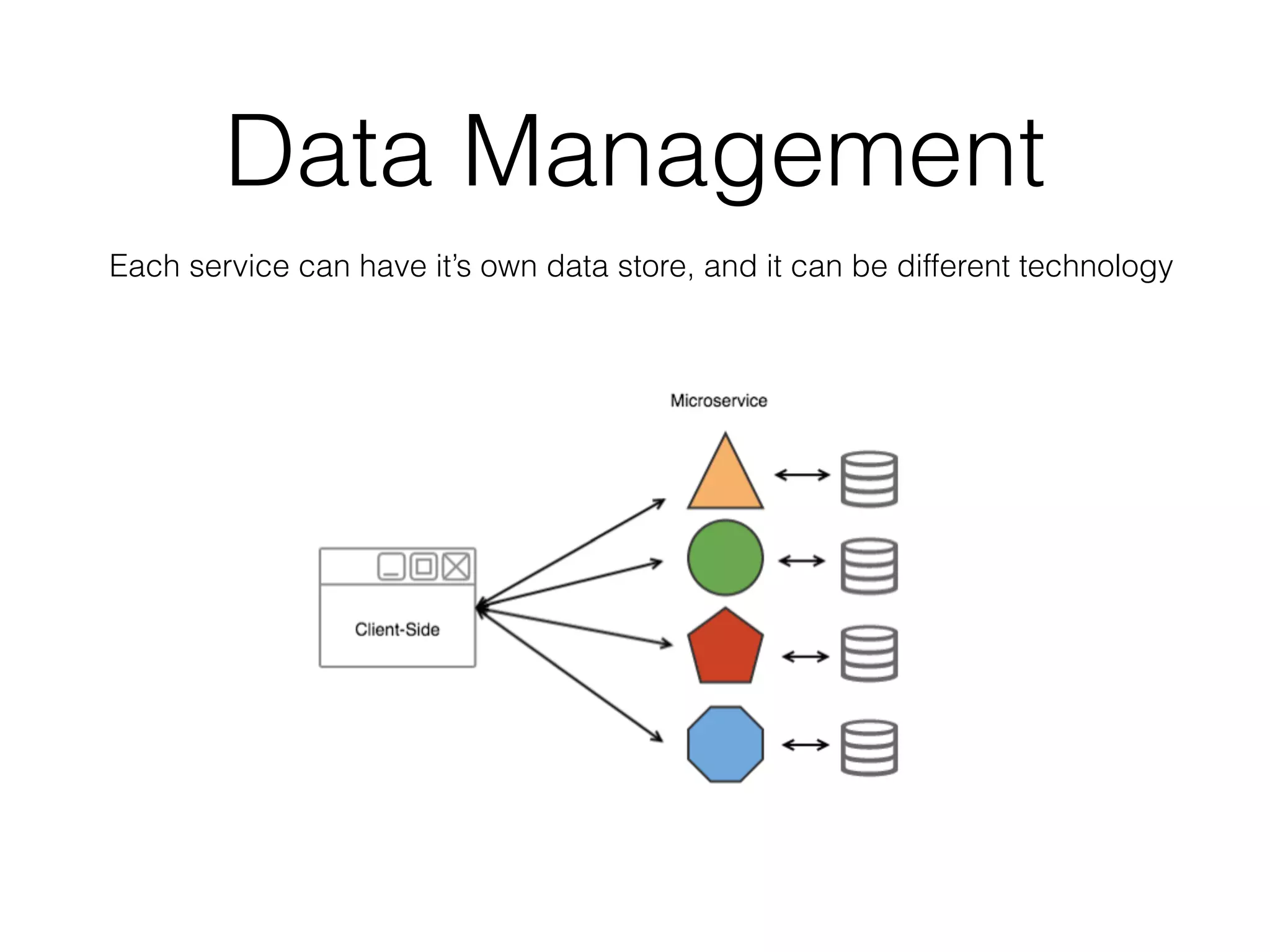
Data Management 
Each service can have it’s own data store, and it can be different technology
Communication between 
services 
• HTTP (Request, Response) 
• Message Queue (e.g. RabbitMQ, zeroMQ ) 
• Don’t Reinvent The Wheel. Use 
• HTTP Status Code 
• HTTP Headers 
• REST (Not just the url also the body)
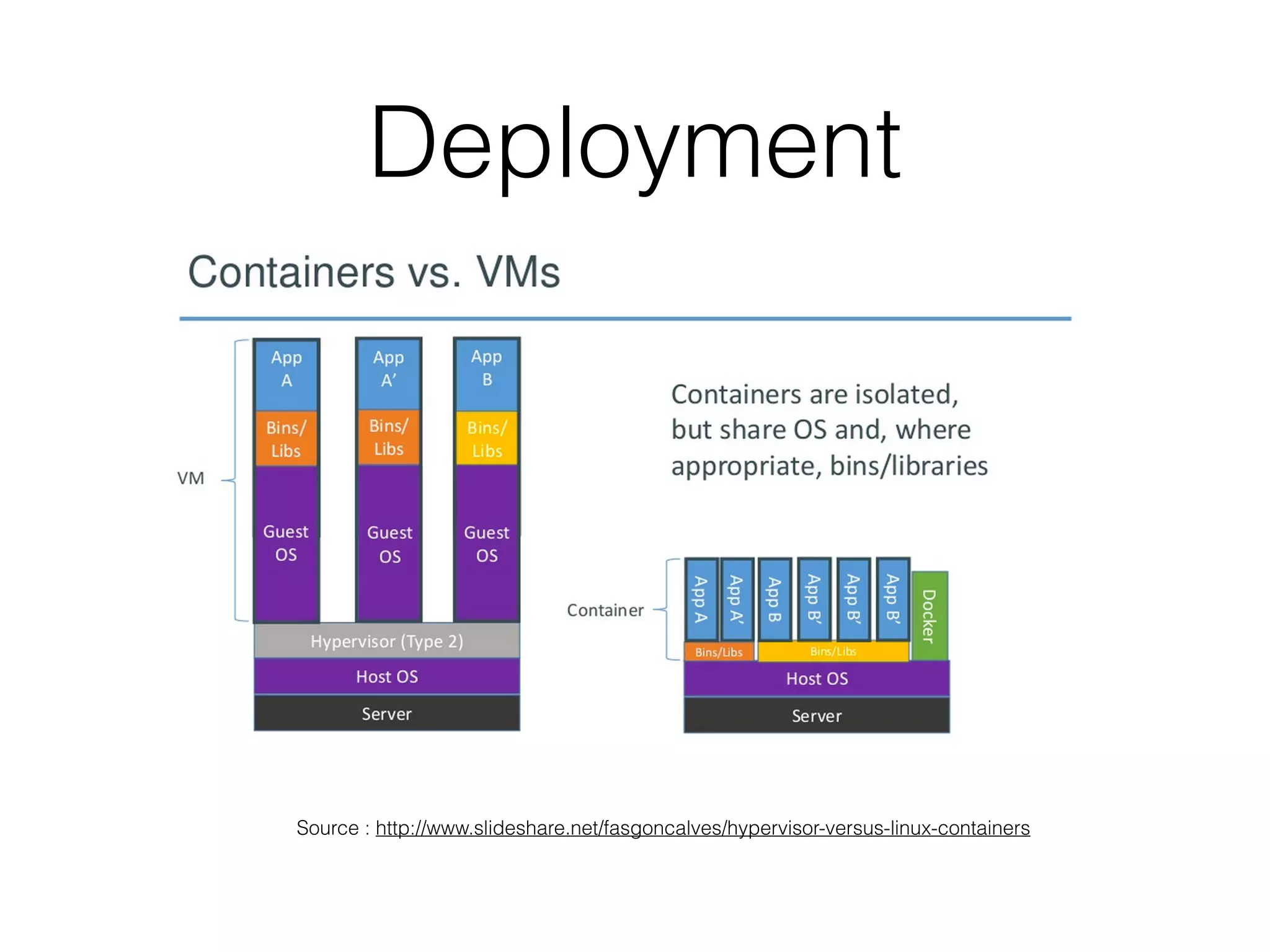
Deployment 
• Each service has its own 
• Repository 
• Build Pipeline 
• Host 
• Build single artifact that represent release candidate. Do not 
build artifact for different environment 
• Manage configuration separately 
• Can we provision a server less than 1 minute?
Deployment 
Source : http://www.slideshare.net/fasgoncalves/hypervisor-versus-linux-containers
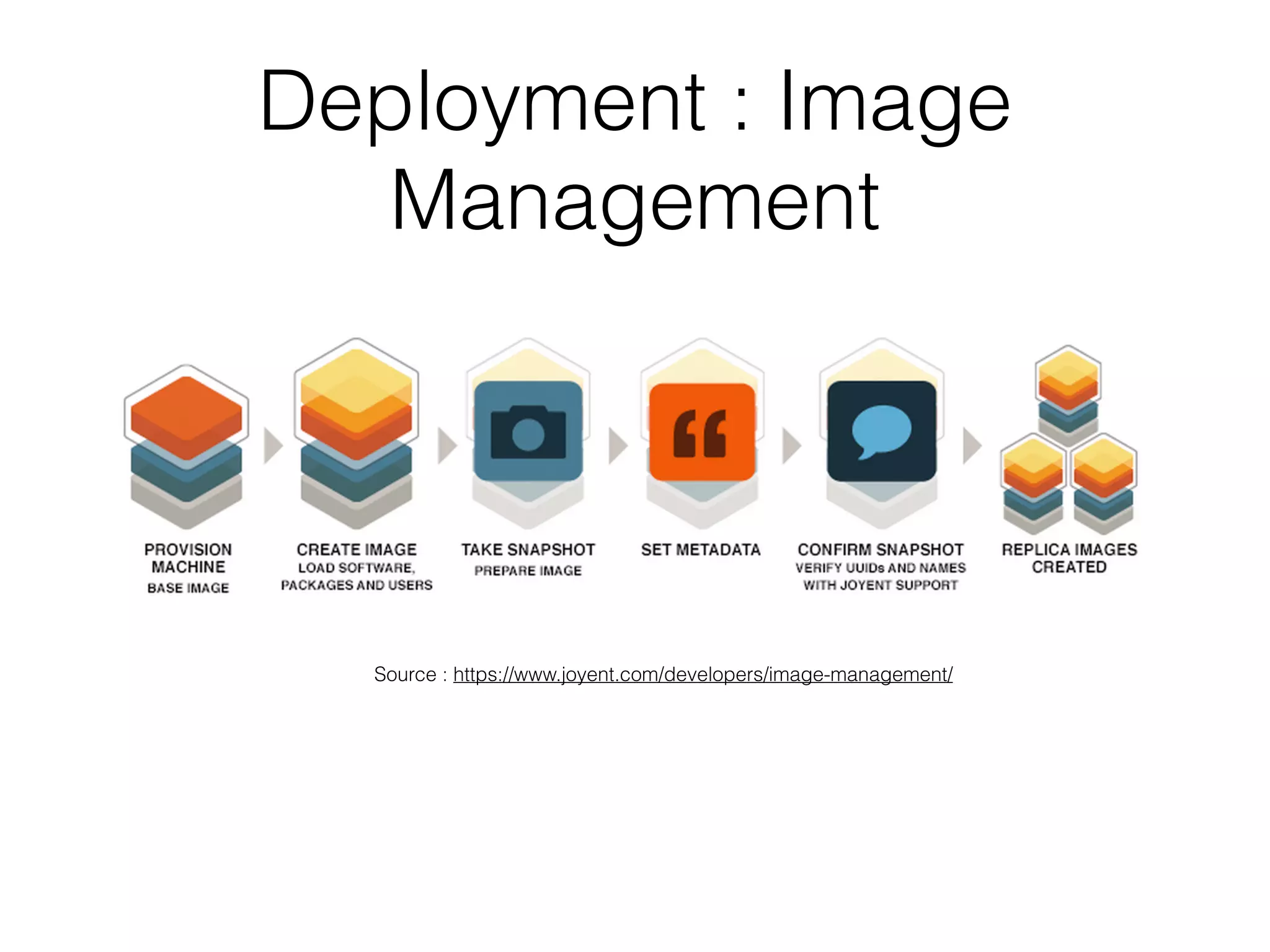
Deployment : Image 
Management 
Source : https://www.joyent.com/developers/image-management/
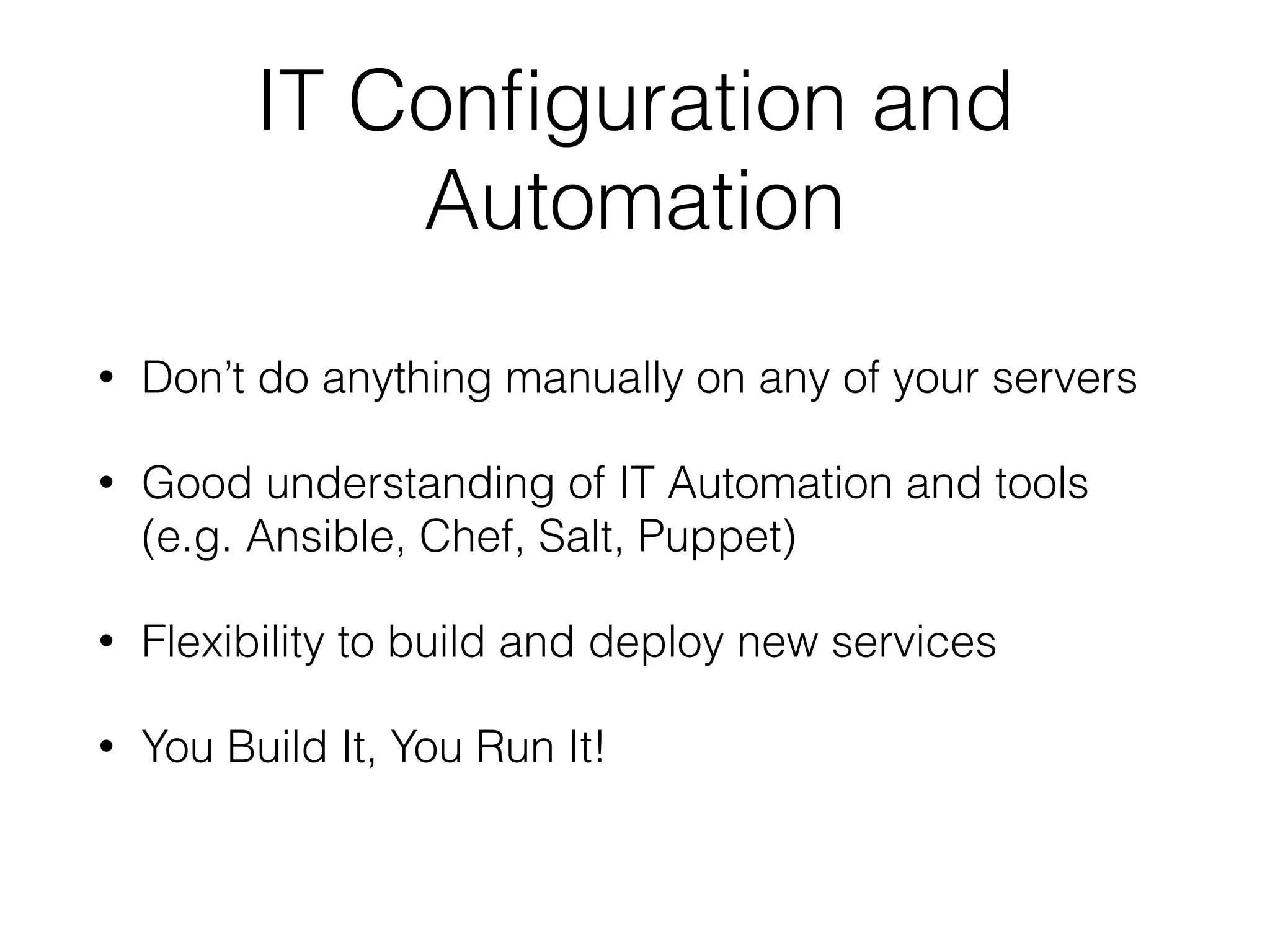
IT Configuration and 
Automation 
• Don’t do anything manually on any of your servers 
• Good understanding of IT Automation and tools 
(e.g. Ansible, Chef, Salt, Puppet) 
• Flexibility to build and deploy new services 
• You Build It, You Run It!
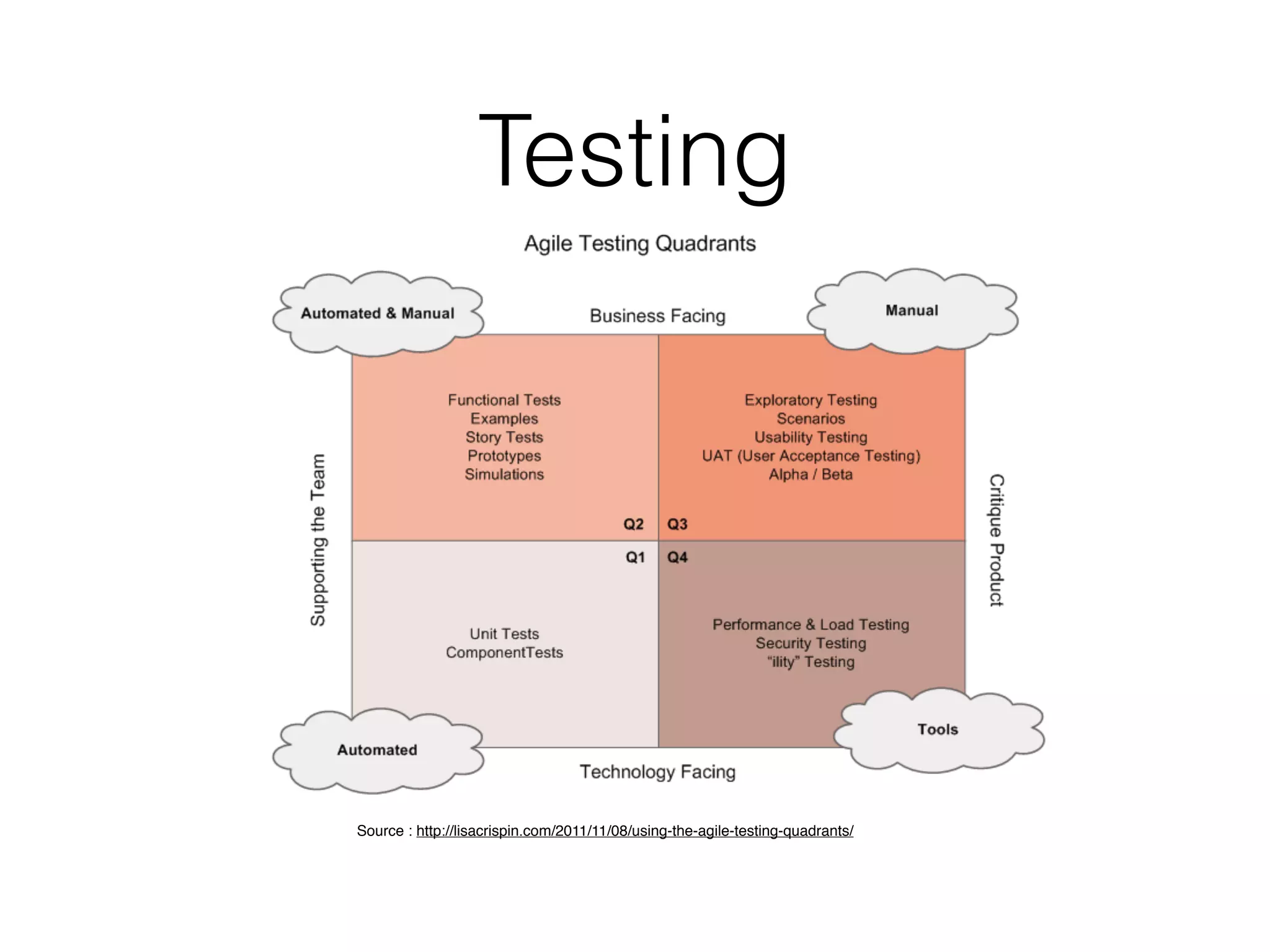
Testing 
Source : http://lisacrispin.com/2011/11/08/using-the-agile-testing-quadrants/
Testing 
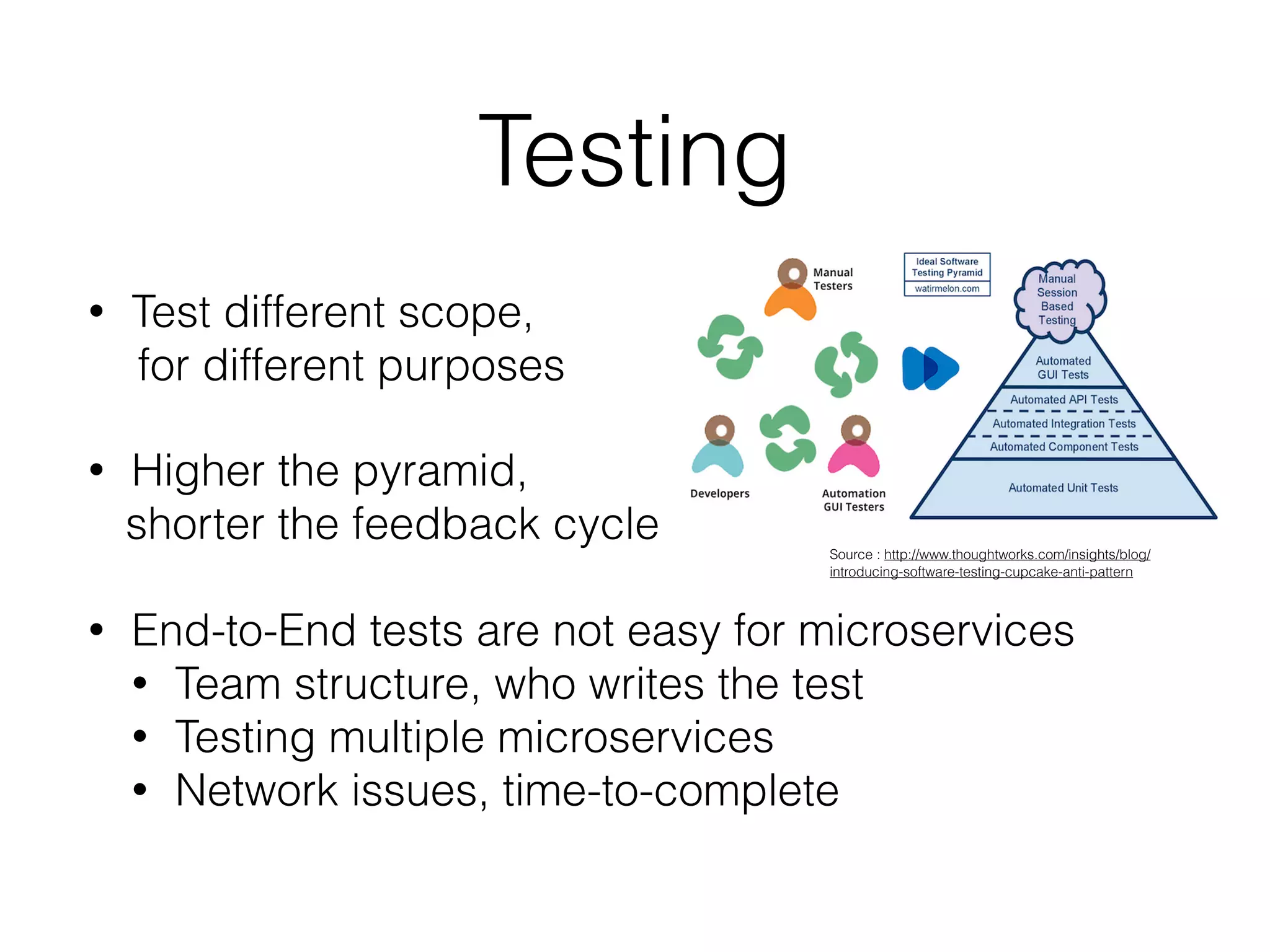
• Test different scope, 
for different purposes 
• Higher the pyramid, 
shorter the feedback cycle 
Source : http://www.thoughtworks.com/insights/blog/ 
introducing-software-testing-cupcake-anti-pattern 
• End-to-End tests are not easy for microservices 
• Team structure, who writes the test 
• Testing multiple microservices 
• Network issues, time-to-complete
Monitoring 
• Monitor your host and individual services 
• Check health of your system 
• Keep track of your logs 
• Build and use conventions (e.g. Standardise your 
logs) 
• Use existing tools: ElasticSearch, Kibana, Graphite, 
Logstash,
Metrics 
• Response time 
• Error Rate 
• Correlation ID
The Company Culture 
• Decentralized Governance: Right tool for right job 
• Open enough to change and adopt 
• Cross functional teams (e.g. for testing, operations)
Questions

Microservice Architecture

  • 1.
    Microservice Architecture EnginYöyen November, 2014
  • 2.
    What is amicroservice? … is a small, discrete, isolated, lightweight application that is stateless service and can be deployed separately.
  • 3.
    What is amonolith? … is a single unit of application, which all the business logic and data access code are combined into a single application.
  • 4.
  • 5.
    Call Center •Agents : Current available agents • Calls : Current calls with details such customer, length of call, agent • Statistics : Current number of calls per day • Monitoring : Failing calls, connections, etc.
  • 6.
    This is howdoes it look like!
  • 7.
    And this ishow you scale! …of course, more work involved!
  • 8.
    Comparison Monolith Microservice Update and Feature Delivery new features takes time to implement easy to understand easy to implement Deployment not frequent but easy frequent but orchestration can be challanging Isolation errors can have effect on entire system error has effect only on particular services Response Time Process call (Faster) API Call (Slower)
  • 9.
    Comparison (2) MonolithMicroservice New Developers Long learning curve (understanding application) Long learning curve (understanding architecture) Technology Standardization on single technology Choice of technology based on problem Testing Relatively Simple Complexity of distributed systems Development Tools (IDE) Larger the code base slower the IDE gets Not an issue
  • 10.
  • 11.
    Single Responsibility •Single Responsibility Principle : Do one thing, but do it well • a responsibility = a reason for change • How small is small? Size does not matter! • Line of code(LOC) is not a good measurement, depends on language, on developer.
  • 12.
    Stateless • Eachrequest as an independent transaction • Persist your data!
  • 13.
  • 14.
    Data Management Eachservice can have it’s own data store, and it can be different technology
  • 15.
    Communication between services • HTTP (Request, Response) • Message Queue (e.g. RabbitMQ, zeroMQ ) • Don’t Reinvent The Wheel. Use • HTTP Status Code • HTTP Headers • REST (Not just the url also the body)
  • 16.
    Deployment • Eachservice has its own • Repository • Build Pipeline • Host • Build single artifact that represent release candidate. Do not build artifact for different environment • Manage configuration separately • Can we provision a server less than 1 minute?
  • 17.
    Deployment Source :http://www.slideshare.net/fasgoncalves/hypervisor-versus-linux-containers
  • 18.
    Deployment : Image Management Source : https://www.joyent.com/developers/image-management/
  • 19.
    IT Configuration and Automation • Don’t do anything manually on any of your servers • Good understanding of IT Automation and tools (e.g. Ansible, Chef, Salt, Puppet) • Flexibility to build and deploy new services • You Build It, You Run It!
  • 20.
    Testing Source :http://lisacrispin.com/2011/11/08/using-the-agile-testing-quadrants/
  • 21.
    Testing • Testdifferent scope, for different purposes • Higher the pyramid, shorter the feedback cycle Source : http://www.thoughtworks.com/insights/blog/ introducing-software-testing-cupcake-anti-pattern • End-to-End tests are not easy for microservices • Team structure, who writes the test • Testing multiple microservices • Network issues, time-to-complete
  • 22.
    Monitoring • Monitoryour host and individual services • Check health of your system • Keep track of your logs • Build and use conventions (e.g. Standardise your logs) • Use existing tools: ElasticSearch, Kibana, Graphite, Logstash,
  • 23.
    Metrics • Responsetime • Error Rate • Correlation ID
  • 24.
    The Company Culture • Decentralized Governance: Right tool for right job • Open enough to change and adopt • Cross functional teams (e.g. for testing, operations)
  • 25.