Microservice 
architecture 
Žilvinas Kuusas 
VilniusPHP 0x19, 2014
Who am I? 
Žilvinas Kuusas 
lead developer @ Estina / iSign.io 
t: @kuusas 
e: zilvinas@kuusas.lt
What is a microservice? 
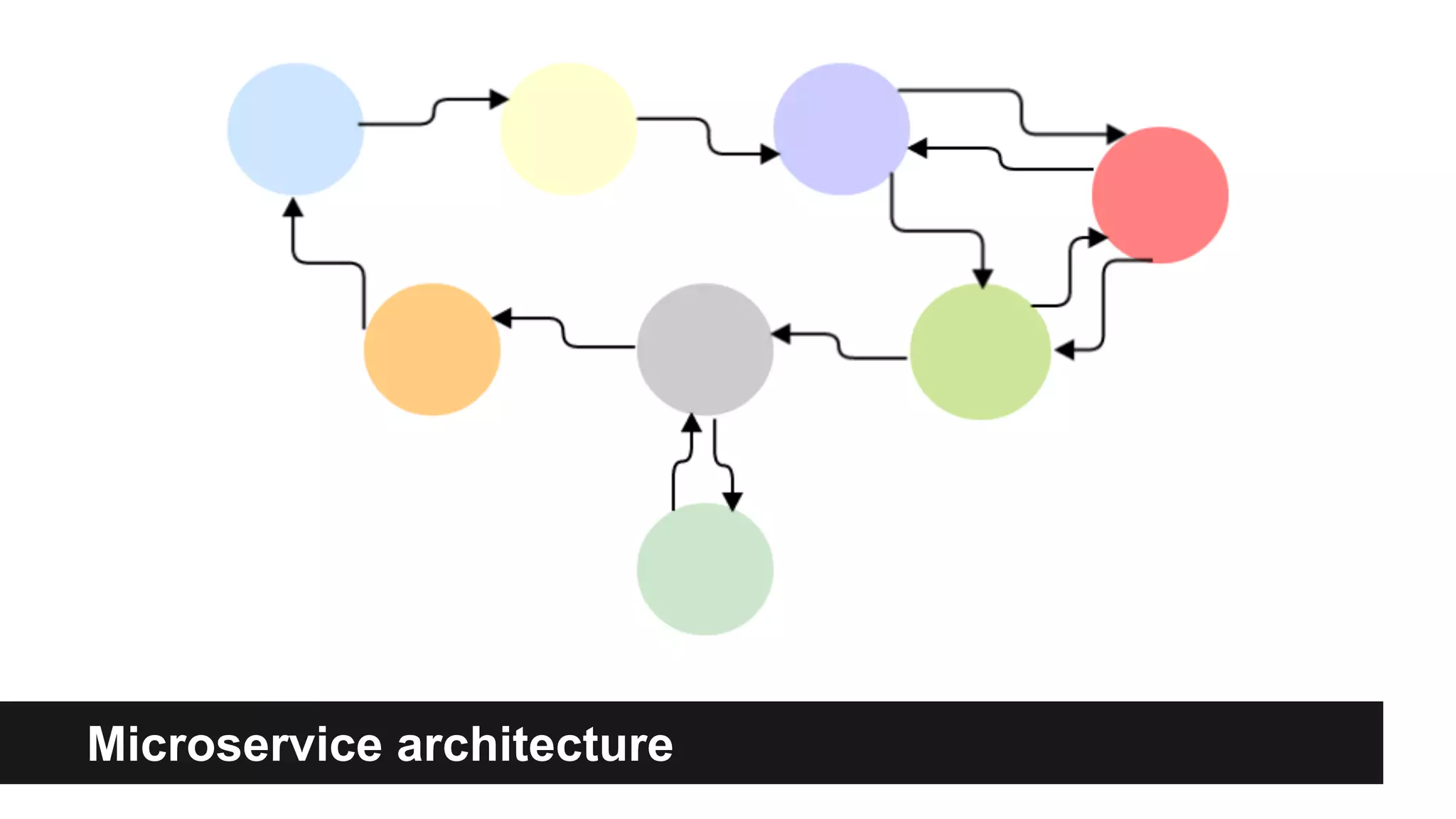
The microservice architectural style is an approach to developing a single 
application as a suite of small services, each running in its own process and 
communicating with lightweight mechanisms, often an HTTP resource API. 
These services are built around business capabilities and independently 
deployable by fully automated deployment machinery. There is a bare minimum 
of centralized management of these services, which may be written in different 
programming languages and use different data storage technologies. 
Martin Fowler 
http://martinfowler.com/articles/microservices.html
Microservice 
● No long-term relationships with technology 
stack 
● Easy to adopt emerging technologies 
● Loose coupling 
● Single responsibility 
● Fault isolation 
● Scalability
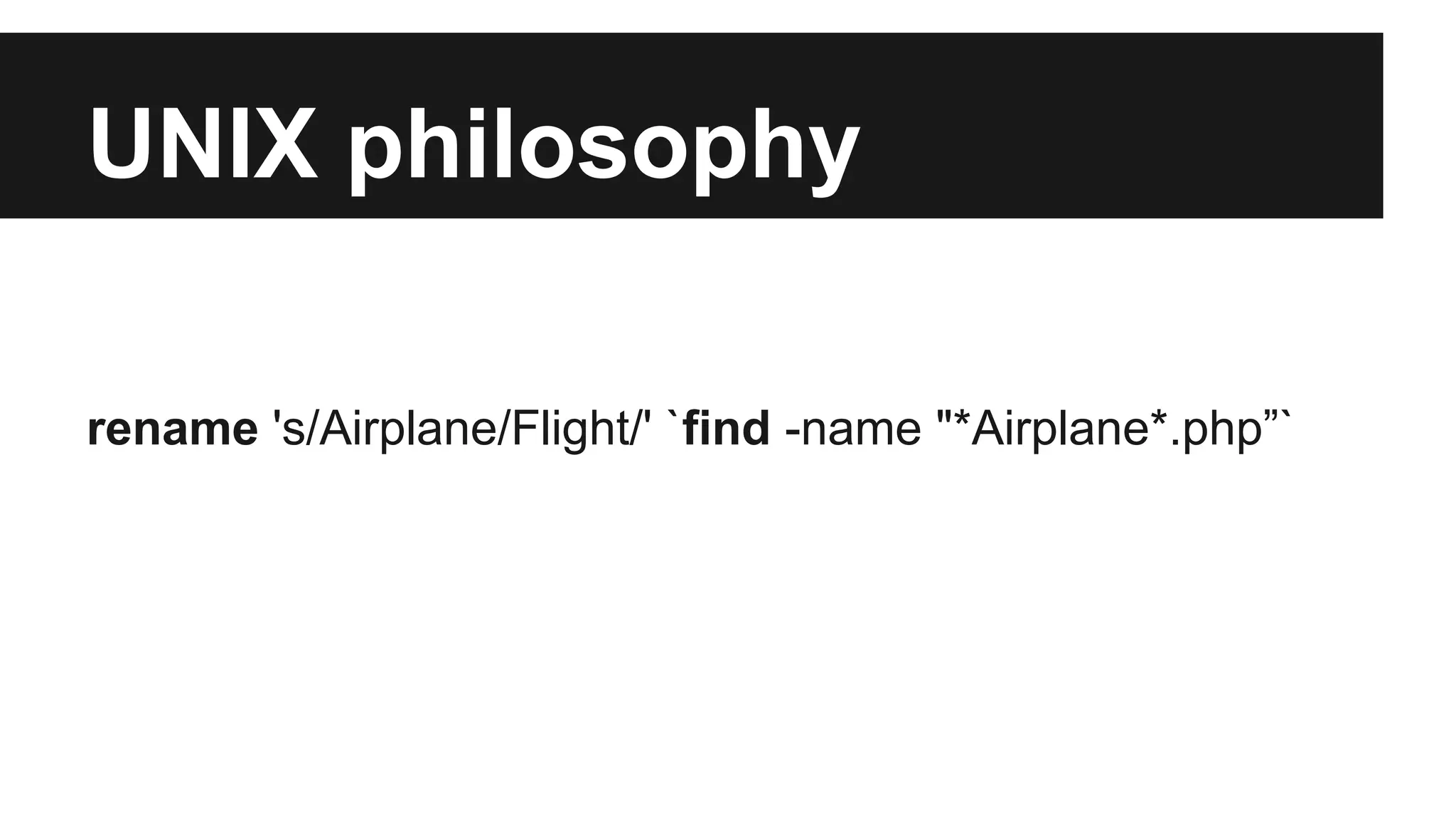
UNIX philosophy 
rename 's/Airplane/Flight/' `find -name "*Airplane*.php”`
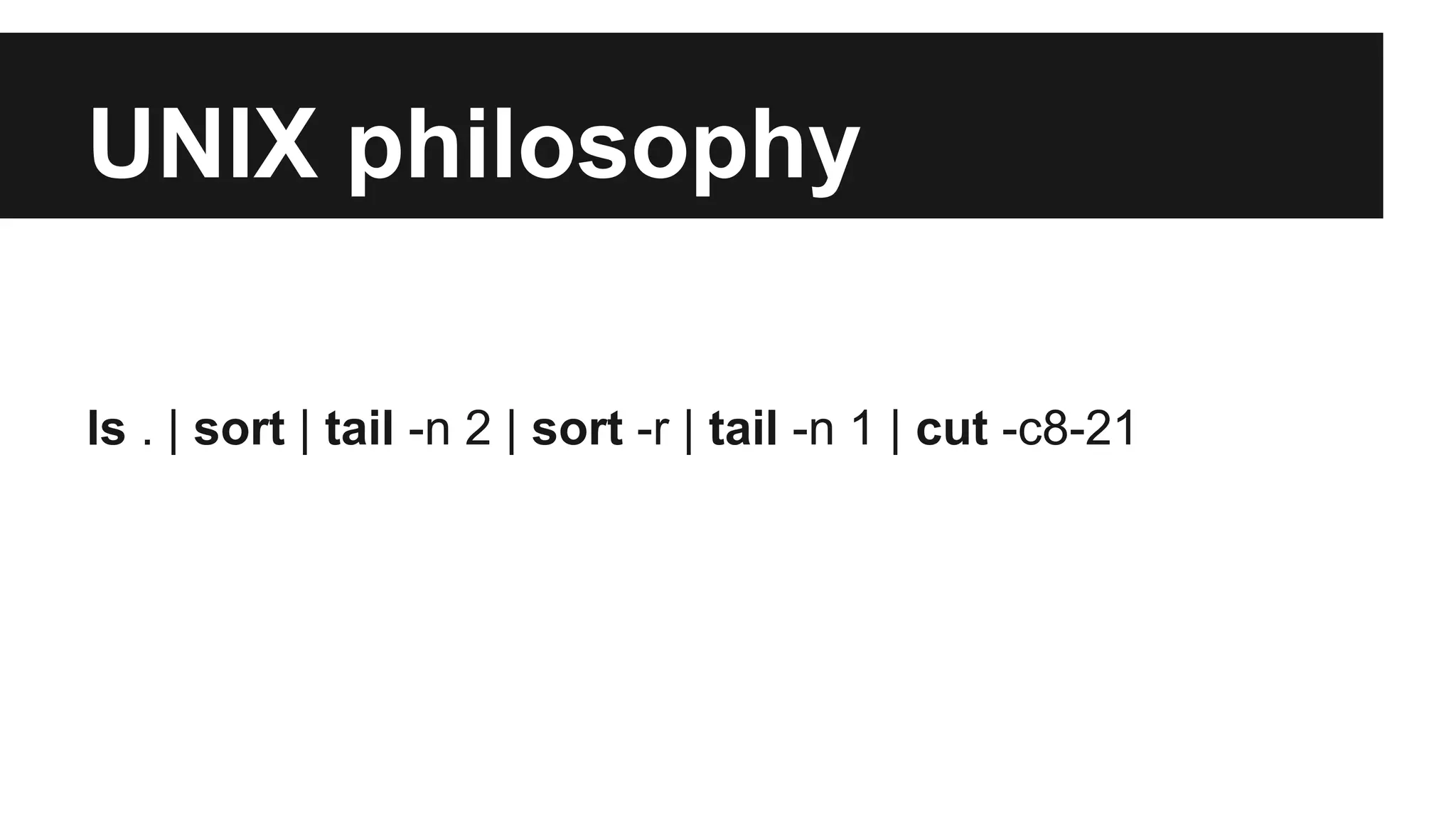
UNIX philosophy 
ls . | sort | tail -n 2 | sort -r | tail -n 1 | cut -c8-21
Microservice architecture 
Microservice architecture
Monolithic application 
Reality - monolithic application
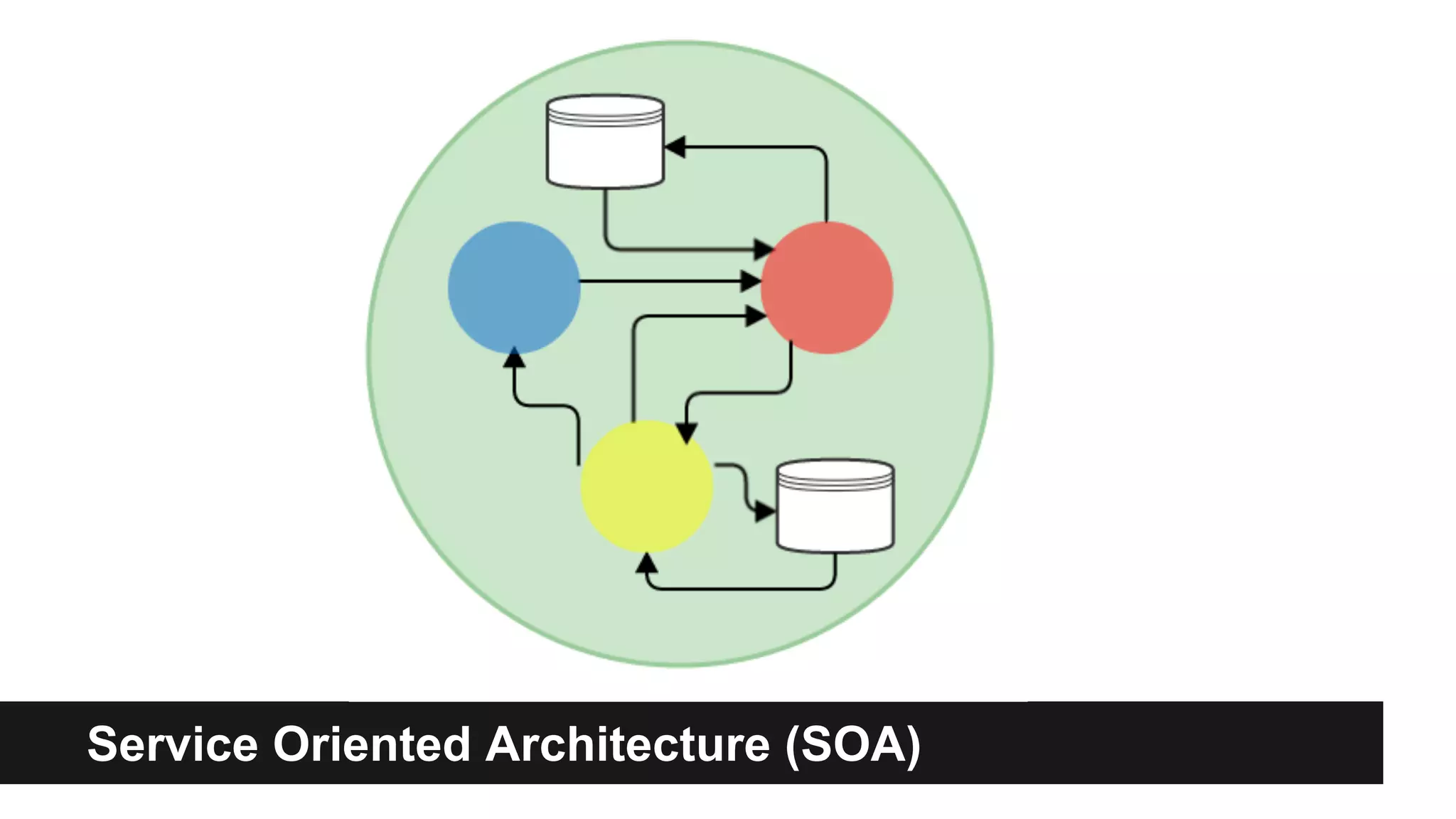
Service Oriented Architecture (SOA)
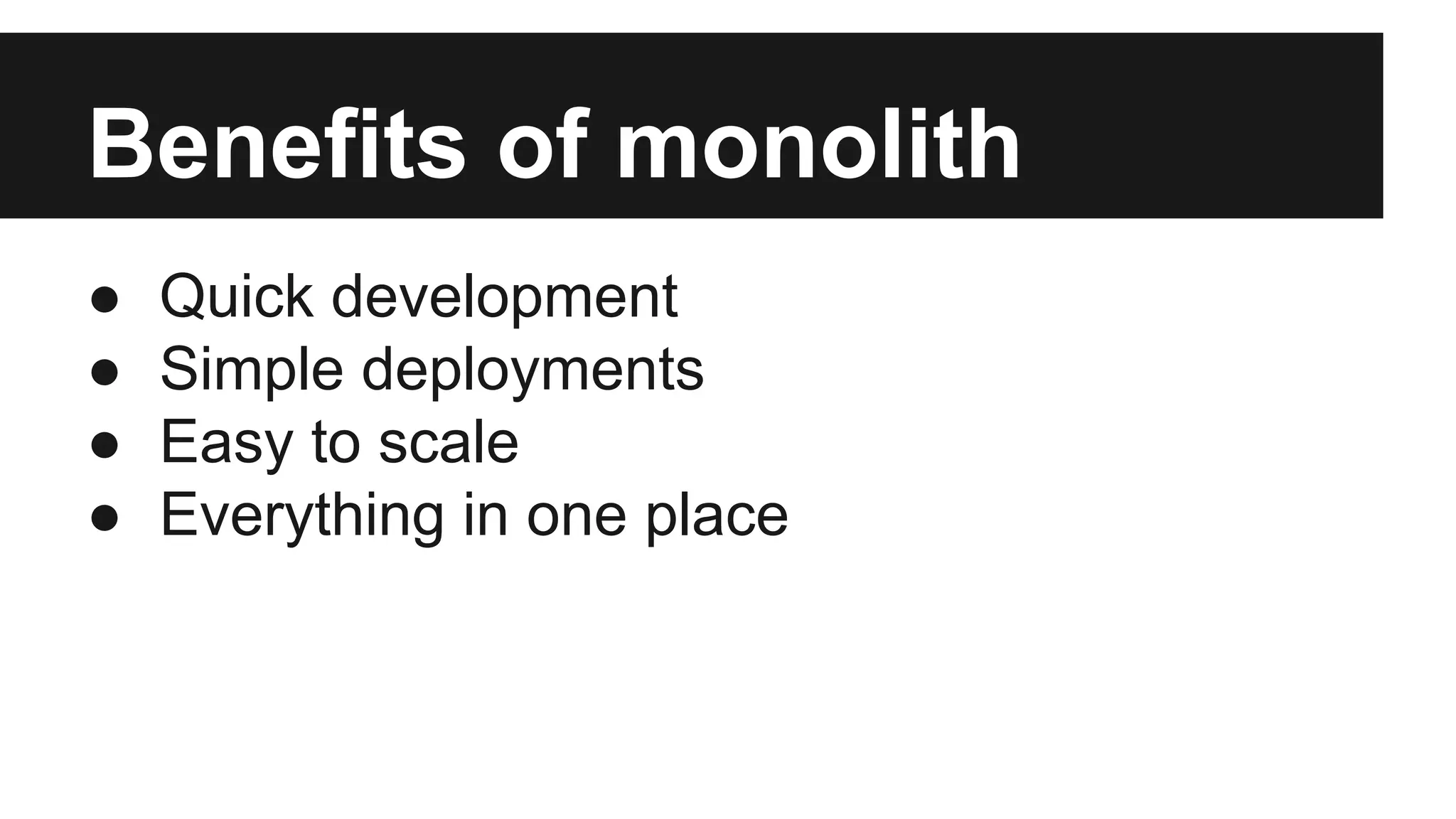
Benefits of monolith 
● Quick development 
● Simple deployments 
● Easy to scale 
● Everything in one place
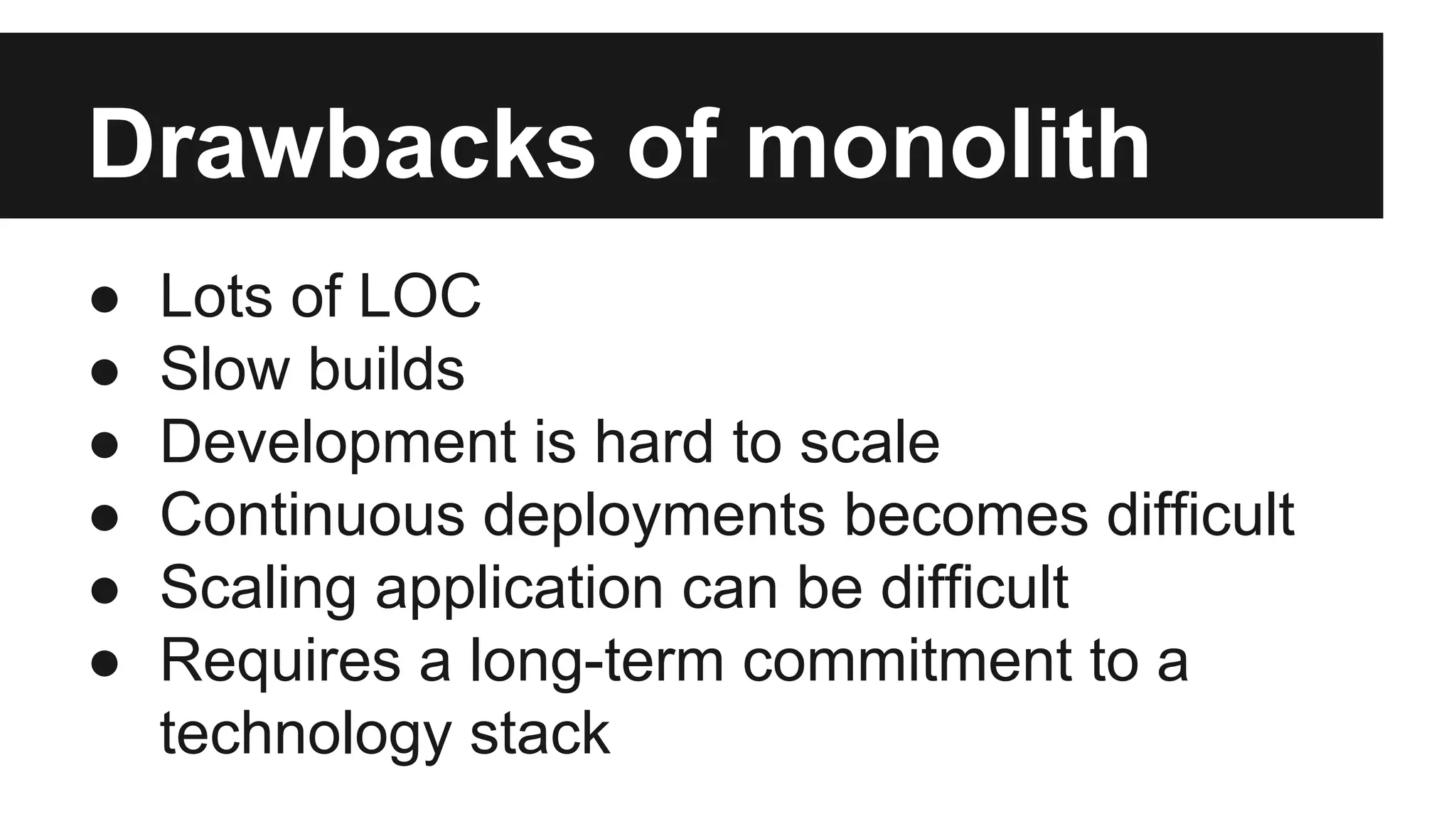
Drawbacks of monolith 
● Lots of LOC 
● Slow builds 
● Development is hard to scale 
● Continuous deployments becomes difficult 
● Scaling application can be difficult 
● Requires a long-term commitment to a 
technology stack
Microservices 
Think about microservice as small, single-purpose 
application. Simple?
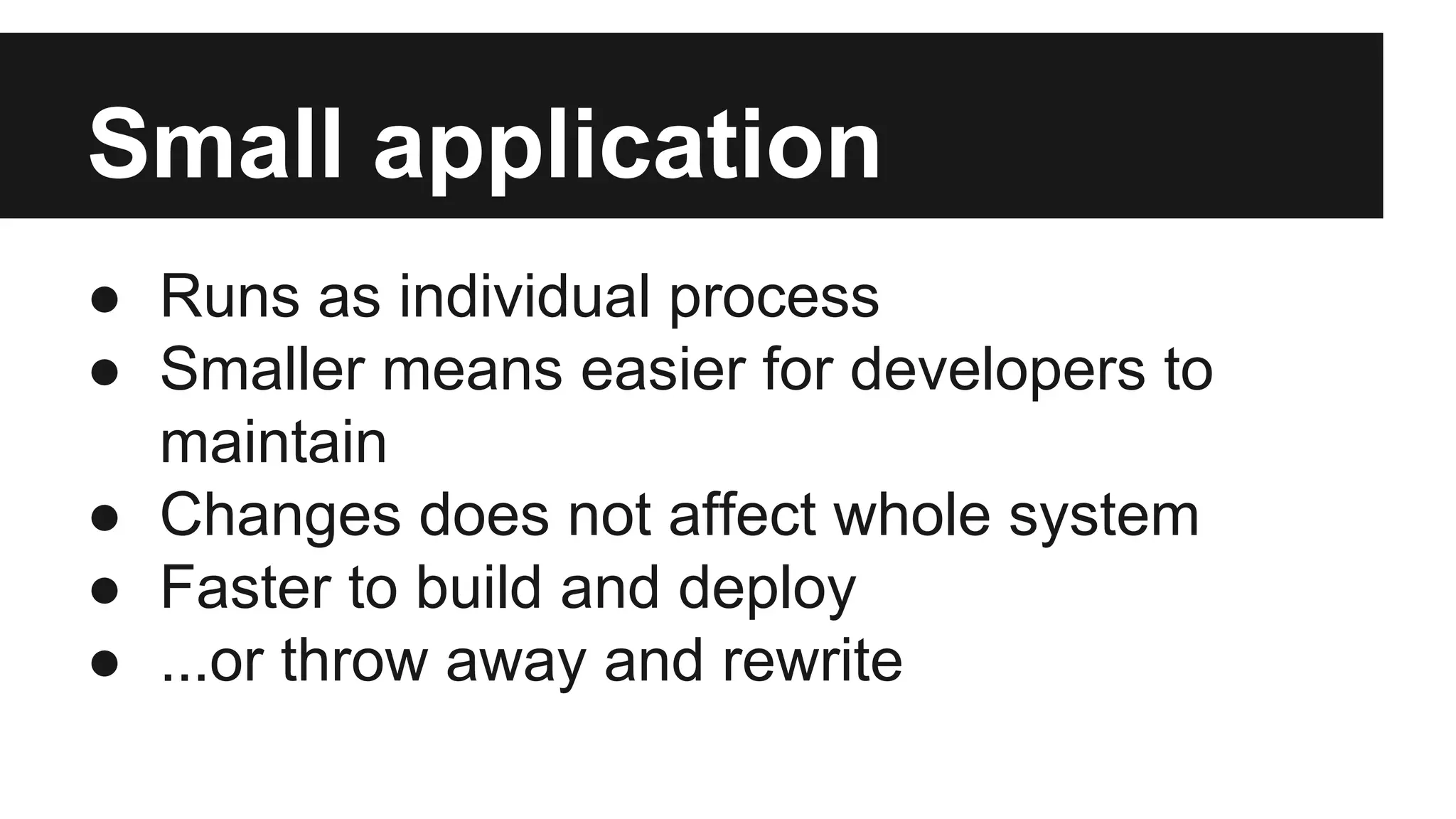
Small application 
● Runs as individual process 
● Smaller means easier for developers to 
maintain 
● Changes does not affect whole system 
● Faster to build and deploy 
● ...or throw away and rewrite
Small application 
● Each service has it’s own database 
● Code duplication vs. code coupling 
● Shared code - libraries
Small application 
“If service is bigger than your 
head then it’s too big” 
Internet
Deploy independently 
● Each microservice runs in it’s own process, 
so deployment of one service won’t affect 
the whole application 
● Easier to scale development 
● Faster feature releases 
● Less downtime 
● Develop, build and deploy!
Flexible solutions 
● Modular 
● Polyglot data persistence 
● Multi-framework
Right tool for the job
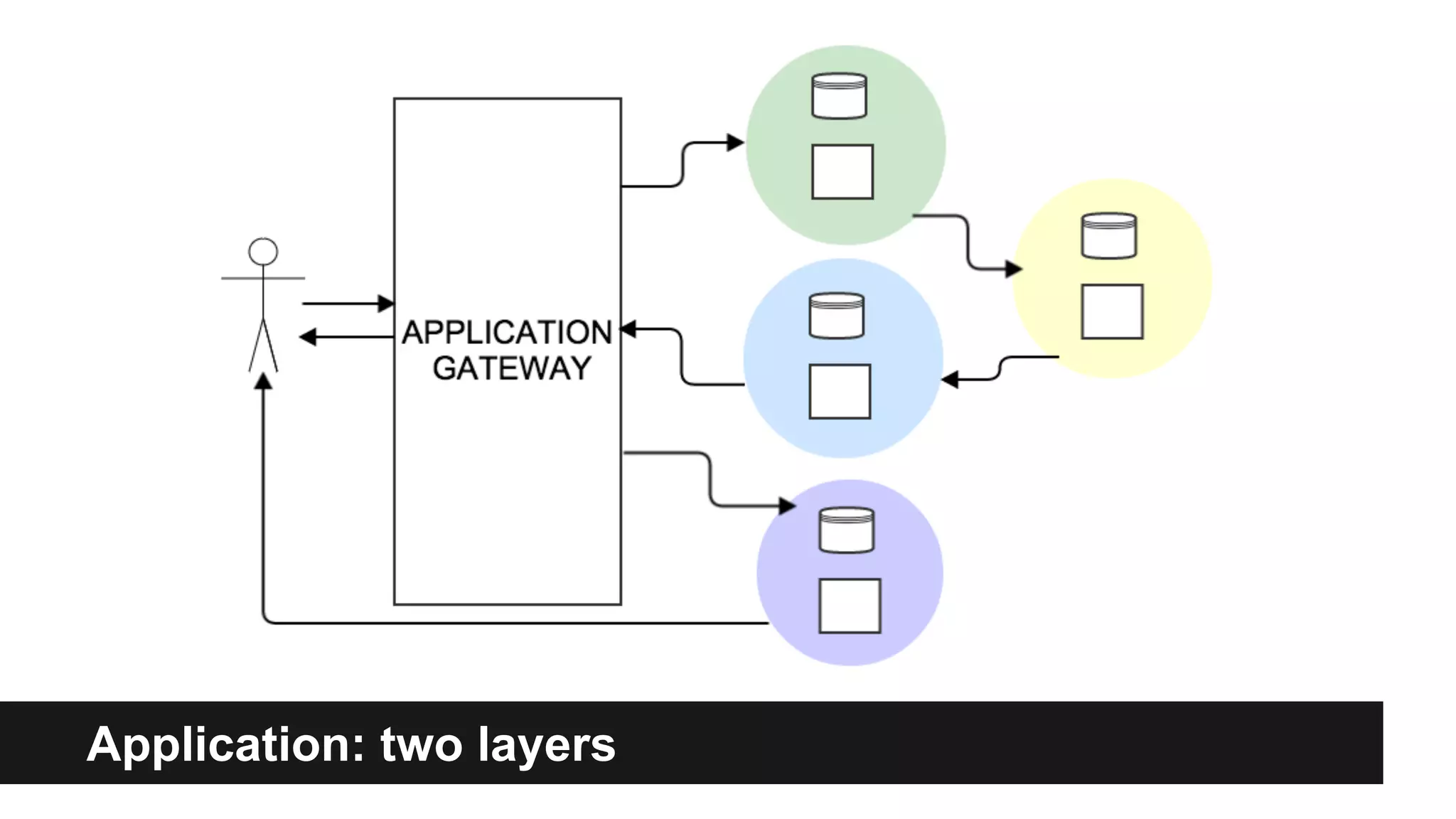
Application: two layers 
● System layer 
○ gateway: defines interfaces, communication 
mechanisms 
○ rarely changes 
● Service layer 
○ services with different internal architectures 
○ different technology stacks 
○ evolves rapidly
Application: two layers 
Application: two layers
When to use it? 
● In the beginning it will slow down the 
development 
● Later - refactoring might be painful 
● It’s easier to merge services than split 
monolith into services 
● ...unless monolith already has loosely-coupled 
modules
Be realistic 
“Focus on building services that make 
development and deployment easier - not just 
tiny services”
Nanoservice antipattern 
A nanoservice is a service whose overhead 
(communications, maintenance, and so on) 
outweighs its utility.
How services communicate? 
● HTTP/REST 
● AMQP for asynchronous requests 
● Event Sourcing 
● Streams
Databases 
● DB instance per service 
● Relational databases, NoSQL, others
How to start? 
● ESI (Edge Side Includes) 
● RabbitMQ 
● Gearman 
● PHP multithreading
Shared data problem 
● ServiceA needs to read data which is 
managed by ServiceB
Solution A 
ServiceA calls ServiceB for data 
● Benefits 
○ quick implementation 
○ data is always fresh 
● Drawbacks 
○ slows down ServiceA 
○ ServiceB might be down at the moment
Solution B 
Data replication 
● Benefits 
○ availability 
○ speed 
● Drawbacks 
○ data replication overhead
Performance 
● Latency is your foe 
● Everything done asynchronously - no 
problem 
● Keep communication between services as 
effective as possible. No chit-chats.
Drawbacks 
● High level of distributed complexity
Automation 
● Automate everything 
○ CI 
○ deployments 
○ configuration 
○ error logging 
○ monitoring
PHP world 
PHP world
Symfony2 app as service 
● Symfony2 isn’t heavy… 
● ...if you know how to circumcise it 
● Avoid standard edition 
● Create your own minimal application 
http://www.whitewashing.de/2014/04/24/symfony_hello_world.html
Symfony2 benefits 
● HttpKernel component is one of the 
greatest things happened in PHP world in 
years 
● SF2 DIC: flexible and extendable way to 
grow your project 
● Console component for CLI utilities 
● Standardised solutions
Symfony2 as gateway 
● Basic SF2 application with dumb controllers 
for routing services 
○ via messaging 
● Rendering main views for ESI
Challenges 
● Define service boundaries 
● Continuous Integration 
○ Continuous Deployment 
● Error logging 
● Monitoring 
● System tests 
○ Consumer tests
More challenges... 
● Security layer 
● Shared configuration 
● Shared assets 
● Graceful degradation
Who is using 
~120 services to generate 1 page 
http://highscalability.com/amazon-architecture 
Has 600+ services in total 
http://techblog.netflix.com/ 
http://www.ebaytechblog.com/
Why microservice? 
● Scale development 
● Scale your application 
● Application availability 
● Use right tools for the job 
● Whole system becomes faster if done right
Dig more 
● Martin Fowler http://martinfowler. 
com/articles/microservices.html 
● Fred George https://www.youtube.com/watch? 
v=2rKEveL55TY 
● http://blog.arkency.com/2014/07/microservices-72- 
resources/
What’s next? 
Reactive architecture? 
http://www.reactivemanifesto.org/
Questions?
Join us 
hello@estina.com

Microservice architecture

  • 1.
    Microservice architecture ŽilvinasKuusas VilniusPHP 0x19, 2014
  • 2.
    Who am I? Žilvinas Kuusas lead developer @ Estina / iSign.io t: @kuusas e: zilvinas@kuusas.lt
  • 3.
    What is amicroservice? The microservice architectural style is an approach to developing a single application as a suite of small services, each running in its own process and communicating with lightweight mechanisms, often an HTTP resource API. These services are built around business capabilities and independently deployable by fully automated deployment machinery. There is a bare minimum of centralized management of these services, which may be written in different programming languages and use different data storage technologies. Martin Fowler http://martinfowler.com/articles/microservices.html
  • 4.
    Microservice ● Nolong-term relationships with technology stack ● Easy to adopt emerging technologies ● Loose coupling ● Single responsibility ● Fault isolation ● Scalability
  • 5.
    UNIX philosophy rename's/Airplane/Flight/' `find -name "*Airplane*.php”`
  • 6.
    UNIX philosophy ls. | sort | tail -n 2 | sort -r | tail -n 1 | cut -c8-21
  • 7.
  • 8.
    Monolithic application Reality- monolithic application
  • 9.
  • 10.
    Benefits of monolith ● Quick development ● Simple deployments ● Easy to scale ● Everything in one place
  • 11.
    Drawbacks of monolith ● Lots of LOC ● Slow builds ● Development is hard to scale ● Continuous deployments becomes difficult ● Scaling application can be difficult ● Requires a long-term commitment to a technology stack
  • 12.
    Microservices Think aboutmicroservice as small, single-purpose application. Simple?
  • 13.
    Small application ●Runs as individual process ● Smaller means easier for developers to maintain ● Changes does not affect whole system ● Faster to build and deploy ● ...or throw away and rewrite
  • 14.
    Small application ●Each service has it’s own database ● Code duplication vs. code coupling ● Shared code - libraries
  • 15.
    Small application “Ifservice is bigger than your head then it’s too big” Internet
  • 16.
    Deploy independently ●Each microservice runs in it’s own process, so deployment of one service won’t affect the whole application ● Easier to scale development ● Faster feature releases ● Less downtime ● Develop, build and deploy!
  • 17.
    Flexible solutions ●Modular ● Polyglot data persistence ● Multi-framework
  • 18.
  • 19.
    Application: two layers ● System layer ○ gateway: defines interfaces, communication mechanisms ○ rarely changes ● Service layer ○ services with different internal architectures ○ different technology stacks ○ evolves rapidly
  • 20.
    Application: two layers Application: two layers
  • 21.
    When to useit? ● In the beginning it will slow down the development ● Later - refactoring might be painful ● It’s easier to merge services than split monolith into services ● ...unless monolith already has loosely-coupled modules
  • 22.
    Be realistic “Focuson building services that make development and deployment easier - not just tiny services”
  • 23.
    Nanoservice antipattern Ananoservice is a service whose overhead (communications, maintenance, and so on) outweighs its utility.
  • 24.
    How services communicate? ● HTTP/REST ● AMQP for asynchronous requests ● Event Sourcing ● Streams
  • 25.
    Databases ● DBinstance per service ● Relational databases, NoSQL, others
  • 26.
    How to start? ● ESI (Edge Side Includes) ● RabbitMQ ● Gearman ● PHP multithreading
  • 27.
    Shared data problem ● ServiceA needs to read data which is managed by ServiceB
  • 28.
    Solution A ServiceAcalls ServiceB for data ● Benefits ○ quick implementation ○ data is always fresh ● Drawbacks ○ slows down ServiceA ○ ServiceB might be down at the moment
  • 29.
    Solution B Datareplication ● Benefits ○ availability ○ speed ● Drawbacks ○ data replication overhead
  • 30.
    Performance ● Latencyis your foe ● Everything done asynchronously - no problem ● Keep communication between services as effective as possible. No chit-chats.
  • 31.
    Drawbacks ● Highlevel of distributed complexity
  • 32.
    Automation ● Automateeverything ○ CI ○ deployments ○ configuration ○ error logging ○ monitoring
  • 33.
  • 34.
    Symfony2 app asservice ● Symfony2 isn’t heavy… ● ...if you know how to circumcise it ● Avoid standard edition ● Create your own minimal application http://www.whitewashing.de/2014/04/24/symfony_hello_world.html
  • 35.
    Symfony2 benefits ●HttpKernel component is one of the greatest things happened in PHP world in years ● SF2 DIC: flexible and extendable way to grow your project ● Console component for CLI utilities ● Standardised solutions
  • 36.
    Symfony2 as gateway ● Basic SF2 application with dumb controllers for routing services ○ via messaging ● Rendering main views for ESI
  • 37.
    Challenges ● Defineservice boundaries ● Continuous Integration ○ Continuous Deployment ● Error logging ● Monitoring ● System tests ○ Consumer tests
  • 38.
    More challenges... ●Security layer ● Shared configuration ● Shared assets ● Graceful degradation
  • 39.
    Who is using ~120 services to generate 1 page http://highscalability.com/amazon-architecture Has 600+ services in total http://techblog.netflix.com/ http://www.ebaytechblog.com/
  • 40.
    Why microservice? ●Scale development ● Scale your application ● Application availability ● Use right tools for the job ● Whole system becomes faster if done right
  • 41.
    Dig more ●Martin Fowler http://martinfowler. com/articles/microservices.html ● Fred George https://www.youtube.com/watch? v=2rKEveL55TY ● http://blog.arkency.com/2014/07/microservices-72- resources/
  • 42.
    What’s next? Reactivearchitecture? http://www.reactivemanifesto.org/
  • 43.
  • 44.