Microorganisms

Francisco Milan- Alberto Pérez- Adrián Rosa-
Index
Pag 1 . Introduction
Pag 2: What are microorganims?
Pag 3: Bacteria I
Pag 4: Bacteria II
Pag 5: Viruses
Pag 6: Fungi
Pag 7: Yeast
Pag 8:Algae
Pag 9: Protozoa
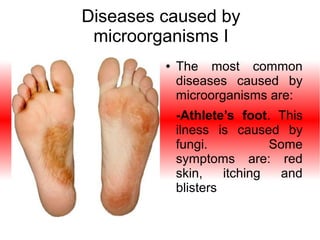
Pag 10:Diseases caused by microorganisms I
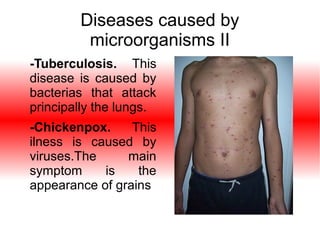
Pag 11:Diseases caused by microorganisms II
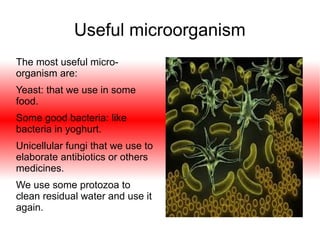
Pag 12:Useful microorganisms
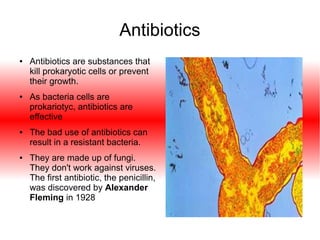
Pag 13:Antibiotics
Pag 14:Quick Notes: Alexander Fleming
Pag 15: And for the end...
Introducction
●

●

We are sourranded
by microorganims.
They are small and
we don't give they
attention but
microorganims are a
big part of our world.
They are in our body,
food, in the air,
water...
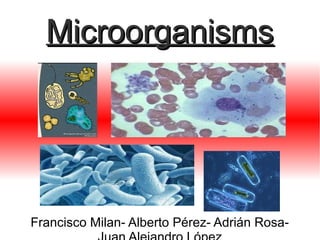
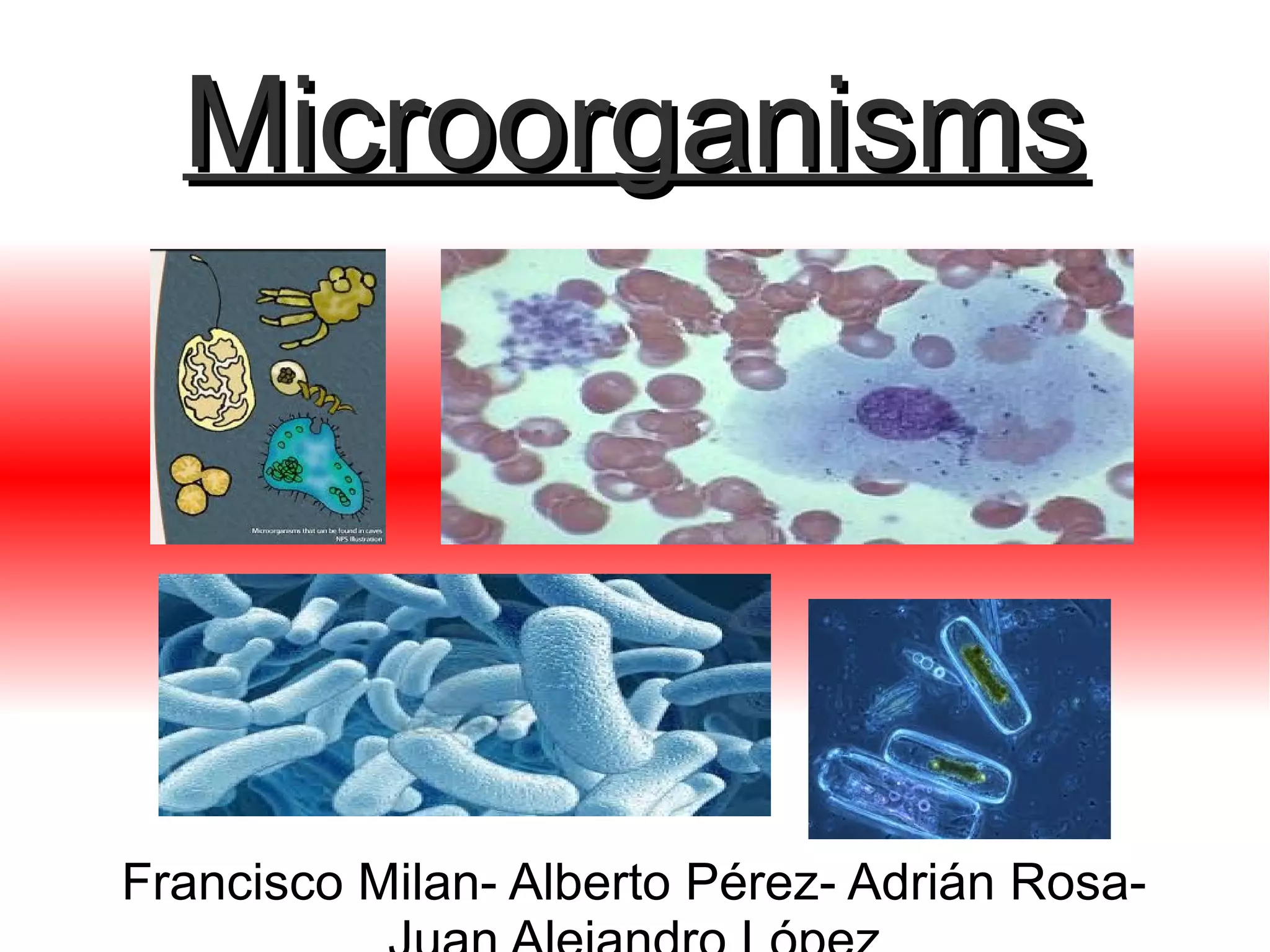
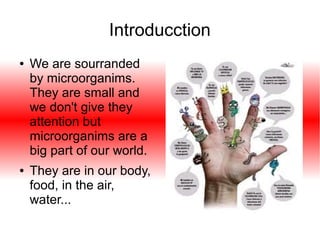
What is a microorganim?
●

●

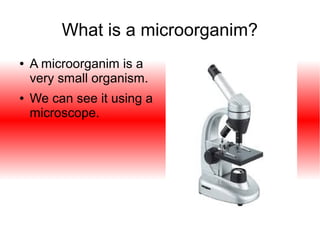
A microorganim is a
very small organism.
We can see it using a
microscope.
Bacteria I
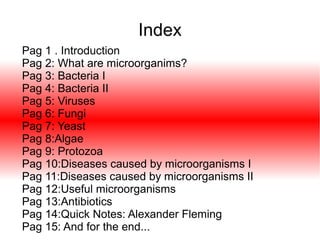
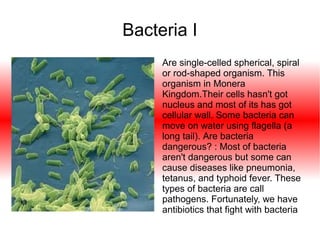
Are single-celled spherical, spiral
or rod-shaped organism. This
organism in Monera
Kingdom.Their cells hasn't got
nucleus and most of its has got
cellular wall. Some bacteria can
move on water using flagella (a
long tail). Are bacteria
dangerous? : Most of bacteria
aren't dangerous but some can
cause diseases like pneumonia,
tetanus, and typhoid fever. These
types of bacteria are call
pathogens. Fortunately, we have
antibiotics that fight with bacteria
Bacterias II
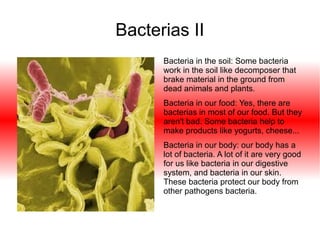
Bacteria in the soil: Some bacteria
work in the soil like decomposer that
brake material in the ground from
dead animals and plants.
Bacteria in our food: Yes, there are
bacterias in most of our food. But they
aren't bad. Some bacteria help to
make products like yogurts, cheese...
Bacteria in our body: our body has a
lot of bacteria. A lot of it are very good
for us like bacteria in our digestive
system, and bacteria in our skin.
These bacteria protect our body from
other pathogens bacteria.
Viruses
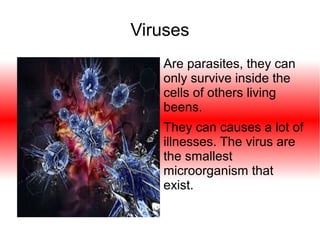
Are parasites, they can
only survive inside the
cells of others living
beens.
They can causes a lot of
illnesses. The virus are
the smallest
microorganism that
exist.
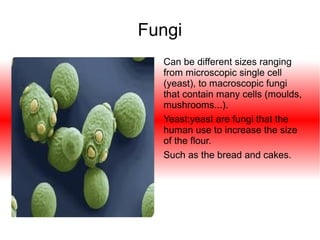
Fungi
Can be different sizes ranging
from microscopic single cell
(yeast), to macroscopic fungi
that contain many cells (moulds,
mushrooms...).
Yeast:yeast are fungi that the
human use to increase the size
of the flour.
Such as the bread and cakes.
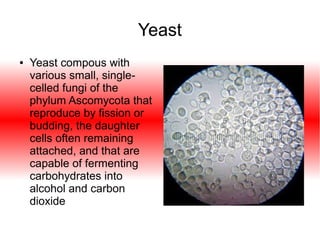
Yeast
●

Yeast compous with
various small, singlecelled fungi of the
phylum Ascomycota that
reproduce by fission or
budding, the daughter
cells often remaining
attached, and that are
capable of fermenting
carbohydrates into
alcohol and carbon
dioxide
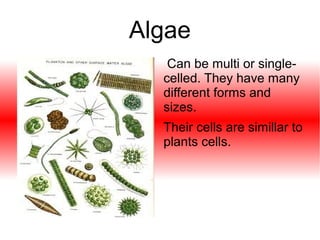
Algae
Can be multi or singlecelled. They have many
different forms and
sizes.
Their cells are simillar to
plants cells.
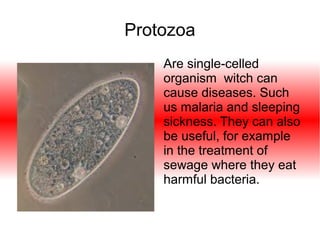
Protozoa
Are single-celled
organism witch can
cause diseases. Such
us malaria and sleeping
sickness. They can also
be useful, for example
in the treatment of
sewage where they eat
harmful bacteria.
Diseases caused by
microorganisms I
●

The most common
diseases caused by
microorganisms are:
-Athlete’s foot. This
ilness is caused by
fungi.
Some
symptoms are: red
skin,
itching
and
blisters
Diseases caused by
microorganisms II
-Tuberculosis. This
disease is caused by
bacterias that attack
principally the lungs.
-Chickenpox.
This
ilness is caused by
viruses.The
main
symptom
is
the
appearance of grains
Useful microorganism
The most useful microorganism are:
Yeast: that we use in some
food.
Some good bacteria: like
bacteria in yoghurt.
Unicellular fungi that we use to
elaborate antibiotics or others
medicines.
We use some protozoa to
clean residual water and use it
again.
Antibiotics
●

●

●

●

Antibiotics are substances that
kill prokaryotic cells or prevent
their growth.
As bacteria cells are
prokariotyc, antibiotics are
effective
The bad use of antibiotics can
result in a resistant bacteria.
They are made up of fungi.
They don't work against viruses.
The first antibiotic, the penicillin,
was discovered by Alexander
Fleming in 1928
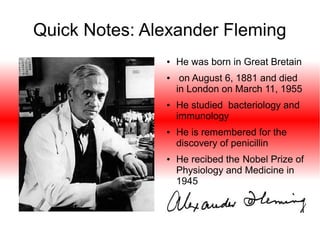
Quick Notes: Alexander Fleming
●

●

●

●

●

●

He was born in Great Bretain
on August 6, 1881 and died
in London on March 11, 1955
He studied bacteriology and
immunology
He is remembered for the
discovery of penicillin
He recibed the Nobel Prize of
Physiology and Medicine in
1945
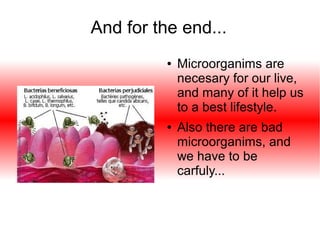
And for the end...
●

●

Microorganims are
necesary for our live,
and many of it help us
to a best lifestyle.
Also there are bad
microorganims, and
we have to be
carfuly...

Micro-oganisms

  • 1.
  • 2.
    Index Pag 1 .Introduction Pag 2: What are microorganims? Pag 3: Bacteria I Pag 4: Bacteria II Pag 5: Viruses Pag 6: Fungi Pag 7: Yeast Pag 8:Algae Pag 9: Protozoa Pag 10:Diseases caused by microorganisms I Pag 11:Diseases caused by microorganisms II Pag 12:Useful microorganisms Pag 13:Antibiotics Pag 14:Quick Notes: Alexander Fleming Pag 15: And for the end...
  • 3.
    Introducction ● ● We are sourranded bymicroorganims. They are small and we don't give they attention but microorganims are a big part of our world. They are in our body, food, in the air, water...
  • 4.
    What is amicroorganim? ● ● A microorganim is a very small organism. We can see it using a microscope.
  • 5.
    Bacteria I Are single-celledspherical, spiral or rod-shaped organism. This organism in Monera Kingdom.Their cells hasn't got nucleus and most of its has got cellular wall. Some bacteria can move on water using flagella (a long tail). Are bacteria dangerous? : Most of bacteria aren't dangerous but some can cause diseases like pneumonia, tetanus, and typhoid fever. These types of bacteria are call pathogens. Fortunately, we have antibiotics that fight with bacteria
  • 6.
    Bacterias II Bacteria inthe soil: Some bacteria work in the soil like decomposer that brake material in the ground from dead animals and plants. Bacteria in our food: Yes, there are bacterias in most of our food. But they aren't bad. Some bacteria help to make products like yogurts, cheese... Bacteria in our body: our body has a lot of bacteria. A lot of it are very good for us like bacteria in our digestive system, and bacteria in our skin. These bacteria protect our body from other pathogens bacteria.
  • 7.
    Viruses Are parasites, theycan only survive inside the cells of others living beens. They can causes a lot of illnesses. The virus are the smallest microorganism that exist.
  • 8.
    Fungi Can be differentsizes ranging from microscopic single cell (yeast), to macroscopic fungi that contain many cells (moulds, mushrooms...). Yeast:yeast are fungi that the human use to increase the size of the flour. Such as the bread and cakes.
  • 9.
    Yeast ● Yeast compous with varioussmall, singlecelled fungi of the phylum Ascomycota that reproduce by fission or budding, the daughter cells often remaining attached, and that are capable of fermenting carbohydrates into alcohol and carbon dioxide
  • 10.
    Algae Can be multior singlecelled. They have many different forms and sizes. Their cells are simillar to plants cells.
  • 11.
    Protozoa Are single-celled organism witchcan cause diseases. Such us malaria and sleeping sickness. They can also be useful, for example in the treatment of sewage where they eat harmful bacteria.
  • 12.
    Diseases caused by microorganismsI ● The most common diseases caused by microorganisms are: -Athlete’s foot. This ilness is caused by fungi. Some symptoms are: red skin, itching and blisters
  • 13.
    Diseases caused by microorganismsII -Tuberculosis. This disease is caused by bacterias that attack principally the lungs. -Chickenpox. This ilness is caused by viruses.The main symptom is the appearance of grains
  • 14.
    Useful microorganism The mostuseful microorganism are: Yeast: that we use in some food. Some good bacteria: like bacteria in yoghurt. Unicellular fungi that we use to elaborate antibiotics or others medicines. We use some protozoa to clean residual water and use it again.
  • 15.
    Antibiotics ● ● ● ● Antibiotics are substancesthat kill prokaryotic cells or prevent their growth. As bacteria cells are prokariotyc, antibiotics are effective The bad use of antibiotics can result in a resistant bacteria. They are made up of fungi. They don't work against viruses. The first antibiotic, the penicillin, was discovered by Alexander Fleming in 1928
  • 16.
    Quick Notes: AlexanderFleming ● ● ● ● ● ● He was born in Great Bretain on August 6, 1881 and died in London on March 11, 1955 He studied bacteriology and immunology He is remembered for the discovery of penicillin He recibed the Nobel Prize of Physiology and Medicine in 1945
  • 17.
    And for theend... ● ● Microorganims are necesary for our live, and many of it help us to a best lifestyle. Also there are bad microorganims, and we have to be carfuly...