International Journal of Trend in Scientific Research and Development (IJTSRD)
Volume 3 Issue 5, August 2019 Available Online: www.ijtsrd.com e-ISSN: 2456 – 6470
@ IJTSRD | Unique Paper ID – IJTSRD27842 | Volume – 3 | Issue – 5 | July - August 2019 Page 1823
Microcontroller Based Temperature Monitoring and
Controlling System using XBee Network
Mon Mon Aye1, Aye Myat Myat Myo2, Zar Chi Soe3
1,2Lecturer, Department of Electronic Engineering, Pyay Technological University, Pyay, Myanmar
3Lecturer, Department of Electronic Engineering, Technological University, Hinthata, Myanmar
How to cite this paper: Mon Mon Aye |
Aye Myat Myat Myo | Zar Chi Soe
"Microcontroller Based Temperature
Monitoring and Controlling System using
XBee Network" Published inInternational
Journal of Trend in
Scientific Research
and Development
(ijtsrd), ISSN: 2456-
6470, Volume-3 |
Issue-5, August
2019, pp.1823-
1827,
https://doi.org/10.31142/ijtsrd27842
Copyright © 2019 by author(s) and
International Journalof Trendin Scientific
Research and Development Journal. This
is an Open Access article distributed
under the terms of
the Creative
CommonsAttribution
License (CC BY 4.0)
(http://creativecommons.org/licenses/by
/4.0)
ABSTRACT
Temperature controlling is one of the most important process variablesin the
process control. In this paper describes the design and implementation of a
Wireless Sensor Networks (WSN) based on XBee technology to monitor the
history and current temperatureinformationof remote locations. In thiswork,
the microcontroller is used to compute and compare the value of current
temperature and the set point values. LCD is used to display the result data.
This result data is also sent to the microcontroller where theoperatorcontrols
the whole process. Then, the signal passes to the relays to On-Off case of the
fan for maintaining the correct temperature.
KEYWORDS: PIC Microcontroller, Temperature controlling, LCD, XBee.
I. INTRODUCTION
In now days, there are many different types of emergencies in the indoor
environment. Response to such emergencies is critical in order to protect
resources including human life and to save property from damage. There is
need to develop wireless sensor network for temperature controlling. WNScan
be used for military application,homeappliances,building-automationcontrols
like intruder/fire alarms,solarpanelfields,structuresmonitoring,environment
monitoring etc. The main advantage of wireless sensor network is that we can
use them with ease in the environment wherewired systemcannotbeused orif
used we have to be very cautious for example in medical treatment.
Temperature monitoring is possible using wireless network also controllingof
temperature is also possible. If we are able to design a type of network then
definitely, in future we can avoid property from damage and also we can save
life of people.
II. WIRELESS SENSOR NETWORK
WSN is equally distributed autonomousdevices usingsensor
which has capable of controlling temperature of wireless
sensor nodes. It is a nothing but equally distributed
autonomous device which has capable of monitoring
physical as well as environmental conditions. Each
autonomous device knows as sensor node. Sensor network
can inform different environmental condition such as
temperature, sound, vibration, pressure, motion, and
pollutant at variousdifferentlocationsespeciallyforbuilding
in campus area. Fig. 1 shows wireless sensor network which
consist of equally distributed autonomous devices.
Figure 1 Wireless Sensor Network Architecture
III. HARDWARE PLATFORM
The main parts hardware platforms are S2C XBee Module,
PIC 16F887 Microcontroller, LCD Display and DS18B20
Temperature Sensor.
A. PIC16F887 Microcontroller
A high performance microcontroller PIC16F887 is shown in
Fig.2. PIC16F887 is one of the latest products from
Microchip. It’s has 40-pins (for PDIP package) and 8-bit
CMOS PIC Microcontroller that comes with nano watt
technology. PIC16F887 incorporates 256 bytes of EEPROM
data memory, 368 bytes of RAM, and program memory of
8K. PIC16F887 contains one 16-bit timer and two 8-bit
timers that can be used in both ways. The PIC architecture is
among the first scalar CPU designs and is still among the
simplest and cheapest [3].
Figure 2 PIC16F887 Microcontroller
B. S2C XBee Module
An XBee embedded module is really three things in one: a
form factor, a host interface, and a group of different
protocols. It is designed for a variety of uses, ranging from
ZigBee to high-throughput, low latency applications. One
IJTSRD27842
International Journal of Trend in Scientific Research and Development (IJTSRD) @ www.ijtsrd.com eISSN: 2456-6470
@ IJTSRD | Unique Paper ID – IJTSRD27842 | Volume – 3 | Issue – 5 | July - August 2019 Page 1824
nice thing about Xbee is it can do anythingthatZigBeecan do
(if you use the ZigBee version), but it also includes other
protocol stacks in the same form factor and host interface.
The form factor deals with a common shape and pin
configuration in the hardware. It has a 20-pin or 37-pin
socket (depending on the hardware footprint you select),
which takes up a very small amount of space on the circuit
board.
This configuration makes it easier for you to bring a new
device into the market, because iftheformfactoristhesame,
the host interface is the same [1]. Unlike ZigBee, DigiMesh
has only one node type. All nodes can route data and are
interchangeable. Fig. 3 is S2C XBee Module.
Figure 3 S2C XBee Module
C. DS18B20 Temperature Sensor
Fig. 4 shows DS18B20 temperature sensors.TheDS18B20is
a small temperature sensor with a built in 12bit ADC. It can
be easily connected to an Arduino digital input. The sensor
communicates over a one-wire bus and requires little in the
way of additional components. It requires only the data pin
connected to the microcontroller with a pull up resistor and
the other two pins are used for power. The temperature
value measured by the sensor will be stored in a 2-byte
register inside the sensor. This data can be read by the using
the 1- wire method by sending in a sequence of data.
DS18B20 has a unique 64-bit serial code, which allows
multiple DS18B20s to function on the same 1-Wire bus. The
DS18B20 has an operating temperature range of -55°C to
+125°C and the accuracy is ±0.5°C over the range of -10°C to
+85°C [7].
Figure 4 DS18B20 Digital Temperature Sensor
D. Liquid Crystal Display (LCD)
A 2x16 LCD (1602A) is shown in Fig. 5 with 4-bit interface
mode has been chosen to display the sensor readings
received from end nodes.
Figure 5 LCD Display
E. Interfacing Relay with PIC Microcontroller
In this system, to ON/OFF fan or heater, relay isused.Arelay
is an electromagnetic switch which is used to switch High
Voltage/Current using low power circuit. Relay are used
where it is necessary to control a circuit by a separate low-
power signal, or where several circuits must be controlled
one signal [4]. Fig. 6 shows Relay Design Circuit.
Figure 6 Circuit Design of Relay
F. X-CTU SOFTWARE
XCTU is a free multi-platform application that enables
developers to manage Digi radio frequency (RF) modules
through a simple-to-use graphical interface. The application
includes embedded tools that make it easy to set up,
configure, and test Digi RF modules. To use XBee module in
this system, we must configure this XBee, first. XCTU
software is most reliable to configure this XBee module [6].
Fig. 7 shows the XCTU Software.
Figure 7. XCTU Software
IV. SYSTEM IMPLEMENTATION
The implementation of the proposed XBee wireless sensor
network includes: End Node and Base Station hardwareand
software Implementation.
A. Base Station (Master Control) Implementation
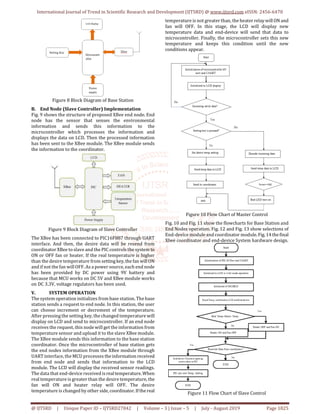
Fig. 8 shows the block diagram of Base Station. In this
station, the user needs to define the desired value of
temperature by using the setting key. And then the base
station has been implemented to collect end nodes sensor
information and display this information on LCD. The MCU
has been the main controller of base station operation. The
MCU receives the end nodes sensors information from the
Coordinator XBee module. The XBee module has been
connected to MCU through UART1 interface.
International Journal of Trend in Scientific Research and Development (IJTSRD) @ www.ijtsrd.com eISSN: 2456-6470
@ IJTSRD | Unique Paper ID – IJTSRD27842 | Volume – 3 | Issue – 5 | July - August 2019 Page 1825
Figure 8 Block Diagram of Base Station
B. End Node (Slave Controller) Implementation
Fig. 9 shows the structure of proposed XBee end node. End
node has the sensor that senses the environmental
information and sends this information to the
microcontroller which processes the information and
displays the data on LCD. Then the processed information
has been sent to the XBee module. The XBee module sends
the information to the coordinator.
Figure 9 Block Diagram of Slave Controller
The XBee has been connected to PIC16F887 through UART
interface. And then, the desire data will be resend from
coordinator XBee to slave and the PIC controls the system to
ON or OFF fan or heater. If the real temperature is higher
than the desire temperature from settingkey, thefan will ON
and if not the fan will OFF. As a power source, each end node
has been provided by DC power using 9V battery and
because that MCU works on DC 5V and XBee module works
on DC 3.3V, voltage regulators has been used.
V. SYSTEM OPERATION
The system operation initializes from base station. The base
station sends a request to end node. In this station, the user
can choose increment or decrement of the temperature.
After pressing the setting key, the changed temperature will
display on LCD and send to microcontroller. If an end node
receives the request, this node will get the information from
temperature sensor and upload it to the slave XBee module.
The XBee module sends this information to the base station
coordinator. Once the microcontroller of base station gets
the end nodes information from the XBee module through
UART interface, the MCU processes theinformationreceived
from end node and sends that information to the LCD
module. The LCD will display the received sensor readings.
The data that end-device received isrealtemperature.When
real temperature is greater than the desire temperature,the
fan will ON and heater relay will OFF. The desire
temperature is changed by other side,coordinator.If thereal
temperature is not greater than, the heater relaywillON and
fan will OFF. In this stage, the LCD will display new
temperature data and end-device will send that data to
microcontroller. Finally, the microcontroller sets this new
temperature and keeps this condition until the new
conditions appear.
Figure 10 Flow Chart of Master Control
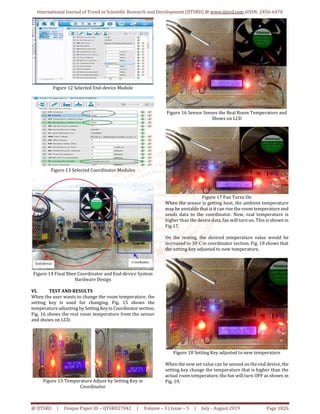
Fig. 10 and Fig. 11 show the flowcharts for Base Station and
End Nodes operation. Fig. 12 and Fig. 13 show selections of
End-device module and coordinator module.Fig.14thefinal
Xbee coordinator and end-device System hardware design.
Figure 11 Flow Chart of Slave Control
International Journal of Trend in Scientific Research and Development (IJTSRD) @ www.ijtsrd.com eISSN: 2456-6470
@ IJTSRD | Unique Paper ID – IJTSRD27842 | Volume – 3 | Issue – 5 | July - August 2019 Page 1826
Figure 12 Selected End-device Module
Figure 13 Selected Coordinator Modules
Figure 14 Final Xbee Coordinator and End-device System
Hardware Design
VI. TEST AND RESULTS
When the user wants to change the room temperature, the
setting key is used for changing. Fig. 15 shows the
temperature adjusting by SettingKeyin Coordinator section.
Fig. 16 shows the real room temperature from the sensor
and shows on LCD.
Figure 15 Temperature Adjust by Setting Key in
Coordinator
Figure 16 Sensor Senses the Real Room Temperature and
Shows on LCD
Figure 17 Fan Turns On
When the sensor is getting heat, the ambient temperature
may be unstable that is it can rise the room temperature and
sends data to the coordinator. Now, real temperature is
higher than the desire data, fan will turn on. This is shown in
Fig 17.
On the testing, the desired temperature value would be
increased to 30˙C in coordinator section. Fig. 18 shows that
the setting key adjusted to new temperature.
Figure 18 Setting Key adjusted to new temperature
When the new set value can be sensed on the end device, the
setting key change the temperature that is higher than the
actual room temperature, the fun will turn OFF as shown in
Fig. 19.
International Journal of Trend in Scientific Research and Development (IJTSRD) @ www.ijtsrd.com eISSN: 2456-6470
@ IJTSRD | Unique Paper ID – IJTSRD27842 | Volume – 3 | Issue – 5 | July - August 2019 Page 1827
Figure 19 Fan Turns OFF
VII. CONCLUSION
In this paper, a prototype of an embedded wireless sensor
network has been built based on PIC microcontrollers and
XBee module. The environmental temperature monitoring
has been considered in this system to demonstrate the
capability of applying the system. The system has the
character of wireless on wiring to remove the limitation of
traditional wired network system for any kind of remote
conditions monitoring. Wireless technology has already
become an importantapplicationwhich usuallyintegrated to
a wide range of device and other technologies. This system
uses the XBee as the wireless module. The combination of
low-cost hardware, very good radio performance makes
XBee a competitive choice on the wireless market.
ACKNOWLEDGEMENT
I would wish to acknowledge the many colleagues at Pyay
Technological University who have contributed to the
passing this research paper.
REFERENCES
[1] https://www.link-labs.com/blog/zigbee-vs-xbee
[2] Stefan Posland, Ubiquitous Computing: Smart Devices,
Environments and Interactions, Wiley, 2009
[3] https://www.eleprocus.com/pic-microcontroller
[4] Wireless Sensor Network Research Group,
http://www.sensornetworks.org
[5] Arduino, http://arduino.cc/.
[6] Introduction to XCTU Software
https://www.digi.com/products/xbee-rf-
solutions/xctu- software/xctu
[7] W. Dargie, C. Poellabauer, and Wiley Inter Science
(Online service), Fundamentals of wireless sensor
networks theory and practice. Chichester,WestSussex,
U.K.; Hoboken, NJ: Wiley, 2010.
[8] DigiInternationalInc,XBeeZNet2.5/XBee-PROZNet2.5
OEM RF Modules, Product Manual v1.x.4x - ZigBee
Protocol For OEM RF Module Part Numbers: XB24-
BxIT-00x,Digi International Inc.11001 Bren Road East
Minnetonka,MN55343877 912-3444or952 912-3444
http://www.digi.com

Microcontroller Based Temperature Monitoring and Controlling System using XBee Network

  • 1.
    International Journal ofTrend in Scientific Research and Development (IJTSRD) Volume 3 Issue 5, August 2019 Available Online: www.ijtsrd.com e-ISSN: 2456 – 6470 @ IJTSRD | Unique Paper ID – IJTSRD27842 | Volume – 3 | Issue – 5 | July - August 2019 Page 1823 Microcontroller Based Temperature Monitoring and Controlling System using XBee Network Mon Mon Aye1, Aye Myat Myat Myo2, Zar Chi Soe3 1,2Lecturer, Department of Electronic Engineering, Pyay Technological University, Pyay, Myanmar 3Lecturer, Department of Electronic Engineering, Technological University, Hinthata, Myanmar How to cite this paper: Mon Mon Aye | Aye Myat Myat Myo | Zar Chi Soe "Microcontroller Based Temperature Monitoring and Controlling System using XBee Network" Published inInternational Journal of Trend in Scientific Research and Development (ijtsrd), ISSN: 2456- 6470, Volume-3 | Issue-5, August 2019, pp.1823- 1827, https://doi.org/10.31142/ijtsrd27842 Copyright © 2019 by author(s) and International Journalof Trendin Scientific Research and Development Journal. This is an Open Access article distributed under the terms of the Creative CommonsAttribution License (CC BY 4.0) (http://creativecommons.org/licenses/by /4.0) ABSTRACT Temperature controlling is one of the most important process variablesin the process control. In this paper describes the design and implementation of a Wireless Sensor Networks (WSN) based on XBee technology to monitor the history and current temperatureinformationof remote locations. In thiswork, the microcontroller is used to compute and compare the value of current temperature and the set point values. LCD is used to display the result data. This result data is also sent to the microcontroller where theoperatorcontrols the whole process. Then, the signal passes to the relays to On-Off case of the fan for maintaining the correct temperature. KEYWORDS: PIC Microcontroller, Temperature controlling, LCD, XBee. I. INTRODUCTION In now days, there are many different types of emergencies in the indoor environment. Response to such emergencies is critical in order to protect resources including human life and to save property from damage. There is need to develop wireless sensor network for temperature controlling. WNScan be used for military application,homeappliances,building-automationcontrols like intruder/fire alarms,solarpanelfields,structuresmonitoring,environment monitoring etc. The main advantage of wireless sensor network is that we can use them with ease in the environment wherewired systemcannotbeused orif used we have to be very cautious for example in medical treatment. Temperature monitoring is possible using wireless network also controllingof temperature is also possible. If we are able to design a type of network then definitely, in future we can avoid property from damage and also we can save life of people. II. WIRELESS SENSOR NETWORK WSN is equally distributed autonomousdevices usingsensor which has capable of controlling temperature of wireless sensor nodes. It is a nothing but equally distributed autonomous device which has capable of monitoring physical as well as environmental conditions. Each autonomous device knows as sensor node. Sensor network can inform different environmental condition such as temperature, sound, vibration, pressure, motion, and pollutant at variousdifferentlocationsespeciallyforbuilding in campus area. Fig. 1 shows wireless sensor network which consist of equally distributed autonomous devices. Figure 1 Wireless Sensor Network Architecture III. HARDWARE PLATFORM The main parts hardware platforms are S2C XBee Module, PIC 16F887 Microcontroller, LCD Display and DS18B20 Temperature Sensor. A. PIC16F887 Microcontroller A high performance microcontroller PIC16F887 is shown in Fig.2. PIC16F887 is one of the latest products from Microchip. It’s has 40-pins (for PDIP package) and 8-bit CMOS PIC Microcontroller that comes with nano watt technology. PIC16F887 incorporates 256 bytes of EEPROM data memory, 368 bytes of RAM, and program memory of 8K. PIC16F887 contains one 16-bit timer and two 8-bit timers that can be used in both ways. The PIC architecture is among the first scalar CPU designs and is still among the simplest and cheapest [3]. Figure 2 PIC16F887 Microcontroller B. S2C XBee Module An XBee embedded module is really three things in one: a form factor, a host interface, and a group of different protocols. It is designed for a variety of uses, ranging from ZigBee to high-throughput, low latency applications. One IJTSRD27842
  • 2.
    International Journal ofTrend in Scientific Research and Development (IJTSRD) @ www.ijtsrd.com eISSN: 2456-6470 @ IJTSRD | Unique Paper ID – IJTSRD27842 | Volume – 3 | Issue – 5 | July - August 2019 Page 1824 nice thing about Xbee is it can do anythingthatZigBeecan do (if you use the ZigBee version), but it also includes other protocol stacks in the same form factor and host interface. The form factor deals with a common shape and pin configuration in the hardware. It has a 20-pin or 37-pin socket (depending on the hardware footprint you select), which takes up a very small amount of space on the circuit board. This configuration makes it easier for you to bring a new device into the market, because iftheformfactoristhesame, the host interface is the same [1]. Unlike ZigBee, DigiMesh has only one node type. All nodes can route data and are interchangeable. Fig. 3 is S2C XBee Module. Figure 3 S2C XBee Module C. DS18B20 Temperature Sensor Fig. 4 shows DS18B20 temperature sensors.TheDS18B20is a small temperature sensor with a built in 12bit ADC. It can be easily connected to an Arduino digital input. The sensor communicates over a one-wire bus and requires little in the way of additional components. It requires only the data pin connected to the microcontroller with a pull up resistor and the other two pins are used for power. The temperature value measured by the sensor will be stored in a 2-byte register inside the sensor. This data can be read by the using the 1- wire method by sending in a sequence of data. DS18B20 has a unique 64-bit serial code, which allows multiple DS18B20s to function on the same 1-Wire bus. The DS18B20 has an operating temperature range of -55°C to +125°C and the accuracy is ±0.5°C over the range of -10°C to +85°C [7]. Figure 4 DS18B20 Digital Temperature Sensor D. Liquid Crystal Display (LCD) A 2x16 LCD (1602A) is shown in Fig. 5 with 4-bit interface mode has been chosen to display the sensor readings received from end nodes. Figure 5 LCD Display E. Interfacing Relay with PIC Microcontroller In this system, to ON/OFF fan or heater, relay isused.Arelay is an electromagnetic switch which is used to switch High Voltage/Current using low power circuit. Relay are used where it is necessary to control a circuit by a separate low- power signal, or where several circuits must be controlled one signal [4]. Fig. 6 shows Relay Design Circuit. Figure 6 Circuit Design of Relay F. X-CTU SOFTWARE XCTU is a free multi-platform application that enables developers to manage Digi radio frequency (RF) modules through a simple-to-use graphical interface. The application includes embedded tools that make it easy to set up, configure, and test Digi RF modules. To use XBee module in this system, we must configure this XBee, first. XCTU software is most reliable to configure this XBee module [6]. Fig. 7 shows the XCTU Software. Figure 7. XCTU Software IV. SYSTEM IMPLEMENTATION The implementation of the proposed XBee wireless sensor network includes: End Node and Base Station hardwareand software Implementation. A. Base Station (Master Control) Implementation Fig. 8 shows the block diagram of Base Station. In this station, the user needs to define the desired value of temperature by using the setting key. And then the base station has been implemented to collect end nodes sensor information and display this information on LCD. The MCU has been the main controller of base station operation. The MCU receives the end nodes sensors information from the Coordinator XBee module. The XBee module has been connected to MCU through UART1 interface.
  • 3.
    International Journal ofTrend in Scientific Research and Development (IJTSRD) @ www.ijtsrd.com eISSN: 2456-6470 @ IJTSRD | Unique Paper ID – IJTSRD27842 | Volume – 3 | Issue – 5 | July - August 2019 Page 1825 Figure 8 Block Diagram of Base Station B. End Node (Slave Controller) Implementation Fig. 9 shows the structure of proposed XBee end node. End node has the sensor that senses the environmental information and sends this information to the microcontroller which processes the information and displays the data on LCD. Then the processed information has been sent to the XBee module. The XBee module sends the information to the coordinator. Figure 9 Block Diagram of Slave Controller The XBee has been connected to PIC16F887 through UART interface. And then, the desire data will be resend from coordinator XBee to slave and the PIC controls the system to ON or OFF fan or heater. If the real temperature is higher than the desire temperature from settingkey, thefan will ON and if not the fan will OFF. As a power source, each end node has been provided by DC power using 9V battery and because that MCU works on DC 5V and XBee module works on DC 3.3V, voltage regulators has been used. V. SYSTEM OPERATION The system operation initializes from base station. The base station sends a request to end node. In this station, the user can choose increment or decrement of the temperature. After pressing the setting key, the changed temperature will display on LCD and send to microcontroller. If an end node receives the request, this node will get the information from temperature sensor and upload it to the slave XBee module. The XBee module sends this information to the base station coordinator. Once the microcontroller of base station gets the end nodes information from the XBee module through UART interface, the MCU processes theinformationreceived from end node and sends that information to the LCD module. The LCD will display the received sensor readings. The data that end-device received isrealtemperature.When real temperature is greater than the desire temperature,the fan will ON and heater relay will OFF. The desire temperature is changed by other side,coordinator.If thereal temperature is not greater than, the heater relaywillON and fan will OFF. In this stage, the LCD will display new temperature data and end-device will send that data to microcontroller. Finally, the microcontroller sets this new temperature and keeps this condition until the new conditions appear. Figure 10 Flow Chart of Master Control Fig. 10 and Fig. 11 show the flowcharts for Base Station and End Nodes operation. Fig. 12 and Fig. 13 show selections of End-device module and coordinator module.Fig.14thefinal Xbee coordinator and end-device System hardware design. Figure 11 Flow Chart of Slave Control
  • 4.
    International Journal ofTrend in Scientific Research and Development (IJTSRD) @ www.ijtsrd.com eISSN: 2456-6470 @ IJTSRD | Unique Paper ID – IJTSRD27842 | Volume – 3 | Issue – 5 | July - August 2019 Page 1826 Figure 12 Selected End-device Module Figure 13 Selected Coordinator Modules Figure 14 Final Xbee Coordinator and End-device System Hardware Design VI. TEST AND RESULTS When the user wants to change the room temperature, the setting key is used for changing. Fig. 15 shows the temperature adjusting by SettingKeyin Coordinator section. Fig. 16 shows the real room temperature from the sensor and shows on LCD. Figure 15 Temperature Adjust by Setting Key in Coordinator Figure 16 Sensor Senses the Real Room Temperature and Shows on LCD Figure 17 Fan Turns On When the sensor is getting heat, the ambient temperature may be unstable that is it can rise the room temperature and sends data to the coordinator. Now, real temperature is higher than the desire data, fan will turn on. This is shown in Fig 17. On the testing, the desired temperature value would be increased to 30˙C in coordinator section. Fig. 18 shows that the setting key adjusted to new temperature. Figure 18 Setting Key adjusted to new temperature When the new set value can be sensed on the end device, the setting key change the temperature that is higher than the actual room temperature, the fun will turn OFF as shown in Fig. 19.
  • 5.
    International Journal ofTrend in Scientific Research and Development (IJTSRD) @ www.ijtsrd.com eISSN: 2456-6470 @ IJTSRD | Unique Paper ID – IJTSRD27842 | Volume – 3 | Issue – 5 | July - August 2019 Page 1827 Figure 19 Fan Turns OFF VII. CONCLUSION In this paper, a prototype of an embedded wireless sensor network has been built based on PIC microcontrollers and XBee module. The environmental temperature monitoring has been considered in this system to demonstrate the capability of applying the system. The system has the character of wireless on wiring to remove the limitation of traditional wired network system for any kind of remote conditions monitoring. Wireless technology has already become an importantapplicationwhich usuallyintegrated to a wide range of device and other technologies. This system uses the XBee as the wireless module. The combination of low-cost hardware, very good radio performance makes XBee a competitive choice on the wireless market. ACKNOWLEDGEMENT I would wish to acknowledge the many colleagues at Pyay Technological University who have contributed to the passing this research paper. REFERENCES [1] https://www.link-labs.com/blog/zigbee-vs-xbee [2] Stefan Posland, Ubiquitous Computing: Smart Devices, Environments and Interactions, Wiley, 2009 [3] https://www.eleprocus.com/pic-microcontroller [4] Wireless Sensor Network Research Group, http://www.sensornetworks.org [5] Arduino, http://arduino.cc/. [6] Introduction to XCTU Software https://www.digi.com/products/xbee-rf- solutions/xctu- software/xctu [7] W. Dargie, C. Poellabauer, and Wiley Inter Science (Online service), Fundamentals of wireless sensor networks theory and practice. Chichester,WestSussex, U.K.; Hoboken, NJ: Wiley, 2010. [8] DigiInternationalInc,XBeeZNet2.5/XBee-PROZNet2.5 OEM RF Modules, Product Manual v1.x.4x - ZigBee Protocol For OEM RF Module Part Numbers: XB24- BxIT-00x,Digi International Inc.11001 Bren Road East Minnetonka,MN55343877 912-3444or952 912-3444 http://www.digi.com