MICROBIAL
PATHOGENICITY
Dr. Ashna Ajimsha
■ Saprophytes - Free living
- live on dead or decaying matter, incapable of
multiplying on living tissue
-some (B.subtilis) infect devitalised tissue
■ Parasites - Establish themselves and multiply in the host
Pathogens - Capable of producing disease in host
Commensals - Harmony with host without causing disease
-Normal flora
■ Opportunistic pathogens- Causes disease in
immunocompromised peoople
■ Infection- Process in which pathogenic organism enters,
establishes itself, multiplies & invades the Anatomical
barrier of the host causing disease
■ Infectious disease- infection + clinical manifestations
■ Colonization- The pathogenic organism enters,
establishes itself, multiplies but does not invade the
Anatomical barrier of the host- no disease, no immune
response
■ Infestation- parasites of Macroscopic size. E.g. Parasitic
worms in the intestine & arthropods
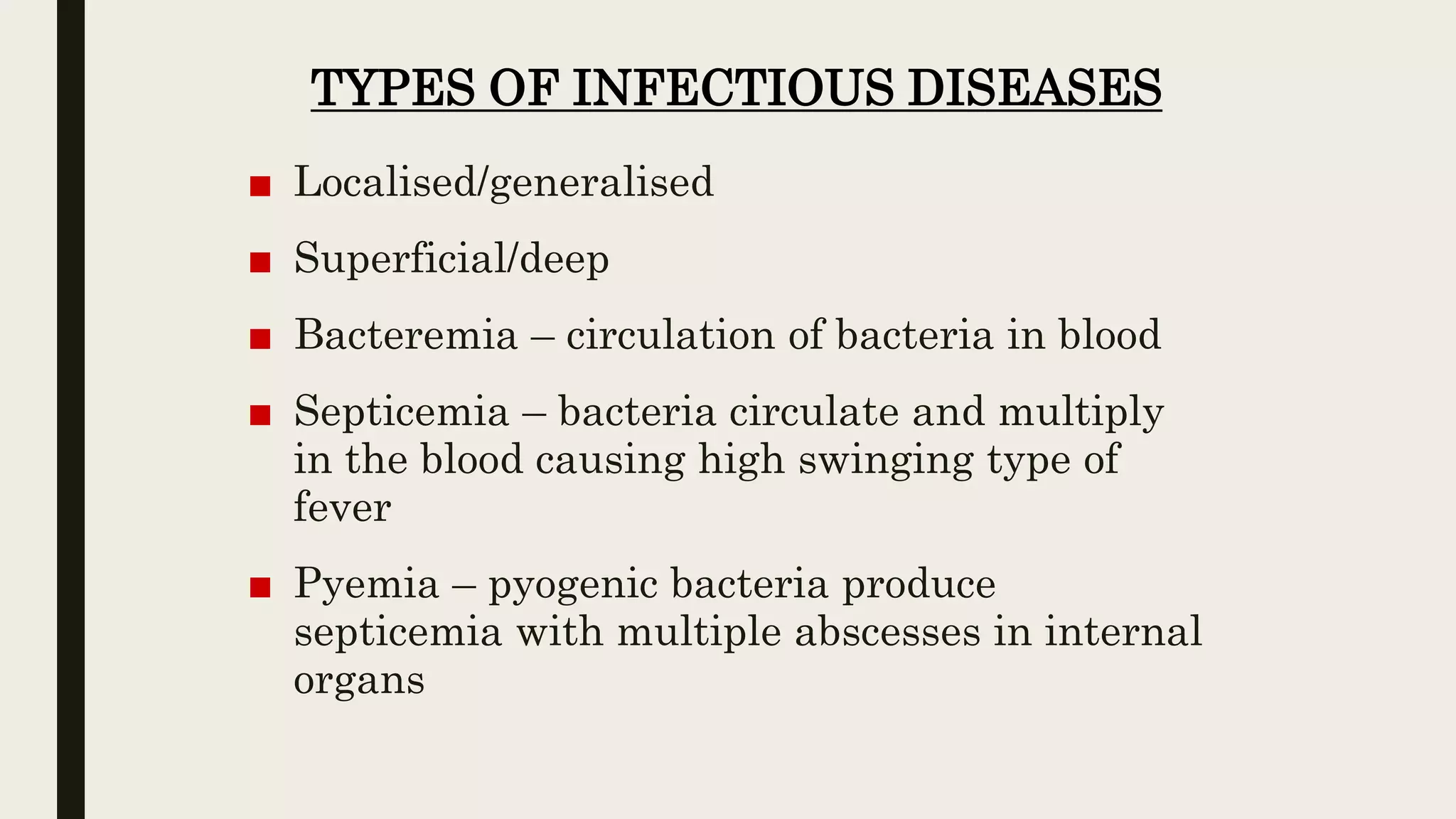
TYPES OF INFECTIOUS DISEASES
■ Localised/generalised
■ Superficial/deep
■ Bacteremia – circulation of bacteria in blood
■ Septicemia – bacteria circulate and multiply
in the blood causing high swinging type of
fever
■ Pyemia – pyogenic bacteria produce
septicemia with multiple abscesses in internal
organs
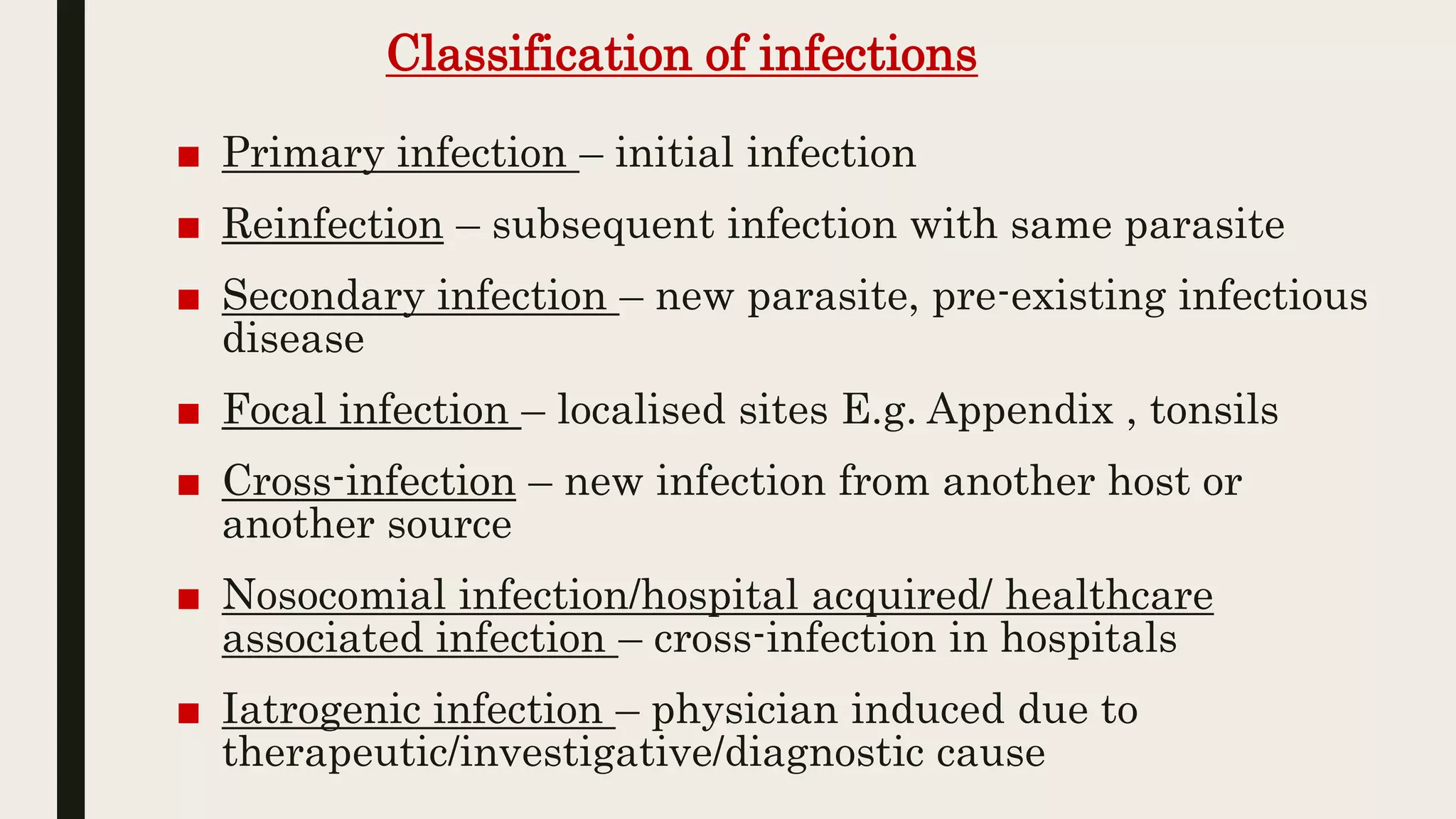
Classification of infections
■ Primary infection – initial infection
■ Reinfection – subsequent infection with same parasite
■ Secondary infection – new parasite, pre-existing infectious
disease
■ Focal infection – localised sites E.g. Appendix , tonsils
■ Cross-infection – new infection from another host or
another source
■ Nosocomial infection/hospital acquired/ healthcare
associated infection – cross-infection in hospitals
■ Iatrogenic infection – physician induced due to
therapeutic/investigative/diagnostic cause
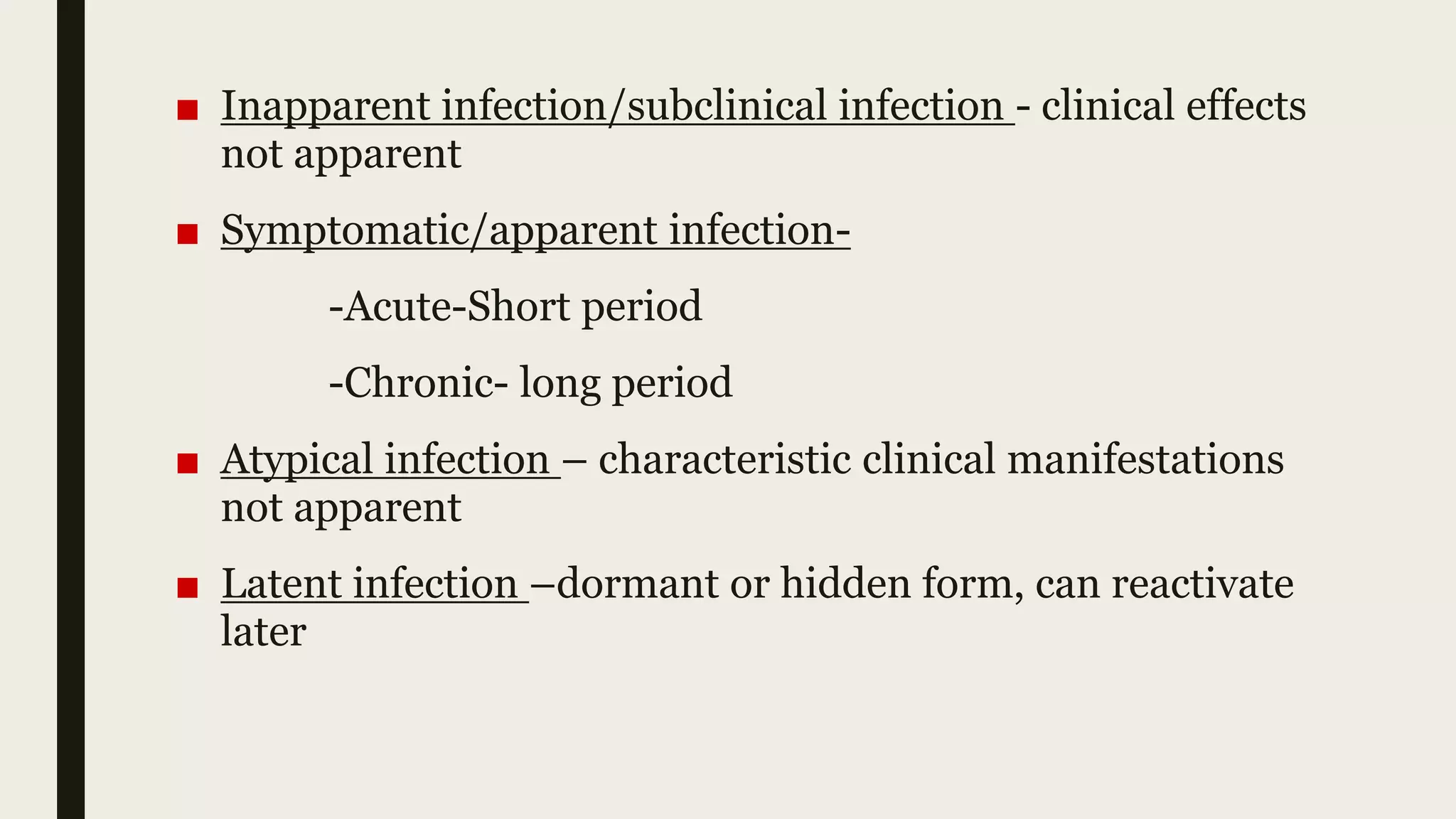
■ Inapparent infection/subclinical infection - clinical effects
not apparent
■ Symptomatic/apparent infection-
-Acute-Short period
-Chronic- long period
■ Atypical infection – characteristic clinical manifestations
not apparent
■ Latent infection –dormant or hidden form, can reactivate
later
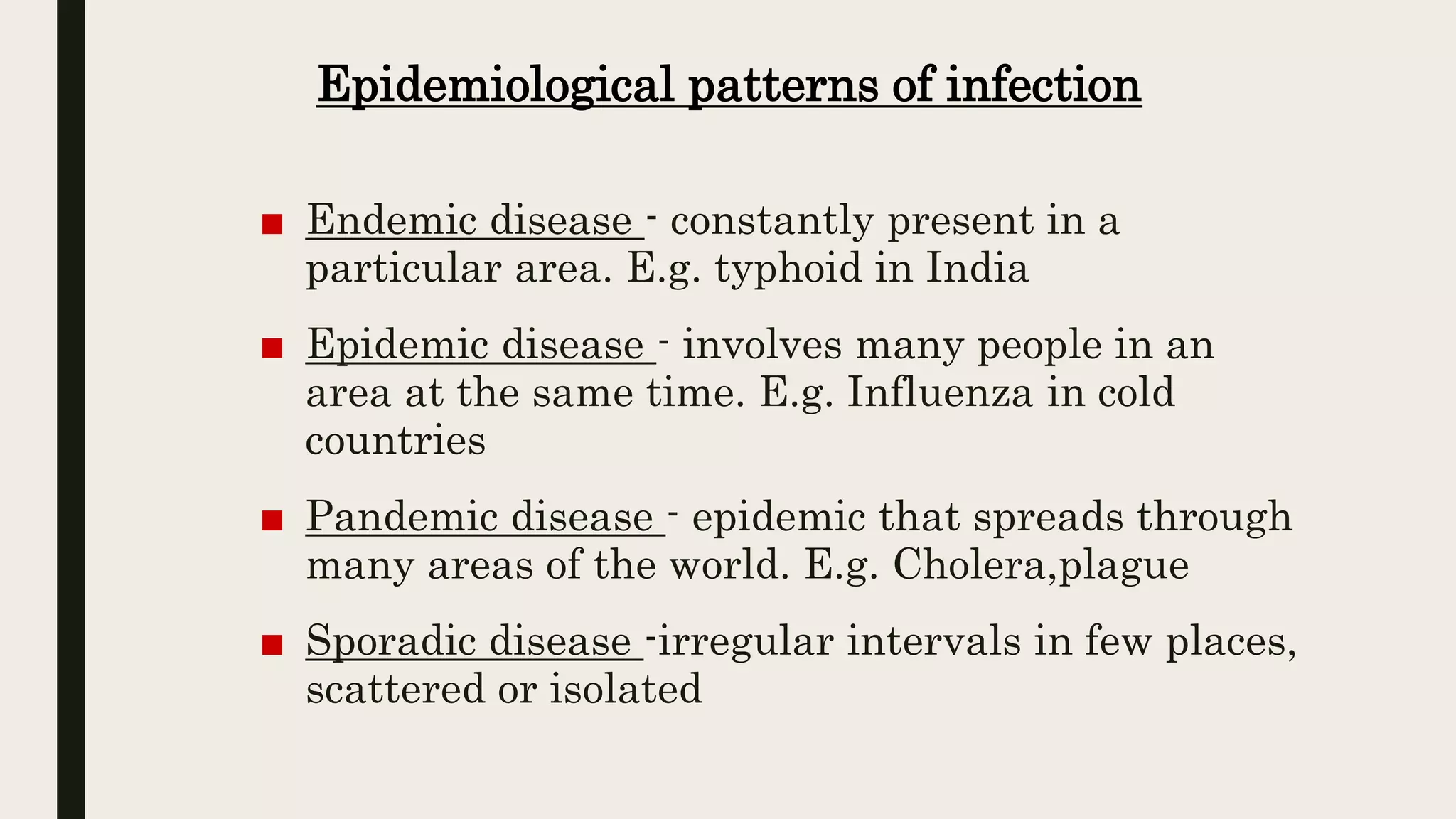
Epidemiological patterns of infection
■ Endemic disease - constantly present in a
particular area. E.g. typhoid in India
■ Epidemic disease - involves many people in an
area at the same time. E.g. Influenza in cold
countries
■ Pandemic disease - epidemic that spreads through
many areas of the world. E.g. Cholera,plague
■ Sporadic disease -irregular intervals in few places,
scattered or isolated
Sources and Reservoirs of infection
■ Source
Person/animal/object from which a micro organism is
transmitted to the host
■ Reservoir
-Natural habitat in which the organism lives & multiplies
-Person/animal/arthropod/plant/soil/substance
Human reservoir
■ Communicable diseases-Diseases that can be spread from 1 person to
another
■ Cases/ patients- Persons in a given population identified as having
disease
■ Carriers-persons/animals who harbour the infectious agent
---Healthy carrier – harbours the pathogen, but never suffered from the
disease. E.g. Polio, Cholera
---Convalescent carrier – recovered from disease and continues to harbour
the pathogen
---Incubatory carrier- shed organism during the incubation period of the
disease. E.g. Measles, mumps, diphtheria, pertussis
Depending on duration
---Temporary carrier – less than six months
---Chronic carrier – several years
Depending on source
---Contact carrier – acquires pathogen from carrier
---Paradoxical carrier – acquires pathogen from another
carrier
Animal Reservoir
■ Reservoir host – maintain the parasite in nature
■ Zoonoses – diseases transmitted from animals to
human beings
■ Amplifier host -Vertebrate reservoir in which
organism multiplies exponentially
E.g. Pigs in Japanese B encephalitis
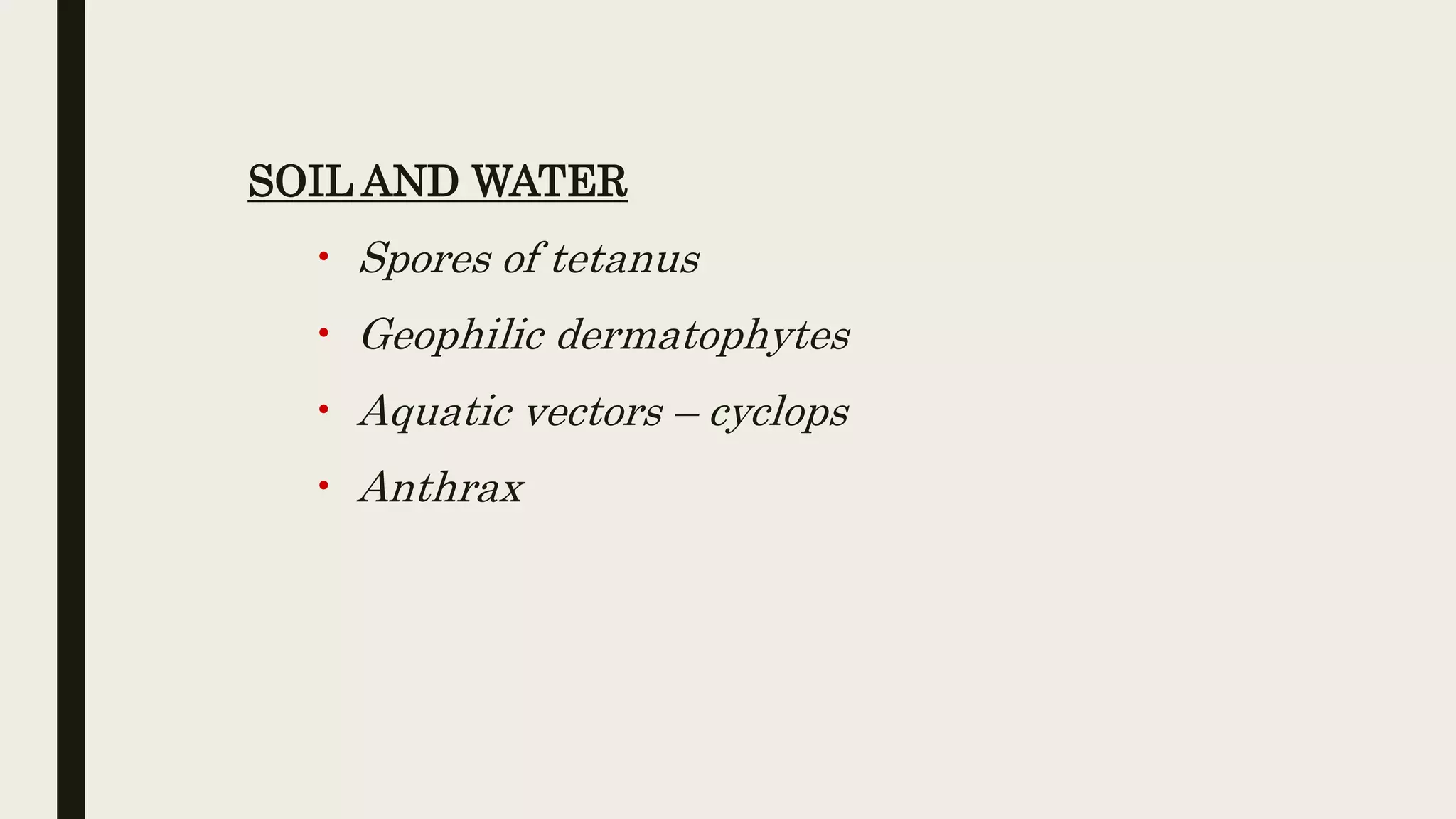
SOIL AND WATER
• Spores of tetanus
• Geophilic dermatophytes
• Aquatic vectors – cyclops
• Anthrax
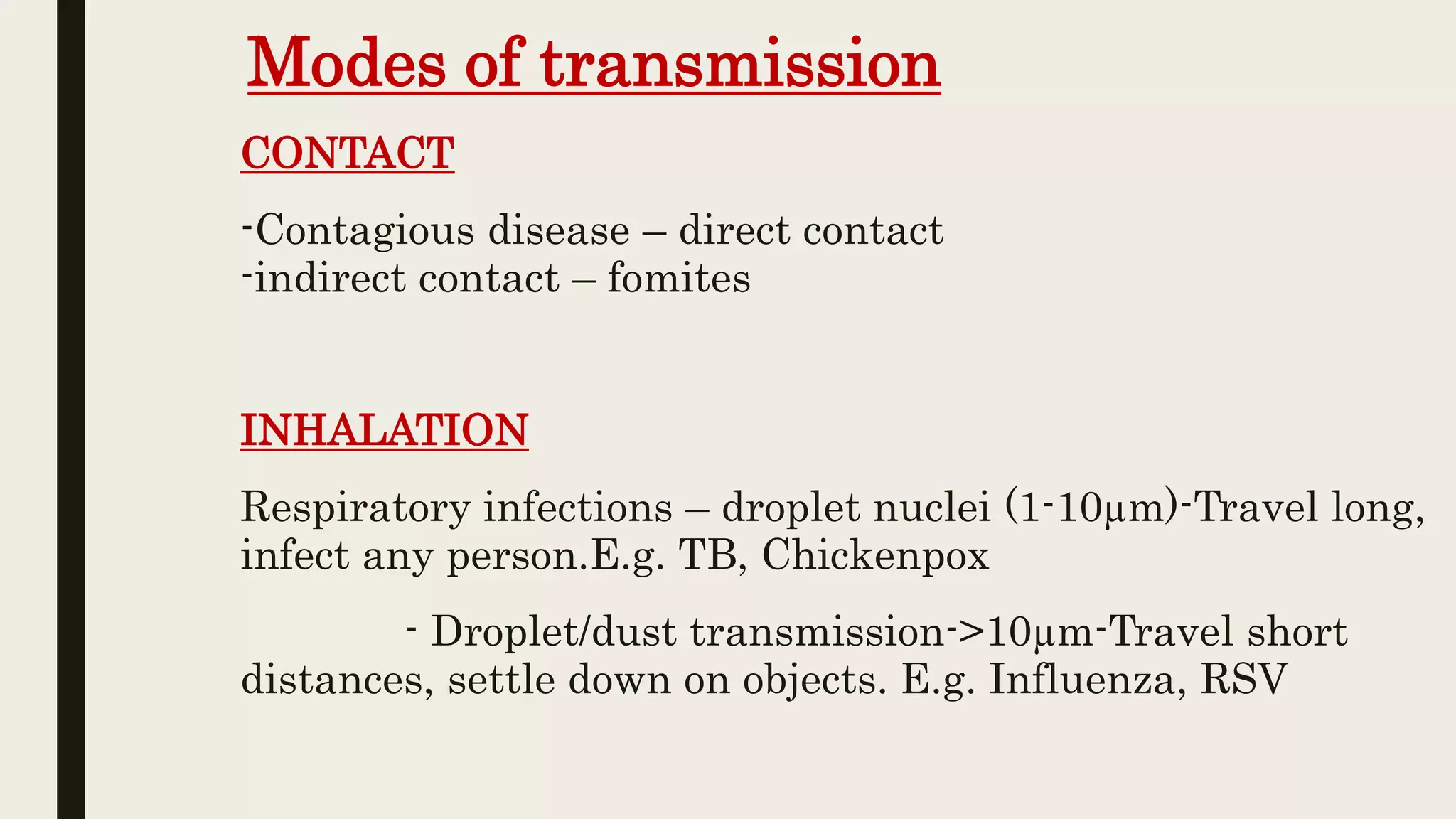
Modes of transmission
CONTACT
-Contagious disease – direct contact
-indirect contact – fomites
INHALATION
Respiratory infections – droplet nuclei (1-10µm)-Travel long,
infect any person.E.g. TB, Chickenpox
- Droplet/dust transmission->10µm-Travel short
distances, settle down on objects. E.g. Influenza, RSV
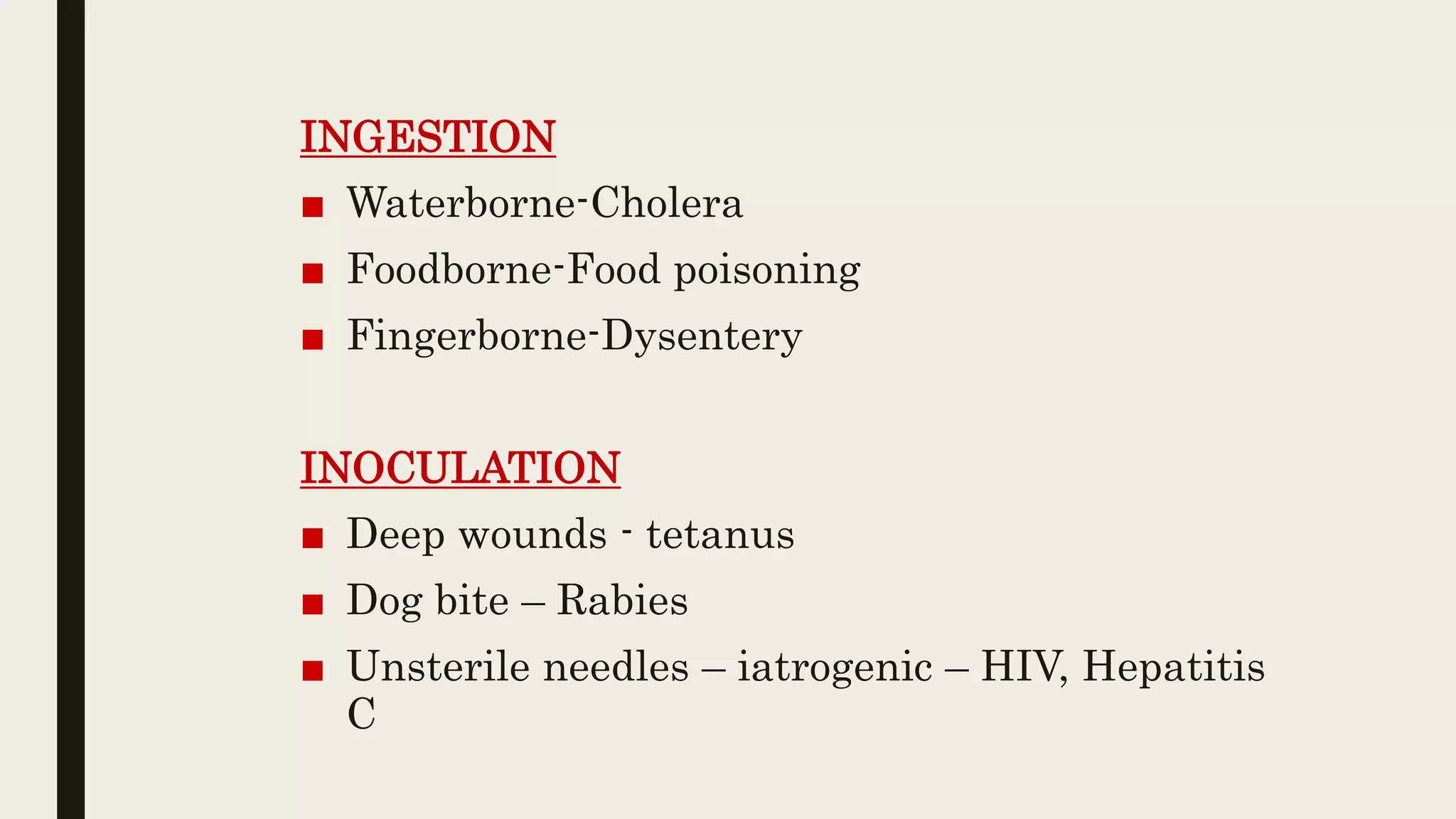
INGESTION
■ Waterborne-Cholera
■ Foodborne-Food poisoning
■ Fingerborne-Dysentery
INOCULATION
■ Deep wounds - tetanus
■ Dog bite – Rabies
■ Unsterile needles – iatrogenic – HIV, Hepatitis
C
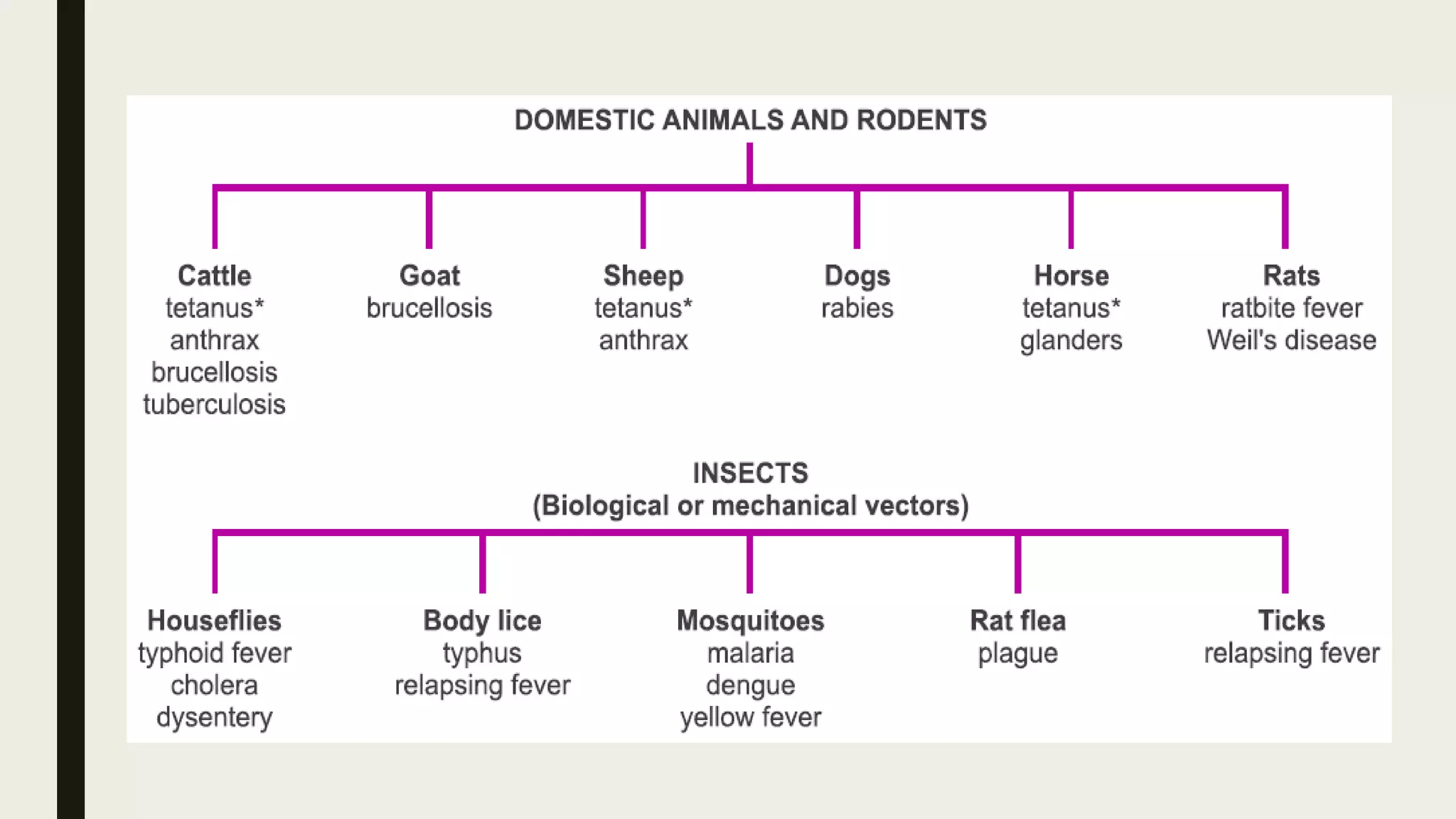
INSECTS
■ Mechanical vectors
Carry micro organisms , transmit them to eatables, no multiplication
■ Biological vectors
Pathogen multiplies in the body of the vector, undergoing part of their
developmental cycle in it.E.g.Culex mosquito in filariasis
■ Extrinsic incubation period
Time taken for the vector to become infective after entry of pathogen
into the vector
VERTICAL TRANSMISSION
■ Transplacental transmission
abortion/miscarriage/still birth/ congenital
malformations- TERATOGENIC INFECTIONS
E.g. TORCH infections
■ Transmission via birth canal
Group B Streptococcus, HBV, HCV, HIV,
N.gonorrhoeae, C. trachomatis, Listeria
MECHANISM OF MICROBIAL PATHOGENICITY
■ Pathogenicity – ability of a microbial species to produce
disease
■ Virulence – ability of a strain of microorganism to produce
disease, relative degree of Pathogenicity
■ Exaltation – enhancement of virulence
■ Attenuation – reduction of virulence
Factors affecting bacterial pathogenicity
■ Route of transmission of infection
-Streptococci – any route
-Vibrio- only oral route
■ Infective dose of the organism
-Minimum inoculum size capable of initiating infection
-Low infective dose-Shigella, Cryptosporidium oocysts
-Large infective dose-Vibrio, Salmonella, E.coli
-Depends on virulence, age & immunity of organism, gastric acidity
Adhesion
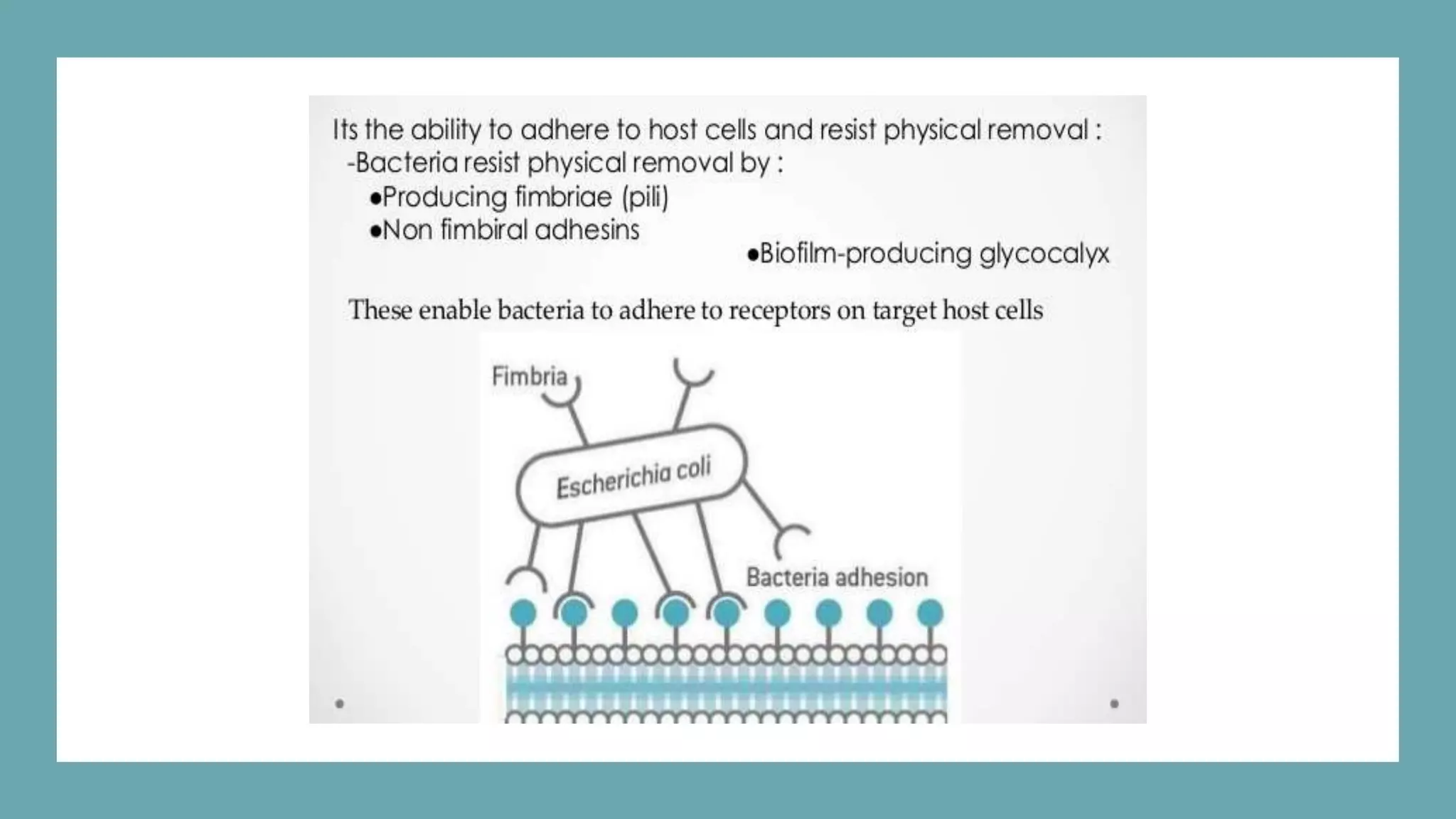
■ Adhesion – attachment of bacteria to body
surfaces
■ Specific reaction between surface receptors on
host cells and adhesive structures (ligands) on
the surface of bacteria
■ Adhesins – organised structures – fimbrae, pili
or colonising factors/ non pilus
adhesins/Biofilm formation
BIOFILMS
■ Well organised microcolonies of bacteria enclosed in
self-produced extracellular polymer matrices known
glycocalyx
■ Types - Monomicrobial and polymicrobial
■ Free floating bacteria come in contact with medical
devices and attach to them with pili
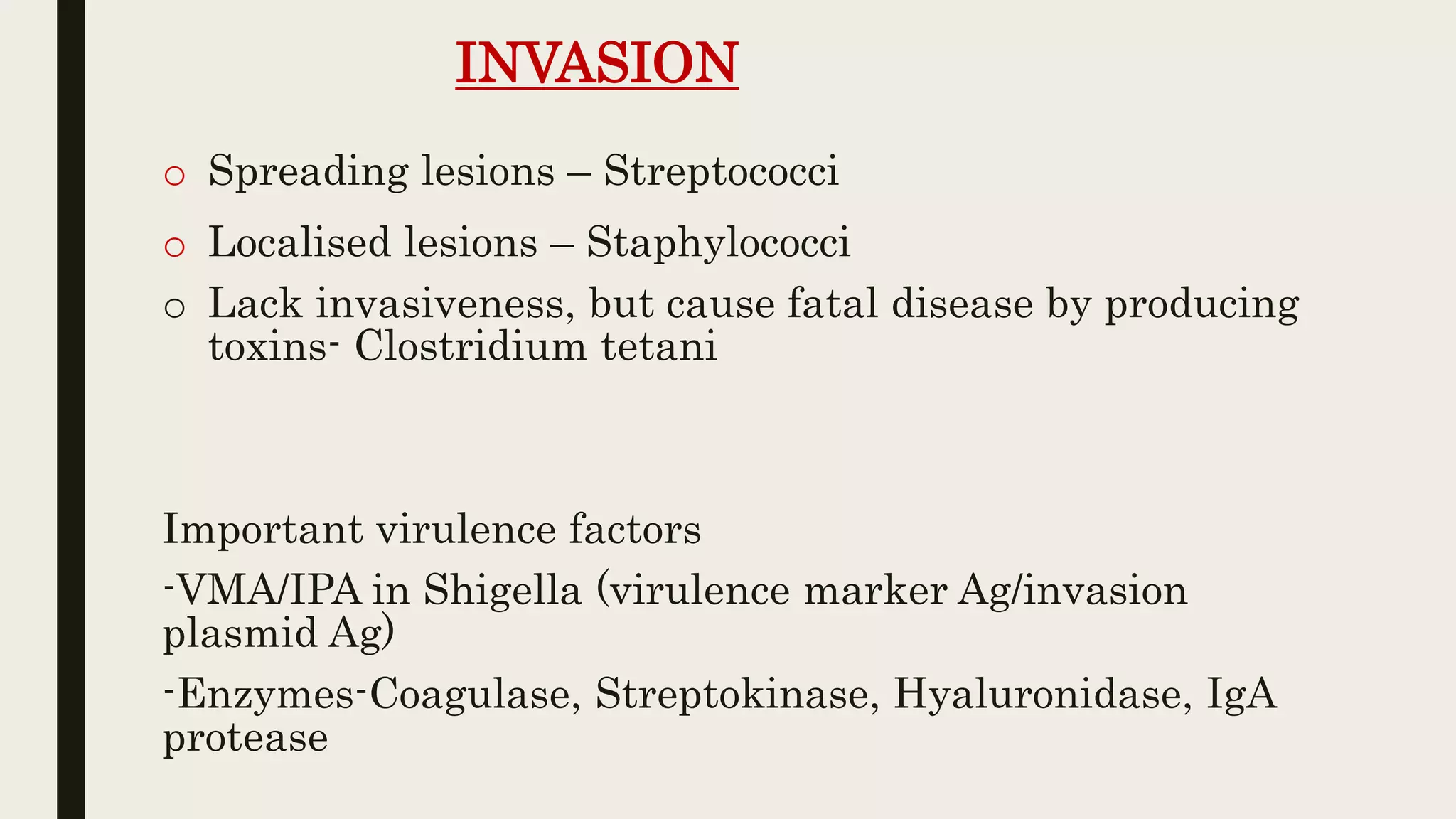
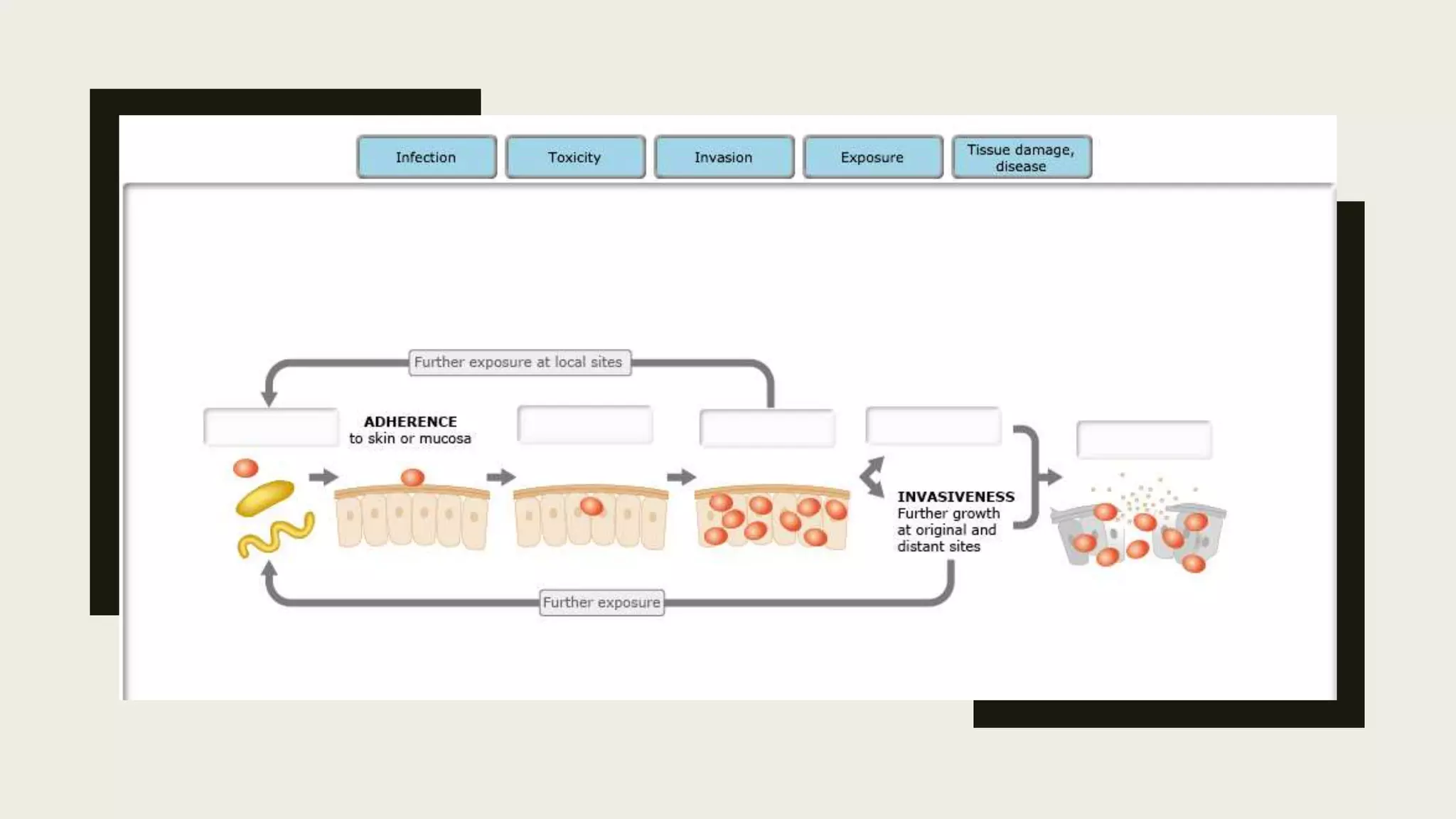
INVASION
o Spreading lesions – Streptococci
o Localised lesions – Staphylococci
o Lack invasiveness, but cause fatal disease by producing
toxins- Clostridium tetani
Important virulence factors
-VMA/IPA in Shigella (virulence marker Ag/invasion
plasmid Ag)
-Enzymes-Coagulase, Streptokinase, Hyaluronidase, IgA
protease
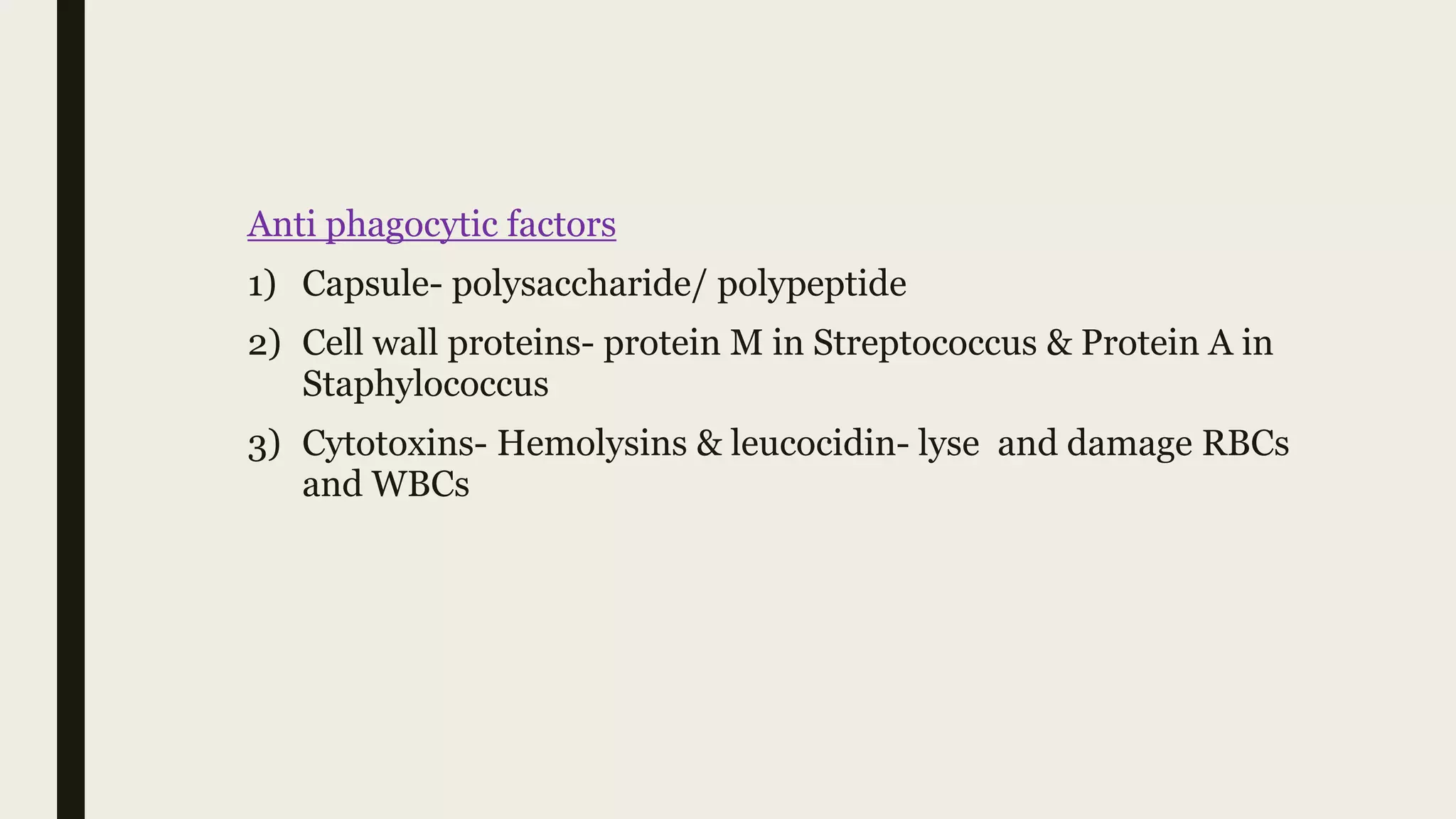
Anti phagocytic factors
1) Capsule- polysaccharide/ polypeptide
2) Cell wall proteins- protein M in Streptococcus & Protein A in
Staphylococcus
3) Cytotoxins- Hemolysins & leucocidin- lyse and damage RBCs
and WBCs
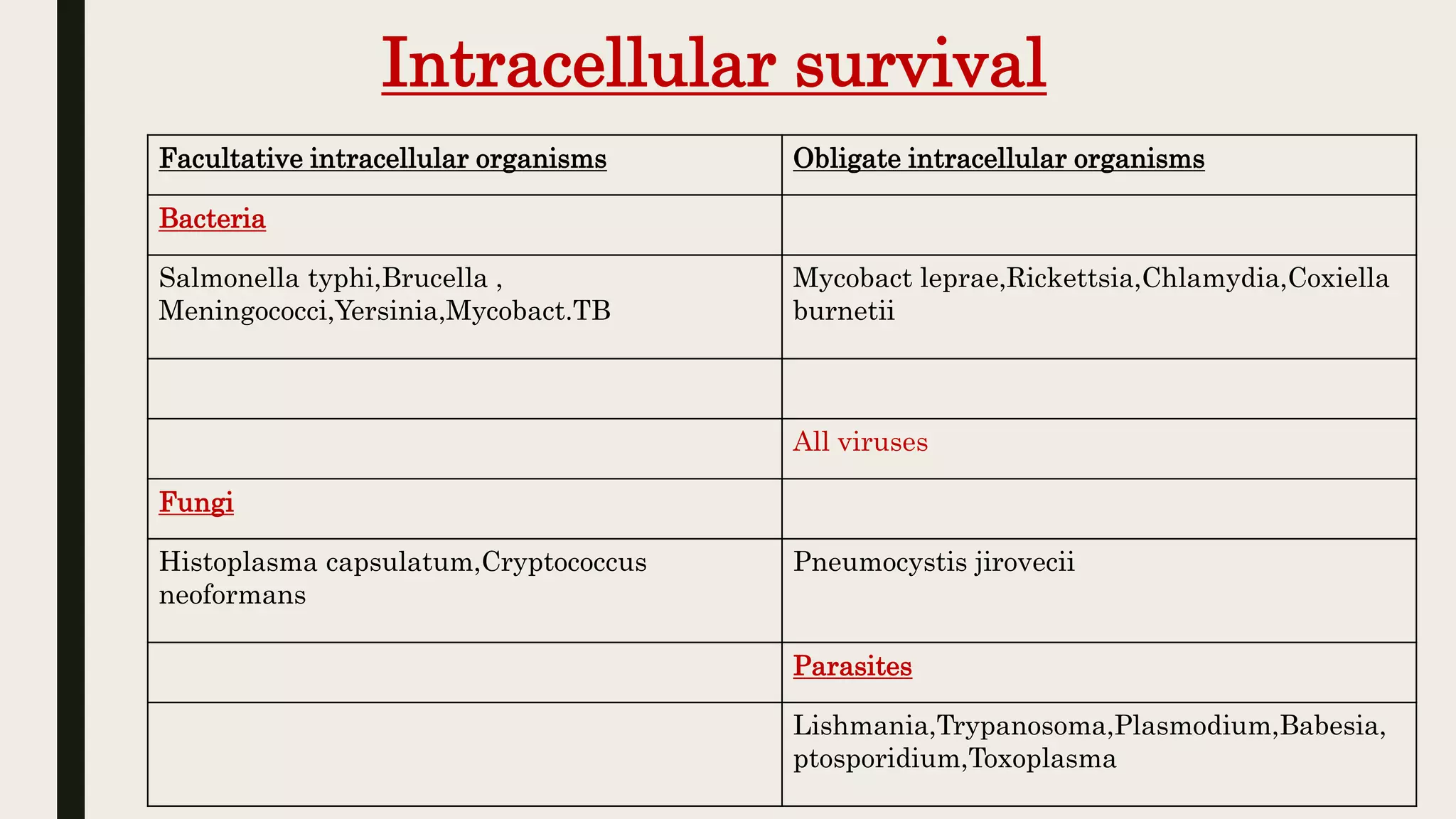
Intracellular survival
Facultative intracellular organisms Obligate intracellular organisms
Bacteria
Salmonella typhi,Brucella ,
Meningococci,Yersinia,Mycobact.TB
Mycobact leprae,Rickettsia,Chlamydia,Coxiella
burnetii
All viruses
Fungi
Histoplasma capsulatum,Cryptococcus
neoformans
Pneumocystis jirovecii
Parasites
Lishmania,Trypanosoma,Plasmodium,Babesia,
ptosporidium,Toxoplasma
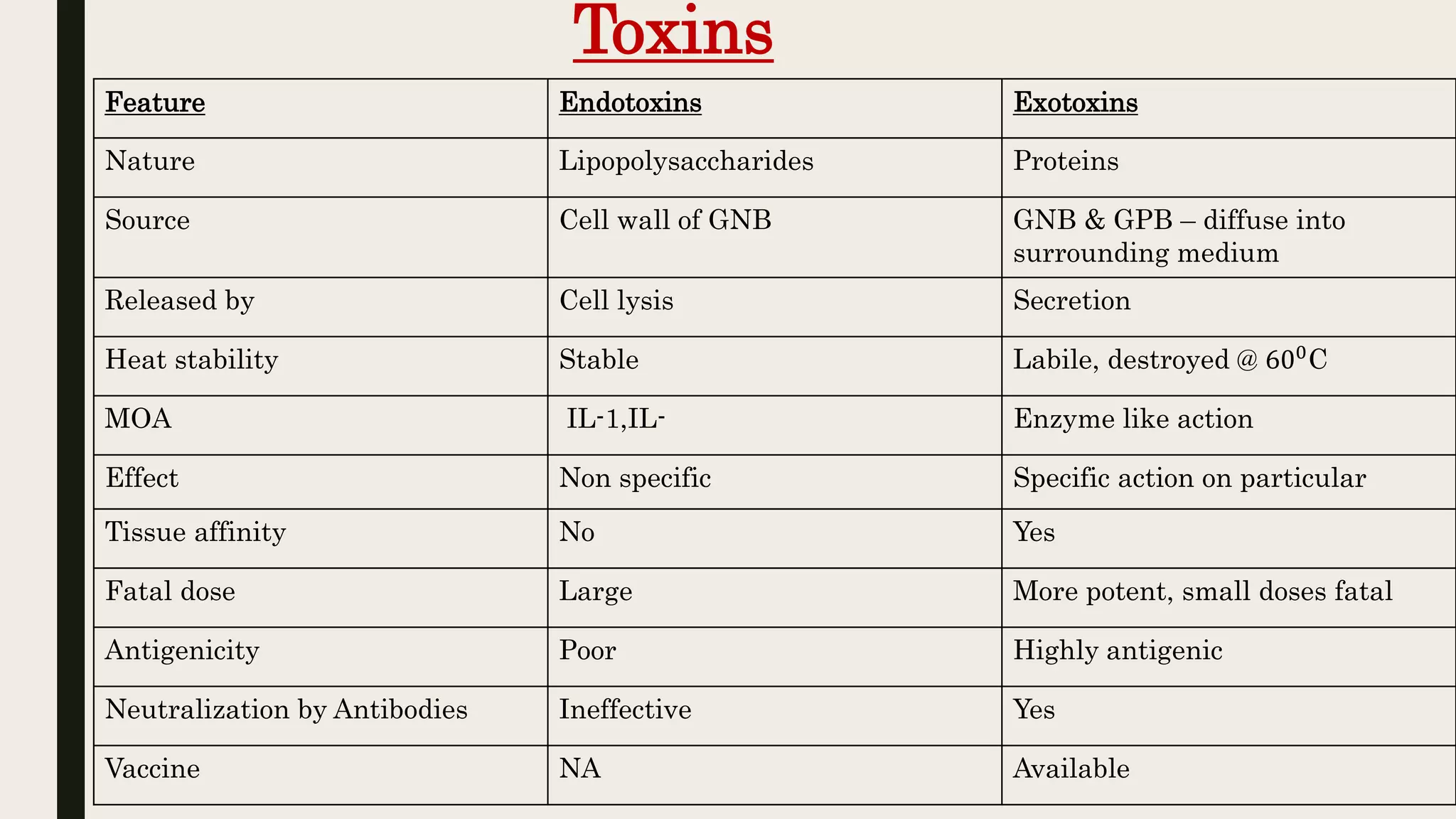
Toxins
Feature Endotoxins Exotoxins
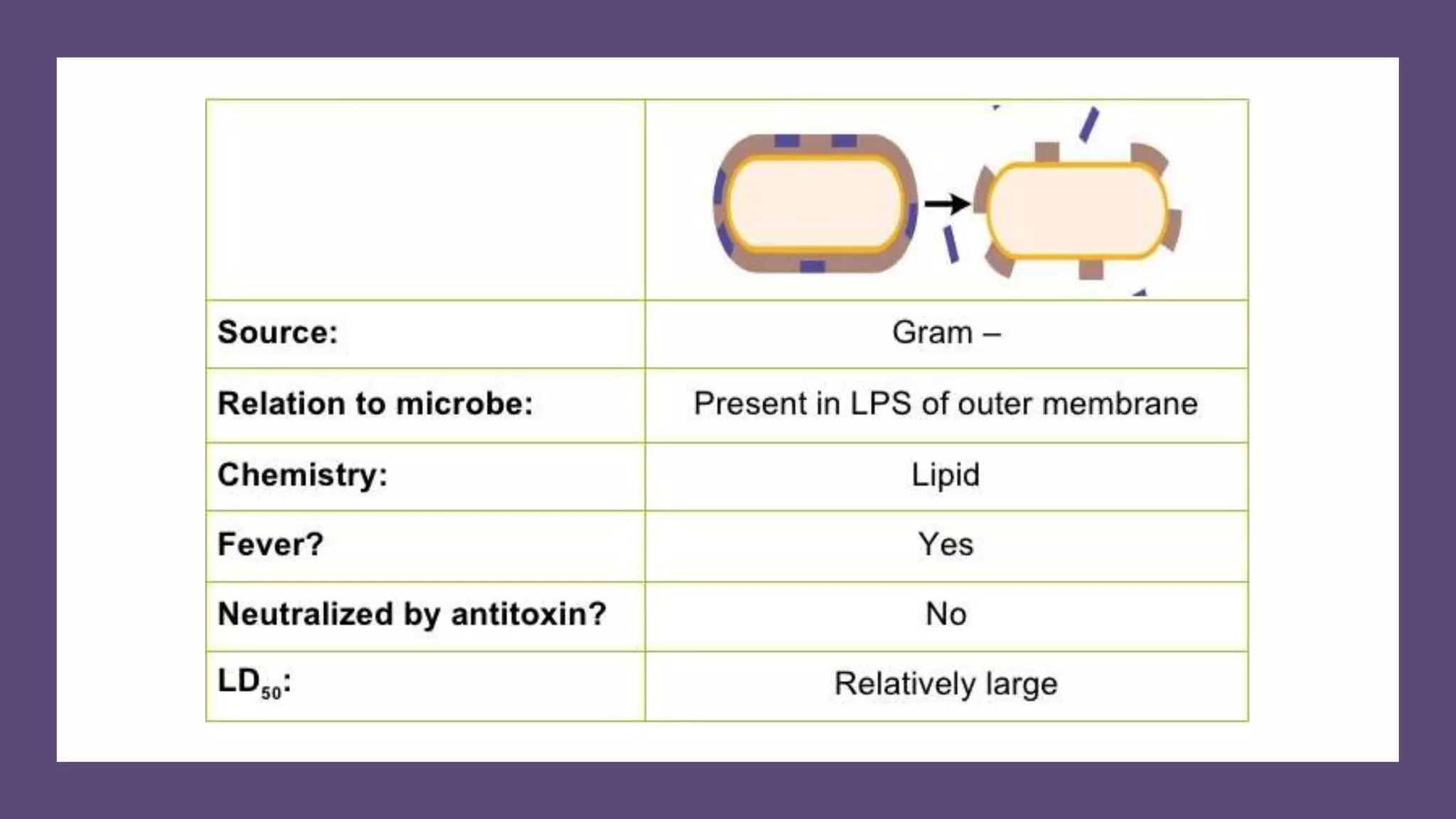
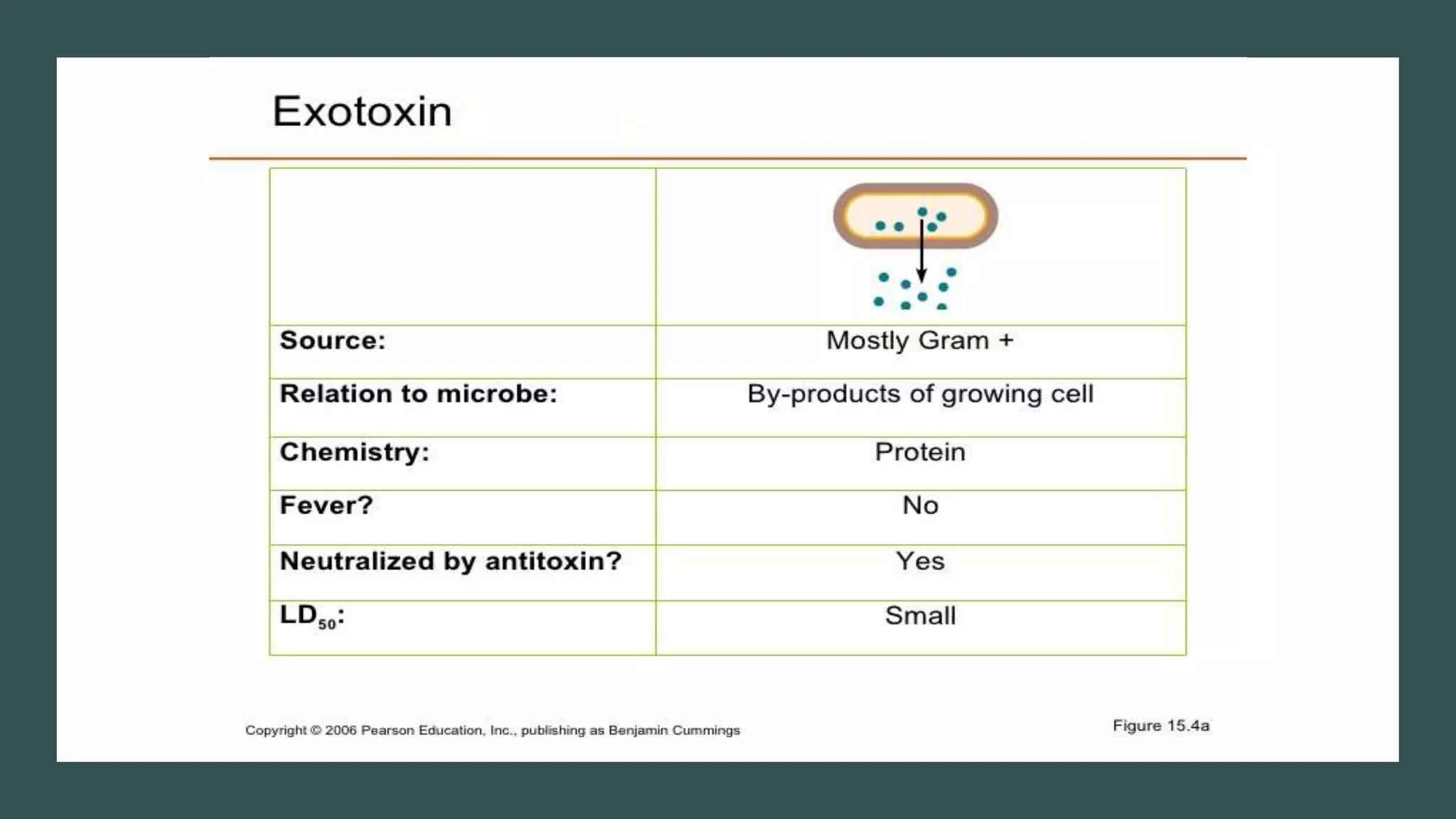
Nature Lipopolysaccharides Proteins
Source Cell wall of GNB GNB & GPB – diffuse into
surrounding medium
Released by Cell lysis Secretion
Heat stability Stable Labile, destroyed @ 600
C
MOA IL-1,IL- Enzyme like action
Effect Non specific Specific action on particular
Tissue affinity No Yes
Fatal dose Large More potent, small doses fatal
Antigenicity Poor Highly antigenic
Neutralization by Antibodies Ineffective Yes
Vaccine NA Available
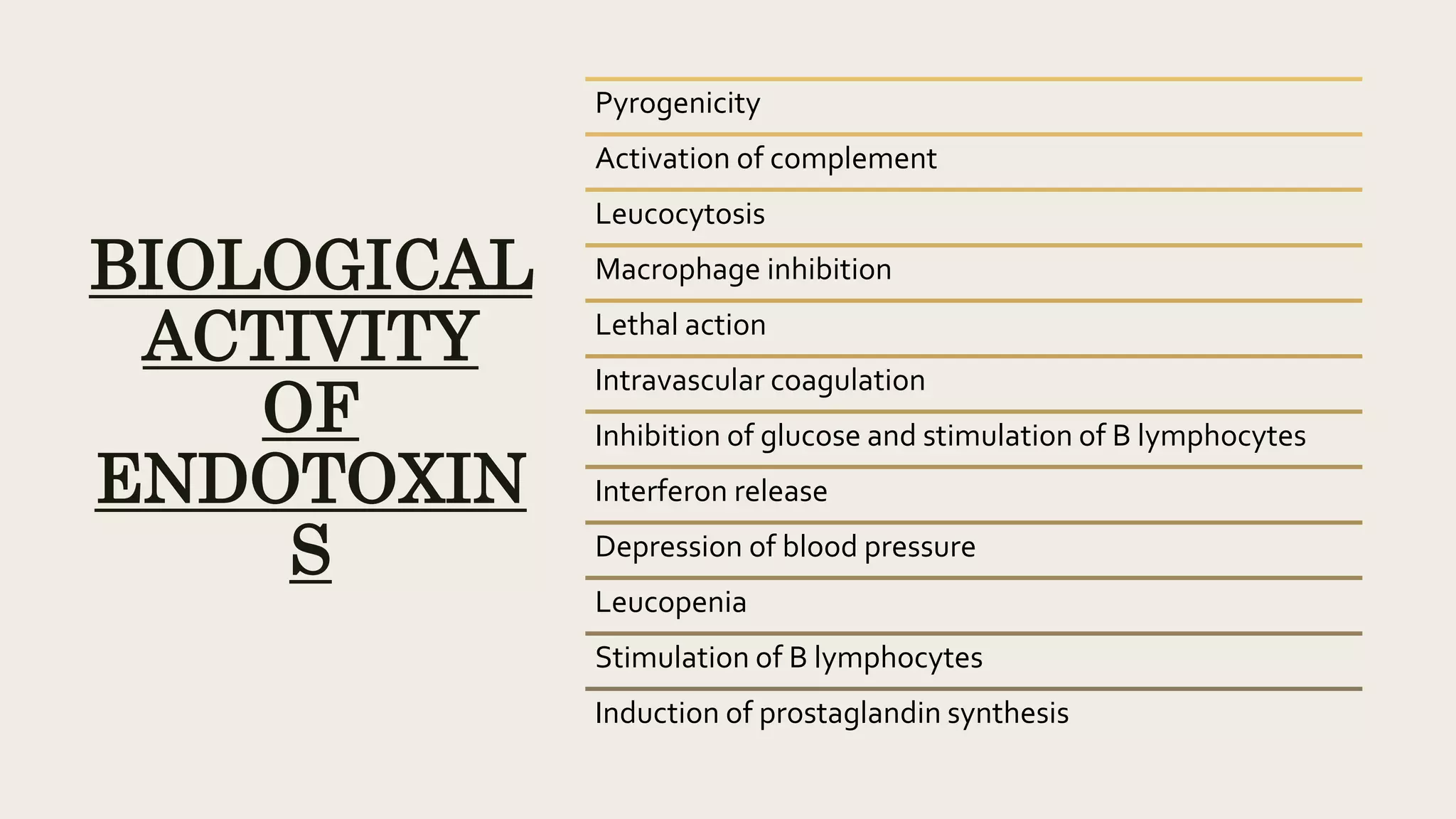
BIOLOGICAL
ACTIVITY
OF
ENDOTOXIN
S
Pyrogenicity
Activation of complement
Leucocytosis
Macrophage inhibition
Lethal action
Intravascular coagulation
Inhibition of glucose and stimulation of B lymphocytes
Interferon release
Depression of blood pressure
Leucopenia
Stimulation of B lymphocytes
Induction of prostaglandin synthesis
PLASMIDS
■ Enterotoxin produced by E.coli and S.aureus
■ Multiple drug resistance (R) plasmids
BACTERIOPHAGES
■ Toxin producing beta of tox + corynephages

Microbial pathogenicity Dr.Ashna Ajimsha

  • 1.
  • 3.
    ■ Saprophytes -Free living - live on dead or decaying matter, incapable of multiplying on living tissue -some (B.subtilis) infect devitalised tissue ■ Parasites - Establish themselves and multiply in the host Pathogens - Capable of producing disease in host Commensals - Harmony with host without causing disease -Normal flora ■ Opportunistic pathogens- Causes disease in immunocompromised peoople
  • 4.
    ■ Infection- Processin which pathogenic organism enters, establishes itself, multiplies & invades the Anatomical barrier of the host causing disease ■ Infectious disease- infection + clinical manifestations ■ Colonization- The pathogenic organism enters, establishes itself, multiplies but does not invade the Anatomical barrier of the host- no disease, no immune response ■ Infestation- parasites of Macroscopic size. E.g. Parasitic worms in the intestine & arthropods
  • 5.
    TYPES OF INFECTIOUSDISEASES ■ Localised/generalised ■ Superficial/deep ■ Bacteremia – circulation of bacteria in blood ■ Septicemia – bacteria circulate and multiply in the blood causing high swinging type of fever ■ Pyemia – pyogenic bacteria produce septicemia with multiple abscesses in internal organs
  • 6.
    Classification of infections ■Primary infection – initial infection ■ Reinfection – subsequent infection with same parasite ■ Secondary infection – new parasite, pre-existing infectious disease ■ Focal infection – localised sites E.g. Appendix , tonsils ■ Cross-infection – new infection from another host or another source ■ Nosocomial infection/hospital acquired/ healthcare associated infection – cross-infection in hospitals ■ Iatrogenic infection – physician induced due to therapeutic/investigative/diagnostic cause
  • 7.
    ■ Inapparent infection/subclinicalinfection - clinical effects not apparent ■ Symptomatic/apparent infection- -Acute-Short period -Chronic- long period ■ Atypical infection – characteristic clinical manifestations not apparent ■ Latent infection –dormant or hidden form, can reactivate later
  • 8.
    Epidemiological patterns ofinfection ■ Endemic disease - constantly present in a particular area. E.g. typhoid in India ■ Epidemic disease - involves many people in an area at the same time. E.g. Influenza in cold countries ■ Pandemic disease - epidemic that spreads through many areas of the world. E.g. Cholera,plague ■ Sporadic disease -irregular intervals in few places, scattered or isolated
  • 9.
    Sources and Reservoirsof infection ■ Source Person/animal/object from which a micro organism is transmitted to the host ■ Reservoir -Natural habitat in which the organism lives & multiplies -Person/animal/arthropod/plant/soil/substance
  • 10.
    Human reservoir ■ Communicablediseases-Diseases that can be spread from 1 person to another ■ Cases/ patients- Persons in a given population identified as having disease ■ Carriers-persons/animals who harbour the infectious agent ---Healthy carrier – harbours the pathogen, but never suffered from the disease. E.g. Polio, Cholera ---Convalescent carrier – recovered from disease and continues to harbour the pathogen ---Incubatory carrier- shed organism during the incubation period of the disease. E.g. Measles, mumps, diphtheria, pertussis
  • 11.
    Depending on duration ---Temporarycarrier – less than six months ---Chronic carrier – several years Depending on source ---Contact carrier – acquires pathogen from carrier ---Paradoxical carrier – acquires pathogen from another carrier
  • 12.
    Animal Reservoir ■ Reservoirhost – maintain the parasite in nature ■ Zoonoses – diseases transmitted from animals to human beings ■ Amplifier host -Vertebrate reservoir in which organism multiplies exponentially E.g. Pigs in Japanese B encephalitis
  • 14.
    SOIL AND WATER •Spores of tetanus • Geophilic dermatophytes • Aquatic vectors – cyclops • Anthrax
  • 15.
    Modes of transmission CONTACT -Contagiousdisease – direct contact -indirect contact – fomites INHALATION Respiratory infections – droplet nuclei (1-10µm)-Travel long, infect any person.E.g. TB, Chickenpox - Droplet/dust transmission->10µm-Travel short distances, settle down on objects. E.g. Influenza, RSV
  • 16.
    INGESTION ■ Waterborne-Cholera ■ Foodborne-Foodpoisoning ■ Fingerborne-Dysentery INOCULATION ■ Deep wounds - tetanus ■ Dog bite – Rabies ■ Unsterile needles – iatrogenic – HIV, Hepatitis C
  • 17.
    INSECTS ■ Mechanical vectors Carrymicro organisms , transmit them to eatables, no multiplication ■ Biological vectors Pathogen multiplies in the body of the vector, undergoing part of their developmental cycle in it.E.g.Culex mosquito in filariasis ■ Extrinsic incubation period Time taken for the vector to become infective after entry of pathogen into the vector
  • 18.
    VERTICAL TRANSMISSION ■ Transplacentaltransmission abortion/miscarriage/still birth/ congenital malformations- TERATOGENIC INFECTIONS E.g. TORCH infections ■ Transmission via birth canal Group B Streptococcus, HBV, HCV, HIV, N.gonorrhoeae, C. trachomatis, Listeria
  • 19.
    MECHANISM OF MICROBIALPATHOGENICITY ■ Pathogenicity – ability of a microbial species to produce disease ■ Virulence – ability of a strain of microorganism to produce disease, relative degree of Pathogenicity ■ Exaltation – enhancement of virulence ■ Attenuation – reduction of virulence
  • 21.
    Factors affecting bacterialpathogenicity ■ Route of transmission of infection -Streptococci – any route -Vibrio- only oral route ■ Infective dose of the organism -Minimum inoculum size capable of initiating infection -Low infective dose-Shigella, Cryptosporidium oocysts -Large infective dose-Vibrio, Salmonella, E.coli -Depends on virulence, age & immunity of organism, gastric acidity
  • 22.
    Adhesion ■ Adhesion –attachment of bacteria to body surfaces ■ Specific reaction between surface receptors on host cells and adhesive structures (ligands) on the surface of bacteria ■ Adhesins – organised structures – fimbrae, pili or colonising factors/ non pilus adhesins/Biofilm formation
  • 24.
    BIOFILMS ■ Well organisedmicrocolonies of bacteria enclosed in self-produced extracellular polymer matrices known glycocalyx ■ Types - Monomicrobial and polymicrobial ■ Free floating bacteria come in contact with medical devices and attach to them with pili
  • 25.
    INVASION o Spreading lesions– Streptococci o Localised lesions – Staphylococci o Lack invasiveness, but cause fatal disease by producing toxins- Clostridium tetani Important virulence factors -VMA/IPA in Shigella (virulence marker Ag/invasion plasmid Ag) -Enzymes-Coagulase, Streptokinase, Hyaluronidase, IgA protease
  • 27.
    Anti phagocytic factors 1)Capsule- polysaccharide/ polypeptide 2) Cell wall proteins- protein M in Streptococcus & Protein A in Staphylococcus 3) Cytotoxins- Hemolysins & leucocidin- lyse and damage RBCs and WBCs
  • 28.
    Intracellular survival Facultative intracellularorganisms Obligate intracellular organisms Bacteria Salmonella typhi,Brucella , Meningococci,Yersinia,Mycobact.TB Mycobact leprae,Rickettsia,Chlamydia,Coxiella burnetii All viruses Fungi Histoplasma capsulatum,Cryptococcus neoformans Pneumocystis jirovecii Parasites Lishmania,Trypanosoma,Plasmodium,Babesia, ptosporidium,Toxoplasma
  • 29.
    Toxins Feature Endotoxins Exotoxins NatureLipopolysaccharides Proteins Source Cell wall of GNB GNB & GPB – diffuse into surrounding medium Released by Cell lysis Secretion Heat stability Stable Labile, destroyed @ 600 C MOA IL-1,IL- Enzyme like action Effect Non specific Specific action on particular Tissue affinity No Yes Fatal dose Large More potent, small doses fatal Antigenicity Poor Highly antigenic Neutralization by Antibodies Ineffective Yes Vaccine NA Available
  • 30.
    BIOLOGICAL ACTIVITY OF ENDOTOXIN S Pyrogenicity Activation of complement Leucocytosis Macrophageinhibition Lethal action Intravascular coagulation Inhibition of glucose and stimulation of B lymphocytes Interferon release Depression of blood pressure Leucopenia Stimulation of B lymphocytes Induction of prostaglandin synthesis
  • 33.
    PLASMIDS ■ Enterotoxin producedby E.coli and S.aureus ■ Multiple drug resistance (R) plasmids BACTERIOPHAGES ■ Toxin producing beta of tox + corynephages