MicroElements
-BYADAMHUBBLE
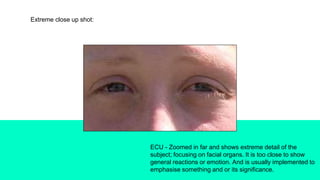
Extreme close up shot:
ECU - Zoomed in far and shows extreme detail of the
subject; focusing on facial organs. It is too close to show
general reactions or emotion. And is usually implemented to
emphasise something and or its significance.
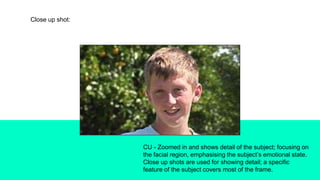
Close up shot:
CU - Zoomed in and shows detail of the subject; focusing on
the facial region, emphasising the subject’s emotional state.
Close up shots are used for showing detail; a specific
feature of the subject covers most of the frame.
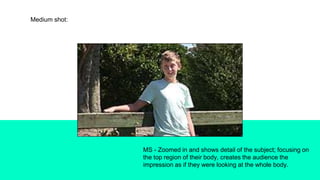
Medium shot:
MS - Zoomed in and shows detail of the subject; focusing on
the top region of their body, creates the audience the
impression as if they were looking at the whole body.
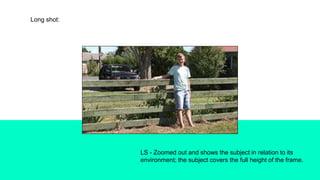
Long shot:
LS - Zoomed out and shows the subject in relation to its
environment; the subject covers the full height of the frame.
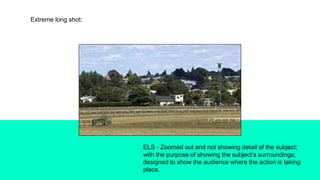
Extreme long shot:
ELS - Zoomed out and not showing detail of the subject;
with the purpose of showing the subject’s surroundings;
designed to show the audience where the action is taking
place.
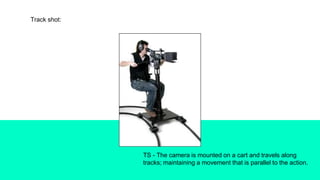
Track shot:
TS - The camera is mounted on a cart and travels along
tracks; maintaining a movement that is parallel to the action.
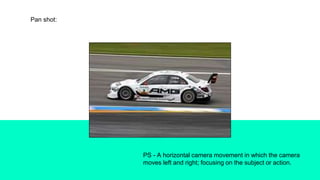
Pan shot:
PS - A horizontal camera movement in which the camera
moves left and right; focusing on the subject or action.
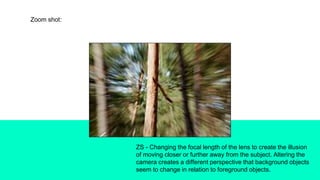
Zoom shot:
ZS - Changing the focal length of the lens to create the illusion
of moving closer or further away from the subject. Altering the
camera creates a different perspective that background objects
seem to change in relation to foreground objects.
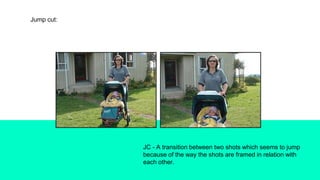
Jump cut:
JC - A transition between two shots which seems to jump
because of the way the shots are framed in relation with
each other.
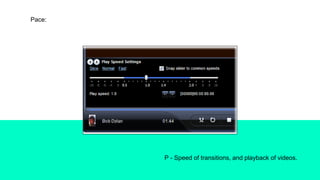
Pace:
P - Speed of transitions, and playback of videos.
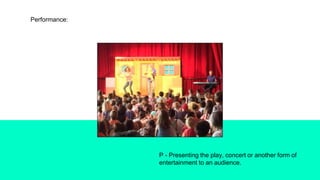
Performance:
P - Presenting the play, concert or another form of
entertainment to an audience.
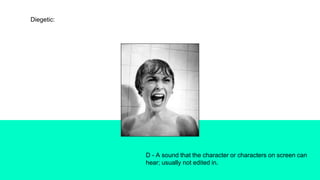
Diegetic:
D - A sound that the character or characters on screen can
hear; usually not edited in.
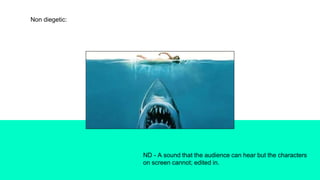
Non diegetic:
ND - A sound that the audience can hear but the characters
on screen cannot; edited in.
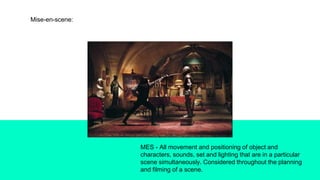
Mise-en-scene:
MES - All movement and positioning of object and
characters, sounds, set and lighting that are in a particular
scene simultaneously. Considered throughout the planning
and filming of a scene.

Micro elements

  • 1.
  • 2.
    Extreme close upshot: ECU - Zoomed in far and shows extreme detail of the subject; focusing on facial organs. It is too close to show general reactions or emotion. And is usually implemented to emphasise something and or its significance.
  • 3.
    Close up shot: CU- Zoomed in and shows detail of the subject; focusing on the facial region, emphasising the subject’s emotional state. Close up shots are used for showing detail; a specific feature of the subject covers most of the frame.
  • 4.
    Medium shot: MS -Zoomed in and shows detail of the subject; focusing on the top region of their body, creates the audience the impression as if they were looking at the whole body.
  • 5.
    Long shot: LS -Zoomed out and shows the subject in relation to its environment; the subject covers the full height of the frame.
  • 6.
    Extreme long shot: ELS- Zoomed out and not showing detail of the subject; with the purpose of showing the subject’s surroundings; designed to show the audience where the action is taking place.
  • 7.
    Track shot: TS -The camera is mounted on a cart and travels along tracks; maintaining a movement that is parallel to the action.
  • 8.
    Pan shot: PS -A horizontal camera movement in which the camera moves left and right; focusing on the subject or action.
  • 9.
    Zoom shot: ZS -Changing the focal length of the lens to create the illusion of moving closer or further away from the subject. Altering the camera creates a different perspective that background objects seem to change in relation to foreground objects.
  • 10.
    Jump cut: JC -A transition between two shots which seems to jump because of the way the shots are framed in relation with each other.
  • 11.
    Pace: P - Speedof transitions, and playback of videos.
  • 12.
    Performance: P - Presentingthe play, concert or another form of entertainment to an audience.
  • 13.
    Diegetic: D - Asound that the character or characters on screen can hear; usually not edited in.
  • 14.
    Non diegetic: ND -A sound that the audience can hear but the characters on screen cannot; edited in.
  • 15.
    Mise-en-scene: MES - Allmovement and positioning of object and characters, sounds, set and lighting that are in a particular scene simultaneously. Considered throughout the planning and filming of a scene.