Research process
Presented by:- kasmi toufik
What is Methodology?
A system of broad principles or rules from which
specific methods or procedures may be derived
to interpret or solve different problems within the
scope of a particular discipline. methodology is
set of practices
Research
Research in common parlance
refers to a search for knowledge
Redman and Mory define research
as a “systematized effort to gain
new knowledge.”
Characteristics of Research
Empirical: Based on observation and
experimentation.
Systematic: Follows orderly and sequential
procedure.
Controlled: All variables except those are tested.
Employs Hypothesis: Guides the investigation
process.
Analytical: No error in interpretation.
Objective: All things are based on empirical.
Employs quantitative or statistical methods :
Data are transformed into numerical measures.
Aims of Research
1-To achieve new insights into a
phenomenon 2- To portray accurately the
characteristics of particular, individual,
or a group.
3- To determine the frequency.
4- To test a hypothesis of a causal
relationship between variables.
Research Methods and
Methodology
Research Methodology is science of studying
how research is done scientifically.
Research Methods are the techniques that are
used for conduction of research.
Research Methods are do constitute a
part of the Research Methodology.
Approaches to Research
There are many approaches concerning
research, but we are concerned with:
 Qualitative Approach: Gathering
information focuses on describing a
phenomenon in deep comprehensive
manner.
 Quantitative Approach:Gathering
information focuses on describing a
phenomenon across a large number of
participants.
Types of Research
 Descriptive Vs Analytical: Description of
the state of affairs as it exists at present;
whereas the second one analyses info
already available
 Applied Vs Fundamental: Aims at finding
a solution, so it is for a reason; whereas
the second one is pure and aims at
formulating a theory.
 Quantitative Vs Qualitative:
Measurement of quantity ( number of
people); whereas the second one deals
with quality ( human behaviour ).
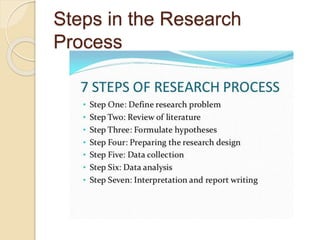
Steps in the Research
Process
Formulating a research
problem
Refers to identifying what it is that
you want to find out about.
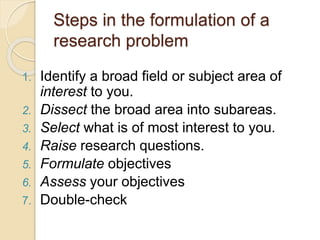
Steps in the formulation of a
research problem
1. Identify a broad field or subject area of
interest to you.
2. Dissect the broad area into subareas.
3. Select what is of most interest to you.
4. Raise research questions.
5. Formulate objectives
6. Assess your objectives
7. Double-check
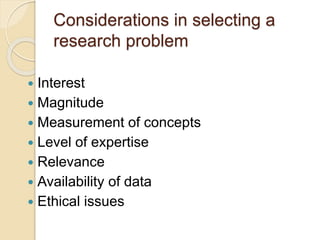
Considerations in selecting a
research problem
 Interest
 Magnitude
 Measurement of concepts
 Level of expertise
 Relevance
 Availability of data
 Ethical issues
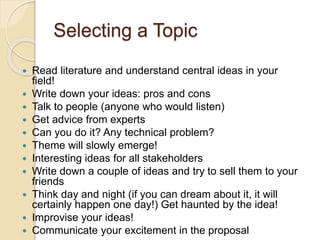
Selecting a Topic
 Read literature and understand central ideas in your
field!
 Write down your ideas: pros and cons
 Talk to people (anyone who would listen)
 Get advice from experts
 Can you do it? Any technical problem?
 Theme will slowly emerge!
 Interesting ideas for all stakeholders
 Write down a couple of ideas and try to sell them to your
friends
 Think day and night (if you can dream about it, it will
certainly happen one day!) Get haunted by the idea!
 Improvise your ideas!
 Communicate your excitement in the proposal

Methodology and research process

  • 1.
  • 2.
    What is Methodology? Asystem of broad principles or rules from which specific methods or procedures may be derived to interpret or solve different problems within the scope of a particular discipline. methodology is set of practices
  • 3.
    Research Research in commonparlance refers to a search for knowledge Redman and Mory define research as a “systematized effort to gain new knowledge.”
  • 4.
    Characteristics of Research Empirical:Based on observation and experimentation. Systematic: Follows orderly and sequential procedure. Controlled: All variables except those are tested. Employs Hypothesis: Guides the investigation process. Analytical: No error in interpretation. Objective: All things are based on empirical. Employs quantitative or statistical methods : Data are transformed into numerical measures.
  • 5.
    Aims of Research 1-Toachieve new insights into a phenomenon 2- To portray accurately the characteristics of particular, individual, or a group. 3- To determine the frequency. 4- To test a hypothesis of a causal relationship between variables.
  • 6.
    Research Methods and Methodology ResearchMethodology is science of studying how research is done scientifically. Research Methods are the techniques that are used for conduction of research. Research Methods are do constitute a part of the Research Methodology.
  • 7.
    Approaches to Research Thereare many approaches concerning research, but we are concerned with:  Qualitative Approach: Gathering information focuses on describing a phenomenon in deep comprehensive manner.  Quantitative Approach:Gathering information focuses on describing a phenomenon across a large number of participants.
  • 8.
    Types of Research Descriptive Vs Analytical: Description of the state of affairs as it exists at present; whereas the second one analyses info already available  Applied Vs Fundamental: Aims at finding a solution, so it is for a reason; whereas the second one is pure and aims at formulating a theory.  Quantitative Vs Qualitative: Measurement of quantity ( number of people); whereas the second one deals with quality ( human behaviour ).
  • 9.
    Steps in theResearch Process
  • 10.
    Formulating a research problem Refersto identifying what it is that you want to find out about.
  • 11.
    Steps in theformulation of a research problem 1. Identify a broad field or subject area of interest to you. 2. Dissect the broad area into subareas. 3. Select what is of most interest to you. 4. Raise research questions. 5. Formulate objectives 6. Assess your objectives 7. Double-check
  • 12.
    Considerations in selectinga research problem  Interest  Magnitude  Measurement of concepts  Level of expertise  Relevance  Availability of data  Ethical issues
  • 13.
    Selecting a Topic Read literature and understand central ideas in your field!  Write down your ideas: pros and cons  Talk to people (anyone who would listen)  Get advice from experts  Can you do it? Any technical problem?  Theme will slowly emerge!  Interesting ideas for all stakeholders  Write down a couple of ideas and try to sell them to your friends  Think day and night (if you can dream about it, it will certainly happen one day!) Get haunted by the idea!  Improvise your ideas!  Communicate your excitement in the proposal

Editor's Notes