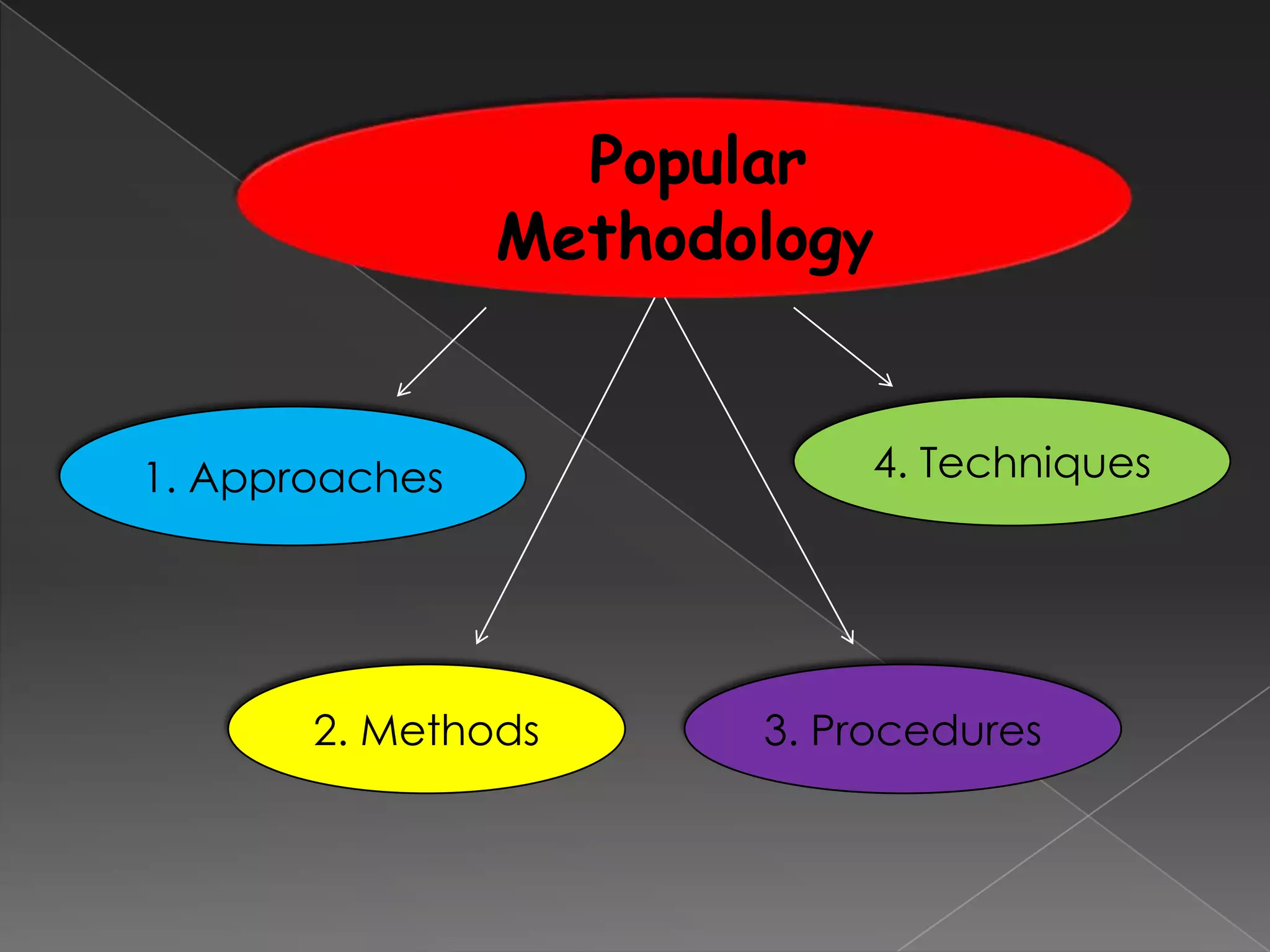
Popular
                Methodology


1. Approaches               4. Techniques


       2. Methods      3. Procedures
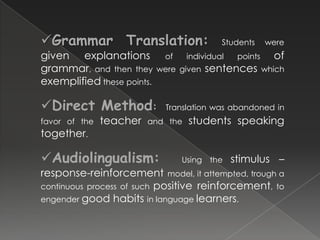
Grammar Translation:                       Students      were
given explanations           of    individual    points     of
grammar, and then they      were given   sentences        which
exemplified these points.

Direct Method:               Translation was abandoned in
favor of the   teacher   and the   students speaking
together.

Audiolingualism:                 Using the     stimulus –
response-reinforcement model, it attempted, trough a
continuous process of such positive reinforcement, to
engender good habits in language learners.
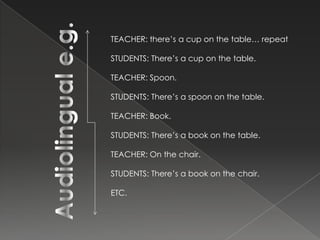
TEACHER: there’s a cup on the table… repeat

STUDENTS: There’s a cup on the table.

TEACHER: Spoon.

STUDENTS: There’s a spoon on the table.

TEACHER: Book.

STUDENTS: There’s a book on the table.

TEACHER: On the chair.

STUDENTS: There’s a book on the chair.

ETC.
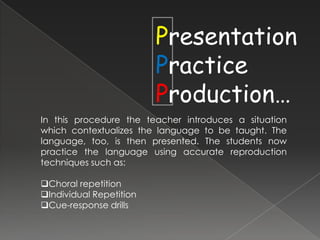
Presentation
                         Practice
                         Production…
In this procedure the teacher introduces a situation
which contextualizes the language to be taught. The
language, too, is then presented. The students now
practice the language using accurate reproduction
techniques such as:

Choral repetition
Individual Repetition
Cue-response drills
Laura   Lina      sofia


Tom &
Ana         Sara   Paul
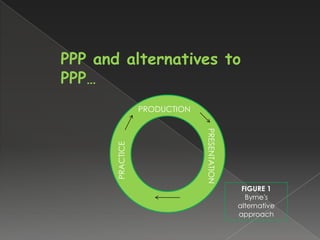
PPP and alternatives to
PPP…
                  PRODUCTION


                               PRESENTATION
       PRACTICE


                                               FIGURE 1
                                                Byrne's
                                              alternative
                                              approach
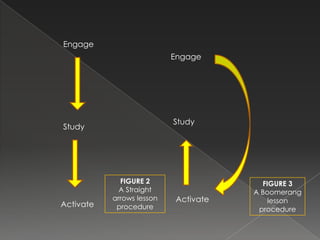
Engage
                           Engage


                           Study
Study


             FIGURE 2                   FIGURE 3
             A Straight               A Boomerang
           arrows lesson   Activate       lesson
Activate    procedure                  procedure
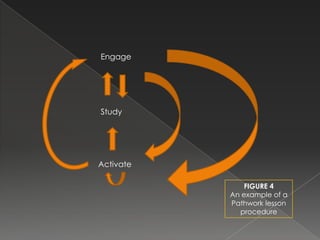
Engage


Study


Activate

               FIGURE 4
           An example of a
           Pathwork lesson
             procedure
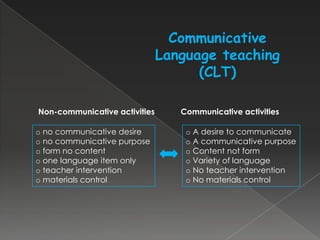
Communicative
                               Language teaching
                                     (CLT)

Non-communicative activities      Communicative activities

o no communicative desire          o A desire to communicate
o no communicative purpose         o A communicative purpose
o form no content                  o Content not form
o one language item only           o Variety of language
o teacher intervention             o No teacher intervention
o materials control                o No materials control
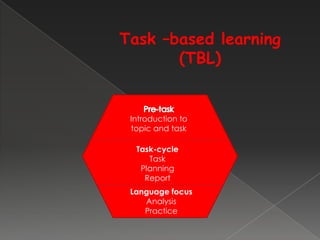
Task –based learning
       (TBL)


 Introduction to
 topic and task

  Task-cycle
     Task
   Planning
    Report
 Language focus
    Analysis
    Practice
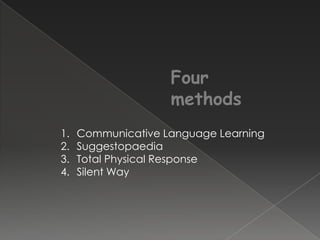
Four
                    methods
1.   Communicative Language Learning
2.   Suggestopaedia
3.   Total Physical Response
4.   Silent Way
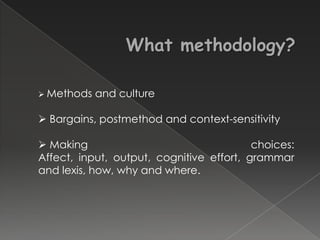
What methodology?

 Methods   and culture

 Bargains, postmethod and context-sensitivity

 Making                                  choices:
Affect, input, output, cognitive effort, grammar
and lexis, how, why and where.

Methodology

  • 1.
    Popular Methodology 1. Approaches 4. Techniques 2. Methods 3. Procedures
  • 2.
    Grammar Translation: Students were given explanations of individual points of grammar, and then they were given sentences which exemplified these points. Direct Method: Translation was abandoned in favor of the teacher and the students speaking together. Audiolingualism: Using the stimulus – response-reinforcement model, it attempted, trough a continuous process of such positive reinforcement, to engender good habits in language learners.
  • 3.
    TEACHER: there’s acup on the table… repeat STUDENTS: There’s a cup on the table. TEACHER: Spoon. STUDENTS: There’s a spoon on the table. TEACHER: Book. STUDENTS: There’s a book on the table. TEACHER: On the chair. STUDENTS: There’s a book on the chair. ETC.
  • 4.
    Presentation Practice Production… In this procedure the teacher introduces a situation which contextualizes the language to be taught. The language, too, is then presented. The students now practice the language using accurate reproduction techniques such as: Choral repetition Individual Repetition Cue-response drills
  • 5.
    Laura Lina sofia Tom & Ana Sara Paul
  • 6.
    PPP and alternativesto PPP… PRODUCTION PRESENTATION PRACTICE FIGURE 1 Byrne's alternative approach
  • 7.
    Engage Engage Study Study FIGURE 2 FIGURE 3 A Straight A Boomerang arrows lesson Activate lesson Activate procedure procedure
  • 8.
    Engage Study Activate FIGURE 4 An example of a Pathwork lesson procedure
  • 9.
    Communicative Language teaching (CLT) Non-communicative activities Communicative activities o no communicative desire o A desire to communicate o no communicative purpose o A communicative purpose o form no content o Content not form o one language item only o Variety of language o teacher intervention o No teacher intervention o materials control o No materials control
  • 10.
    Task –based learning (TBL) Introduction to topic and task Task-cycle Task Planning Report Language focus Analysis Practice
  • 11.
    Four methods 1. Communicative Language Learning 2. Suggestopaedia 3. Total Physical Response 4. Silent Way
  • 12.
    What methodology?  Methods and culture  Bargains, postmethod and context-sensitivity  Making choices: Affect, input, output, cognitive effort, grammar and lexis, how, why and where.