N AV J O T K A U R
UTILIZATION OF
RESEARCH FINDINGS
INTRODUCTION
• It is not a novel idea that nurses need to engage in
research, and integrate research findings into practice.
• In spite of this, the actual utilization of research and
practice has yet to be realized. The gap that exists
between research and practice has been termed
research-practice gap.
DEFINITION
• Research utilization is the process of synthesizing,
disseminating and using research generated knowledge
to make and impact on or change in the existing
practices in the society.
BARRIERS IN UTILIZATION OF NURSING
RESEARCH
• A major barrier to research utilization is the absence of
published research on specific clinical issues.
• Published research may have limitations (e.g. sample
size or design) that restrict the ability to generalize
results to clinical practice settings.
• Nurses may lack experience reading and critiquing
research reports and may have difficulty interpreting
study designs and statistical findings.
MAIN CONSTRAINTS TO USE OF
NURSING RESEARCH FINDINGS ARE AS
FOLLOWS:
• Nurses lack time to actively participate in conducting and
implementing research.
• They lack the resources to read current research
findings.
• Nurses do not understand the importance of research.
• Research is the minute and difficult component of under
graduate nursing programmes.
• Health care system pays little attention to research in
nursing.
CONTD….
• Lack of access to research literature for the bedside
clinical nurses.
• Investigators lack of preservation of research from a
clinical perspective and their use of research jargon can
make it difficult for staff nurses to understand or interpret
study results.
• Published research may have few clinical applications
and staff nurses may not read nursing research journals.
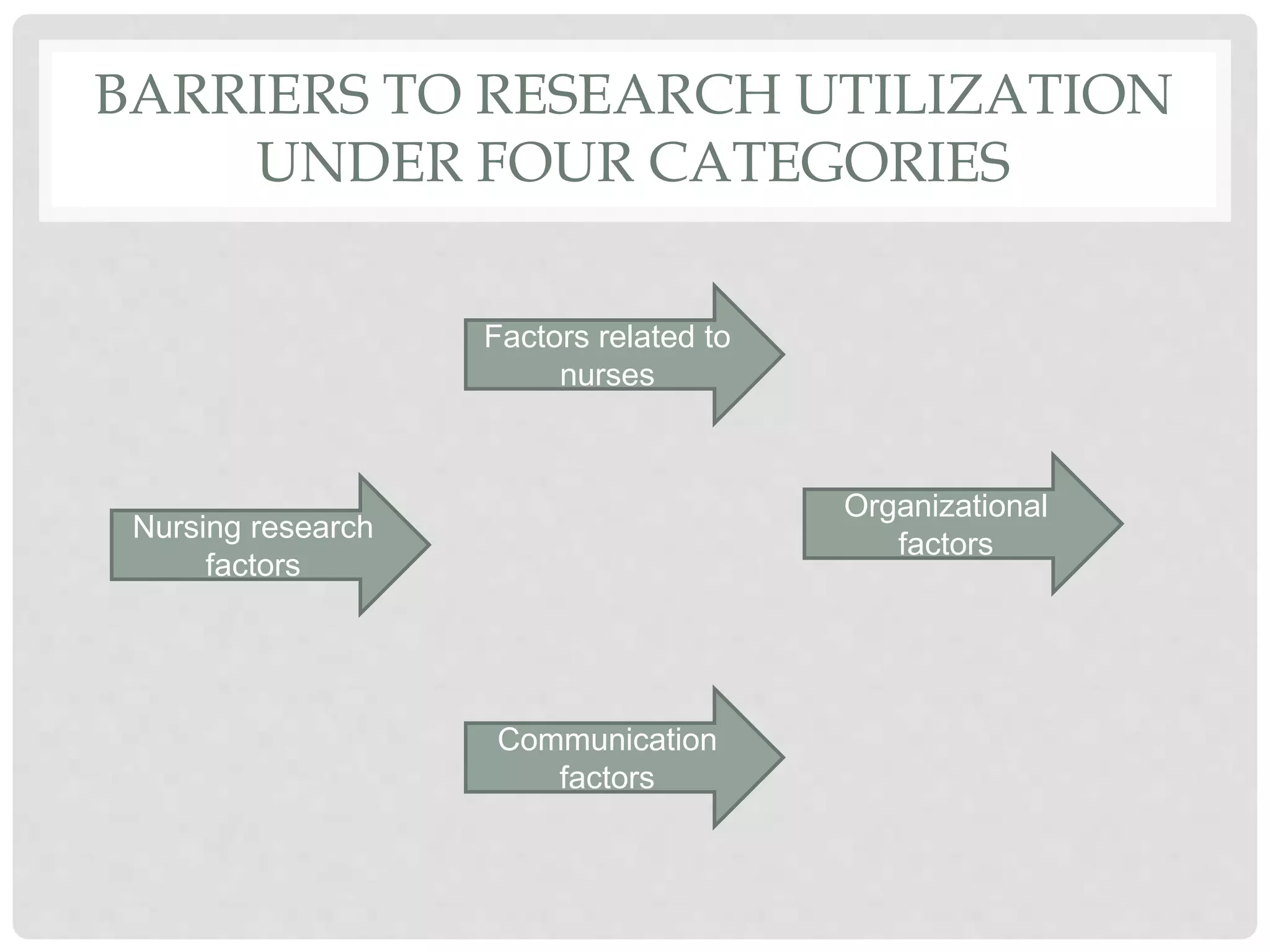
BARRIERS TO RESEARCH UTILIZATION
UNDER FOUR CATEGORIES
Factors related to
nurses
Organizational
factors
Nursing research
factors
Communication
factors
FACTORS RELATED TO NURSES
• Lack of time, motivation, confidence, research knowledge,
money and resources.
• Nurses do not see the value of research for practice.
• They see little benefit of research for them.
• Some are inflexible and unwilling to change
• There is not a documented need to change practice.
• Nurses lack confidence in new research findings.
• Unaware about the importance of the research.
NURSING RESEARCH FACTORS
• The research has methodological inadequacies
• The conclusions drawn from the research are not justified.
• The research has not been replicated.
• The literature reports conflicting results.
• The nurses are uncertain whether to believe the results of the
research.
• Research articles are not published fast enough.
• Nursing research generally lacks the appropriate clinical
applicable recommendations.
ORGANIZATIONAL FACTORS
• Organizations fail to provide access to journals and
research resources.
• Lack of funds to support new research findings.
• Administration does not allow implementation of
research findings
• Physicians some times do not cooperate with
implementation of new research findings
• There is insufficient time on the job to implement new
ideas.
• Other staff are not supportive of implementation
• The facilities are inadequate for implementation.
COMMUNICATION FACTORS
• Lack of collaboration between researchers and clinicians
• lack of presentation of research findings to nurses in
clinical area
• Lack of publications in clinical nursing journals
• Lack of understanding
• Contradicting information in journals and text books
• Implications for nursing are not made clear
• Research reports/ articles are not readily available
• Research is not reported clearly
• Statistical analysis is not understandable
STRATEGIES TO FACILITATE
UTILIZATION OF NURSING RESEARCH
• The most crucial factor in facilitating research utilization
is the identification of clinically relevant problems and
issues.
• Nursing administrators who provide adequate resources
help promote research utilization.
• Nurse administrators can promote links between clinical
nurses and researchers.
• Administrators can provide access to nursing literature
through libraries.
To overcome the barriers a combined effort from nurses in
education, research, administration and clinical practice is
required.
NURSE EDUCATORS
• These are role models in providing foundation fro
research-based practice.
• They must have the ability to foster research and make it
interesting for students.
• If nurse educators refer research findings in their
lectures, students realize the importance of research.
• Students must be encouraged to seek latest research
findings in their field so they can possess the most
current practice.
NURSE RESEARCHERS
• They must focus their research activity on current clinical
problems
• Disseminate research results as early as possible.
• Present research findings locally, regionally and nationally.
• Publish the research findings in clinical as well as scientific
journals
• Clearly delineate practice implications of results.
NURSE ADMINISTRATORS
• To establish a research-friendly culture in an
organization.
• Encourage clinicians to question traditional activities.
• Provision of appreciation an awards for innovation
• They can incorporate research role in job descriptions.
• They should provide resources for research such as
literature, internet access etc.
• Encourage and support continuing education,
conference participation and publication
NURSE CLINICIANS
• They should question practice traditions
• Stay updated with literature
• Commit to continuous learning, such as continuing education,
joining professional organizations and pursuing advanced
degrees.
• Collaborate with researchers.
• Support research conduct in clinical setting
• Take risks to make changes and improve practice.

Utilization of research findings

  • 1.
    N AV JO T K A U R UTILIZATION OF RESEARCH FINDINGS
  • 2.
    INTRODUCTION • It isnot a novel idea that nurses need to engage in research, and integrate research findings into practice. • In spite of this, the actual utilization of research and practice has yet to be realized. The gap that exists between research and practice has been termed research-practice gap.
  • 3.
    DEFINITION • Research utilizationis the process of synthesizing, disseminating and using research generated knowledge to make and impact on or change in the existing practices in the society.
  • 4.
    BARRIERS IN UTILIZATIONOF NURSING RESEARCH • A major barrier to research utilization is the absence of published research on specific clinical issues. • Published research may have limitations (e.g. sample size or design) that restrict the ability to generalize results to clinical practice settings. • Nurses may lack experience reading and critiquing research reports and may have difficulty interpreting study designs and statistical findings.
  • 5.
    MAIN CONSTRAINTS TOUSE OF NURSING RESEARCH FINDINGS ARE AS FOLLOWS: • Nurses lack time to actively participate in conducting and implementing research. • They lack the resources to read current research findings. • Nurses do not understand the importance of research. • Research is the minute and difficult component of under graduate nursing programmes. • Health care system pays little attention to research in nursing.
  • 6.
    CONTD…. • Lack ofaccess to research literature for the bedside clinical nurses. • Investigators lack of preservation of research from a clinical perspective and their use of research jargon can make it difficult for staff nurses to understand or interpret study results. • Published research may have few clinical applications and staff nurses may not read nursing research journals.
  • 7.
    BARRIERS TO RESEARCHUTILIZATION UNDER FOUR CATEGORIES Factors related to nurses Organizational factors Nursing research factors Communication factors
  • 8.
    FACTORS RELATED TONURSES • Lack of time, motivation, confidence, research knowledge, money and resources. • Nurses do not see the value of research for practice. • They see little benefit of research for them. • Some are inflexible and unwilling to change • There is not a documented need to change practice. • Nurses lack confidence in new research findings. • Unaware about the importance of the research.
  • 9.
    NURSING RESEARCH FACTORS •The research has methodological inadequacies • The conclusions drawn from the research are not justified. • The research has not been replicated. • The literature reports conflicting results. • The nurses are uncertain whether to believe the results of the research. • Research articles are not published fast enough. • Nursing research generally lacks the appropriate clinical applicable recommendations.
  • 10.
    ORGANIZATIONAL FACTORS • Organizationsfail to provide access to journals and research resources. • Lack of funds to support new research findings. • Administration does not allow implementation of research findings • Physicians some times do not cooperate with implementation of new research findings • There is insufficient time on the job to implement new ideas. • Other staff are not supportive of implementation • The facilities are inadequate for implementation.
  • 11.
    COMMUNICATION FACTORS • Lackof collaboration between researchers and clinicians • lack of presentation of research findings to nurses in clinical area • Lack of publications in clinical nursing journals • Lack of understanding • Contradicting information in journals and text books • Implications for nursing are not made clear • Research reports/ articles are not readily available • Research is not reported clearly • Statistical analysis is not understandable
  • 12.
    STRATEGIES TO FACILITATE UTILIZATIONOF NURSING RESEARCH • The most crucial factor in facilitating research utilization is the identification of clinically relevant problems and issues. • Nursing administrators who provide adequate resources help promote research utilization. • Nurse administrators can promote links between clinical nurses and researchers. • Administrators can provide access to nursing literature through libraries.
  • 13.
    To overcome thebarriers a combined effort from nurses in education, research, administration and clinical practice is required.
  • 14.
    NURSE EDUCATORS • Theseare role models in providing foundation fro research-based practice. • They must have the ability to foster research and make it interesting for students. • If nurse educators refer research findings in their lectures, students realize the importance of research. • Students must be encouraged to seek latest research findings in their field so they can possess the most current practice.
  • 15.
    NURSE RESEARCHERS • Theymust focus their research activity on current clinical problems • Disseminate research results as early as possible. • Present research findings locally, regionally and nationally. • Publish the research findings in clinical as well as scientific journals • Clearly delineate practice implications of results.
  • 16.
    NURSE ADMINISTRATORS • Toestablish a research-friendly culture in an organization. • Encourage clinicians to question traditional activities. • Provision of appreciation an awards for innovation • They can incorporate research role in job descriptions. • They should provide resources for research such as literature, internet access etc. • Encourage and support continuing education, conference participation and publication
  • 17.
    NURSE CLINICIANS • Theyshould question practice traditions • Stay updated with literature • Commit to continuous learning, such as continuing education, joining professional organizations and pursuing advanced degrees. • Collaborate with researchers. • Support research conduct in clinical setting • Take risks to make changes and improve practice.