OHM’S
LAW
GRADE 8 PHYSICS
LET’S PL ACTIVITY
Learning
Objectives
A. describe how metals bond with each other.
B. appreciate the importance of metals and
properties of metals in their uses in daily life.
C. create a model that represent metallic bonding.
TOPIC 2.3 METALLIC BONDIBG
• WHAT IS METALLIC BOND?
• FACTORS AFFECTING METALLIC BOND
• PROPERTIES OF METAL
• USES IN EVERYDAY LIFE
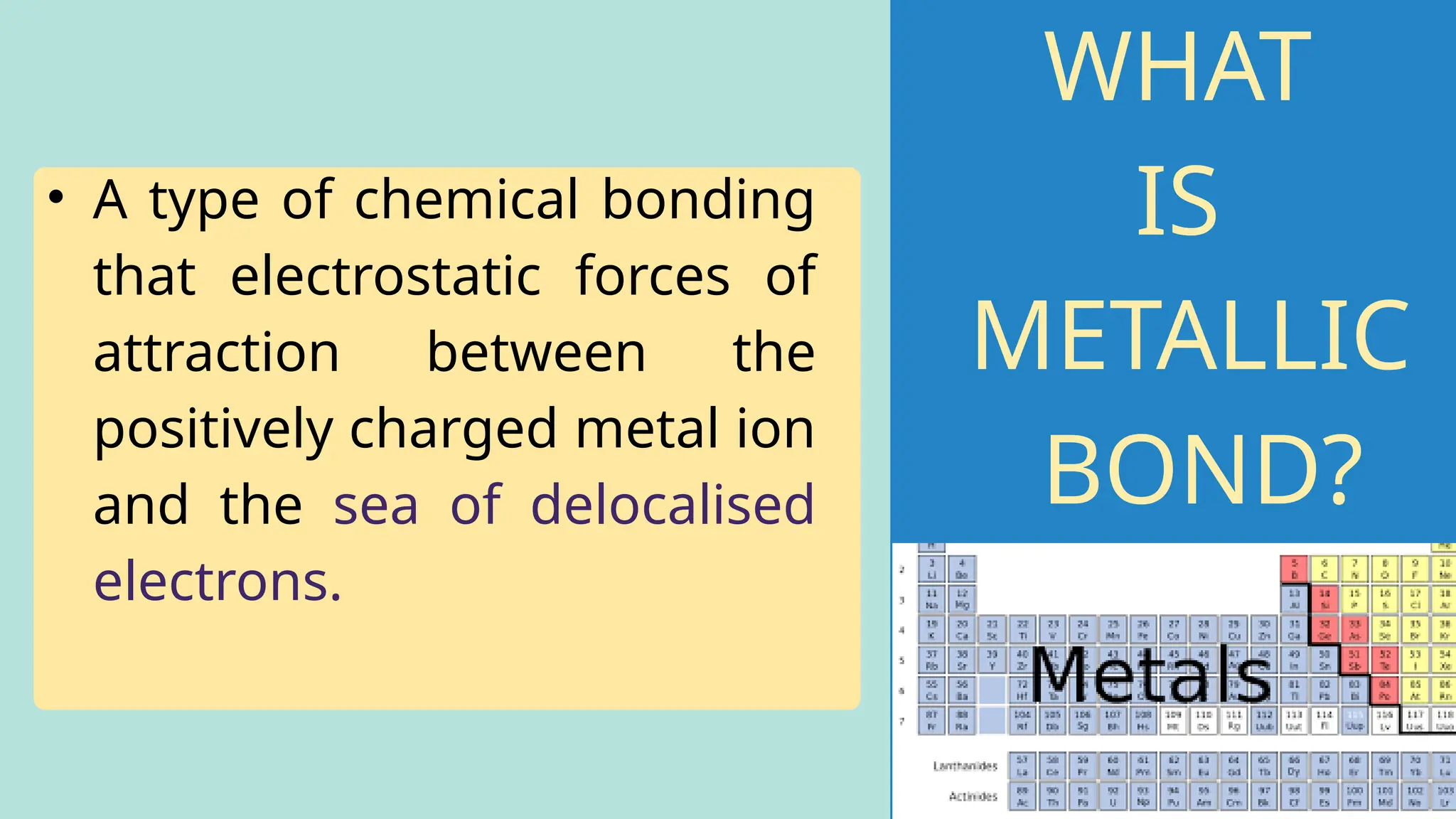
• A type of chemical bonding
that electrostatic forces of
attraction between the
positively charged metal ion
and the sea of delocalised
electrons.
WHAT
IS
METALLIC
BOND?
How do metals bond with other metals?
EXAMPLES
• Higher valence
electrons, stronger
metallic bond
• Smaller the atomic size,
stronger metallic bond
FACTORS
AFFECTING
METALLIC
BOND
The strength of metallic bonds is
influenced by the number of valence
electrons and the size of the metal ions.
PROPERTIES
OF
METAL
• Malleability
• Ductility
• Electrical
Conductivity
• Thermal
Conductivity
• Metallic luster
• refers to a material's capacity to be shaped.
The term is often used with reference to
metals, as in the degree to which they can
be shaped by pounding with a hammer or
rolled into thin sheets.
Malleability
Ductility
• refers to the ability of a
substance such as a metal to be
stretched or shaped without
breaking. Thus, metals can be
drawn into wires.
Electrical
Conductivity
• refers to the measure of the
amount of electrical current
a material can carry or it's
ability to carry a current.
Thermal
Conductivity
• refers to the ability of a given
material to conduct or
transfer heat.
Metallic
Luster
• is a property of a metal that
describes the amount of light that
reflects off the metal. In other
words, it describes the shine of
metals. This property is one of the
identifying qualities of metals that
sets them apart from other
elements on the periodic table.
USES
IN
EVERYDA
Y
Metallic bonds can be used to make metal alloys. Metallic
bonds are used via copper wires in a house in order to
transfer electricity due to its conductive properties.
A metal alloy is a substance that combines more than one
metal or mixes a metal with other non-metallic elements.
Alloys Compositions Uses
Brass Cu + Zn In making utensils.
Bronze Cu + Sn In making coins, bell and utensils.
Stainless steel Fe + Cr + Ni + C
For making utensils and surgical
cutlery.
Gun Metal Cu + Sn + Zn + Pb
In making guns, barrels, gears and
bearings.
Dutch metal Cu + Zn In making artificial ornaments.
Delta metal Cu + Zn + Fe In making blades of aeroplane.
Munz metal Cu + Zn In making coins
Type metal Sn + Pb + Sb In printing industry.
Rolled Gold Cu + Al In making cheap ornaments.
Nickel steel Fe + Ni
For making electrical wire,
automobile parts.
List of Important Alloys and their Uses
1. Why do metals play an important role to our life? Give
examples.
2. How does understanding metallic bonding help
explain the versatility of metals in everyday objects?
3. How does the concept of metallic bonding connect to
advancements in technology?
VALUING
The class will be divided into four groups. Each group
will receive materials and instructions for preparing
the required items. Each group is tasked with creating
a model representing metallic bonding. Encourage
creativity in their approach. Additionally, each group
will craft a HUGOT line about Metallic Bonding and
present it to the class.
FIXING SKILLS
ASSESSMENT
I. Multiple Choice. Read each item carefully and encircle the letter of the best answer.
Use ½ crosswise.
1. What type of bonding involves the sharing of electrons between metal atoms?
a) Ionic Bonding b) Covalent Bonding c) Metallic Bonding
2. Which property of metals is primarily due to metallic bonding?
a) Conductivity b) Malleability c) Solubility
3. What is the name of the lattice structure formed by metal atoms in metallic bonding?
a) Ionic lattice b) Covalent lattice c) Crystal lattice
4. What is the key characteristic of electrons in metallic bonding?
a) Localized b) Delocalized c) Shared
5. What is the general state of metals at room temperature, considering metallic bonding?
a) Liquid b) Gas c) Solid
ASSESSMENT
II. In Table 1. list down the metallic properties that you know and try to explain why metals
possess those properties.
METALLIC PROPERTY EXPLANATION
1.
2.
3.
4.
5.
Research on an innovative application of a specific metal in
modern technology, emphasizing its impact on society and the
economy. Present your findings by writing or printing them on
a long bond paper.
ASSIGNMENT
THANK YOU !

metallic bond- grade 8 chemistry 3 grade

  • 1.
  • 2.
  • 3.
    Learning Objectives A. describe howmetals bond with each other. B. appreciate the importance of metals and properties of metals in their uses in daily life. C. create a model that represent metallic bonding.
  • 4.
    TOPIC 2.3 METALLICBONDIBG • WHAT IS METALLIC BOND? • FACTORS AFFECTING METALLIC BOND • PROPERTIES OF METAL • USES IN EVERYDAY LIFE
  • 6.
    • A typeof chemical bonding that electrostatic forces of attraction between the positively charged metal ion and the sea of delocalised electrons. WHAT IS METALLIC BOND?
  • 7.
    How do metalsbond with other metals?
  • 8.
    How do metalsbond with other metals?
  • 9.
  • 11.
    • Higher valence electrons,stronger metallic bond • Smaller the atomic size, stronger metallic bond FACTORS AFFECTING METALLIC BOND The strength of metallic bonds is influenced by the number of valence electrons and the size of the metal ions.
  • 13.
    PROPERTIES OF METAL • Malleability • Ductility •Electrical Conductivity • Thermal Conductivity • Metallic luster
  • 14.
    • refers toa material's capacity to be shaped. The term is often used with reference to metals, as in the degree to which they can be shaped by pounding with a hammer or rolled into thin sheets. Malleability
  • 15.
    Ductility • refers tothe ability of a substance such as a metal to be stretched or shaped without breaking. Thus, metals can be drawn into wires.
  • 16.
    Electrical Conductivity • refers tothe measure of the amount of electrical current a material can carry or it's ability to carry a current.
  • 17.
    Thermal Conductivity • refers tothe ability of a given material to conduct or transfer heat.
  • 18.
    Metallic Luster • is aproperty of a metal that describes the amount of light that reflects off the metal. In other words, it describes the shine of metals. This property is one of the identifying qualities of metals that sets them apart from other elements on the periodic table.
  • 19.
  • 20.
    Metallic bonds canbe used to make metal alloys. Metallic bonds are used via copper wires in a house in order to transfer electricity due to its conductive properties. A metal alloy is a substance that combines more than one metal or mixes a metal with other non-metallic elements.
  • 21.
    Alloys Compositions Uses BrassCu + Zn In making utensils. Bronze Cu + Sn In making coins, bell and utensils. Stainless steel Fe + Cr + Ni + C For making utensils and surgical cutlery. Gun Metal Cu + Sn + Zn + Pb In making guns, barrels, gears and bearings. Dutch metal Cu + Zn In making artificial ornaments. Delta metal Cu + Zn + Fe In making blades of aeroplane. Munz metal Cu + Zn In making coins Type metal Sn + Pb + Sb In printing industry. Rolled Gold Cu + Al In making cheap ornaments. Nickel steel Fe + Ni For making electrical wire, automobile parts. List of Important Alloys and their Uses
  • 22.
    1. Why dometals play an important role to our life? Give examples. 2. How does understanding metallic bonding help explain the versatility of metals in everyday objects? 3. How does the concept of metallic bonding connect to advancements in technology? VALUING
  • 23.
    The class willbe divided into four groups. Each group will receive materials and instructions for preparing the required items. Each group is tasked with creating a model representing metallic bonding. Encourage creativity in their approach. Additionally, each group will craft a HUGOT line about Metallic Bonding and present it to the class. FIXING SKILLS
  • 24.
    ASSESSMENT I. Multiple Choice.Read each item carefully and encircle the letter of the best answer. Use ½ crosswise. 1. What type of bonding involves the sharing of electrons between metal atoms? a) Ionic Bonding b) Covalent Bonding c) Metallic Bonding 2. Which property of metals is primarily due to metallic bonding? a) Conductivity b) Malleability c) Solubility 3. What is the name of the lattice structure formed by metal atoms in metallic bonding? a) Ionic lattice b) Covalent lattice c) Crystal lattice 4. What is the key characteristic of electrons in metallic bonding? a) Localized b) Delocalized c) Shared 5. What is the general state of metals at room temperature, considering metallic bonding? a) Liquid b) Gas c) Solid
  • 25.
    ASSESSMENT II. In Table1. list down the metallic properties that you know and try to explain why metals possess those properties. METALLIC PROPERTY EXPLANATION 1. 2. 3. 4. 5.
  • 26.
    Research on aninnovative application of a specific metal in modern technology, emphasizing its impact on society and the economy. Present your findings by writing or printing them on a long bond paper. ASSIGNMENT
  • 27.

Editor's Notes

  • #6 This is sometimes described as "an array of positive ions in a sea of electrons". If you are going to use this view, beware! Is a metal made up of atoms or ions? It is made of atoms. Each positive center in the diagram represents all the rest of the atom apart from the outer electron, but that electron has not been lost - it may no longer have an attachment to a particular atom, but it's still there in the structure.