Cataloging Efficiencies:
Managing Metadata for
E-book Collections


ALA Annual 2012
Anaheim, CA
Holly Tomren
@htomren
My context:
 Academic    library
 About 150,000 ebooks
 About 20 ebook
  providers, multiple
  collections
 Small staff
 Individual cataloging for most packages
  not feasible; look for batch solutions
Ebook metadata
 Different providers = different workflows
 Different frequencies
 Notifications are rare
 Not all vendors provide MARC records
 Quality of vendor MARC records varies
 Not all vendors provide info about
  changed records (UPD, DEL)
 Few provide OCLC numbers/holdings
Workflow: Varies by Vendor
 Example    A: WorldCat Collection Set;
  monthly email notification, retrieve via FTP
 Example B: generate files on demand
  from web interface; separate NEW and
  DEL files; not OCLC records
 Example C: generate file on demand
  from web interface; 1 mixed file (NEW &
  DEL); no control numbers, no match point
Workflow: Varies by Vendor
 Example   D: generate file from web
  interface based on date (broken); no DEL
  notifications
 Example E: provides records through
  multiple sources but coverage different in
  each source; lots of cleanup, bad links
 Example F: updates collection
  constantly, but MARC records only once
  a year
Workflow: Varies by Vendor
 Example   G: provides records and
  notification; OCLC numbers not in records
  but in separate spreadsheet
 Example H: No MARC records; title
  spreadsheet available
 Example I: No MARC records, no title list;
  check website manually
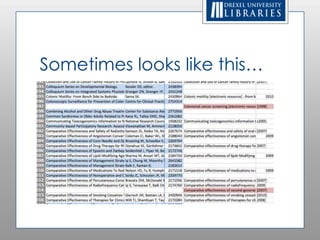
Sometimes looks like this…
Tools of the Trade
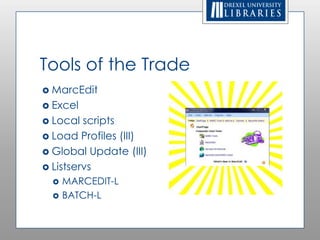
 MarcEdit
 Excel
 Local  scripts
 Load Profiles (III)
 Global Update (III)
 Listservs
     MARCEDIT-L
     BATCH-L
WCKB Pilot
 Beta started in March 2012
 Currently only using WCKB for ebooks, not
  ejournals
 5 ebook collections managed in WCKB to
  date
    As beta tester, comparing each collection
     to records from other sources
    So far, extremely accurate and timely
WCKB Workflow
 Select collections in KB, set up MARC
  customization options (one time)
 Daily record notifications via email
 Download files via FTP
 Clearly identified NEW, UPD, DEL
     Separate with MarcEdit if necessary
 Load records without editing
 Minimal spot checking in Global Update
WCKB Benefits
   Retrieve records for all providers in one
    place, including NEW, UPD, DEL
   Notification – no more elaborate schedules
   Customizable records – less in-house editing
   URLs are correct
   Efficient way to manage provider-neutral
    records
   OCLC holdings set, OCLC numbers included
   Free with OCLC cataloging subscription
Greater Discoverability
 Worldcat.org,  WorldCat Local
 Anything powered by WorldCat API
  (Mobile apps, Google “Find in a Library,”
  Selection tools, LibX, etc.)
WCKB Wishlist
 Improved  record matching
 More ebook collections in KB
 “Expert Community” functionality


                  … all of this is on the way
Conclusion
 More    efficient workflow
 More thorough and accurate access to
  ebooks in our catalog & discovery tools
 Still a combination of WCKB + other
  methods for now, but will move more
  ebooks to WCKB as time goes on
Thank you!

            Holly Tomren
     Head, Metadata Services
     Drexel University Libraries
     holly.tomren@drexel.edu

Managing Metadata for Ebook Collections

  • 1.
    Cataloging Efficiencies: Managing Metadatafor E-book Collections ALA Annual 2012 Anaheim, CA Holly Tomren @htomren
  • 2.
    My context:  Academic library  About 150,000 ebooks  About 20 ebook providers, multiple collections  Small staff  Individual cataloging for most packages not feasible; look for batch solutions
  • 3.
    Ebook metadata  Differentproviders = different workflows  Different frequencies  Notifications are rare  Not all vendors provide MARC records  Quality of vendor MARC records varies  Not all vendors provide info about changed records (UPD, DEL)  Few provide OCLC numbers/holdings
  • 4.
    Workflow: Varies byVendor  Example A: WorldCat Collection Set; monthly email notification, retrieve via FTP  Example B: generate files on demand from web interface; separate NEW and DEL files; not OCLC records  Example C: generate file on demand from web interface; 1 mixed file (NEW & DEL); no control numbers, no match point
  • 5.
    Workflow: Varies byVendor  Example D: generate file from web interface based on date (broken); no DEL notifications  Example E: provides records through multiple sources but coverage different in each source; lots of cleanup, bad links  Example F: updates collection constantly, but MARC records only once a year
  • 6.
    Workflow: Varies byVendor  Example G: provides records and notification; OCLC numbers not in records but in separate spreadsheet  Example H: No MARC records; title spreadsheet available  Example I: No MARC records, no title list; check website manually
  • 7.
  • 8.
    Tools of theTrade  MarcEdit  Excel  Local scripts  Load Profiles (III)  Global Update (III)  Listservs  MARCEDIT-L  BATCH-L
  • 9.
    WCKB Pilot  Betastarted in March 2012  Currently only using WCKB for ebooks, not ejournals  5 ebook collections managed in WCKB to date  As beta tester, comparing each collection to records from other sources  So far, extremely accurate and timely
  • 10.
    WCKB Workflow  Selectcollections in KB, set up MARC customization options (one time)  Daily record notifications via email  Download files via FTP  Clearly identified NEW, UPD, DEL  Separate with MarcEdit if necessary  Load records without editing  Minimal spot checking in Global Update
  • 11.
    WCKB Benefits  Retrieve records for all providers in one place, including NEW, UPD, DEL  Notification – no more elaborate schedules  Customizable records – less in-house editing  URLs are correct  Efficient way to manage provider-neutral records  OCLC holdings set, OCLC numbers included  Free with OCLC cataloging subscription
  • 12.
    Greater Discoverability  Worldcat.org, WorldCat Local  Anything powered by WorldCat API (Mobile apps, Google “Find in a Library,” Selection tools, LibX, etc.)
  • 13.
    WCKB Wishlist  Improved record matching  More ebook collections in KB  “Expert Community” functionality … all of this is on the way
  • 14.
    Conclusion  More efficient workflow  More thorough and accurate access to ebooks in our catalog & discovery tools  Still a combination of WCKB + other methods for now, but will move more ebooks to WCKB as time goes on
  • 15.
    Thank you! Holly Tomren Head, Metadata Services Drexel University Libraries holly.tomren@drexel.edu