MARGIN
SALES &
FORECASTING

OPEN TO BUY

Merchandising
INVENTORY
Process
MANAGEMENT
PERFORMANCE
ANALYSIS

STOCK
ALLOCATION

DISTRIBUTION
LOCATIONS

People

FINANCE

SUPPLY CHAIN

Influences

MANAGEMENT
REPORTING

POS

Systems

SUPPLIERS
MARKETING

MERCHANDISING
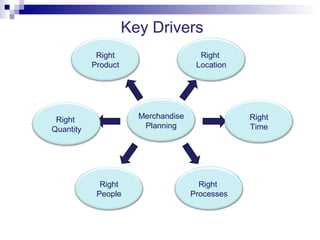
Key Drivers
Right
Product

Right
Location

Merchandise
Planning

Right
Quantity

Right
People

Right
Time

Right
Processes
Right Location
Physical Location
 Size
 Occupancy Costs
 Demographics
 Classification
 Grade
 Sales per m²

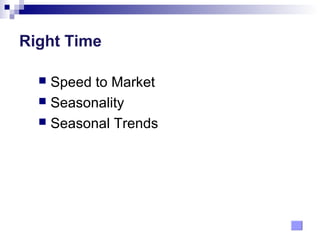
Right Time
Speed to Market
 Seasonality
 Seasonal Trends

Right Processes










Sales and Forecasting
Inventory Management
Stock Allocation
Supply Chain
Margin Management
Performance Analysis
Open to Buy
Industry Benchmarks
KPI’s
Right People
Level of Experience
 Level of Expertise
 Succession Planning
 Incentive Programs
 Training and Development Programs

Right Quantity
Size Matrix
 Colour Assortment
 Fabric Assortment
 No. of Styles
 Quantity per Style
 Sleeve Lengths
 Pant Lengths
 Category Mix

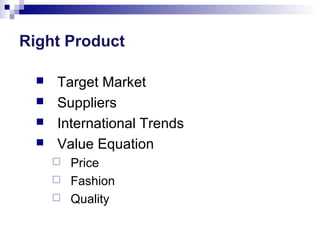
Right Product





Target Market
Suppliers
International Trends
Value Equation




Price
Fashion
Quality
Common Problems Experienced











Late to Market
High Stock Holdings
Wrong Product on Racks
Timing of Markdowns
Inadequate Stock Allocation Methodology
Range Planning not identifying Key Trends
Inadequate Margin Management
Lack of detailed Management Reporting
No Lifecycle Management Strategy
No Pre-Season Strategic Plan
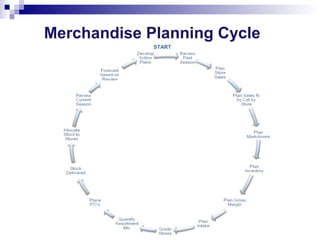
Merchandise Planning Cycle
START
Step 1






Review Past Season
Company Performance vs. Plan
Category/Dept/Store
Sell Thru by Product Type
Missed Opportunities
Step 2












Initial Budget Proposal for New
Season by Store at Company
level taking into account
Current Trends
New Stores
Refurbishments
Relocations and
Closures
Indicative Market Financial Trends
(CPI, Industry Growth)
Gross Margin Target
Step 3









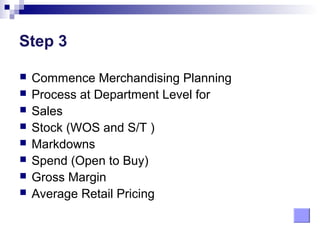
Commence Merchandising Planning
Process at Department Level for
Sales
Stock (WOS and S/T )
Markdowns
Spend (Open to Buy)
Gross Margin
Average Retail Pricing
Step 4









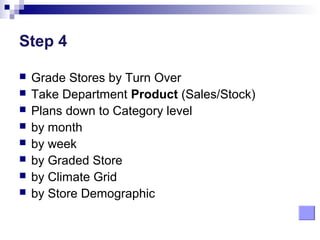
Grade Stores by Turn Over
Take Department Product (Sales/Stock)
Plans down to Category level
by month
by week
by Graded Store
by Climate Grid
by Store Demographic
Step 5






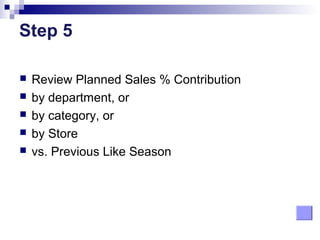
Review Planned Sales % Contribution
by department, or
by category, or
by Store
vs. Previous Like Season
Step 6












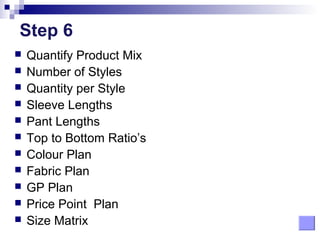
Quantify Product Mix
Number of Styles
Quantity per Style
Sleeve Lengths
Pant Lengths
Top to Bottom Ratio’s
Colour Plan
Fabric Plan
GP Plan
Price Point Plan
Size Matrix
Step 7



Sign-Off Product and Financial Plans
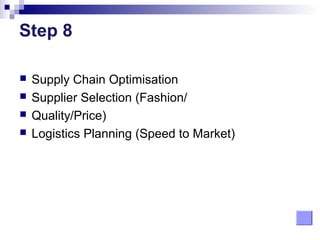
Step 8





Supply Chain Optimisation
Supplier Selection (Fashion/
Quality/Price)
Logistics Planning (Speed to Market)
Step 9






Stock Allocation Process
by Style
by Store (incl new/Refurb)
by performance vs. plan
Delivery to Store
Step 10





Sales/Stock Performance Review
by Store
by week
by month
FAQ Relating to Merchandise Planning Cycle


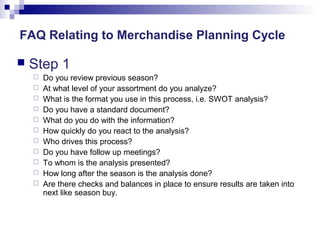
Step 1












Do you review previous season?
At what level of your assortment do you analyze?
What is the format you use in this process, i.e. SWOT analysis?
Do you have a standard document?
What do you do with the information?
How quickly do you react to the analysis?
Who drives this process?
Do you have follow up meetings?
To whom is the analysis presented?
How long after the season is the analysis done?
Are there checks and balances in place to ensure results are taken into
next like season buy.
FAQ Relating to Merchandise Planning Cycle


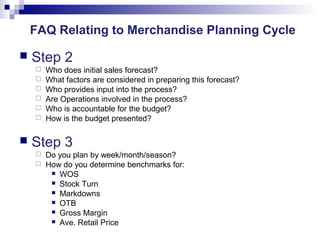
Step 2









Who does initial sales forecast?
What factors are considered in preparing this forecast?
Who provides input into the process?
Are Operations involved in the process?
Who is accountable for the budget?
How is the budget presented?

Step 3
Do you plan by week/month/season?
 How do you determine benchmarks for:
 WOS
 Stock Turn
 Markdowns
 OTB
 Gross Margin
 Ave. Retail Price

FAQ Relating to Merchandise Planning Cycle


Step 4
How are stores graded/ranked?
 What factors are considered when grading stores?
 Who provides input into this process?




Step 5
How much emphasis is placed on % sales contribution?
 At what level is this broken down to?




Step 6
Who determines the assortment plan?
 How do they go about developing their plan?
 Who drives the plan?
 Who owns the plan?

FAQ Relating to Merchandise Planning Cycle


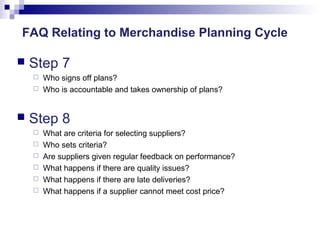
Step 7
Who signs off plans?
 Who is accountable and takes ownership of plans?




Step 8







What are criteria for selecting suppliers?
Who sets criteria?
Are suppliers given regular feedback on performance?
What happens if there are quality issues?
What happens if there are late deliveries?
What happens if a supplier cannot meet cost price?
FAQ Relating to Merchandise Planning Cycle


Step 9
What criteria are applied to determine quantification to each store?
 How often are criteria reviewed?
 How do you determine what a new store should receive as opening
stock?
 Who controls the allocation process?




Step 10
Is there a process to review performance?
 What happens to information generated in these reviews?


Merchandise planning step by step process

  • 2.
    MARGIN SALES & FORECASTING OPEN TOBUY Merchandising INVENTORY Process MANAGEMENT PERFORMANCE ANALYSIS STOCK ALLOCATION DISTRIBUTION LOCATIONS People FINANCE SUPPLY CHAIN Influences MANAGEMENT REPORTING POS Systems SUPPLIERS MARKETING MERCHANDISING
  • 3.
  • 4.
    Right Location Physical Location Size  Occupancy Costs  Demographics  Classification  Grade  Sales per m² 
  • 5.
    Right Time Speed toMarket  Seasonality  Seasonal Trends 
  • 6.
    Right Processes          Sales andForecasting Inventory Management Stock Allocation Supply Chain Margin Management Performance Analysis Open to Buy Industry Benchmarks KPI’s
  • 7.
    Right People Level ofExperience  Level of Expertise  Succession Planning  Incentive Programs  Training and Development Programs 
  • 8.
    Right Quantity Size Matrix Colour Assortment  Fabric Assortment  No. of Styles  Quantity per Style  Sleeve Lengths  Pant Lengths  Category Mix 
  • 9.
    Right Product     Target Market Suppliers InternationalTrends Value Equation    Price Fashion Quality
  • 10.
    Common Problems Experienced           Lateto Market High Stock Holdings Wrong Product on Racks Timing of Markdowns Inadequate Stock Allocation Methodology Range Planning not identifying Key Trends Inadequate Margin Management Lack of detailed Management Reporting No Lifecycle Management Strategy No Pre-Season Strategic Plan
  • 11.
  • 12.
    Step 1      Review PastSeason Company Performance vs. Plan Category/Dept/Store Sell Thru by Product Type Missed Opportunities
  • 13.
    Step 2            Initial BudgetProposal for New Season by Store at Company level taking into account Current Trends New Stores Refurbishments Relocations and Closures Indicative Market Financial Trends (CPI, Industry Growth) Gross Margin Target
  • 14.
    Step 3         Commence MerchandisingPlanning Process at Department Level for Sales Stock (WOS and S/T ) Markdowns Spend (Open to Buy) Gross Margin Average Retail Pricing
  • 15.
    Step 4         Grade Storesby Turn Over Take Department Product (Sales/Stock) Plans down to Category level by month by week by Graded Store by Climate Grid by Store Demographic
  • 16.
    Step 5      Review PlannedSales % Contribution by department, or by category, or by Store vs. Previous Like Season
  • 17.
    Step 6            Quantify ProductMix Number of Styles Quantity per Style Sleeve Lengths Pant Lengths Top to Bottom Ratio’s Colour Plan Fabric Plan GP Plan Price Point Plan Size Matrix
  • 18.
    Step 7  Sign-Off Productand Financial Plans
  • 19.
    Step 8     Supply ChainOptimisation Supplier Selection (Fashion/ Quality/Price) Logistics Planning (Speed to Market)
  • 20.
    Step 9      Stock AllocationProcess by Style by Store (incl new/Refurb) by performance vs. plan Delivery to Store
  • 21.
    Step 10     Sales/Stock PerformanceReview by Store by week by month
  • 22.
    FAQ Relating toMerchandise Planning Cycle  Step 1            Do you review previous season? At what level of your assortment do you analyze? What is the format you use in this process, i.e. SWOT analysis? Do you have a standard document? What do you do with the information? How quickly do you react to the analysis? Who drives this process? Do you have follow up meetings? To whom is the analysis presented? How long after the season is the analysis done? Are there checks and balances in place to ensure results are taken into next like season buy.
  • 23.
    FAQ Relating toMerchandise Planning Cycle  Step 2        Who does initial sales forecast? What factors are considered in preparing this forecast? Who provides input into the process? Are Operations involved in the process? Who is accountable for the budget? How is the budget presented? Step 3 Do you plan by week/month/season?  How do you determine benchmarks for:  WOS  Stock Turn  Markdowns  OTB  Gross Margin  Ave. Retail Price 
  • 24.
    FAQ Relating toMerchandise Planning Cycle  Step 4 How are stores graded/ranked?  What factors are considered when grading stores?  Who provides input into this process?   Step 5 How much emphasis is placed on % sales contribution?  At what level is this broken down to?   Step 6 Who determines the assortment plan?  How do they go about developing their plan?  Who drives the plan?  Who owns the plan? 
  • 25.
    FAQ Relating toMerchandise Planning Cycle  Step 7 Who signs off plans?  Who is accountable and takes ownership of plans?   Step 8       What are criteria for selecting suppliers? Who sets criteria? Are suppliers given regular feedback on performance? What happens if there are quality issues? What happens if there are late deliveries? What happens if a supplier cannot meet cost price?
  • 26.
    FAQ Relating toMerchandise Planning Cycle  Step 9 What criteria are applied to determine quantification to each store?  How often are criteria reviewed?  How do you determine what a new store should receive as opening stock?  Who controls the allocation process?   Step 10 Is there a process to review performance?  What happens to information generated in these reviews? 