Financial
Budget
Goals
Pre-
Market
Merchandi
zing Plan
In-Market
Business
Reviews
Post-
Market
Cut&Sold
Managing
In Season
Sales
In Season
Ad-Hoc
Analysis
Annual
Closing
IT & Other
Projects
Retail Planning and Merchandize
Analytics Department
Cycle Process & Responsibilities
Review LY Financial
Results & This Year
Financial Goals
Agree on TY Top
financial #s
(Sales $, Profit Margins)
Sales Channel
(Retail, Dep.Stores,
Incentive Markets, E-
Commerce)
Any new Opportunities?
Cost and time frame
Customer in each Sales
Channel
Risks to:
Existing Customers? Door
Exits? Margin Drains?
Product Classification
Silhouette, Style & SKU
(includes LDP, Gross Price,
MSRP, Units)
Injected New
Opportunities
Market Research on:
Competition, Innovations,
Risks & Opportunities
Phase 1: Set Up TY Financial Budget Goals
Collaboration with: Finance, Design, Merchandizing, Sales, Marketing
Present In Depth Financial Budget Goals to: Top Management, Finance, Sales, Merchandize Planning, Design
Project Next 3-5 Years: Sales Growth and Profits
% out by:
Bottom UP: Silhouette,
Class, Style, SKU Levels
Market Seasonal Fashion
Trends and Basic
Programs
Fashion Injections, Exit
Programs
% & $ by:
Season, Qtrs., Fashion &
Basic Programs
Factory capacity and
delivery risks?
Pricing Review
Anticipates Customer
Negotiations?
Marketing Initiatives and
costs
Current and Future
inventory Levels
Projections
Phase 2: Pre-Market Merchandizing Plan
Collaboration with: Design, Merchandizing, Marketing, Sales
Present Merchandizing Plans to: Design and Merchandizing teams. Open table conversations & revisions
Based on:
Business Reviews &
Market Negotiations
Business Review with
Customers:
Where we’ve been and
where we are going
TY vs Plan and LY:
Financials, Opportunities
& Risks
Proposals by:
Each Region, Door,
Classification, Delivery
New Territories to
Explore? New Programs
to roll out
OTB Roll-up
Set up TY Annual & 2 year
forward projected OTB by
each customer
On Going Roll-Ups of
Customer Commitments:
Projecting Market Success
Market last Minute Ad-
Hoc Analysis
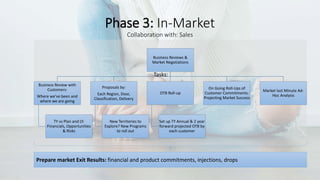
Phase 3: In-Market
Collaboration with: Sales
Prepare market Exit Results: financial and product commitments, injections, drops
Tasks:
Cut & Sold Roll-Up
(style/sku level
purchasing)
Roll Up all Style & Sku
commitments
Get ready to pass them to
production team
Review Commitments vs
Financial Plans
Sales $, Class %, Margin $
Current and Future
inventory impacts
What is the new
inventory WOS? New Cost
log
Propose Style & Fabric
Commitments
Production conversations
and outstanding issues
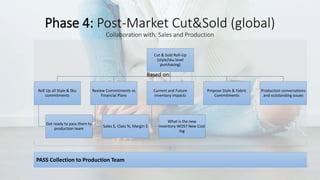
Phase 4: Post-Market Cut&Sold (global)
Collaboration with: Sales and Production
PASS Collection to Production Team
Based on:
Weekly + Monthly + QTR
Reports
Style/SKU Weekly Selling
reports
Sell-thru, units, WOS,
rolling profit margins
Monthly Review of Best
and Worst in Season
Sellers
Meetings with Design to
set up future design
guide
Monthly Regional & by
Door Sales – what works
where
Is there regionality effect
– need to transfer
inventory between
stores?
Weekly Inventory Track
& Review
Recommend Inventory
transfers, markdowns,
clearances
Weekly Managing OTB
financials
Current Sales, Margins,
Markdowns Projections
& Financial Impacts
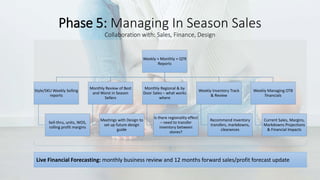
Phase 5: Managing In Season Sales
Collaboration with: Sales, Finance, Design
Live Financial Forecasting: monthly business review and 12 months forward sales/profit forecast update
Other Reports
Monthly Production
Issues
Delivery issues, unit fall-
outs
Raw goods inventory
issues
Tracking costs & forward
factory negotiation
based on need
Market Research
Opportunities and
innovations. Working
with outside market
reports. Upper
management
Presentations
Long-term strategies
Quarterly board
meetings & financial
markets guidance
Customer Map
In depth knowledge of
our customer.
Aspirational vs Actual
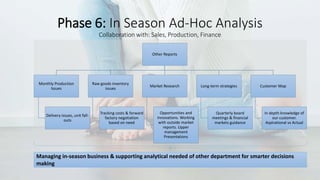
Phase 6: In Season Ad-Hoc Analysis
Collaboration with: Sales, Production, Finance
Managing in-season business & supporting analytical needed of other department for smarter decisions
making
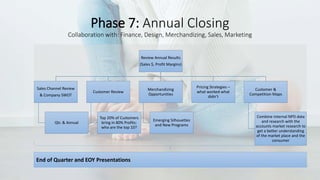
Review Annual Results
(Sales $, Profit Margins)
Sales Channel Review
& Company SWOT
Qtr. & Annual
Customer Review
Top 20% of Customers
bring in 80% Profits:
who are the top 10?
Merchandizing
Opportunities
Emerging Silhouettes
and New Programs
Pricing Strategies –
what worked what
didn’t
Customer &
Competition Maps
Combine internal NPD data
and research with the
accounts market research to
get a better understanding
of the market place and the
consumer
Phase 7: Annual Closing
Collaboration with: Finance, Design, Merchandizing, Sales, Marketing
End of Quarter and EOY Presentations
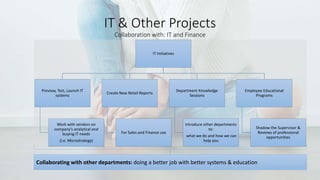
IT Initiatives
Preview, Test, Launch IT
systems
Work with vendors on
company’s analytical and
buying IT needs
(i.e. Microstrategy)
Create New Retail Reports
For Sales and Finance use
Department Knowledge
Sessions
Introduce other departments
to:
what we do and how we can
help you
Employee Educational
Programs
Shadow the Supervisor &
Reviews of professional
opportunities
IT & Other Projects
Collaboration with: IT and Finance
Collaborating with other departments: doing a better job with better systems & education

Retail planning and merchandizing analytics

  • 1.
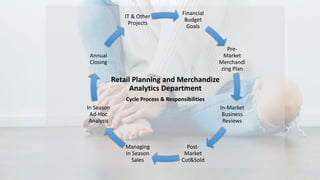
    Financial Budget Goals Pre- Market Merchandi zing Plan In-Market Business Reviews Post- Market Cut&Sold Managing In Season Sales InSeason Ad-Hoc Analysis Annual Closing IT & Other Projects Retail Planning and Merchandize Analytics Department Cycle Process & Responsibilities
  • 2.
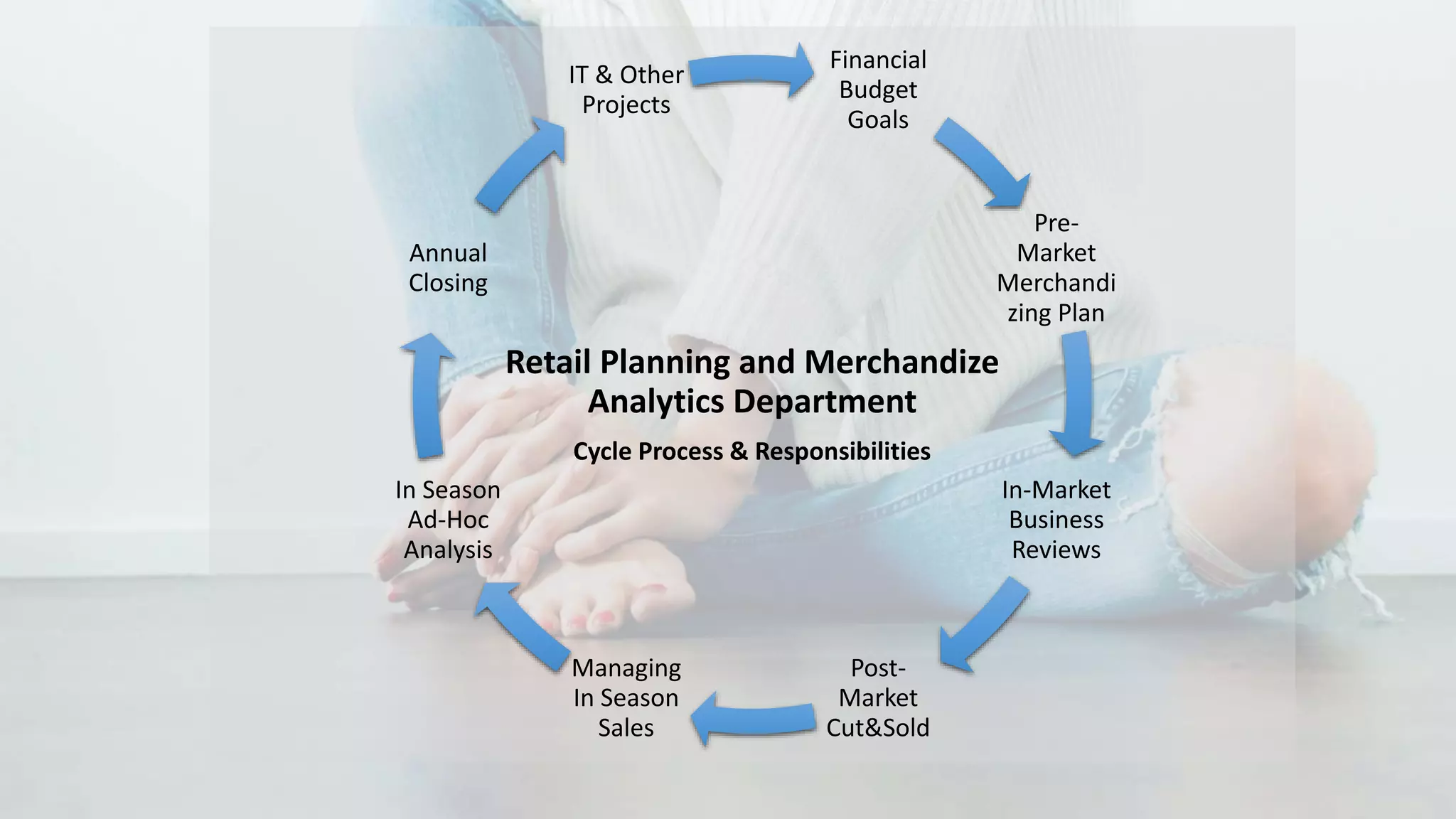
    Review LY Financial Results& This Year Financial Goals Agree on TY Top financial #s (Sales $, Profit Margins) Sales Channel (Retail, Dep.Stores, Incentive Markets, E- Commerce) Any new Opportunities? Cost and time frame Customer in each Sales Channel Risks to: Existing Customers? Door Exits? Margin Drains? Product Classification Silhouette, Style & SKU (includes LDP, Gross Price, MSRP, Units) Injected New Opportunities Market Research on: Competition, Innovations, Risks & Opportunities Phase 1: Set Up TY Financial Budget Goals Collaboration with: Finance, Design, Merchandizing, Sales, Marketing Present In Depth Financial Budget Goals to: Top Management, Finance, Sales, Merchandize Planning, Design Project Next 3-5 Years: Sales Growth and Profits % out by:
  • 3.
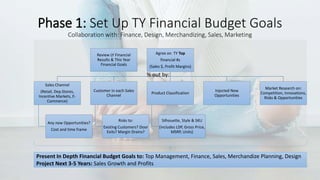
    Bottom UP: Silhouette, Class,Style, SKU Levels Market Seasonal Fashion Trends and Basic Programs Fashion Injections, Exit Programs % & $ by: Season, Qtrs., Fashion & Basic Programs Factory capacity and delivery risks? Pricing Review Anticipates Customer Negotiations? Marketing Initiatives and costs Current and Future inventory Levels Projections Phase 2: Pre-Market Merchandizing Plan Collaboration with: Design, Merchandizing, Marketing, Sales Present Merchandizing Plans to: Design and Merchandizing teams. Open table conversations & revisions Based on:
  • 4.
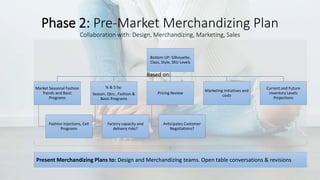
    Business Reviews & MarketNegotiations Business Review with Customers: Where we’ve been and where we are going TY vs Plan and LY: Financials, Opportunities & Risks Proposals by: Each Region, Door, Classification, Delivery New Territories to Explore? New Programs to roll out OTB Roll-up Set up TY Annual & 2 year forward projected OTB by each customer On Going Roll-Ups of Customer Commitments: Projecting Market Success Market last Minute Ad- Hoc Analysis Phase 3: In-Market Collaboration with: Sales Prepare market Exit Results: financial and product commitments, injections, drops Tasks:
  • 5.
    Cut & SoldRoll-Up (style/sku level purchasing) Roll Up all Style & Sku commitments Get ready to pass them to production team Review Commitments vs Financial Plans Sales $, Class %, Margin $ Current and Future inventory impacts What is the new inventory WOS? New Cost log Propose Style & Fabric Commitments Production conversations and outstanding issues Phase 4: Post-Market Cut&Sold (global) Collaboration with: Sales and Production PASS Collection to Production Team Based on:
  • 6.
    Weekly + Monthly+ QTR Reports Style/SKU Weekly Selling reports Sell-thru, units, WOS, rolling profit margins Monthly Review of Best and Worst in Season Sellers Meetings with Design to set up future design guide Monthly Regional & by Door Sales – what works where Is there regionality effect – need to transfer inventory between stores? Weekly Inventory Track & Review Recommend Inventory transfers, markdowns, clearances Weekly Managing OTB financials Current Sales, Margins, Markdowns Projections & Financial Impacts Phase 5: Managing In Season Sales Collaboration with: Sales, Finance, Design Live Financial Forecasting: monthly business review and 12 months forward sales/profit forecast update
  • 7.
    Other Reports Monthly Production Issues Deliveryissues, unit fall- outs Raw goods inventory issues Tracking costs & forward factory negotiation based on need Market Research Opportunities and innovations. Working with outside market reports. Upper management Presentations Long-term strategies Quarterly board meetings & financial markets guidance Customer Map In depth knowledge of our customer. Aspirational vs Actual Phase 6: In Season Ad-Hoc Analysis Collaboration with: Sales, Production, Finance Managing in-season business & supporting analytical needed of other department for smarter decisions making
  • 8.
    Review Annual Results (Sales$, Profit Margins) Sales Channel Review & Company SWOT Qtr. & Annual Customer Review Top 20% of Customers bring in 80% Profits: who are the top 10? Merchandizing Opportunities Emerging Silhouettes and New Programs Pricing Strategies – what worked what didn’t Customer & Competition Maps Combine internal NPD data and research with the accounts market research to get a better understanding of the market place and the consumer Phase 7: Annual Closing Collaboration with: Finance, Design, Merchandizing, Sales, Marketing End of Quarter and EOY Presentations
  • 9.
    IT Initiatives Preview, Test,Launch IT systems Work with vendors on company’s analytical and buying IT needs (i.e. Microstrategy) Create New Retail Reports For Sales and Finance use Department Knowledge Sessions Introduce other departments to: what we do and how we can help you Employee Educational Programs Shadow the Supervisor & Reviews of professional opportunities IT & Other Projects Collaboration with: IT and Finance Collaborating with other departments: doing a better job with better systems & education