Session-1
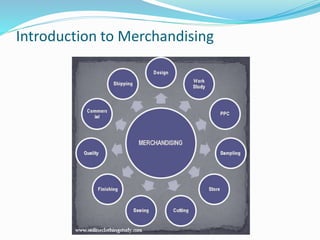
 Introduction to Merchandising
 Place of Marketing & Merchandising in textile industry
 Role & responsibilities of a merchandiser
 Merchandising terminology, Fashion cycle, Sample
approvals
 Merchandising planning tools and techniques
 Merchandising calender
 Forecasting
 Line planning
 Time and Action Plan
 Garment Costing
 International Marketing:
o Importance
o Marketing mix
o Market identification, segmentation, targeting & positioning
o Marketing environment
o Marketing channels and communication- sales promotion and channels of
distribution
o Consumer buying behaviour
 Export documentation
 Inco terms and payment terms- Importance, classification and uses
Introduction to Apparel industry
 In today’s competitive environment where the
 Lead-times are shrinking ,
 Volumes have reduced ,
 Number of season are increasing
 and thousands of style are demanded
adopting merchandising concepts ,which comply with all the
procedures
 execute & dispatch the shipment on time ,
 considering quality & cost
have become very important.
Factors Affecting Success Path
Every one wants to achieve success ,we need to closely
focus on the factors which affects the success of any
organization
 Proper planning
 Sourcing of raw material
 Timely purchasing
 Sampling and approval
 Production & packaging
 Delivery time
1.Proper Planning
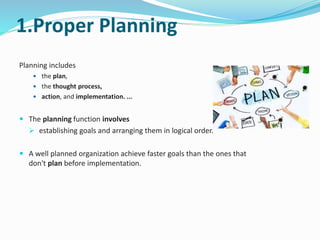
Planning includes
 the plan,
 the thought process,
 action, and implementation. ...
 The planning function involves
 establishing goals and arranging them in logical order.
 A well planned organization achieve faster goals than the ones that
don't plan before implementation.
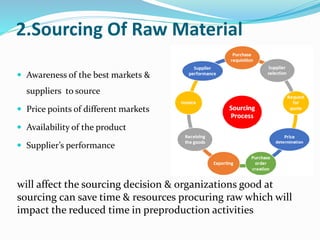
2.Sourcing Of Raw Material
 Awareness of the best markets &
suppliers to source
 Price points of different markets
 Availability of the product
 Supplier’s performance
will affect the sourcing decision & organizations good at
sourcing can save time & resources procuring raw which will
impact the reduced time in preproduction activities
3.Timely Purchasing
 Purchasing too early will hamper the rotation of money which can be
invested in the other important task where as late purchase can result in
late delivery of the shipment ,eventually a loss.
 Therefore, Timely purchasing of raw materials will result in timely
execution of production activities and hence, helps in timely delivery.
4. Sampling and
Approval
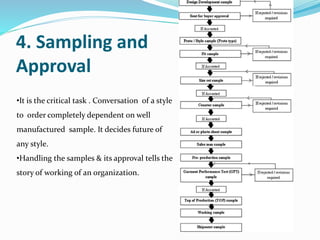
•It is the critical task . Conversation of a style
to order completely dependent on well
manufactured sample. It decides future of
any style.
•Handling the samples & its approval tells the
story of working of an organization.
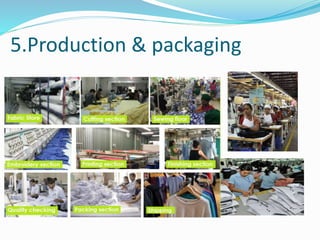
5.Production & packaging
6.Delivery Time
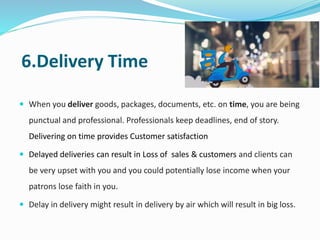
 When you deliver goods, packages, documents, etc. on time, you are being
punctual and professional. Professionals keep deadlines, end of story.
Delivering on time provides Customer satisfaction
 Delayed deliveries can result in Loss of sales & customers and clients can
be very upset with you and you could potentially lose income when your
patrons lose faith in you.
 Delay in delivery might result in delivery by air which will result in big loss.
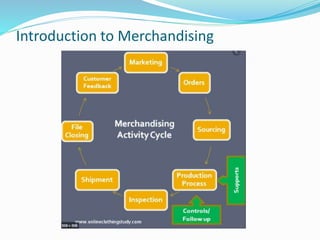
Introduction to Merchandising
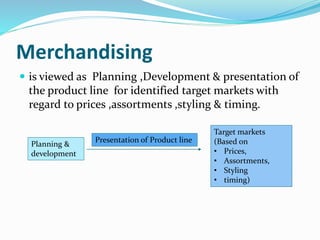
Merchandising
 is viewed as Planning ,Development & presentation of
the product line for identified target markets with
regard to prices ,assortments ,styling & timing.
Planning &
development
Target markets
(Based on
• Prices,
• Assortments,
• Styling
• timing)
Presentation of Product line
 The term Merchandising includes all the planning
and activities necessary to supply the goods wanted
and needed by the retail customers.
 Merchandising can be defined as, the planning and
coordination that is required to get the right product,
at the right time, at a right price, at a right place and in
a right quantity.
Objective of Merchandising:
Merchandising denotes all the planned activities to
execute and dispatch the merchandise on time, taking
into consideration of the 4 R’s to replenish the
customer.
 Right Quantity: To dispatch right quantity of product
what buyer ordered.
 Right Quality: It should be with right quality as
accepted both parties.
 Right Cost: Everybody wants Value for Money
 Right Time: No one wants to wait idle even in a
Restaurant. Keeping delivery schedule is mandatory.
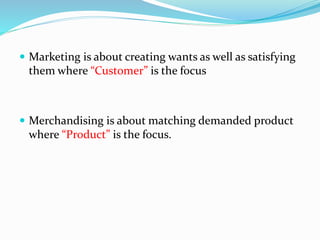
 Marketing is about creating wants as well as satisfying
them where “Customer” is the focus
 Merchandising is about matching demanded product
where “Product” is the focus.
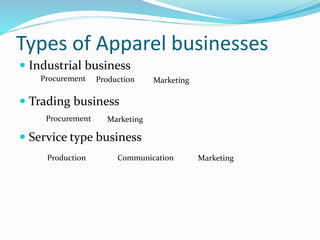
Types of Apparel businesses
 Industrial business
 Trading business
 Service type business
Production Marketing
Procurement
Procurement Marketing
Production Communication Marketing
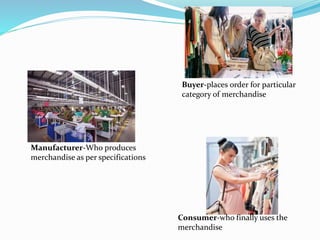
Consumer-who finally uses the
merchandise
Manufacturer-Who produces
merchandise as per specifications
Buyer-places order for particular
category of merchandise
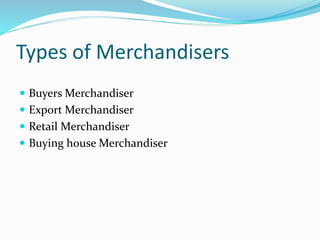
Types of Merchandisers
 Buyers Merchandiser
 Export Merchandiser
 Retail Merchandiser
 Buying house Merchandiser
Questions???
 How does timely delivery helps in building image and
creating business??
 What is the difference between buyer & consumers ?
 What is the difference between marketing &
merchandising?
 Explain the concept of merchandising in brief.

Introduction to Merchandising

  • 1.
  • 2.
     Introduction toMerchandising  Place of Marketing & Merchandising in textile industry  Role & responsibilities of a merchandiser  Merchandising terminology, Fashion cycle, Sample approvals  Merchandising planning tools and techniques  Merchandising calender  Forecasting  Line planning  Time and Action Plan  Garment Costing
  • 3.
     International Marketing: oImportance o Marketing mix o Market identification, segmentation, targeting & positioning o Marketing environment o Marketing channels and communication- sales promotion and channels of distribution o Consumer buying behaviour  Export documentation  Inco terms and payment terms- Importance, classification and uses
  • 4.
    Introduction to Apparelindustry  In today’s competitive environment where the  Lead-times are shrinking ,  Volumes have reduced ,  Number of season are increasing  and thousands of style are demanded adopting merchandising concepts ,which comply with all the procedures  execute & dispatch the shipment on time ,  considering quality & cost have become very important.
  • 5.
    Factors Affecting SuccessPath Every one wants to achieve success ,we need to closely focus on the factors which affects the success of any organization  Proper planning  Sourcing of raw material  Timely purchasing  Sampling and approval  Production & packaging  Delivery time
  • 6.
    1.Proper Planning Planning includes the plan,  the thought process,  action, and implementation. ...  The planning function involves  establishing goals and arranging them in logical order.  A well planned organization achieve faster goals than the ones that don't plan before implementation.
  • 7.
    2.Sourcing Of RawMaterial  Awareness of the best markets & suppliers to source  Price points of different markets  Availability of the product  Supplier’s performance will affect the sourcing decision & organizations good at sourcing can save time & resources procuring raw which will impact the reduced time in preproduction activities
  • 8.
    3.Timely Purchasing  Purchasingtoo early will hamper the rotation of money which can be invested in the other important task where as late purchase can result in late delivery of the shipment ,eventually a loss.  Therefore, Timely purchasing of raw materials will result in timely execution of production activities and hence, helps in timely delivery.
  • 9.
    4. Sampling and Approval •Itis the critical task . Conversation of a style to order completely dependent on well manufactured sample. It decides future of any style. •Handling the samples & its approval tells the story of working of an organization.
  • 10.
  • 11.
    6.Delivery Time  Whenyou deliver goods, packages, documents, etc. on time, you are being punctual and professional. Professionals keep deadlines, end of story. Delivering on time provides Customer satisfaction  Delayed deliveries can result in Loss of sales & customers and clients can be very upset with you and you could potentially lose income when your patrons lose faith in you.  Delay in delivery might result in delivery by air which will result in big loss.
  • 12.
  • 13.
  • 14.
    Merchandising  is viewedas Planning ,Development & presentation of the product line for identified target markets with regard to prices ,assortments ,styling & timing. Planning & development Target markets (Based on • Prices, • Assortments, • Styling • timing) Presentation of Product line
  • 15.
     The termMerchandising includes all the planning and activities necessary to supply the goods wanted and needed by the retail customers.  Merchandising can be defined as, the planning and coordination that is required to get the right product, at the right time, at a right price, at a right place and in a right quantity.
  • 16.
    Objective of Merchandising: Merchandisingdenotes all the planned activities to execute and dispatch the merchandise on time, taking into consideration of the 4 R’s to replenish the customer.  Right Quantity: To dispatch right quantity of product what buyer ordered.  Right Quality: It should be with right quality as accepted both parties.  Right Cost: Everybody wants Value for Money  Right Time: No one wants to wait idle even in a Restaurant. Keeping delivery schedule is mandatory.
  • 17.
     Marketing isabout creating wants as well as satisfying them where “Customer” is the focus  Merchandising is about matching demanded product where “Product” is the focus.
  • 18.
    Types of Apparelbusinesses  Industrial business  Trading business  Service type business Production Marketing Procurement Procurement Marketing Production Communication Marketing
  • 19.
    Consumer-who finally usesthe merchandise Manufacturer-Who produces merchandise as per specifications Buyer-places order for particular category of merchandise
  • 20.
    Types of Merchandisers Buyers Merchandiser  Export Merchandiser  Retail Merchandiser  Buying house Merchandiser
  • 21.
    Questions???  How doestimely delivery helps in building image and creating business??  What is the difference between buyer & consumers ?  What is the difference between marketing & merchandising?  Explain the concept of merchandising in brief.