Jennifer Evans 
Assistant Director ELA 
St. Clair County RESA 
Evans.jennifer@sccresa.org 
http://www.protopage.com/evans.jennifer#Untitled/Home
Agenda 
Assessment 
Fidelity 
WriteWell© 
Pre and Post 
Assessments 
How do you 
administer the 
assessment? 
Determine 
Protocol 
Scoring 
Fidelity 
How do you 
score the 
assessment? 
Scoring 
Protocol 
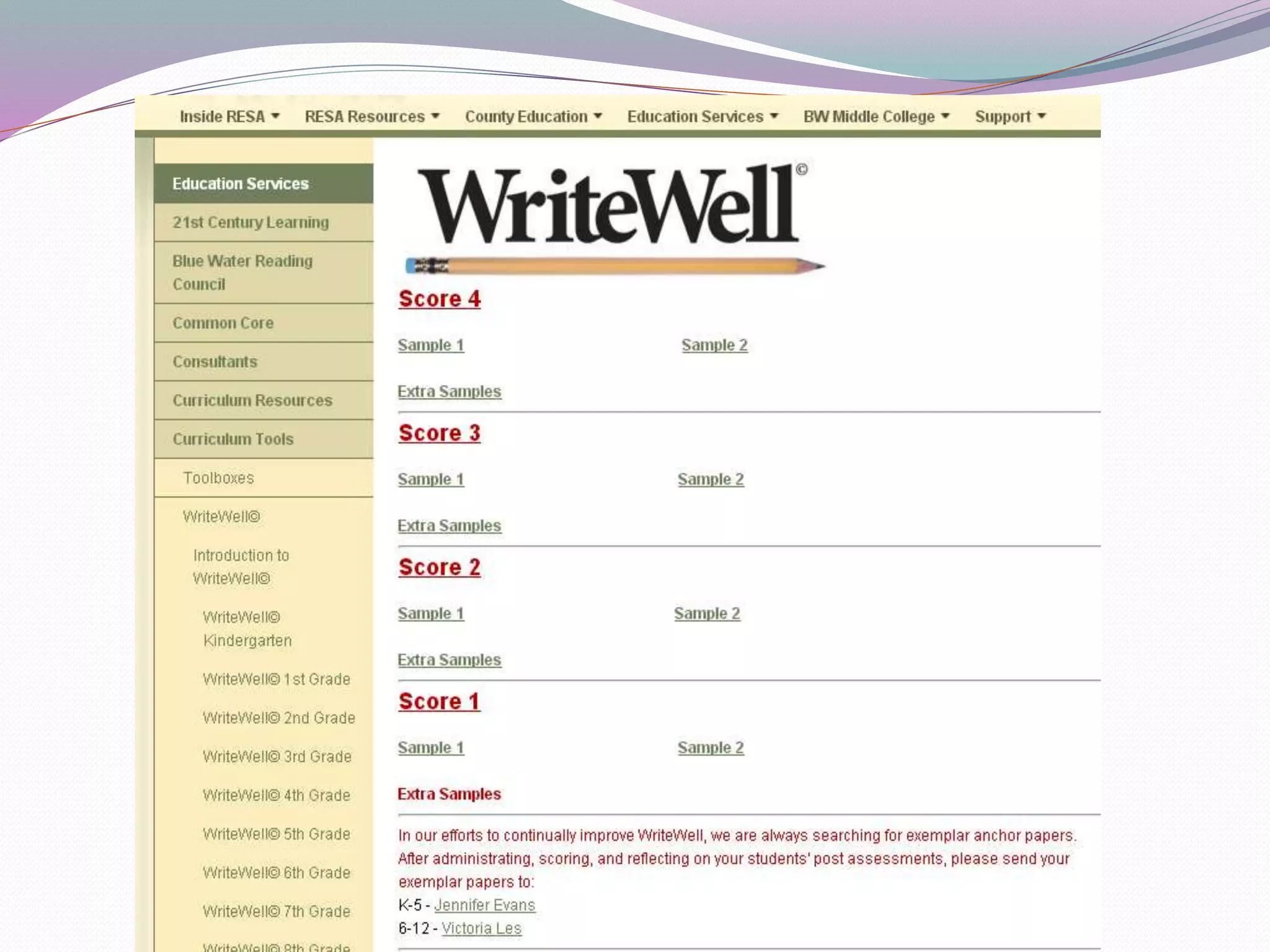
Anchor 
Papers 
What is a 
good example 
of a 4,3,2,1? 
Practice
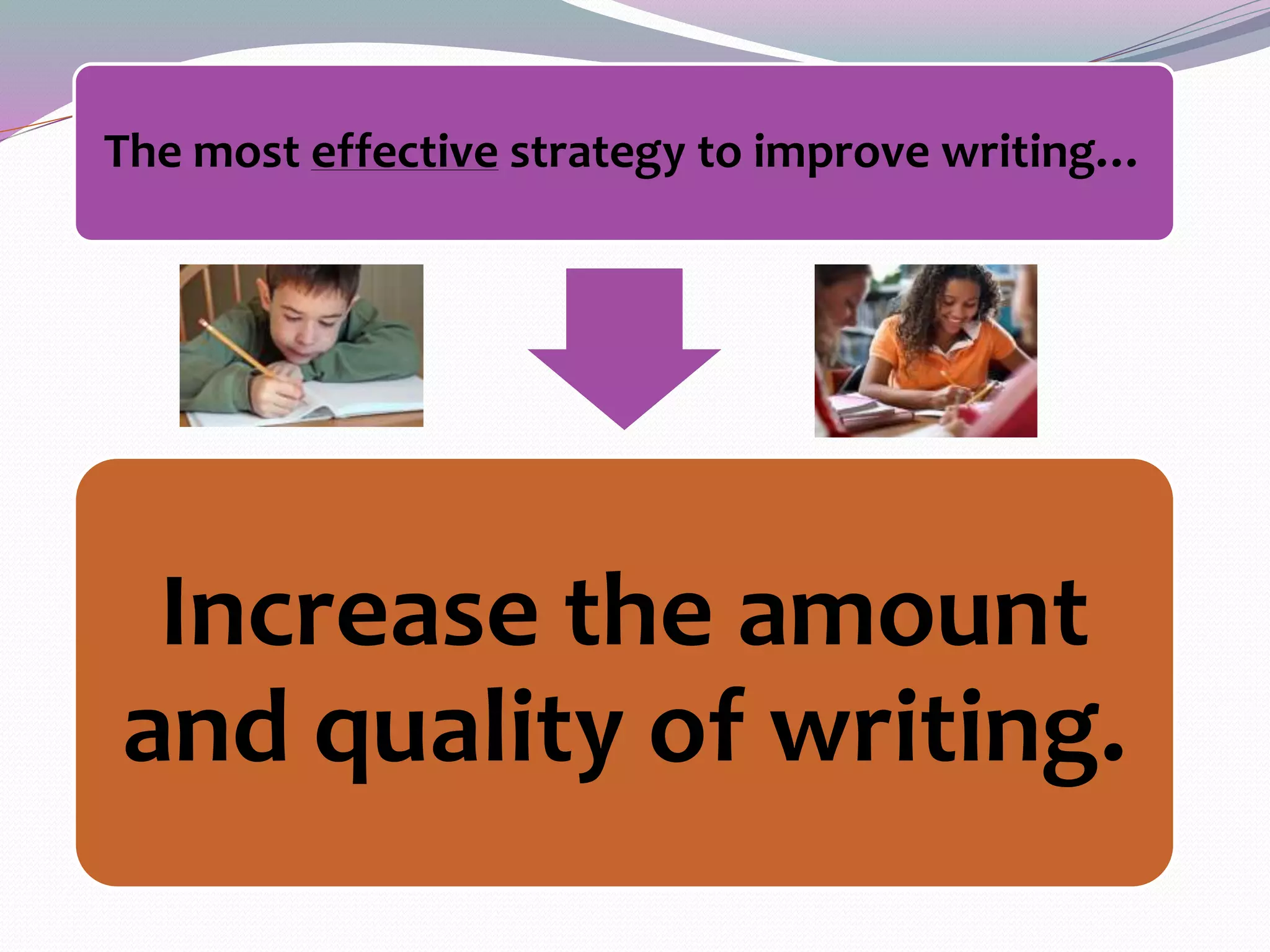
The most effective strategy to improve writing… 
Increase the amount 
and quality of writing.
“Assigning writing 
is easy. Teaching 
writing is really 
hard.” 
“We need to teach our 
students to read like 
writers and write like 
readers.” 
Kelly Gallagher, Author and Teacher 
http://www.kellygallagher.org/index.html
Note: “On Demand” 
writing is a necessary 
skill. However, giving 
writing prompts 
every day is not 
writing instruction – 
it’s assigning writing.
What is the WriteWell© Curriculum? 
It is a carefully sequenced, coherent K-12 writing curriculum 
that follows a Writing Workshop format designed to: 
Continually improve 
meet the needs of all students 
increase writing proficiency at every grade 
use effective, researched based instructional practices
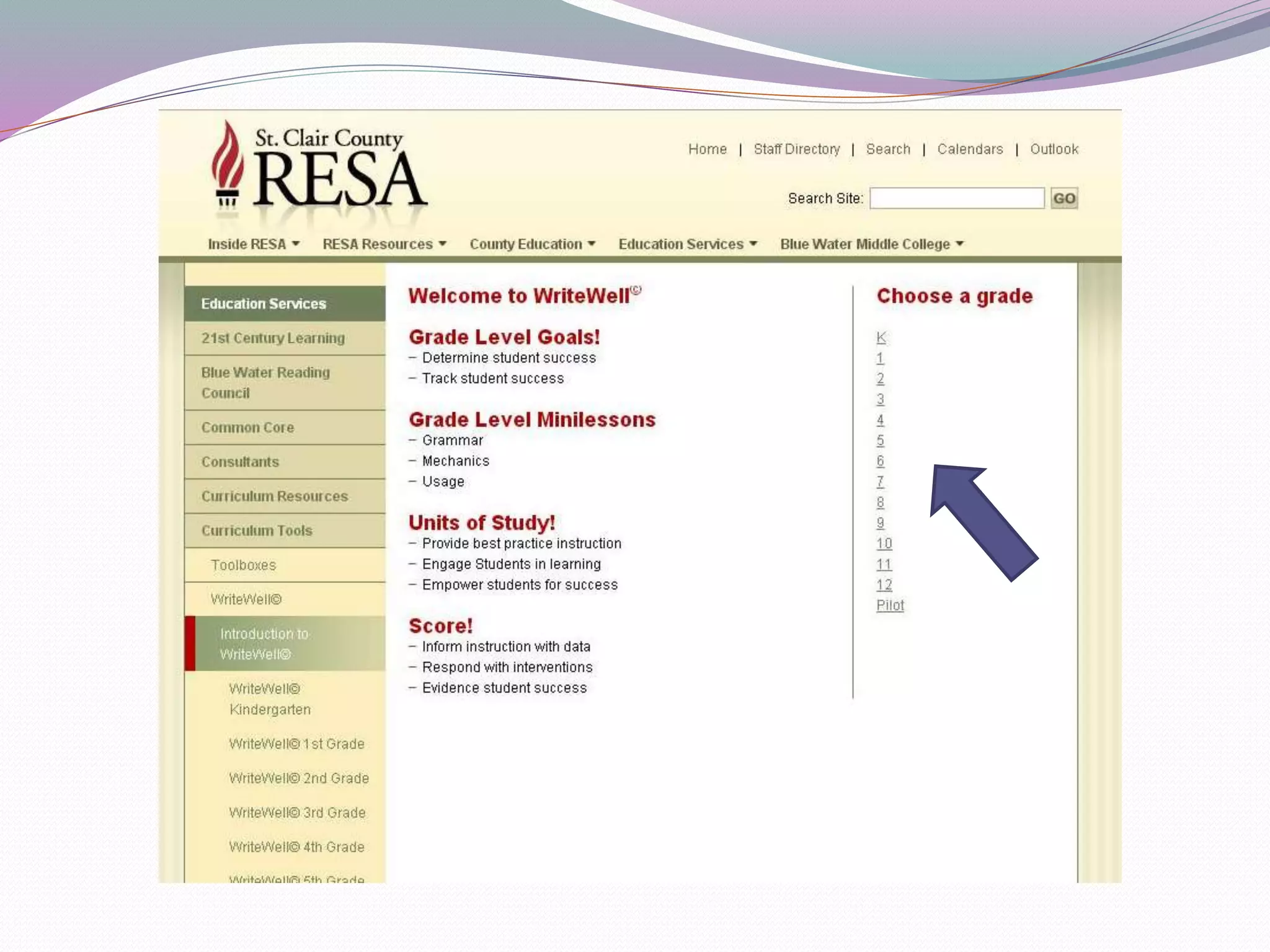
Navigating the Website 
 WriteWell© 
 http://www.sccresa.org/toolsforschools/curriculumtool 
s/writewell/ 
 Select logo 
 Enter school log in and password: 
Log in: 
Password:
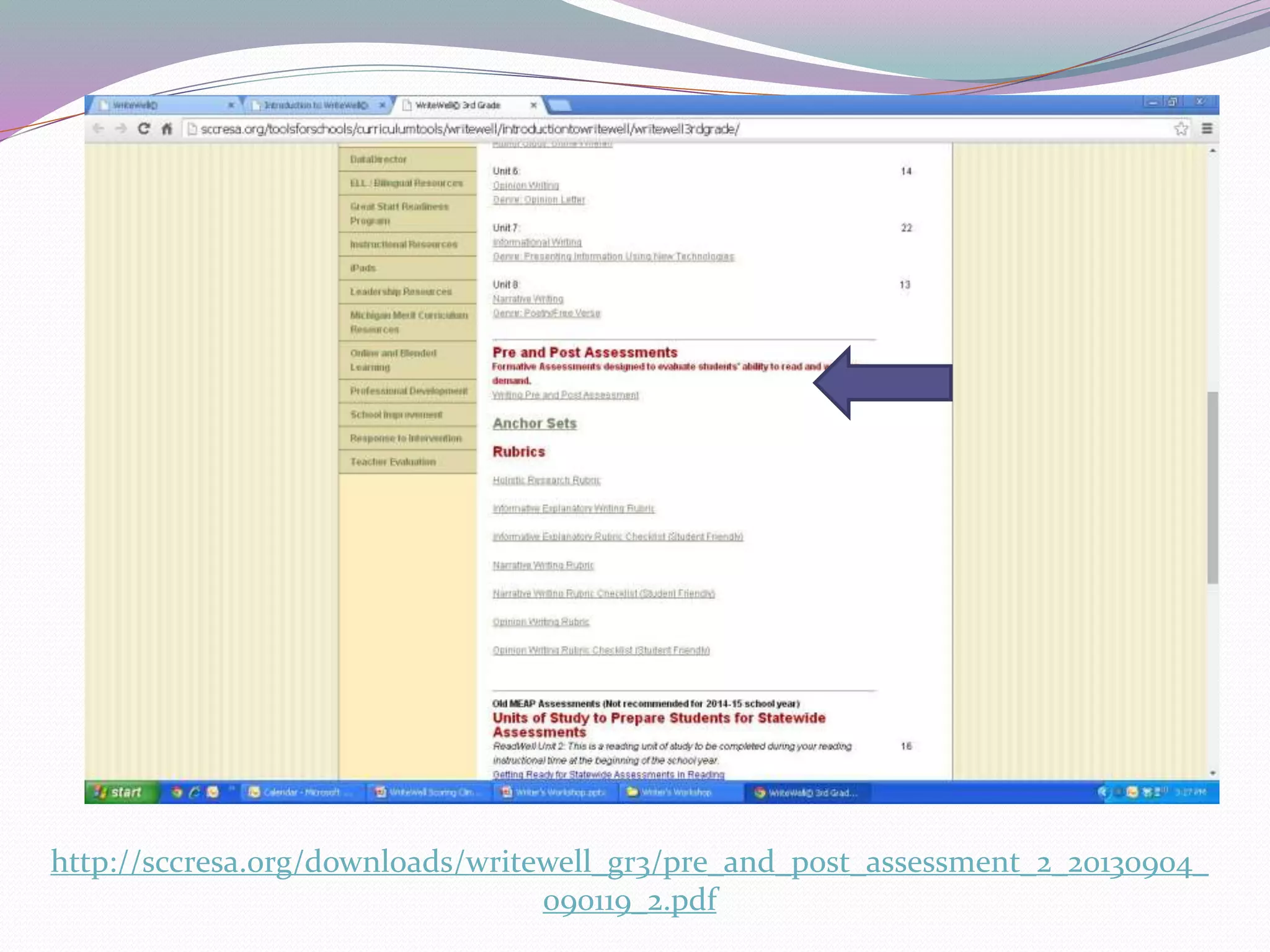
www.sccresa.org
http://sccresa.org/downloads/writewell_gr3/pre_and_post_assessment_2_20130904_ 
090119_2.pdf
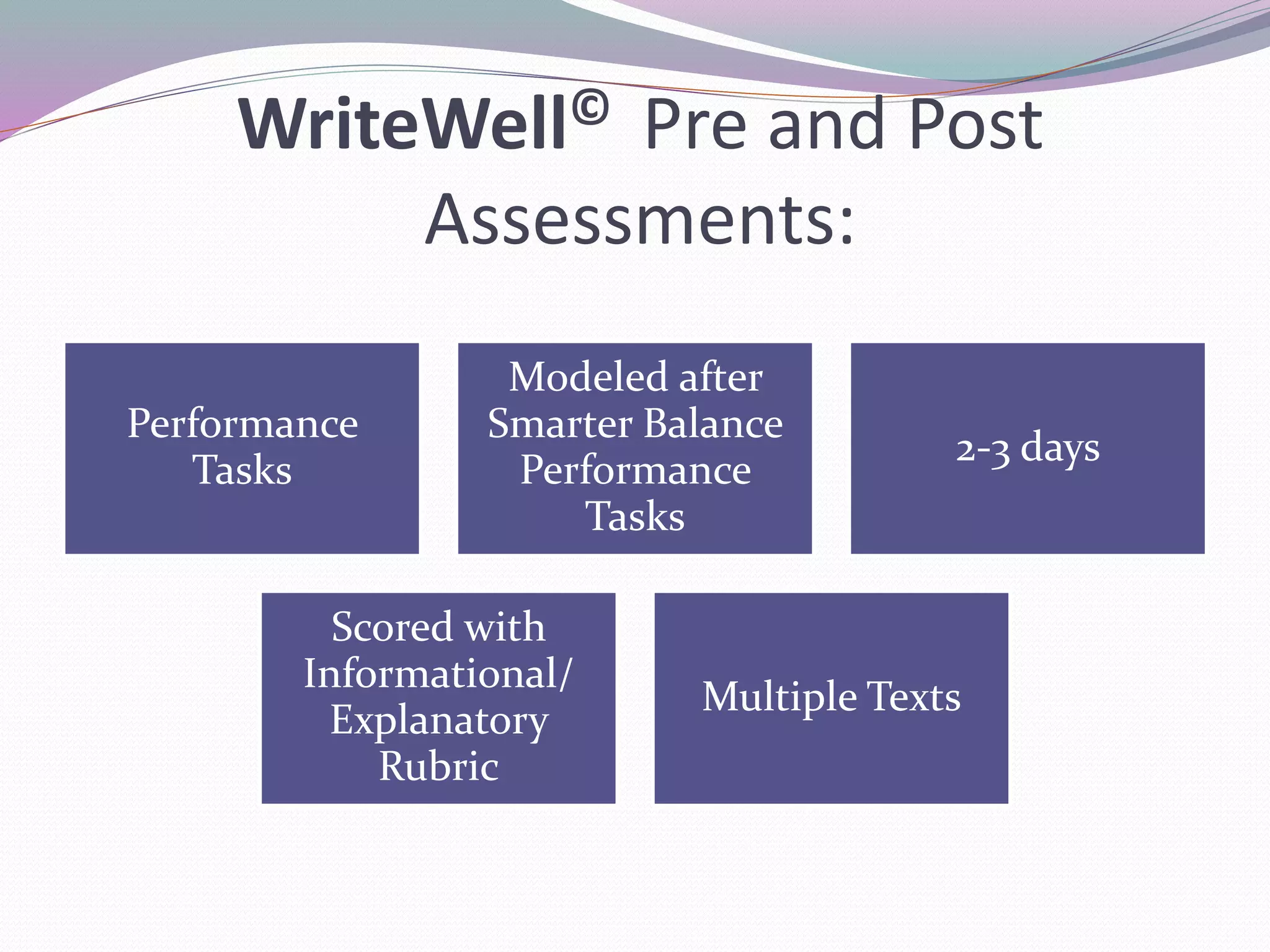
WriteWell© Pre and Post 
Assessments: 
Performance 
Tasks 
Modeled after 
Smarter Balance 
Performance 
Tasks 
2-3 days 
Scored with 
Informational/ 
Explanatory 
Rubric 
Multiple Texts
Assessment Fidelity
“There is now conclusive, compelling 
research stating that acting as a 
Professional Learning Community 
(PLC) is the most powerful and 
effective process to systemically change 
school culture and improve student 
learning.” 
- Sharon Kramer, PLC Conference: 
Connecting the Dots: From ELA Standards to Formative 
Assessment to Interventions and Extensions, 2014
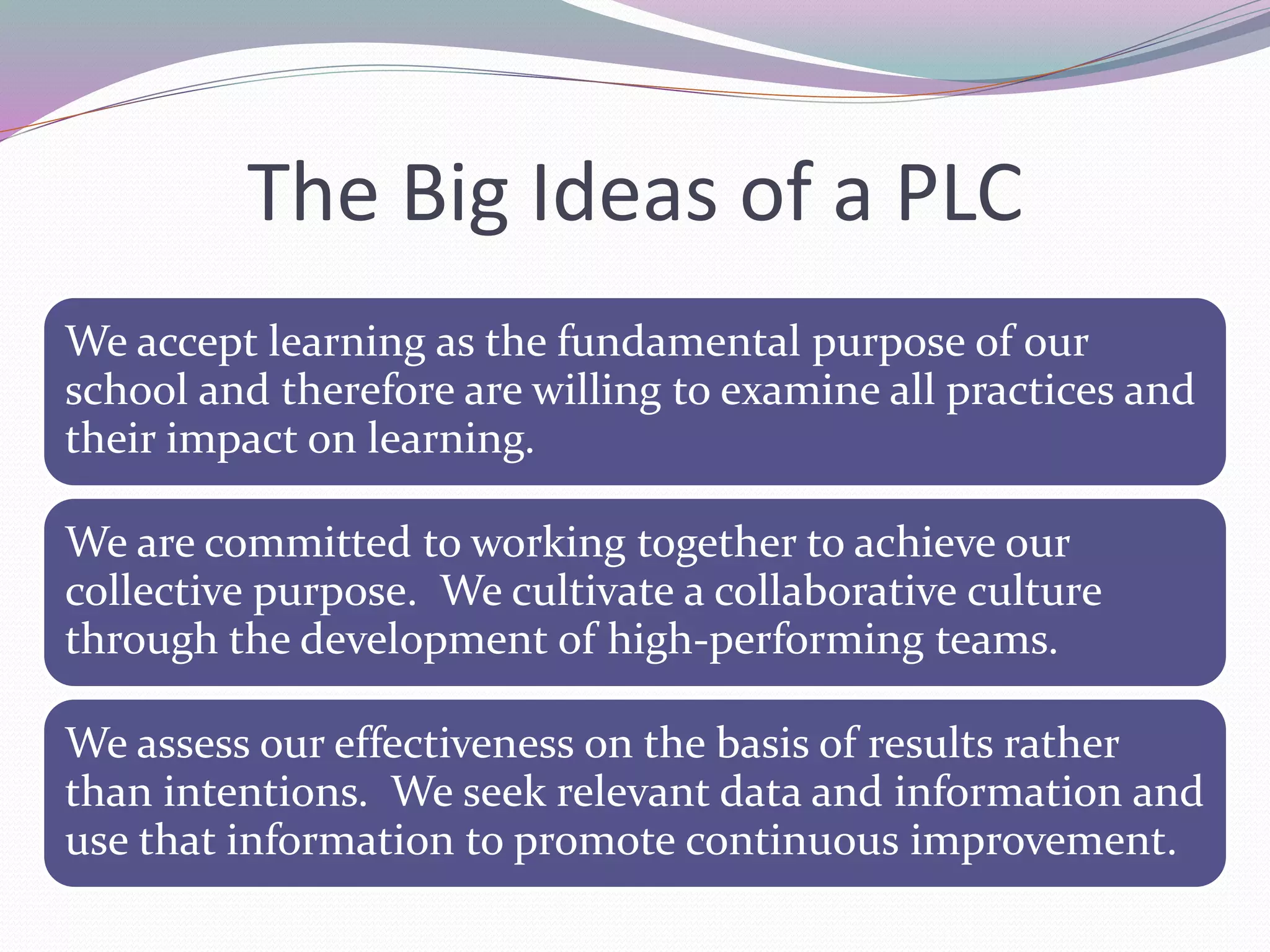
The Big Ideas of a PLC 
We accept learning as the fundamental purpose of our 
school and therefore are willing to examine all practices and 
their impact on learning. 
We are committed to working together to achieve our 
collective purpose. We cultivate a collaborative culture 
through the development of high-performing teams. 
We assess our effectiveness on the basis of results rather 
than intentions. We seek relevant data and information and 
use that information to promote continuous improvement.
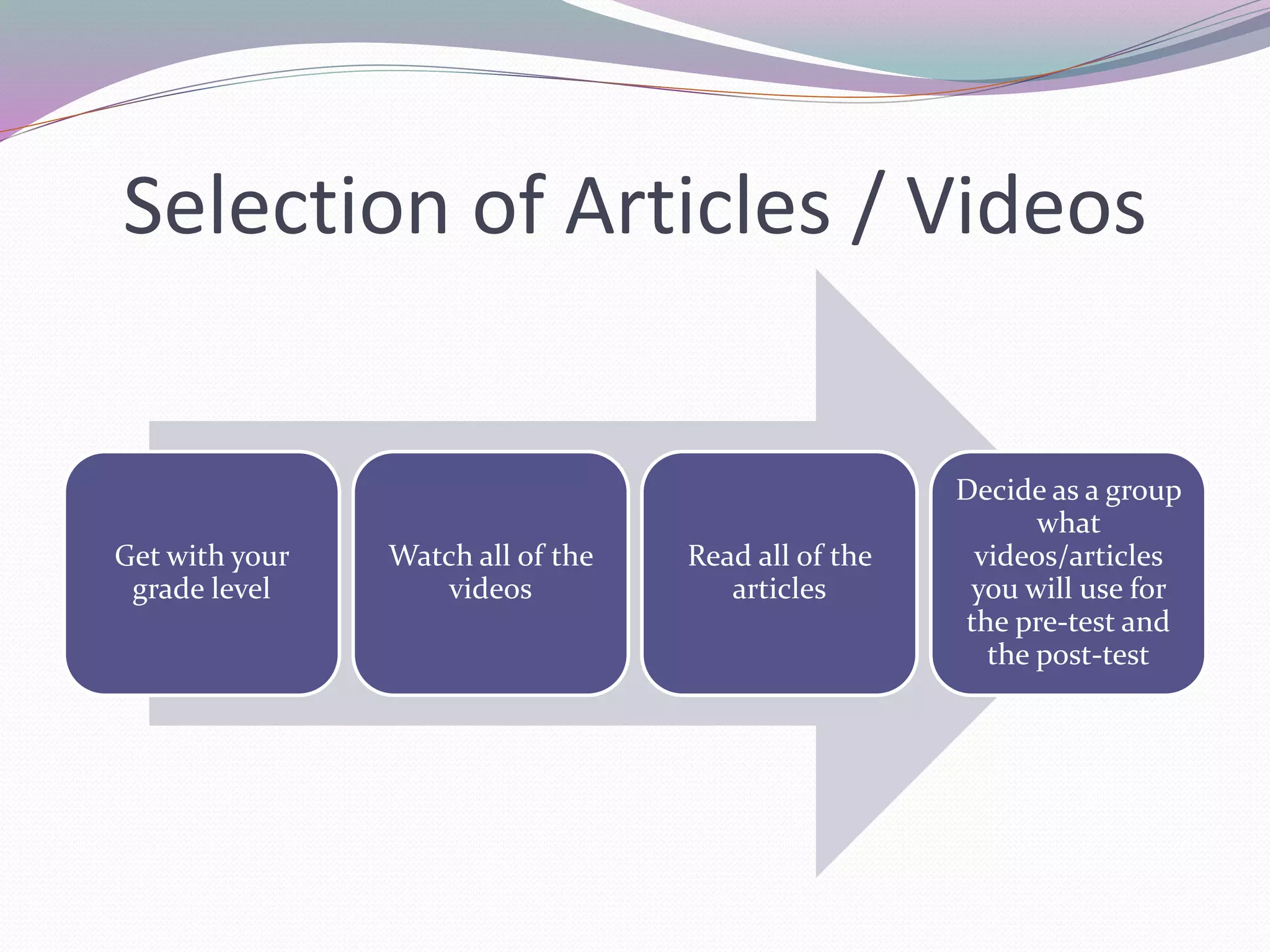
Selection of Articles / Videos 
Get with your 
grade level 
Watch all of the 
videos 
Read all of the 
articles 
Decide as a group 
what 
videos/articles 
you will use for 
the pre-test and 
the post-test
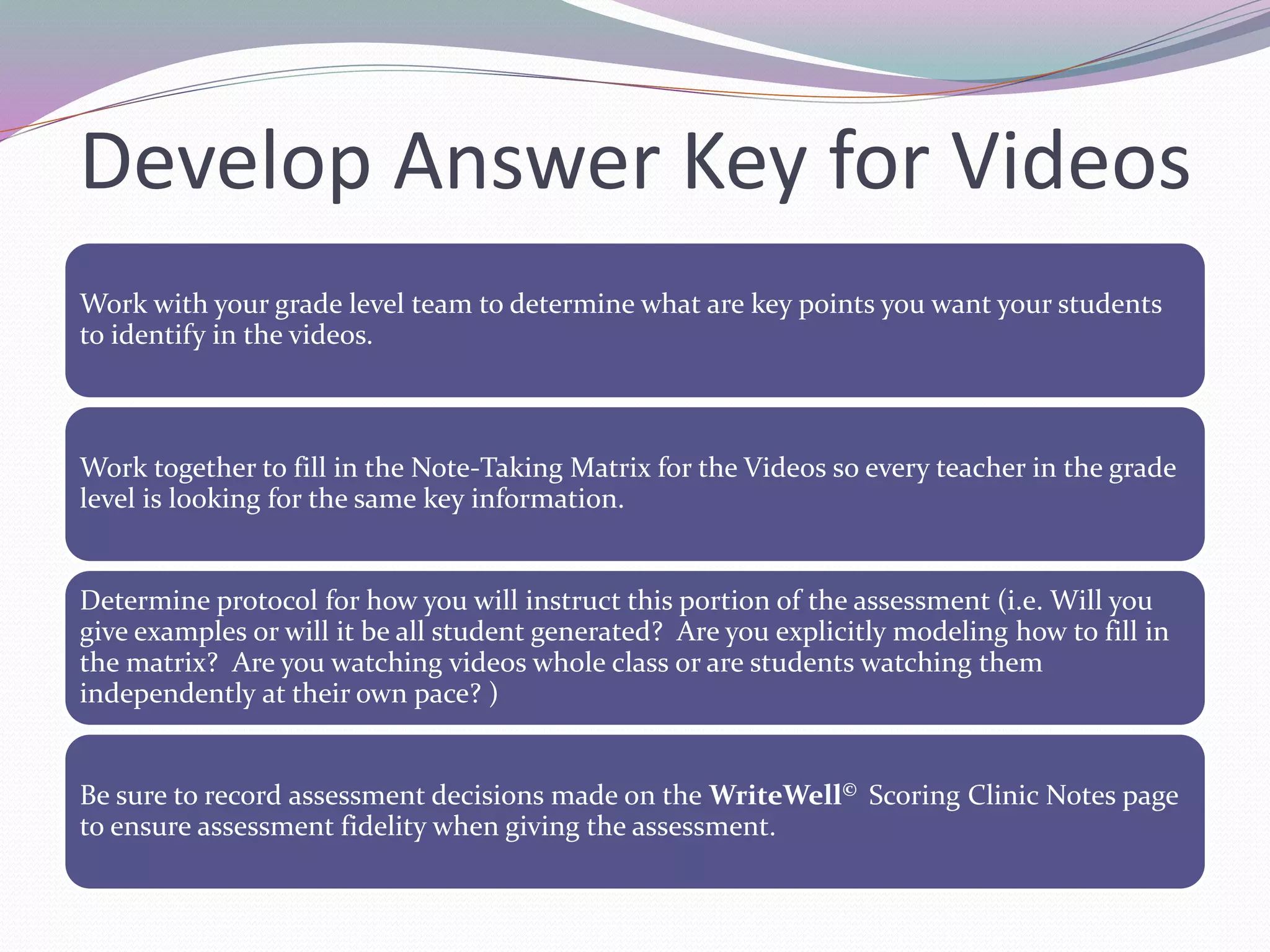
Develop Answer Key for Videos 
Work with your grade level team to determine what are key points you want your students 
to identify in the videos. 
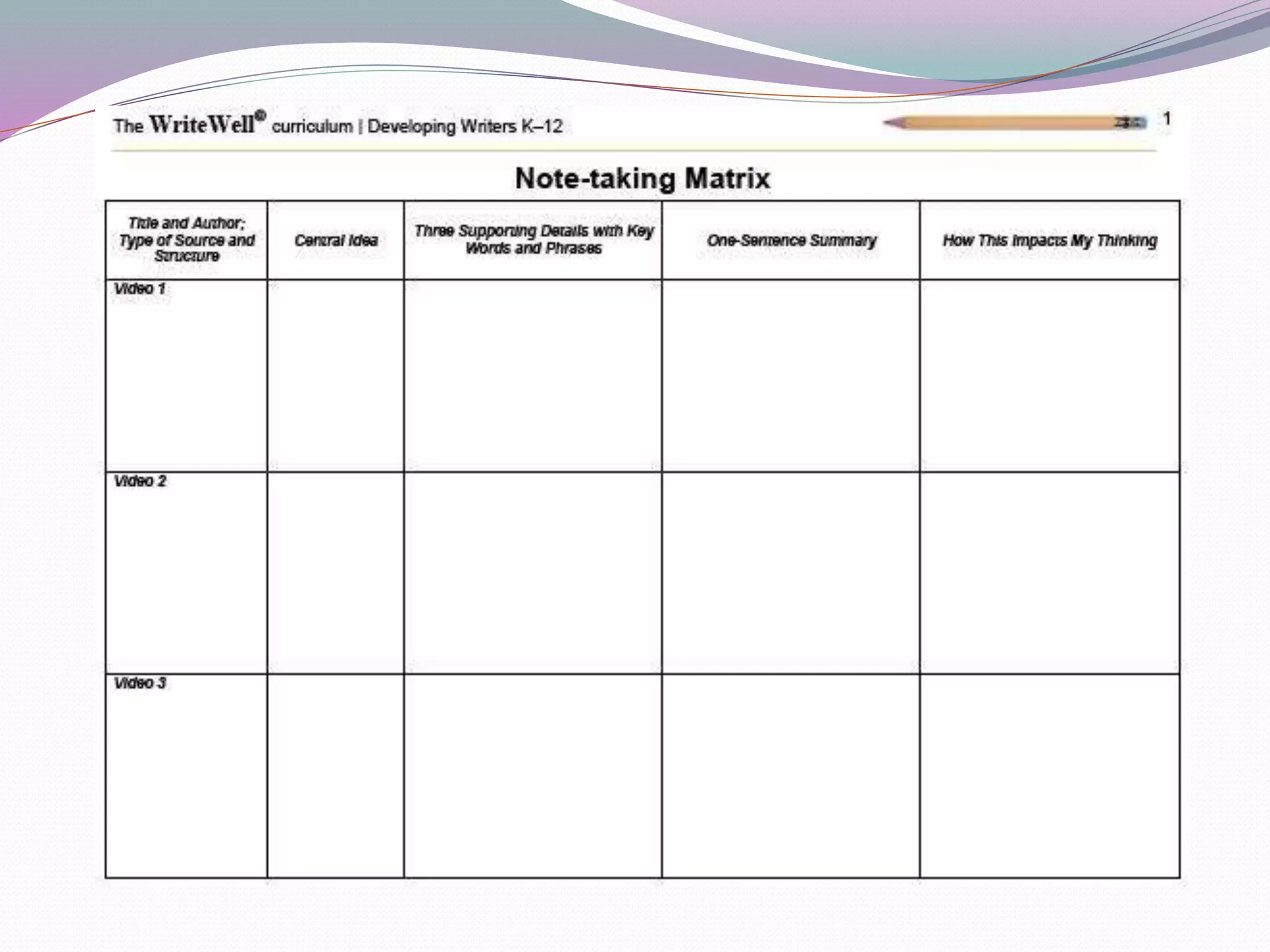
Work together to fill in the Note-Taking Matrix for the Videos so every teacher in the grade 
level is looking for the same key information. 
Determine protocol for how you will instruct this portion of the assessment (i.e. Will you 
give examples or will it be all student generated? Are you explicitly modeling how to fill in 
the matrix? Are you watching videos whole class or are students watching them 
independently at their own pace? ) 
Be sure to record assessment decisions made on the WriteWell© Scoring Clinic Notes page 
to ensure assessment fidelity when giving the assessment.
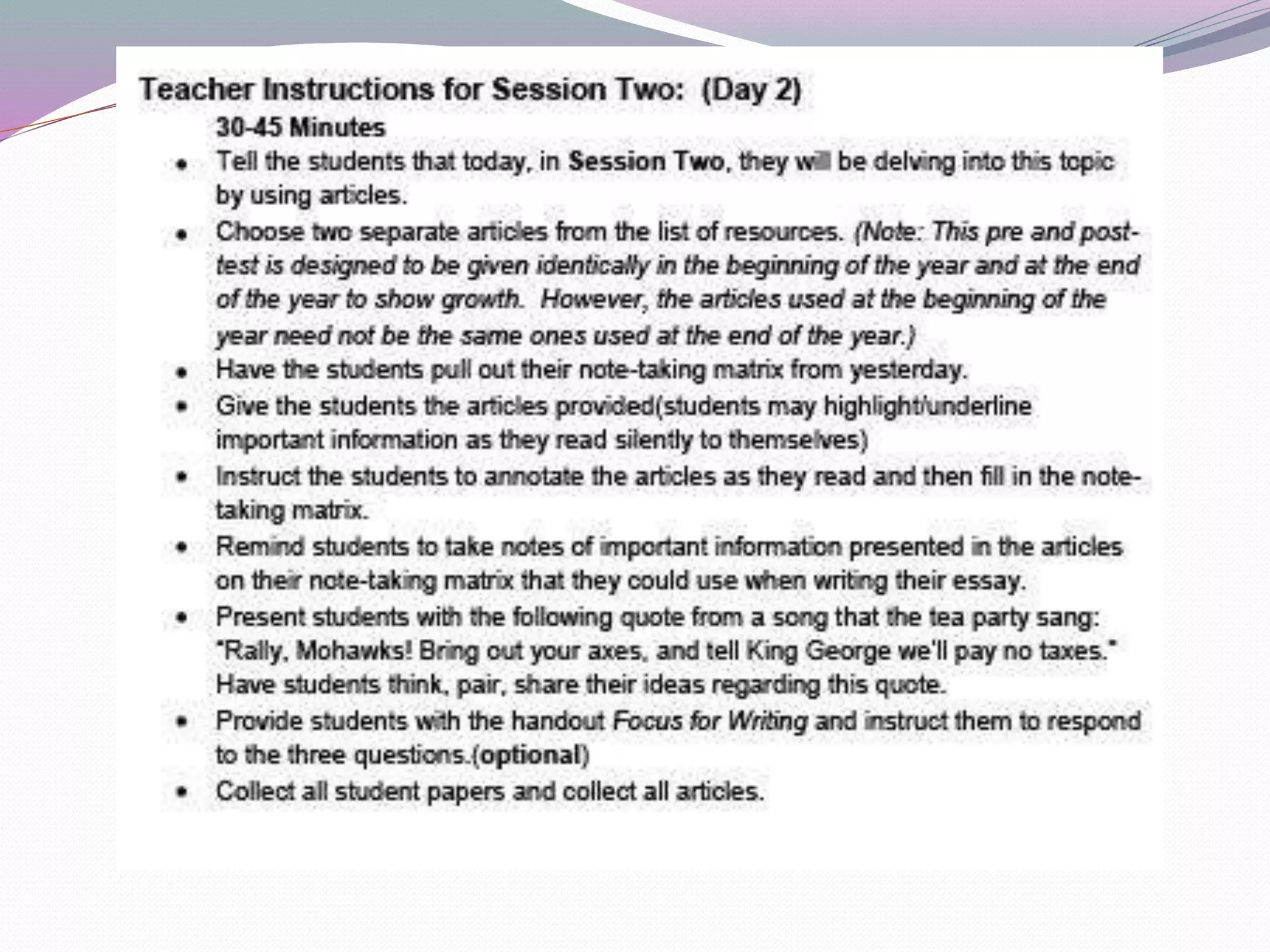
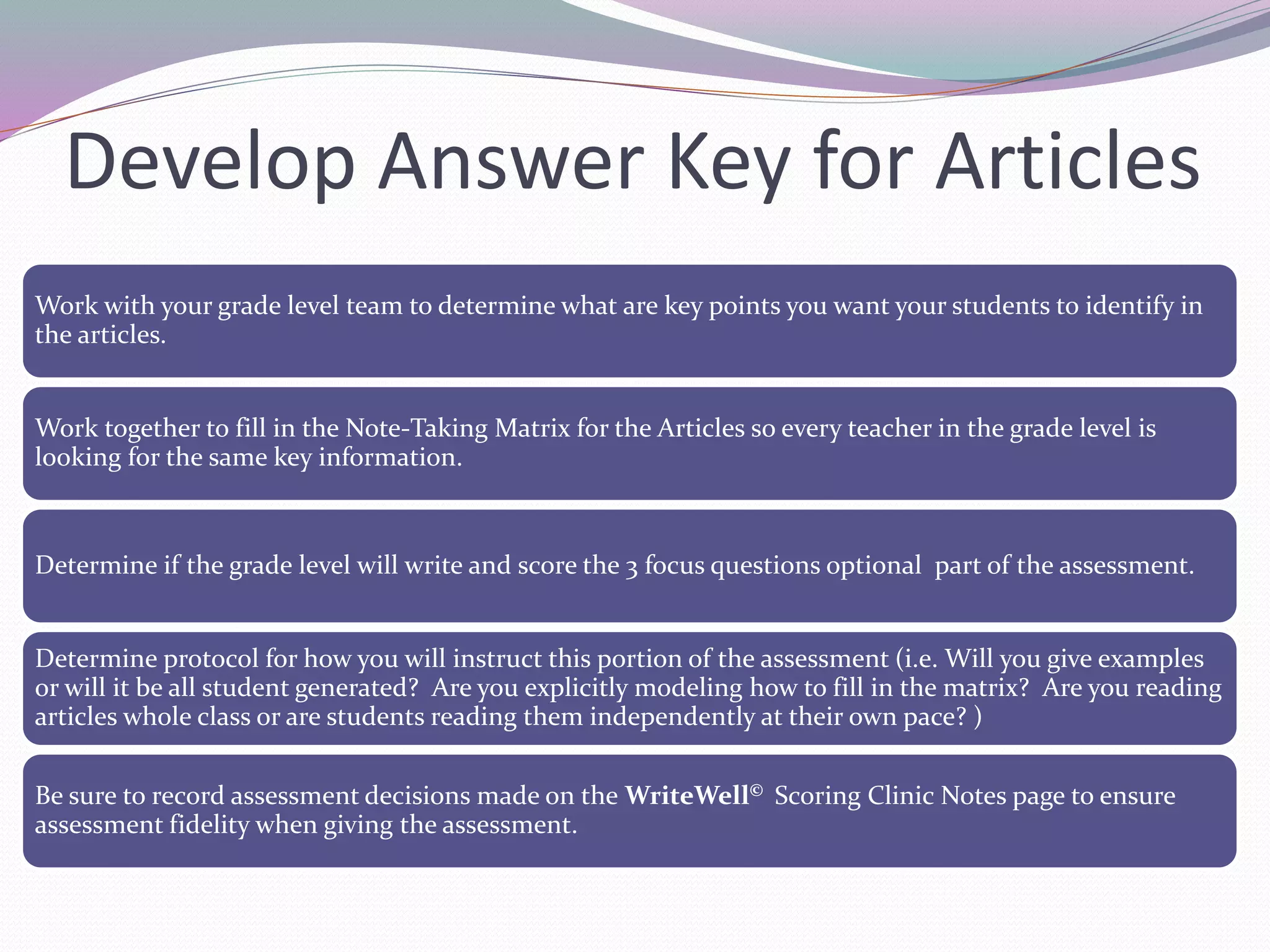
Develop Answer Key for Articles 
Work with your grade level team to determine what are key points you want your students to identify in 
the articles. 
Work together to fill in the Note-Taking Matrix for the Articles so every teacher in the grade level is 
looking for the same key information. 
Determine if the grade level will write and score the 3 focus questions optional part of the assessment. 
Determine protocol for how you will instruct this portion of the assessment (i.e. Will you give examples 
or will it be all student generated? Are you explicitly modeling how to fill in the matrix? Are you reading 
articles whole class or are students reading them independently at their own pace? ) 
Be sure to record assessment decisions made on the WriteWell© Scoring Clinic Notes page to ensure 
assessment fidelity when giving the assessment.
Scoring Fidelity
Key Points 
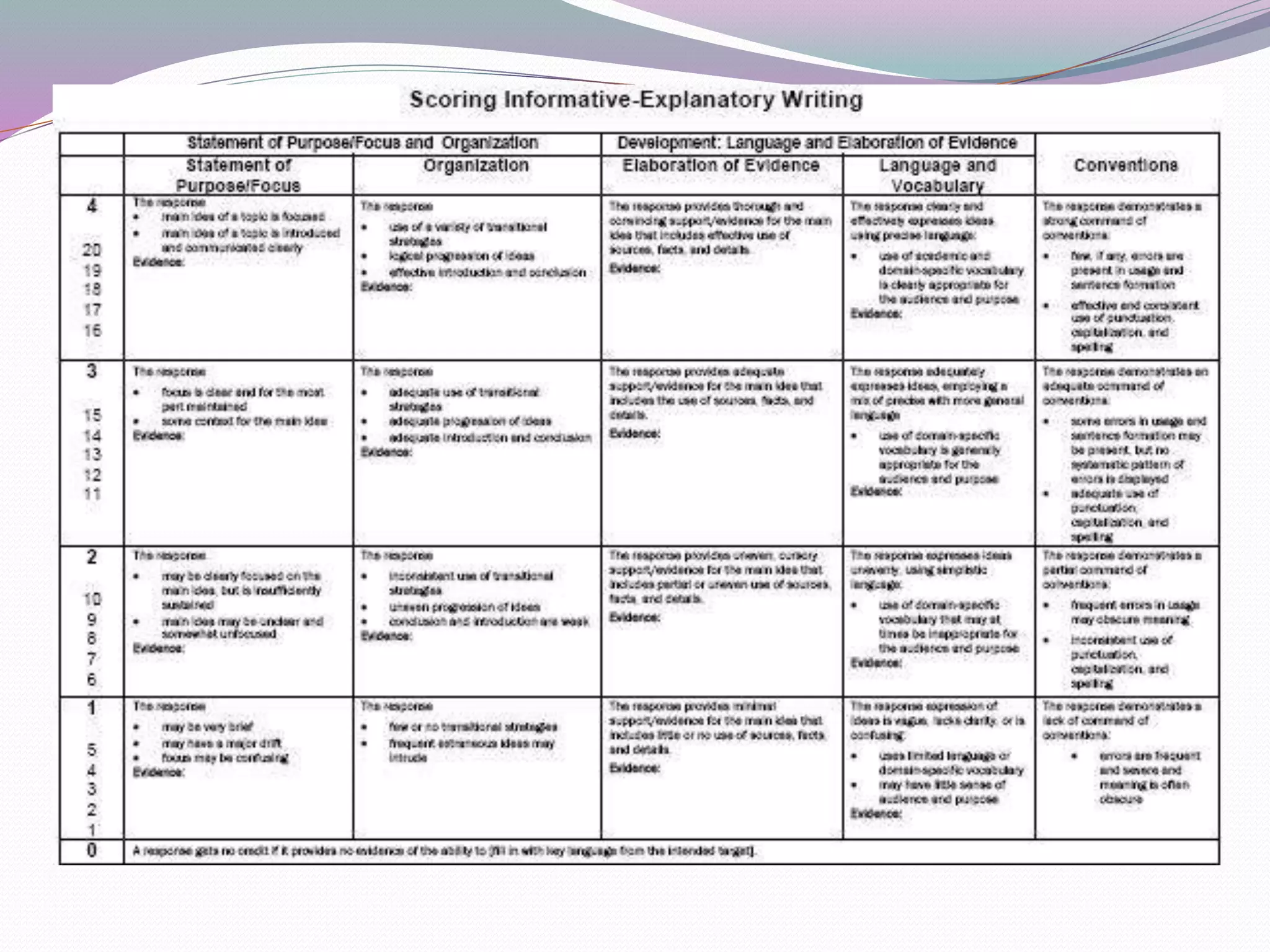
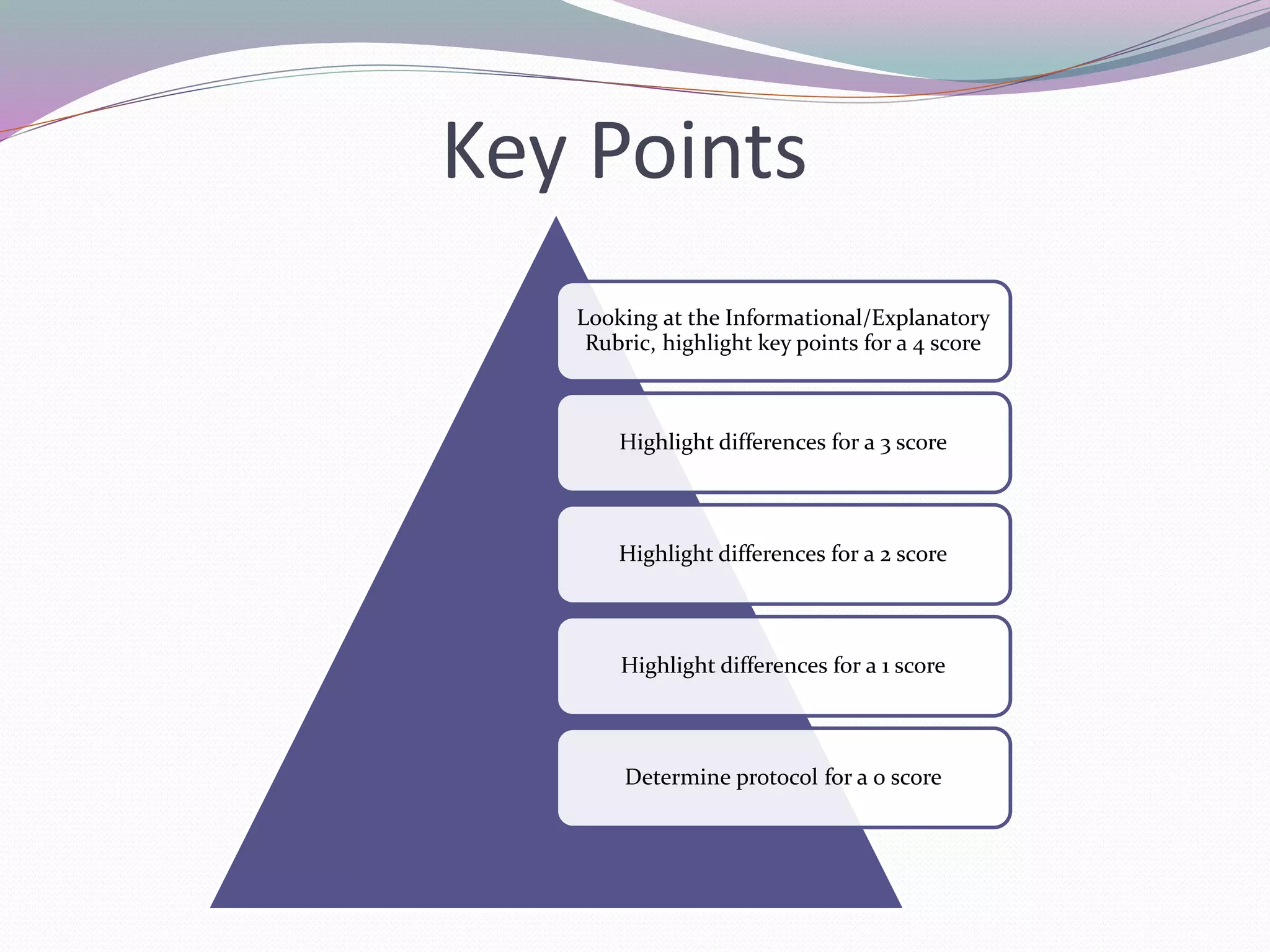
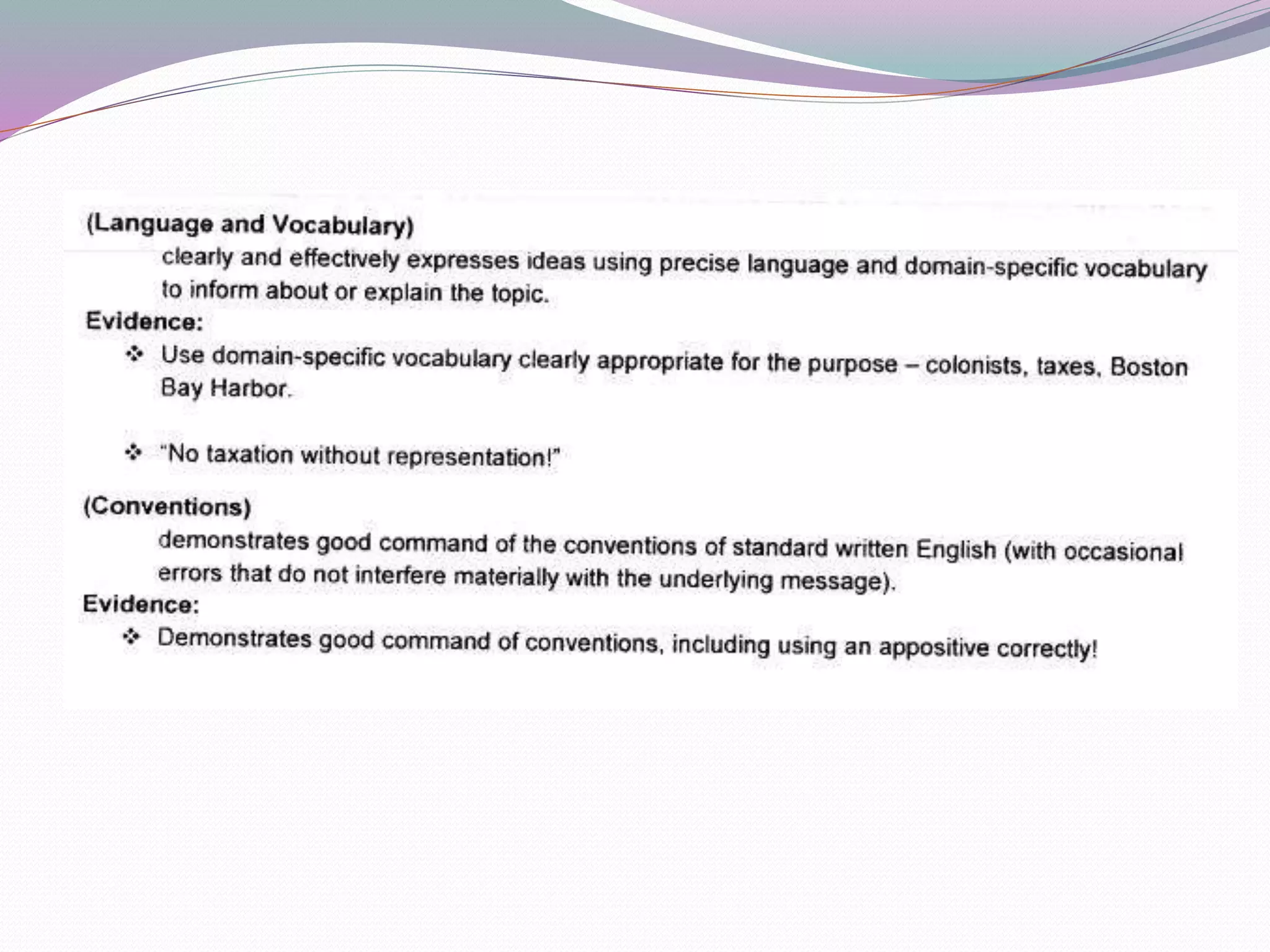
Looking at the Informational/Explanatory 
Rubric, highlight key points for a 4 score 
Highlight differences for a 3 score 
Highlight differences for a 2 score 
Highlight differences for a 1 score 
Determine protocol for a 0 score
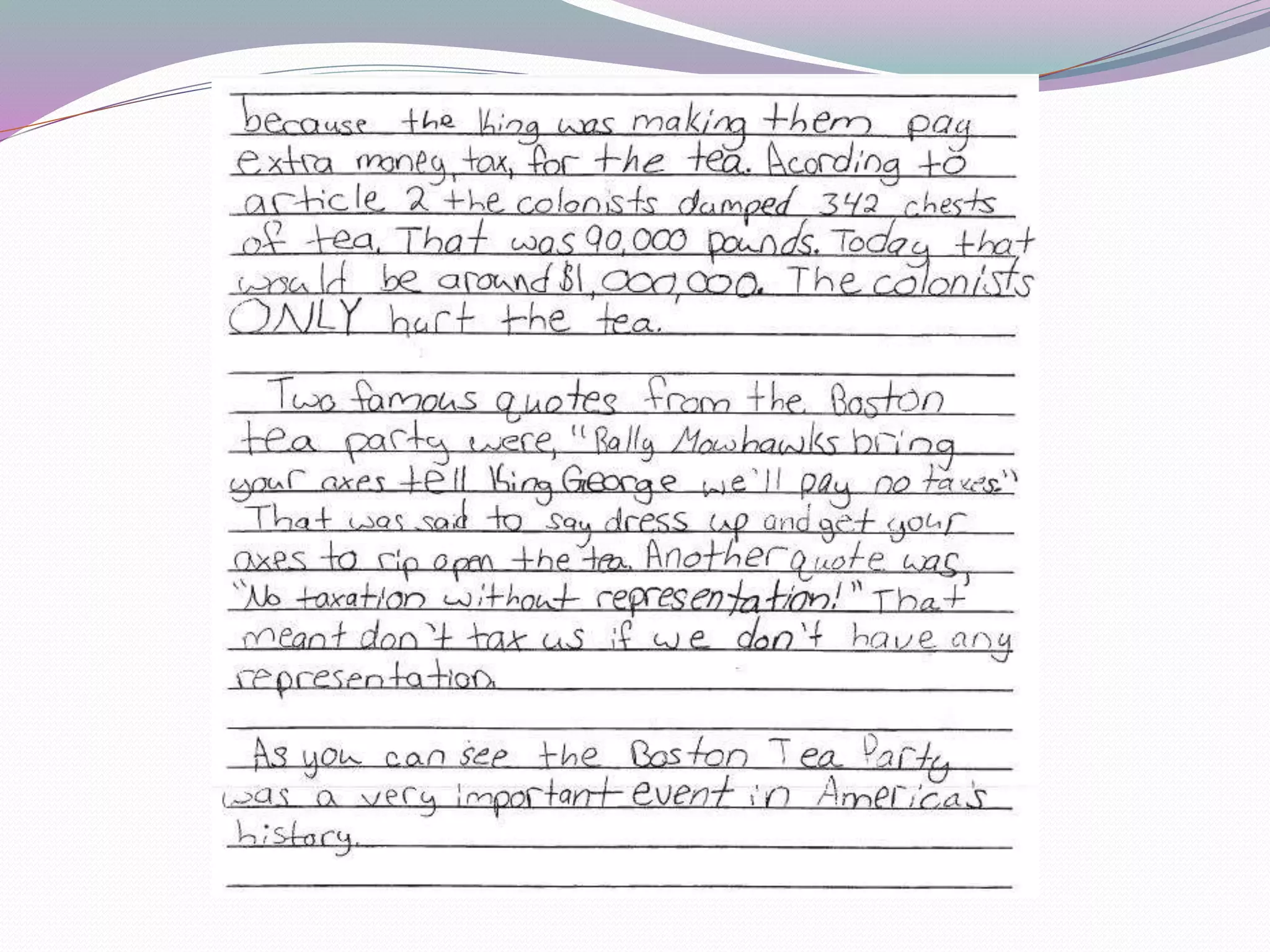
Anchor Papers
5th Grade Score 4 Sample 1
Discuss 3rd Grade Example
Scoring Protocol 
Look at the anchor 
set of papers for 
your grade level 
Discuss with your 
team key points 
Determine a 
protocol for how 
your team will score 
papers with fidelity
Scoring
Scoring Practice 
Working with your 
grade level, begin 
scoring practice 
student papers. 
Each paper should be 
scored by at least 2 
teachers. 
Discrepant scores 
need to be discussed 
and protocol 
determined
2014-15 Memphis Assessment 
Schedule 
Beginning 
Assessment: 
September 2 – 
September 16 2014 
• Narrative Assessment and 
Informational Assessment 
Mid-Year 
Assessment: 
January 12 – 
January 22 2015 
• Narrative Assessment and 
Informational Assessment 
End Year 
Assessment: 
May 4 – May 15 2015 
• Narrative Assessment and 
Informational Assessment
Narrative Topics: 
Kindergarten – Something you did with a friend. ( New: Pre and Post) 
1st Grade – A time you helped or were helped. ( New: Pre and Post) 
2nd Grade – Solving a problem (Old: End of Year Below the Line) 
3rd Grade –Working Together (Old: End of Year Below the Line) 
4th Grade – Doing the Right Thing (Old: Beginning of Year Below the Line) 
5th Grade – Courage (Old: End of Year Below the Line)
Informational Topics 
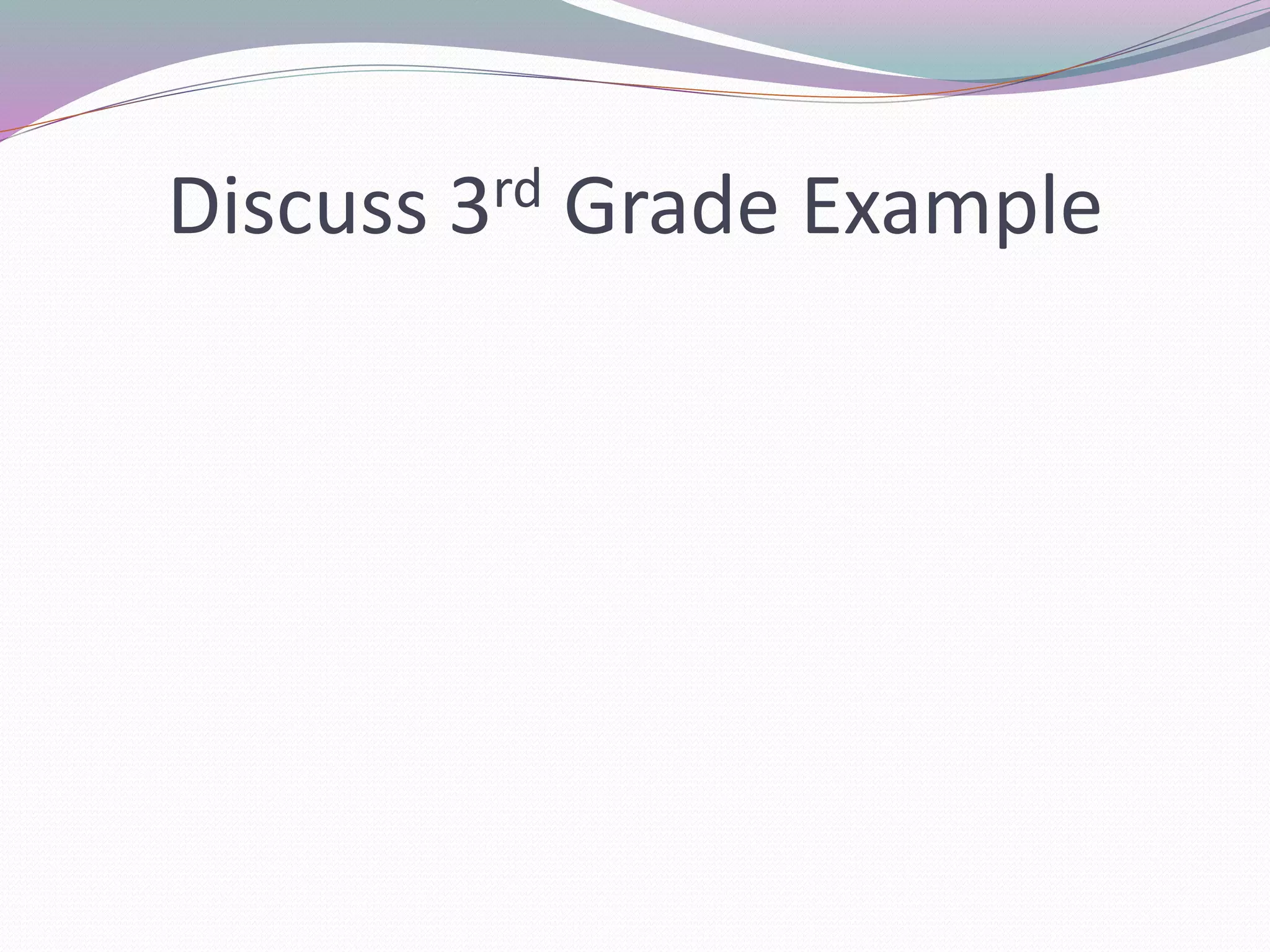
2nd Grade – Explain what you know about frogs. 
(New: Pre and Post) 
3rd Grade – Explain what you know about fur trading. 
(New: Pre and Post) 
4th Grade – Explain the effects of an invasive species on an 
exosystem.(New: Pre and Post) 
5th Grade – Explain the importance of the Boston Tea Party. 
(New: Pre and Post)
Other 
Target Aim Score! Beginning, Middle, and End of Year 
testing (2-5) are expected to be teacher directed 
review that does not have to be put in DataDirector. 
Student packets will be reviewed at an after-school 
professional development session. 
The writing prompt used for the above assessments 
may be skipped.
Questions?

Memphis scoring clinic 2014

  • 1.
    Jennifer Evans AssistantDirector ELA St. Clair County RESA Evans.jennifer@sccresa.org http://www.protopage.com/evans.jennifer#Untitled/Home
  • 2.
    Agenda Assessment Fidelity WriteWell© Pre and Post Assessments How do you administer the assessment? Determine Protocol Scoring Fidelity How do you score the assessment? Scoring Protocol Anchor Papers What is a good example of a 4,3,2,1? Practice
  • 4.
    The most effectivestrategy to improve writing… Increase the amount and quality of writing.
  • 5.
    “Assigning writing iseasy. Teaching writing is really hard.” “We need to teach our students to read like writers and write like readers.” Kelly Gallagher, Author and Teacher http://www.kellygallagher.org/index.html
  • 6.
    Note: “On Demand” writing is a necessary skill. However, giving writing prompts every day is not writing instruction – it’s assigning writing.
  • 7.
    What is theWriteWell© Curriculum? It is a carefully sequenced, coherent K-12 writing curriculum that follows a Writing Workshop format designed to: Continually improve meet the needs of all students increase writing proficiency at every grade use effective, researched based instructional practices
  • 8.
    Navigating the Website  WriteWell©  http://www.sccresa.org/toolsforschools/curriculumtool s/writewell/  Select logo  Enter school log in and password: Log in: Password:
  • 9.
  • 12.
  • 13.
    WriteWell© Pre andPost Assessments: Performance Tasks Modeled after Smarter Balance Performance Tasks 2-3 days Scored with Informational/ Explanatory Rubric Multiple Texts
  • 14.
  • 15.
    “There is nowconclusive, compelling research stating that acting as a Professional Learning Community (PLC) is the most powerful and effective process to systemically change school culture and improve student learning.” - Sharon Kramer, PLC Conference: Connecting the Dots: From ELA Standards to Formative Assessment to Interventions and Extensions, 2014
  • 16.
    The Big Ideasof a PLC We accept learning as the fundamental purpose of our school and therefore are willing to examine all practices and their impact on learning. We are committed to working together to achieve our collective purpose. We cultivate a collaborative culture through the development of high-performing teams. We assess our effectiveness on the basis of results rather than intentions. We seek relevant data and information and use that information to promote continuous improvement.
  • 18.
    Selection of Articles/ Videos Get with your grade level Watch all of the videos Read all of the articles Decide as a group what videos/articles you will use for the pre-test and the post-test
  • 22.
    Develop Answer Keyfor Videos Work with your grade level team to determine what are key points you want your students to identify in the videos. Work together to fill in the Note-Taking Matrix for the Videos so every teacher in the grade level is looking for the same key information. Determine protocol for how you will instruct this portion of the assessment (i.e. Will you give examples or will it be all student generated? Are you explicitly modeling how to fill in the matrix? Are you watching videos whole class or are students watching them independently at their own pace? ) Be sure to record assessment decisions made on the WriteWell© Scoring Clinic Notes page to ensure assessment fidelity when giving the assessment.
  • 25.
    Develop Answer Keyfor Articles Work with your grade level team to determine what are key points you want your students to identify in the articles. Work together to fill in the Note-Taking Matrix for the Articles so every teacher in the grade level is looking for the same key information. Determine if the grade level will write and score the 3 focus questions optional part of the assessment. Determine protocol for how you will instruct this portion of the assessment (i.e. Will you give examples or will it be all student generated? Are you explicitly modeling how to fill in the matrix? Are you reading articles whole class or are students reading them independently at their own pace? ) Be sure to record assessment decisions made on the WriteWell© Scoring Clinic Notes page to ensure assessment fidelity when giving the assessment.
  • 27.
  • 29.
    Key Points Lookingat the Informational/Explanatory Rubric, highlight key points for a 4 score Highlight differences for a 3 score Highlight differences for a 2 score Highlight differences for a 1 score Determine protocol for a 0 score
  • 31.
  • 33.
    5th Grade Score4 Sample 1
  • 37.
  • 38.
    Scoring Protocol Lookat the anchor set of papers for your grade level Discuss with your team key points Determine a protocol for how your team will score papers with fidelity
  • 39.
  • 40.
    Scoring Practice Workingwith your grade level, begin scoring practice student papers. Each paper should be scored by at least 2 teachers. Discrepant scores need to be discussed and protocol determined
  • 41.
    2014-15 Memphis Assessment Schedule Beginning Assessment: September 2 – September 16 2014 • Narrative Assessment and Informational Assessment Mid-Year Assessment: January 12 – January 22 2015 • Narrative Assessment and Informational Assessment End Year Assessment: May 4 – May 15 2015 • Narrative Assessment and Informational Assessment
  • 42.
    Narrative Topics: Kindergarten– Something you did with a friend. ( New: Pre and Post) 1st Grade – A time you helped or were helped. ( New: Pre and Post) 2nd Grade – Solving a problem (Old: End of Year Below the Line) 3rd Grade –Working Together (Old: End of Year Below the Line) 4th Grade – Doing the Right Thing (Old: Beginning of Year Below the Line) 5th Grade – Courage (Old: End of Year Below the Line)
  • 43.
    Informational Topics 2ndGrade – Explain what you know about frogs. (New: Pre and Post) 3rd Grade – Explain what you know about fur trading. (New: Pre and Post) 4th Grade – Explain the effects of an invasive species on an exosystem.(New: Pre and Post) 5th Grade – Explain the importance of the Boston Tea Party. (New: Pre and Post)
  • 44.
    Other Target AimScore! Beginning, Middle, and End of Year testing (2-5) are expected to be teacher directed review that does not have to be put in DataDirector. Student packets will be reviewed at an after-school professional development session. The writing prompt used for the above assessments may be skipped.
  • 45.

Editor's Notes

  • #5 Model/coach students to elevate their writing Read lots of mentor texts in the genre – have them look at the text with the thought “What did the writer do that I could do?” Turn & talk about the “how” Show them by writing in front of students – write in front of the class and think aloud during the process, modeling about 5-7 minutes at a time WriteWell is about quality vs. quantity
  • #6 Assign and assess writing does not teach students the knowledge and skills needed to become better writers WriteWell is designed around the format of Writer’s Workshop where teachers teach students minilessons as well as teach them to read like writers and write like readers.
  • #8 Discuss alignment process this summer to match CCSS It is an online product that is revised and improved as needed throughout the year and more extensively each summer, relying on classroom teachers to make the revisions
  • #9 Participants spend some time online exploring the units for their grade level
  • #18 Need to be school wide / district wide consensus as to what articles/videos will be used