Media Terms

Amelia Eguchi-Wale
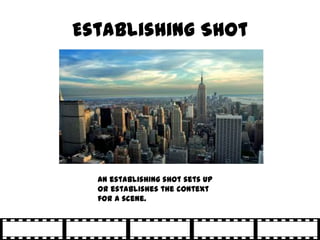
Establishing Shot


  An establishing shot sets up
  or establishes the context
  for a scene.
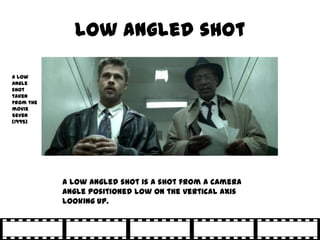
Low angled shot

A low
angle
shot
taken
from the
movie
Seven
(1995)


           A low angled shot is a shot from a camera
           angle positioned low on the vertical axis
           looking up.
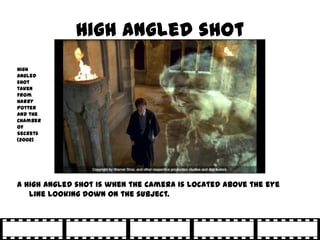
High angled shot
High
angled
shot
taken
from
Harry
Potter
and the
Chamber
of
Secrets
(2002)


A high angled shot is when the camera is located above the eye
   line looking down on the subject.
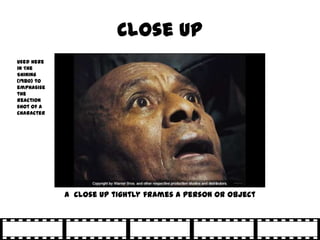
Close up
Used here
in The
Shining
(1980) to
emphasise
the
reaction
shot of a
character


            A close up tightly frames a person or object
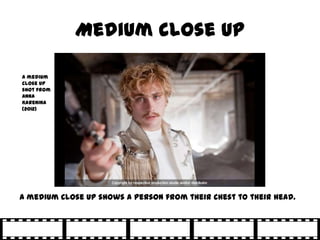
Medium close up

A medium
close up
shot from
Anna
Karenina
(2012)


A medium close up shows a person from their chest to their head.
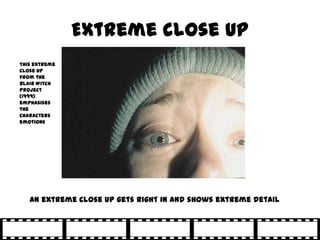
Extreme close up
This extreme
close up
from the
Blair Witch
Project
(1999)
emphasises
the
characters
emotions


   An extreme close up gets right in and shows extreme detail
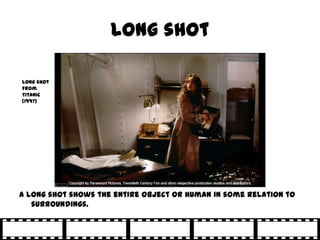
Long shot

Long shot
from
Titanic
(1997)


A long shot shows the entire object or human in some relation to
   surroundings.
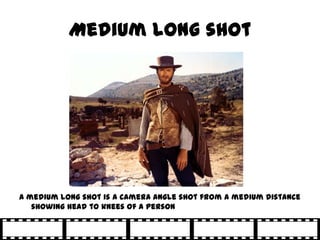
Medium long shot


A medium long shot is a camera angle shot from a medium distance
   showing head to knees of a person
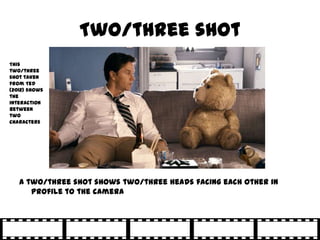
Two/three shot
This
two/three
shot taken
from Ted
(2012) shows
the
interaction
between
two
characters


   A two/three shot shows two/three heads facing each other in
      profile to the camera
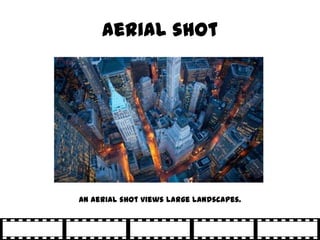
Aerial shot


An aerial shot views large landscapes.
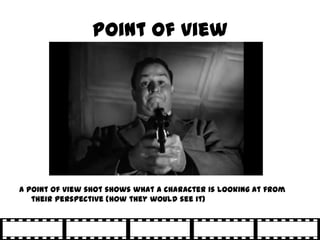
Point of view


A point of view shot shows what a character is looking at from
   their perspective (how they would see it)
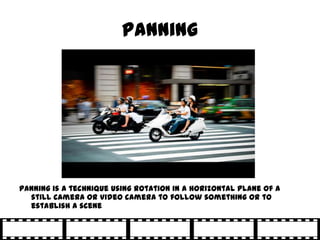
Panning


Panning is a technique using rotation in a horizontal plane of a
  still camera or video camera to follow something or to
  establish a scene
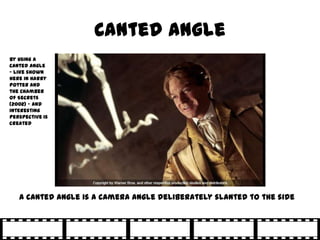
Canted angle
By using a
canted angle
– like shown
here in Harry
Potter and
the Chamber
of Secrets
(2002) – and
interesting
perspective is
created


   A canted angle is a camera angle deliberately slanted to the side
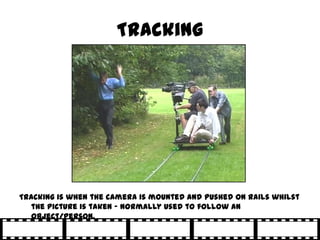
Tracking


Tracking is when the camera is mounted and pushed on rails whilst
   the picture is taken – normally used to follow an
   object/person.
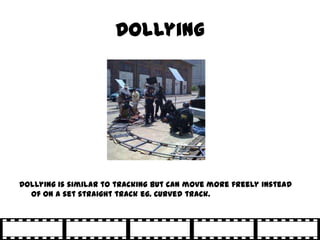
Dollying


Dollying is similar to tracking but can move more freely instead
  of on a set straight track eg. Curved track.
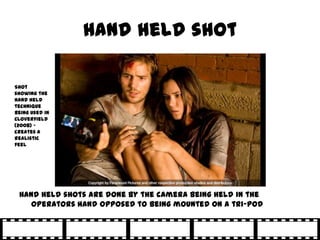
Hand held shot

Shot
showing the
hand held
technique
being used in
Cloverfield
(2008) –
creates a
realistic
feel


 Hand held shots are done by the camera being held in the
    operators hand opposed to being mounted on a tri-pod
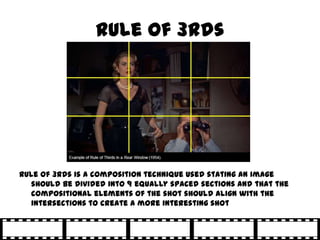
Rule of 3rds


Rule of 3rds is a composition technique used stating an image
   should be divided into 9 equally spaced sections and that the
   compositional elements of the shot should align with the
   intersections to create a more interesting shot
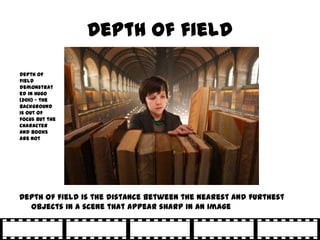
Depth of field

Depth of
field
demonstrat
ed in Hugo
(2011) – the
background
is out of
focus but the
character
and books
are not


Depth of field is the distance between the nearest and furthest
  objects in a scene that appear sharp in an image

Media terms

  • 1.
  • 2.
    Establishing Shot An establishing shot sets up or establishes the context for a scene.
  • 3.
    Low angled shot Alow angle shot taken from the movie Seven (1995) A low angled shot is a shot from a camera angle positioned low on the vertical axis looking up.
  • 4.
    High angled shot High angled shot taken from Harry Potter andthe Chamber of Secrets (2002) A high angled shot is when the camera is located above the eye line looking down on the subject.
  • 5.
    Close up Used here inThe Shining (1980) to emphasise the reaction shot of a character A close up tightly frames a person or object
  • 6.
    Medium close up Amedium close up shot from Anna Karenina (2012) A medium close up shows a person from their chest to their head.
  • 7.
    Extreme close up Thisextreme close up from the Blair Witch Project (1999) emphasises the characters emotions An extreme close up gets right in and shows extreme detail
  • 8.
    Long shot Long shot from Titanic (1997) Along shot shows the entire object or human in some relation to surroundings.
  • 9.
    Medium long shot Amedium long shot is a camera angle shot from a medium distance showing head to knees of a person
  • 10.
    Two/three shot This two/three shot taken fromTed (2012) shows the interaction between two characters A two/three shot shows two/three heads facing each other in profile to the camera
  • 11.
    Aerial shot An aerialshot views large landscapes.
  • 12.
    Point of view Apoint of view shot shows what a character is looking at from their perspective (how they would see it)
  • 13.
    Panning Panning is atechnique using rotation in a horizontal plane of a still camera or video camera to follow something or to establish a scene
  • 14.
    Canted angle By usinga canted angle – like shown here in Harry Potter and the Chamber of Secrets (2002) – and interesting perspective is created A canted angle is a camera angle deliberately slanted to the side
  • 15.
    Tracking Tracking is whenthe camera is mounted and pushed on rails whilst the picture is taken – normally used to follow an object/person.
  • 16.
    Dollying Dollying is similarto tracking but can move more freely instead of on a set straight track eg. Curved track.
  • 17.
    Hand held shot Shot showingthe hand held technique being used in Cloverfield (2008) – creates a realistic feel Hand held shots are done by the camera being held in the operators hand opposed to being mounted on a tri-pod
  • 18.
    Rule of 3rds Ruleof 3rds is a composition technique used stating an image should be divided into 9 equally spaced sections and that the compositional elements of the shot should align with the intersections to create a more interesting shot
  • 19.
    Depth of field Depthof field demonstrat ed in Hugo (2011) – the background is out of focus but the character and books are not Depth of field is the distance between the nearest and furthest objects in a scene that appear sharp in an image