Issues Independent Studios MajorStudios
1) How easily/widely
can films be
distributed?
Difficult – have a lower budget in comparison to
conglomerates and so with distribution costs at a high
level their lack of funds puts them at a disadvantage.
Depends on the type of distribution being used e.g.
showing the film on TV will be more expensive than
solely producing DVDs. Smaller companies are typically
horizontally integrated and so will have to seek help
from a distribution company. As they have no
reputation, the acceptance of a company willing to show
their filmis not guaranteed, and they may struggle to
persuade companies.
Easier – with many conglomerate institutions being
vertically integrated (meaning they may own their own
distribution company) e.g. Disney’s Disney Channel.
Often these companies have previously made films that
were a success, and so they have a good reputation
due to their major roles in the industry.
2) How profitable are
the releases for the
company?
Low profit – their audience is often a niche market
meaning not everyone will be interested. As they have
not got an established reputation or customer base, it is
not guaranteed that many people will even take a
chance and spend money on viewing their film.
High profit – their reputation from previous successful
films gives them a sense of security in that people will
see the film. Being known for high quality releases and
the famous actors often featured, people are likely to
spend money to go and see the film.
3) How much
creative control do
the makers of the
films have over the
films they produce?
Low control – their reliance on others for funding often
means that this investor will want a portion of the
control. As they do not have their own funding they may
be forced to alter ideas such as characters in the movie;
to fit the ideas of the investor who has more authority.
High control – they are sourcing the finance for the film
and so will hire and instruct the cast etc. However if the
film is based off another form of media such as a book
e.g. Gone Girl (2014) then there will be less control as
the author is permitted to make decisions about how
they will present their story.
4) How easy is it for
them to get funding?
Hard – they wouldn’t have much profit from previous
productions and would probably have to seek help from
external sources. They are likely to face rejection as they
have no reputation or guarantee that their film will be a
success and so they would have to persuade somebody
to take a chance on them which would be hard as they
are of low positioning the market and can’t compete
with larger institutions.
Easy – they can use surplus collected from previous
productions to fund new projects. If they required a
loan from a bank, they are likely to be accepted as they
have a good reputation and have previously been
successful. Also because of both vertical and horizontal
integration they have multiple sources of funding e.g.
Disney’s stores selling merchandise gains the
institution additional profit.

Media ownership issues

  • 1.
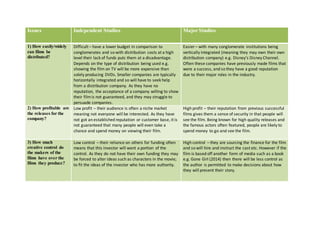
    Issues Independent StudiosMajorStudios 1) How easily/widely can films be distributed? Difficult – have a lower budget in comparison to conglomerates and so with distribution costs at a high level their lack of funds puts them at a disadvantage. Depends on the type of distribution being used e.g. showing the film on TV will be more expensive than solely producing DVDs. Smaller companies are typically horizontally integrated and so will have to seek help from a distribution company. As they have no reputation, the acceptance of a company willing to show their filmis not guaranteed, and they may struggle to persuade companies. Easier – with many conglomerate institutions being vertically integrated (meaning they may own their own distribution company) e.g. Disney’s Disney Channel. Often these companies have previously made films that were a success, and so they have a good reputation due to their major roles in the industry. 2) How profitable are the releases for the company? Low profit – their audience is often a niche market meaning not everyone will be interested. As they have not got an established reputation or customer base, it is not guaranteed that many people will even take a chance and spend money on viewing their film. High profit – their reputation from previous successful films gives them a sense of security in that people will see the film. Being known for high quality releases and the famous actors often featured, people are likely to spend money to go and see the film. 3) How much creative control do the makers of the films have over the films they produce? Low control – their reliance on others for funding often means that this investor will want a portion of the control. As they do not have their own funding they may be forced to alter ideas such as characters in the movie; to fit the ideas of the investor who has more authority. High control – they are sourcing the finance for the film and so will hire and instruct the cast etc. However if the film is based off another form of media such as a book e.g. Gone Girl (2014) then there will be less control as the author is permitted to make decisions about how they will present their story.
  • 2.
    4) How easyis it for them to get funding? Hard – they wouldn’t have much profit from previous productions and would probably have to seek help from external sources. They are likely to face rejection as they have no reputation or guarantee that their film will be a success and so they would have to persuade somebody to take a chance on them which would be hard as they are of low positioning the market and can’t compete with larger institutions. Easy – they can use surplus collected from previous productions to fund new projects. If they required a loan from a bank, they are likely to be accepted as they have a good reputation and have previously been successful. Also because of both vertical and horizontal integration they have multiple sources of funding e.g. Disney’s stores selling merchandise gains the institution additional profit.