Impact of new technology on institutions
Factor Pros Cons
Quality  More people will want to see the film as visually pleasing
productions are more enjoyable to watch resulting in
higher revenue for the institution
 Digital transfer of films doesn’t affect quality over time
whereas previously the reels could have become worn
and so work is preserved
 Equipment is highly expensive – however
conglomerates are able to afford it due to
high budgets
 Some argue that the image of digital footage
looks ‘flat’ and that it is of lower quality than
classic film
Cost-cutting  Saves money for the firm which can then be used in other
areas or kept as surplus for owners
 Benefits smaller institutions with less money available so
that they can still make a profit
 Fewer specialists needed for each area of production
 Lower quality as minimal money is being
spent – the best quality e.g. well-known
actors are the most expensive, and are more
likely to make people want to watch your
film, having unknown starts doesn’t have
much of an appeal
 Viewing film as a form of art would be
overlooked
Piracy  The quality of films streamed illegally online is usually
poor and contains viruses so people may be discouraged
by this
 Going out to see a film for example is a social event and so
most people would rather pay and visit the cinema with
friends
 Independent companies may not be bothered by making a
large amount of profit and want people to properly
appreciate the style of their work
 Cinemas can combat this with new offers such as cinema
loyalty cards offering customers access to all films fora
fixed price per month on a yearly contract, guaranteeing
 Loses companies a lot of money as people
can access the films that they spent millions
of pounds producing for free on the internet
– this suffering in profit means they will
struggle to produce more films
 Instead money is illegally obtained by
criminals
revenue for the cinema
Exhibition  Is an extremely speedy process, films are available for
viewing in an instant - allowing institutions to provide a
highly convenient service for the customer which will give
them the upper hand over competitors such as the cinema
(which requires the customer to travel to see the film) –
this speedy service also allows institutions to charge less
for filmviewing e.g. Netflix at £5.99* per month (access to
a wide range of films at any time) previously films were in
reels that were heavy and had to be carried to cinemas –
saving them time and money spent on transport
 Advancements in the showing of films such as 4K, 3D and
4D will entice more customers who are likely to be keen to
experience something new (is a USP for cinemas)
 Thousands of copies of the film vs. one reel (previously)
meaning much more revenue can be made as it can be
shown on multiple screens
 Cinemas are rivalled greatly by the
convenience offered by online providers who
offer a greater range of films (including best
loved classics that many customers are
unable to see at the cinema) and at much
lower prices - £5.99* a month for access to
thousands of films at any time vs. around £8-
13 per cinema showing
 Smaller studios cannot afford to exhibit their
films on all the different platforms and so are
overwhelmed by conglomerates who have
much more money
Marketing  Increased marketing platforms allow them to advertise
their filmon different sites (e.g. social media)
 Can reach out to their desired target audience as they
have information on where (which sites) those people will
be browsing online (e.g. could post on Twitter to target
older teens and young adults)
 Advertising online is inexpensive e.g. creating a Facebook
page for the film would be free and people can easily
access your profile online, making promotion easier for
smaller, independent studios with small budgets
 Film information and reviews are accessible to all online
seeking information about your film – this is key in
persuading them to watch the film
 Can be rather impersonal – can be seen by
everyone, however the film is not likely to be
targeted towards everyone
 Ads seen as pesky, may be ignored by people
and therefore online advertising could be
considered ineffective – wasted money
 Consumers can spreads the word about your films to
others by posting on their pages – e.g. a Tweet (social
media site Twitter) reading ‘Saw the new Fast & Furious
movie today, it was awesome!’ and this will be seen by
their friends and followers – relation to Blumer and Katz
use and gratification – personal relationships theories that
media is often consumed in order to socialise and bond
with other people e.g. the person may watch a movie that
their friend recommends so that they can discuss it
together – this results in higher revenue for an institution
Impact of new technology on audiences
Factor Pros Cons
Access  Films are accessible online meaning we do not have to
leave the house – which saves hassle and transport
costs
 Can watch films in the comfort of our homes
 Online streaming is a lot cheaper than going to the
cinema – more value for money, saves our money
which we can then spend on other things
 Online streaming allows us access to older (e.g.
classicalfilms) and family favourites that cinemas are
no longer showing
 Online streaming means we can watch films
whenever we like, as opposed to being limited to the
specific showings of films at the cinema
 Can watch films without the adverts at the beginning
 Save money on the cost of snacks (which are high at
the cinema)
 Can watch films in the comfort of our homes
 Online sites take longer to have newer films
available, have to wait which is not favourable
as people like to watch things when they come
out as to get involved with the trend
 Accessing films homes makes us lazier as we
are missing out on exercise, and also the
experience of having a day out (with friends or
family) at the cinema
Environment  3D and 4D showings allow us to experience
something new
 Can view films in the comfort of our own home – this
could make viewing more enjoyable
 Watching the latest releases enables us to socialise
with others and get involved in a trend
 The experience of sitting at home watching a
film as opposed to viewing it at the cinema
isn’t as special and our value of watching and
enjoying a film decreases as it becomes a
common thing for us to do
Audience as
producers
 Allows us to develop skills and take an interest in a
profession – generations could go on to become
professional film makers
 We are not as convinced to watch productions
by smaller companies as they have no
reputation to go by and are overpowered by
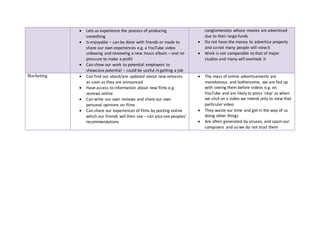
 Lets us experience the process of producing
something
 Is enjoyable – can be done with friends or made to
share our own experiences e.g. a YouTube video
unboxing and reviewing a new music album – and no
pressure to make a profit
 Can show our work to potential employers to
showcase potential – could be useful in getting a job
conglomerates whose movies are advertised
due to their large funds
 Do not have the money to advertise properly
and so not many people will view it
 Work is not comparable to that of major
studios and many will overlook it
Marketing  Can find out about/are updated about new releases
as soon as they are announced
 Have access to information about new films e.g.
reviews online
 Can write our own reviews and share our own
personal opinions on films
 Can share our experiences of films by posting online
which our friends will then see – can also see peoples’
recommendations
 The mass of online advertisements are
monotonous and bothersome, we are fed up
with seeing them before videos e.g. on
YouTube and are likely to press ‘skip’ as when
we click on a video we intend only to view that
particular video
 They waste our time and get in the way of us
doing other things
 Are often generated by viruses, and spam our
computers and so we do not trust them

Impact of new technology

  • 1.
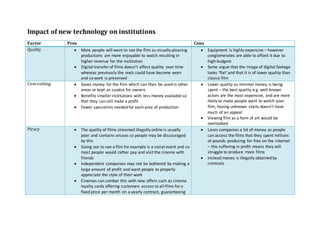
    Impact of newtechnology on institutions Factor Pros Cons Quality  More people will want to see the film as visually pleasing productions are more enjoyable to watch resulting in higher revenue for the institution  Digital transfer of films doesn’t affect quality over time whereas previously the reels could have become worn and so work is preserved  Equipment is highly expensive – however conglomerates are able to afford it due to high budgets  Some argue that the image of digital footage looks ‘flat’ and that it is of lower quality than classic film Cost-cutting  Saves money for the firm which can then be used in other areas or kept as surplus for owners  Benefits smaller institutions with less money available so that they can still make a profit  Fewer specialists needed for each area of production  Lower quality as minimal money is being spent – the best quality e.g. well-known actors are the most expensive, and are more likely to make people want to watch your film, having unknown starts doesn’t have much of an appeal  Viewing film as a form of art would be overlooked Piracy  The quality of films streamed illegally online is usually poor and contains viruses so people may be discouraged by this  Going out to see a film for example is a social event and so most people would rather pay and visit the cinema with friends  Independent companies may not be bothered by making a large amount of profit and want people to properly appreciate the style of their work  Cinemas can combat this with new offers such as cinema loyalty cards offering customers access to all films fora fixed price per month on a yearly contract, guaranteeing  Loses companies a lot of money as people can access the films that they spent millions of pounds producing for free on the internet – this suffering in profit means they will struggle to produce more films  Instead money is illegally obtained by criminals
  • 2.
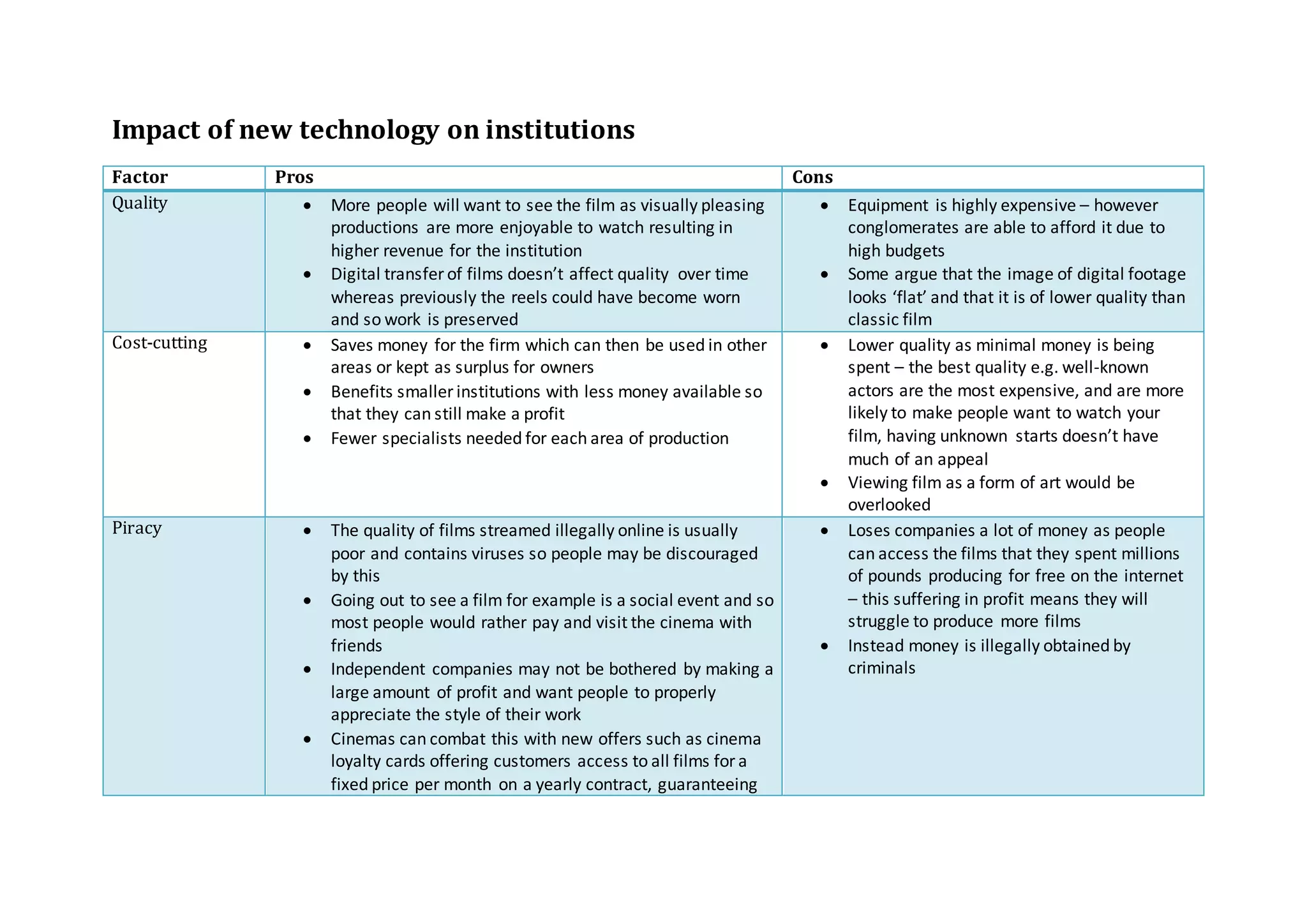
    revenue for thecinema Exhibition  Is an extremely speedy process, films are available for viewing in an instant - allowing institutions to provide a highly convenient service for the customer which will give them the upper hand over competitors such as the cinema (which requires the customer to travel to see the film) – this speedy service also allows institutions to charge less for filmviewing e.g. Netflix at £5.99* per month (access to a wide range of films at any time) previously films were in reels that were heavy and had to be carried to cinemas – saving them time and money spent on transport  Advancements in the showing of films such as 4K, 3D and 4D will entice more customers who are likely to be keen to experience something new (is a USP for cinemas)  Thousands of copies of the film vs. one reel (previously) meaning much more revenue can be made as it can be shown on multiple screens  Cinemas are rivalled greatly by the convenience offered by online providers who offer a greater range of films (including best loved classics that many customers are unable to see at the cinema) and at much lower prices - £5.99* a month for access to thousands of films at any time vs. around £8- 13 per cinema showing  Smaller studios cannot afford to exhibit their films on all the different platforms and so are overwhelmed by conglomerates who have much more money Marketing  Increased marketing platforms allow them to advertise their filmon different sites (e.g. social media)  Can reach out to their desired target audience as they have information on where (which sites) those people will be browsing online (e.g. could post on Twitter to target older teens and young adults)  Advertising online is inexpensive e.g. creating a Facebook page for the film would be free and people can easily access your profile online, making promotion easier for smaller, independent studios with small budgets  Film information and reviews are accessible to all online seeking information about your film – this is key in persuading them to watch the film  Can be rather impersonal – can be seen by everyone, however the film is not likely to be targeted towards everyone  Ads seen as pesky, may be ignored by people and therefore online advertising could be considered ineffective – wasted money
  • 3.
     Consumers canspreads the word about your films to others by posting on their pages – e.g. a Tweet (social media site Twitter) reading ‘Saw the new Fast & Furious movie today, it was awesome!’ and this will be seen by their friends and followers – relation to Blumer and Katz use and gratification – personal relationships theories that media is often consumed in order to socialise and bond with other people e.g. the person may watch a movie that their friend recommends so that they can discuss it together – this results in higher revenue for an institution
  • 4.
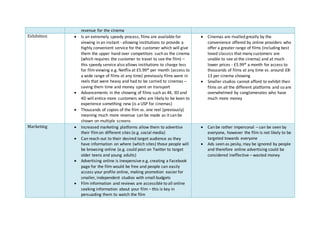
    Impact of newtechnology on audiences Factor Pros Cons Access  Films are accessible online meaning we do not have to leave the house – which saves hassle and transport costs  Can watch films in the comfort of our homes  Online streaming is a lot cheaper than going to the cinema – more value for money, saves our money which we can then spend on other things  Online streaming allows us access to older (e.g. classicalfilms) and family favourites that cinemas are no longer showing  Online streaming means we can watch films whenever we like, as opposed to being limited to the specific showings of films at the cinema  Can watch films without the adverts at the beginning  Save money on the cost of snacks (which are high at the cinema)  Can watch films in the comfort of our homes  Online sites take longer to have newer films available, have to wait which is not favourable as people like to watch things when they come out as to get involved with the trend  Accessing films homes makes us lazier as we are missing out on exercise, and also the experience of having a day out (with friends or family) at the cinema Environment  3D and 4D showings allow us to experience something new  Can view films in the comfort of our own home – this could make viewing more enjoyable  Watching the latest releases enables us to socialise with others and get involved in a trend  The experience of sitting at home watching a film as opposed to viewing it at the cinema isn’t as special and our value of watching and enjoying a film decreases as it becomes a common thing for us to do Audience as producers  Allows us to develop skills and take an interest in a profession – generations could go on to become professional film makers  We are not as convinced to watch productions by smaller companies as they have no reputation to go by and are overpowered by
  • 5.
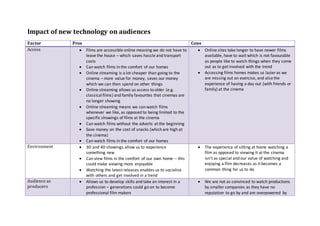
     Lets usexperience the process of producing something  Is enjoyable – can be done with friends or made to share our own experiences e.g. a YouTube video unboxing and reviewing a new music album – and no pressure to make a profit  Can show our work to potential employers to showcase potential – could be useful in getting a job conglomerates whose movies are advertised due to their large funds  Do not have the money to advertise properly and so not many people will view it  Work is not comparable to that of major studios and many will overlook it Marketing  Can find out about/are updated about new releases as soon as they are announced  Have access to information about new films e.g. reviews online  Can write our own reviews and share our own personal opinions on films  Can share our experiences of films by posting online which our friends will then see – can also see peoples’ recommendations  The mass of online advertisements are monotonous and bothersome, we are fed up with seeing them before videos e.g. on YouTube and are likely to press ‘skip’ as when we click on a video we intend only to view that particular video  They waste our time and get in the way of us doing other things  Are often generated by viruses, and spam our computers and so we do not trust them