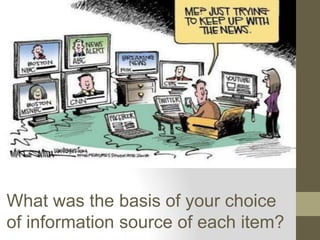
What was the basis of your choice
of information source of each item?
MEDIA AND
INFORMATION
SOURCES
SOURCES OF INFORMATION:
•LIBRARIES
•INDIGENOUS
MEDIA
•INTERNET
LIBRARIES
WHAT IS A LIBRARY?
-A place in which literary, musical,
artistic, or reference materials
such as books, manuscripts,
recordings, or films) are kept for
use but not for sale
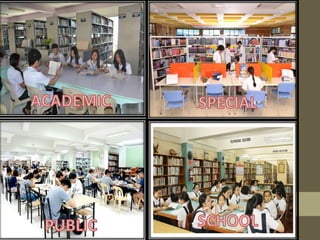
4 Major Types ofLibraries:
•ACADEMIC LIBRARY
•PUBLIC LIBRARY
•SCHOOL LIBRARY
•SPECIAL LIBRARY
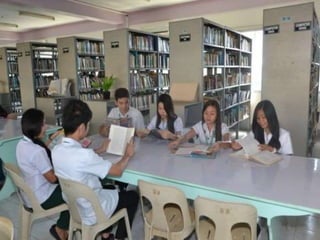
ACADEMIC LIBRARY
- serves colleges and
universities
PUBLIC LIBRARY
- serves cities and towns of
all types
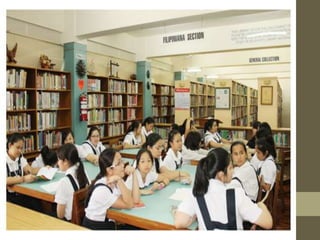
SCHOOL LIBRARY
- serves students from
Kindergarten to Grade 12
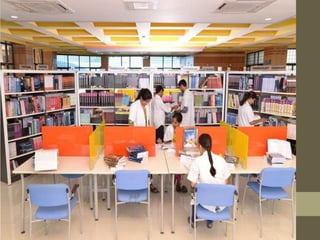
SPECIAL LIBRARY
- are in specialized environments,
such as hospitals, corporations,
museums, the military, private
business, and the government.
SOURCES OF INFORMATION:
•LIBRARIES
•INDIGENOUS MEDIA
•INTERNET
INDIGENOUS
MEDIA
What is Indigenous?
- native; local; originating
or produced naturally in a
particular region/locality
Indigenous Knowledge
- knowledge that is unique to
a specific culture or society;
most often it is not written
down
Indigenous Communication
-transmission of information
through local channels or forms
-it is a means by which the
culture is preserved, handed
down and adapted
INDIGENOUS MEDIA
- may be defined as forms of
media expression
conceptualized, produced, and
circulated by indigenous
peoples around the globe as
vehicles for communication
IK has its own characteristics making it
easy to distinguish among other sources
such as:
oral tradition of communication
store information in memories
information exchange is face-to-face
and information are contain within the
border of the community.
FORMS OF INDIGENOUSMEDIA:
1. FOLK OR TRADITIONAL MEDIA
2. GATHERINGS AND SOCIAL
ORGANIZATIONS
3. DIRECT OBSERVATION
4. RECORDS (WRITTEN, CARVED,
ORAL)
5. ORAL INSTRUCTION
SOURCES OF
INFORMATION:
•LIBRARIES
•INDIGENOUS
MEDIA
•INTERNET
INTERNET
What is an Internet?
- a global computer network
providing a variety of
information and
communication facilities,
consisting of interconnected
networks using standardized
communication protocols.
EVALUATINGINFORMATION
FOUND ON THEINTERNET:
-Authorship
-Publishing body
-Accuracy and Verifiability
-Currency
Things to Consider in
Evaluating Information:
-Reliability
-Accuracy
- Value
-Authority
-Timeliness
Reliability of Information
Information is said to be
reliable if it can be verified
and evaluated. Others refer
to the trustworthiness of the
source in evaluating the
reliability of information.
Accuracy of Information
Accuracy refers to the closeness of
the report to the actual data.
Measurement of accuracy varies,
depending on the type of
information being evaluated.
Forecasts - similar to the actual data.
Financial - values are correct
Value of Information
Information is said to be of
value if it aids the user in
making or improving
decisions.
Authority of theSource
-Who authored or published
the information?
- Is the source credible?
Timeliness
Reliability, accuracy, and value of
information may vary based on the
time it was produced or acquired.
It may become irrelevant and
inaccurate with the passing of time
(thus making it less valuable)
Timeliness
Other information may be
timeless, proven to be the
same in reliability, accuracy,
and value throughout history.
Skills in determining the
Reliability of Information:
a. Check the Author
b. Check the Date of Publication or of update
c. Check for Citations
d. Check the Domain or owner of the site/page.
.com -
.edu -
.mil -
.gov -
.org -
commercial
educational
military
government
nonprofit organization
Skills in Determining
Accurate Information:
a. Look forfacts.
b.Cross-reference with other
source for consistency.
c. Determine the reason for writing
and publishing the information.
END

MEDIA INFORMATION SOURCES.pptx