MEDIA & INFORMATION
SOURCES
SOURCES OF INFORMATION:
•LIBRARIES
•INDIGENOUS MEDIA
•INTERNET
LIBRARIES
WHATIS A LIBRARY?
-A place in which literary, musical,
artistic,
(such
or reference materials
as books, manuscripts,
recordings, or films) are kept for
use but not for sale
(Merriam Webster’s 11th Collegiate
Dictionary)
4 Major Types of Libraries:
•ACADEMIC LIBRARY
•PUBLIC LIBRARY
•SCHOOL LIBRARY
•SPECIAL LIBRARY
ACADEMIC LIBRARY
- serves colleges and universities
PUBLIC LIBRARY
- serves cities and towns of all
types
SCHOOL LIBRARY
- serves students from
Kindergarten to Grade 12
SPECIAL LIBRARY
- are in specialized environments,
such as hospitals, corporations,
museums, the military, private
business, and the government.
SOURCES OF INFORMATION:
•LIBRARIES
•INDIGENOUS MEDIA
•INTERNET
INDIGENOUS MEDIA
What is Indigenous?
- native; local; originating
or produced naturally in a
particular region/locality
Indigenous Knowledge
- knowledge that is unique to
a specific culture or society;
most often it is not written
down
Examples of Indigenous
Knowledge and Practices
The Indigenous Knowledge and
Practices(IKSPs) have been proven to
contribute to the productivity of many
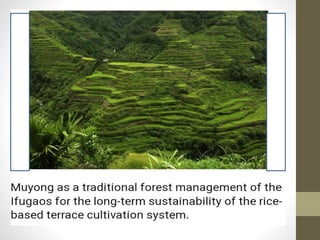
ecosystems, examples of which include the
rice terraces and imuyung (private woodlot
of the Ifugao, the traditional biodiverse
swidden of the Hanunuo, the fish
conservation practices of the Dumagat and
the traditional herbal medicines of many
Filipino Ethnic communities.
Indigenous Communication
- transmission of information
through local channels or forms
- it is a means by which the
culture is preserved, handed
down and adapted
INDIGENOUS MEDIA
- Is owned, controlled and managed by
Indigenous Peoples in order for them to
develop and produce culturally appropriate
information in the languages understood by
the community by utilizing indigenous
materials and resources and independent
from vested interest groups.
-May be defined as forms of media
expression conceptualized, produced, and
circulated by indigenous peoples around the
globe as vehicles for communication
Indigenous Media
Also known as community
media , is any form of media
that is created and controlled in
the community, for the
community, about the
community and by the
community.
FORMS OF INDIGENOUS MEDIA:
1. FOLK OR TRADITIONAL MEDIA
2. GATHERINGS AND SOCIAL
ORGANIZATIONS
3. DIRECT OBSERVATION
4. RECORDS (WRITTEN, CARVED,
ORAL)
5. ORAL INSTRUCTION
SOURCES OF INFORMATION:
•LIBRARIES
•INDIGENOUS MEDIA
•INTERNET
INTERNET
What is an Internet?
- a global computer network
providing a variety of information
and communication facilities,
consisting of interconnected
networks using standardized
communication protocols.
EVALUATINGINFORMATION
FOUNDON THEINTERNET:
-Authorship
-Publishing body
-Accuracy and Verifiability
-Currency
Thingsto Consider in
Evaluating Information:
-Reliability
-Accuracy
-Value
-Authority
-Timeliness
Reliability of Information
Information is said to be
reliable if it can be verified and
evaluated. Others refer to the
trustworthiness of the source in
evaluating the reliability of
information.
Accuracyof Information
Accuracy refers to the closeness of
the report to the actual data.
Measurement of accuracy varies,
depending on the type of
information being evaluated.
Forecasts - similar to the actual data.
Financial - values are correct
Valueof Information
Information is said to be of
value if it aids the user in
making or improving decisions.
Authorityof the Source
- Who authored or published
the information?
- Is the source credible?
Timeliness
Reliability, accuracy, and value of
information may vary based on
the time it was produced or
acquired. It may become
irrelevant and inaccurate with
the passing of time (thus making
it less valuable)
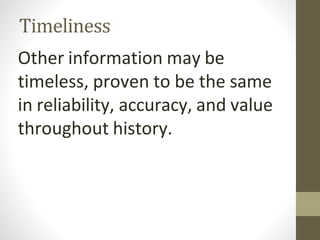
Timeliness
Other information may be
timeless, proven to be the same
in reliability, accuracy, and value
throughout history.
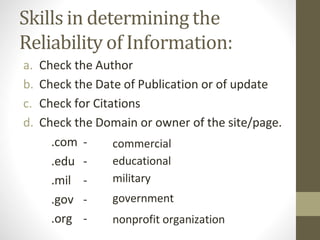
Skills in determining the
Reliability of Information:
a. Check the Author
b. Check the Date of Publication or of update
c. Check for Citations
d. Check the Domain or owner of the site/page.
.com -
.edu -
.mil -
.gov -
.org -
commercial
educational
military
government
nonprofit organization
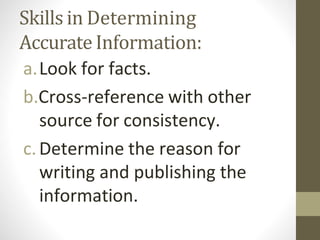
Skills in Determining
Accurate Information:
a.Look for facts.
b.Cross-reference with other
source for consistency.
c.Determine the reason for
writing and publishing the
information.
END

Media and Information Sources.pptx

  • 1.
  • 2.
  • 3.
  • 4.
    WHATIS A LIBRARY? -Aplace in which literary, musical, artistic, (such or reference materials as books, manuscripts, recordings, or films) are kept for use but not for sale (Merriam Webster’s 11th Collegiate Dictionary)
  • 5.
    4 Major Typesof Libraries: •ACADEMIC LIBRARY •PUBLIC LIBRARY •SCHOOL LIBRARY •SPECIAL LIBRARY
  • 6.
    ACADEMIC LIBRARY - servescolleges and universities PUBLIC LIBRARY - serves cities and towns of all types
  • 7.
    SCHOOL LIBRARY - servesstudents from Kindergarten to Grade 12 SPECIAL LIBRARY - are in specialized environments, such as hospitals, corporations, museums, the military, private business, and the government.
  • 8.
  • 9.
  • 10.
    What is Indigenous? -native; local; originating or produced naturally in a particular region/locality
  • 11.
    Indigenous Knowledge - knowledgethat is unique to a specific culture or society; most often it is not written down
  • 12.
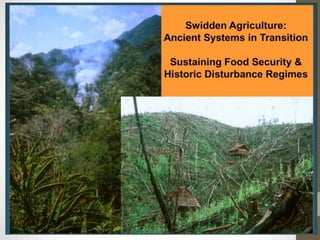
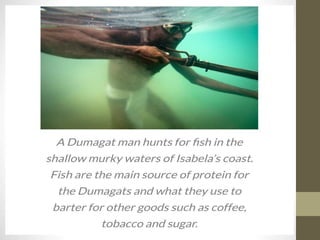
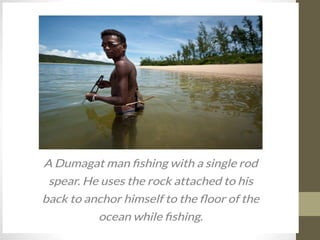
    Examples of Indigenous Knowledgeand Practices The Indigenous Knowledge and Practices(IKSPs) have been proven to contribute to the productivity of many ecosystems, examples of which include the rice terraces and imuyung (private woodlot of the Ifugao, the traditional biodiverse swidden of the Hanunuo, the fish conservation practices of the Dumagat and the traditional herbal medicines of many Filipino Ethnic communities.
  • 17.
    Indigenous Communication - transmissionof information through local channels or forms - it is a means by which the culture is preserved, handed down and adapted
  • 18.
    INDIGENOUS MEDIA - Isowned, controlled and managed by Indigenous Peoples in order for them to develop and produce culturally appropriate information in the languages understood by the community by utilizing indigenous materials and resources and independent from vested interest groups. -May be defined as forms of media expression conceptualized, produced, and circulated by indigenous peoples around the globe as vehicles for communication
  • 19.
    Indigenous Media Also knownas community media , is any form of media that is created and controlled in the community, for the community, about the community and by the community.
  • 20.
    FORMS OF INDIGENOUSMEDIA: 1. FOLK OR TRADITIONAL MEDIA 2. GATHERINGS AND SOCIAL ORGANIZATIONS 3. DIRECT OBSERVATION 4. RECORDS (WRITTEN, CARVED, ORAL) 5. ORAL INSTRUCTION
  • 21.
  • 22.
  • 23.
    What is anInternet? - a global computer network providing a variety of information and communication facilities, consisting of interconnected networks using standardized communication protocols.
  • 24.
  • 25.
    Thingsto Consider in EvaluatingInformation: -Reliability -Accuracy -Value -Authority -Timeliness
  • 26.
    Reliability of Information Informationis said to be reliable if it can be verified and evaluated. Others refer to the trustworthiness of the source in evaluating the reliability of information.
  • 27.
    Accuracyof Information Accuracy refersto the closeness of the report to the actual data. Measurement of accuracy varies, depending on the type of information being evaluated. Forecasts - similar to the actual data. Financial - values are correct
  • 28.
    Valueof Information Information issaid to be of value if it aids the user in making or improving decisions.
  • 29.
    Authorityof the Source -Who authored or published the information? - Is the source credible?
  • 30.
    Timeliness Reliability, accuracy, andvalue of information may vary based on the time it was produced or acquired. It may become irrelevant and inaccurate with the passing of time (thus making it less valuable)
  • 31.
    Timeliness Other information maybe timeless, proven to be the same in reliability, accuracy, and value throughout history.
  • 32.
    Skills in determiningthe Reliability of Information: a. Check the Author b. Check the Date of Publication or of update c. Check for Citations d. Check the Domain or owner of the site/page. .com - .edu - .mil - .gov - .org - commercial educational military government nonprofit organization
  • 33.
    Skills in Determining AccurateInformation: a.Look for facts. b.Cross-reference with other source for consistency. c.Determine the reason for writing and publishing the information.
  • 34.