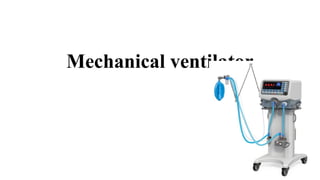
Mechanical ventilator
Learning Objectives:
Upon completion of this lecture, the student nurse will be able to:
• Identify the induction of mechanical ventilator.
• List criteria of for institution of ventilator support.
• Mention the most commonly types of mechanical ventilation
• Identify the different weaning methods
• Recognize complications of MV
• Identify nursing care of patient on MV
Definition:
Ventilator is a machine that provides respiratory support to
patients who cannot breathe on their own, or who cannot breathe well
enough to oxygenate their bodies. The air reaches the lungs via an
endotracheal (ET) tube which travels from the mouth or nose into the
trachea, the tube in the throat that carries air to the lungs.
Goals of Mechanical Ventilation
• Relieve respiratory distress
• Decrease work of breathing
a. Improve secretion clearance
b. Reverse bronchospasm
c. Apply PEEP/CPAP
d. Decrease auto-PEEP
e. Appropriate positioning
f. Synchronize machine output to
patient demand
• Improve pulmonary gas
exchange
• Reverse respiratory muscle
fatigue
• Permit lung healing
• Avoid complications
Indications for MV
•Mechanical ventilation is indicated when the patient's spontaneous
ventilation is inadequate to sustain life. In addition, it is indicated as a
measure to control ventilation in critically ill patients and as prophylaxis
for impending collapse of other physiologic functions.
•1- The main indication for mechanical ventilation is respiratory failure.
Causes of Respiratory Failure
•Inadequate gas exchange
 Pneumonia, pulmonary oedema, acute respiratory distress syndrome (ARDS)
•Inadequate breathing
 Chest wall problems e.g. fractured ribs
 Pleural wall problems e.g. pneumothorax, haemothorax
 Respiratory muscle failure e.g. myasthenia gravis, poliomyelitis, tetanus
 Central nervous system depression e.g. drugs, brain stem compression
•Obstructed breathing
 Upper airway obstruction eg epiglottitis, oedema, tumour
 Lower airway obstruction eg bronchospasm
2- Others
 Control of intracranial pressure in head injury
 Airway protection following drug overdose
 Following cardiac arrest
 For recovery after prolonged major surgery or trauma (Upper
abdominal/thoracic surgery) altered conscious level, inability to protect the
airway
 Cardiac disease: poor left Ventricle function, pulmonary edema
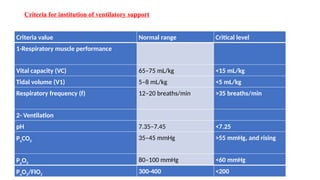
Criteria for institution of ventilatory support
Criteria value Normal range Critical level
1-Respiratory muscle performance
Vital capacity (VC) 65–75 mL/kg <15 mL/kg
Tidal volume (V1) 5–8 mL/kg <5 mL/kg
Respiratory frequency (f) 12–20 breaths/min >35 breaths/min
2- Ventilation
pH 7.35–7.45 <7.25
PaCO2
35–45 mmHg >55 mmHg, and rising
PaO2
80–100 mmHg <60 mmHg
PaO2/FIO2
300-400 <200
Types of Ventilators
There are two general kinds of ventilators: negative pressure and
positive pressure.
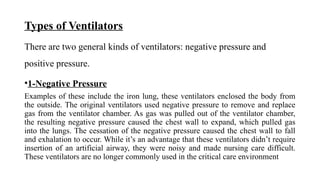
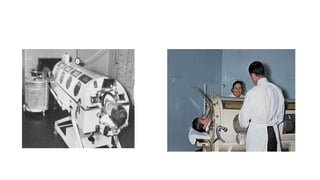
•1-Negative Pressure
Examples of these include the iron lung, these ventilators enclosed the body from
the outside. The original ventilators used negative pressure to remove and replace
gas from the ventilator chamber. As gas was pulled out of the ventilator chamber,
the resulting negative pressure caused the chest wall to expand, which pulled gas
into the lungs. The cessation of the negative pressure caused the chest wall to fall
and exhalation to occur. While it’s an advantage that these ventilators didn’t require
insertion of an artificial airway, they were noisy and made nursing care difficult.
These ventilators are no longer commonly used in the critical care environment
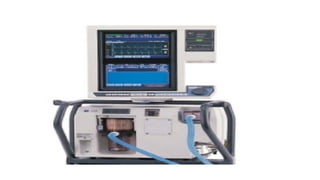
2-Positive pressure
Ventilators that require an artificial airway (endotracheal or
tracheostomy tube), and use positive pressure to force oxygen into a
patient’s lungs. Inspiration can be triggered either by the patient or the
machine. There are four types of positive pressure ventilators: volume
cycled, pressure cycled, flow cycled, and time cycled
•Volume-cycled ventilators are designed to deliver a preset tidal
volume of air to be with each inspiration, and then allow passive
expiration. This is ideal for patients with bronchospasm since the same
tidal volume is delivered regardless of the amount of airway resistance.
The most commonly used in critical care environments.
•Pressure-cycled ventilators deliver gases at preset pressure, and then allow
passive expiration. The benefit of this is a decreased risk of lung damage from
high inspiratory pressures. The disadvantage of these ventilators is that the
patient may not receive the complete tidal volume if he or she has poor lung
compliance and increased airway resistance. This type of ventilation is usually
used for short-term therapy (less than 24 hours).
•Flow-cycled ventilators deliver a breath until a preset flow rate is achieved
during inspiration.
• Time-cycled ventilators terminate or control inspiration after a preset time.
Ventilator Modes
Mode refers to how the machine will ventilate the patient in relation to the
patient’s own respiratory efforts.
Control Mandatory Ventilation (CMV)
•CV delivers the preset volume or pressure regardless of the patient’s own
inspiratory efforts. This mode is used for patients who are unable to initiate a
breath (apnea). If it is used with spontaneously breathing patients, they must be
sedated and/or pharmacologically paralyzed. Inspiration is initiated by timing
device. Machine controlled breath
Assist-Control Ventilation (A/C)
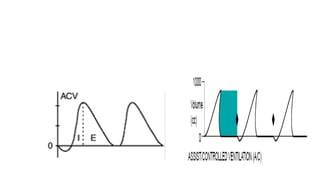
•A/C delivers the preset volume or pressure in response to the patient’s own
inspiratory effort, but will initiate the breath if the patient does not do so
within the set amount of time. This means that any inspiratory attempt by the
patient triggers a ventilator breath. The patient may need to be sedated to
limit the number of spontaneous breaths since hyperventilation can occur.
This mode is used for patients who can inititate a breath (for spontaneously
breathing patients) but who have weakened respiratory muscles.
Intermittent mandatory ventilation
•With intermittent mandatory ventilation (IMV), breaths are delivered at
a preset interval, and spontaneous breathing is allowed between
ventilator-administered breaths. Spontaneous breathing occurs against
the resistance of the airway tubing and ventilator valves, which may be
formidable. This mode has given way to synchronous intermittent
mandatory ventilation (SIMV).
Synchronous Intermittent Mandatory Ventilation (SIMV)
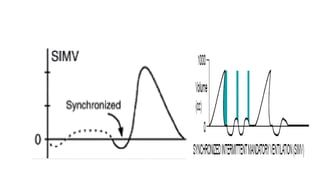
•SIMV was developed as a result of the problem of high respiratory rates associated with
A/C. SIMV delivers the preset volume or pressure and rate while allowing the patient to
breathe spontaneously in between ventilator breaths. Each ventilator breath is delivered
in synchrony with the patient’s breaths, yet the patient is allowed to completely control
the spontaneous breaths. SIMV is used as a primary mode of ventilation, as well as a
weaning mode. (During weaning, the preset rate is gradually reduced, allowing the
patient to slowly regain breathing on his or her own.) The disadvantage of this mode is
that it may increase the work of breathing and respiratory muscle fatigue.
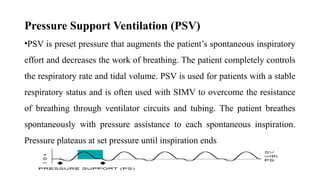
Pressure Support Ventilation (PSV)
•PSV is preset pressure that augments the patient’s spontaneous inspiratory
effort and decreases the work of breathing. The patient completely controls
the respiratory rate and tidal volume. PSV is used for patients with a stable
respiratory status and is often used with SIMV to overcome the resistance
of breathing through ventilator circuits and tubing. The patient breathes
spontaneously with pressure assistance to each spontaneous inspiration.
Pressure plateaus at set pressure until inspiration ends
Adjuncts to Ventilator Modes
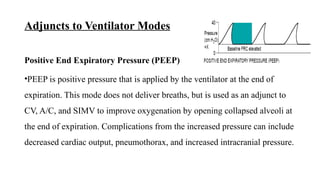
Positive End Expiratory Pressure (PEEP)
•PEEP is positive pressure that is applied by the ventilator at the end of
expiration. This mode does not deliver breaths, but is used as an adjunct to
CV, A/C, and SIMV to improve oxygenation by opening collapsed alveoli at
the end of expiration. Complications from the increased pressure can include
decreased cardiac output, pneumothorax, and increased intracranial pressure.
Constant Positive Airway Pressure (CPAP)
•CPAP is similar to PEEP except that it works only for patients who are
breathing spontaneously. CPAP can also be administered using a mask
and CPAP machine for patients who do not require mechanical
ventilation, but who need respiratory support; for example, patients with
sleep apnea.
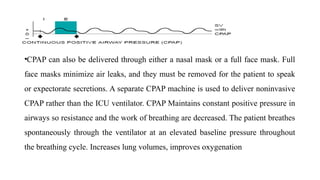
•CPAP can also be delivered through either a nasal mask or a full face mask. Full
face masks minimize air leaks, and they must be removed for the patient to speak
or expectorate secretions. A separate CPAP machine is used to deliver noninvasive
CPAP rather than the ICU ventilator. CPAP Maintains constant positive pressure in
airways so resistance and the work of breathing are decreased. The patient breathes
spontaneously through the ventilator at an elevated baseline pressure throughout
the breathing cycle. Increases lung volumes, improves oxygenation
Ventilator Settings
Ventilator settings are ordered by the physician and are individualized for each
patient.
Respiratory Rate (RR)
•The respiratory rate is the number of breaths the ventilator delivers to the patient
each minute. The rate chosen depends on the tidal volume, the type of pulmonary
pathology, and the patient’s target PaCO2. Patients with normal pulmonary
mechanics can tolerate a rate of 8-12 breaths/minute.
Tidal Volume (VT)
•The tidal volume is the volume of gas the ventilator delivers to the patient
with each breath. The usual setting is 5-15 mL/kg, based on compliance,
resistance, and type of pathology. The tidal volume parameters are set
above and below the desired number, and the alarm will sound if the
patient’s actual tidal volume is outside of the desired range.
Fractional Inspired Oxygen (FIO2)
•The fractional inspired oxygen is the amount of oxygen delivered to the
patient. It can range from 21% (room air) to 100%. 100% oxygen
should not be used continuously for long periods of time because of the
risk of oxygen toxicity. Once the patient is stabilized, the FIO2 can be
weaned down based on pulse oximetry and arterial blood gas values.
Inspiratory: Expiratory (I: E) Ratio or Inspiratory time
•The I:E ratio is usually set at 1:2 or 1:1.5 to approximate the normal physiology
of inspiration and expiration
Peak Inspiratory Pressure: Reflects airway resistance and lung compliance
(work required to move air through the airways and into the alveoli). Elevated
with either increased resistance (tracheal tube, ventilator circuitry) or decreased
compliance.
Pressure Limit
The pressure limit regulates the amount of pressure the volume-cycled
ventilator can generate to deliver the preset tidal volume. Because high
pressures can cause lung injury, it’s recommended that the plateau
pressure not exceed 35 cm H2O. If this limit is reached, the ventilator
stops delivering the breath and alarms. This may be an indication that
the patient’s airway is obstructed with mucus, the high pressure is
usually resolved with suctioning. It can also be caused by the patient
coughing, biting on the ETT, breathing against the ventilator, or by a
kink in the ventilator tubing.
Flow Rate
The flow rate is the speed with which the tidal volume is delivered. The
usual setting is 40-100 liters per minute.
Sensitivity/Trigger
The sensitivity determines the amount of effort required by the patient
to initiate inspiration. It can be set to be triggered by pressure or flow. (-
0.5 to -2 cmH2O)
Sigh
•The ventilator can be programmed to deliver an occasional sigh with a larger
tidal volume because it was thought that it prevented collapse of the
alveoli(atelectasis). However, recently there has been concern that the
increased pressure produced in the alveoli may heighten the risk of the alveoli
rupturing and causing pneumothorax. The usual volume is 1.5-2 times tidal
volume, and usual rate is 4-5 times/ hour.
Initial ventilator settings
•FiO2 1.0 initially but then reduce
•PEEP 5 cm H2O
•Tidal volume 7-10 ml/kg
•Inspiratory pressure 20 cm H2O (15cmH2O above
•Frequency 10 - 15 breaths per minute
•I:E Ratio 1 : 2
•Flow trigger 2 l/min
• Pressure trigger - 1 to -3 cm H2O
Ventilator alarms
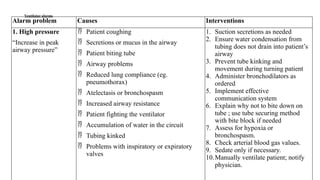
Alarm problem Causes Interventions
1. High pressure
“Increase in peak
airway pressure”
 Patient coughing
 Secretions or mucus in the airway
 Patient biting tube
 Airway problems
 Reduced lung compliance (eg.
pneumothorax)
 Atelectasis or bronchospasm
 Increased airway resistance
 Patient fighting the ventilator
 Accumulation of water in the circuit
 Tubing kinked
 Problems with inspiratory or expiratory
valves
1. Suction secretions as needed
2. Ensure water condensation from
tubing does not drain into patient’s
airway
3. Prevent tube kinking and
movement during turning patient
4. Administer bronchodilators as
ordered
5. Implement effective
communication system
6. Explain why not to bite down on
tube ; use tube securing method
with bite block if needed
7. Assess for hypoxia or
bronchospasm.
8. Check arterial blood gas values.
9. Sedate only if necessary.
10.Manually ventilate patient; notify
physician.
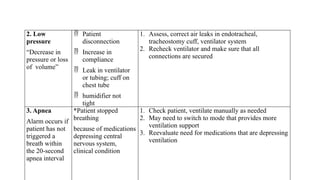
2. Low
pressure
“Decrease in
pressure or loss
of volume”
 Patient
disconnection
 Increase in
compliance
 Leak in ventilator
or tubing; cuff on
chest tube
 humidifier not
tight
1. Assess, correct air leaks in endotracheal,
tracheostomy cuff, ventilator system
2. Recheck ventilator and make sure that all
connections are secured
3. Apnea
Alarm occurs if
patient has not
triggered a
breath within
the 20-second
apnea interval
*Patient stopped
breathing
because of medications
depressing central
nervous system,
clinical condition
1. Check patient, ventilate manually as needed
2. May need to switch to mode that provides more
ventilation support
3. Reevaluate need for medications that are depressing
ventilation
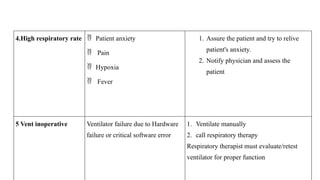
4.High respiratory rate  Patient anxiety
 Pain
 Hypoxia
 Fever
1. Assure the patient and try to relive
patient's anxiety.
2. Notify physician and assess the
patient
5 Vent inoperative Ventilator failure due to Hardware
failure or critical software error
1. Ventilate manually
2. call respiratory therapy
Respiratory therapist must evaluate/retest
ventilator for proper function
Nursing intervention of the Mechanically Ventilated Patient
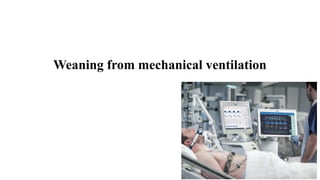
Weaning from mechanical ventilation
•During the ventilatory weaning process, the modes of mechanical
ventilation are gradually changed to allow the patient to initiate more
breaths while the ventilator provides fewer breaths until patient is
sufficiently recovered to breathe on his own.
Factors that affect weaning process
 Weaning techniques
 Weaning criteria or predictors
 Work of breathing,
 Muscle weakness and fatigue
 Nutrition
• Humidification
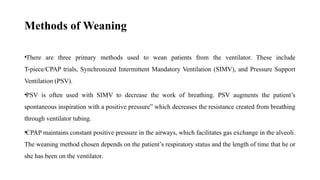
Methods of Weaning
•There are three primary methods used to wean patients from the ventilator. These include
T-piece/CPAP trials, Synchronized Intermittent Mandatory Ventilation (SIMV), and Pressure Support
Ventilation (PSV).
•PSV is often used with SIMV to decrease the work of breathing. PSV augments the patient’s
spontaneous inspiration with a positive pressure” which decreases the resistance created from breathing
through ventilator tubing.
•CPAP maintains constant positive pressure in the airways, which facilitates gas exchange in the alveoli.
The weaning method chosen depends on the patient’s respiratory status and the length of time that he or
she has been on the ventilator.
T-piece Trials:
• T-piece trials consist of alternating intervals of time on the ventilator with intervals of
spontaneous breathing. To facilitate spontaneous breathing, the patient is removed from
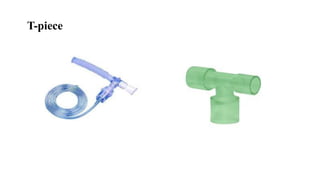
the ventilator and a T-shaped tube is attached to the endotracheal or tracheostomy tube.
One end of this tubing is attached to an oxygen flowmeter and the other end is open;
the amount of oxygen used is ordered by the physician. If they tire out or their
respiratory status becomes unstable, they should be reconnected to the ventilator. The
goal of this method of weaning is to gradually increase the amount of time spent off the
ventilator.
T-piece
Indicators of Weaning Failure
•Inadequate gas exchange
 Arterial oxygenation saturation (SaO2) <85% - 90%
 PaO2 <50 – 60 mmHg
 pH < 7.32
 Increase in PaCO2 >10 mmHg
• Respiratory rate >30 – 35 breaths/minute
•Hemodynamic instability
 Heart rate >120 – 140 beats/minute
 Systolic blood pressure >180 mmHg or diastolic <90 mmHg
•Change in mental status
 Coma
 Agitation
 Anxiety
Signs of increased work of breathing
 Nasal flaring
 Use of accessory respiratory muscles
 Onset of worsening discomfort ± diaphoresis
Complications of Mechanical Ventilation
Pulmonary System
o Barotrauma and pneumothorax due to high pressures lead to alveolar rupture
o ETT displacement or extubation
o Tracheal damage
o Oxygen toxicity
o Acid-Base Disturbances
o Aspiration
o Infection
o Ventilator Dependence
Cardiovascular
o Decreased venous return and cardiac output due to application of
positive pressure to lungs
o Hypotension
• Fluid retention
Neurovascular
o Increased ICP
o Decreased cerebral perfusion pressure
Renal
o Decreased urinary output
o Fluid retention
GIT system
o Stress ulcers and GIT bleeding
o May develop paralytic ileus
o Inadequate nutrition common
o Constipation
Sensory
oConjunctivitis
oImpaired communication
Nursing Care of the Mechanically Ventilated Patient
•A- Assessment of the patient
•B- Assessment of the ventilator:
- Ventilator settings
- Ventilator alarms
- Ventilator connections and tubing
- Humidifier
A- Assessment of the patient
•The respiratory status of patients who are mechanically ventilated must be frequently assessed.
 Breath Sounds: Breath sounds should be assessed at least every four hours.
 Spontaneous Respiratory Rate and Tidal Volume
•If the spontaneous tidal volume is low and the respiratory rate is high, it may indicate that the
patient isn’t tolerating the weaning attempts, needs suctioning, or is anxious or trying to
communicate.
 Pulse Oximetry to measure oxygen saturation (SpO2).
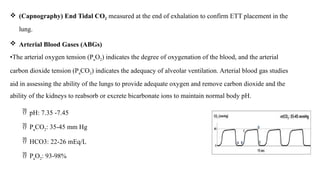
 (Capnography) End Tidal CO2 measured at the end of exhalation to confirm ETT placement in the
lung.
 Arterial Blood Gases (ABGs)
•The arterial oxygen tension (PaO2) indicates the degree of oxygenation of the blood, and the arterial
carbon dioxide tension (PaCO2) indicates the adequacy of alveolar ventilation. Arterial blood gas studies
aid in assessing the ability of the lungs to provide adequate oxygen and remove carbon dioxide and the
ability of the kidneys to reabsorb or excrete bicarbonate ions to maintain normal body pH.
 pH: 7.35 -7.45
 PaCO2: 35-45 mm Hg
 HCO3: 22-26 mEq/L
 PaO2: 93-98%
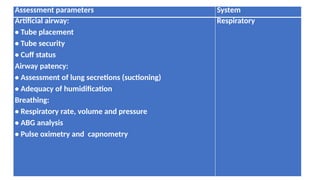
Assessment parameters System
Artificial airway:
• Tube placement
• Tube security
• Cuff status
Airway patency:
• Assessment of lung secretions (suctioning)
• Adequacy of humidification
Breathing:
• Respiratory rate, volume and pressure
• ABG analysis
• Pulse oximetry and capnometry
Respiratory
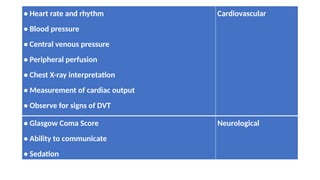
• Heart rate and rhythm
• Blood pressure
• Central venous pressure
• Peripheral perfusion
• Chest X-ray interpretation
• Measurement of cardiac output
• Observe for signs of DVT
Cardiovascular
• Glasgow Coma Score
• Ability to communicate
• Sedation
Neurological
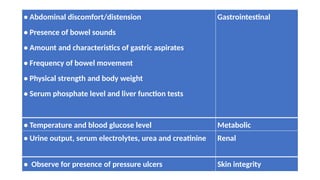
• Abdominal discomfort/distension
• Presence of bowel sounds
• Amount and characteristics of gastric aspirates
• Frequency of bowel movement
• Physical strength and body weight
• Serum phosphate level and liver function tests
Gastrointestinal
• Temperature and blood glucose level Metabolic
• Urine output, serum electrolytes, urea and creatinine Renal
• Observe for presence of pressure ulcers Skin integrity
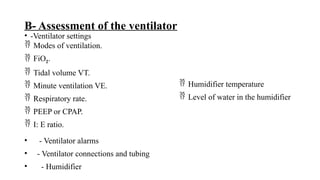
B- Assessment of the ventilator
• -Ventilator settings
 Modes of ventilation.
 FiO2.
 Tidal volume VT.
 Minute ventilation VE.
 Respiratory rate.
 PEEP or CPAP.
 I: E ratio.
• - Ventilator alarms
• - Ventilator connections and tubing
• - Humidifier
 Humidifier temperature
 Level of water in the humidifier
THANK YOU

mechanical ventilation for nurses(1).pptx

  • 1.
  • 2.
    Learning Objectives: Upon completionof this lecture, the student nurse will be able to: • Identify the induction of mechanical ventilator. • List criteria of for institution of ventilator support. • Mention the most commonly types of mechanical ventilation • Identify the different weaning methods • Recognize complications of MV • Identify nursing care of patient on MV
  • 3.
    Definition: Ventilator is amachine that provides respiratory support to patients who cannot breathe on their own, or who cannot breathe well enough to oxygenate their bodies. The air reaches the lungs via an endotracheal (ET) tube which travels from the mouth or nose into the trachea, the tube in the throat that carries air to the lungs.
  • 4.
    Goals of MechanicalVentilation • Relieve respiratory distress • Decrease work of breathing a. Improve secretion clearance b. Reverse bronchospasm c. Apply PEEP/CPAP d. Decrease auto-PEEP e. Appropriate positioning f. Synchronize machine output to patient demand • Improve pulmonary gas exchange • Reverse respiratory muscle fatigue • Permit lung healing • Avoid complications
  • 5.
    Indications for MV •Mechanicalventilation is indicated when the patient's spontaneous ventilation is inadequate to sustain life. In addition, it is indicated as a measure to control ventilation in critically ill patients and as prophylaxis for impending collapse of other physiologic functions. •1- The main indication for mechanical ventilation is respiratory failure.
  • 6.
    Causes of RespiratoryFailure •Inadequate gas exchange  Pneumonia, pulmonary oedema, acute respiratory distress syndrome (ARDS) •Inadequate breathing  Chest wall problems e.g. fractured ribs  Pleural wall problems e.g. pneumothorax, haemothorax  Respiratory muscle failure e.g. myasthenia gravis, poliomyelitis, tetanus  Central nervous system depression e.g. drugs, brain stem compression •Obstructed breathing  Upper airway obstruction eg epiglottitis, oedema, tumour  Lower airway obstruction eg bronchospasm
  • 7.
    2- Others  Controlof intracranial pressure in head injury  Airway protection following drug overdose  Following cardiac arrest  For recovery after prolonged major surgery or trauma (Upper abdominal/thoracic surgery) altered conscious level, inability to protect the airway  Cardiac disease: poor left Ventricle function, pulmonary edema
  • 8.
    Criteria for institutionof ventilatory support Criteria value Normal range Critical level 1-Respiratory muscle performance Vital capacity (VC) 65–75 mL/kg <15 mL/kg Tidal volume (V1) 5–8 mL/kg <5 mL/kg Respiratory frequency (f) 12–20 breaths/min >35 breaths/min 2- Ventilation pH 7.35–7.45 <7.25 PaCO2 35–45 mmHg >55 mmHg, and rising PaO2 80–100 mmHg <60 mmHg PaO2/FIO2 300-400 <200
  • 9.
    Types of Ventilators Thereare two general kinds of ventilators: negative pressure and positive pressure. •1-Negative Pressure Examples of these include the iron lung, these ventilators enclosed the body from the outside. The original ventilators used negative pressure to remove and replace gas from the ventilator chamber. As gas was pulled out of the ventilator chamber, the resulting negative pressure caused the chest wall to expand, which pulled gas into the lungs. The cessation of the negative pressure caused the chest wall to fall and exhalation to occur. While it’s an advantage that these ventilators didn’t require insertion of an artificial airway, they were noisy and made nursing care difficult. These ventilators are no longer commonly used in the critical care environment
  • 11.
    2-Positive pressure Ventilators thatrequire an artificial airway (endotracheal or tracheostomy tube), and use positive pressure to force oxygen into a patient’s lungs. Inspiration can be triggered either by the patient or the machine. There are four types of positive pressure ventilators: volume cycled, pressure cycled, flow cycled, and time cycled
  • 13.
    •Volume-cycled ventilators aredesigned to deliver a preset tidal volume of air to be with each inspiration, and then allow passive expiration. This is ideal for patients with bronchospasm since the same tidal volume is delivered regardless of the amount of airway resistance. The most commonly used in critical care environments.
  • 14.
    •Pressure-cycled ventilators delivergases at preset pressure, and then allow passive expiration. The benefit of this is a decreased risk of lung damage from high inspiratory pressures. The disadvantage of these ventilators is that the patient may not receive the complete tidal volume if he or she has poor lung compliance and increased airway resistance. This type of ventilation is usually used for short-term therapy (less than 24 hours). •Flow-cycled ventilators deliver a breath until a preset flow rate is achieved during inspiration. • Time-cycled ventilators terminate or control inspiration after a preset time.
  • 15.
    Ventilator Modes Mode refersto how the machine will ventilate the patient in relation to the patient’s own respiratory efforts. Control Mandatory Ventilation (CMV) •CV delivers the preset volume or pressure regardless of the patient’s own inspiratory efforts. This mode is used for patients who are unable to initiate a breath (apnea). If it is used with spontaneously breathing patients, they must be sedated and/or pharmacologically paralyzed. Inspiration is initiated by timing device. Machine controlled breath
  • 16.
    Assist-Control Ventilation (A/C) •A/Cdelivers the preset volume or pressure in response to the patient’s own inspiratory effort, but will initiate the breath if the patient does not do so within the set amount of time. This means that any inspiratory attempt by the patient triggers a ventilator breath. The patient may need to be sedated to limit the number of spontaneous breaths since hyperventilation can occur. This mode is used for patients who can inititate a breath (for spontaneously breathing patients) but who have weakened respiratory muscles.
  • 18.
    Intermittent mandatory ventilation •Withintermittent mandatory ventilation (IMV), breaths are delivered at a preset interval, and spontaneous breathing is allowed between ventilator-administered breaths. Spontaneous breathing occurs against the resistance of the airway tubing and ventilator valves, which may be formidable. This mode has given way to synchronous intermittent mandatory ventilation (SIMV).
  • 19.
    Synchronous Intermittent MandatoryVentilation (SIMV) •SIMV was developed as a result of the problem of high respiratory rates associated with A/C. SIMV delivers the preset volume or pressure and rate while allowing the patient to breathe spontaneously in between ventilator breaths. Each ventilator breath is delivered in synchrony with the patient’s breaths, yet the patient is allowed to completely control the spontaneous breaths. SIMV is used as a primary mode of ventilation, as well as a weaning mode. (During weaning, the preset rate is gradually reduced, allowing the patient to slowly regain breathing on his or her own.) The disadvantage of this mode is that it may increase the work of breathing and respiratory muscle fatigue.
  • 21.
    Pressure Support Ventilation(PSV) •PSV is preset pressure that augments the patient’s spontaneous inspiratory effort and decreases the work of breathing. The patient completely controls the respiratory rate and tidal volume. PSV is used for patients with a stable respiratory status and is often used with SIMV to overcome the resistance of breathing through ventilator circuits and tubing. The patient breathes spontaneously with pressure assistance to each spontaneous inspiration. Pressure plateaus at set pressure until inspiration ends
  • 22.
    Adjuncts to VentilatorModes Positive End Expiratory Pressure (PEEP) •PEEP is positive pressure that is applied by the ventilator at the end of expiration. This mode does not deliver breaths, but is used as an adjunct to CV, A/C, and SIMV to improve oxygenation by opening collapsed alveoli at the end of expiration. Complications from the increased pressure can include decreased cardiac output, pneumothorax, and increased intracranial pressure.
  • 23.
    Constant Positive AirwayPressure (CPAP) •CPAP is similar to PEEP except that it works only for patients who are breathing spontaneously. CPAP can also be administered using a mask and CPAP machine for patients who do not require mechanical ventilation, but who need respiratory support; for example, patients with sleep apnea.
  • 24.
    •CPAP can alsobe delivered through either a nasal mask or a full face mask. Full face masks minimize air leaks, and they must be removed for the patient to speak or expectorate secretions. A separate CPAP machine is used to deliver noninvasive CPAP rather than the ICU ventilator. CPAP Maintains constant positive pressure in airways so resistance and the work of breathing are decreased. The patient breathes spontaneously through the ventilator at an elevated baseline pressure throughout the breathing cycle. Increases lung volumes, improves oxygenation
  • 25.
    Ventilator Settings Ventilator settingsare ordered by the physician and are individualized for each patient. Respiratory Rate (RR) •The respiratory rate is the number of breaths the ventilator delivers to the patient each minute. The rate chosen depends on the tidal volume, the type of pulmonary pathology, and the patient’s target PaCO2. Patients with normal pulmonary mechanics can tolerate a rate of 8-12 breaths/minute.
  • 26.
    Tidal Volume (VT) •Thetidal volume is the volume of gas the ventilator delivers to the patient with each breath. The usual setting is 5-15 mL/kg, based on compliance, resistance, and type of pathology. The tidal volume parameters are set above and below the desired number, and the alarm will sound if the patient’s actual tidal volume is outside of the desired range.
  • 27.
    Fractional Inspired Oxygen(FIO2) •The fractional inspired oxygen is the amount of oxygen delivered to the patient. It can range from 21% (room air) to 100%. 100% oxygen should not be used continuously for long periods of time because of the risk of oxygen toxicity. Once the patient is stabilized, the FIO2 can be weaned down based on pulse oximetry and arterial blood gas values.
  • 28.
    Inspiratory: Expiratory (I:E) Ratio or Inspiratory time •The I:E ratio is usually set at 1:2 or 1:1.5 to approximate the normal physiology of inspiration and expiration Peak Inspiratory Pressure: Reflects airway resistance and lung compliance (work required to move air through the airways and into the alveoli). Elevated with either increased resistance (tracheal tube, ventilator circuitry) or decreased compliance.
  • 29.
    Pressure Limit The pressurelimit regulates the amount of pressure the volume-cycled ventilator can generate to deliver the preset tidal volume. Because high pressures can cause lung injury, it’s recommended that the plateau pressure not exceed 35 cm H2O. If this limit is reached, the ventilator stops delivering the breath and alarms. This may be an indication that the patient’s airway is obstructed with mucus, the high pressure is usually resolved with suctioning. It can also be caused by the patient coughing, biting on the ETT, breathing against the ventilator, or by a kink in the ventilator tubing.
  • 30.
    Flow Rate The flowrate is the speed with which the tidal volume is delivered. The usual setting is 40-100 liters per minute. Sensitivity/Trigger The sensitivity determines the amount of effort required by the patient to initiate inspiration. It can be set to be triggered by pressure or flow. (- 0.5 to -2 cmH2O)
  • 31.
    Sigh •The ventilator canbe programmed to deliver an occasional sigh with a larger tidal volume because it was thought that it prevented collapse of the alveoli(atelectasis). However, recently there has been concern that the increased pressure produced in the alveoli may heighten the risk of the alveoli rupturing and causing pneumothorax. The usual volume is 1.5-2 times tidal volume, and usual rate is 4-5 times/ hour.
  • 32.
    Initial ventilator settings •FiO21.0 initially but then reduce •PEEP 5 cm H2O •Tidal volume 7-10 ml/kg •Inspiratory pressure 20 cm H2O (15cmH2O above •Frequency 10 - 15 breaths per minute •I:E Ratio 1 : 2 •Flow trigger 2 l/min • Pressure trigger - 1 to -3 cm H2O
  • 33.
    Ventilator alarms Alarm problemCauses Interventions 1. High pressure “Increase in peak airway pressure”  Patient coughing  Secretions or mucus in the airway  Patient biting tube  Airway problems  Reduced lung compliance (eg. pneumothorax)  Atelectasis or bronchospasm  Increased airway resistance  Patient fighting the ventilator  Accumulation of water in the circuit  Tubing kinked  Problems with inspiratory or expiratory valves 1. Suction secretions as needed 2. Ensure water condensation from tubing does not drain into patient’s airway 3. Prevent tube kinking and movement during turning patient 4. Administer bronchodilators as ordered 5. Implement effective communication system 6. Explain why not to bite down on tube ; use tube securing method with bite block if needed 7. Assess for hypoxia or bronchospasm. 8. Check arterial blood gas values. 9. Sedate only if necessary. 10.Manually ventilate patient; notify physician.
  • 34.
    2. Low pressure “Decrease in pressureor loss of volume”  Patient disconnection  Increase in compliance  Leak in ventilator or tubing; cuff on chest tube  humidifier not tight 1. Assess, correct air leaks in endotracheal, tracheostomy cuff, ventilator system 2. Recheck ventilator and make sure that all connections are secured 3. Apnea Alarm occurs if patient has not triggered a breath within the 20-second apnea interval *Patient stopped breathing because of medications depressing central nervous system, clinical condition 1. Check patient, ventilate manually as needed 2. May need to switch to mode that provides more ventilation support 3. Reevaluate need for medications that are depressing ventilation
  • 35.
    4.High respiratory rate Patient anxiety  Pain  Hypoxia  Fever 1. Assure the patient and try to relive patient's anxiety. 2. Notify physician and assess the patient 5 Vent inoperative Ventilator failure due to Hardware failure or critical software error 1. Ventilate manually 2. call respiratory therapy Respiratory therapist must evaluate/retest ventilator for proper function
  • 36.
    Nursing intervention ofthe Mechanically Ventilated Patient
  • 37.
  • 38.
    •During the ventilatoryweaning process, the modes of mechanical ventilation are gradually changed to allow the patient to initiate more breaths while the ventilator provides fewer breaths until patient is sufficiently recovered to breathe on his own.
  • 39.
    Factors that affectweaning process  Weaning techniques  Weaning criteria or predictors  Work of breathing,  Muscle weakness and fatigue  Nutrition • Humidification
  • 40.
    Methods of Weaning •Thereare three primary methods used to wean patients from the ventilator. These include T-piece/CPAP trials, Synchronized Intermittent Mandatory Ventilation (SIMV), and Pressure Support Ventilation (PSV). •PSV is often used with SIMV to decrease the work of breathing. PSV augments the patient’s spontaneous inspiration with a positive pressure” which decreases the resistance created from breathing through ventilator tubing. •CPAP maintains constant positive pressure in the airways, which facilitates gas exchange in the alveoli. The weaning method chosen depends on the patient’s respiratory status and the length of time that he or she has been on the ventilator.
  • 41.
    T-piece Trials: • T-piecetrials consist of alternating intervals of time on the ventilator with intervals of spontaneous breathing. To facilitate spontaneous breathing, the patient is removed from the ventilator and a T-shaped tube is attached to the endotracheal or tracheostomy tube. One end of this tubing is attached to an oxygen flowmeter and the other end is open; the amount of oxygen used is ordered by the physician. If they tire out or their respiratory status becomes unstable, they should be reconnected to the ventilator. The goal of this method of weaning is to gradually increase the amount of time spent off the ventilator.
  • 42.
  • 43.
    Indicators of WeaningFailure •Inadequate gas exchange  Arterial oxygenation saturation (SaO2) <85% - 90%  PaO2 <50 – 60 mmHg  pH < 7.32  Increase in PaCO2 >10 mmHg • Respiratory rate >30 – 35 breaths/minute
  • 44.
    •Hemodynamic instability  Heartrate >120 – 140 beats/minute  Systolic blood pressure >180 mmHg or diastolic <90 mmHg •Change in mental status  Coma  Agitation  Anxiety
  • 45.
    Signs of increasedwork of breathing  Nasal flaring  Use of accessory respiratory muscles  Onset of worsening discomfort ± diaphoresis
  • 46.
    Complications of MechanicalVentilation Pulmonary System o Barotrauma and pneumothorax due to high pressures lead to alveolar rupture o ETT displacement or extubation o Tracheal damage o Oxygen toxicity o Acid-Base Disturbances o Aspiration o Infection o Ventilator Dependence
  • 47.
    Cardiovascular o Decreased venousreturn and cardiac output due to application of positive pressure to lungs o Hypotension • Fluid retention
  • 48.
    Neurovascular o Increased ICP oDecreased cerebral perfusion pressure Renal o Decreased urinary output o Fluid retention GIT system o Stress ulcers and GIT bleeding o May develop paralytic ileus o Inadequate nutrition common o Constipation
  • 49.
  • 50.
    Nursing Care ofthe Mechanically Ventilated Patient •A- Assessment of the patient •B- Assessment of the ventilator: - Ventilator settings - Ventilator alarms - Ventilator connections and tubing - Humidifier
  • 51.
    A- Assessment ofthe patient •The respiratory status of patients who are mechanically ventilated must be frequently assessed.  Breath Sounds: Breath sounds should be assessed at least every four hours.  Spontaneous Respiratory Rate and Tidal Volume •If the spontaneous tidal volume is low and the respiratory rate is high, it may indicate that the patient isn’t tolerating the weaning attempts, needs suctioning, or is anxious or trying to communicate.  Pulse Oximetry to measure oxygen saturation (SpO2).
  • 52.
     (Capnography) EndTidal CO2 measured at the end of exhalation to confirm ETT placement in the lung.  Arterial Blood Gases (ABGs) •The arterial oxygen tension (PaO2) indicates the degree of oxygenation of the blood, and the arterial carbon dioxide tension (PaCO2) indicates the adequacy of alveolar ventilation. Arterial blood gas studies aid in assessing the ability of the lungs to provide adequate oxygen and remove carbon dioxide and the ability of the kidneys to reabsorb or excrete bicarbonate ions to maintain normal body pH.  pH: 7.35 -7.45  PaCO2: 35-45 mm Hg  HCO3: 22-26 mEq/L  PaO2: 93-98%
  • 53.
    Assessment parameters System Artificialairway: • Tube placement • Tube security • Cuff status Airway patency: • Assessment of lung secretions (suctioning) • Adequacy of humidification Breathing: • Respiratory rate, volume and pressure • ABG analysis • Pulse oximetry and capnometry Respiratory
  • 54.
    • Heart rateand rhythm • Blood pressure • Central venous pressure • Peripheral perfusion • Chest X-ray interpretation • Measurement of cardiac output • Observe for signs of DVT Cardiovascular • Glasgow Coma Score • Ability to communicate • Sedation Neurological
  • 55.
    • Abdominal discomfort/distension •Presence of bowel sounds • Amount and characteristics of gastric aspirates • Frequency of bowel movement • Physical strength and body weight • Serum phosphate level and liver function tests Gastrointestinal • Temperature and blood glucose level Metabolic • Urine output, serum electrolytes, urea and creatinine Renal • Observe for presence of pressure ulcers Skin integrity
  • 56.
    B- Assessment ofthe ventilator • -Ventilator settings  Modes of ventilation.  FiO2.  Tidal volume VT.  Minute ventilation VE.  Respiratory rate.  PEEP or CPAP.  I: E ratio. • - Ventilator alarms • - Ventilator connections and tubing • - Humidifier  Humidifier temperature  Level of water in the humidifier
  • 57.