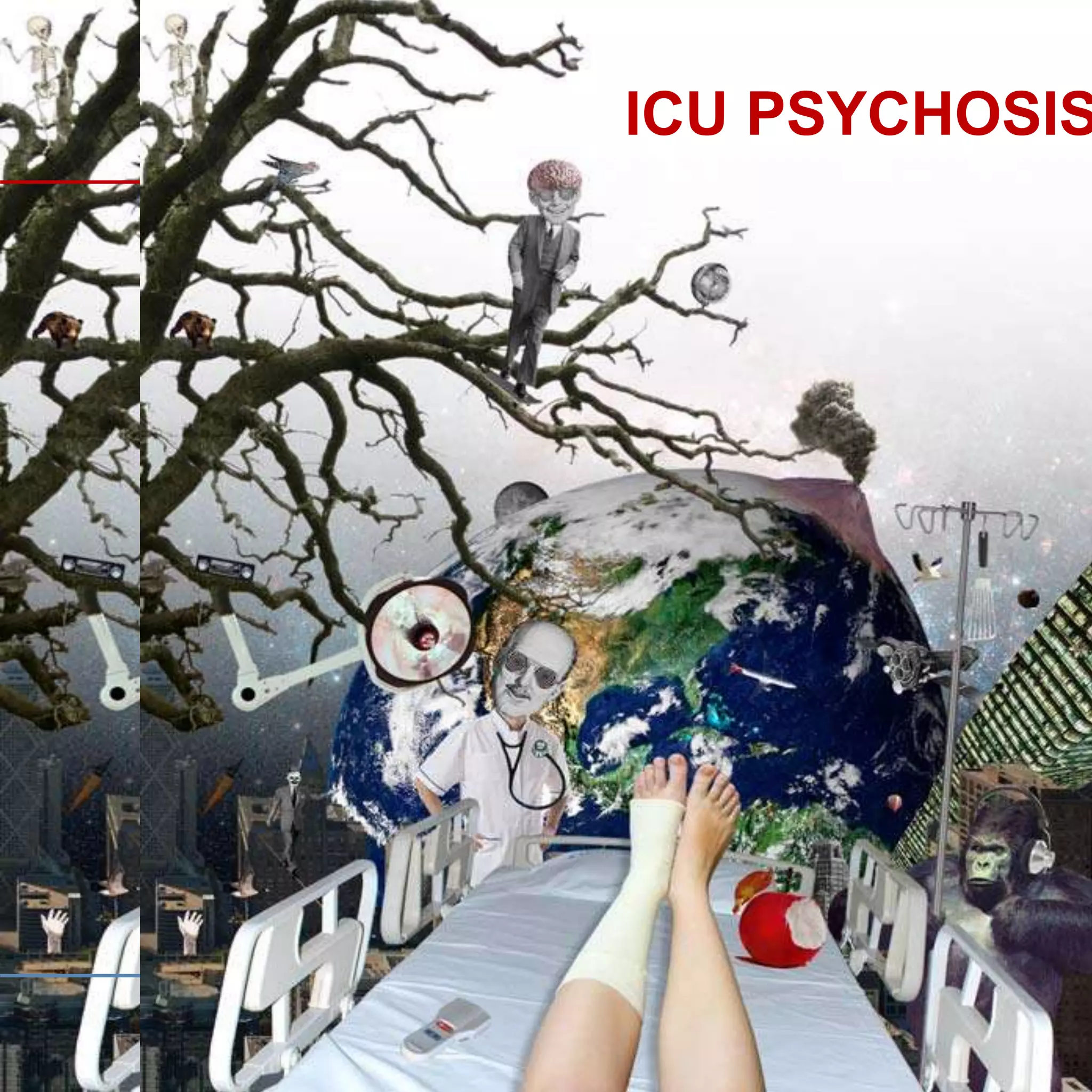
A protochol for
assessment and
managment of
PATIENT WITH
INTE
NSIVE CARE UNIT
PSYCHOSIS
1
ICU PSYCHOSIS
A protocol for assessment and
managment of patients with
ICU psychosis
Hanan Zaghla
Critical care department
Cairo University
Outline
 DEFINITION
 INCIDENCE
 CAUSES
 PATHOGENESIS
 WHY DO WE NEED GUIDLINES FOR
ICU PSYCHOSIS?
 MANAGMENT STRATEGY
 RECOGNITION
 PREVNENTION
 MANAGMENT
 TAKE HOME MESSAGE
ICU Psychosis
Or
ICU Delirium ?
Is it
Psychosis or Delirium ?
 Many different terms have been used to describe the
spectrum of cognitive impairment in the ICU,
including ICU psychosis, ICU syndrome, acute
confusional state, septic encephalopathy, and acute
brain failure.
 Recently, the medical literatures indicate that the signs
and symptoms of
ICU psychosis are consistent with delirium
Boltey EM, . J Crit Care. 2019 Mar 01;51:192-197.
Delirium is defined as a rapid change in
consciousness (hours to days) characterized by
reduced environmental awareness, decreased
attention and altered cognition.
These clinical features can manifest themselves as
memory deficits, disorientation, hallucinations,
fluctuating levels of alertness, and motor
abnormalities.
. Washington, DC: American Psychiatric Association; 2013
Definition
Incidence of delirium
 Delirium is one of the most common of medical
emergencies affecting up to 80% of patients in the intensive
care unit [ICU]) ,
 Annoying fact.......Annoying disease
Marcantonio ER. N Engl J Med 2017;377(15):1456-66.
 Most common psychiatric syndrome found in the general
hospital setting.
 Upto 25% of hospitalized cancer patients
 Upto 51% of postoperative patients
 Patients, who develop delirium in the intensive care until
(ICU), have a two to four fold-increased risk of death
out of the hospital.
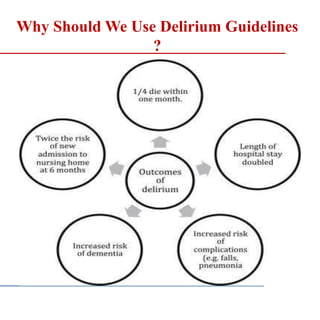
Why Should We Use Delirium Guidelines
?
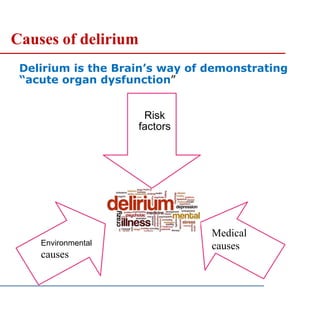
Risk
factors
`
Environmental
causes
Medical
causes
Causes of delirium
Delirium is the Brain’s way of demonstrating
“acute organ dysfunction”
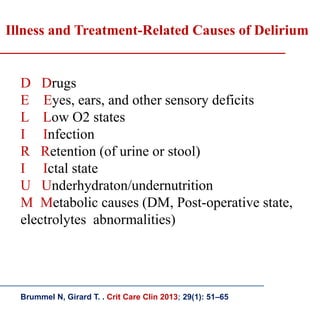
D Drugs
E Eyes, ears, and other sensory deficits
L Low O2 states
I Infection
R Retention (of urine or stool)
I Ictal state
U Underhydraton/undernutrition
M Metabolic causes (DM, Post-operative state,
electrolytes abnormalities)
Illness and Treatment-Related Causes of Delirium
Brummel N, Girard T. . Crit Care Clin 2013; 29(1): 51–65
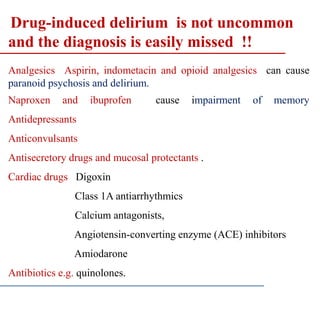
Drug-induced delirium is not uncommon
and the diagnosis is easily missed !!
Analgesics Aspirin, indometacin and opioid analgesics can cause
paranoid psychosis and delirium.
Naproxen and ibuprofen cause impairment of memory
Antidepressants
Anticonvulsants
Antisecretory drugs and mucosal protectants .
Cardiac drugs Digoxin
Class 1A antiarrhythmics
Calcium antagonists,
Angiotensin-converting enzyme (ACE) inhibitors
Amiodarone
Antibiotics e.g. quinolones.
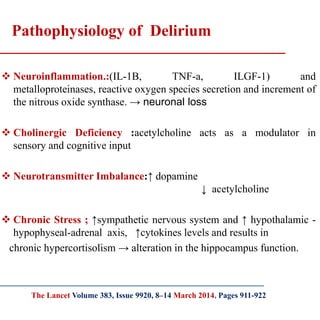
 Neuroinflammation.:(IL-1B, TNF-a, ILGF-1) and
metalloproteinases, reactive oxygen species secretion and increment of
the nitrous oxide synthase. → neuronal loss
 Cholinergic Deficiency :acetylcholine acts as a modulator in
sensory and cognitive input
 Neurotransmitter Imbalance:↑ dopamine
↓ acetylcholine
 Chronic Stress ; ↑sympathetic nervous system and ↑ hypothalamic -
hypophyseal-adrenal axis, ↑cytokines levels and results in
chronic hypercortisolism → alteration in the hippocampus function.
Pathophysiology of Delirium
The Lancet Volume 383, Issue 9920, 8–14 March 2014, Pages 911-922
RECOGNITION OF DELIRIUM
1-EARLY PREDICTION
The Prediction of Delirium in ICU Patients (PRE-
DELIRIC) model uses 10 predictors :
 AGE
 APACHE II
 Admission group,
 Urgent admission,
 Urea level,
 Morphine use,
 Metabolic acidosis
 Sepsis
 Sedation,
 Coma,
Wassenaar A, et al. Intensive Care Med 2015;41:1048–56.[Article] [PubMed] [PMC]
2.CLINICAL FEATURES
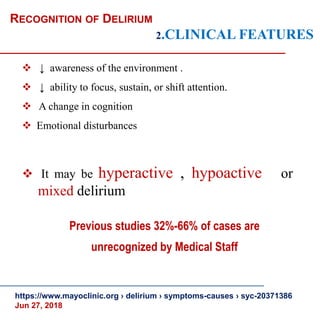
 It may be hyperactive , hypoactive or
mixed delirium
 ↓ awareness of the environment .
 ↓ ability to focus, sustain, or shift attention.
 A change in cognition
 Emotional disturbances
https://www.mayoclinic.org › delirium › symptoms-causes › syc-20371386
Jun 27, 2018
RECOGNITION OF DELIRIUM
Previous studies 32%-66% of cases are
unrecognized by Medical Staff
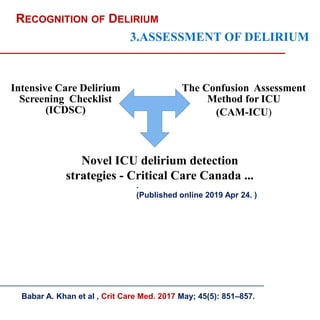
Intensive Care Delirium
Screening Checklist
(ICDSC)
The Confusion Assessment
Method for ICU
(CAM-ICU)
RECOGNITION OF DELIRIUM
Babar A. Khan et al , Crit Care Med. 2017 May; 45(5): 851–857.
Novel ICU delirium detection
strategies - Critical Care Canada ...
.
(Published online 2019 Apr 24. )
3.ASSESSMENT OF DELIRIUM
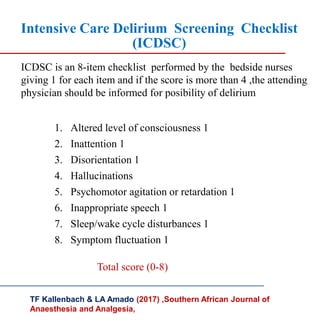
Intensive Care Delirium Screening Checklist
(ICDSC)
1. Altered level of consciousness 1
2. Inattention 1
3. Disorientation 1
4. Hallucinations
5. Psychomotor agitation or retardation 1
6. Inappropriate speech 1
7. Sleep/wake cycle disturbances 1
8. Symptom fluctuation 1
Total score (0‐8)
ICDSC is an 8-item checklist performed by the bedside nurses
giving 1 for each item and if the score is more than 4 ,the attending
physician should be informed for posibility of delirium
TF Kallenbach & LA Amado (2017) ,Southern African Journal of
Anaesthesia and Analgesia,
CMAJ Open. 2019 Apr-Jun; 7(2): E294–E299.Published online 2019 Apr 24
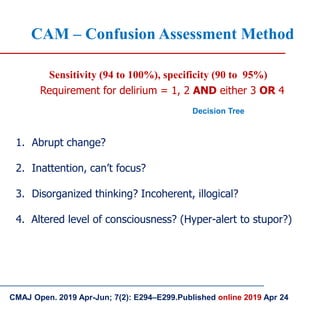
CAM – Confusion Assessment Method
Sensitivity (94 to 100%), specificity (90 to 95%)
Requirement for delirium = 1, 2 AND either 3 OR 4
1. Abrupt change?
2. Inattention, can’t focus?
3. Disorganized thinking? Incoherent, illogical?
4. Altered level of consciousness? (Hyper-alert to stupor?)
Decision Tree
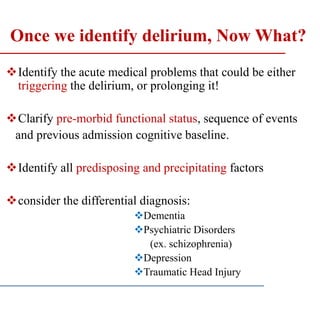
Once we identify delirium, Now What?
Identify the acute medical problems that could be either
triggering the delirium, or prolonging it!
Clarify pre-morbid functional status, sequence of events
and previous admission cognitive baseline.
Identify all predisposing and precipitating factors
consider the differential diagnosis:
Dementia
Psychiatric Disorders
(ex. schizophrenia)
Depression
Traumatic Head Injury
 No recommendation for using a pharmacologic delirium
prevention protocol [administering prophylactic
antipsychotics to the general ICU population] in adult
ICU patients
 Early and aggressive mobilization may reduce the
incidence and duration of delirium, shorten ICU and
hospital LOS, and lower hospital costs.
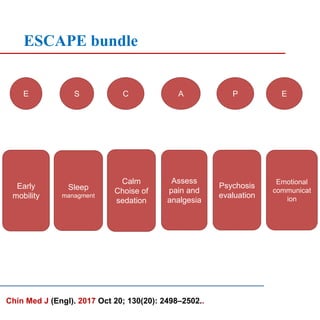
 There is evidence based delirium prevention strategy .
[“ESCAPE” bundle]
What About Prevention?
Arch Intern Med. 2003;163(8):958-964. doi:10.1001/archinte.163.8.958
Try to Make ICU Less Traumatic for Patients, Families - Medscape - Jul 16 2019.
E S C A P E
Early
mobility
Calm
Choise of
sedation
Sleep
managment
Assess
pain and
analgesia
Psychosis
evaluation
Emotional
communicat
ion
ESCAPE bundle
Chin Med J (Engl). 2017 Oct 20; 130(20): 2498–2502..
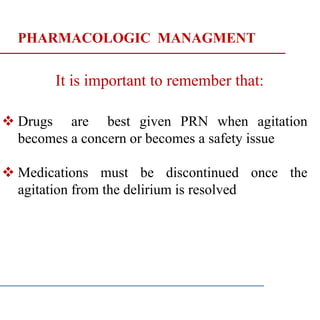
PHARMACOLOGIC MANAGMENT
It is important to remember that:
 Drugs are best given PRN when agitation
becomes a concern or becomes a safety issue
 Medications must be discontinued once the
agitation from the delirium is resolved
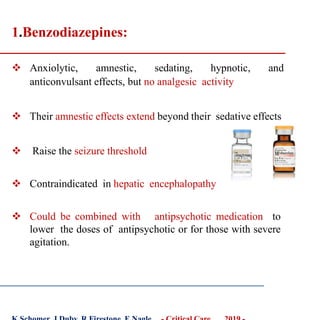
1.Benzodiazepines:
 Anxiolytic, amnestic, sedating, hypnotic, and
anticonvulsant effects, but no analgesic activity
 Their amnestic effects extend beyond their sedative effects
 Raise the seizure threshold
 Contraindicated in hepatic encephalopathy
 Could be combined with antipsychotic medication to
lower the doses of antipsychotic or for those with severe
agitation.
 A high-potency dopamine- blocking agent is most frequently
used because of its short half-life, few or no anticholinergic
side effects, no active metabolites, and lower sedation.
 Oral or parenteral.
 Safe in hepatic insufficiency
2.Butyrophenones
 Comparisons of haloperidol and other antipsychotics did not find
any antipsychotic to be more effective than another.(e.g
quetapine or respirdone)
World Health Organization (WHO). [cited 29 Nov 2018].
Available from url: https://www.who.int/classifications/icd/en/GRNBOOK.pdf
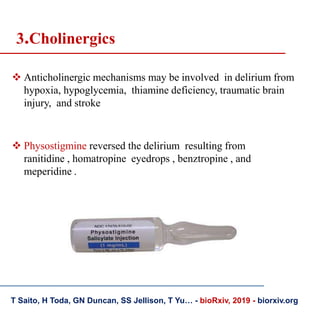
3.Cholinergics
 Anticholinergic mechanisms may be involved in delirium from
hypoxia, hypoglycemia, thiamine deficiency, traumatic brain
injury, and stroke
 Physostigmine reversed the delirium resulting from
ranitidine , homatropine eyedrops , benztropine , and
meperidine .
T Saito, H Toda, GN Duncan, SS Jellison, T Yu… - bioRxiv, 2019 - biorxiv.org
Side effects
 Extrapyramidal side effects, dyskinesia, and neuroleptic
malignant syndrome.
 Lengthen the QT interval.
 lowering of the seizure threshold , elevations in liver enzymes
 Phenothiazines can be associated with sedation, anticholinergic
effects, and α- adrenergic blocking effects that can cause
hypotension
KL Houseknecht et al - The FASEB …, 2019 - fasebj.org
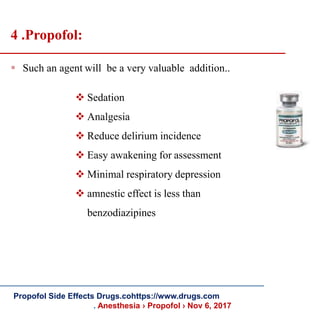
4 .Propofol:
 Such an agent will be a very valuable addition..
 Sedation
 Analgesia
 Reduce delirium incidence
 Easy awakening for assessment
 Minimal respiratory depression
 amnestic effect is less than
benzodiazipines
Propofol Side Effects Drugs.cohttps://www.drugs.com
. Anesthesia › Propofol › Nov 6, 2017
 Dose-dependent respiratory depression and hypotension
 Propofol infusion syndrome (PRIS)
propofol infusion syndrome [PRIS]
 worsening metabolic acidosis
Hypertriglyceridemia
 hypotension with increasing vasopressor requirements
 Arrhythmias
 Acute kidney
injury
hyperkalemia
rhabdomyolysis
liver dysfunction
 [usually associated with prolonged administration of high
propofol doses (> 70 μg/kg/min)]
Side effects :
Kam, PC; . (July 2007). "Propofol infusion syndrome". Anaesthesia. 62
(7): 690–701.last edited on 29 January 2019
 ⍺2 Agonist-- sedative, analgesic/opioid sparing ,with
sympatholytic properties.
 Patients are more easily arousable and interactive
 The onset of sedation occurs within 15 mins and peak
sedation
occurs within 1 hr of starting an IV infusion .
 Dexmedetomidine is the only sedative approved in the United
States for administration in Intubated ICU patients
 Side effects: Hypotension
5.Dexmedetomidine
Jun 4, 2018 - The North American guidelines proposed strategies to prevent
delirium
2013 guidelines by the Society of Critical
Care Medicine
 Continuous IV infusions of dexmedetomidine is preferred
than benzodiazepine infusions for sedation in in ICU
patients with delirium unrelated to alcohol or
benzodiazepine withdrawal.
 Although dexmedetomidine has only been approved in the
United States for short-term sedation of ICU patients (< 24 hrs),
several studies demonstrate the safety and efficacy of
dexmedetomidine infusions administered for greater than 24 hrs
(up to 28 days) .
Barr J, , et al;guidelines for the management of pain, agitation, and delirium
in adult patients in the intensive care unit. Crit Care Med 2013; 41:263–306
Which agent to use ?!
The (PADIS) guidelines 2018;
 Sedation strategies using nonbenzodiazepine sedatives may be
preferred over sedation with benzodiazepines to improve
clinical outcomes in mechanically ventilated adult ICU
patients where agitation is precluding weaning/extubation.
 Suggested using haloperidol or an atypical antipsychotic to
treat delirium in critically ill adults.
Clinical Practice Guidelines for the Prevention and Management of Pain,
Agitation/Sedation, Delirium, Immobility, and Sleep Disruption in Adult Patients in the
ICU. Crit Care Med 2018; 46:e825–e873
Follow-up care
Inpatient (out of icu ) Care:
Carefully assess patients to determine their level of care needs.
Assessment should include
 behavior ( for 24 h).
 daily mental status.
 potential for injury.
 underlying medical and metabolic status.
https://emedicine.medscape.com/article/288890-followup
Outpatient (out of hospital) Care
 Following recovery, patient's memories are variable.
 Be sure to educate the patient, family, and primary
caregivers about future risk factors.
 Elderly patients may require 6-8 weeks or longer for full
recovery.
Follow-up care
https://emedicine.medscape.com/article/288890-followup
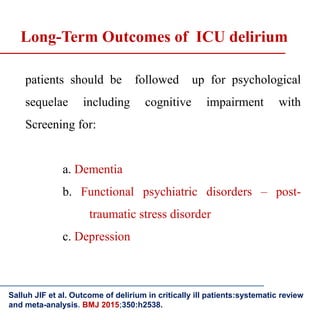
patients should be followed up for psychological
sequelae including cognitive impairment with
Screening for:
a. Dementia
b. Functional psychiatric disorders – post-
traumatic stress disorder
c. Depression
Salluh JIF et al. Outcome of delirium in critically ill patients:systematic review
and meta-analysis. BMJ 2015;350:h2538.
Long-Term Outcomes of ICU delirium
Take home message
Delirium is a common medical emergency affecting the
critically ill patient outcome .
Avoidance of risk factors decreases the incidence.
Non pharmacological prevention is essential.
Early detection of the delirium improves the outcome.
Pharmacological treatment by nonbenzodiaipines
(propfol or dexmedotemedine)or antipsychotic is
preferred rather than benzodiazepines.
The patient should be followed up after discharge to
monitor and manage long term complications.
REFFERENCES
1. Boltey EM, Iwashyna TJ, Hyzy RC, Watson SR, Ross C, Costa DK. J Crit Care.
2019 Mar 01;51:192-197.
2. Marcantonio ER.. N Engl J Med 2017;377(15):1456-66.
3. Persico I, Cesari M, Morandi A, Haas J, Mazzola P, Zambon A, et al. J Am Geriatr
Soc 2018;66(10):2022-30 https://www.mayoclinic.org -20371386Jun 27, 2018 MAJ
Open. 2019 Apr-Jun; 7(2): E294–E299.
4. Babar A. Khan et al , Crit Care Med. 2017 May; 45(5): 851–857.
5. Devlin JW, Skrobik Y, Gelinas C, et al. Crit Care Med 2018; 46:e825–e873
Medscape - Jul 16 2019.
6. Whitlock EL. et al. K Schomer, J Duby, R Firestone, E Nagle… - Critical Care …,
2019 - Anesthesia & Analgesia 2014;118(4):809-17. World Health Organization
(WHO).. [cited 29 Nov 2018].
7. N Haque, RM Naqvi, M Dasgupta - Canadian Geriatrics Journal, 2019 -
gjonline.ca
8. T Saito, H Toda, GN Duncan, SS Jellison, T Yu… - bioRxiv, 2019 - biorxiv.org
9. KL Houseknecht, M May, M Beauchemin, D Barlow… - The FASEB …, 2019
10.Kam, PC; Cardone D. (July 2007). Anaesthesia. 62 (7): 690–701.last edited on 29
January 2019
11.Louis C, Godet T, Chanques G, Bourguignon N, Morand D, Pereira B, . 2018
12.Barr J, Fraser GL, Puntillo K, et al; American College of Critical Care Medicine,Crit
Care Med 2013; 41:263–306
13.Devlin JW, Skrobik Y, Gelinas C, et al: Crit Care Med 2018; 46:e825–e87
14.Salluh JIF, Wang H, Schneider EB, Nagaraja N, Yenokyan G, Damluji A, et al BMJ
2015;350:h2538.
A huge thanks to all my inspiring
professors that have gone above and
beyond to open my mind and my heart

Icu Psychosis

  • 1.
    A protochol for assessmentand managment of PATIENT WITH INTE NSIVE CARE UNIT PSYCHOSIS 1 ICU PSYCHOSIS
  • 2.
    A protocol forassessment and managment of patients with ICU psychosis Hanan Zaghla Critical care department Cairo University
  • 3.
    Outline  DEFINITION  INCIDENCE CAUSES  PATHOGENESIS  WHY DO WE NEED GUIDLINES FOR ICU PSYCHOSIS?  MANAGMENT STRATEGY  RECOGNITION  PREVNENTION  MANAGMENT  TAKE HOME MESSAGE
  • 4.
  • 5.
    Psychosis or Delirium?  Many different terms have been used to describe the spectrum of cognitive impairment in the ICU, including ICU psychosis, ICU syndrome, acute confusional state, septic encephalopathy, and acute brain failure.  Recently, the medical literatures indicate that the signs and symptoms of ICU psychosis are consistent with delirium Boltey EM, . J Crit Care. 2019 Mar 01;51:192-197.
  • 6.
    Delirium is definedas a rapid change in consciousness (hours to days) characterized by reduced environmental awareness, decreased attention and altered cognition. These clinical features can manifest themselves as memory deficits, disorientation, hallucinations, fluctuating levels of alertness, and motor abnormalities. . Washington, DC: American Psychiatric Association; 2013 Definition
  • 7.
    Incidence of delirium Delirium is one of the most common of medical emergencies affecting up to 80% of patients in the intensive care unit [ICU]) ,  Annoying fact.......Annoying disease Marcantonio ER. N Engl J Med 2017;377(15):1456-66.  Most common psychiatric syndrome found in the general hospital setting.  Upto 25% of hospitalized cancer patients  Upto 51% of postoperative patients  Patients, who develop delirium in the intensive care until (ICU), have a two to four fold-increased risk of death out of the hospital.
  • 8.
    Why Should WeUse Delirium Guidelines ?
  • 9.
    Risk factors ` Environmental causes Medical causes Causes of delirium Deliriumis the Brain’s way of demonstrating “acute organ dysfunction”
  • 10.
    D Drugs E Eyes,ears, and other sensory deficits L Low O2 states I Infection R Retention (of urine or stool) I Ictal state U Underhydraton/undernutrition M Metabolic causes (DM, Post-operative state, electrolytes abnormalities) Illness and Treatment-Related Causes of Delirium Brummel N, Girard T. . Crit Care Clin 2013; 29(1): 51–65
  • 11.
    Drug-induced delirium isnot uncommon and the diagnosis is easily missed !! Analgesics Aspirin, indometacin and opioid analgesics can cause paranoid psychosis and delirium. Naproxen and ibuprofen cause impairment of memory Antidepressants Anticonvulsants Antisecretory drugs and mucosal protectants . Cardiac drugs Digoxin Class 1A antiarrhythmics Calcium antagonists, Angiotensin-converting enzyme (ACE) inhibitors Amiodarone Antibiotics e.g. quinolones.
  • 12.
     Neuroinflammation.:(IL-1B, TNF-a,ILGF-1) and metalloproteinases, reactive oxygen species secretion and increment of the nitrous oxide synthase. → neuronal loss  Cholinergic Deficiency :acetylcholine acts as a modulator in sensory and cognitive input  Neurotransmitter Imbalance:↑ dopamine ↓ acetylcholine  Chronic Stress ; ↑sympathetic nervous system and ↑ hypothalamic - hypophyseal-adrenal axis, ↑cytokines levels and results in chronic hypercortisolism → alteration in the hippocampus function. Pathophysiology of Delirium The Lancet Volume 383, Issue 9920, 8–14 March 2014, Pages 911-922
  • 13.
    RECOGNITION OF DELIRIUM 1-EARLYPREDICTION The Prediction of Delirium in ICU Patients (PRE- DELIRIC) model uses 10 predictors :  AGE  APACHE II  Admission group,  Urgent admission,  Urea level,  Morphine use,  Metabolic acidosis  Sepsis  Sedation,  Coma, Wassenaar A, et al. Intensive Care Med 2015;41:1048–56.[Article] [PubMed] [PMC]
  • 14.
    2.CLINICAL FEATURES  Itmay be hyperactive , hypoactive or mixed delirium  ↓ awareness of the environment .  ↓ ability to focus, sustain, or shift attention.  A change in cognition  Emotional disturbances https://www.mayoclinic.org › delirium › symptoms-causes › syc-20371386 Jun 27, 2018 RECOGNITION OF DELIRIUM Previous studies 32%-66% of cases are unrecognized by Medical Staff
  • 15.
    Intensive Care Delirium ScreeningChecklist (ICDSC) The Confusion Assessment Method for ICU (CAM-ICU) RECOGNITION OF DELIRIUM Babar A. Khan et al , Crit Care Med. 2017 May; 45(5): 851–857. Novel ICU delirium detection strategies - Critical Care Canada ... . (Published online 2019 Apr 24. ) 3.ASSESSMENT OF DELIRIUM
  • 16.
    Intensive Care DeliriumScreening Checklist (ICDSC) 1. Altered level of consciousness 1 2. Inattention 1 3. Disorientation 1 4. Hallucinations 5. Psychomotor agitation or retardation 1 6. Inappropriate speech 1 7. Sleep/wake cycle disturbances 1 8. Symptom fluctuation 1 Total score (0‐8) ICDSC is an 8-item checklist performed by the bedside nurses giving 1 for each item and if the score is more than 4 ,the attending physician should be informed for posibility of delirium TF Kallenbach & LA Amado (2017) ,Southern African Journal of Anaesthesia and Analgesia,
  • 17.
    CMAJ Open. 2019Apr-Jun; 7(2): E294–E299.Published online 2019 Apr 24 CAM – Confusion Assessment Method Sensitivity (94 to 100%), specificity (90 to 95%) Requirement for delirium = 1, 2 AND either 3 OR 4 1. Abrupt change? 2. Inattention, can’t focus? 3. Disorganized thinking? Incoherent, illogical? 4. Altered level of consciousness? (Hyper-alert to stupor?) Decision Tree
  • 18.
    Once we identifydelirium, Now What? Identify the acute medical problems that could be either triggering the delirium, or prolonging it! Clarify pre-morbid functional status, sequence of events and previous admission cognitive baseline. Identify all predisposing and precipitating factors consider the differential diagnosis: Dementia Psychiatric Disorders (ex. schizophrenia) Depression Traumatic Head Injury
  • 19.
     No recommendationfor using a pharmacologic delirium prevention protocol [administering prophylactic antipsychotics to the general ICU population] in adult ICU patients  Early and aggressive mobilization may reduce the incidence and duration of delirium, shorten ICU and hospital LOS, and lower hospital costs.  There is evidence based delirium prevention strategy . [“ESCAPE” bundle] What About Prevention? Arch Intern Med. 2003;163(8):958-964. doi:10.1001/archinte.163.8.958 Try to Make ICU Less Traumatic for Patients, Families - Medscape - Jul 16 2019.
  • 20.
    E S CA P E Early mobility Calm Choise of sedation Sleep managment Assess pain and analgesia Psychosis evaluation Emotional communicat ion ESCAPE bundle Chin Med J (Engl). 2017 Oct 20; 130(20): 2498–2502..
  • 21.
    PHARMACOLOGIC MANAGMENT It isimportant to remember that:  Drugs are best given PRN when agitation becomes a concern or becomes a safety issue  Medications must be discontinued once the agitation from the delirium is resolved
  • 22.
    1.Benzodiazepines:  Anxiolytic, amnestic,sedating, hypnotic, and anticonvulsant effects, but no analgesic activity  Their amnestic effects extend beyond their sedative effects  Raise the seizure threshold  Contraindicated in hepatic encephalopathy  Could be combined with antipsychotic medication to lower the doses of antipsychotic or for those with severe agitation.
  • 23.
     A high-potencydopamine- blocking agent is most frequently used because of its short half-life, few or no anticholinergic side effects, no active metabolites, and lower sedation.  Oral or parenteral.  Safe in hepatic insufficiency 2.Butyrophenones  Comparisons of haloperidol and other antipsychotics did not find any antipsychotic to be more effective than another.(e.g quetapine or respirdone) World Health Organization (WHO). [cited 29 Nov 2018]. Available from url: https://www.who.int/classifications/icd/en/GRNBOOK.pdf
  • 24.
    3.Cholinergics  Anticholinergic mechanismsmay be involved in delirium from hypoxia, hypoglycemia, thiamine deficiency, traumatic brain injury, and stroke  Physostigmine reversed the delirium resulting from ranitidine , homatropine eyedrops , benztropine , and meperidine . T Saito, H Toda, GN Duncan, SS Jellison, T Yu… - bioRxiv, 2019 - biorxiv.org
  • 25.
    Side effects  Extrapyramidalside effects, dyskinesia, and neuroleptic malignant syndrome.  Lengthen the QT interval.  lowering of the seizure threshold , elevations in liver enzymes  Phenothiazines can be associated with sedation, anticholinergic effects, and α- adrenergic blocking effects that can cause hypotension KL Houseknecht et al - The FASEB …, 2019 - fasebj.org
  • 26.
    4 .Propofol:  Suchan agent will be a very valuable addition..  Sedation  Analgesia  Reduce delirium incidence  Easy awakening for assessment  Minimal respiratory depression  amnestic effect is less than benzodiazipines Propofol Side Effects Drugs.cohttps://www.drugs.com . Anesthesia › Propofol › Nov 6, 2017
  • 27.
     Dose-dependent respiratorydepression and hypotension  Propofol infusion syndrome (PRIS) propofol infusion syndrome [PRIS]  worsening metabolic acidosis Hypertriglyceridemia  hypotension with increasing vasopressor requirements  Arrhythmias  Acute kidney injury hyperkalemia rhabdomyolysis liver dysfunction  [usually associated with prolonged administration of high propofol doses (> 70 μg/kg/min)] Side effects : Kam, PC; . (July 2007). "Propofol infusion syndrome". Anaesthesia. 62 (7): 690–701.last edited on 29 January 2019
  • 28.
     ⍺2 Agonist--sedative, analgesic/opioid sparing ,with sympatholytic properties.  Patients are more easily arousable and interactive  The onset of sedation occurs within 15 mins and peak sedation occurs within 1 hr of starting an IV infusion .  Dexmedetomidine is the only sedative approved in the United States for administration in Intubated ICU patients  Side effects: Hypotension 5.Dexmedetomidine Jun 4, 2018 - The North American guidelines proposed strategies to prevent delirium
  • 29.
    2013 guidelines bythe Society of Critical Care Medicine  Continuous IV infusions of dexmedetomidine is preferred than benzodiazepine infusions for sedation in in ICU patients with delirium unrelated to alcohol or benzodiazepine withdrawal.  Although dexmedetomidine has only been approved in the United States for short-term sedation of ICU patients (< 24 hrs), several studies demonstrate the safety and efficacy of dexmedetomidine infusions administered for greater than 24 hrs (up to 28 days) . Barr J, , et al;guidelines for the management of pain, agitation, and delirium in adult patients in the intensive care unit. Crit Care Med 2013; 41:263–306
  • 30.
    Which agent touse ?! The (PADIS) guidelines 2018;  Sedation strategies using nonbenzodiazepine sedatives may be preferred over sedation with benzodiazepines to improve clinical outcomes in mechanically ventilated adult ICU patients where agitation is precluding weaning/extubation.  Suggested using haloperidol or an atypical antipsychotic to treat delirium in critically ill adults. Clinical Practice Guidelines for the Prevention and Management of Pain, Agitation/Sedation, Delirium, Immobility, and Sleep Disruption in Adult Patients in the ICU. Crit Care Med 2018; 46:e825–e873
  • 31.
    Follow-up care Inpatient (outof icu ) Care: Carefully assess patients to determine their level of care needs. Assessment should include  behavior ( for 24 h).  daily mental status.  potential for injury.  underlying medical and metabolic status. https://emedicine.medscape.com/article/288890-followup
  • 32.
    Outpatient (out ofhospital) Care  Following recovery, patient's memories are variable.  Be sure to educate the patient, family, and primary caregivers about future risk factors.  Elderly patients may require 6-8 weeks or longer for full recovery. Follow-up care https://emedicine.medscape.com/article/288890-followup
  • 33.
    patients should befollowed up for psychological sequelae including cognitive impairment with Screening for: a. Dementia b. Functional psychiatric disorders – post- traumatic stress disorder c. Depression Salluh JIF et al. Outcome of delirium in critically ill patients:systematic review and meta-analysis. BMJ 2015;350:h2538. Long-Term Outcomes of ICU delirium
  • 34.
    Take home message Deliriumis a common medical emergency affecting the critically ill patient outcome . Avoidance of risk factors decreases the incidence. Non pharmacological prevention is essential. Early detection of the delirium improves the outcome. Pharmacological treatment by nonbenzodiaipines (propfol or dexmedotemedine)or antipsychotic is preferred rather than benzodiazepines. The patient should be followed up after discharge to monitor and manage long term complications.
  • 35.
    REFFERENCES 1. Boltey EM,Iwashyna TJ, Hyzy RC, Watson SR, Ross C, Costa DK. J Crit Care. 2019 Mar 01;51:192-197. 2. Marcantonio ER.. N Engl J Med 2017;377(15):1456-66. 3. Persico I, Cesari M, Morandi A, Haas J, Mazzola P, Zambon A, et al. J Am Geriatr Soc 2018;66(10):2022-30 https://www.mayoclinic.org -20371386Jun 27, 2018 MAJ Open. 2019 Apr-Jun; 7(2): E294–E299. 4. Babar A. Khan et al , Crit Care Med. 2017 May; 45(5): 851–857. 5. Devlin JW, Skrobik Y, Gelinas C, et al. Crit Care Med 2018; 46:e825–e873 Medscape - Jul 16 2019. 6. Whitlock EL. et al. K Schomer, J Duby, R Firestone, E Nagle… - Critical Care …, 2019 - Anesthesia & Analgesia 2014;118(4):809-17. World Health Organization (WHO).. [cited 29 Nov 2018]. 7. N Haque, RM Naqvi, M Dasgupta - Canadian Geriatrics Journal, 2019 - gjonline.ca 8. T Saito, H Toda, GN Duncan, SS Jellison, T Yu… - bioRxiv, 2019 - biorxiv.org 9. KL Houseknecht, M May, M Beauchemin, D Barlow… - The FASEB …, 2019 10.Kam, PC; Cardone D. (July 2007). Anaesthesia. 62 (7): 690–701.last edited on 29 January 2019 11.Louis C, Godet T, Chanques G, Bourguignon N, Morand D, Pereira B, . 2018 12.Barr J, Fraser GL, Puntillo K, et al; American College of Critical Care Medicine,Crit Care Med 2013; 41:263–306 13.Devlin JW, Skrobik Y, Gelinas C, et al: Crit Care Med 2018; 46:e825–e87 14.Salluh JIF, Wang H, Schneider EB, Nagaraja N, Yenokyan G, Damluji A, et al BMJ 2015;350:h2538.
  • 36.
    A huge thanksto all my inspiring professors that have gone above and beyond to open my mind and my heart