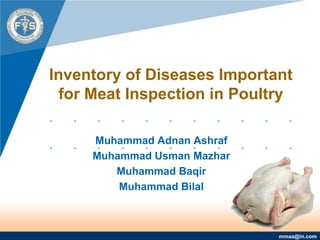
Inventory of Diseases Important for Meat Inspection in PoultryMuhammad Adnan Ashraf Muhammad Usman MazharMuhammad BaqirMuhammad Bilal
Objectives To describe the PM lesions of poultry diseases having zoonotic and economic importanceTo prepare the addressee to diagnose the particular disease during poultry meat inspectionTo describe the sensitivity of the causative organism of the particular diseaseTo describe the vulnerable species of poultry with respect to particular diseaseTo decide the fate of judgement of the poultry carcass with respect to particular diseaseTo ensure that consumers are getting the wholesome poultry meat
Inventory of Viral Diseases of PoultryAvian Influenza (Bird Flu)Newcastle Disease (Ranikhet)Infectious Bursal Disease (Gumboro)Infectious BronchitisInfectious Laryngeotracheitis Avian Pox (Fowl Pox)Avian Leukosis ComplexLymphoid LeukosisErythroid LeukosisMyeloid LeukosisEndothelioma Sarcoma Marek’s DiseaseReticuloendotheliosis Lymphoproliferation
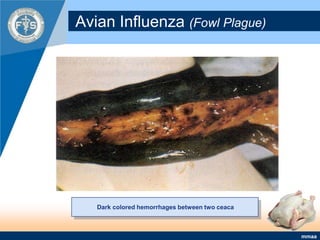
Avian Influenza (Fowl Plague)Affects domestic fowl although wild birds are natural reservoirsReportable disease with zoonotic importanceCausative Organism:			Sensitivity:Orthomyxovirus				56 ˚C for 60 minPM Findings:Inflammation of conjunctivae, trachea and airsacs Edema of the head with congestion, haemorrhages and cyanosis of the combs and wattlesPetechial and ecchymotic haemorrhages in serosal and mucosal surfaces of heart and small intestineJudgement:Totally condemned
Avian Influenza (Fowl Plague)Dark colored hemorrhages between two ceaca
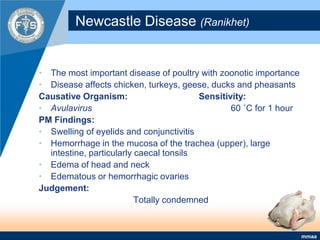
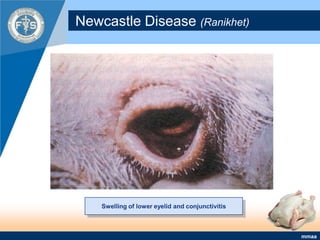
Newcastle Disease (Ranikhet)The most important disease of poultry with zoonotic importanceDisease affects chicken, turkeys, geese, ducks and pheasantsCausative Organism: 			Sensitivity:Avulavirus 					60 ˚C for 1 hourPM Findings:Swelling of eyelids and conjunctivitisHemorrhage in the mucosa of the trachea (upper), large intestine, particularly caecal tonsils Edema of head and neckEdematous or hemorrhagic ovariesJudgement:Totally condemned
Newcastle Disease (Ranikhet)Swelling of lower eyelid and conjunctivitis
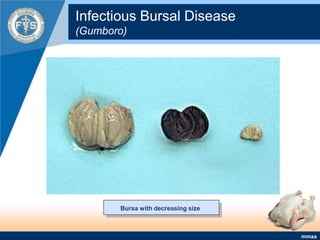
Infectious Bursal Disease(Gumboro)Second most important disease of poultry (chicken)Causative Organism:			Sensitivity:Birnavirus					71 ˚C for 6 minPM Findings:Petechial hemorrhages in the breast and thigh musclesBursa of Fabricius is at first enlarged, inflammed and cheesy and after 4-8 days atrophiesPeripheral infarcts of liver with spleen enlargedJudgement:If lesions are localized, it is partially condemnedIf lesions are generalized, it is totally condemned
Infectious Bursal Disease (Gumboro)Bursa with decreasing size
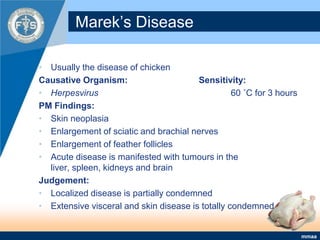
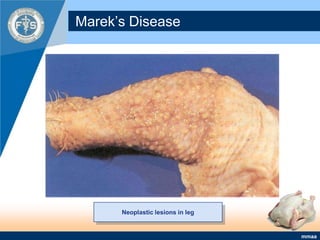
Marek’s DiseaseUsually the disease of chickenCausative Organism:			Sensitivity:Herpesvirus 					60 ˚C for 3 hoursPM Findings:Skin neoplasiaEnlargement of sciatic and brachial nervesEnlargement of feather folliclesAcute disease is manifested with tumours in the liver, spleen, kidneys and brain Judgement:Localized disease is partially condemnedExtensive visceral and skin disease is totally condemned
Marek’s DiseaseNeoplastic lesions in leg
Inventory of Bacterial Diseases of PoultryFowl Cholera (Pasteurellosis)Salmonellosis PullorumFowl TyphoidTuberculosis Pseudotuberculosis Campylobacteriosis Erysipelas ParatyphoidArizona infection (Paracolon infection)Mycoplasmosis Chronic Respiratory DiseaseAirsacculitisInfectious SinusitisClostridial DiseasesGangreneous DermatitisNecrotic EnteritisChalamydiosis Ornithosis Psittacosis
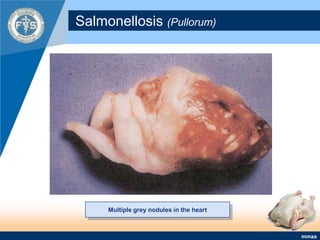
Salmonellosis (Pullorum and Fowl Typhoid)Disease of poultry, ducks and turkeysCausative organism:			Sensitivity:Salmonella group 				70 ˚C for 5 minPM Findings:Multiple grey nodules in the heart, lung, liver and spleen, gizzard and intestineSwelling of tibiotarsal jointDiscolored follicles in the ovaryJudgement:Totally condemned
Salmonellosis (Pullorum)Multiple grey nodules in the heart
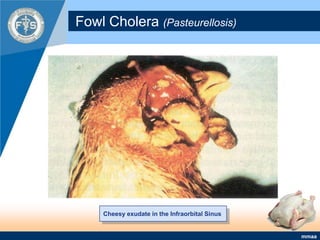
Fowl Cholera (Pasteurellosis)Mainly affects turkey and water fowlCausative Organism:			Sensitivity: Pasteurella multocida			60 ˚C for 2 minPM Findings:Caseous exudate in wattles, sinuses, nasal turbinates and jointsPetechial and ecchymotic haemorrhages on the heart, serous and mucous membranes Darkened breast muscles are frequently noted Liver has small grey areas of necrosisJudgement:If disease is localized, affected parts are condemnedIf there is septicemia, all of the carcass is condemned
Fowl Cholera (Pasteurellosis)Cheesy exudate in the Infraorbital Sinus
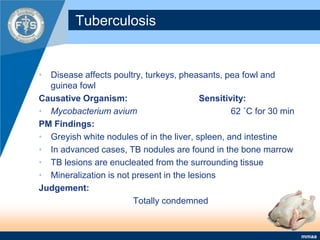
Tuberculosis Disease affects poultry, turkeys, pheasants, pea fowl and guinea fowlCausative Organism:			Sensitivity:Mycobacterium avium 			62 ˚C for 30 minPM Findings:Greyish white nodules of in the liver, spleen, and intestine In advanced cases, TB nodules are found in the bone marrow TB lesions are enucleated from the surrounding tissue Mineralization is not present in the lesions Judgement:Totally condemned
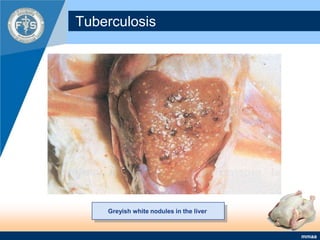
Tuberculosis Greyish white nodules in the liver
Parasitic, Fungal and other Diseases of PoultryParasitic DiseasesHistomoniasis (Blackhead)HexamitiasisLeukocytozoonosis Coccidiosis Ceacal coccidiosisIntestinal coccidiosis Fungal DiseasesAspergillosis
Favus (White Comb)
Moniliasis
Mycotoxicosis (Aflatoxicosis)Miscelleneous DiseasesAscites (Congestive Heart Failure)
Neoplasms
Oregon Disease

Meat Inspection In Poultry

  • 1.
    Inventory of DiseasesImportant for Meat Inspection in PoultryMuhammad Adnan Ashraf Muhammad Usman MazharMuhammad BaqirMuhammad Bilal
  • 2.
    Objectives To describethe PM lesions of poultry diseases having zoonotic and economic importanceTo prepare the addressee to diagnose the particular disease during poultry meat inspectionTo describe the sensitivity of the causative organism of the particular diseaseTo describe the vulnerable species of poultry with respect to particular diseaseTo decide the fate of judgement of the poultry carcass with respect to particular diseaseTo ensure that consumers are getting the wholesome poultry meat
  • 3.
    Inventory of ViralDiseases of PoultryAvian Influenza (Bird Flu)Newcastle Disease (Ranikhet)Infectious Bursal Disease (Gumboro)Infectious BronchitisInfectious Laryngeotracheitis Avian Pox (Fowl Pox)Avian Leukosis ComplexLymphoid LeukosisErythroid LeukosisMyeloid LeukosisEndothelioma Sarcoma Marek’s DiseaseReticuloendotheliosis Lymphoproliferation
  • 4.
    Avian Influenza (FowlPlague)Affects domestic fowl although wild birds are natural reservoirsReportable disease with zoonotic importanceCausative Organism: Sensitivity:Orthomyxovirus 56 ˚C for 60 minPM Findings:Inflammation of conjunctivae, trachea and airsacs Edema of the head with congestion, haemorrhages and cyanosis of the combs and wattlesPetechial and ecchymotic haemorrhages in serosal and mucosal surfaces of heart and small intestineJudgement:Totally condemned
  • 5.
    Avian Influenza (FowlPlague)Dark colored hemorrhages between two ceaca
  • 6.
    Newcastle Disease (Ranikhet)Themost important disease of poultry with zoonotic importanceDisease affects chicken, turkeys, geese, ducks and pheasantsCausative Organism: Sensitivity:Avulavirus 60 ˚C for 1 hourPM Findings:Swelling of eyelids and conjunctivitisHemorrhage in the mucosa of the trachea (upper), large intestine, particularly caecal tonsils Edema of head and neckEdematous or hemorrhagic ovariesJudgement:Totally condemned
  • 7.
    Newcastle Disease (Ranikhet)Swellingof lower eyelid and conjunctivitis
  • 8.
    Infectious Bursal Disease(Gumboro)Secondmost important disease of poultry (chicken)Causative Organism: Sensitivity:Birnavirus 71 ˚C for 6 minPM Findings:Petechial hemorrhages in the breast and thigh musclesBursa of Fabricius is at first enlarged, inflammed and cheesy and after 4-8 days atrophiesPeripheral infarcts of liver with spleen enlargedJudgement:If lesions are localized, it is partially condemnedIf lesions are generalized, it is totally condemned
  • 9.
    Infectious Bursal Disease(Gumboro)Bursa with decreasing size
  • 10.
    Marek’s DiseaseUsually thedisease of chickenCausative Organism: Sensitivity:Herpesvirus 60 ˚C for 3 hoursPM Findings:Skin neoplasiaEnlargement of sciatic and brachial nervesEnlargement of feather folliclesAcute disease is manifested with tumours in the liver, spleen, kidneys and brain Judgement:Localized disease is partially condemnedExtensive visceral and skin disease is totally condemned
  • 11.
  • 12.
    Inventory of BacterialDiseases of PoultryFowl Cholera (Pasteurellosis)Salmonellosis PullorumFowl TyphoidTuberculosis Pseudotuberculosis Campylobacteriosis Erysipelas ParatyphoidArizona infection (Paracolon infection)Mycoplasmosis Chronic Respiratory DiseaseAirsacculitisInfectious SinusitisClostridial DiseasesGangreneous DermatitisNecrotic EnteritisChalamydiosis Ornithosis Psittacosis
  • 13.
    Salmonellosis (Pullorum andFowl Typhoid)Disease of poultry, ducks and turkeysCausative organism: Sensitivity:Salmonella group 70 ˚C for 5 minPM Findings:Multiple grey nodules in the heart, lung, liver and spleen, gizzard and intestineSwelling of tibiotarsal jointDiscolored follicles in the ovaryJudgement:Totally condemned
  • 14.
  • 15.
    Fowl Cholera (Pasteurellosis)Mainlyaffects turkey and water fowlCausative Organism: Sensitivity: Pasteurella multocida 60 ˚C for 2 minPM Findings:Caseous exudate in wattles, sinuses, nasal turbinates and jointsPetechial and ecchymotic haemorrhages on the heart, serous and mucous membranes Darkened breast muscles are frequently noted Liver has small grey areas of necrosisJudgement:If disease is localized, affected parts are condemnedIf there is septicemia, all of the carcass is condemned
  • 16.
    Fowl Cholera (Pasteurellosis)Cheesyexudate in the Infraorbital Sinus
  • 17.
    Tuberculosis Disease affectspoultry, turkeys, pheasants, pea fowl and guinea fowlCausative Organism: Sensitivity:Mycobacterium avium 62 ˚C for 30 minPM Findings:Greyish white nodules of in the liver, spleen, and intestine In advanced cases, TB nodules are found in the bone marrow TB lesions are enucleated from the surrounding tissue Mineralization is not present in the lesions Judgement:Totally condemned
  • 18.
    Tuberculosis Greyish whitenodules in the liver
  • 19.
    Parasitic, Fungal andother Diseases of PoultryParasitic DiseasesHistomoniasis (Blackhead)HexamitiasisLeukocytozoonosis Coccidiosis Ceacal coccidiosisIntestinal coccidiosis Fungal DiseasesAspergillosis
  • 20.
  • 21.
  • 22.
  • 23.
  • 24.