
Lecture 5
TRANSPORT AND
STORAGE OF FRUITS AND
VEGETABLES
LEARNING OBJECTIVES
At the end of the lesson, the learners are expected to:
1. characterize the ideal transport for fresh fruits and
vegetables;
2. explain how refrigerated storage can reduce
deterioration of fresh fruits and vegetables;
3. explain the importance of appropriate transport in the
marketing of produce; and
4. discuss the fruit and vegetable damages incurred during
transport;
LESSON OUTLINE
1. Characteristics of Ideal Transport for
Fresh Fruits and Vegetables
2. Effect of Refrigerated Storage on
Deterioration of Fresh Fruits and
Vegetables
3. Importance of Appropriate Transport in
the Marketing of Produce
4. Damages Incurred by Fruits and
Vegetables during Transport
Presentation 3.2
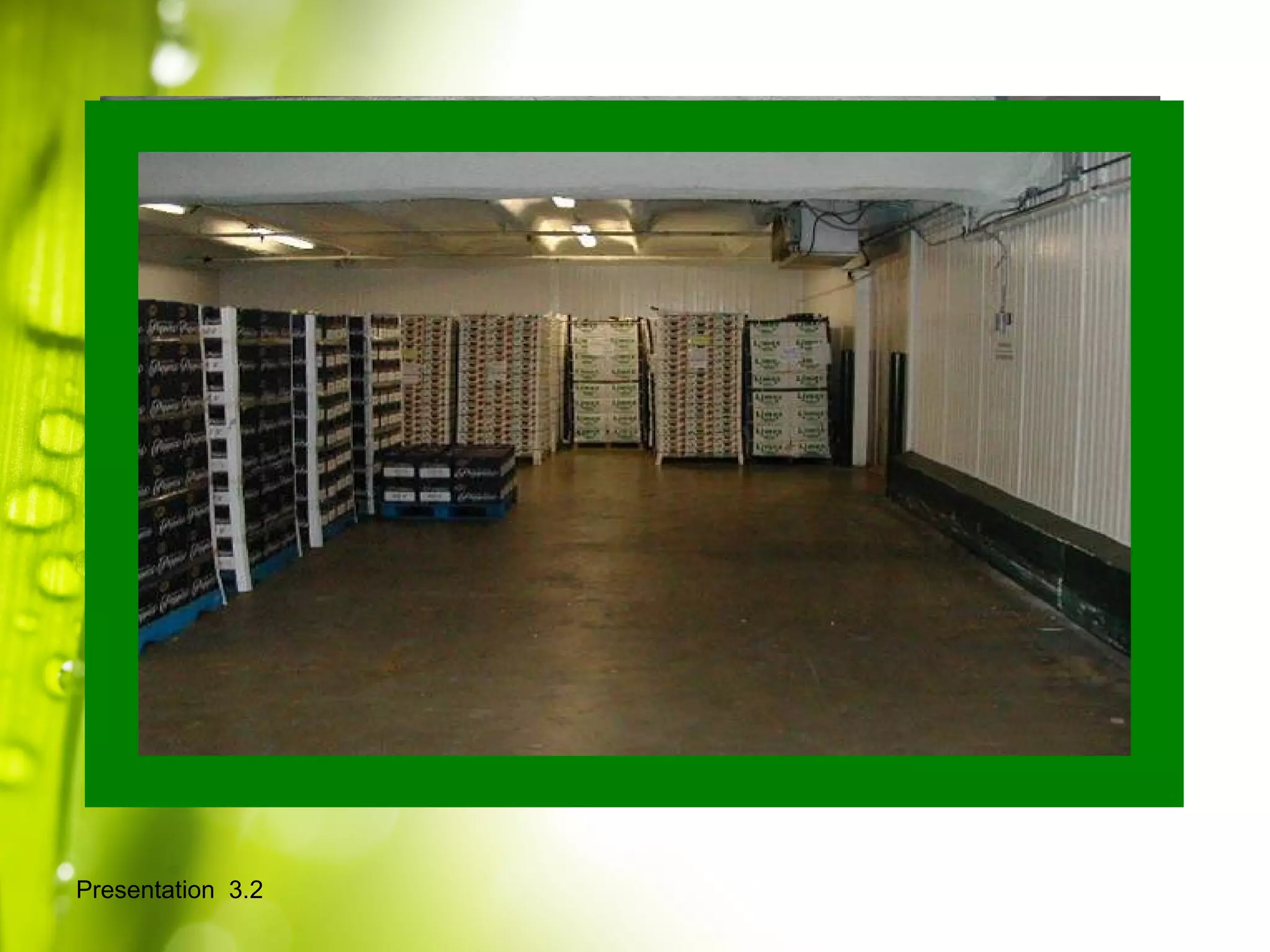
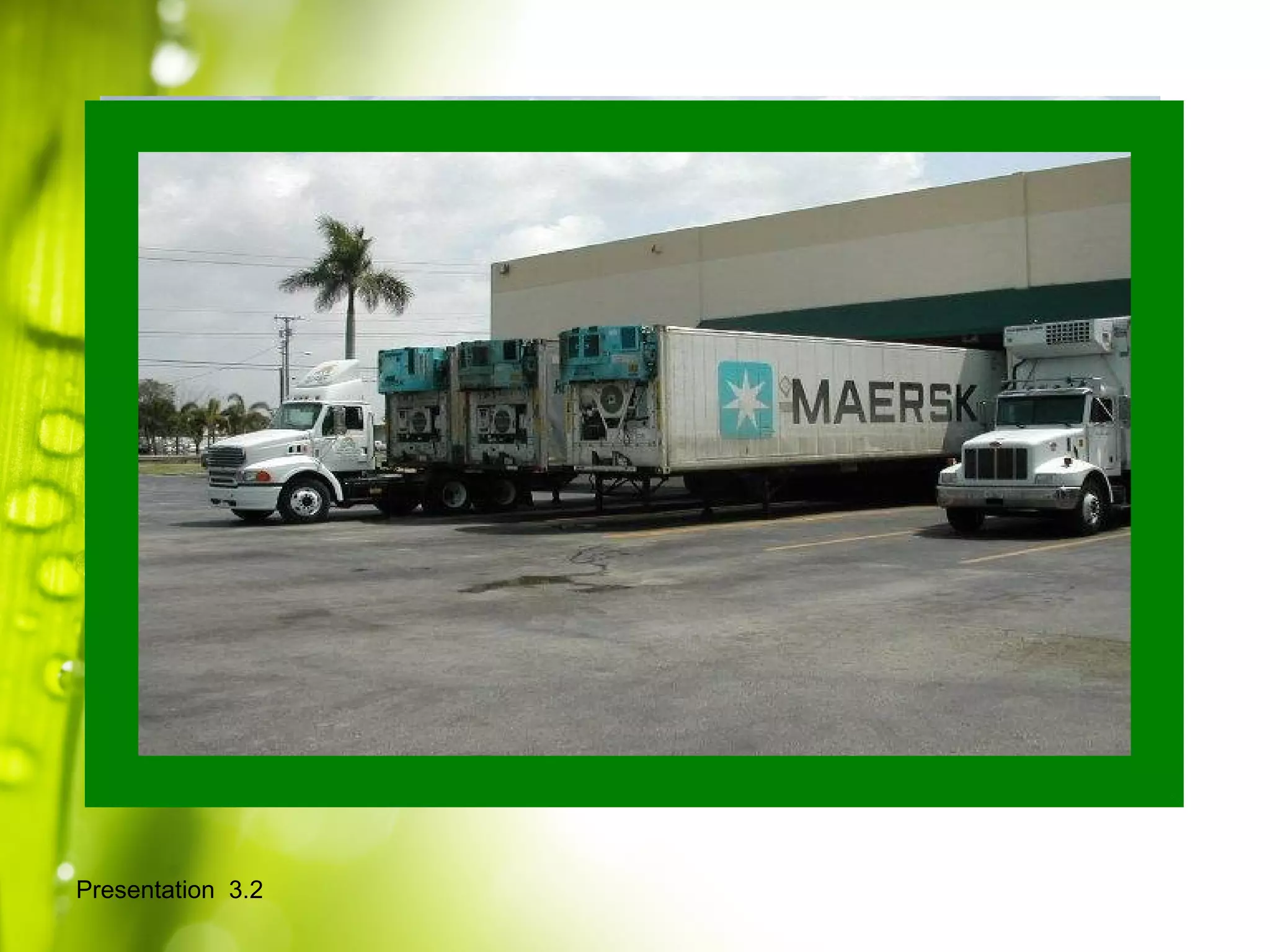
• have well designed and adequately equipped
compartments.
• have slip resistant floors.
• are perfectly insulated.
• have adequate and well-positioned doors for loading and
unloading.
• allow effective distribution of cool air.
• allow monitoring and temperature control.
• proper air spaces between pallets and room walls to
ensure proper air circulation.
Cooling rooms and refrigerated vehicles :
Presentation 3.2
Presentation 3.2
Storage
7
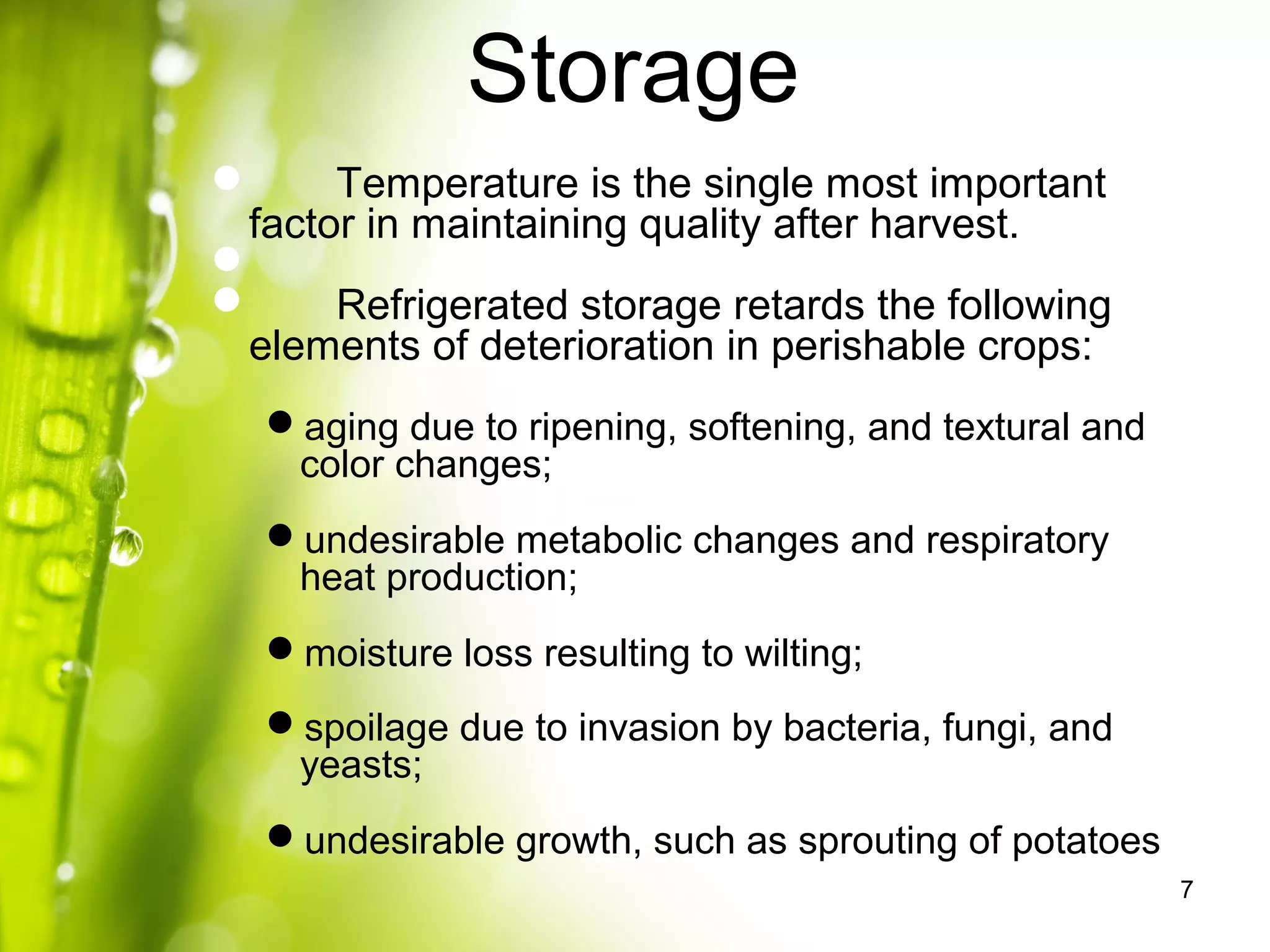
 Temperature is the single most important
factor in maintaining quality after harvest.

 Refrigerated storage retards the following
elements of deterioration in perishable crops:
aging due to ripening, softening, and textural and
color changes;
undesirable metabolic changes and respiratory
heat production;
moisture loss resulting to wilting;
spoilage due to invasion by bacteria, fungi, and
yeasts;
undesirable growth, such as sprouting of potatoes
Objective of Fresh Fruit and
Vegetable Storage
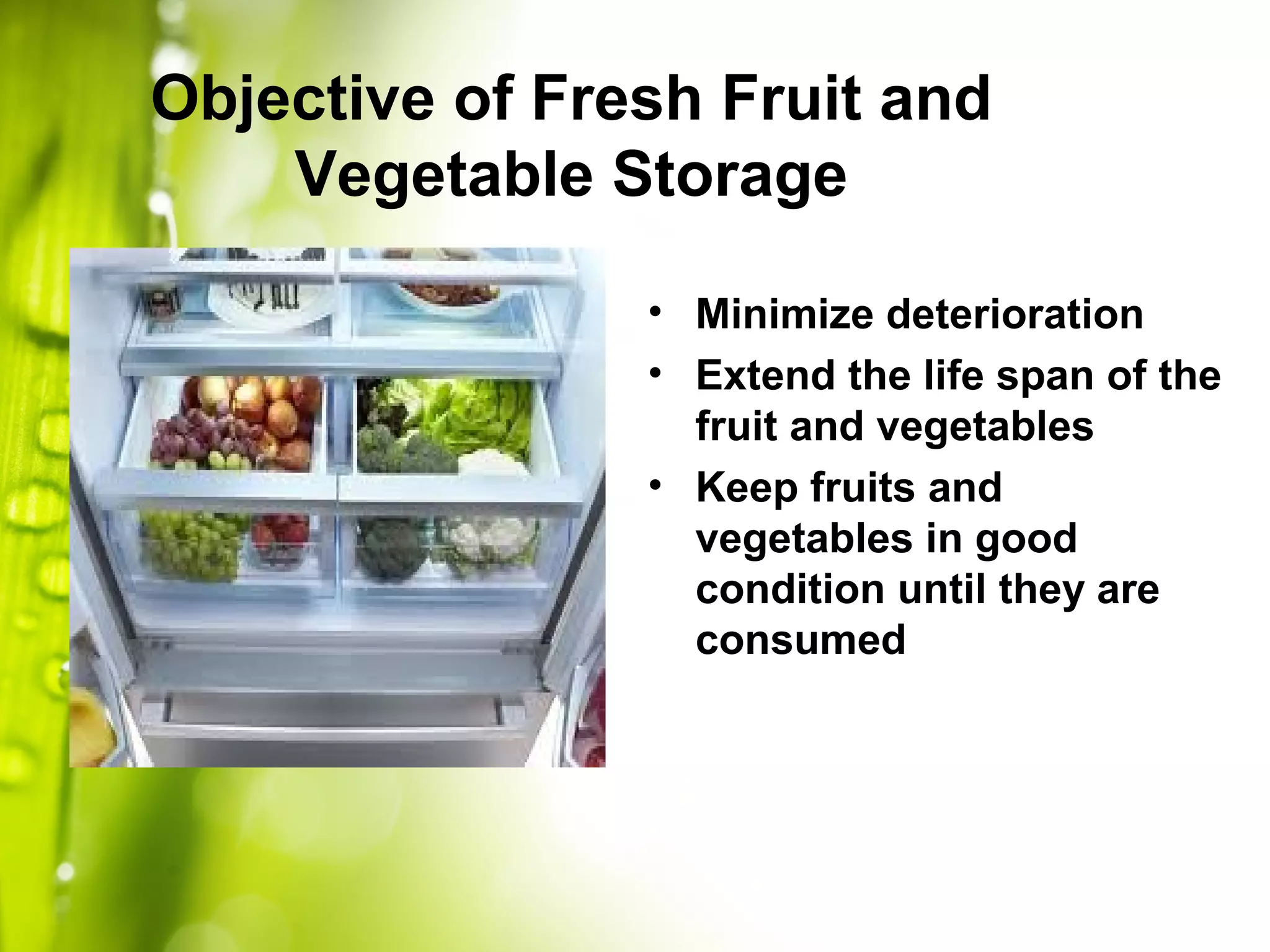
• Minimize deterioration
• Extend the life span of the
fruit and vegetables
• Keep fruits and
vegetables in good
condition until they are
consumed
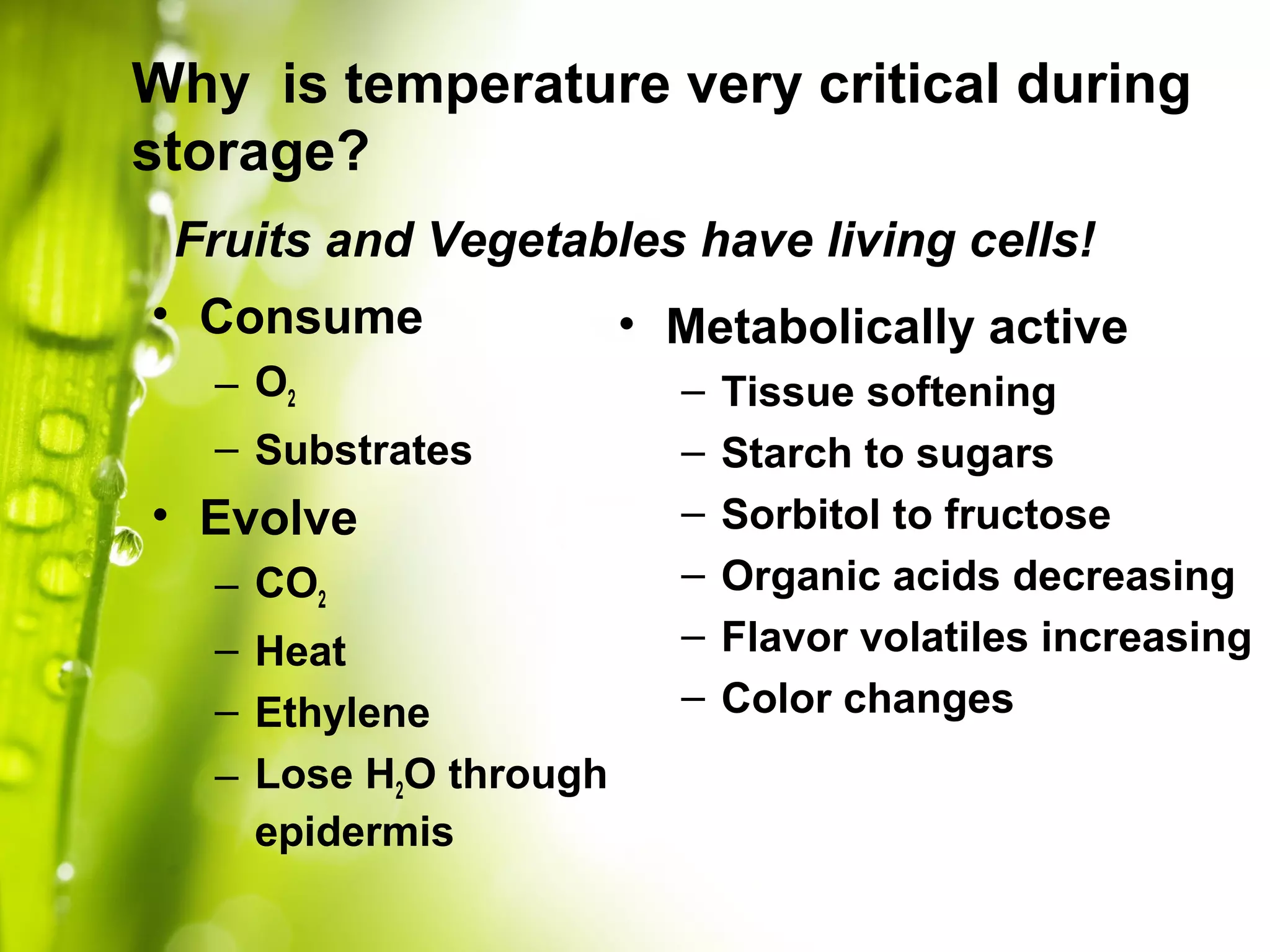
Fruits and Vegetables have living cells!
• Consume
– O2
– Substrates
• Evolve
– CO2
– Heat
– Ethylene
– Lose H2O through
epidermis
• Metabolically active
– Tissue softening
– Starch to sugars
– Sorbitol to fructose
– Organic acids decreasing
– Flavor volatiles increasing
– Color changes
Why is temperature very critical during
storage?
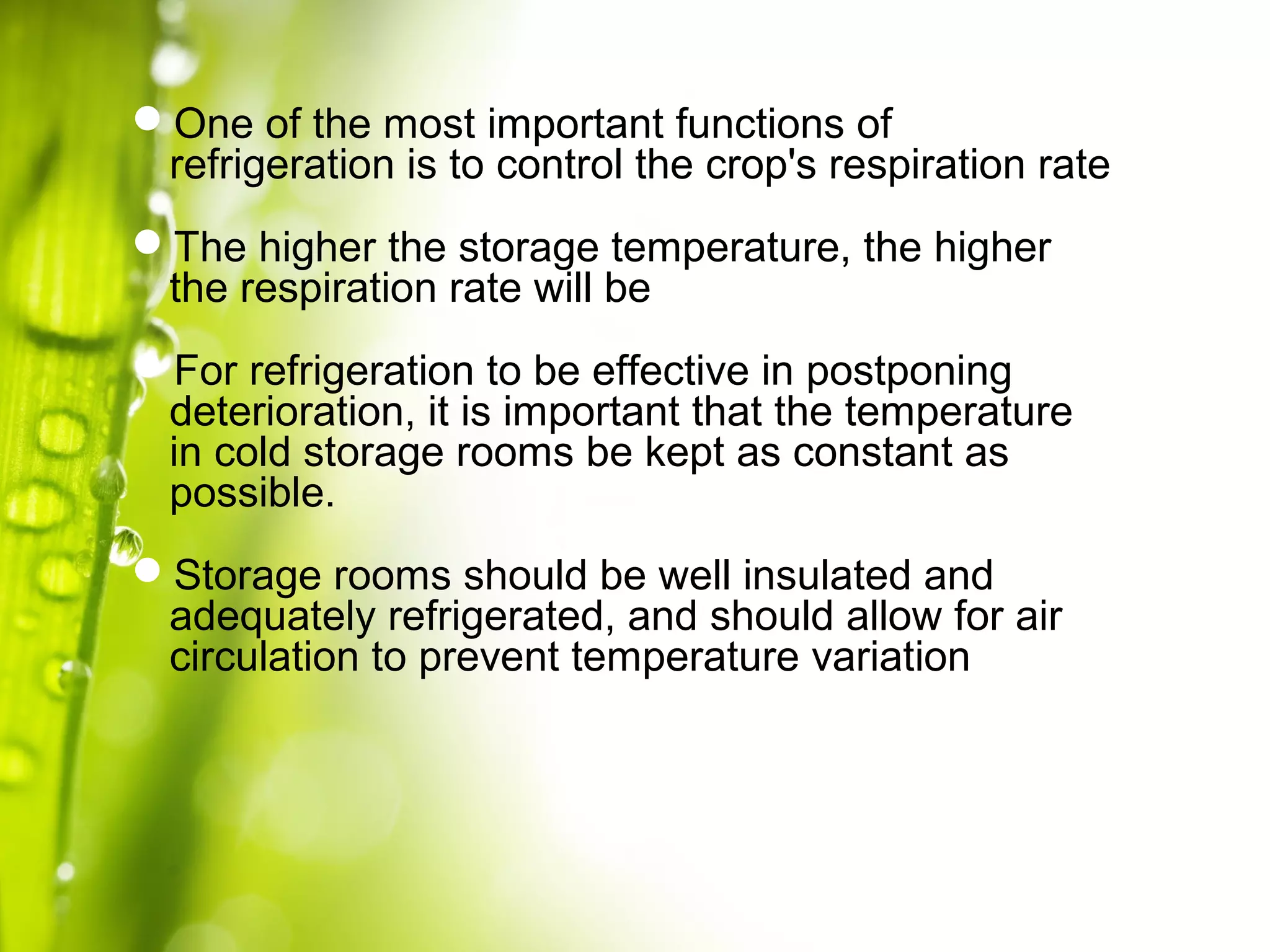
One of the most important functions of
refrigeration is to control the crop's respiration rate
The higher the storage temperature, the higher
the respiration rate will be
For refrigeration to be effective in postponing
deterioration, it is important that the temperature
in cold storage rooms be kept as constant as
possible.
Storage rooms should be well insulated and
adequately refrigerated, and should allow for air
circulation to prevent temperature variation
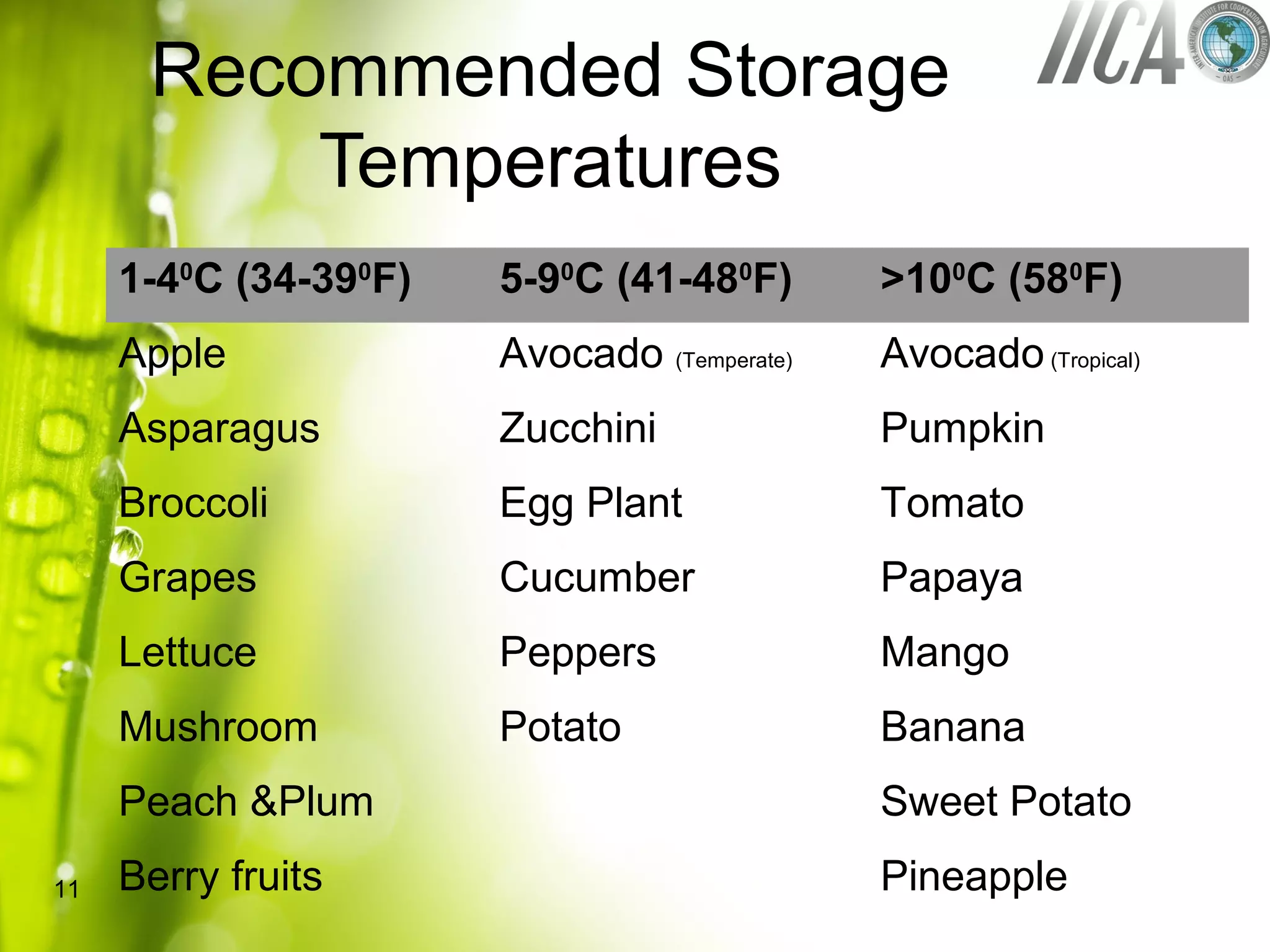
Recommended Storage
Temperatures
1-40
C (34-390
F) 5-90
C (41-480
F) >100
C (580
F)
Apple Avocado (Temperate) Avocado(Tropical)
Asparagus Zucchini Pumpkin
Broccoli Egg Plant Tomato
Grapes Cucumber Papaya
Lettuce Peppers Mango
Mushroom Potato Banana
Peach &Plum Sweet Potato
Berry fruits Pineapple11
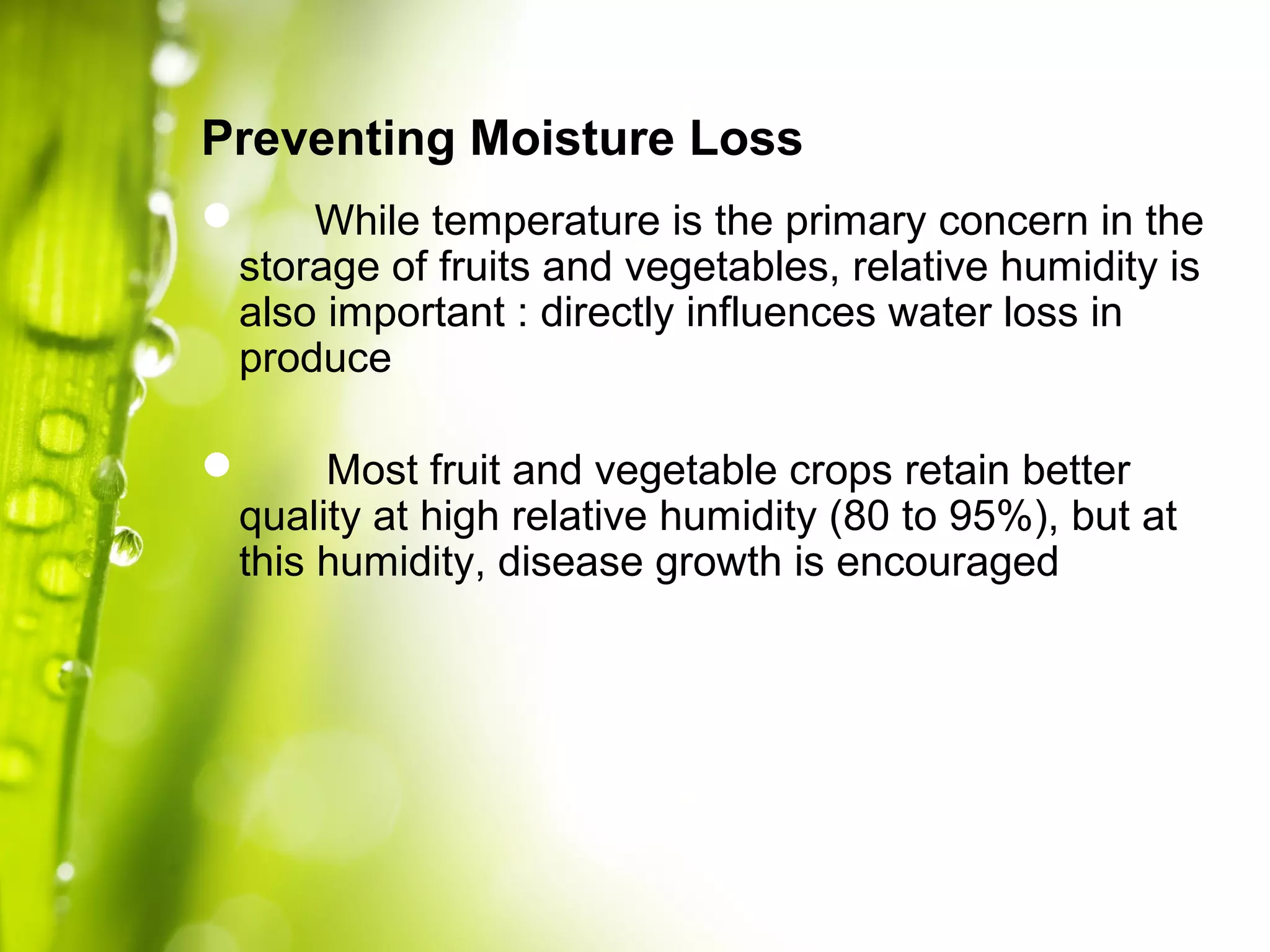
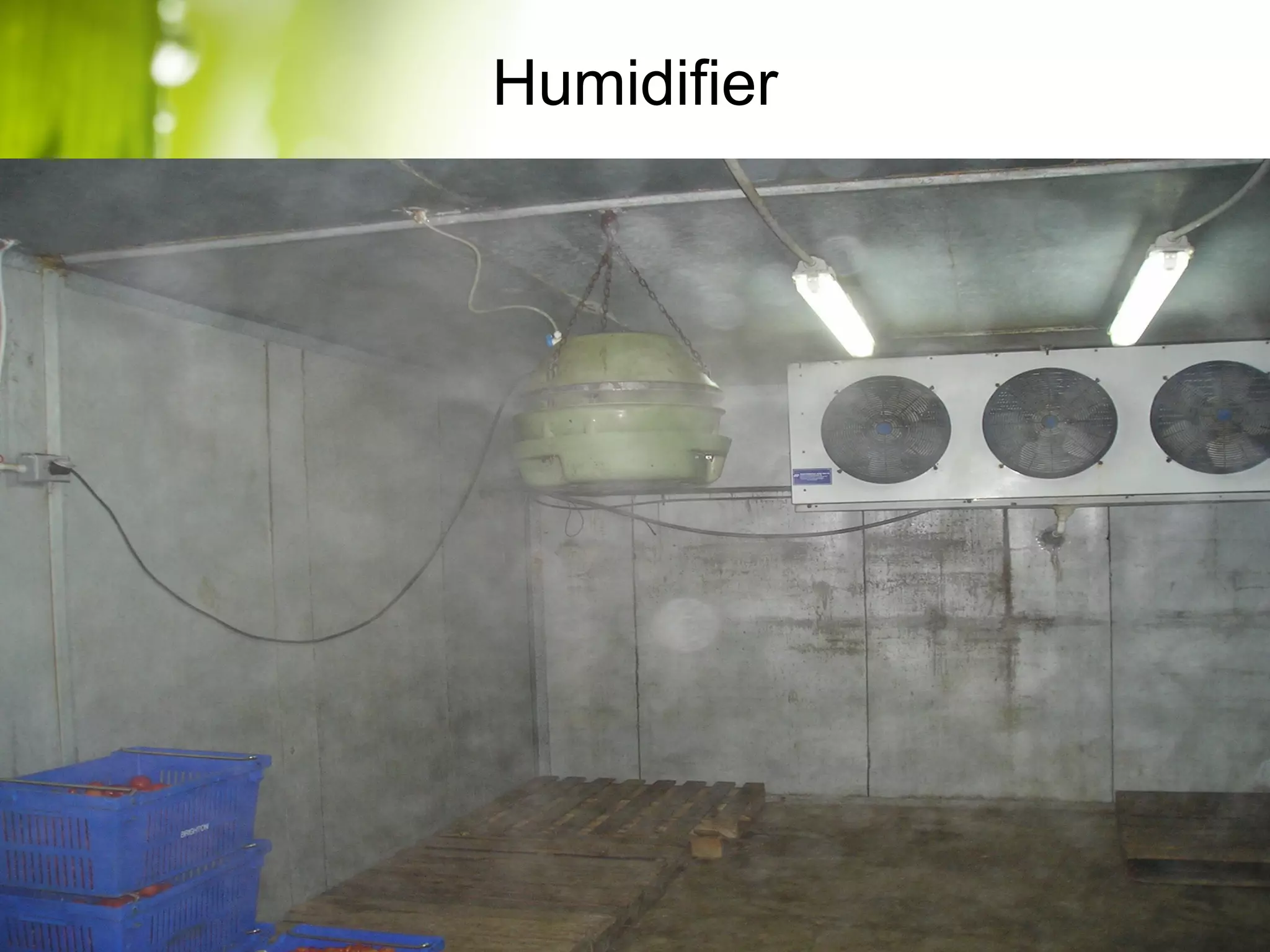
 While temperature is the primary concern in the
storage of fruits and vegetables, relative humidity is
also important : directly influences water loss in
produce
 Most fruit and vegetable crops retain better
quality at high relative humidity (80 to 95%), but at
this humidity, disease growth is encouraged
Preventing Moisture Loss
Humidifier
13
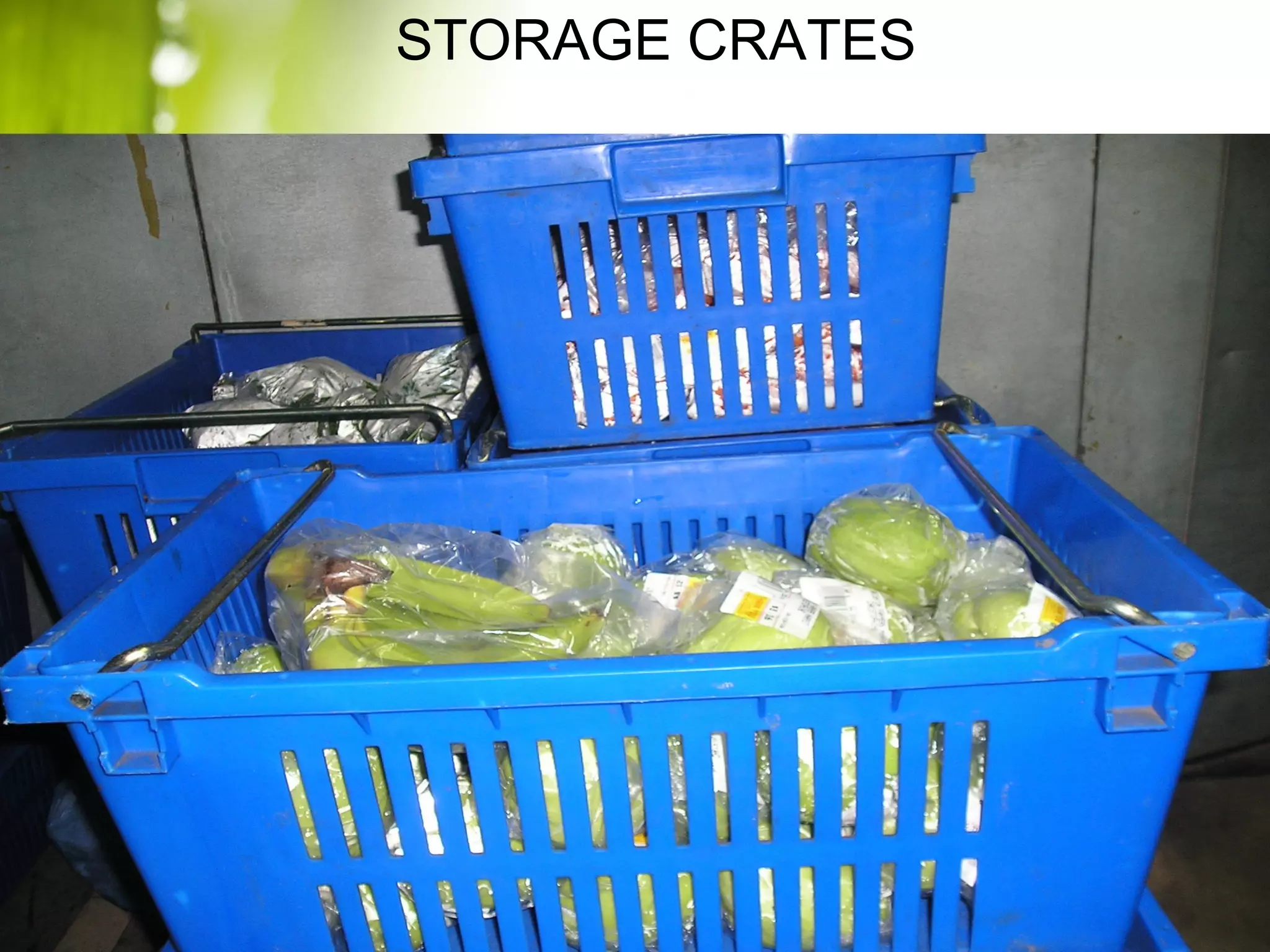
STORAGE CRATES
14
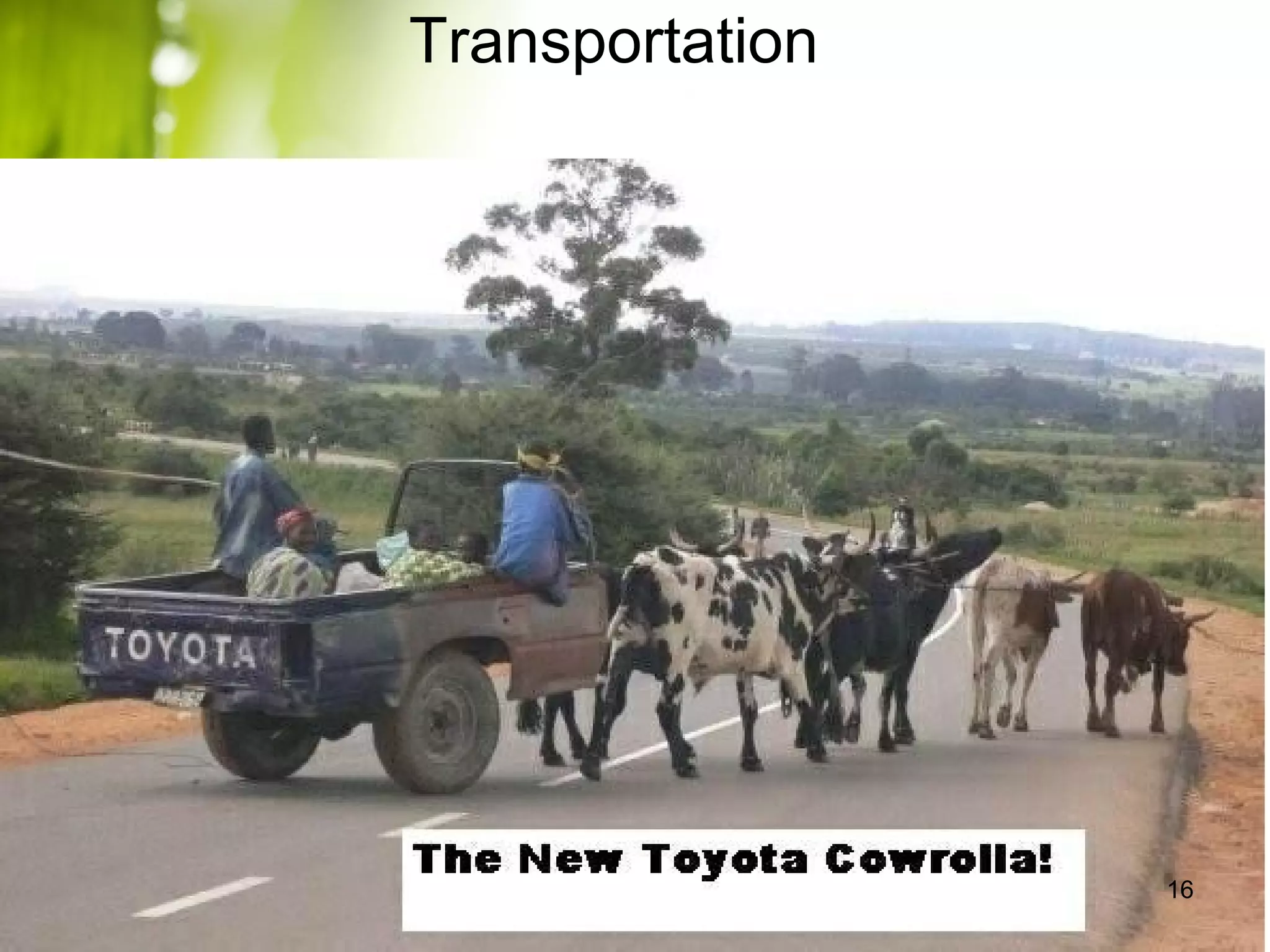
Transportation
16
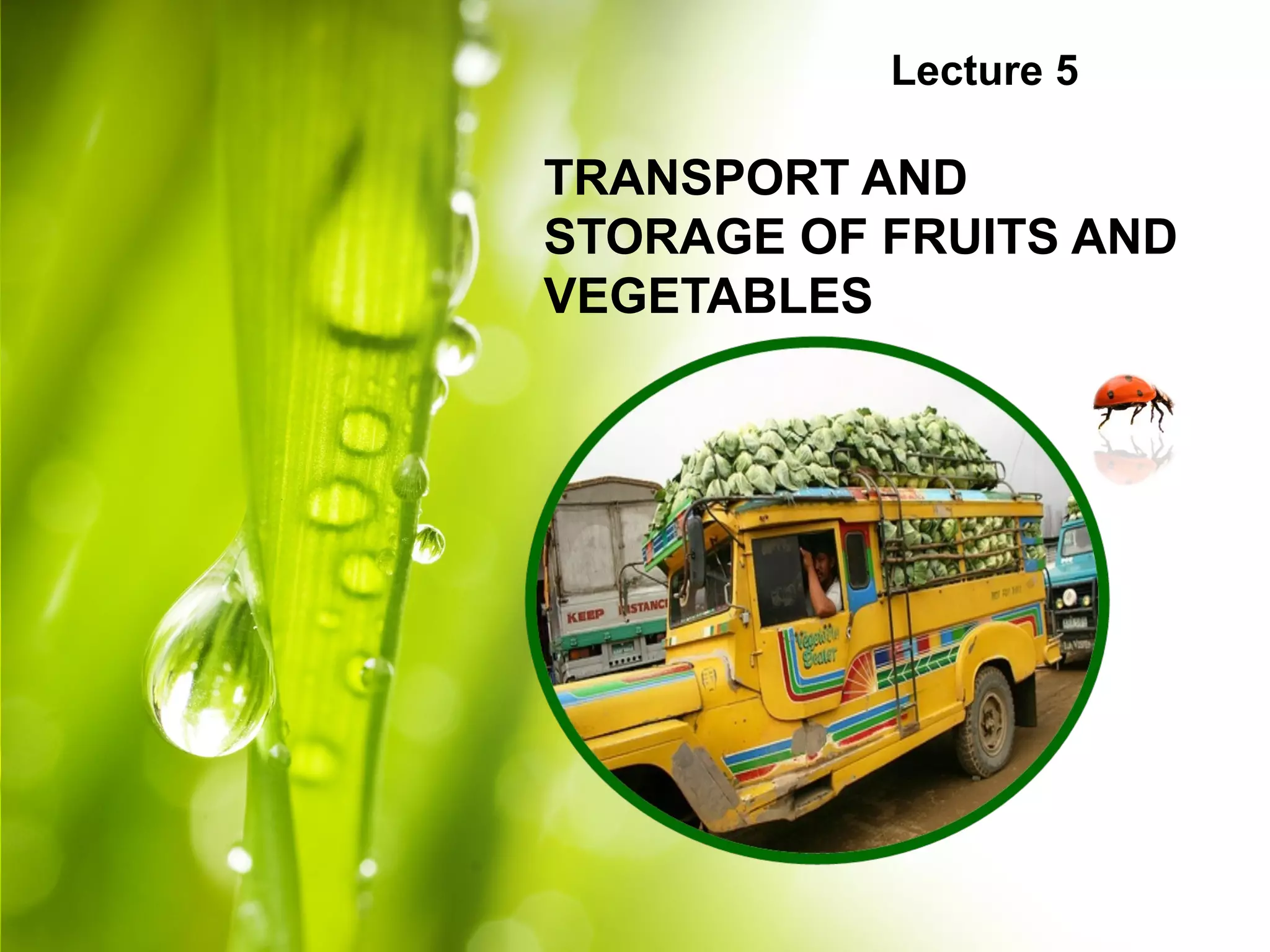
 Transportation is a big and often
the most important factor in the
marketing of fresh produce.
 Ideally, transport would take
produce from the grower directly to the
consumer
 Losses directly attributed to
transport conditions can be high
TRANSPORTATION
The goal of every person concerned
with transport should be that the
produce be kept in the best possible
condition during transport and that
the haulage of produce be quick and
efficient.
To this end, produce should be
properly packaged and properly
loaded on a suitable vehicle.
The damage and loss incurred during non-
refrigerated transport are caused primarily by
mechanical damage and by overheating
Mechanical damage
careless handling of packed produce during
loading and unloading;
vibration (shaking) of the vehicle, especially
on bad roads;
fast driving and poor condition of the vehicle;
poor stowage, which allows packages in
transit to sway; the stow may collapse
packages stacked too high; the movement of
produce within a package increases in relation
to its height in the stack
Over heating
This can occur not only from
external sources but also from
heat generated by the produce
within the package itself.
Overheating promotes natural
breakdown and decay, and
increases the rate of water loss
from produce.
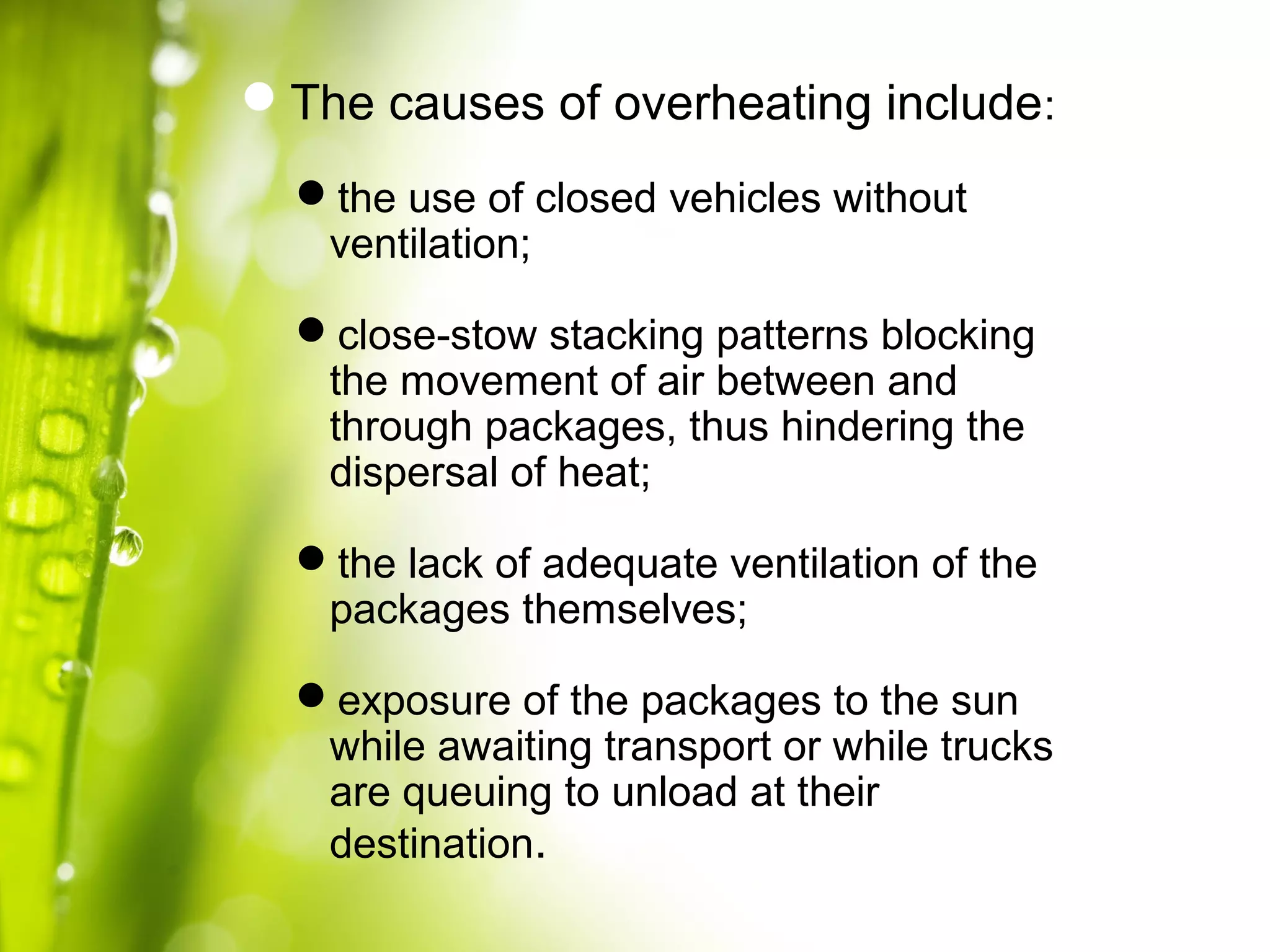
The causes of overheating include:
the use of closed vehicles without
ventilation;
close-stow stacking patterns blocking
the movement of air between and
through packages, thus hindering the
dispersal of heat;
the lack of adequate ventilation of the
packages themselves;
exposure of the packages to the sun
while awaiting transport or while trucks
are queuing to unload at their
destination.
22
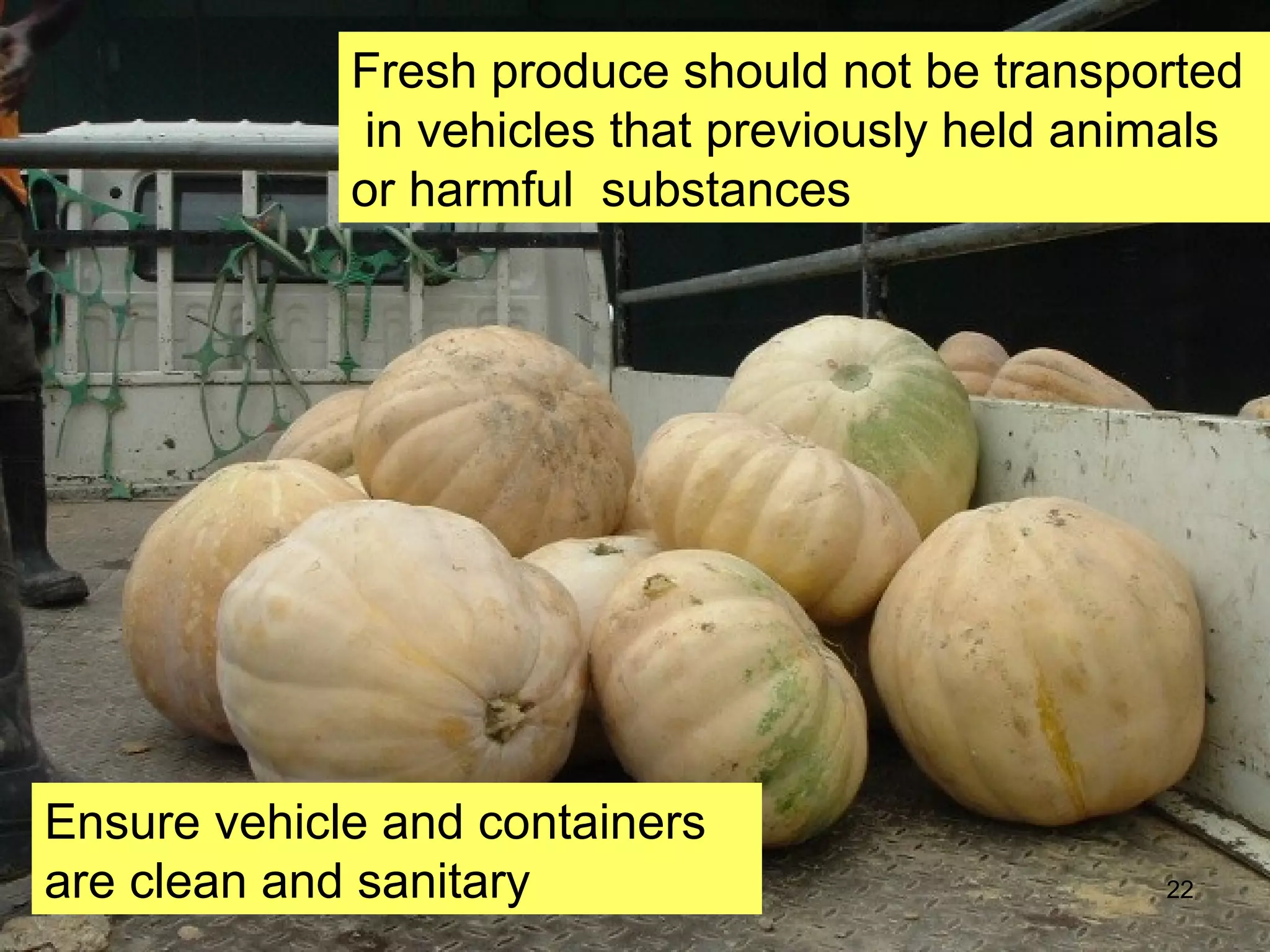
Ensure vehicle and containers
are clean and sanitary
Fresh produce should not be transported
in vehicles that previously held animals
or harmful substances
Presentation 3.2
Presentation 3.2
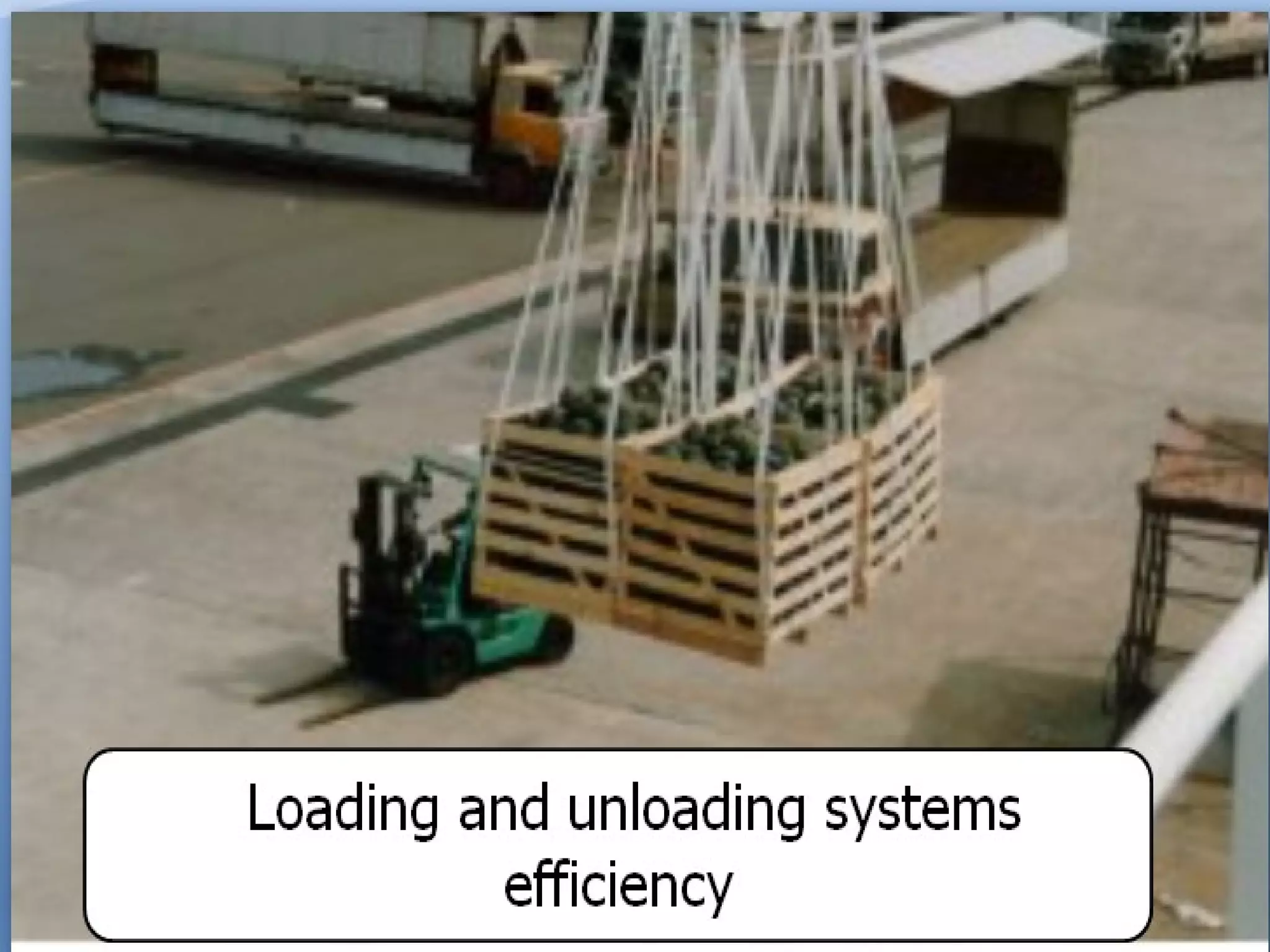
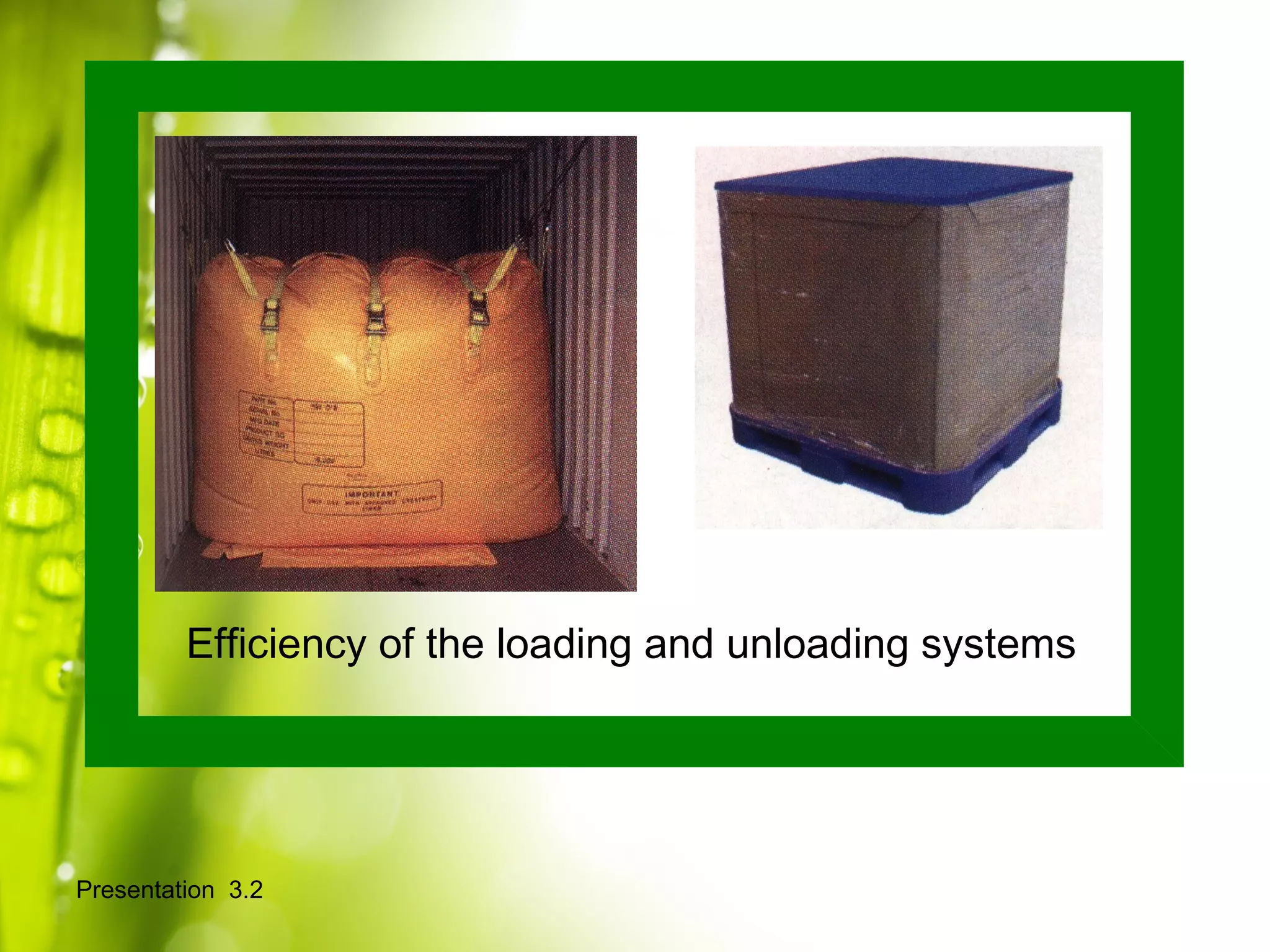
Efficiency of the loading and unloading systems
Thank You!

Lecture 5: Transport and Storage of Fruits and Vegetables

  • 1.
    Lecture 5 TRANSPORT AND STORAGEOF FRUITS AND VEGETABLES
  • 2.
    LEARNING OBJECTIVES At theend of the lesson, the learners are expected to: 1. characterize the ideal transport for fresh fruits and vegetables; 2. explain how refrigerated storage can reduce deterioration of fresh fruits and vegetables; 3. explain the importance of appropriate transport in the marketing of produce; and 4. discuss the fruit and vegetable damages incurred during transport;
  • 3.
    LESSON OUTLINE 1. Characteristicsof Ideal Transport for Fresh Fruits and Vegetables 2. Effect of Refrigerated Storage on Deterioration of Fresh Fruits and Vegetables 3. Importance of Appropriate Transport in the Marketing of Produce 4. Damages Incurred by Fruits and Vegetables during Transport
  • 4.
    Presentation 3.2 • havewell designed and adequately equipped compartments. • have slip resistant floors. • are perfectly insulated. • have adequate and well-positioned doors for loading and unloading. • allow effective distribution of cool air. • allow monitoring and temperature control. • proper air spaces between pallets and room walls to ensure proper air circulation. Cooling rooms and refrigerated vehicles :
  • 5.
  • 6.
  • 7.
    Storage 7  Temperature isthe single most important factor in maintaining quality after harvest.   Refrigerated storage retards the following elements of deterioration in perishable crops: aging due to ripening, softening, and textural and color changes; undesirable metabolic changes and respiratory heat production; moisture loss resulting to wilting; spoilage due to invasion by bacteria, fungi, and yeasts; undesirable growth, such as sprouting of potatoes
  • 8.
    Objective of FreshFruit and Vegetable Storage • Minimize deterioration • Extend the life span of the fruit and vegetables • Keep fruits and vegetables in good condition until they are consumed
  • 9.
    Fruits and Vegetableshave living cells! • Consume – O2 – Substrates • Evolve – CO2 – Heat – Ethylene – Lose H2O through epidermis • Metabolically active – Tissue softening – Starch to sugars – Sorbitol to fructose – Organic acids decreasing – Flavor volatiles increasing – Color changes Why is temperature very critical during storage?
  • 10.
    One of themost important functions of refrigeration is to control the crop's respiration rate The higher the storage temperature, the higher the respiration rate will be For refrigeration to be effective in postponing deterioration, it is important that the temperature in cold storage rooms be kept as constant as possible. Storage rooms should be well insulated and adequately refrigerated, and should allow for air circulation to prevent temperature variation
  • 11.
    Recommended Storage Temperatures 1-40 C (34-390 F)5-90 C (41-480 F) >100 C (580 F) Apple Avocado (Temperate) Avocado(Tropical) Asparagus Zucchini Pumpkin Broccoli Egg Plant Tomato Grapes Cucumber Papaya Lettuce Peppers Mango Mushroom Potato Banana Peach &Plum Sweet Potato Berry fruits Pineapple11
  • 12.
     While temperatureis the primary concern in the storage of fruits and vegetables, relative humidity is also important : directly influences water loss in produce  Most fruit and vegetable crops retain better quality at high relative humidity (80 to 95%), but at this humidity, disease growth is encouraged Preventing Moisture Loss
  • 13.
  • 14.
  • 16.
  • 17.
     Transportation isa big and often the most important factor in the marketing of fresh produce.  Ideally, transport would take produce from the grower directly to the consumer  Losses directly attributed to transport conditions can be high TRANSPORTATION
  • 18.
    The goal ofevery person concerned with transport should be that the produce be kept in the best possible condition during transport and that the haulage of produce be quick and efficient. To this end, produce should be properly packaged and properly loaded on a suitable vehicle.
  • 19.
    The damage andloss incurred during non- refrigerated transport are caused primarily by mechanical damage and by overheating Mechanical damage careless handling of packed produce during loading and unloading; vibration (shaking) of the vehicle, especially on bad roads; fast driving and poor condition of the vehicle; poor stowage, which allows packages in transit to sway; the stow may collapse packages stacked too high; the movement of produce within a package increases in relation to its height in the stack
  • 20.
    Over heating This canoccur not only from external sources but also from heat generated by the produce within the package itself. Overheating promotes natural breakdown and decay, and increases the rate of water loss from produce.
  • 21.
    The causes ofoverheating include: the use of closed vehicles without ventilation; close-stow stacking patterns blocking the movement of air between and through packages, thus hindering the dispersal of heat; the lack of adequate ventilation of the packages themselves; exposure of the packages to the sun while awaiting transport or while trucks are queuing to unload at their destination.
  • 22.
    22 Ensure vehicle andcontainers are clean and sanitary Fresh produce should not be transported in vehicles that previously held animals or harmful substances
  • 23.
  • 25.
    Presentation 3.2 Efficiency ofthe loading and unloading systems
  • 26.