 Meat is muscle tissue. It is the edible flesh of
domestic animals (cattle, hogs, and lambs)
and of wild game animals (such as deer)
Meat consist of:
Water – 75%
Protein – 19%
Intramuscular Fat – 2.5%
Carbohydrates – 2.3%
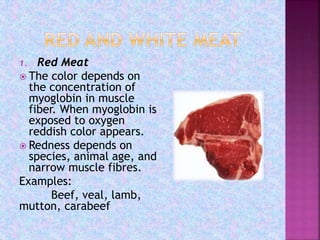
1. Red Meat
 The color depends on
the concentration of
myoglobin in muscle
fiber. When myoglobin is
exposed to oxygen
reddish color appears.
 Redness depends on
species, animal age, and
narrow muscle fibres.
Examples:
Beef, veal, lamb,
mutton, carabeef
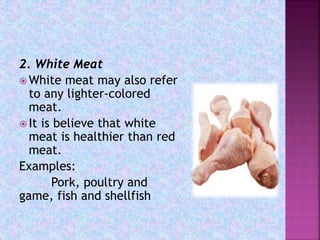
2. White Meat
 White meat may also refer
to any lighter-colored
meat.
 It is believe that white
meat is healthier than red
meat.
Examples:
Pork, poultry and
game, fish and shellfish
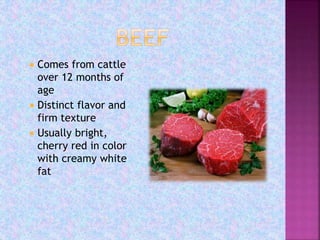
 Comes from cattle
over 12 months of
age
 Distinct flavor and
firm texture
 Usually bright,
cherry red in color
with creamy white
fat
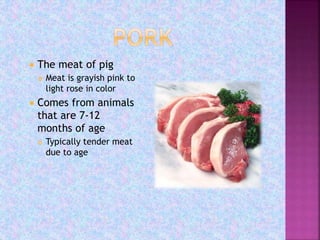
 The meat of pig
 Meat is grayish pink to
light rose in color
 Comes from animals
that are 7-12
months of age
 Typically tender meat
due to age
- Calves under the age of nine months (8-16
weeks)
- Lighter in color than beef, more delicate
flavor, generally more tender
 Lean meat is composed of long, thin muscle
fibers bound together in bundles. These
determine the texture or grain of a piece of
meat.
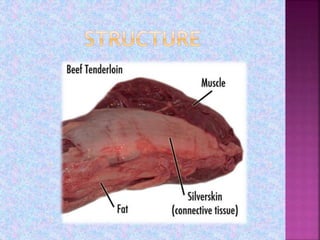
 Muscle fibers are bound together in a network of
proteins called connective tissue. Each muscle fiber
also is covered in a sheath of connective tissue.
 It is important for the cook to understand connective
tissue for one basic reason: Connective tissue is tough.
To cook meats successfully, you should know
• Which meats are high in connective tissue and
which are low.
• What are the best ways to make tough meats
tender.
1. Meats are highest in connective tissue if
 They come from muscles that are more exercised.
Muscles in the legs, for example, have more
connective tissue than muscles in the back.
2. Meats high in connective tissue can be made more
tender by using proper cooking techniques.
There are two kinds of connective tissue: collagen,
which is white in color, and elastin, which is yellow.
a. Collagen.
Long, slow cooking in the presence of moisture
breaks down or dissolves collagen by turning it into
gelatin and water. Of course, muscle tissue is about 75
percent water, so moisture is always present when
meats are cooked. Except for very large roasts,
however, long cooking by a dry-heat method has the
danger of evaporating too much moisture and drying
out the meat. Therefore, moist-heat cooking methods
at low temperatures are most effective for turning a
meat high in connective tissue into a tender, juicy
finished product.
a. Elastin.
Older animals have a higher proportion
of elastin than younger animals. Elastin is not
broken down in cooking. Tenderizing can be
accomplished only by removing the elastin
(cutting away any tendons) and by
mechanically breaking up the fibers, as in
 Pounding and cubing (cubed steaks)
 Grinding (hamburger)
 Slicing the cooked meat very thin against the
grain
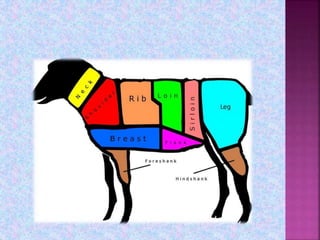
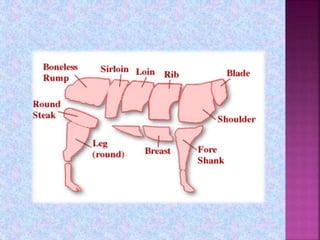
 The following discussion of meat cuts focuses
on the four primary meat categories in the
wholesale and retail markets: beef, veal,
lamb and pork. Meat cuts are based on two
factors:
1. The muscle and bone structure of meat.
2. Uses of and appropriate cooking methods
for various parts of animal.
 Carcasses - the carcasses is the whole
animal, minus the entrails, head, feet and
hide(except pork from which the only
entrails and head are removed).whole
carcasses are rarely purchased by food
service operators because of the skills and
labor required in cutting and because of the
problem of total utilization.
 Beef is split first through the backbone into
sides. Sides are divided between 12th and
13th ribs into forequarter and hindquarter.
 Veal is cut in between 11th and 12th ribs.
 Lamb is cut in between 12th and 13th ribs.
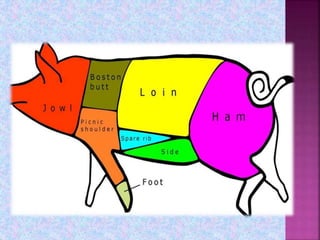
 Pork carcasses are not divided in this way
.they are cut directly into primal cuts.
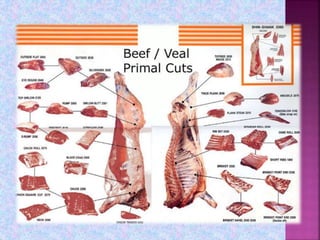
This cuts are called primal cuts, are still used,
to some extent in food service because they:
 Are small enough to be manageable in many
food –service kitchen.
 Are still large enough to allow a variety of
cuts for different uses or needs.
 Are easier completely to utilize completely
than quarter or halves.
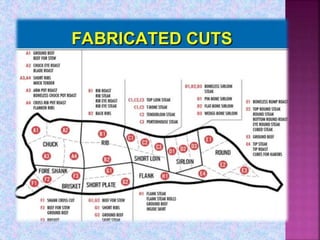
Primal cuts are fabricated into
smaller cuts toasts, steak,
chops, cutles, stewing meat,
ground meat, and so forth.
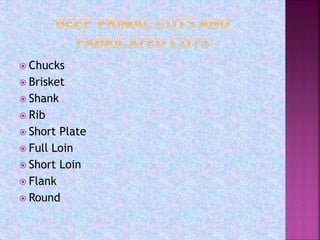
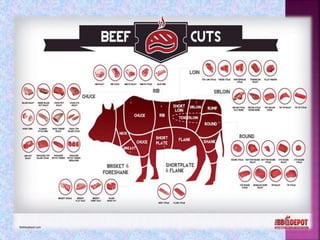
 Chucks
 Brisket
 Shank
 Rib
 Short Plate
 Full Loin
 Short Loin
 Flank
 Round
 Shoulder
 Breast and shank
 Hotel rack
 Loin
 Leg
 Shoulder
 Breast
 Shank
 Hotel rack
 Loin
 Leg
 Shoulder picnic
 Boston butt
 Loin
 Ham
 Belly
 Spare ribs
 Fatback and clear plate
 Jowl
 Feet
 Fresh meat - recently slaughtered and has
not been preserved
 Chilled meat - placed in a chiller or slightly
cold
 Frozen meat - meat covered with
surrounded by ice.
 Cured meat - to preserved as by salting,
smoking or aging.
 Canned meat - are cooked meat product and
requires by reheated.

Meat preparation

  • 2.
     Meat ismuscle tissue. It is the edible flesh of domestic animals (cattle, hogs, and lambs) and of wild game animals (such as deer)
  • 3.
    Meat consist of: Water– 75% Protein – 19% Intramuscular Fat – 2.5% Carbohydrates – 2.3%
  • 4.
    1. Red Meat The color depends on the concentration of myoglobin in muscle fiber. When myoglobin is exposed to oxygen reddish color appears.  Redness depends on species, animal age, and narrow muscle fibres. Examples: Beef, veal, lamb, mutton, carabeef
  • 5.
    2. White Meat White meat may also refer to any lighter-colored meat.  It is believe that white meat is healthier than red meat. Examples: Pork, poultry and game, fish and shellfish
  • 7.
     Comes fromcattle over 12 months of age  Distinct flavor and firm texture  Usually bright, cherry red in color with creamy white fat
  • 8.
     The meatof pig  Meat is grayish pink to light rose in color  Comes from animals that are 7-12 months of age  Typically tender meat due to age
  • 9.
    - Calves underthe age of nine months (8-16 weeks) - Lighter in color than beef, more delicate flavor, generally more tender
  • 11.
     Lean meatis composed of long, thin muscle fibers bound together in bundles. These determine the texture or grain of a piece of meat.
  • 12.
     Muscle fibersare bound together in a network of proteins called connective tissue. Each muscle fiber also is covered in a sheath of connective tissue.  It is important for the cook to understand connective tissue for one basic reason: Connective tissue is tough. To cook meats successfully, you should know • Which meats are high in connective tissue and which are low. • What are the best ways to make tough meats tender. 1. Meats are highest in connective tissue if  They come from muscles that are more exercised. Muscles in the legs, for example, have more connective tissue than muscles in the back.
  • 13.
    2. Meats highin connective tissue can be made more tender by using proper cooking techniques. There are two kinds of connective tissue: collagen, which is white in color, and elastin, which is yellow. a. Collagen. Long, slow cooking in the presence of moisture breaks down or dissolves collagen by turning it into gelatin and water. Of course, muscle tissue is about 75 percent water, so moisture is always present when meats are cooked. Except for very large roasts, however, long cooking by a dry-heat method has the danger of evaporating too much moisture and drying out the meat. Therefore, moist-heat cooking methods at low temperatures are most effective for turning a meat high in connective tissue into a tender, juicy finished product.
  • 14.
    a. Elastin. Older animalshave a higher proportion of elastin than younger animals. Elastin is not broken down in cooking. Tenderizing can be accomplished only by removing the elastin (cutting away any tendons) and by mechanically breaking up the fibers, as in  Pounding and cubing (cubed steaks)  Grinding (hamburger)  Slicing the cooked meat very thin against the grain
  • 15.
     The followingdiscussion of meat cuts focuses on the four primary meat categories in the wholesale and retail markets: beef, veal, lamb and pork. Meat cuts are based on two factors: 1. The muscle and bone structure of meat. 2. Uses of and appropriate cooking methods for various parts of animal.
  • 16.
     Carcasses -the carcasses is the whole animal, minus the entrails, head, feet and hide(except pork from which the only entrails and head are removed).whole carcasses are rarely purchased by food service operators because of the skills and labor required in cutting and because of the problem of total utilization.
  • 17.
     Beef issplit first through the backbone into sides. Sides are divided between 12th and 13th ribs into forequarter and hindquarter.  Veal is cut in between 11th and 12th ribs.  Lamb is cut in between 12th and 13th ribs.  Pork carcasses are not divided in this way .they are cut directly into primal cuts.
  • 18.
    This cuts arecalled primal cuts, are still used, to some extent in food service because they:  Are small enough to be manageable in many food –service kitchen.  Are still large enough to allow a variety of cuts for different uses or needs.  Are easier completely to utilize completely than quarter or halves.
  • 20.
    Primal cuts arefabricated into smaller cuts toasts, steak, chops, cutles, stewing meat, ground meat, and so forth.
  • 23.
     Chucks  Brisket Shank  Rib  Short Plate  Full Loin  Short Loin  Flank  Round
  • 25.
     Shoulder  Breastand shank  Hotel rack  Loin  Leg
  • 27.
     Shoulder  Breast Shank  Hotel rack  Loin  Leg
  • 29.
     Shoulder picnic Boston butt  Loin  Ham  Belly  Spare ribs  Fatback and clear plate  Jowl  Feet
  • 31.
     Fresh meat- recently slaughtered and has not been preserved  Chilled meat - placed in a chiller or slightly cold  Frozen meat - meat covered with surrounded by ice.  Cured meat - to preserved as by salting, smoking or aging.  Canned meat - are cooked meat product and requires by reheated.