12.3 Measures of Dispersion
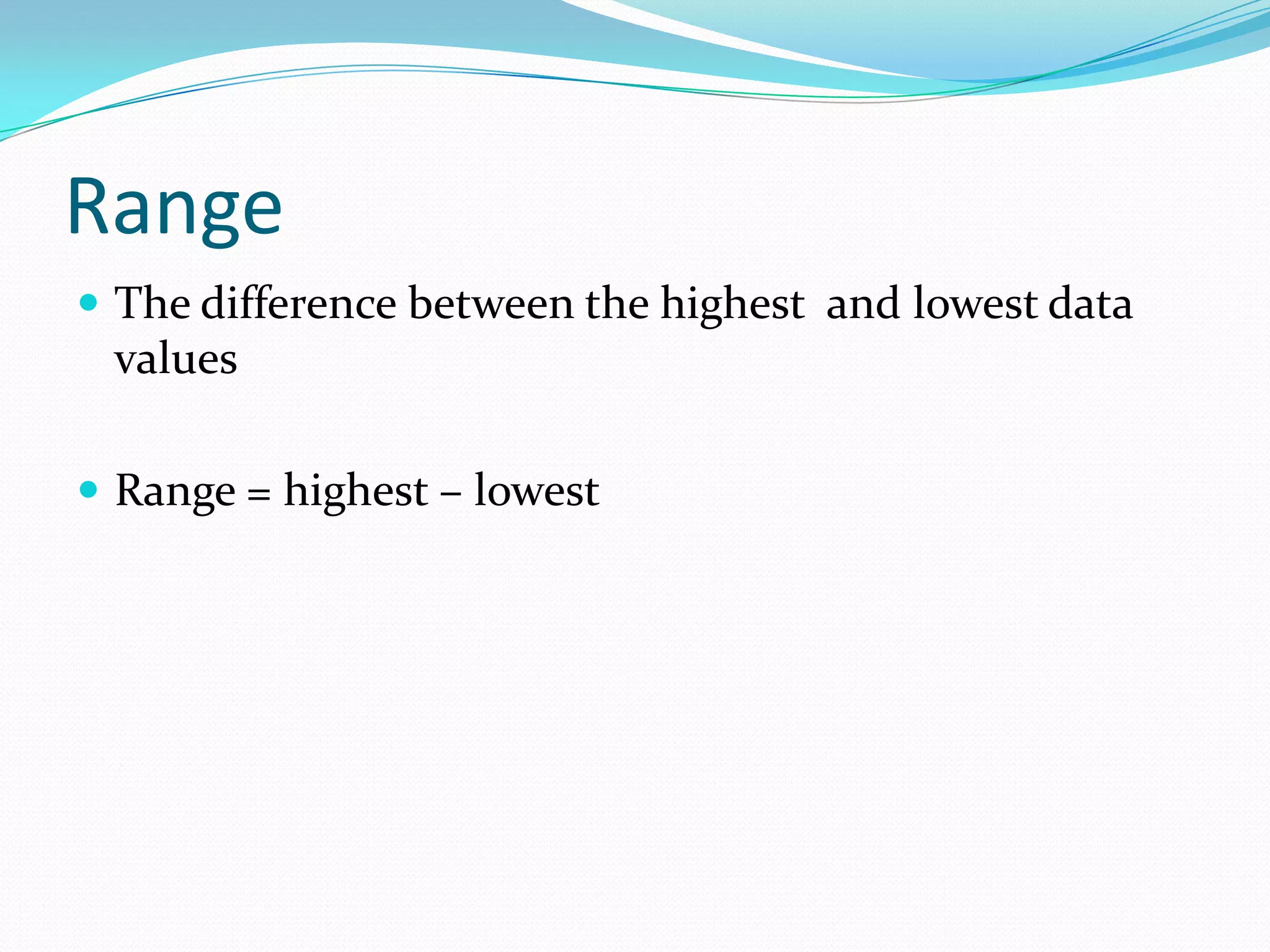
RangeThe difference between the highest  and lowest data valuesRange = highest – lowest
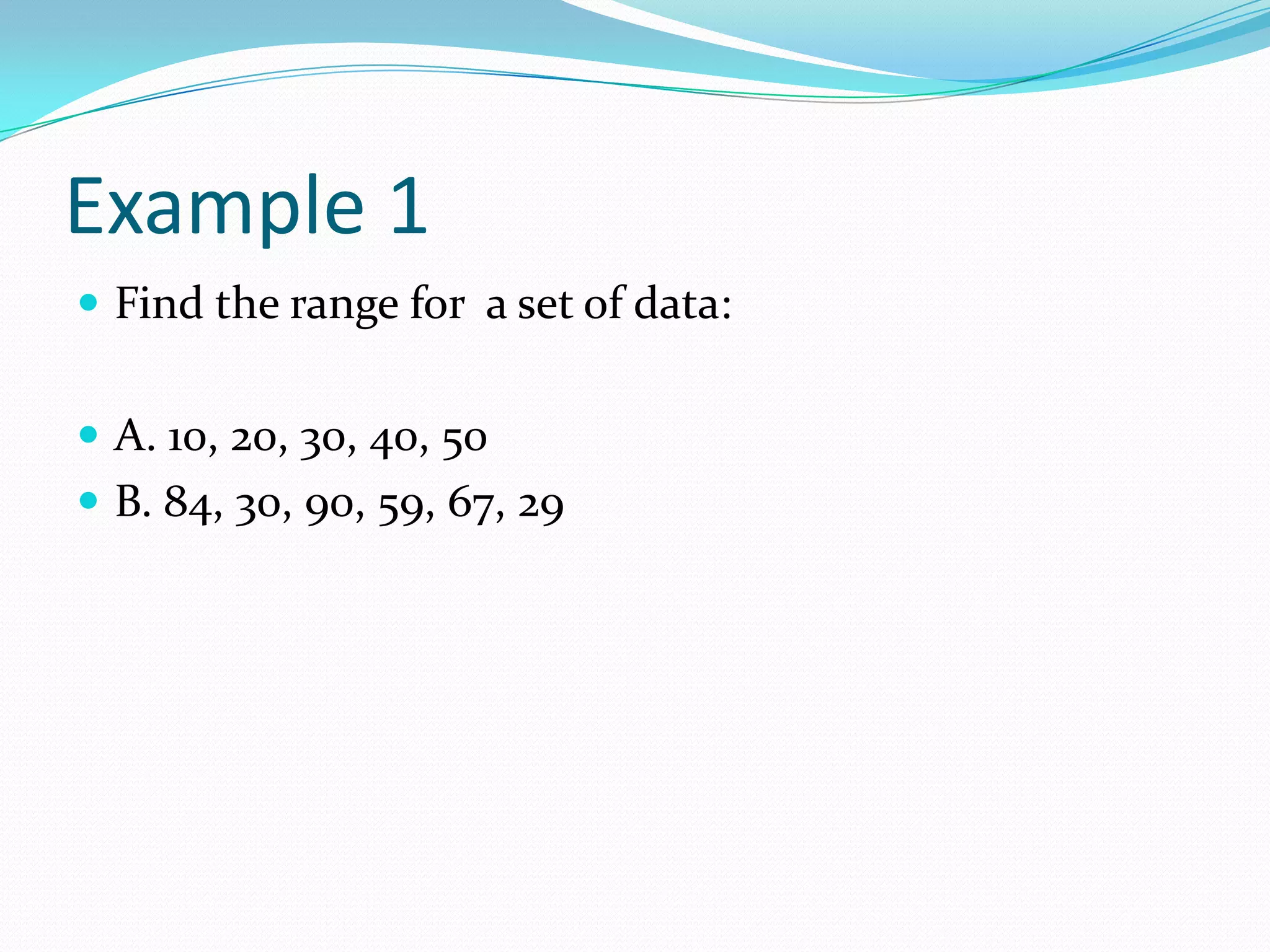
Example 1Find the range for  a set of data:A. 10, 20, 30, 40, 50B. 84, 30, 90, 59, 67, 29
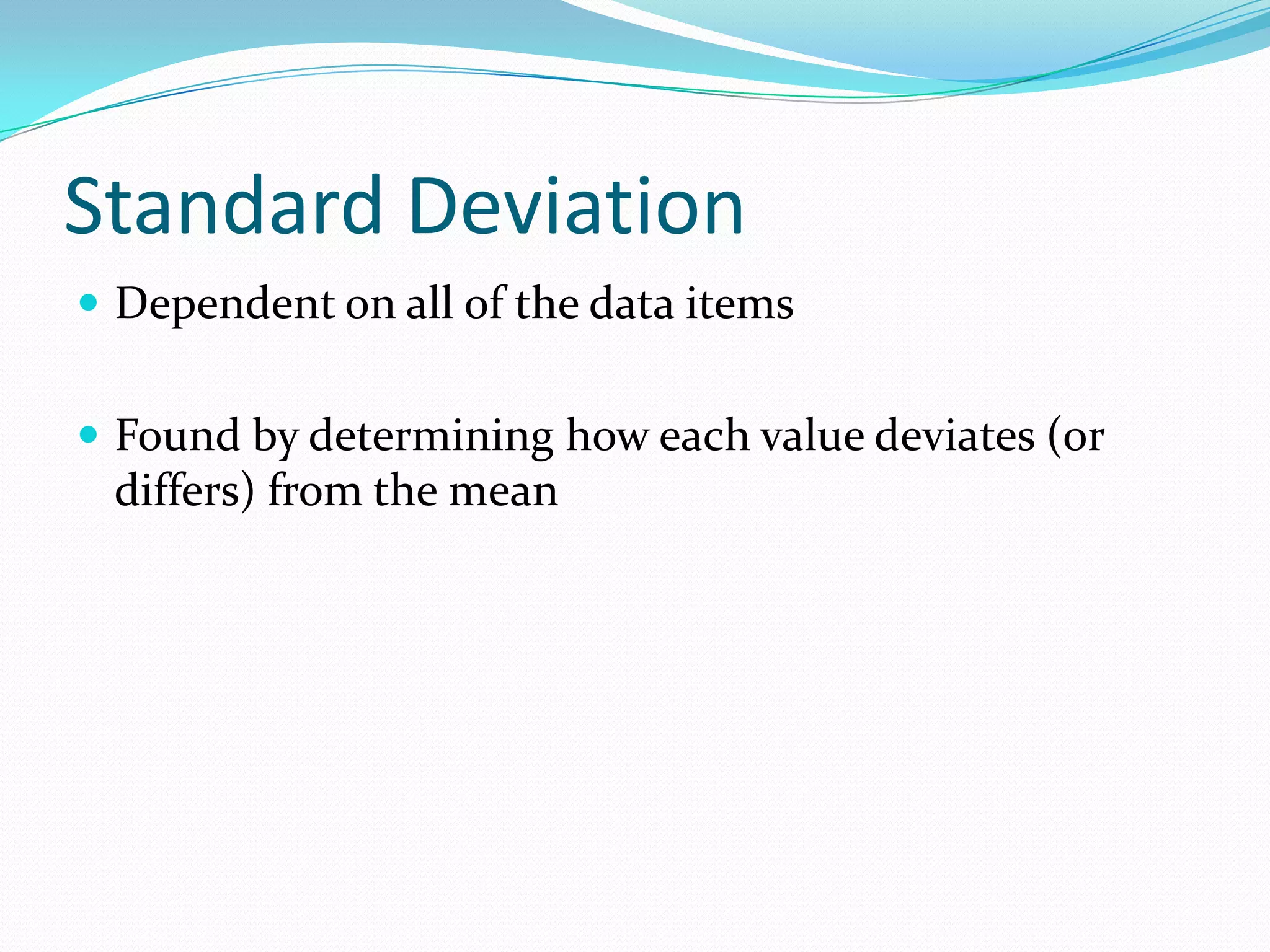
Standard DeviationDependent on all of the data itemsFound by determining how each value deviates (or differs) from the mean
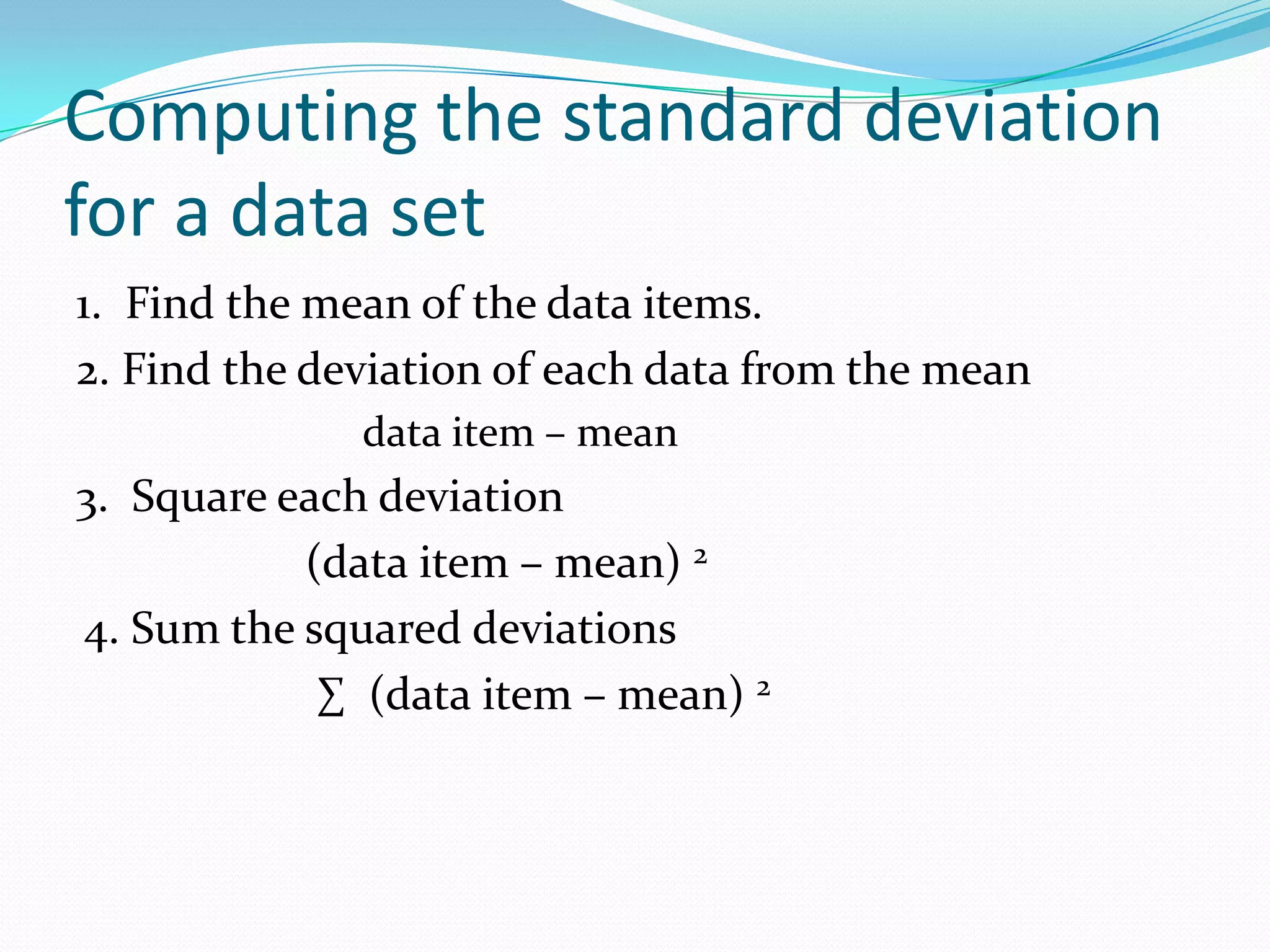
Computing the standard deviation for a data set1.  Find the mean of the data items.2. Find the deviation of each data from the mean                      data item – mean3.  Square each deviation                   (data item – mean) 24. Sum the squared deviations                    ∑  (data item – mean) 2
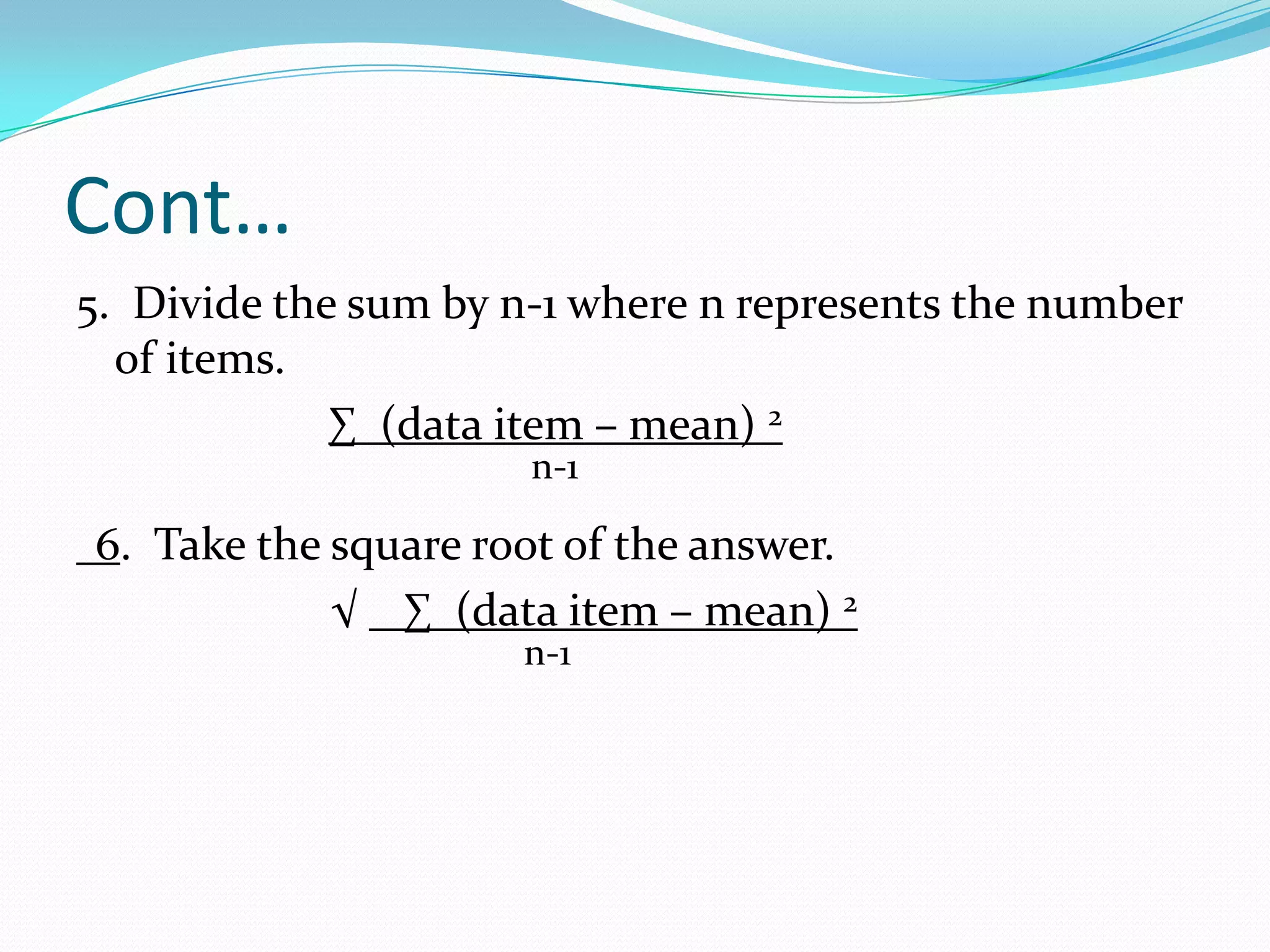
Cont…5.  Divide the sum by n-1 where n represents the number of items.∑  (data item – mean) 2                                                n-16.  Take the square root of the answer.			√ ∑  (data item – mean) 2n-1

Measure of Dispersion

  • 1.
  • 2.
    RangeThe difference betweenthe highest and lowest data valuesRange = highest – lowest
  • 3.
    Example 1Find therange for a set of data:A. 10, 20, 30, 40, 50B. 84, 30, 90, 59, 67, 29
  • 4.
    Standard DeviationDependent onall of the data itemsFound by determining how each value deviates (or differs) from the mean
  • 5.
    Computing the standarddeviation for a data set1. Find the mean of the data items.2. Find the deviation of each data from the mean data item – mean3. Square each deviation (data item – mean) 24. Sum the squared deviations ∑ (data item – mean) 2
  • 6.
    Cont…5. Dividethe sum by n-1 where n represents the number of items.∑ (data item – mean) 2 n-16. Take the square root of the answer. √ ∑ (data item – mean) 2n-1