Welcome To Our Presentation
Topic: Measure of Dispersion
Daffodil International University
Bangladesh.
What is Measure of Dispersion
• Measure of dispersion is defined as average
deviation of observations from some central
value.
To describe us about the spread of the data.
To compare the spread in two or more
distributions.
To calculate the lower limit and upper limit of
the observations under study.
Why Study Measure of dispersion?
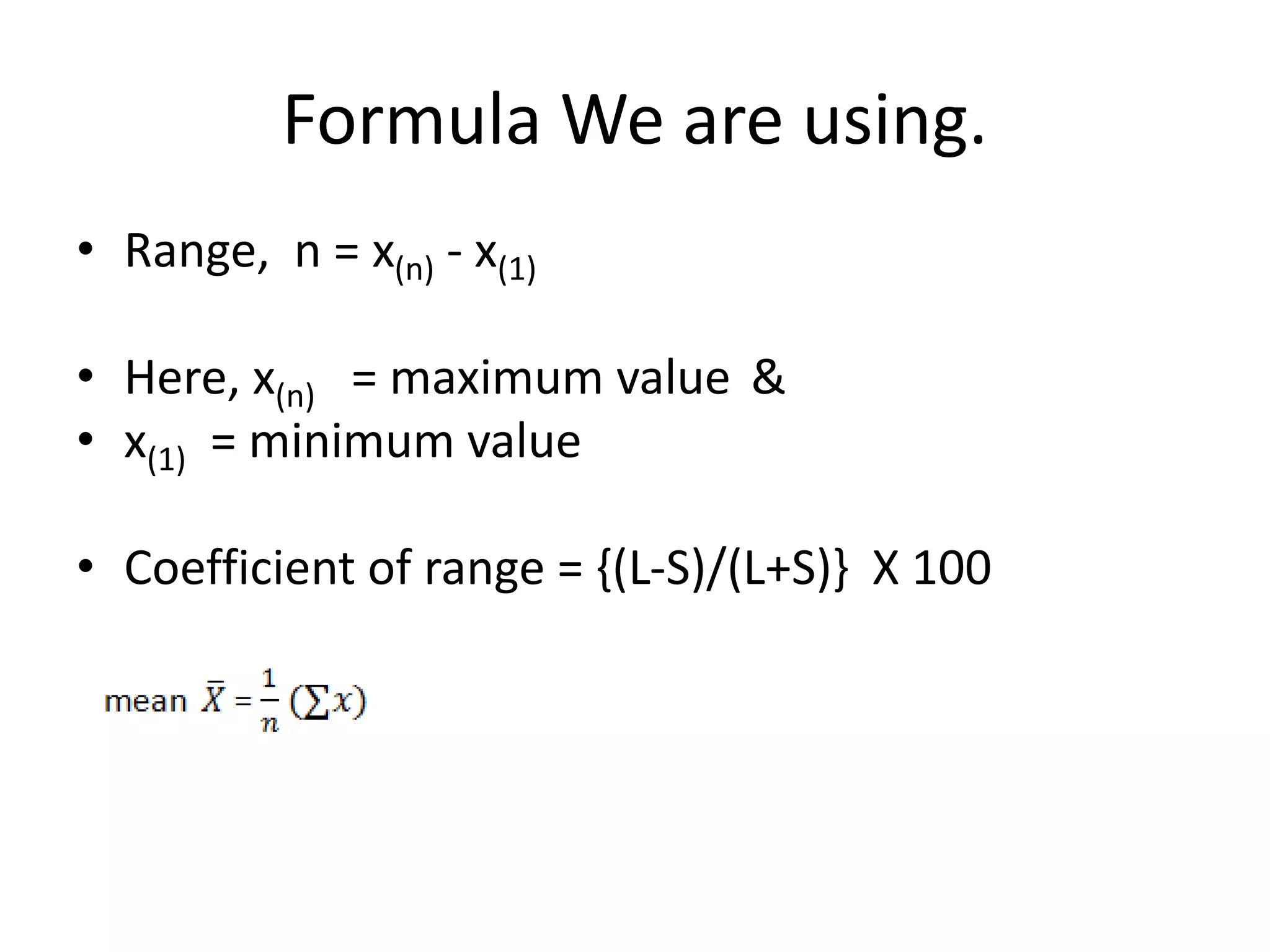
Formula We are using.
• Range, n = x(n) - x(1)
• Here, x(n) = maximum value &
• x(1) = minimum value
• Coefficient of range = {(L-S)/(L+S)} X 100
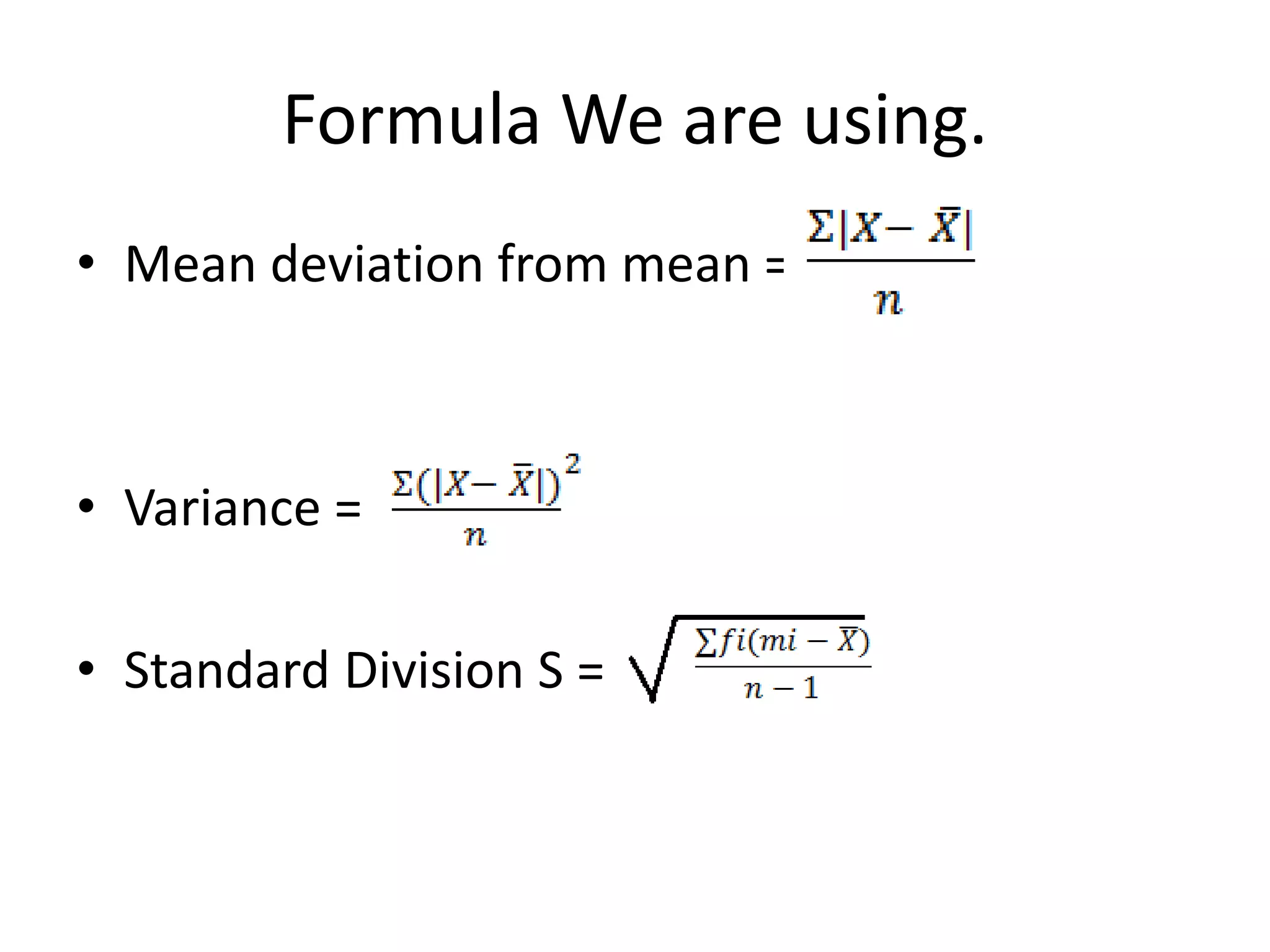
Formula We are using.
• Mean deviation from mean =
• Variance =
• Standard Division S =
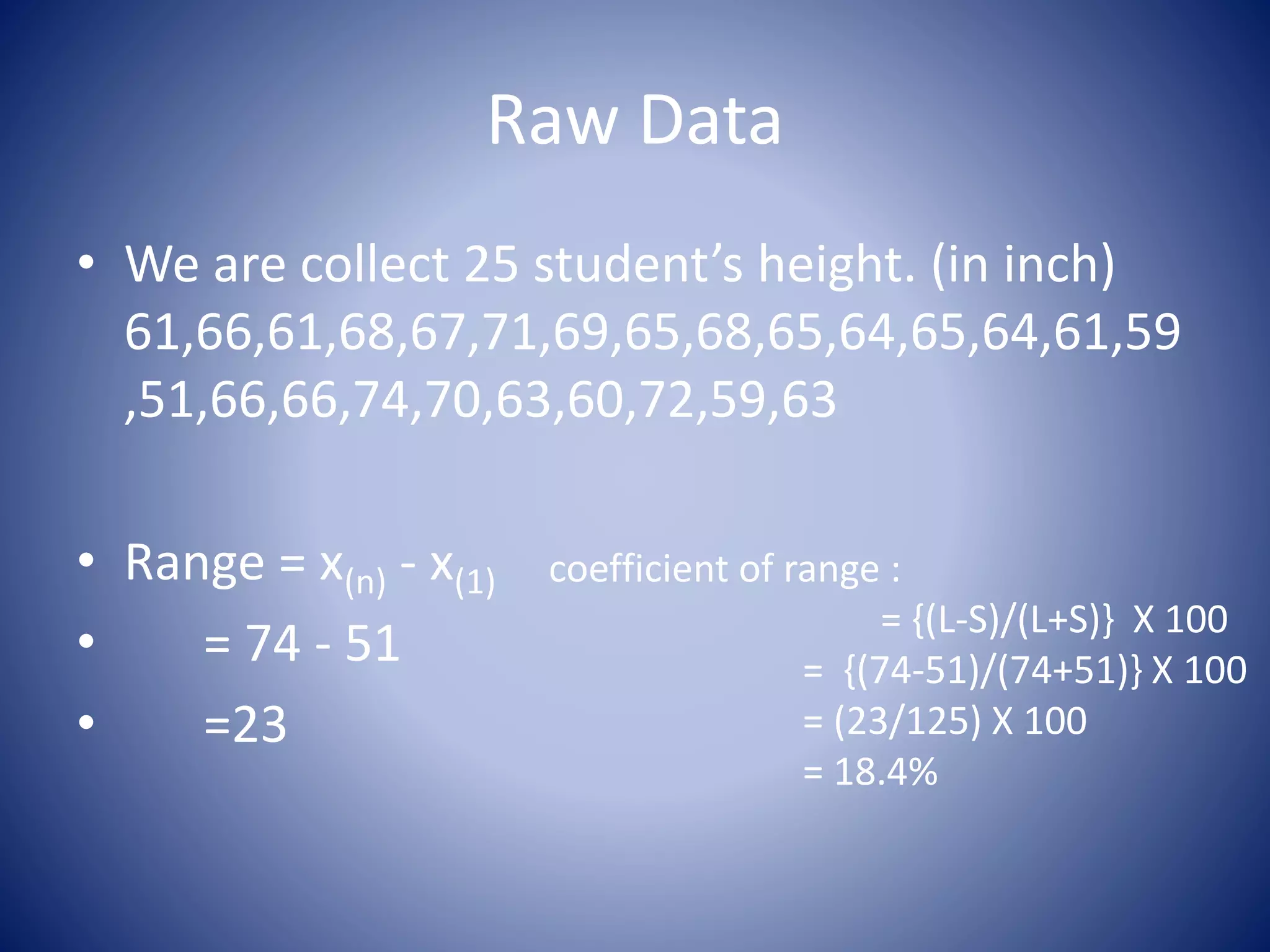
Raw Data
• We are collect 25 student’s height. (in inch)
61,66,61,68,67,71,69,65,68,65,64,65,64,61,59
,51,66,66,74,70,63,60,72,59,63
• Range = x(n) - x(1)
• = 74 - 51
• =23
coefficient of range :
= {(L-S)/(L+S)} X 100
= {(74-51)/(74+51)} X 100
= (23/125) X 100
= 18.4%
Mean
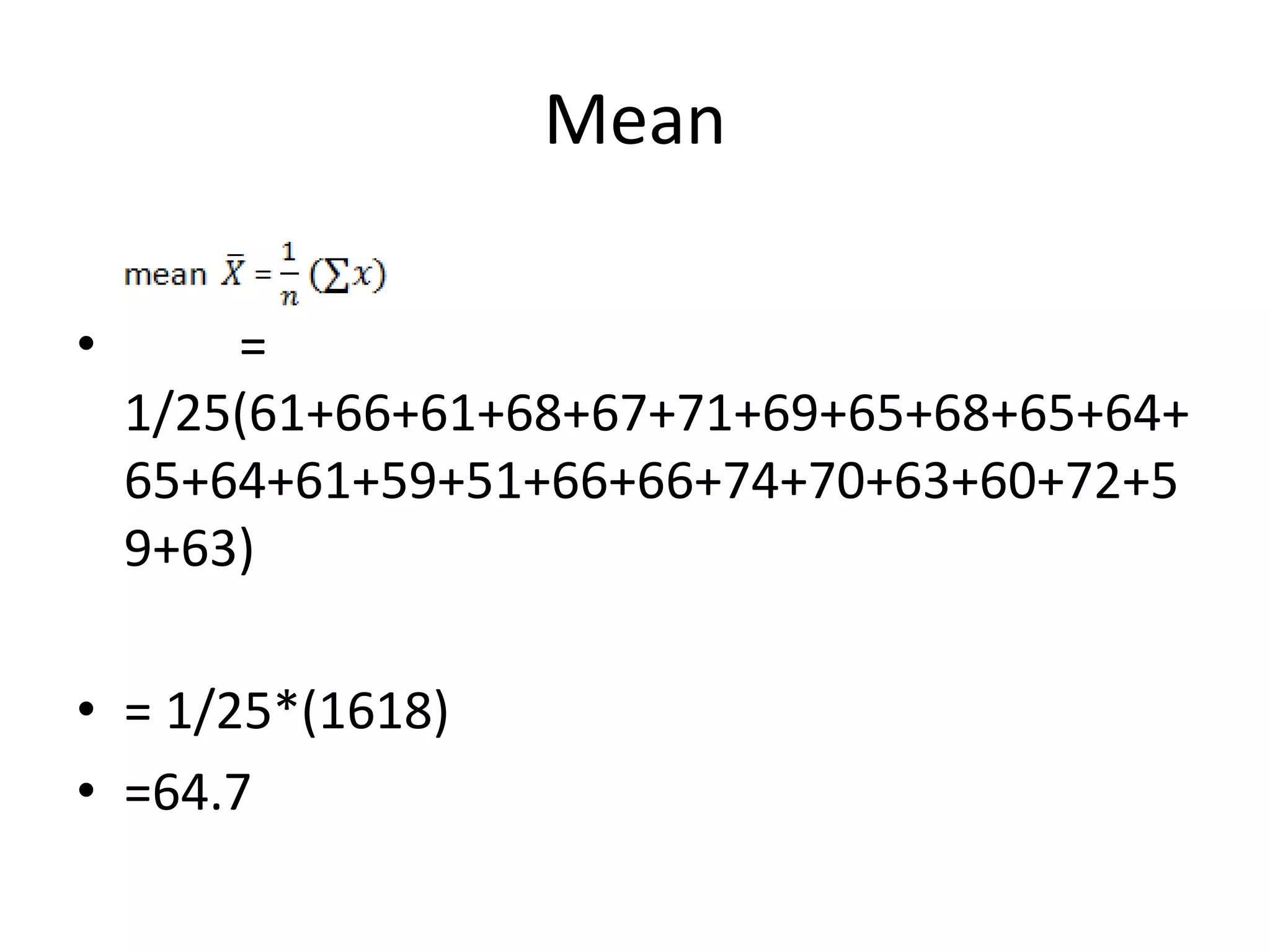
• =
1/25(61+66+61+68+67+71+69+65+68+65+64+
65+64+61+59+51+66+66+74+70+63+60+72+5
9+63)
• = 1/25*(1618)
• =64.7
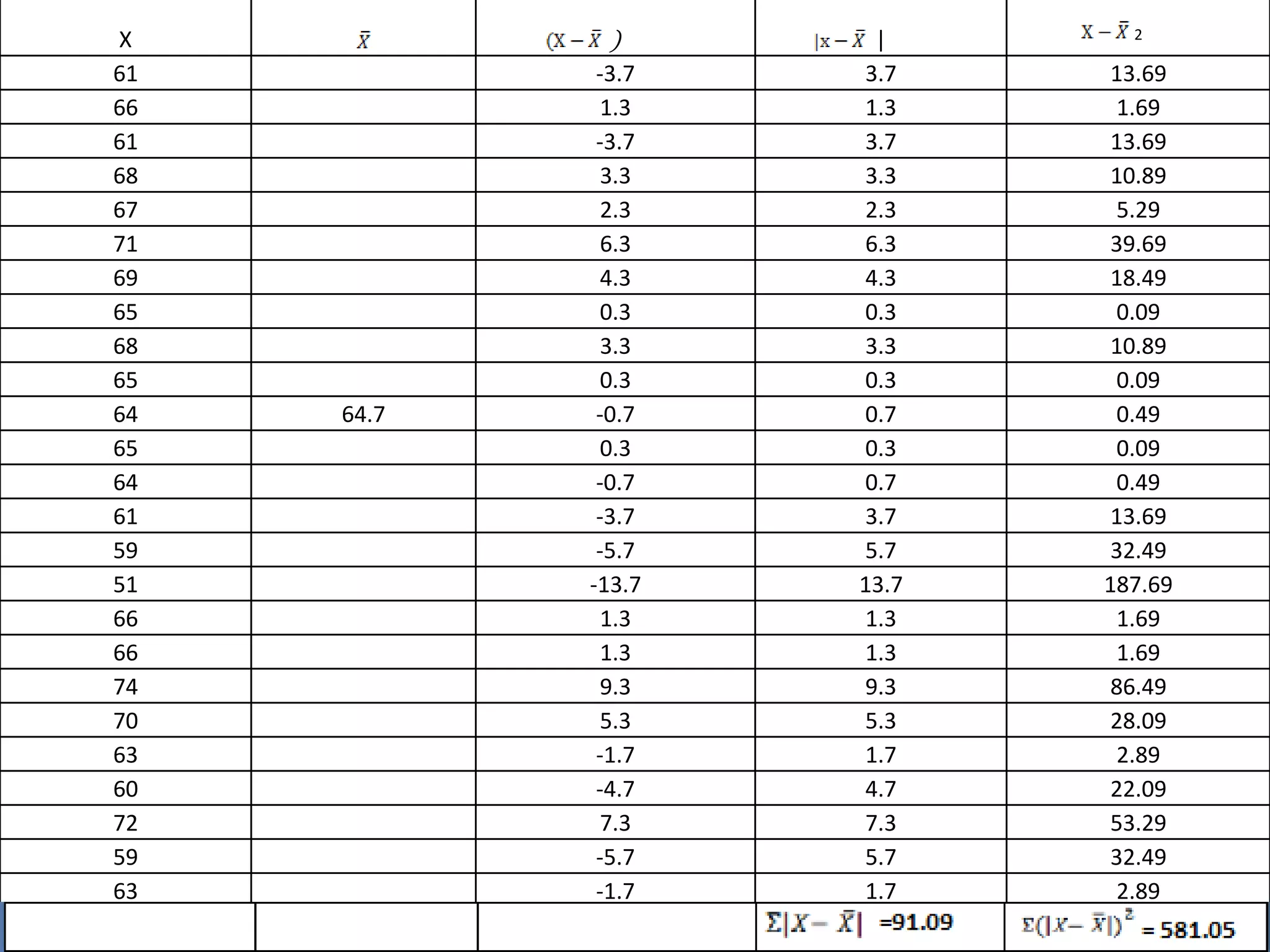
X ) | 2
61 -3.7 3.7 13.69
66 1.3 1.3 1.69
61 -3.7 3.7 13.69
68 3.3 3.3 10.89
67 2.3 2.3 5.29
71 6.3 6.3 39.69
69 4.3 4.3 18.49
65 0.3 0.3 0.09
68 3.3 3.3 10.89
65 0.3 0.3 0.09
64 64.7 -0.7 0.7 0.49
65 0.3 0.3 0.09
64 -0.7 0.7 0.49
61 -3.7 3.7 13.69
59 -5.7 5.7 32.49
51 -13.7 13.7 187.69
66 1.3 1.3 1.69
66 1.3 1.3 1.69
74 9.3 9.3 86.49
70 5.3 5.3 28.09
63 -1.7 1.7 2.89
60 -4.7 4.7 22.09
72 7.3 7.3 53.29
59 -5.7 5.7 32.49
63 -1.7 1.7 2.89
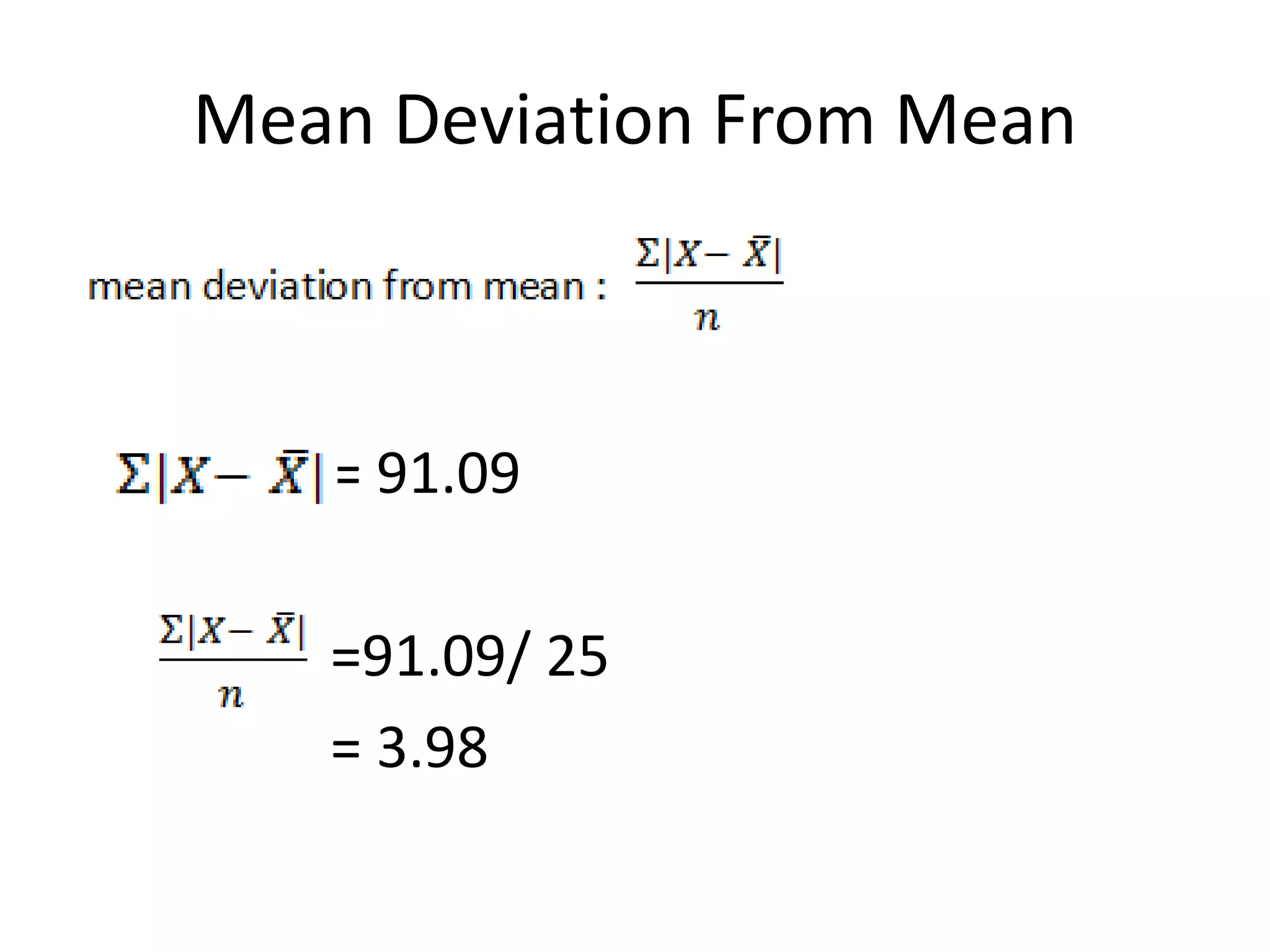
Mean Deviation From Mean
= 91.09
=91.09/ 25
= 3.98
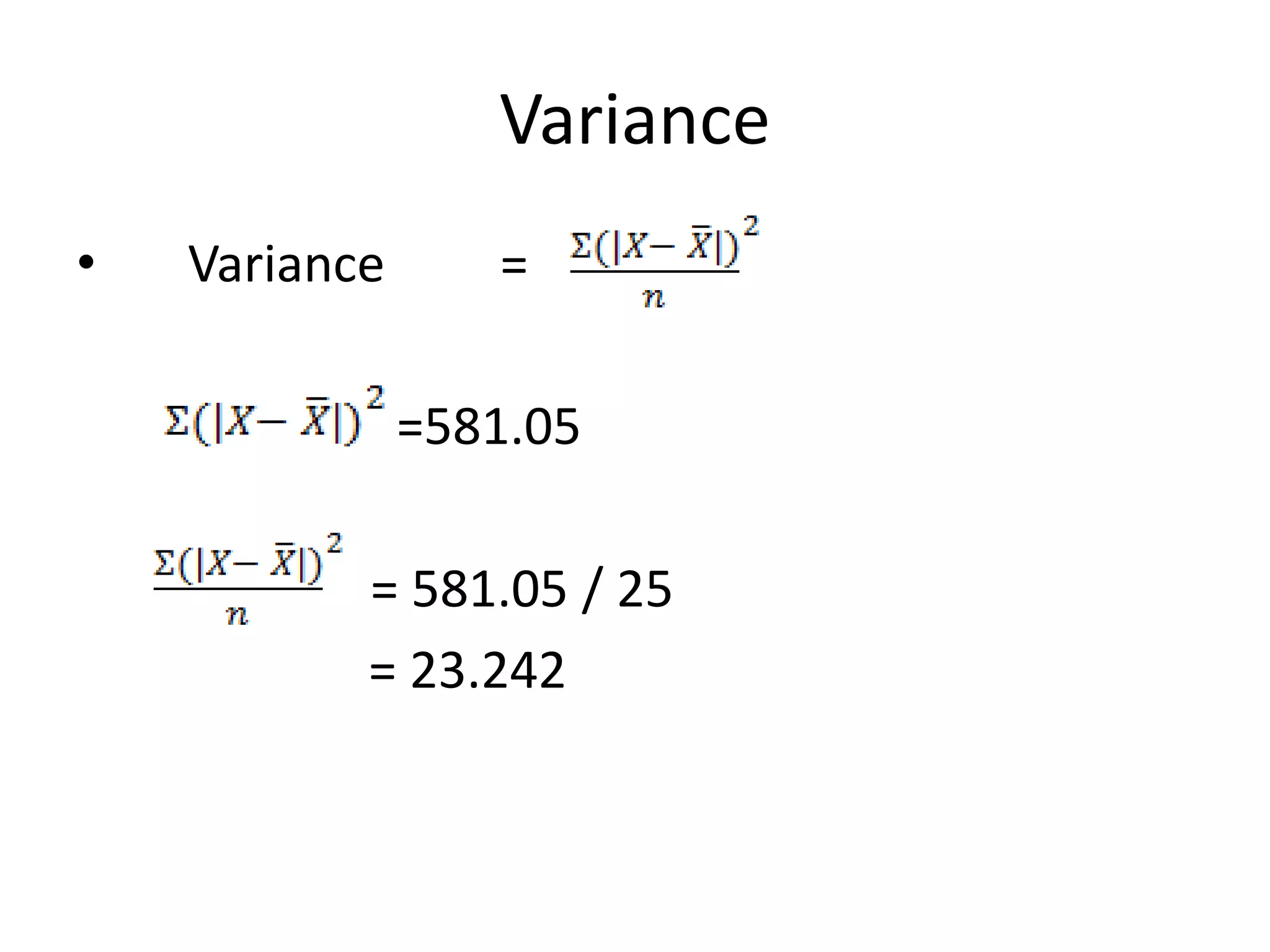
Variance
• Variance =
=581.05
= 581.05 / 25
= 23.242
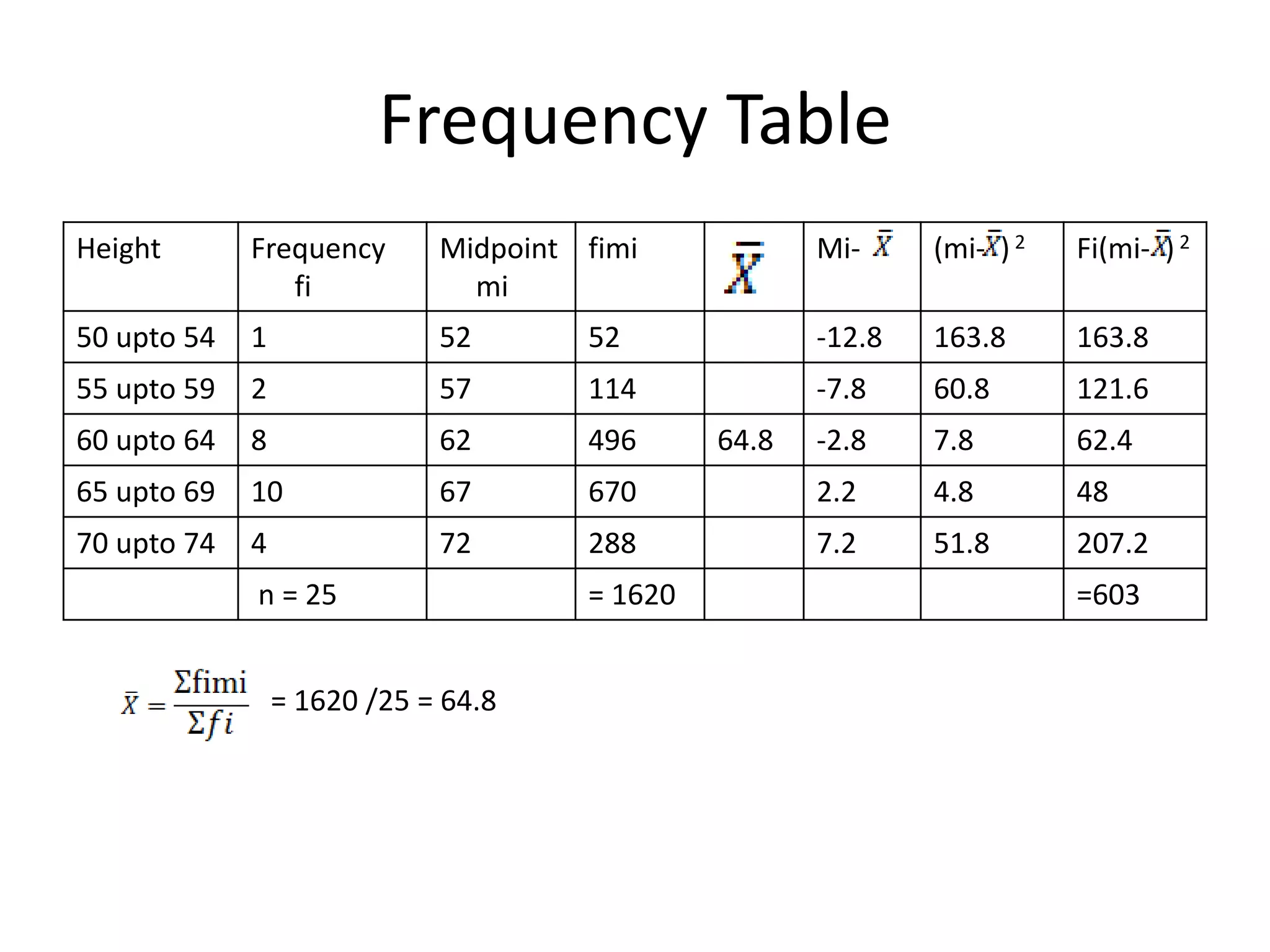
Frequency Table
Height Frequency
fi
Midpoint
mi
fimi Mi- (mi- ) 2 Fi(mi- ) 2
50 upto 54 1 52 52 -12.8 163.8 163.8
55 upto 59 2 57 114 -7.8 60.8 121.6
60 upto 64 8 62 496 64.8 -2.8 7.8 62.4
65 upto 69 10 67 670 2.2 4.8 48
70 upto 74 4 72 288 7.2 51.8 207.2
n = 25 = 1620 =603
= 1620 /25 = 64.8
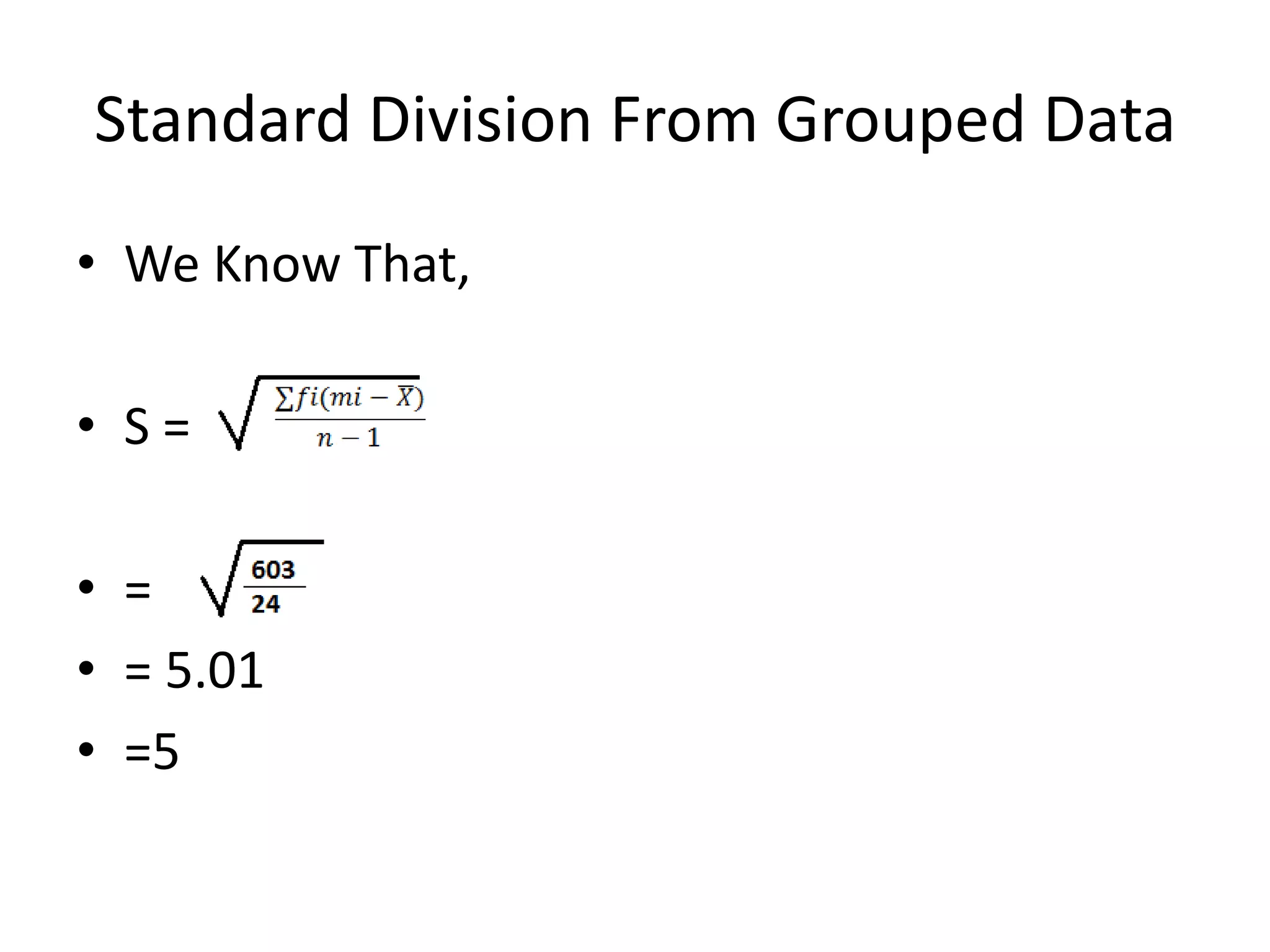
Standard Division From Grouped Data
• We Know That,
• S =
• =
• = 5.01
• =5
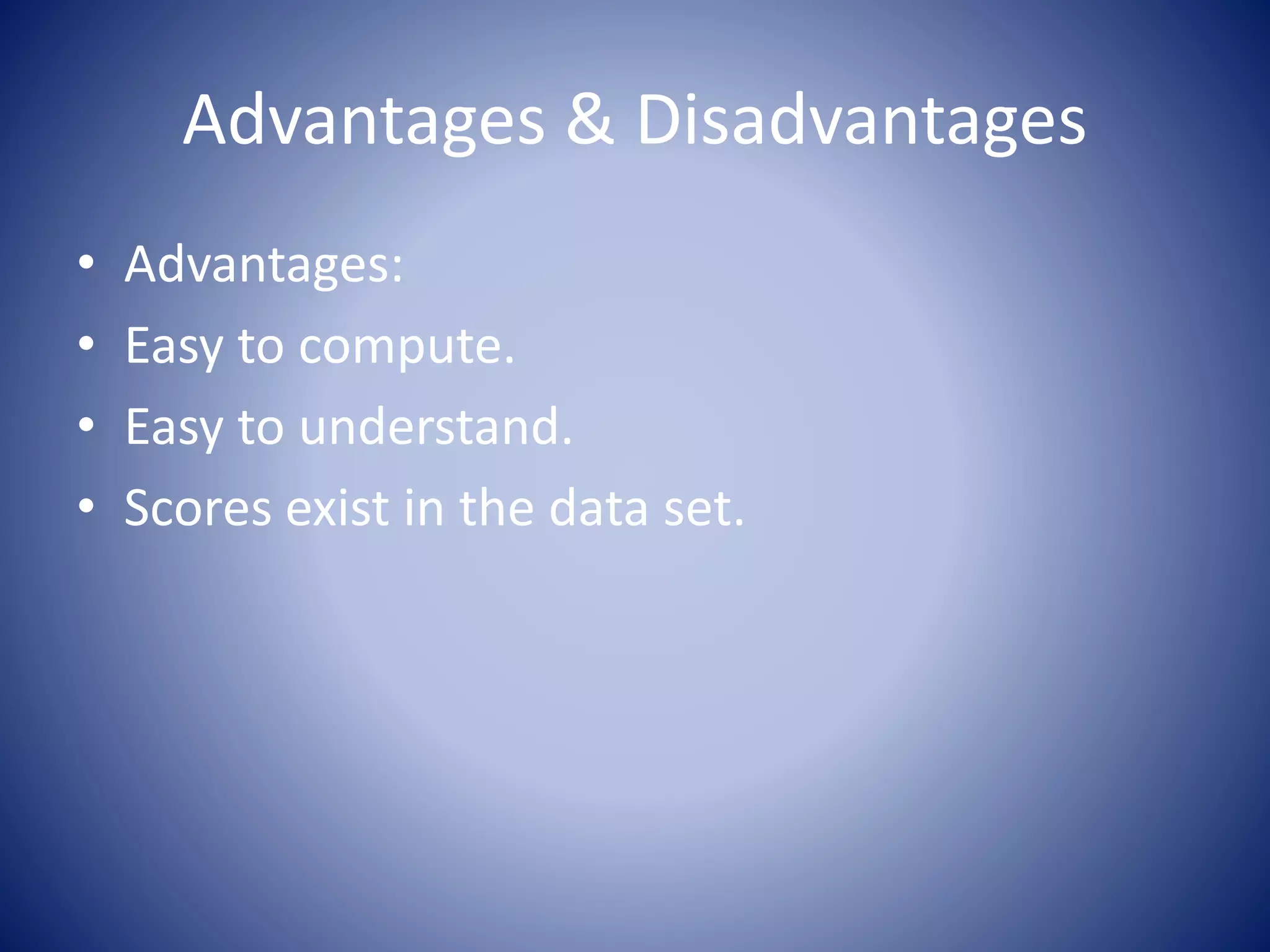
Advantages & Disadvantages
• Advantages:
• Easy to compute.
• Easy to understand.
• Scores exist in the data set.
Advantages & Disadvantages
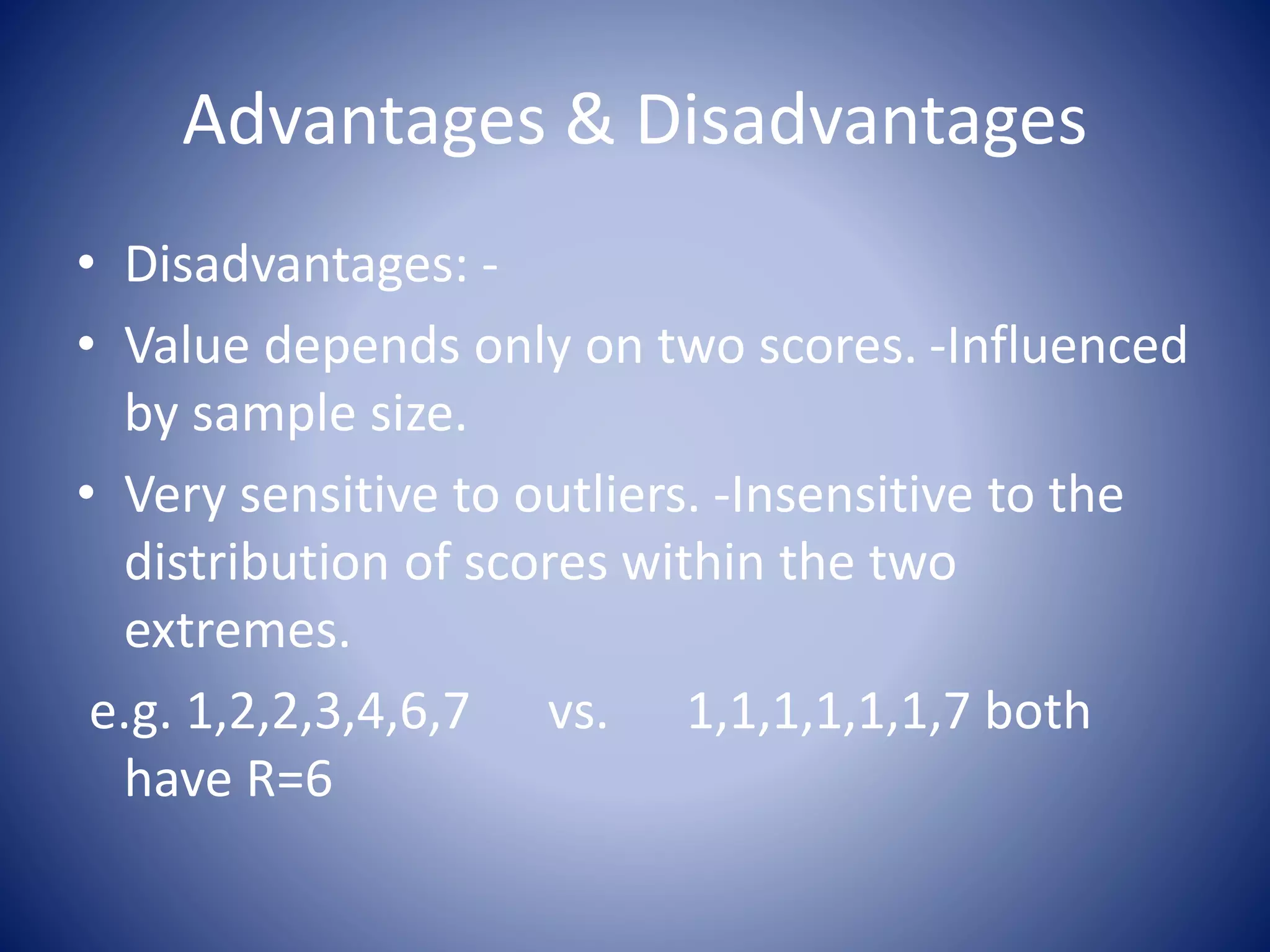
• Disadvantages: -
• Value depends only on two scores. -Influenced
by sample size.
• Very sensitive to outliers. -Insensitive to the
distribution of scores within the two
extremes.
e.g. 1,2,2,3,4,6,7 vs. 1,1,1,1,1,1,7 both
have R=6
Application:
• Describe the homogeneity or heterogeneity of
the distribution.
• Understand the reliability of the mean.
• Compare the distributions as regards the
variability.
• Describe the relative standing of the data and
also shape of the distribution.
Review
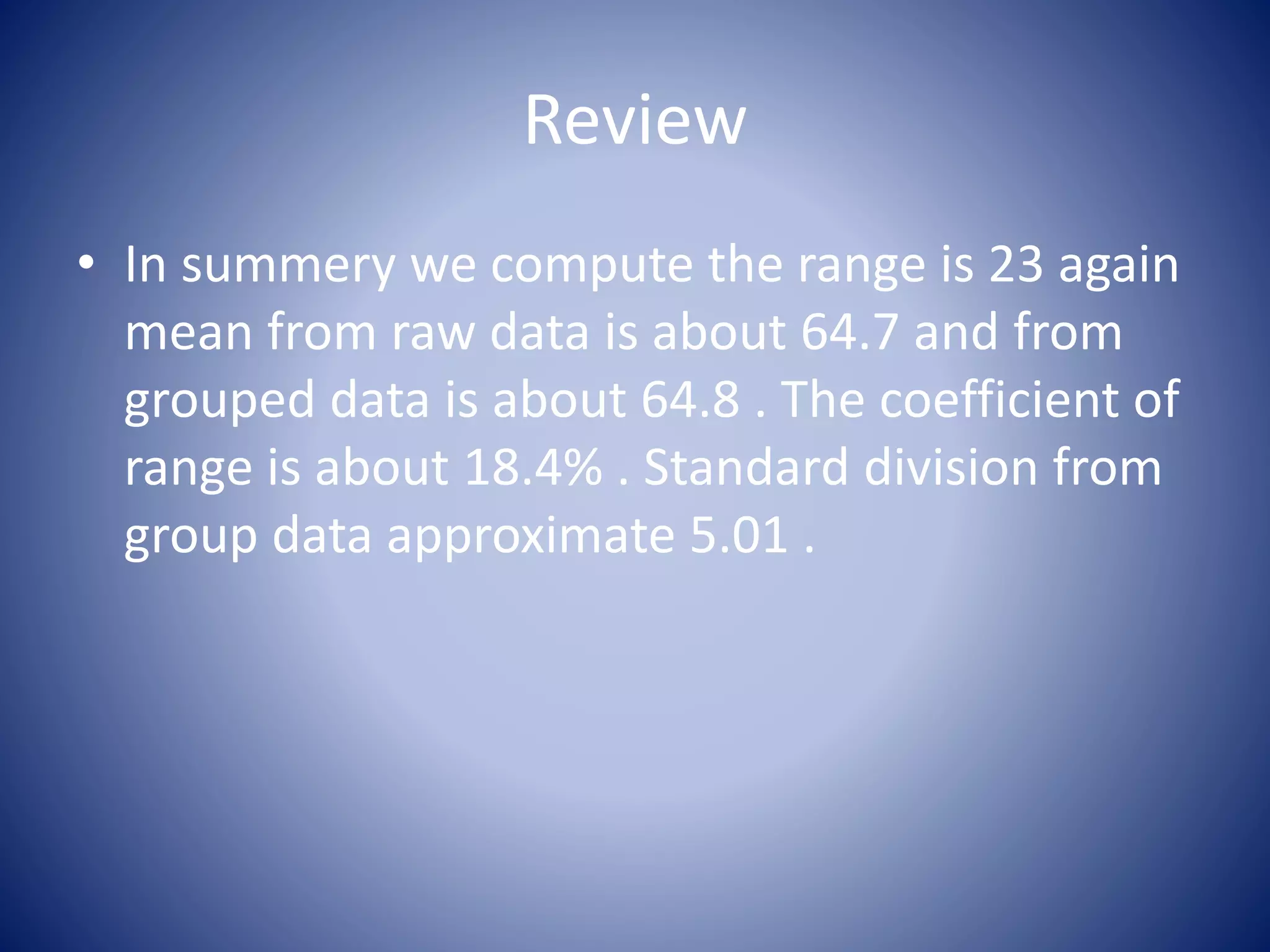
• In summery we compute the range is 23 again
mean from raw data is about 64.7 and from
grouped data is about 64.8 . The coefficient of
range is about 18.4% . Standard division from
group data approximate 5.01 .
Measure of dispersion statistics

Measure of dispersion statistics

  • 1.
    Welcome To OurPresentation Topic: Measure of Dispersion Daffodil International University Bangladesh.
  • 2.
    What is Measureof Dispersion • Measure of dispersion is defined as average deviation of observations from some central value. To describe us about the spread of the data. To compare the spread in two or more distributions. To calculate the lower limit and upper limit of the observations under study. Why Study Measure of dispersion?
  • 3.
    Formula We areusing. • Range, n = x(n) - x(1) • Here, x(n) = maximum value & • x(1) = minimum value • Coefficient of range = {(L-S)/(L+S)} X 100
  • 4.
    Formula We areusing. • Mean deviation from mean = • Variance = • Standard Division S =
  • 5.
    Raw Data • Weare collect 25 student’s height. (in inch) 61,66,61,68,67,71,69,65,68,65,64,65,64,61,59 ,51,66,66,74,70,63,60,72,59,63 • Range = x(n) - x(1) • = 74 - 51 • =23 coefficient of range : = {(L-S)/(L+S)} X 100 = {(74-51)/(74+51)} X 100 = (23/125) X 100 = 18.4%
  • 6.
  • 7.
    X ) |2 61 -3.7 3.7 13.69 66 1.3 1.3 1.69 61 -3.7 3.7 13.69 68 3.3 3.3 10.89 67 2.3 2.3 5.29 71 6.3 6.3 39.69 69 4.3 4.3 18.49 65 0.3 0.3 0.09 68 3.3 3.3 10.89 65 0.3 0.3 0.09 64 64.7 -0.7 0.7 0.49 65 0.3 0.3 0.09 64 -0.7 0.7 0.49 61 -3.7 3.7 13.69 59 -5.7 5.7 32.49 51 -13.7 13.7 187.69 66 1.3 1.3 1.69 66 1.3 1.3 1.69 74 9.3 9.3 86.49 70 5.3 5.3 28.09 63 -1.7 1.7 2.89 60 -4.7 4.7 22.09 72 7.3 7.3 53.29 59 -5.7 5.7 32.49 63 -1.7 1.7 2.89
  • 8.
    Mean Deviation FromMean = 91.09 =91.09/ 25 = 3.98
  • 9.
  • 10.
    Frequency Table Height Frequency fi Midpoint mi fimiMi- (mi- ) 2 Fi(mi- ) 2 50 upto 54 1 52 52 -12.8 163.8 163.8 55 upto 59 2 57 114 -7.8 60.8 121.6 60 upto 64 8 62 496 64.8 -2.8 7.8 62.4 65 upto 69 10 67 670 2.2 4.8 48 70 upto 74 4 72 288 7.2 51.8 207.2 n = 25 = 1620 =603 = 1620 /25 = 64.8
  • 11.
    Standard Division FromGrouped Data • We Know That, • S = • = • = 5.01 • =5
  • 12.
    Advantages & Disadvantages •Advantages: • Easy to compute. • Easy to understand. • Scores exist in the data set.
  • 13.
    Advantages & Disadvantages •Disadvantages: - • Value depends only on two scores. -Influenced by sample size. • Very sensitive to outliers. -Insensitive to the distribution of scores within the two extremes. e.g. 1,2,2,3,4,6,7 vs. 1,1,1,1,1,1,7 both have R=6
  • 14.
    Application: • Describe thehomogeneity or heterogeneity of the distribution. • Understand the reliability of the mean. • Compare the distributions as regards the variability. • Describe the relative standing of the data and also shape of the distribution.
  • 15.
    Review • In summerywe compute the range is 23 again mean from raw data is about 64.7 and from grouped data is about 64.8 . The coefficient of range is about 18.4% . Standard division from group data approximate 5.01 .