Downloaded 420 times

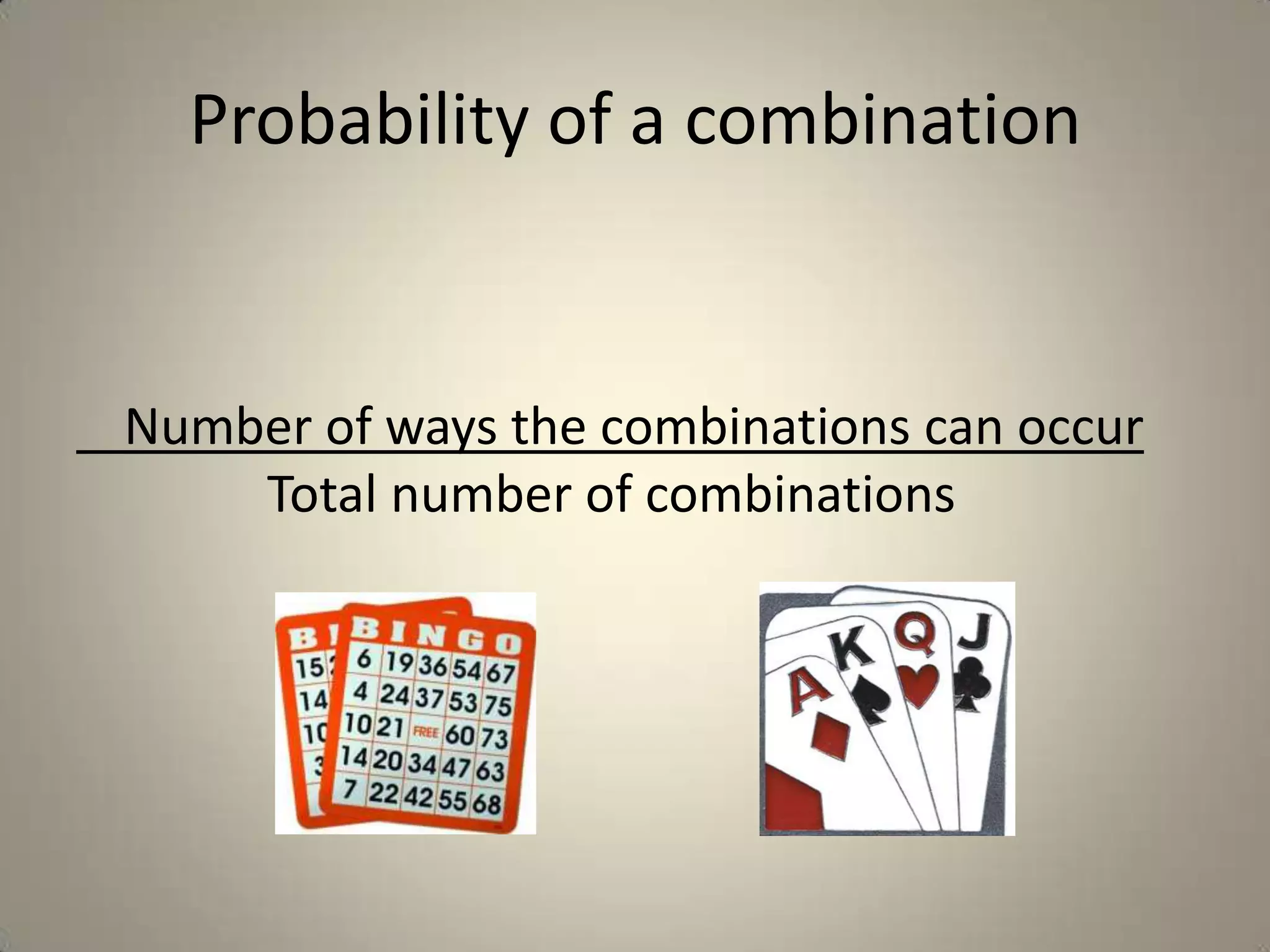
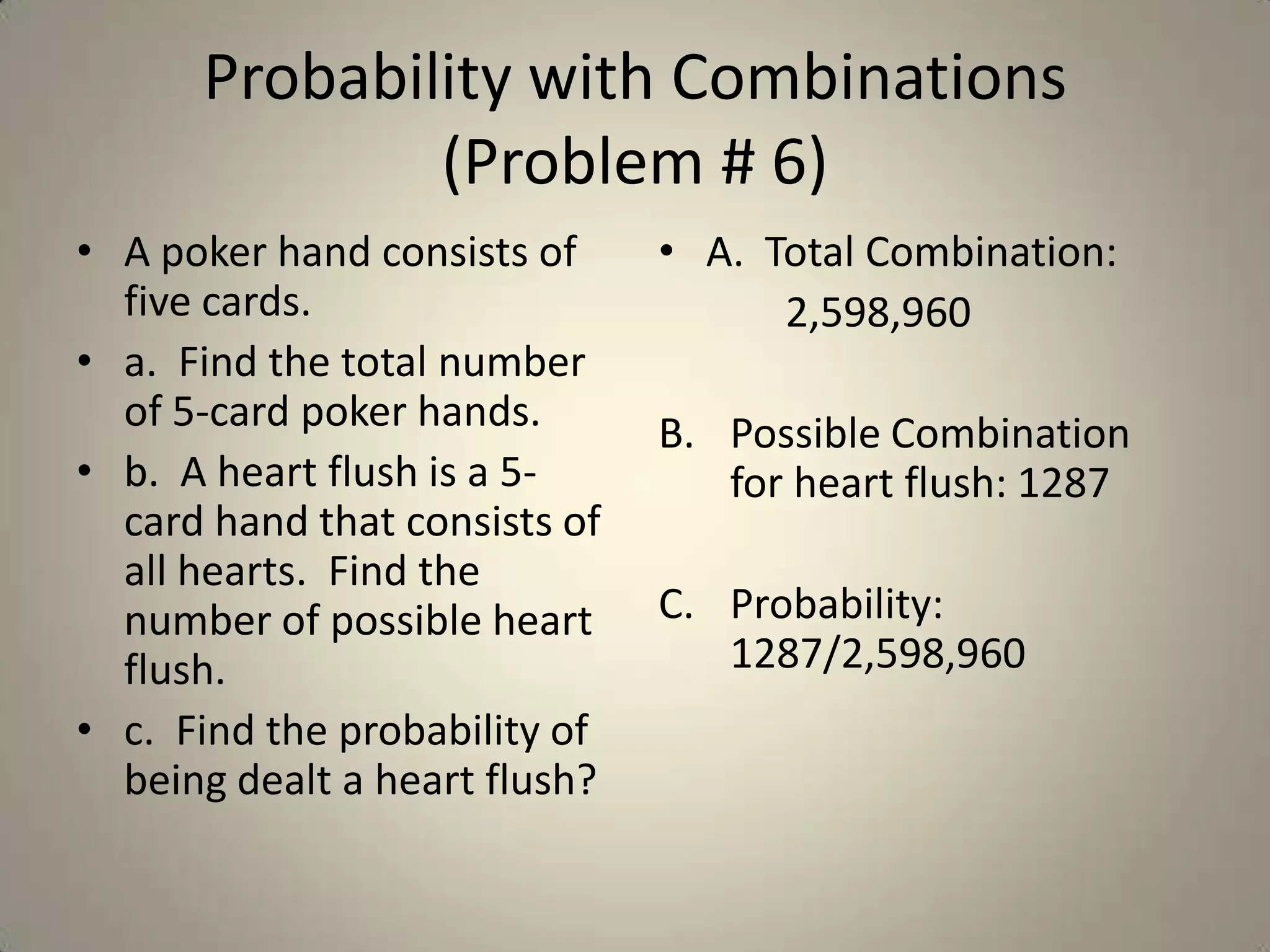
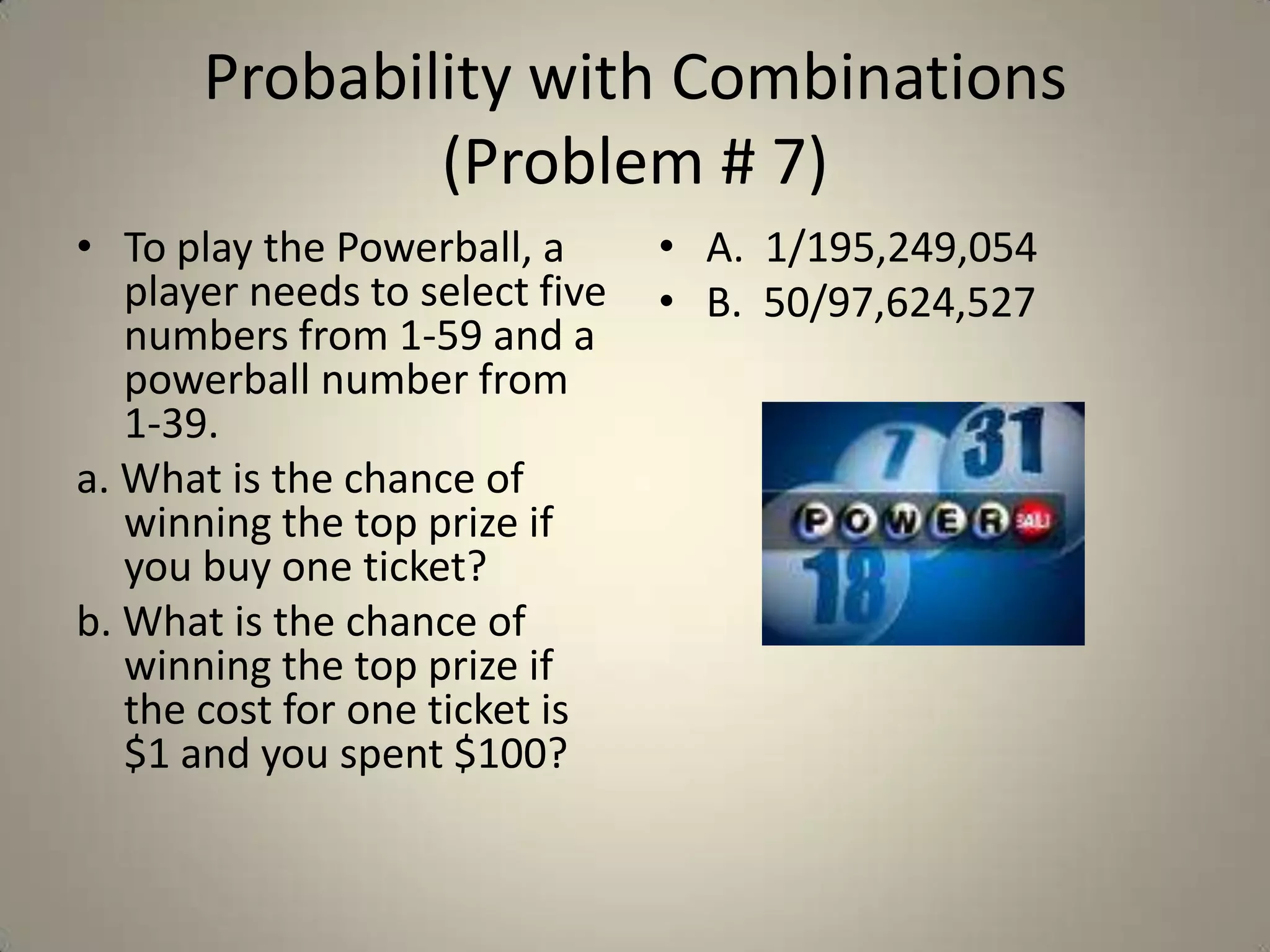
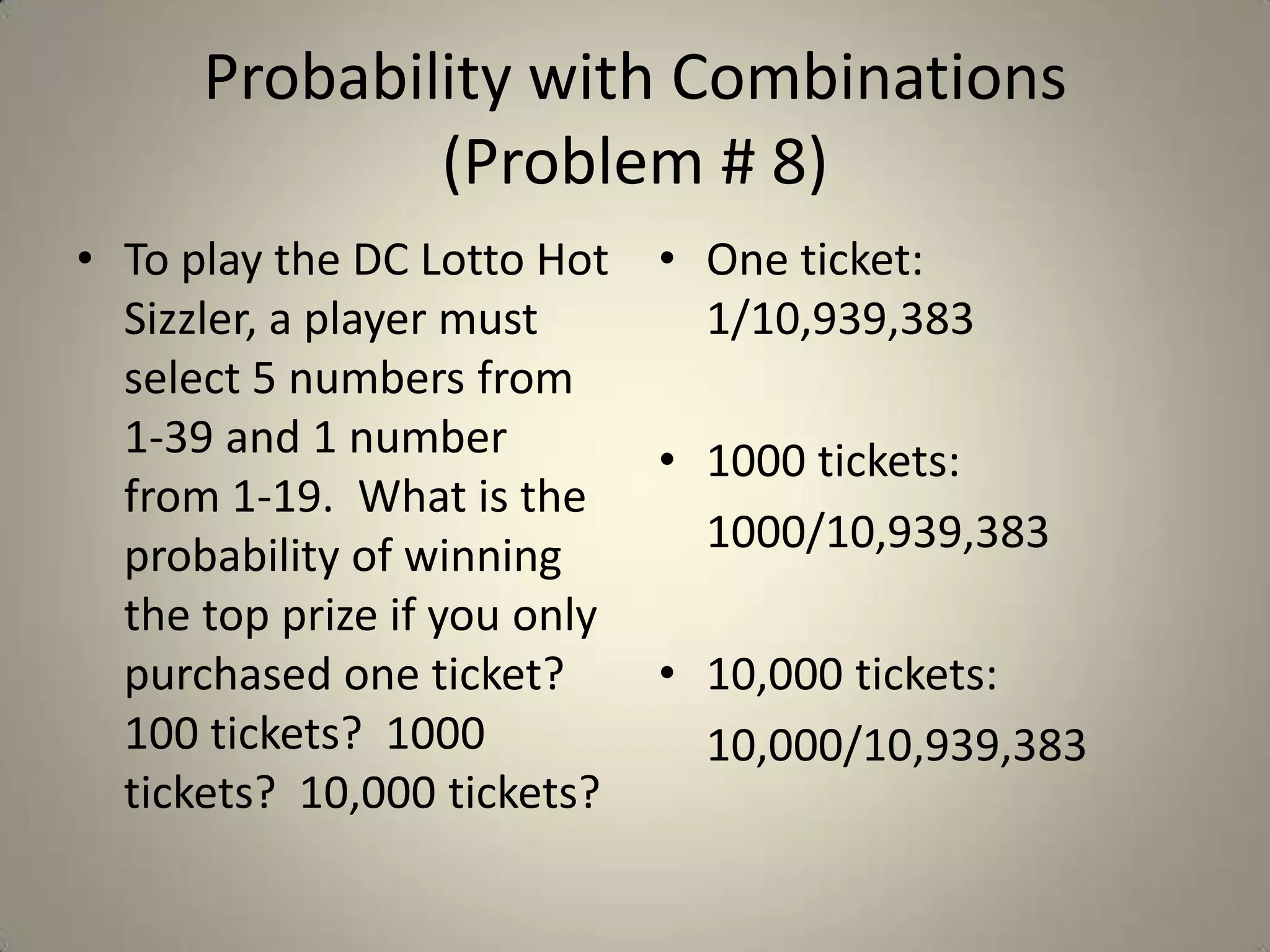

This document provides examples of using fundamental counting principles, permutations, and combinations to calculate probabilities. It includes 10 problems calculating probabilities of events like arranging a group of people in different orders, being dealt certain poker hands, selecting lottery numbers, and choosing items from a box where some are defective. The key concepts covered are theoretical, empirical and subjective probability, and determining the total number of possible outcomes versus favorable outcomes to calculate probability.


