MCB & Earth
Leakage Circuit
Breaker
Presented By:
Navinkumar Patle
Suraj Poul
Madhu Prasad
Piyush Saudagare &
Kirti SaindaneGCO
DEPARTMENT OF ELECTRICAL
• WHAT IS CIRCUIT BREAKER ?
• TYPES OF CIRCUIT BREAKER .
• MCB
• MCB COSTRUCTION .
• HOW MCB WORK ?
• USES OF MCB .
• ELCB
• WHY WE USE ELCB ?
• CONSTRUCTION OF ELCB .
• OPERATION
Content
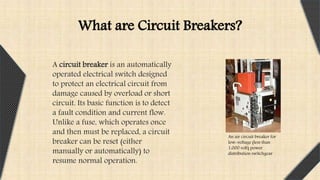
A circuit breaker is an automatically
operated electrical switch designed
to protect an electrical circuit from
damage caused by overload or short
circuit. Its basic function is to detect
a fault condition and current flow.
Unlike a fuse, which operates once
and then must be replaced, a circuit
breaker can be reset (either
manually or automatically) to
resume normal operation.
An air circuit breaker for
low-voltage (less than
1,000 volt) power
distribution switchgear
What are Circuit Breakers?
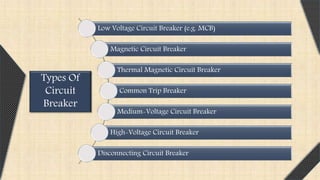
Low Voltage Circuit Breaker (e.g. MCB)
Magnetic Circuit Breaker
Thermal Magnetic Circuit Breaker
Common Trip Breaker
Medium-Voltage Circuit Breaker
High-Voltage Circuit Breaker
Disconnecting Circuit Breaker
Types Of
Circuit
Breaker
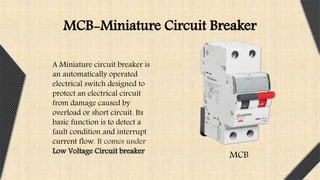
A Miniature circuit breaker is
an automatically operated
electrical switch designed to
protect an electrical circuit
from damage caused by
overload or short circuit. Its
basic function is to detect a
fault condition and interrupt
current flow. It comes under
Low Voltage Circuit breaker
MCB
MCB-Miniature Circuit Breaker
 MCB is meant for two type of overcurrent situation
overload and short circuit
 It consist of magnetic and thermal trip unit
 Both units act independently and mechanically with
breaker’s trip mechanism to open breaker’s contact.
 Magnetic trip unit (Short circuit protection):
The magnetic trip unit protects against a short
circuit. The magnetic trip unit is comprised of an
electromagnet and armature.
 Thermal trip unit (Overload protection)
The thermal trip unit protects against
continuous overload. The thermal unit is comprised of
bimetal element located behind the circuit breaker
trip bar and is part of the breaker’s current carrying
path.
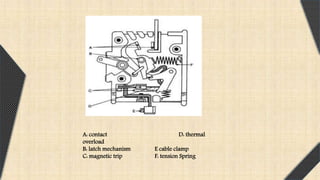
Construction
A: contact D: thermal
overload
B: latch mechanism E cable clamp
C: magnetic trip F: tension Spring
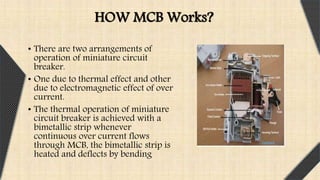
• There are two arrangements of
operation of miniature circuit
breaker.
• One due to thermal effect and other
due to electromagnetic effect of over
current.
• The thermal operation of miniature
circuit breaker is achieved with a
bimetallic strip whenever
continuous over current flows
through MCB, the bimetallic strip is
heated and deflects by bending
HOW MCB Works?
• A miniature circuit breaker is used in
new constructions instead of the
older types of fuses. Circuit breakers
are small devices used o control and
protect the electrical panel and the
other devices from overflowing of
electrical power.
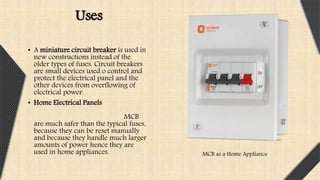
• Home Electrical Panels
MCB
are much safer than the typical fuses,
because they can be reset manually
and because they handle much larger
amounts of power hence they are
used in home appliances. MCB as a Home Appliance
Uses
• Ground Fault Trip Mechanism
In some cases, you can use a miniature circuit breaker with ground fault,
or arc fault mechanisms, because the breakers consist of a system that opens the
contacts if a line to ground fault occurs.
• Lights
Using miniature circuit breakers in the lighting system of the house,
because they can deal with the amount of power needed to light a house,
especially if using specific types of lamps, such as fluorescent lights.
• Industrial Applications
There are many small scale industrial buildings that use the miniature
circuit breakers instead of the old fuses. These installations require up to 30 kA
capacity, therefore the miniature breakers are ideal for this type of applications
and devices. Same with commercial installations and applications. Some
industrial applications that use miniature breakers are large stoves, and
appliances used in restaurants, bakeries and food commercial stores.
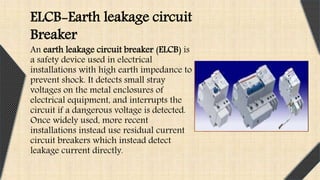
An earth leakage circuit breaker (ELCB) is
a safety device used in electrical
installations with high earth impedance to
prevent shock. It detects small stray
voltages on the metal enclosures of
electrical equipment, and interrupts the
circuit if a dangerous voltage is detected.
Once widely used, more recent
installations instead use residual current
circuit breakers which instead detect
leakage current directly.
ELCB-Earth leakage circuit
Breaker
The main purpose of earth leakage protectors is to prevent injury to
humans and animals due to electric shock
Why we Use ELCB?
Construction
Operation
• An ELCB is a specialised type of latching relay that has a building's
incoming mains power connected through its switching contacts so
that the ELCB disconnects the power in an earth leakage (unsafe)
condition.
• The ELCB detects fault currents from live to the earth (ground) wire
within the installation it protects. If sufficient voltage appears across
the ELCB's sense coil, it will switch off the power, and remain off
until manually reset. A voltage-sensing ELCB does not sense fault
currents from live to any other earthed body.
ANY QUERIES ?

MCB And Earth Leakage Circuit

  • 1.
    MCB & Earth LeakageCircuit Breaker Presented By: Navinkumar Patle Suraj Poul Madhu Prasad Piyush Saudagare & Kirti SaindaneGCO DEPARTMENT OF ELECTRICAL
  • 2.
    • WHAT ISCIRCUIT BREAKER ? • TYPES OF CIRCUIT BREAKER . • MCB • MCB COSTRUCTION . • HOW MCB WORK ? • USES OF MCB . • ELCB • WHY WE USE ELCB ? • CONSTRUCTION OF ELCB . • OPERATION Content
  • 3.
    A circuit breakeris an automatically operated electrical switch designed to protect an electrical circuit from damage caused by overload or short circuit. Its basic function is to detect a fault condition and current flow. Unlike a fuse, which operates once and then must be replaced, a circuit breaker can be reset (either manually or automatically) to resume normal operation. An air circuit breaker for low-voltage (less than 1,000 volt) power distribution switchgear What are Circuit Breakers?
  • 4.
    Low Voltage CircuitBreaker (e.g. MCB) Magnetic Circuit Breaker Thermal Magnetic Circuit Breaker Common Trip Breaker Medium-Voltage Circuit Breaker High-Voltage Circuit Breaker Disconnecting Circuit Breaker Types Of Circuit Breaker
  • 5.
    A Miniature circuitbreaker is an automatically operated electrical switch designed to protect an electrical circuit from damage caused by overload or short circuit. Its basic function is to detect a fault condition and interrupt current flow. It comes under Low Voltage Circuit breaker MCB MCB-Miniature Circuit Breaker
  • 6.
     MCB ismeant for two type of overcurrent situation overload and short circuit  It consist of magnetic and thermal trip unit  Both units act independently and mechanically with breaker’s trip mechanism to open breaker’s contact.  Magnetic trip unit (Short circuit protection): The magnetic trip unit protects against a short circuit. The magnetic trip unit is comprised of an electromagnet and armature.  Thermal trip unit (Overload protection) The thermal trip unit protects against continuous overload. The thermal unit is comprised of bimetal element located behind the circuit breaker trip bar and is part of the breaker’s current carrying path. Construction
  • 7.
    A: contact D:thermal overload B: latch mechanism E cable clamp C: magnetic trip F: tension Spring
  • 8.
    • There aretwo arrangements of operation of miniature circuit breaker. • One due to thermal effect and other due to electromagnetic effect of over current. • The thermal operation of miniature circuit breaker is achieved with a bimetallic strip whenever continuous over current flows through MCB, the bimetallic strip is heated and deflects by bending HOW MCB Works?
  • 9.
    • A miniaturecircuit breaker is used in new constructions instead of the older types of fuses. Circuit breakers are small devices used o control and protect the electrical panel and the other devices from overflowing of electrical power. • Home Electrical Panels MCB are much safer than the typical fuses, because they can be reset manually and because they handle much larger amounts of power hence they are used in home appliances. MCB as a Home Appliance Uses
  • 10.
    • Ground FaultTrip Mechanism In some cases, you can use a miniature circuit breaker with ground fault, or arc fault mechanisms, because the breakers consist of a system that opens the contacts if a line to ground fault occurs. • Lights Using miniature circuit breakers in the lighting system of the house, because they can deal with the amount of power needed to light a house, especially if using specific types of lamps, such as fluorescent lights. • Industrial Applications There are many small scale industrial buildings that use the miniature circuit breakers instead of the old fuses. These installations require up to 30 kA capacity, therefore the miniature breakers are ideal for this type of applications and devices. Same with commercial installations and applications. Some industrial applications that use miniature breakers are large stoves, and appliances used in restaurants, bakeries and food commercial stores.
  • 11.
    An earth leakagecircuit breaker (ELCB) is a safety device used in electrical installations with high earth impedance to prevent shock. It detects small stray voltages on the metal enclosures of electrical equipment, and interrupts the circuit if a dangerous voltage is detected. Once widely used, more recent installations instead use residual current circuit breakers which instead detect leakage current directly. ELCB-Earth leakage circuit Breaker
  • 12.
    The main purposeof earth leakage protectors is to prevent injury to humans and animals due to electric shock Why we Use ELCB?
  • 13.
  • 14.
    Operation • An ELCBis a specialised type of latching relay that has a building's incoming mains power connected through its switching contacts so that the ELCB disconnects the power in an earth leakage (unsafe) condition. • The ELCB detects fault currents from live to the earth (ground) wire within the installation it protects. If sufficient voltage appears across the ELCB's sense coil, it will switch off the power, and remain off until manually reset. A voltage-sensing ELCB does not sense fault currents from live to any other earthed body.
  • 15.