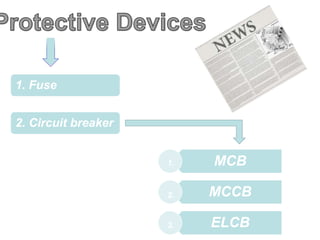
1. Fuse
2. Circuit breaker
MCB
MCCB
ELCB
1.
2.
3.
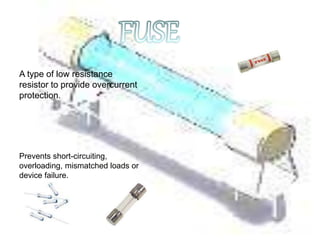
A type of low resistance
resistor to provide overcurrent
protection.
Prevents short-circuiting,
overloading, mismatched loads or
device failure.
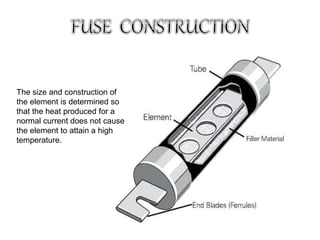
The size and construction of
the element is determined so
that the heat produced for a
normal current does not cause
the element to attain a high
temperature.
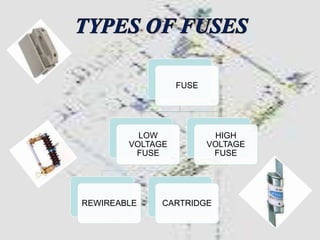
FUSE
LOW
VOLTAGE
FUSE
REWIREABLE CARTRIDGE
HIGH
VOLTAGE
FUSE
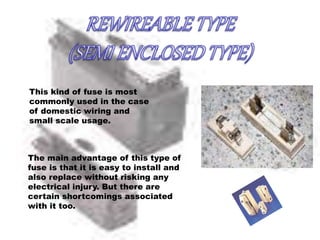
This kind of fuse is most
commonly used in the case
of domestic wiring and
small scale usage.
The main advantage of this type of
fuse is that it is easy to install and
also replace without risking any
electrical injury. But there are
certain shortcomings associated
with it too.
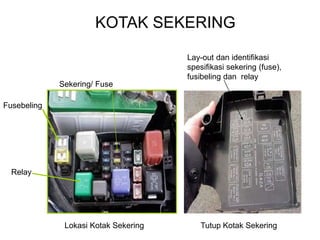
KOTAK SEKERING
Fusebeling
Relay
Sekering/ Fuse
Lokasi Kotak Sekering Tutup Kotak Sekering
Lay-out dan identifikasi
spesifikasi sekering (fuse),
fusibeling dan relay
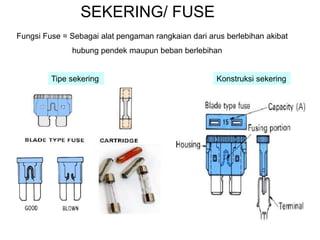
SEKERING/ FUSE
Fungsi Fuse = Sebagai alat pengaman rangkaian dari arus berlebihan akibat
hubung pendek maupun beban berlebihan
Tipe sekering Konstruksi sekering
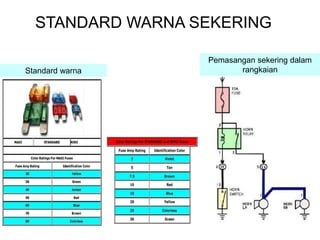
STANDARD WARNA SEKERING
Standard warna
Pemasangan sekering dalam
rangkaian
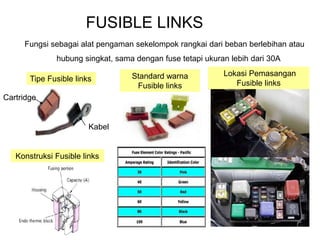
FUSIBLE LINKS
Fungsi sebagai alat pengaman sekelompok rangkai dari beban berlebihan atau
hubung singkat, sama dengan fuse tetapi ukuran lebih dari 30A
Tipe Fusible links Standard warna
Fusible links
Konstruksi Fusible links
Lokasi Pemasangan
Fusible links
Kabel
Cartridge
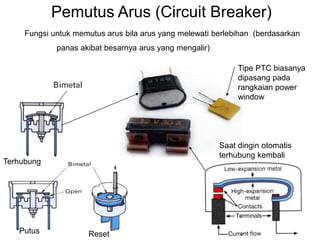
Pemutus Arus (Circuit Breaker)
Fungsi untuk memutus arus bila arus yang melewati berlebihan (berdasarkan
panas akibat besarnya arus yang mengalir)
Terhubung
Putus Reset
Saat dingin otomatis
terhubung kembali
Tipe PTC biasanya
dipasang pada
rangkaian power
window
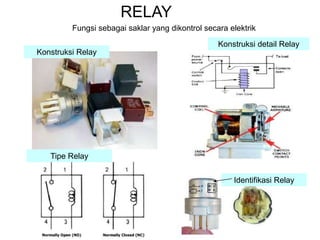
RELAY
Fungsi sebagai saklar yang dikontrol secara elektrik
Konstruksi Relay
Tipe Relay
Identifikasi Relay
Konstruksi detail Relay
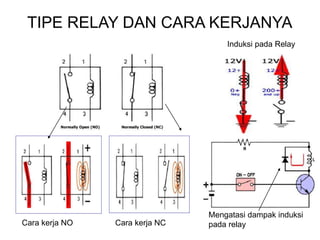
Cara kerja NO Cara kerja NC
Induksi pada Relay
TIPE RELAY DAN CARA KERJANYA
Mengatasi dampak induksi
pada relay
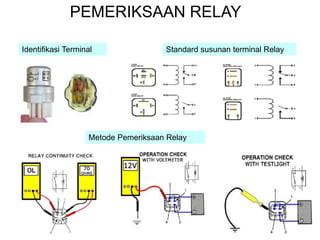
PEMERIKSAAN RELAY
Identifikasi Terminal Standard susunan terminal Relay
Metode Pemeriksaan Relay
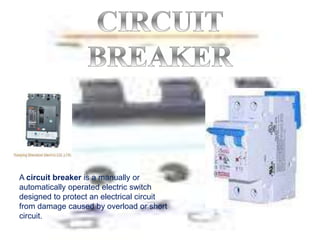
A circuit breaker is a manually or
automatically operated electric switch
designed to protect an electrical circuit
from damage caused by overload or short
circuit.
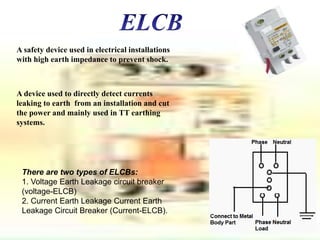
A safety device used in electrical installations
with high earth impedance to prevent shock.
A device used to directly detect currents
leaking to earth from an installation and cut
the power and mainly used in TT earthing
systems.
There are two types of ELCBs:
1. Voltage Earth Leakage circuit breaker
(voltage-ELCB)
2. Current Earth Leakage Current Earth
Leakage Circuit Breaker (Current-ELCB).
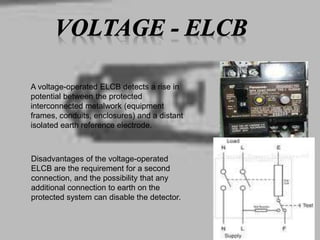
A voltage-operated ELCB detects a rise in
potential between the protected
interconnected metalwork (equipment
frames, conduits, enclosures) and a distant
isolated earth reference electrode.
Disadvantages of the voltage-operated
ELCB are the requirement for a second
connection, and the possibility that any
additional connection to earth on the
protected system can disable the detector.
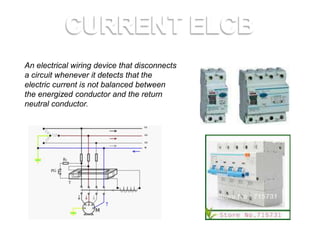
An electrical wiring device that disconnects
a circuit whenever it detects that the
electric current is not balanced between
the energized conductor and the return
neutral conductor.
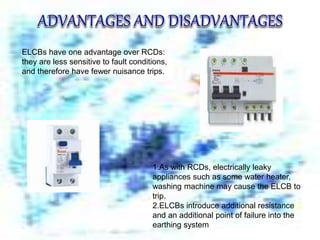
ELCBs have one advantage over RCDs:
they are less sensitive to fault conditions,
and therefore have fewer nuisance trips.
1.As with RCDs, electrically leaky
appliances such as some water heater,
washing machine may cause the ELCB to
trip.
2.ELCBs introduce additional resistance
and an additional point of failure into the
earthing system
It automatically switches off the electrical circuit during abnormal
condition of the network means in over load condition as well as
faulty condition.
MCB is much more sensitive to over current than fuse.
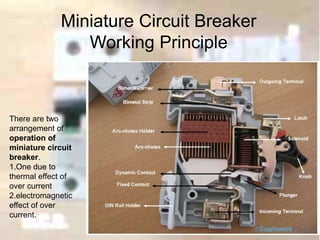
Miniature Circuit Breaker
Working Principle
There are two
arrangement of
operation of
miniature circuit
breaker.
1.One due to
thermal effect of
over current
2.electromagnetic
effect of over
current.
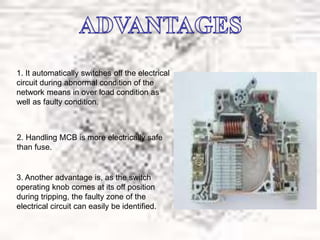
1. It automatically switches off the electrical
circuit during abnormal condition of the
network means in over load condition as
well as faulty condition.
2. Handling MCB is more electrically safe
than fuse.
3. Another advantage is, as the switch
operating knob comes at its off position
during tripping, the faulty zone of the
electrical circuit can easily be identified.
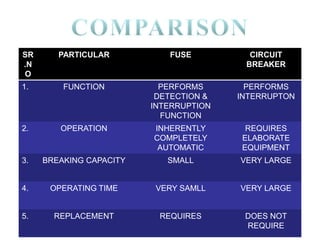
SR
.N
O
PARTICULAR FUSE CIRCUIT
BREAKER
1. FUNCTION PERFORMS
DETECTION &
INTERRUPTION
FUNCTION
PERFORMS
INTERRUPTON
2. OPERATION INHERENTLY
COMPLETELY
AUTOMATIC
REQUIRES
ELABORATE
EQUIPMENT
3. BREAKING CAPACITY SMALL VERY LARGE
4. OPERATING TIME VERY SAMLL VERY LARGE
5. REPLACEMENT REQUIRES DOES NOT
REQUIRE

Electrical Protective Device.pptx.ppt

  • 3.
    1. Fuse 2. Circuitbreaker MCB MCCB ELCB 1. 2. 3.
  • 4.
    A type oflow resistance resistor to provide overcurrent protection. Prevents short-circuiting, overloading, mismatched loads or device failure.
  • 5.
    The size andconstruction of the element is determined so that the heat produced for a normal current does not cause the element to attain a high temperature.
  • 6.
  • 7.
    This kind offuse is most commonly used in the case of domestic wiring and small scale usage. The main advantage of this type of fuse is that it is easy to install and also replace without risking any electrical injury. But there are certain shortcomings associated with it too.
  • 8.
    KOTAK SEKERING Fusebeling Relay Sekering/ Fuse LokasiKotak Sekering Tutup Kotak Sekering Lay-out dan identifikasi spesifikasi sekering (fuse), fusibeling dan relay
  • 9.
    SEKERING/ FUSE Fungsi Fuse= Sebagai alat pengaman rangkaian dari arus berlebihan akibat hubung pendek maupun beban berlebihan Tipe sekering Konstruksi sekering
  • 10.
    STANDARD WARNA SEKERING Standardwarna Pemasangan sekering dalam rangkaian
  • 11.
    FUSIBLE LINKS Fungsi sebagaialat pengaman sekelompok rangkai dari beban berlebihan atau hubung singkat, sama dengan fuse tetapi ukuran lebih dari 30A Tipe Fusible links Standard warna Fusible links Konstruksi Fusible links Lokasi Pemasangan Fusible links Kabel Cartridge
  • 12.
    Pemutus Arus (CircuitBreaker) Fungsi untuk memutus arus bila arus yang melewati berlebihan (berdasarkan panas akibat besarnya arus yang mengalir) Terhubung Putus Reset Saat dingin otomatis terhubung kembali Tipe PTC biasanya dipasang pada rangkaian power window
  • 13.
    RELAY Fungsi sebagai saklaryang dikontrol secara elektrik Konstruksi Relay Tipe Relay Identifikasi Relay Konstruksi detail Relay
  • 14.
    Cara kerja NOCara kerja NC Induksi pada Relay TIPE RELAY DAN CARA KERJANYA Mengatasi dampak induksi pada relay
  • 15.
    PEMERIKSAAN RELAY Identifikasi TerminalStandard susunan terminal Relay Metode Pemeriksaan Relay
  • 16.
    A circuit breakeris a manually or automatically operated electric switch designed to protect an electrical circuit from damage caused by overload or short circuit.
  • 17.
    A safety deviceused in electrical installations with high earth impedance to prevent shock. A device used to directly detect currents leaking to earth from an installation and cut the power and mainly used in TT earthing systems. There are two types of ELCBs: 1. Voltage Earth Leakage circuit breaker (voltage-ELCB) 2. Current Earth Leakage Current Earth Leakage Circuit Breaker (Current-ELCB).
  • 18.
    A voltage-operated ELCBdetects a rise in potential between the protected interconnected metalwork (equipment frames, conduits, enclosures) and a distant isolated earth reference electrode. Disadvantages of the voltage-operated ELCB are the requirement for a second connection, and the possibility that any additional connection to earth on the protected system can disable the detector.
  • 19.
    An electrical wiringdevice that disconnects a circuit whenever it detects that the electric current is not balanced between the energized conductor and the return neutral conductor.
  • 20.
    ELCBs have oneadvantage over RCDs: they are less sensitive to fault conditions, and therefore have fewer nuisance trips. 1.As with RCDs, electrically leaky appliances such as some water heater, washing machine may cause the ELCB to trip. 2.ELCBs introduce additional resistance and an additional point of failure into the earthing system
  • 21.
    It automatically switchesoff the electrical circuit during abnormal condition of the network means in over load condition as well as faulty condition. MCB is much more sensitive to over current than fuse.
  • 22.
    Miniature Circuit Breaker WorkingPrinciple There are two arrangement of operation of miniature circuit breaker. 1.One due to thermal effect of over current 2.electromagnetic effect of over current.
  • 23.
    1. It automaticallyswitches off the electrical circuit during abnormal condition of the network means in over load condition as well as faulty condition. 2. Handling MCB is more electrically safe than fuse. 3. Another advantage is, as the switch operating knob comes at its off position during tripping, the faulty zone of the electrical circuit can easily be identified.
  • 24.
    SR .N O PARTICULAR FUSE CIRCUIT BREAKER 1.FUNCTION PERFORMS DETECTION & INTERRUPTION FUNCTION PERFORMS INTERRUPTON 2. OPERATION INHERENTLY COMPLETELY AUTOMATIC REQUIRES ELABORATE EQUIPMENT 3. BREAKING CAPACITY SMALL VERY LARGE 4. OPERATING TIME VERY SAMLL VERY LARGE 5. REPLACEMENT REQUIRES DOES NOT REQUIRE