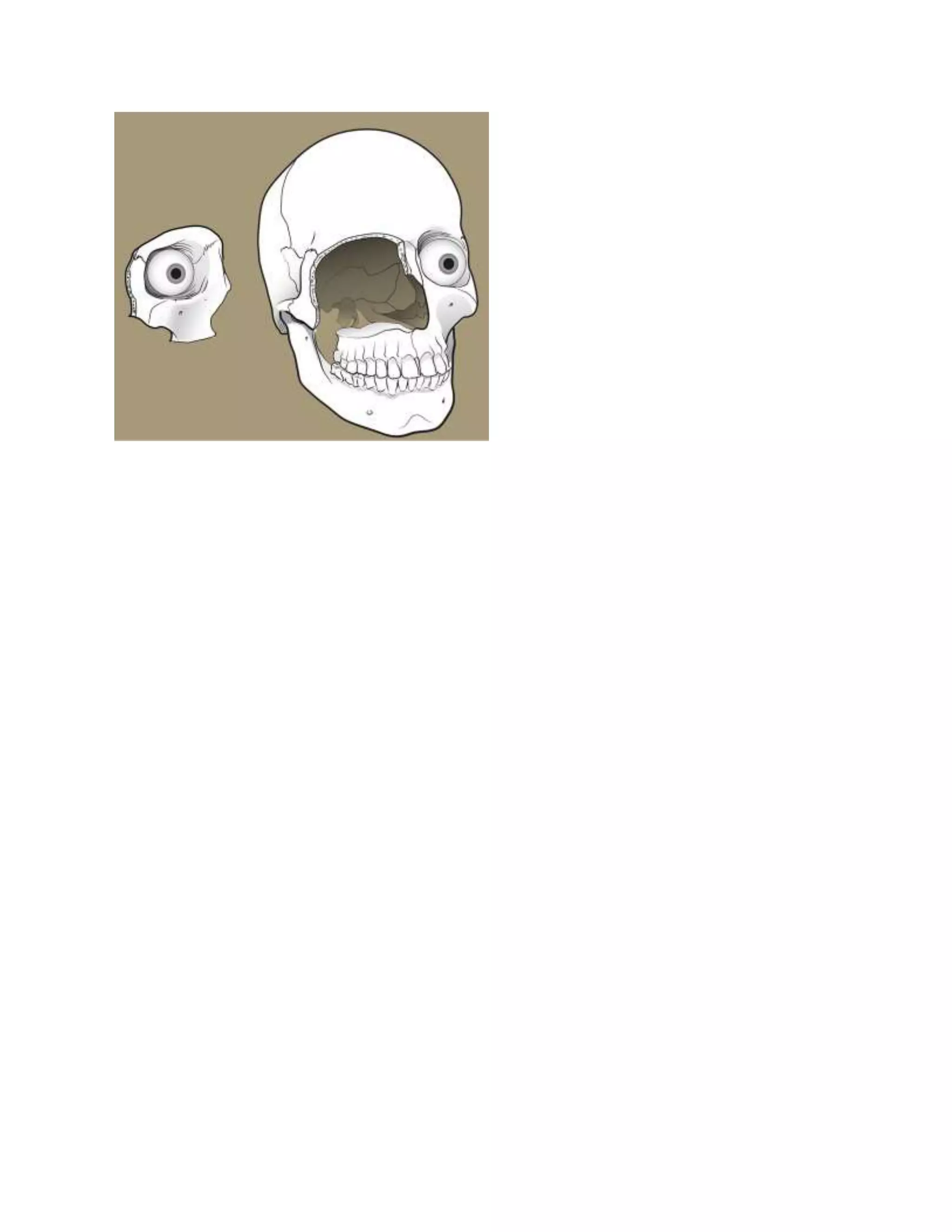
MAXILLECTOMY DEFECTCLASSIFICATIONS
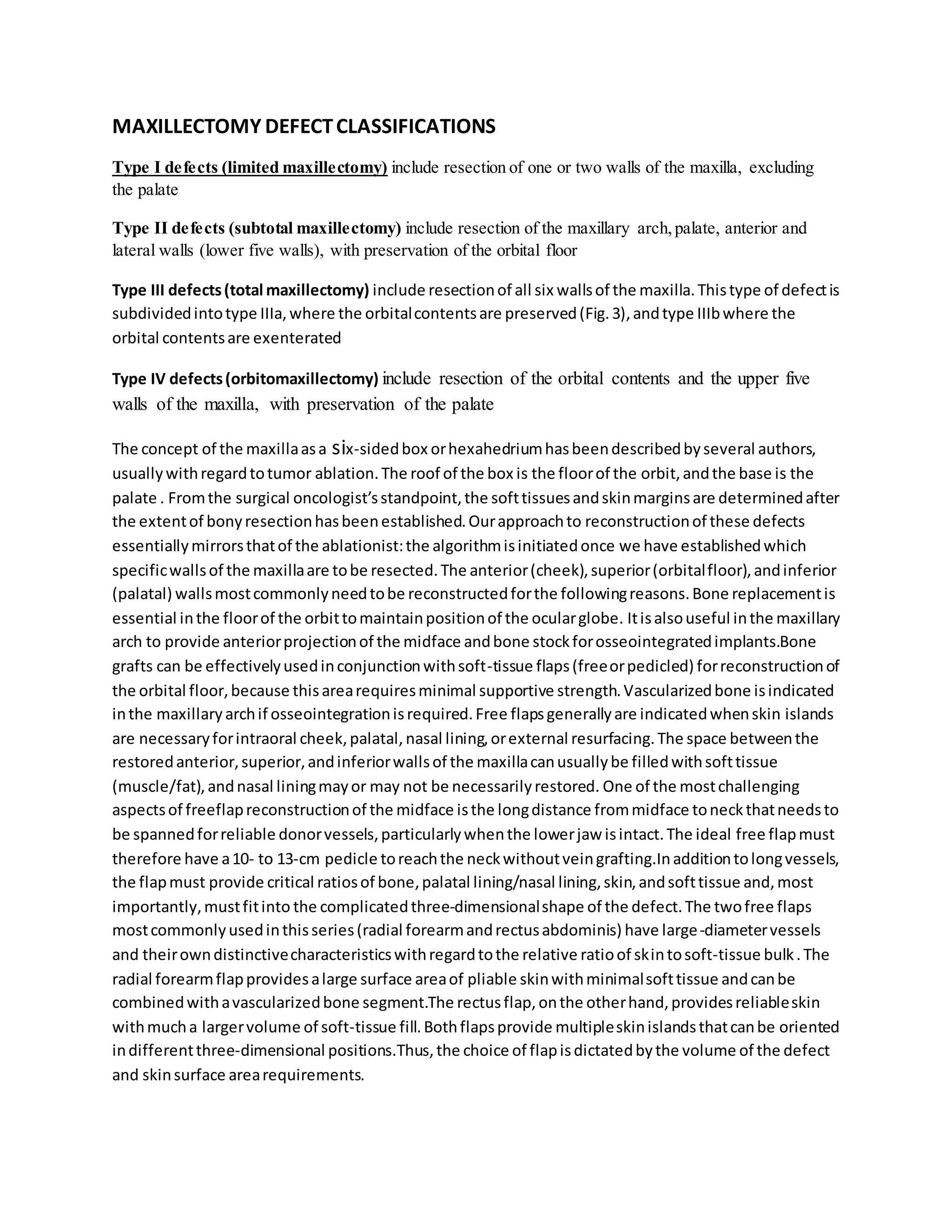
Type I defects (limited maxillectomy) include resection of one or two walls of the maxilla, excluding
the palate
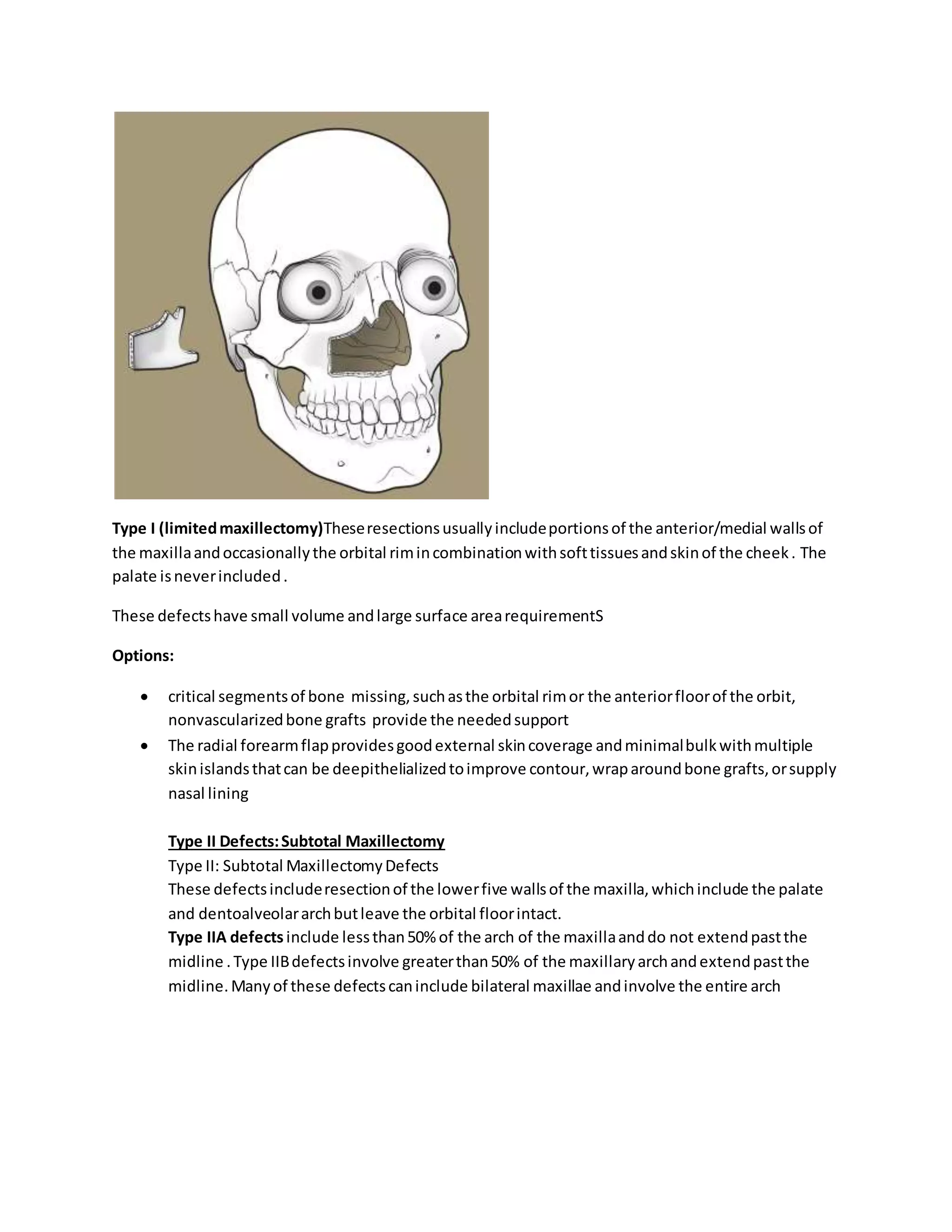
Type II defects (subtotal maxillectomy) include resection of the maxillary arch,palate, anterior and
lateral walls (lower five walls), with preservation of the orbital floor
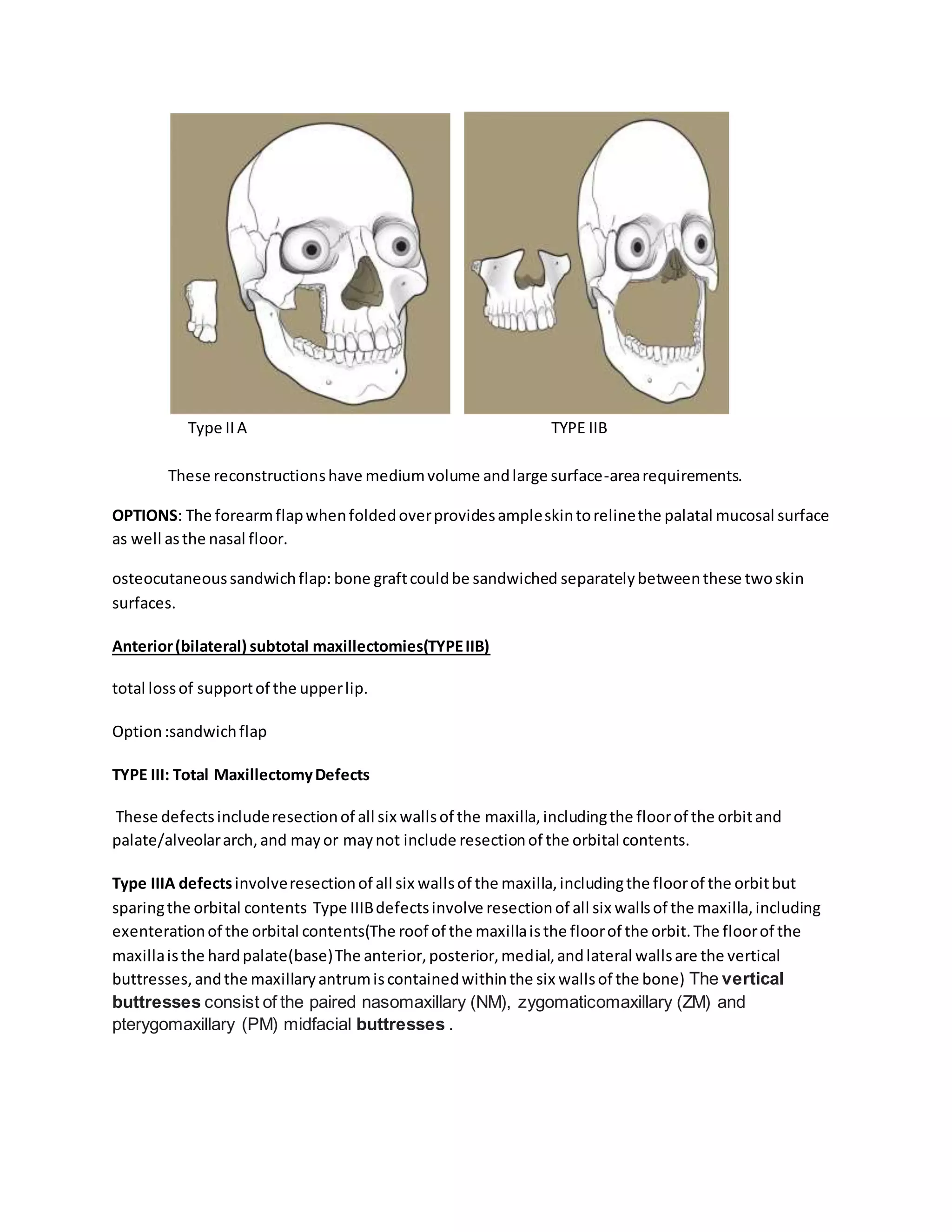
Type III defects(total maxillectomy) include resectionof all six wallsof the maxilla.Thistype of defectis
subdividedintotype IIIa,where the orbitalcontentsare preserved(Fig.3),andtype IIIbwhere the
orbital contentsare exenterated
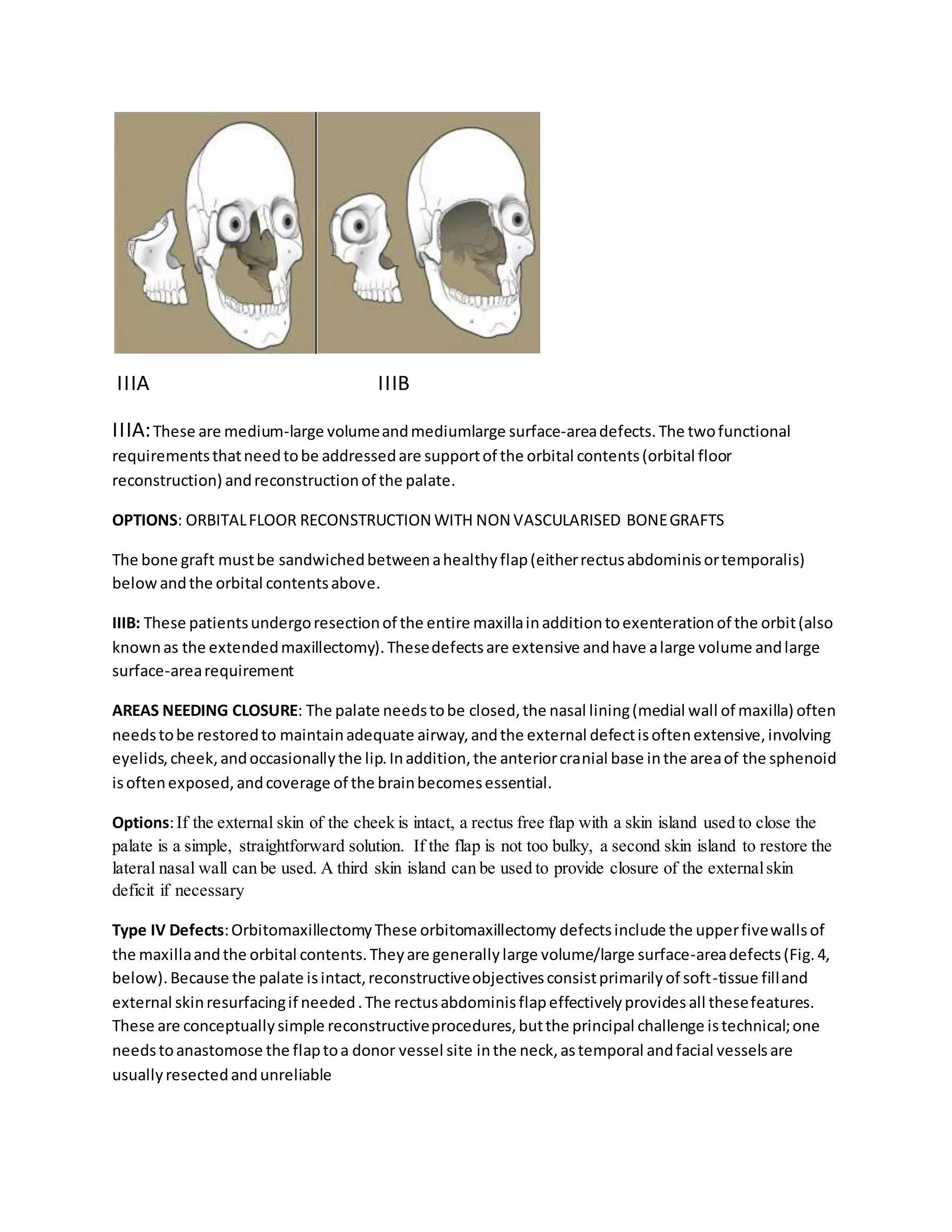
Type IV defects(orbitomaxillectomy) include resection of the orbital contents and the upper five
walls of the maxilla, with preservation of the palate
The concept of the maxillaasa six-sidedbox orhexahedriumhasbeendescribedbyseveral authors,
usuallywithregardtotumor ablation.The roof of the box is the floorof the orbit,andthe base is the
palate . Fromthe surgical oncologist’sstandpoint,the softtissuesandskinmarginsare determinedafter
the extentof bonyresectionhasbeenestablished.Ourapproachto reconstructionof these defects
essentiallymirrorsthatof the ablationist:the algorithmisinitiatedonce we have establishedwhich
specificwallsof the maxillaare tobe resected.The anterior(cheek),superior(orbitalfloor),andinferior
(palatal) wallsmostcommonlyneedtobe reconstructedforthe followingreasons.Bone replacementis
essential inthe floorof the orbittomaintainpositionof the ocularglobe. Itisalsouseful inthe maxillary
arch to provide anteriorprojectionof the midface andbone stockforosseointegratedimplants.Bone
grafts can be effectivelyusedinconjunctionwithsoft-tissue flaps(freeorpedicled) forreconstructionof
the orbital floor,because thisarearequiresminimal supportive strength.Vascularizedbone isindicated
inthe maxillaryarchif osseointegrationisrequired.Free flapsgenerallyare indicatedwhenskin islands
are necessaryforintraoral cheek,palatal,nasal lining,orexternal resurfacing.The space betweenthe
restoredanterior,superior,andinferiorwallsof the maxillacanusuallybe filledwithsofttissue
(muscle/fat),andnasal liningmayor may not be necessarilyrestored. One of the mostchallenging
aspectsof freeflapreconstructionof the midface isthe longdistance frommidface toneckthatneedsto
be spannedforreliable donorvessels,particularlywhenthe lowerjaw isintact.The ideal free flapmust
therefore have a10- to 13-cm pedicle toreachthe neckwithoutveingrafting.Inadditiontolongvessels,
the flapmust provide critical ratiosof bone,palatal lining/nasal lining,skin,andsofttissue and,most
importantly,mustfitinto the complicatedthree-dimensionalshape of the defect.The twofree flaps
mostcommonlyusedinthisseries(radial forearmandrectusabdominis) have large-diametervessels
and theirowndistinctivecharacteristicswithregardtothe relative ratioof skintosoft-tissue bulk.The
radial forearmflapprovidesalarge surface areaof pliable skinwithminimalsofttissue andcanbe
combinedwithavascularizedbone segment.The rectusflap,onthe otherhand,providesreliableskin
withmucha largervolume of soft-tissue fill.Bothflapsprovide multipleskinislandsthatcanbe oriented
indifferentthree-dimensional positions.Thus,the choice of flapisdictatedbythe volume of the defect
and skinsurface arearequirements.
Type I (limitedmaxillectomy)Theseresectionsusuallyincludeportionsof the anterior/medial wallsof
the maxillaandoccasionallythe orbital rimincombinationwithsofttissuesandskinof the cheek. The
palate isneverincluded.
These defectshave small volume andlarge surface arearequirementS
Options:
 critical segmentsof bone missing,suchasthe orbital rimor the anteriorfloorof the orbit,
nonvascularizedbone grafts provide the neededsupport
 The radial forearmflapprovidesgoodexternal skincoverage andminimalbulkwithmultiple
skinislandsthatcan be deepithelializedtoimprove contour,wraparoundbone grafts,orsupply
nasal lining
Type II Defects:Subtotal Maxillectomy
Type II: Subtotal MaxillectomyDefects
These defectsincluderesectionof the lowerfive wallsof the maxilla,whichinclude the palate
and dentoalveolararchbutleave the orbital floorintact.
Type IIA defects include lessthan50% of the arch of the maxillaanddo not extendpastthe
midline .Type IIBdefectsinvolve greaterthan50% of the maxillaryarchandextendpastthe
midline.Manyof these defectscaninclude bilateral maxillae andinvolve the entire arch
Type IIA TYPE IIB
These reconstructionshave mediumvolume andlarge surface-arearequirements.
OPTIONS: The forearmflapwhenfoldedoverprovidesampleskintorelinethe palatal mucosal surface
as well asthe nasal floor.
osteocutaneoussandwichflap: bone graftcouldbe sandwiched separatelybetweenthese twoskin
surfaces.
Anterior(bilateral) subtotal maxillectomies(TYPEIIB)
total lossof supportof the upperlip.
Option:sandwichflap
TYPE III: Total MaxillectomyDefects
These defectsincluderesectionof all six wallsof the maxilla,includingthe floorof the orbitand
palate/alveolararch,and mayor maynot include resectionof the orbital contents.
Type IIIA defectsinvolveresectionof all six wallsof the maxilla,includingthe floorof the orbitbut
sparingthe orbital contents Type IIIBdefectsinvolve resectionof all six wallsof the maxilla,including
exenterationof the orbital contents(The roof of the maxillaisthe floorof the orbit.The floorof the
maxillaisthe hardpalate(base)The anterior,posterior,medial,andlateral wallsare the vertical
buttresses,andthe maxillaryantrumiscontainedwithinthe six wallsof the bone) The vertical
buttresses consist of the paired nasomaxillary (NM), zygomaticomaxillary (ZM) and
pterygomaxillary (PM) midfacial buttresses .
IIIA IIIB
IIIA:These are medium-large volumeandmediumlarge surface-areadefects.The twofunctional
requirementsthatneedtobe addressedare supportof the orbital contents(orbital floor
reconstruction) andreconstructionof the palate.
OPTIONS: ORBITALFLOOR RECONSTRUCTION WITH NON VASCULARISED BONEGRAFTS
The bone graft mustbe sandwichedbetweenahealthyflap(eitherrectusabdominisortemporalis)
belowandthe orbital contentsabove.
IIIB: These patientsundergoresectionof the entire maxillainadditiontoexenterationof the orbit(also
knownas the extendedmaxillectomy).Thesedefectsare extensive andhave alarge volume andlarge
surface-arearequirement
AREAS NEEDING CLOSURE: The palate needstobe closed,the nasal lining(medial wall of maxilla) often
needstobe restoredto maintainadequate airway,andthe external defectisoftenextensive,involving
eyelids,cheek,andoccasionallythe lip.Inaddition,the anteriorcranial base inthe areaof the sphenoid
isoftenexposed,andcoverage of the brainbecomesessential.
Options:If the external skin of the cheek is intact, a rectus free flap with a skin island used to close the
palate is a simple, straightforward solution. If the flap is not too bulky, a second skin island to restore the
lateral nasal wall can be used. A third skin island can be used to provide closure of the externalskin
deficit if necessary
Type IV Defects:OrbitomaxillectomyThese orbitomaxillectomy defectsinclude the upperfivewallsof
the maxillaandthe orbital contents.Theyare generallylarge volume/large surface-areadefects(Fig.4,
below).Because the palate isintact,reconstructiveobjectivesconsistprimarilyof soft-tissue filland
external skinresurfacingif needed.The rectusabdominisflapeffectivelyprovidesall thesefeatures.
These are conceptuallysimple reconstructiveprocedures,butthe principal challenge istechnical;one
needstoanastomose the flaptoa donor vessel site inthe neck,astemporal andfacial vesselsare
usuallyresectedandunreliable
Maxillectomy defect classifications cordeiro

Maxillectomy defect classifications cordeiro

  • 1.
    MAXILLECTOMY DEFECTCLASSIFICATIONS Type Idefects (limited maxillectomy) include resection of one or two walls of the maxilla, excluding the palate Type II defects (subtotal maxillectomy) include resection of the maxillary arch,palate, anterior and lateral walls (lower five walls), with preservation of the orbital floor Type III defects(total maxillectomy) include resectionof all six wallsof the maxilla.Thistype of defectis subdividedintotype IIIa,where the orbitalcontentsare preserved(Fig.3),andtype IIIbwhere the orbital contentsare exenterated Type IV defects(orbitomaxillectomy) include resection of the orbital contents and the upper five walls of the maxilla, with preservation of the palate The concept of the maxillaasa six-sidedbox orhexahedriumhasbeendescribedbyseveral authors, usuallywithregardtotumor ablation.The roof of the box is the floorof the orbit,andthe base is the palate . Fromthe surgical oncologist’sstandpoint,the softtissuesandskinmarginsare determinedafter the extentof bonyresectionhasbeenestablished.Ourapproachto reconstructionof these defects essentiallymirrorsthatof the ablationist:the algorithmisinitiatedonce we have establishedwhich specificwallsof the maxillaare tobe resected.The anterior(cheek),superior(orbitalfloor),andinferior (palatal) wallsmostcommonlyneedtobe reconstructedforthe followingreasons.Bone replacementis essential inthe floorof the orbittomaintainpositionof the ocularglobe. Itisalsouseful inthe maxillary arch to provide anteriorprojectionof the midface andbone stockforosseointegratedimplants.Bone grafts can be effectivelyusedinconjunctionwithsoft-tissue flaps(freeorpedicled) forreconstructionof the orbital floor,because thisarearequiresminimal supportive strength.Vascularizedbone isindicated inthe maxillaryarchif osseointegrationisrequired.Free flapsgenerallyare indicatedwhenskin islands are necessaryforintraoral cheek,palatal,nasal lining,orexternal resurfacing.The space betweenthe restoredanterior,superior,andinferiorwallsof the maxillacanusuallybe filledwithsofttissue (muscle/fat),andnasal liningmayor may not be necessarilyrestored. One of the mostchallenging aspectsof freeflapreconstructionof the midface isthe longdistance frommidface toneckthatneedsto be spannedforreliable donorvessels,particularlywhenthe lowerjaw isintact.The ideal free flapmust therefore have a10- to 13-cm pedicle toreachthe neckwithoutveingrafting.Inadditiontolongvessels, the flapmust provide critical ratiosof bone,palatal lining/nasal lining,skin,andsofttissue and,most importantly,mustfitinto the complicatedthree-dimensionalshape of the defect.The twofree flaps mostcommonlyusedinthisseries(radial forearmandrectusabdominis) have large-diametervessels and theirowndistinctivecharacteristicswithregardtothe relative ratioof skintosoft-tissue bulk.The radial forearmflapprovidesalarge surface areaof pliable skinwithminimalsofttissue andcanbe combinedwithavascularizedbone segment.The rectusflap,onthe otherhand,providesreliableskin withmucha largervolume of soft-tissue fill.Bothflapsprovide multipleskinislandsthatcanbe oriented indifferentthree-dimensional positions.Thus,the choice of flapisdictatedbythe volume of the defect and skinsurface arearequirements.
  • 2.
    Type I (limitedmaxillectomy)Theseresectionsusuallyincludeportionsofthe anterior/medial wallsof the maxillaandoccasionallythe orbital rimincombinationwithsofttissuesandskinof the cheek. The palate isneverincluded. These defectshave small volume andlarge surface arearequirementS Options:  critical segmentsof bone missing,suchasthe orbital rimor the anteriorfloorof the orbit, nonvascularizedbone grafts provide the neededsupport  The radial forearmflapprovidesgoodexternal skincoverage andminimalbulkwithmultiple skinislandsthatcan be deepithelializedtoimprove contour,wraparoundbone grafts,orsupply nasal lining Type II Defects:Subtotal Maxillectomy Type II: Subtotal MaxillectomyDefects These defectsincluderesectionof the lowerfive wallsof the maxilla,whichinclude the palate and dentoalveolararchbutleave the orbital floorintact. Type IIA defects include lessthan50% of the arch of the maxillaanddo not extendpastthe midline .Type IIBdefectsinvolve greaterthan50% of the maxillaryarchandextendpastthe midline.Manyof these defectscaninclude bilateral maxillae andinvolve the entire arch
  • 3.
    Type IIA TYPEIIB These reconstructionshave mediumvolume andlarge surface-arearequirements. OPTIONS: The forearmflapwhenfoldedoverprovidesampleskintorelinethe palatal mucosal surface as well asthe nasal floor. osteocutaneoussandwichflap: bone graftcouldbe sandwiched separatelybetweenthese twoskin surfaces. Anterior(bilateral) subtotal maxillectomies(TYPEIIB) total lossof supportof the upperlip. Option:sandwichflap TYPE III: Total MaxillectomyDefects These defectsincluderesectionof all six wallsof the maxilla,includingthe floorof the orbitand palate/alveolararch,and mayor maynot include resectionof the orbital contents. Type IIIA defectsinvolveresectionof all six wallsof the maxilla,includingthe floorof the orbitbut sparingthe orbital contents Type IIIBdefectsinvolve resectionof all six wallsof the maxilla,including exenterationof the orbital contents(The roof of the maxillaisthe floorof the orbit.The floorof the maxillaisthe hardpalate(base)The anterior,posterior,medial,andlateral wallsare the vertical buttresses,andthe maxillaryantrumiscontainedwithinthe six wallsof the bone) The vertical buttresses consist of the paired nasomaxillary (NM), zygomaticomaxillary (ZM) and pterygomaxillary (PM) midfacial buttresses .
  • 4.
    IIIA IIIB IIIA:These aremedium-large volumeandmediumlarge surface-areadefects.The twofunctional requirementsthatneedtobe addressedare supportof the orbital contents(orbital floor reconstruction) andreconstructionof the palate. OPTIONS: ORBITALFLOOR RECONSTRUCTION WITH NON VASCULARISED BONEGRAFTS The bone graft mustbe sandwichedbetweenahealthyflap(eitherrectusabdominisortemporalis) belowandthe orbital contentsabove. IIIB: These patientsundergoresectionof the entire maxillainadditiontoexenterationof the orbit(also knownas the extendedmaxillectomy).Thesedefectsare extensive andhave alarge volume andlarge surface-arearequirement AREAS NEEDING CLOSURE: The palate needstobe closed,the nasal lining(medial wall of maxilla) often needstobe restoredto maintainadequate airway,andthe external defectisoftenextensive,involving eyelids,cheek,andoccasionallythe lip.Inaddition,the anteriorcranial base inthe areaof the sphenoid isoftenexposed,andcoverage of the brainbecomesessential. Options:If the external skin of the cheek is intact, a rectus free flap with a skin island used to close the palate is a simple, straightforward solution. If the flap is not too bulky, a second skin island to restore the lateral nasal wall can be used. A third skin island can be used to provide closure of the externalskin deficit if necessary Type IV Defects:OrbitomaxillectomyThese orbitomaxillectomy defectsinclude the upperfivewallsof the maxillaandthe orbital contents.Theyare generallylarge volume/large surface-areadefects(Fig.4, below).Because the palate isintact,reconstructiveobjectivesconsistprimarilyof soft-tissue filland external skinresurfacingif needed.The rectusabdominisflapeffectivelyprovidesall thesefeatures. These are conceptuallysimple reconstructiveprocedures,butthe principal challenge istechnical;one needstoanastomose the flaptoa donor vessel site inthe neck,astemporal andfacial vesselsare usuallyresectedandunreliable