Presented by-
Harsh Rastogi
M.Sc. Nursing 1st year
King George’s Medical University,
Institute of Nursing,
Lucknow.
 Mother & children not only constitute a large group,
but they are also “vulnerable” or special group. They
comprises 71.4% of population of the developing
countries. In India, women of child bearing age (15-44
years) constitute 22.2% & children under 15 years of
age about 35.3% of total population, together 57.5% of
population consists of mother & children.
 Current population of India as on 1.324 billion (2016)
 Children are the foremost priorities of Community
Health Program. Their aim is to increase the nutrition
level of mother & children to ensure the birth of
healthy child.
 MCH services started due to different reasons in
different countries. Maternal & child health services
were first organized in India in 1921 by a committee of
“The Lady Chelmsford League” which collected funds
for child welfare & established demonstration services
on an all India basis.
 4. Various & s facilities & programme organized for the
purpose of providing medical & social services for
mother & children.
 5. medical services includes prenatal & postnatal
services, family planning care, & pediatric care in
infancy.
 According to W.H.O. (1976)
 Maternal & child health services can be defined as
“promoting, preventing, therapeutic or
rehabilitation facility or care for the mother &
child.”
 Thus maternal & child health services is an important
& essential services related to mother & child’s overall
development.
 Reduce maternal, perinatal, infant & child mortality &
morbidity rates.
 Child survival.
 Promoting reproductive health or safe motherhood.
 Ensure birth of healthy child.
 Prevent malnutrition.
 Prevent communicable disease.
 Early diagnosis & treatment of the health problems.
 Health education & family planning services.
 The MCH service are rendered through the
infrastructure of P.H.C. & sub centers. It is proposed to
set up one P.H.C. & sub-centers.
 It is proposed to set up one P.H.C. for every 30,0000
population, & one sub-centers for every 3000 to 5000
population.
 Each sub-centers are foundation of national health
system. Each sub-sub-center is manned by a team of
one male & female health worker. In addition there is a
team of one trained Dai & one health guidein every
village.
• The components of MCH include the following sub
areas-
 Maternal health
 Family planning
 Child health
 School health
 Handicapped children
 Care of the children in special setting such as day care
centers.
 Maternal & child health services are an important part
of primary health care.
 Traditional activity areas of these programme-
1. Complete health check-up & care of the child &
mother from conception to birth.
2. Studying health problems of mothers & children.
3. Providing health education to parents for taking care
of children.
4. Training to professional & assistant workers.
 There are 4 main reasons why mother & children health
must be given top priorities in health programme-
1. Mother & child below the age of 15 years makeup the
majority of the population in almost countries.
2. Mother & children constitutes a ‘special risk’ or
vulnerable group in the case of illness, death, in the
terms of pregnancy, childbirth of mothers, & growth 7
development in the case of children.
3. by improving the health of mother & children we can
improve the health o the family & community.
4. Ensuring child survival is a future investment for the
family & community.
 Maternal & child health can be evaluated on the basis
of the following indicators:
1. Maternal mortality rate: below 1 (for every 1000 live
births)
2. Infant mortality rate: below 30 (for every 1000 live
births)
3. Death rate of 1-4 year old age group: below 10.
4. Size o f family: 2-3 members.
5. Perinatal mortality rate: 30-35.
6. Weight of minimum 90% of total children: according
to height/weight charts.
1. Integration of care: Earlier MCH care services were
divide into antenatal, child care & family planning.
Naturally it is helpful in increase the capability &
effectiveness of services.
2. Risk approach: This new thought was born from the
lack of resources & their availability. As per this the
risk group among mother & infant is identified
special care is given to them.
3. Man power changes: According to new concept,
maternal & child health services should be left to
traditional health workers (ANMs, health visitors)
rather than specialist of field & child volunteers &
workers of NGOs.
4. Primary health care: It makes available information
about protection & resources for mother & child
health care.
5. Reproductive & child health: As per the decision
taken in world women’s conferences, Beijing (1995),
maternal & child health services have been included
in reproductive & child health services.
 The guiding principles for the M.C.H. programme are:
a. Consultation & participation: Consultation with , &
participation by, families id integral to the services. Services
will be informed by, & seek to meet, the young needs of young
children & their families.
b. Access & availability: all families with young children should
be able to readily access the information, services & resources
that are appropriate for, & useful to them.
c. Primary prevention: Prevention of harm or damage is
preferable to repairing it later. Early detection of risk factors is
required, & intervention, where appropriate .
d. Capacity building: Promotion of resilience & capacity is
preferable to allowing problems to undermine health or
autonomy.
a. Equity: All children should be able to grow up actively
learning, healthy, sociable & safe-irrespective of their family
circumstances & background.
b. Family centered: The identification & management of child &
family needs requires a family centered approach that focuses
on strength..
c. Inclusion: Inclusive practices are essential for all children to
get the best start, irrespective of their family circumstances,
differing abilities 7 background.
d. Partnership: Quality services are achieved through integrated
services delivered & partnership with other early childhood &
specialist services, & with family.
e. Quality: All families with young children must be confident of
the quality of information, services & resources provided to
them.
1. The MCH services provide universal access to its
services for children from birth to school age & their
families.
2. The MCH services promotes optimal health &
development outcomes for children from birth to
school age through a focus on the child, mother &
family.
3. The MCH services builds partnership with families &
communities & collaborates & integrated with other
services & organizations.
1. The MCH services are delivered by competent &
professional workplace.
2. The MCH services are supported local government or
the governing authority, provides a responsive &
accountable services.
3. Services for children mothers & families through
effective governance & managements.
4. The MCH services deliver a quality & safe services.
 Complete health check up & care of the child &
mother from conception to birth.
 Studying the health problems of mother & child.
 Providing health education to parents for taking care
to children.
 Training to professional & assistant workers.
1. • DIRECT CARE
2. • MANAGERIAL FUNCTIONS
3. • EDUCATIONAL FUNCTIONS
 The function of Community Health Nurse are:
a. Direct care provider:
1. Antenatal care:
i. Contact: Contacting every pregnant mother in the
primary stage of pregnancy.
ii. History : Taking history of general health,
previous child birth & present pregnancy.
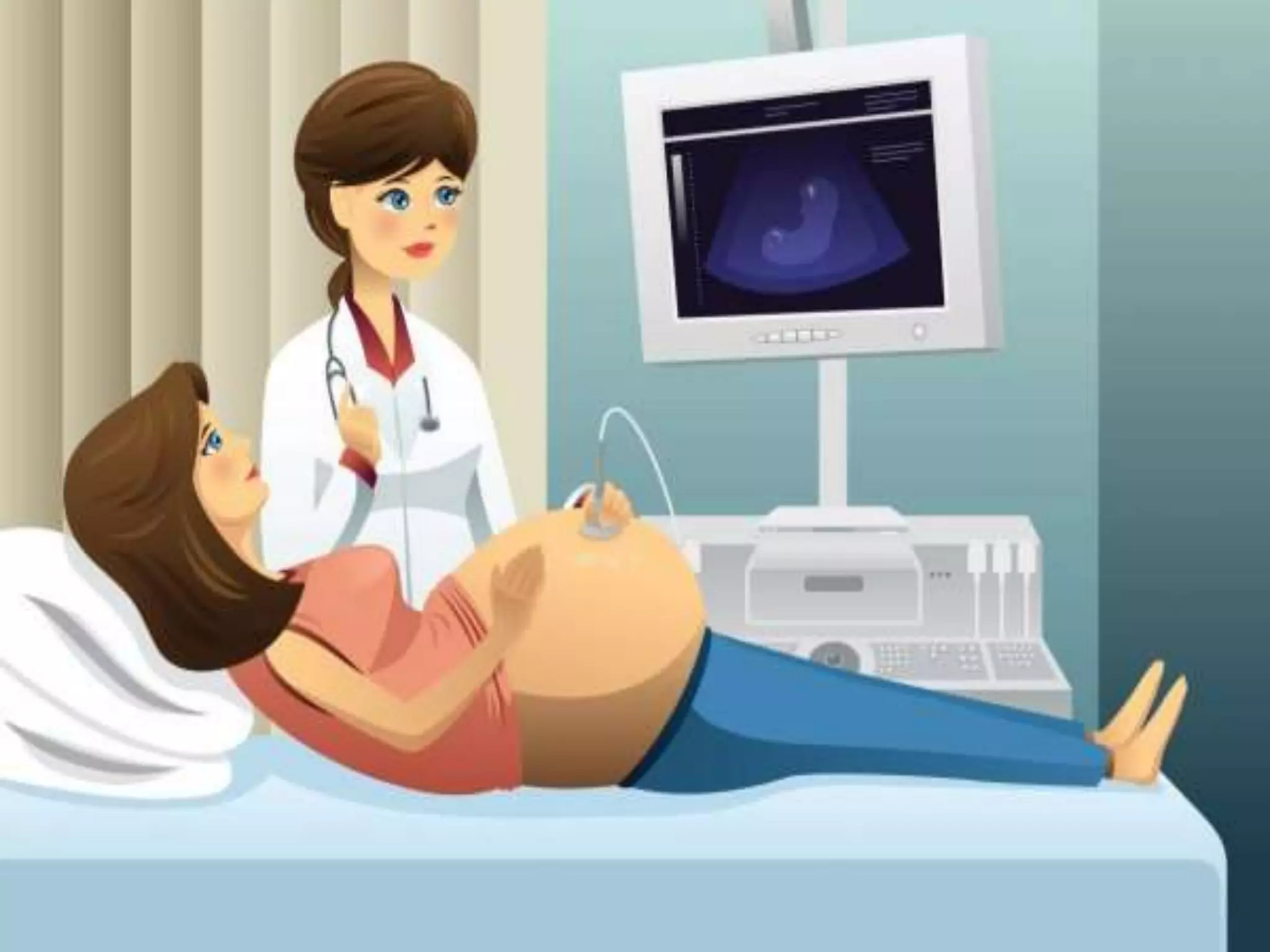
iii. Antenatal examination: Conducting physical
birth & present pregnancy.
iv. Antenatal examination:
 Calculate obstetrics examination etc.
 Calculating the expected date of delivery.
 Identifying high risk of mother.
 Providing counseling & health education.
 Helping mother & other family members in planning
the delivery.
2. Intranatal care:
i. Preparing the place for delivery.
ii. Arranging necessary equipments.
iii. Giving mental support to mothers.
iv. Preparing mother for delivery.
v. Examine position of fetus, dilatation of
cervix, & heart of fetus, observing the
position of bladder & uterine
contraction.
i. Noting general condition of the pregnant
mother, process of pain & time of membrane
rupture.
ii. Ensuring safe delivery, examining umbilical cord
& noting abnormalities.
iii. If necessary, taking help of doctor or referring
patient to a specialist.
iv. Maintaining through asepsis during delivery.
v. Should be ready to handle complications like
bleeding, malpresentation, cord prolepses etc.
vi. Noting the correct time of birth.
3. Postnatal care:
 The week immediately after the child birth is called
postnatal period. Responsibilities of Community
Health nurse are-
 Observing the blood pressure, temperature and pulse
of mother immediately after the delivery & then
during the following period.
 Collecting information about the general condition of
mother, sleep pain and elimination acceptor and
accordingly the nursing care.
 Observing fundus, perineum, lochia, bladder etc.
 Observing breast and nipples.
 Protecting the mother from complication like
puerperal sepsis, breast inflammation, postpartum
hemorrhage, urinary incontinence, urinary
retention and thrombophlebitis and providing
required treatment.
4. Neonatal care:
 Observing the respiration of newborn, immediately
after birth and if necessary provide resuscitation.
 Taking care of umbilical cord and cutting the cord &
tying it using proper techniques.
 Taking notice of abnormalities or congenital defects
and informing the relatives.
 Assessing the physical condition of newborn by his
APGAR score (9 or 10 is ideal score).
 Cleaning the new born child (giving bath to newborn
has become less popular).
 Taking care of newborn skin and eyes.
 Keeping the new born child on save bed and providing
breastfeeding to baby at earliest.
 Maintaining normal body temperature of the
newborn (give kangaroo care).

 Home visit: During home visit, community health
nurse should try to focus the attention of mother on
the following-
 Antenatal check up and its importance.
 Anatomy, physiology and psychology of pregnancy.
 Diet during pregnancy.
 Plans of delivery.
 Neonatal care .
 Family planning.
 Organizing and managing the nursing home.
 Playing the role of liaison officer under referral
system, for sending the mother to hospital for safe
delivery.
 Taking part in community activities.
 Explaining the importance of reproductive and child
health and community.
 Supervising the work of midwives and female health
workers and give them appropriate suggestions.
 Organizing and managing maternal clinics.
 Coordinating between the doctor, family and patients.
 Storing and maintaining the records of maternal and
child health services.
 Assisting the research work in the field of maternal
and child health services.
 Providing health education to mother and family
either individually or in the groups.
 Educating using demonstration pregnant mother and
relatives about maternal nursing.
 Community health nurse can discuss following topics
with pregnant mothers:
 Importance of regular antenatal check up.
 Personal hygiene and proper diet.
 Clean environment including mental environment.
 Importance of hospital delivery or delivery by trained
workers.
 Taking care of infants.
 The community health nurse has a multifaceted role in
maternal services it is only through proper discharge
maternal and infant mortality can be reduced to
targeted rate.
 Introduction of maternal and child health program.
 Aims of maternal and child health program.
 Sub areas of MCH.
 Activities of MCH program
 Need for MCH program
 Principles of MCH program
 Indicators of MCH program
 Recent trends in MCH.
 Role of nurse in MCH.
 Park K, Preventive And Social Medicine, 22nd Edition
2013, Published by Prem Nagar, Jabalpur, Page Number 481-514.
 Park K, Essentials Of Community Health Nursing, 4th Edition
2014, Published by Prem Nagar, Jabalpur ,Page Number 278-
280.
 Dr Mrs. Rao Sundari Kasturi, An Introduction To Community
Health Nursing 4th Edition 2005, Published by B. I. Publication
Private Limited, Chennai, Page Number 446.
 Swarnkar Keshav, Community Health Nursing 2nd Edition
2007, Published By N.R. Brothers Indore , Page Number 83-87
 www.google.com
Maternal and child health programme

Maternal and child health programme

  • 1.
    Presented by- Harsh Rastogi M.Sc.Nursing 1st year King George’s Medical University, Institute of Nursing, Lucknow.
  • 3.
     Mother &children not only constitute a large group, but they are also “vulnerable” or special group. They comprises 71.4% of population of the developing countries. In India, women of child bearing age (15-44 years) constitute 22.2% & children under 15 years of age about 35.3% of total population, together 57.5% of population consists of mother & children.  Current population of India as on 1.324 billion (2016)
  • 4.
     Children arethe foremost priorities of Community Health Program. Their aim is to increase the nutrition level of mother & children to ensure the birth of healthy child.  MCH services started due to different reasons in different countries. Maternal & child health services were first organized in India in 1921 by a committee of “The Lady Chelmsford League” which collected funds for child welfare & established demonstration services on an all India basis.
  • 5.
     4. Various& s facilities & programme organized for the purpose of providing medical & social services for mother & children.  5. medical services includes prenatal & postnatal services, family planning care, & pediatric care in infancy.
  • 7.
     According toW.H.O. (1976)  Maternal & child health services can be defined as “promoting, preventing, therapeutic or rehabilitation facility or care for the mother & child.”  Thus maternal & child health services is an important & essential services related to mother & child’s overall development.
  • 9.
     Reduce maternal,perinatal, infant & child mortality & morbidity rates.  Child survival.  Promoting reproductive health or safe motherhood.  Ensure birth of healthy child.
  • 10.
     Prevent malnutrition. Prevent communicable disease.  Early diagnosis & treatment of the health problems.  Health education & family planning services.
  • 12.
     The MCHservice are rendered through the infrastructure of P.H.C. & sub centers. It is proposed to set up one P.H.C. & sub-centers.  It is proposed to set up one P.H.C. for every 30,0000 population, & one sub-centers for every 3000 to 5000 population.  Each sub-centers are foundation of national health system. Each sub-sub-center is manned by a team of one male & female health worker. In addition there is a team of one trained Dai & one health guidein every village.
  • 13.
    • The componentsof MCH include the following sub areas-  Maternal health  Family planning  Child health  School health  Handicapped children  Care of the children in special setting such as day care centers.
  • 14.
     Maternal &child health services are an important part of primary health care.  Traditional activity areas of these programme- 1. Complete health check-up & care of the child & mother from conception to birth. 2. Studying health problems of mothers & children. 3. Providing health education to parents for taking care of children. 4. Training to professional & assistant workers.
  • 15.
     There are4 main reasons why mother & children health must be given top priorities in health programme- 1. Mother & child below the age of 15 years makeup the majority of the population in almost countries. 2. Mother & children constitutes a ‘special risk’ or vulnerable group in the case of illness, death, in the terms of pregnancy, childbirth of mothers, & growth 7 development in the case of children. 3. by improving the health of mother & children we can improve the health o the family & community. 4. Ensuring child survival is a future investment for the family & community.
  • 16.
     Maternal &child health can be evaluated on the basis of the following indicators: 1. Maternal mortality rate: below 1 (for every 1000 live births) 2. Infant mortality rate: below 30 (for every 1000 live births) 3. Death rate of 1-4 year old age group: below 10. 4. Size o f family: 2-3 members. 5. Perinatal mortality rate: 30-35. 6. Weight of minimum 90% of total children: according to height/weight charts.
  • 17.
    1. Integration ofcare: Earlier MCH care services were divide into antenatal, child care & family planning. Naturally it is helpful in increase the capability & effectiveness of services. 2. Risk approach: This new thought was born from the lack of resources & their availability. As per this the risk group among mother & infant is identified special care is given to them. 3. Man power changes: According to new concept, maternal & child health services should be left to traditional health workers (ANMs, health visitors) rather than specialist of field & child volunteers & workers of NGOs.
  • 18.
    4. Primary healthcare: It makes available information about protection & resources for mother & child health care. 5. Reproductive & child health: As per the decision taken in world women’s conferences, Beijing (1995), maternal & child health services have been included in reproductive & child health services.
  • 19.
     The guidingprinciples for the M.C.H. programme are: a. Consultation & participation: Consultation with , & participation by, families id integral to the services. Services will be informed by, & seek to meet, the young needs of young children & their families. b. Access & availability: all families with young children should be able to readily access the information, services & resources that are appropriate for, & useful to them. c. Primary prevention: Prevention of harm or damage is preferable to repairing it later. Early detection of risk factors is required, & intervention, where appropriate . d. Capacity building: Promotion of resilience & capacity is preferable to allowing problems to undermine health or autonomy.
  • 20.
    a. Equity: Allchildren should be able to grow up actively learning, healthy, sociable & safe-irrespective of their family circumstances & background. b. Family centered: The identification & management of child & family needs requires a family centered approach that focuses on strength.. c. Inclusion: Inclusive practices are essential for all children to get the best start, irrespective of their family circumstances, differing abilities 7 background. d. Partnership: Quality services are achieved through integrated services delivered & partnership with other early childhood & specialist services, & with family. e. Quality: All families with young children must be confident of the quality of information, services & resources provided to them.
  • 21.
    1. The MCHservices provide universal access to its services for children from birth to school age & their families. 2. The MCH services promotes optimal health & development outcomes for children from birth to school age through a focus on the child, mother & family. 3. The MCH services builds partnership with families & communities & collaborates & integrated with other services & organizations.
  • 22.
    1. The MCHservices are delivered by competent & professional workplace. 2. The MCH services are supported local government or the governing authority, provides a responsive & accountable services. 3. Services for children mothers & families through effective governance & managements. 4. The MCH services deliver a quality & safe services.
  • 23.
     Complete healthcheck up & care of the child & mother from conception to birth.  Studying the health problems of mother & child.  Providing health education to parents for taking care to children.  Training to professional & assistant workers.
  • 24.
    1. • DIRECTCARE 2. • MANAGERIAL FUNCTIONS 3. • EDUCATIONAL FUNCTIONS
  • 26.
     The functionof Community Health Nurse are: a. Direct care provider: 1. Antenatal care: i. Contact: Contacting every pregnant mother in the primary stage of pregnancy. ii. History : Taking history of general health, previous child birth & present pregnancy. iii. Antenatal examination: Conducting physical birth & present pregnancy.
  • 28.
    iv. Antenatal examination: Calculate obstetrics examination etc.  Calculating the expected date of delivery.  Identifying high risk of mother.  Providing counseling & health education.  Helping mother & other family members in planning the delivery.
  • 29.
    2. Intranatal care: i.Preparing the place for delivery. ii. Arranging necessary equipments. iii. Giving mental support to mothers. iv. Preparing mother for delivery. v. Examine position of fetus, dilatation of cervix, & heart of fetus, observing the position of bladder & uterine contraction.
  • 31.
    i. Noting generalcondition of the pregnant mother, process of pain & time of membrane rupture. ii. Ensuring safe delivery, examining umbilical cord & noting abnormalities. iii. If necessary, taking help of doctor or referring patient to a specialist. iv. Maintaining through asepsis during delivery. v. Should be ready to handle complications like bleeding, malpresentation, cord prolepses etc. vi. Noting the correct time of birth.
  • 32.
    3. Postnatal care: The week immediately after the child birth is called postnatal period. Responsibilities of Community Health nurse are-  Observing the blood pressure, temperature and pulse of mother immediately after the delivery & then during the following period.  Collecting information about the general condition of mother, sleep pain and elimination acceptor and accordingly the nursing care.
  • 34.
     Observing fundus,perineum, lochia, bladder etc.  Observing breast and nipples.  Protecting the mother from complication like puerperal sepsis, breast inflammation, postpartum hemorrhage, urinary incontinence, urinary retention and thrombophlebitis and providing required treatment.
  • 35.
    4. Neonatal care: Observing the respiration of newborn, immediately after birth and if necessary provide resuscitation.  Taking care of umbilical cord and cutting the cord & tying it using proper techniques.  Taking notice of abnormalities or congenital defects and informing the relatives.  Assessing the physical condition of newborn by his APGAR score (9 or 10 is ideal score).
  • 37.
     Cleaning thenew born child (giving bath to newborn has become less popular).  Taking care of newborn skin and eyes.  Keeping the new born child on save bed and providing breastfeeding to baby at earliest.  Maintaining normal body temperature of the newborn (give kangaroo care). 
  • 38.
     Home visit:During home visit, community health nurse should try to focus the attention of mother on the following-  Antenatal check up and its importance.  Anatomy, physiology and psychology of pregnancy.  Diet during pregnancy.  Plans of delivery.  Neonatal care .  Family planning.
  • 39.
     Organizing andmanaging the nursing home.  Playing the role of liaison officer under referral system, for sending the mother to hospital for safe delivery.  Taking part in community activities.  Explaining the importance of reproductive and child health and community.
  • 41.
     Supervising thework of midwives and female health workers and give them appropriate suggestions.  Organizing and managing maternal clinics.  Coordinating between the doctor, family and patients.  Storing and maintaining the records of maternal and child health services.  Assisting the research work in the field of maternal and child health services.
  • 42.
     Providing healtheducation to mother and family either individually or in the groups.  Educating using demonstration pregnant mother and relatives about maternal nursing.  Community health nurse can discuss following topics with pregnant mothers:  Importance of regular antenatal check up.
  • 44.
     Personal hygieneand proper diet.  Clean environment including mental environment.  Importance of hospital delivery or delivery by trained workers.  Taking care of infants.  The community health nurse has a multifaceted role in maternal services it is only through proper discharge maternal and infant mortality can be reduced to targeted rate.
  • 45.
     Introduction ofmaternal and child health program.  Aims of maternal and child health program.  Sub areas of MCH.  Activities of MCH program  Need for MCH program  Principles of MCH program  Indicators of MCH program  Recent trends in MCH.  Role of nurse in MCH.
  • 47.
     Park K,Preventive And Social Medicine, 22nd Edition 2013, Published by Prem Nagar, Jabalpur, Page Number 481-514.  Park K, Essentials Of Community Health Nursing, 4th Edition 2014, Published by Prem Nagar, Jabalpur ,Page Number 278- 280.  Dr Mrs. Rao Sundari Kasturi, An Introduction To Community Health Nursing 4th Edition 2005, Published by B. I. Publication Private Limited, Chennai, Page Number 446.  Swarnkar Keshav, Community Health Nursing 2nd Edition 2007, Published By N.R. Brothers Indore , Page Number 83-87  www.google.com