RECENT TRENDS IN HOSPITAL
STORES MANAGEMENT
Presented from – NITHIN PRASAD M
 Now a days stores management is assumed as
multifaceted role and dimension.
 Previously it was just places of receipt and issue.
 Now they transformed into centers of productivity, cost
containment, efficiency and effectivity.
INTRODUCTION
LISTOFRECENT
TRENDS
 Some of the recent trends are ;-
 AUTOMATED STORES,
 STOCKLESS PURCHASING,
 NETWORKING
 E – COMMERCE
 INTERNET TENDERING
 CANALISATION
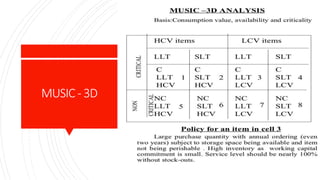
 MUSIC 3D
AUTOMATED
STORES
 It is a mechanized storage system where there is
considerable degree of remote control through
computer.
 High storage racking, palletization and
computerization are main features of an automated
stores.
 It ensures quick response to indents and improves
distribution management, space utilization and
ensures effective productivity.
 Efficient storage like FIFO ( First In First Out
)system, more accurate inventory management with
reduced handling time for receipt, issue and dispatch.
STOCKLESS
PURCHASING
 Stockless purchasing represents buying supplies for
direct utilization by the respective department without
duplication or accumulation in the central stores .
 It is based on JIT ( Just In Time ) system.
 It is ideal for urban areas because space effective,
directly delivered by original supplier, and supplies
obtained on short notice and delivery.
NETWORKING
 2 Types :-
 LAN – Local Area Networking – it is using computer
network to obtain information about availability, stock
position, funds so on at any point of time like away
from office ( HOME ). But not more distance away.
 WAN – Wide Area Networking – LAN is suitable for
computers within limited area. But, WAN can connect
computers each other among different cities. WAN
facilitates may be gainfully employed for data
compilation and analysis like cost effectiveness, cost
containment in different healthcare institutions.
E– COMMERCE
 E – commerce is gaining momentum in global
procurement. In INDIA, It is legal by IT BILL 1999.
 This bill set up a regulatory framework , provides for
digital signatures and a digital certification authority
and a controller to monitor Net related activities.
 Online transactions are limited to placing orders. The
goods are delivered physically after the cash is
collected. Verifying digital signature, transaction
legally approved and bill processed.
INTERNET
TRENDING
 Global trending through website utilization is now
frequently employed by healthcare institutions.
 advantage is getting details of tender requisites are
more easily obtainable by the national and
international manufactures, agents and sellers
through websites.
 The information is disseminated quicker to all
concerned .
CANALIZATION
 Canalization or bulk buying from other countries with
adequate expertise helps to optimally utilize the
foreign exchange resources.
 This avoid miss use of import license and improper
invoicing.
 through canalization its easy for hospitals to buy
medical equipment's at right price from reliable
suppliers, maintenance / training is facilitated and
scrap value is also enhanced on obsolescence of the
equipment.
MUSIC- 3D
THANK
YOU

MATERIALS-MANAGEMENT.pptx

  • 1.
    RECENT TRENDS INHOSPITAL STORES MANAGEMENT Presented from – NITHIN PRASAD M
  • 2.
     Now adays stores management is assumed as multifaceted role and dimension.  Previously it was just places of receipt and issue.  Now they transformed into centers of productivity, cost containment, efficiency and effectivity. INTRODUCTION
  • 3.
    LISTOFRECENT TRENDS  Some ofthe recent trends are ;-  AUTOMATED STORES,  STOCKLESS PURCHASING,  NETWORKING  E – COMMERCE  INTERNET TENDERING  CANALISATION  MUSIC 3D
  • 4.
    AUTOMATED STORES  It isa mechanized storage system where there is considerable degree of remote control through computer.  High storage racking, palletization and computerization are main features of an automated stores.  It ensures quick response to indents and improves distribution management, space utilization and ensures effective productivity.  Efficient storage like FIFO ( First In First Out )system, more accurate inventory management with reduced handling time for receipt, issue and dispatch.
  • 5.
    STOCKLESS PURCHASING  Stockless purchasingrepresents buying supplies for direct utilization by the respective department without duplication or accumulation in the central stores .  It is based on JIT ( Just In Time ) system.  It is ideal for urban areas because space effective, directly delivered by original supplier, and supplies obtained on short notice and delivery.
  • 6.
    NETWORKING  2 Types:-  LAN – Local Area Networking – it is using computer network to obtain information about availability, stock position, funds so on at any point of time like away from office ( HOME ). But not more distance away.  WAN – Wide Area Networking – LAN is suitable for computers within limited area. But, WAN can connect computers each other among different cities. WAN facilitates may be gainfully employed for data compilation and analysis like cost effectiveness, cost containment in different healthcare institutions.
  • 7.
    E– COMMERCE  E– commerce is gaining momentum in global procurement. In INDIA, It is legal by IT BILL 1999.  This bill set up a regulatory framework , provides for digital signatures and a digital certification authority and a controller to monitor Net related activities.  Online transactions are limited to placing orders. The goods are delivered physically after the cash is collected. Verifying digital signature, transaction legally approved and bill processed.
  • 8.
    INTERNET TRENDING  Global trendingthrough website utilization is now frequently employed by healthcare institutions.  advantage is getting details of tender requisites are more easily obtainable by the national and international manufactures, agents and sellers through websites.  The information is disseminated quicker to all concerned .
  • 9.
    CANALIZATION  Canalization orbulk buying from other countries with adequate expertise helps to optimally utilize the foreign exchange resources.  This avoid miss use of import license and improper invoicing.  through canalization its easy for hospitals to buy medical equipment's at right price from reliable suppliers, maintenance / training is facilitated and scrap value is also enhanced on obsolescence of the equipment.
  • 10.
  • 11.