Raw Material, Material and goods
Thinking routines
Good
Material
Raw material
9
Natural resources from
which the materials we use
in technological activity are
obtained
the substance of which
something is made
3
Vegetable: wood, cotton, cork
Animal: wool, silk
Mineral: clay, granite, slate, metallic ore
Wood
Cotton
Cork
Cap
2
Wool
(ball, skein)
Silk
(robe, dressing gown, housecoat)
2
Clay
Granite
Tin
Tin/Canslate
8
Renewable
Non renewable
Oil / Petroleum
2
Over exploited quarry
 Wool
 Marble
 Cotton
 Clay
 Sand
 Silk
 Cork
 Glass
 Steel
 Plastic
 Cotton
 Porcelain
 Concrete
 Iron
 Mechanical strength
 tensile strength
 compressive strength
 Flexural strength
 Video iphone
 Torsional strength
 Video
 Shear strength
10
 Elasticity
 Plasticity
 Ductility.- (ductile).
 Malleability.- (malleable).
5
 Hardness
 Toughness/Brittleness
 Permeability / impermeability.
5
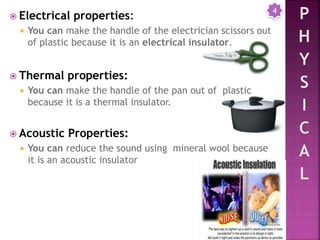
 Electrical properties:
 You can make the handle of the electrician scissors out
of plastic because it is an electrical insulator.
 Thermal properties:
 You can make the handle of the pan out of plastic
because it is a thermal insulator.
 Acoustic Properties:
 You can reduce the sound using mineral wool because
it is an acoustic insulator
4
 Magnetic properties:
 video.
 Optical properties:
 Opaque
 Transparent
 Translucent
6
 Oxidation
2
 Recyclable material
 Glass, paper, cardboard, some metals, some plastics
10
Landfill /rubbish dump
Rubbish/garbage/trash
Bin, container
Recycling center
When we reuse and recycle we conserve natural
resources and reduce the accumulation of waste
products which damage the environment.
 Toxic material
 Heavy metals
3
These materials contaminate the environment (soil, the water and the
atmosphere). They can be poisonous for living things.
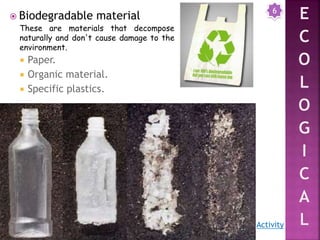
 Biodegradable material
 Paper.
 Organic material.
 Specific plastics.
6
Activity
These are materials that decompose
naturally and don't cause damage to the
environment.
And derivatives
 Wood is classified into:
 Natural:
 Hardwood
 Softwood
 Derivatives
 Paper, cardboard, card
 Plywood, chipboard, fiberboard, hardboard and cork.
 Derivatives
 Plywood
 Chipboard
 Fiberboard
 Hardboard
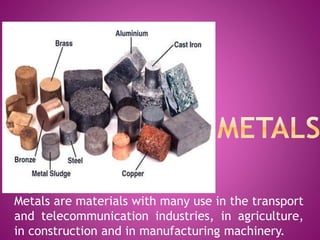
Metals are materials with many use in the transport
and telecommunication industries, in agriculture,
in construction and in manufacturing machinery.
 According to
 Pure metals: Metals whose
crystalline structure is
composed of only one
metallic element. For
example: gold, silver, iron,
copper etc.
 Metal alloys or alloys: These
are a combination of one or
two metals. One of them
has to be a metal For
example: bronze, tinplate,
steel, cast iron, brass
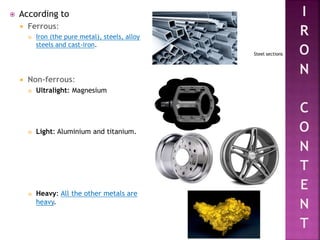
 According to
 Ferrous:
 Iron (the pure metal), steels, alloy
steels and cast-iron.
 Non-ferrous:
 Ultralight: Magnesium
 Light: Aluminium and titanium.
 Heavy: All the other metals are
heavy.
Steel sections
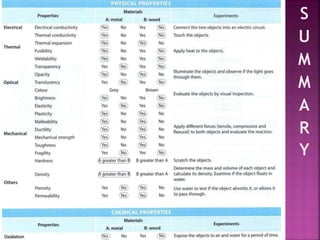
 The general properties of metals.
 Toughness: The ability to support impacts without
breaking. Metals are tough.
 Ductility: The ability to form wires.
 Malleability: The ability to form sheets.
 Hardness: Scratch resistance. Metals are relatively
hard materials.
 Electrical and thermal conductivity: Metals conduct
heat and electricity well.
 Metallic shine: Metals characteristically shine after
being recently cut.
 Most of them are toxic, recyclable and reusable
 Some of them are magnetic. (Iron, steel, cast iron)
 Except mercury all metals are solid at room
temperature.
 The process of obtaining metals
 Mining
 Obtaining the metals from mines.
 Separation of the mineral into ore and gangue
 The metal is extracted from the ore in an ironworks
through physical and chemical processes
 Metallurgy
 The technology of metals
 Technique of obtaining and
producing metals from the
ores that contain them. It
studies its properties too
 Siderurgy (ironworks)
(Steel and iron industry)
Materials unit 3

Materials unit 3

  • 1.
    Raw Material, Materialand goods Thinking routines
  • 2.
    Good Material Raw material 9 Natural resourcesfrom which the materials we use in technological activity are obtained the substance of which something is made
  • 3.
  • 4.
    Vegetable: wood, cotton,cork Animal: wool, silk Mineral: clay, granite, slate, metallic ore
  • 5.
  • 6.
  • 7.
  • 8.
    Renewable Non renewable Oil /Petroleum 2 Over exploited quarry
  • 10.
     Wool  Marble Cotton  Clay  Sand  Silk  Cork
  • 11.
     Glass  Steel Plastic  Cotton  Porcelain  Concrete  Iron
  • 12.
     Mechanical strength tensile strength  compressive strength  Flexural strength  Video iphone  Torsional strength  Video  Shear strength 10
  • 13.
     Elasticity  Plasticity Ductility.- (ductile).  Malleability.- (malleable). 5
  • 14.
     Hardness  Toughness/Brittleness Permeability / impermeability. 5
  • 15.
     Electrical properties: You can make the handle of the electrician scissors out of plastic because it is an electrical insulator.  Thermal properties:  You can make the handle of the pan out of plastic because it is a thermal insulator.  Acoustic Properties:  You can reduce the sound using mineral wool because it is an acoustic insulator 4
  • 16.
     Magnetic properties: video.  Optical properties:  Opaque  Transparent  Translucent 6
  • 17.
  • 18.
     Recyclable material Glass, paper, cardboard, some metals, some plastics 10 Landfill /rubbish dump Rubbish/garbage/trash Bin, container Recycling center When we reuse and recycle we conserve natural resources and reduce the accumulation of waste products which damage the environment.
  • 19.
     Toxic material Heavy metals 3 These materials contaminate the environment (soil, the water and the atmosphere). They can be poisonous for living things.
  • 20.
     Biodegradable material Paper.  Organic material.  Specific plastics. 6 Activity These are materials that decompose naturally and don't cause damage to the environment.
  • 21.
  • 22.
     Wood isclassified into:  Natural:  Hardwood  Softwood  Derivatives  Paper, cardboard, card  Plywood, chipboard, fiberboard, hardboard and cork.
  • 23.
     Derivatives  Plywood Chipboard  Fiberboard  Hardboard
  • 24.
    Metals are materialswith many use in the transport and telecommunication industries, in agriculture, in construction and in manufacturing machinery.
  • 25.
     According to Pure metals: Metals whose crystalline structure is composed of only one metallic element. For example: gold, silver, iron, copper etc.  Metal alloys or alloys: These are a combination of one or two metals. One of them has to be a metal For example: bronze, tinplate, steel, cast iron, brass
  • 26.
     According to Ferrous:  Iron (the pure metal), steels, alloy steels and cast-iron.  Non-ferrous:  Ultralight: Magnesium  Light: Aluminium and titanium.  Heavy: All the other metals are heavy. Steel sections
  • 27.
     The generalproperties of metals.  Toughness: The ability to support impacts without breaking. Metals are tough.  Ductility: The ability to form wires.  Malleability: The ability to form sheets.  Hardness: Scratch resistance. Metals are relatively hard materials.  Electrical and thermal conductivity: Metals conduct heat and electricity well.  Metallic shine: Metals characteristically shine after being recently cut.  Most of them are toxic, recyclable and reusable  Some of them are magnetic. (Iron, steel, cast iron)  Except mercury all metals are solid at room temperature.
  • 28.
     The processof obtaining metals  Mining  Obtaining the metals from mines.  Separation of the mineral into ore and gangue  The metal is extracted from the ore in an ironworks through physical and chemical processes
  • 29.
     Metallurgy  Thetechnology of metals  Technique of obtaining and producing metals from the ores that contain them. It studies its properties too  Siderurgy (ironworks) (Steel and iron industry)