Masterbatch
S H A K T I N A D A R
P A C K A G I N G D E V E L O P M E N T
C A V I N K A R E P V T . L T D .
2 6 T H A U G 2 0 1 5
1
Contents
1. Masterbatch & its types
2. Importance of Distribution & Dispersion
3. Masterbatch Manufacturing Process - https://youtu.be/0j3-GY-B6vk
4. Effect Pigments
5. Additive MB’s
6. Fillers
2
Definitions
Polymer Compounding : Combining a base plastic resin with Colours, Modifiers,
Reinforcements, Fillers or other polymers by Melting & Mixing in an Extruder to convert the
base resin properties to deliver a better performance, low cost, ease of manufacturing & more
attractive appearance.
Agglomeration : to form a mass
Pigments : Colouring matter
3
Masterbatch
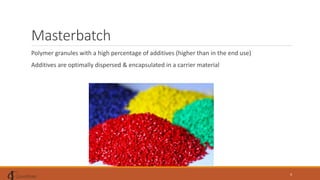
Polymer granules with a high percentage of additives (higher than in the end use)
Additives are optimally dispersed & encapsulated in a carrier material
4
Types of Masterbatch
1. Colour Masterbatch – for colouring plastic products
2. Additive Masterbatch – for certain chemical & physical properties for end product
3. Filler Masterbatch – for cost reduction
5
Goal of Masterbatch Production
The Aim is the ideal dispersion of pigment/additives in the polymer matrix.
The powdery feed material tends to agglomerate.
Dispersive & Distributive Mixing:
Dispersion : incorporation of pigment/additives into binder or carrier
Distributive mixing : distribution of the material without destroying the single components
6
Mixing
Bad DISPERSION & Bad DISTRIBUTION
7
Mixing
Bad DISPERSION & Good DISTRIBUTION
8
Mixing
Good DISPERSION & Bad DISTRIBUTION
9
Mixing
Good DISPERSION & Good DISTRIBUTION
10
Production Process
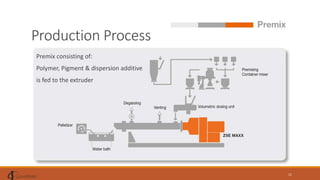
Premix consisting of:
Polymer, Pigment & dispersion additive
is fed to the extruder
11
12
Polymer is plasticized first
Pigment & dispersion additive
via separate feeder
Methods of Producing Masterbatch
Single Stage Process
All the components are combined in one processing step
Process can be either Pre-mix or Split
Can be applied for all 3 types of Masterbatch
Two Stage Process
13
Methods of Producing Masterbatch
Two Stage Process
Single pigment are produced in the same manner as single stage
Followed by second extrusion step, that combines required ratio of colourant & additive
Can be applied only for Colour Masterbatch
14
Methods of Producing Masterbatch
15
Colour Masterbatch
Colour Pigments (20-90%) + Carrier Polymer (>10%)
(Carrier polymer selection is basis compatibility of the Raw Polymer which is used for the Plastic
product)
Universal Masterbatch
(these are polymer less masterbatch)
16
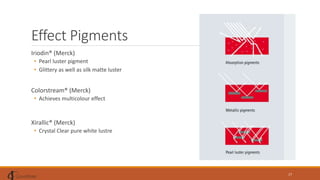
Effect Pigments
Iriodin® (Merck)
• Pearl luster pigment
• Glittery as well as silk matte luster
Colorstream® (Merck)
• Achieves multicolour effect
Xirallic® (Merck)
• Crystal Clear pure white lustre
17
Effect Pigments
Firemist Colourmotion (BASF)
• Glittering effect
Santa Fe (BASF)
• Earth tone added desert like hue
• Specular property (mirror like)
Dynacolour (BASF)
• Gives high degree of colour purity & intensity
18
Additive Masterbatch
Anti-Static:
• Reduces static charges developed in the plastic products
Anti-Block:
• Plastic film layers tend to stick together, this phenomena is called Blocking.
• Anti-block MB create small space between the 2 layers (surface roughness) preventing blocking.
• Additionally this imparts Slip properties & Scratch resistance
• Allows smooth unwinding of Rolls
Anti-Fogging :
• Fogging refers to condensation of water-vapours on the surface of the plastic film
19
Additive Masterbatch
Anti-Oxidant :
• Used to protect polymers from Degradation, during processing & during use
• During polymer degradation free radicals are formed, resulting in uncontrolled chain reactions
• Anti-Oxidants are used to decrease the amount of free radicals
Cling Agent :
• Used during the manufacturing of stretch films
UV Masterbatch :
• These are PE filled with Ultra Violet Stabilizers (hindered amine light stabilizers)
• Harmful UV rays from sunlight degrade & discolour the exposed plastic products
• UV MB avoids discolouration & chalking
20
Additive Masterbatch
Optical Brightener Masterbatch :
• Used to impart whiteness & brightness to plastic products without any blue tone
Silicon Masterbatch :
• Enhances abrasion resistance
Processing Aid Masterbatch :
• Improves the extrusion ability of the polymer
Clarifying Masterbatch :
• Lowers the haze & improves the transparancy in Injection moulded items
21
Fillers
Fillers are materials added to plastic to lower the consumption of expensive polymers.
Eg.
Calcium Carbonate (CaCO3)
Talc
22
Benefits
Optimum Dispersion of pigments/additives
Low Stock holding compared to pre-compounded materials
Dust free, no health or safety risk
Reduction in purging cost
23
Thank You
24

Masterbatch 26.08.2015

  • 1.
    Masterbatch S H AK T I N A D A R P A C K A G I N G D E V E L O P M E N T C A V I N K A R E P V T . L T D . 2 6 T H A U G 2 0 1 5 1
  • 2.
    Contents 1. Masterbatch &its types 2. Importance of Distribution & Dispersion 3. Masterbatch Manufacturing Process - https://youtu.be/0j3-GY-B6vk 4. Effect Pigments 5. Additive MB’s 6. Fillers 2
  • 3.
    Definitions Polymer Compounding :Combining a base plastic resin with Colours, Modifiers, Reinforcements, Fillers or other polymers by Melting & Mixing in an Extruder to convert the base resin properties to deliver a better performance, low cost, ease of manufacturing & more attractive appearance. Agglomeration : to form a mass Pigments : Colouring matter 3
  • 4.
    Masterbatch Polymer granules witha high percentage of additives (higher than in the end use) Additives are optimally dispersed & encapsulated in a carrier material 4
  • 5.
    Types of Masterbatch 1.Colour Masterbatch – for colouring plastic products 2. Additive Masterbatch – for certain chemical & physical properties for end product 3. Filler Masterbatch – for cost reduction 5
  • 6.
    Goal of MasterbatchProduction The Aim is the ideal dispersion of pigment/additives in the polymer matrix. The powdery feed material tends to agglomerate. Dispersive & Distributive Mixing: Dispersion : incorporation of pigment/additives into binder or carrier Distributive mixing : distribution of the material without destroying the single components 6
  • 7.
    Mixing Bad DISPERSION &Bad DISTRIBUTION 7
  • 8.
    Mixing Bad DISPERSION &Good DISTRIBUTION 8
  • 9.
    Mixing Good DISPERSION &Bad DISTRIBUTION 9
  • 10.
    Mixing Good DISPERSION &Good DISTRIBUTION 10
  • 11.
    Production Process Premix consistingof: Polymer, Pigment & dispersion additive is fed to the extruder 11
  • 12.
    12 Polymer is plasticizedfirst Pigment & dispersion additive via separate feeder
  • 13.
    Methods of ProducingMasterbatch Single Stage Process All the components are combined in one processing step Process can be either Pre-mix or Split Can be applied for all 3 types of Masterbatch Two Stage Process 13
  • 14.
    Methods of ProducingMasterbatch Two Stage Process Single pigment are produced in the same manner as single stage Followed by second extrusion step, that combines required ratio of colourant & additive Can be applied only for Colour Masterbatch 14
  • 15.
    Methods of ProducingMasterbatch 15
  • 16.
    Colour Masterbatch Colour Pigments(20-90%) + Carrier Polymer (>10%) (Carrier polymer selection is basis compatibility of the Raw Polymer which is used for the Plastic product) Universal Masterbatch (these are polymer less masterbatch) 16
  • 17.
    Effect Pigments Iriodin® (Merck) •Pearl luster pigment • Glittery as well as silk matte luster Colorstream® (Merck) • Achieves multicolour effect Xirallic® (Merck) • Crystal Clear pure white lustre 17
  • 18.
    Effect Pigments Firemist Colourmotion(BASF) • Glittering effect Santa Fe (BASF) • Earth tone added desert like hue • Specular property (mirror like) Dynacolour (BASF) • Gives high degree of colour purity & intensity 18
  • 19.
    Additive Masterbatch Anti-Static: • Reducesstatic charges developed in the plastic products Anti-Block: • Plastic film layers tend to stick together, this phenomena is called Blocking. • Anti-block MB create small space between the 2 layers (surface roughness) preventing blocking. • Additionally this imparts Slip properties & Scratch resistance • Allows smooth unwinding of Rolls Anti-Fogging : • Fogging refers to condensation of water-vapours on the surface of the plastic film 19
  • 20.
    Additive Masterbatch Anti-Oxidant : •Used to protect polymers from Degradation, during processing & during use • During polymer degradation free radicals are formed, resulting in uncontrolled chain reactions • Anti-Oxidants are used to decrease the amount of free radicals Cling Agent : • Used during the manufacturing of stretch films UV Masterbatch : • These are PE filled with Ultra Violet Stabilizers (hindered amine light stabilizers) • Harmful UV rays from sunlight degrade & discolour the exposed plastic products • UV MB avoids discolouration & chalking 20
  • 21.
    Additive Masterbatch Optical BrightenerMasterbatch : • Used to impart whiteness & brightness to plastic products without any blue tone Silicon Masterbatch : • Enhances abrasion resistance Processing Aid Masterbatch : • Improves the extrusion ability of the polymer Clarifying Masterbatch : • Lowers the haze & improves the transparancy in Injection moulded items 21
  • 22.
    Fillers Fillers are materialsadded to plastic to lower the consumption of expensive polymers. Eg. Calcium Carbonate (CaCO3) Talc 22
  • 23.
    Benefits Optimum Dispersion ofpigments/additives Low Stock holding compared to pre-compounded materials Dust free, no health or safety risk Reduction in purging cost 23
  • 24.