THE MARKETING PLAN
SMALL BUSINESS DEVELOPMENT AND ENTREPRENEURSHIP
TEAM MEMBERS:
1. Syed Abdul Basit Shah (13PWMEC-3541)
2. Basit Nazir (13PWMEC-3540)
3. Kashif Riaz (13PWMEC-3538)
4. Hamood Ur Rahman (13PWMEC-3539)
5. Umar Ayub Afridi (13PWMEC-3563)
Contents:
1. Overview of all plans
2. What is Market?
3. What is Marketing plan?
4. Why do we need marketing plan?
5. Research and Analysis
6. Outline of Marketing Plan
7. What is “Marketing mix”?
8. Practical Application or Idea of Marketing Plan
1) BUSINESS PLAN
2) FINANCIAL PLAN
3) PRODUCTION PLAN
4) ORGANIZATIONAL PLAN
5) OPERATIONAL PLAN
Over View of Other plans
Primary concern is WISH , Satisfaction and need of
customer
Quality , Quantity , Price and Time are secondary
What is Market?
Background
Example
What is Marketing Plan?
 What is its importance?
 Less profit
 Risk of failure
 Achieving the target
Need of Marketing Plan
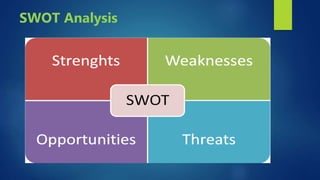
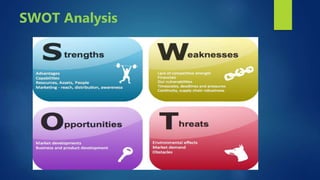
Marketing Analysis
 Ups and downs of the product.
 Achieved by SWOT analysis.
 For a product
 place
 industry
 person
 Identifying the internal and external factors that are favorable and
unfavorable to achieve that objective.
SWOT Analysis
SWOT Analysis
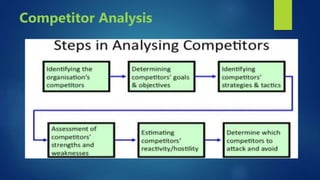
Competitor Analysis
Marketing research for the new
venture
It involves gathering of data in order to determine
 Who will buy the product or services?
 What is the size of potential market?
 What price should be charged?
 What is the most appropriate channel?
 What is the most effective promotion strategy to inform and
reach potential customers?
Steps in Marketing Research
1. Defining the purpose or objectives
Ask People about your product
Quality
Price
Advertisement
Steps in marketing research (Continued)
2. Gathering data from secondary sources:
Old information
Internet
Newspaper
Trade magazines etc.
Steps in marketing research (Continued)
3. Gathering data from primary sources:
New information
Observation
Networking
Interviewing
Experimentations
Steps in marketing research (Continued)
4. Analyzing and interpreting the Results
Analyzing the situation
 Background
 Considering strength and weakness
 Available opportunities and expected threats
 Competitor analysis
Marketing objectives and goals
 Promotion of product
 Defining time interval
 Determining rate of success
Marketing Strategy
 Launching of product
 Determining the influencing factors
External factors
Internal factors
External Factors
 Culture
 Economy
 Technology
 Demand
Internal Factors
 Financial
 Management
 Suppliers
Flexibility
 Room for remodeling i.e change in some factors according
to the situation
Achieving Goals
 Growth and development of business
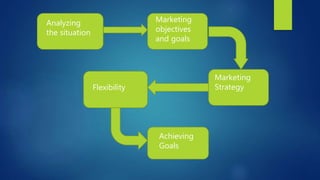
Analyzing
the situation
Marketing
objectives
and goals
Flexibility
Marketing
Strategy
Achieving
Goals
Marketing Strategy and Action Programs
Marketing Strategy and Action decisions respond to the
following question:
How do we get there?
The question can be best answered by marketing mix.
Marketing Mix: It is combination of;
1. Product or service
2. Price
3. Distribution
4. and Promotion
Product or Service
 Indicates a description of the product or service to be
marketed in the venture
 Product or service definition should be considered more
than the physical characteristics
 It involves packaging, price, warranty, image, service, delivery
time, new features, style and even the website that will be
seen by most customers.
Pricing
 Prior to setting the price, following three important elements
should be considered:
1. Costs (Cost of material used, labor salary and overhead)
2. Margins or Markups
3. Competition: Update the product and install new features or
reduce the price little bit from the competitor's price.
Distribution
 Distribution provides utility to the consumer i.e. it makes a product
convenient to purchase when it is needed.
 Products to be distributed in outlets that have a quality image.
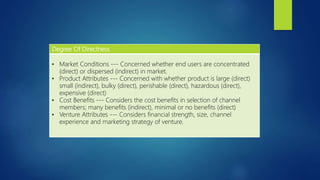
 Channel distribution strategy considerations are summarized in table
given on next slide.
Degree Of Directness
• Market Conditions --- Concerned whether end users are concentrated
(direct) or dispersed (indirect) in market.
• Product Attributes --- Concerned with whether product is large (direct)
small (indirect), bulky (direct), perishable (direct), hazardous (direct),
expensive (direct)
• Cost Benefits --- Considers the cost benefits in selection of channel
members; many benefits (indirect), minimal or no benefits (direct)
• Venture Attributes --- Considers financial strength, size, channel
experience and marketing strategy of venture.
Promotion
 It is necessary to inform potential consumers about the
product’s availability or to educate the consumer using
advertising media.
 It is achieved through the following methods:
1. Advertisement in Newspapers and Magazines
2. Radio
3. Television
4. Advertisement Boards
5. Through Social Media
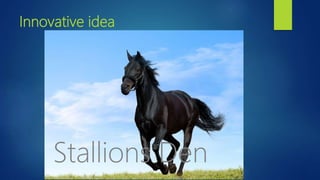
Innovative idea
Stallions Den
Executive Summary
 Getting Horses
 Reproduction__ Breeding
 Training
Target Customers
 Spectators of four cattle shows in Pakistan; DI Khan, Lahore
Fort, Sindh and Baluchistan.
 Armored Core Division(Cavalary) of Pakistan Army
 Derby (Horse Racing)
 Polo festival in Shandoor
Selling Proposition
 Reasonable Price
 Free Delivery with in Pakistan
 Well Trained
Pricing
 Investment + Costs on Transporting + Overhead + Profit
Distribution
 Once the deal is done, the package will be delivered to the
destination customer wish for.
Promotion
 Visiting cattle shows
 Through Pamphlets
 Arranging my own show
 Short Paid Documentary Televised
 Sometimes free control riding for untrained people to
motivate them.
 Visiting the foreign countries
Questions?
Thanks for Listening!

Marketing plan presentation (2015, section B) [UET Peshawar]

  • 1.
    THE MARKETING PLAN SMALLBUSINESS DEVELOPMENT AND ENTREPRENEURSHIP TEAM MEMBERS: 1. Syed Abdul Basit Shah (13PWMEC-3541) 2. Basit Nazir (13PWMEC-3540) 3. Kashif Riaz (13PWMEC-3538) 4. Hamood Ur Rahman (13PWMEC-3539) 5. Umar Ayub Afridi (13PWMEC-3563)
  • 2.
    Contents: 1. Overview ofall plans 2. What is Market? 3. What is Marketing plan? 4. Why do we need marketing plan? 5. Research and Analysis 6. Outline of Marketing Plan 7. What is “Marketing mix”? 8. Practical Application or Idea of Marketing Plan
  • 3.
    1) BUSINESS PLAN 2)FINANCIAL PLAN 3) PRODUCTION PLAN 4) ORGANIZATIONAL PLAN 5) OPERATIONAL PLAN Over View of Other plans
  • 4.
    Primary concern isWISH , Satisfaction and need of customer Quality , Quantity , Price and Time are secondary What is Market?
  • 5.
  • 6.
     What isits importance?  Less profit  Risk of failure  Achieving the target Need of Marketing Plan
  • 7.
    Marketing Analysis  Upsand downs of the product.  Achieved by SWOT analysis.  For a product  place  industry  person  Identifying the internal and external factors that are favorable and unfavorable to achieve that objective.
  • 8.
  • 9.
  • 10.
  • 11.
    Marketing research forthe new venture It involves gathering of data in order to determine  Who will buy the product or services?  What is the size of potential market?  What price should be charged?  What is the most appropriate channel?  What is the most effective promotion strategy to inform and reach potential customers?
  • 12.
    Steps in MarketingResearch 1. Defining the purpose or objectives Ask People about your product Quality Price Advertisement
  • 13.
    Steps in marketingresearch (Continued) 2. Gathering data from secondary sources: Old information Internet Newspaper Trade magazines etc.
  • 14.
    Steps in marketingresearch (Continued) 3. Gathering data from primary sources: New information Observation Networking Interviewing Experimentations
  • 15.
    Steps in marketingresearch (Continued) 4. Analyzing and interpreting the Results
  • 16.
    Analyzing the situation Background  Considering strength and weakness  Available opportunities and expected threats  Competitor analysis
  • 17.
    Marketing objectives andgoals  Promotion of product  Defining time interval  Determining rate of success
  • 18.
    Marketing Strategy  Launchingof product  Determining the influencing factors External factors Internal factors
  • 19.
    External Factors  Culture Economy  Technology  Demand
  • 20.
    Internal Factors  Financial Management  Suppliers
  • 21.
    Flexibility  Room forremodeling i.e change in some factors according to the situation
  • 22.
    Achieving Goals  Growthand development of business
  • 23.
  • 24.
    Marketing Strategy andAction Programs Marketing Strategy and Action decisions respond to the following question: How do we get there?
  • 25.
    The question canbe best answered by marketing mix. Marketing Mix: It is combination of; 1. Product or service 2. Price 3. Distribution 4. and Promotion
  • 26.
    Product or Service Indicates a description of the product or service to be marketed in the venture  Product or service definition should be considered more than the physical characteristics  It involves packaging, price, warranty, image, service, delivery time, new features, style and even the website that will be seen by most customers.
  • 27.

    Pricing  Prior tosetting the price, following three important elements should be considered: 1. Costs (Cost of material used, labor salary and overhead) 2. Margins or Markups 3. Competition: Update the product and install new features or reduce the price little bit from the competitor's price.
  • 28.
    Distribution  Distribution providesutility to the consumer i.e. it makes a product convenient to purchase when it is needed.  Products to be distributed in outlets that have a quality image.  Channel distribution strategy considerations are summarized in table given on next slide.
  • 29.
    Degree Of Directness •Market Conditions --- Concerned whether end users are concentrated (direct) or dispersed (indirect) in market. • Product Attributes --- Concerned with whether product is large (direct) small (indirect), bulky (direct), perishable (direct), hazardous (direct), expensive (direct) • Cost Benefits --- Considers the cost benefits in selection of channel members; many benefits (indirect), minimal or no benefits (direct) • Venture Attributes --- Considers financial strength, size, channel experience and marketing strategy of venture.
  • 30.
    Promotion  It isnecessary to inform potential consumers about the product’s availability or to educate the consumer using advertising media.  It is achieved through the following methods: 1. Advertisement in Newspapers and Magazines 2. Radio 3. Television 4. Advertisement Boards 5. Through Social Media
  • 31.
  • 32.
    Executive Summary  GettingHorses  Reproduction__ Breeding  Training
  • 33.
    Target Customers  Spectatorsof four cattle shows in Pakistan; DI Khan, Lahore Fort, Sindh and Baluchistan.  Armored Core Division(Cavalary) of Pakistan Army  Derby (Horse Racing)  Polo festival in Shandoor
  • 34.
    Selling Proposition  ReasonablePrice  Free Delivery with in Pakistan  Well Trained
  • 35.
    Pricing  Investment +Costs on Transporting + Overhead + Profit
  • 36.
    Distribution  Once thedeal is done, the package will be delivered to the destination customer wish for.
  • 37.
    Promotion  Visiting cattleshows  Through Pamphlets  Arranging my own show  Short Paid Documentary Televised  Sometimes free control riding for untrained people to motivate them.  Visiting the foreign countries
  • 38.
  • 39.