PRESENTED BY –LG 12
JOYDEEP MUKHERJEE
NEHA SUDRANIA
DAIZY DAS
SNEHASIH MONDAL
TANMOY ROY
SCANNING MARKETING ENVIRONMENT
 BUSINESSENVIRONMENT
EXTERNAL MACRO ENVIORNMENT
COMPETITIVE ENVIRONMENT
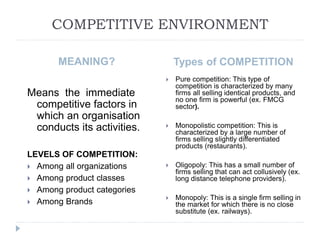
MEANING? Types of COMPETITION
Means the immediate
competitive factors in
which an organisation
conducts its activities.
LEVELS OF COMPETITION:
 Among all organizations
 Among product classes
 Among product categories
 Among Brands
 Pure competition: This type of
competition is characterized by many
firms all selling identical products, and
no one firm is powerful (ex. FMCG
sector).
 Monopolistic competition: This is
characterized by a large number of
firms selling slightly differentiated
products (restaurants).
 Oligopoly: This has a small number of
firms selling that can act collusively (ex.
long distance telephone providers).
 Monopoly: This is a single firm selling in
the market for which there is no close
substitute (ex. railways).
SWOT ANALYSIS
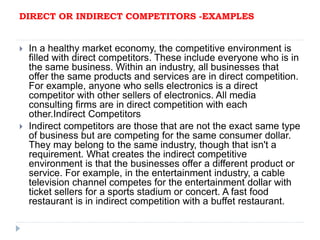
DIRECT OR INDIRECT COMPETITORS -EXAMPLES
 In a healthy market economy, the competitive environment is
filled with direct competitors. These include everyone who is in
the same business. Within an industry, all businesses that
offer the same products and services are in direct competition.
For example, anyone who sells electronics is a direct
competitor with other sellers of electronics. All media
consulting firms are in direct competition with each
other.Indirect Competitors
 Indirect competitors are those that are not the exact same type
of business but are competing for the same consumer dollar.
They may belong to the same industry, though that isn't a
requirement. What creates the indirect competitive
environment is that the businesses offer a different product or
service. For example, in the entertainment industry, a cable
television channel competes for the entertainment dollar with
ticket sellers for a sports stadium or concert. A fast food
restaurant is in indirect competition with a buffet restaurant.
Marketing Environment scanning

Marketing Environment scanning

  • 1.
    PRESENTED BY –LG12 JOYDEEP MUKHERJEE NEHA SUDRANIA DAIZY DAS SNEHASIH MONDAL TANMOY ROY SCANNING MARKETING ENVIRONMENT
  • 2.
  • 3.
  • 4.
    COMPETITIVE ENVIRONMENT MEANING? Typesof COMPETITION Means the immediate competitive factors in which an organisation conducts its activities. LEVELS OF COMPETITION:  Among all organizations  Among product classes  Among product categories  Among Brands  Pure competition: This type of competition is characterized by many firms all selling identical products, and no one firm is powerful (ex. FMCG sector).  Monopolistic competition: This is characterized by a large number of firms selling slightly differentiated products (restaurants).  Oligopoly: This has a small number of firms selling that can act collusively (ex. long distance telephone providers).  Monopoly: This is a single firm selling in the market for which there is no close substitute (ex. railways).
  • 5.
  • 7.
    DIRECT OR INDIRECTCOMPETITORS -EXAMPLES  In a healthy market economy, the competitive environment is filled with direct competitors. These include everyone who is in the same business. Within an industry, all businesses that offer the same products and services are in direct competition. For example, anyone who sells electronics is a direct competitor with other sellers of electronics. All media consulting firms are in direct competition with each other.Indirect Competitors  Indirect competitors are those that are not the exact same type of business but are competing for the same consumer dollar. They may belong to the same industry, though that isn't a requirement. What creates the indirect competitive environment is that the businesses offer a different product or service. For example, in the entertainment industry, a cable television channel competes for the entertainment dollar with ticket sellers for a sports stadium or concert. A fast food restaurant is in indirect competition with a buffet restaurant.