Marketing & Strategy Knowledge
Concepts
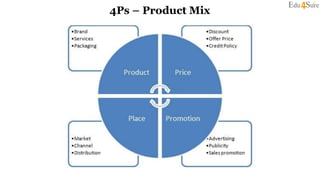
4Ps – Product Mix
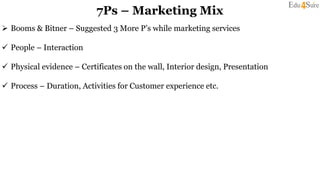
7Ps – Marketing Mix
 Booms & Bitner – Suggested 3 More P’s while marketing services
 People – Interaction
 Physical evidence – Certificates on the wall, Interior design, Presentation
 Process – Duration, Activities for Customer experience etc.
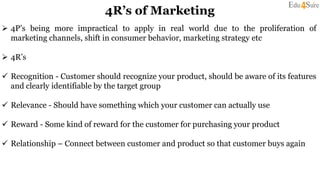
4R’s of Marketing
 4P’s being more impractical to apply in real world due to the proliferation of
marketing channels, shift in consumer behavior, marketing strategy etc
 4R’s
 Recognition - Customer should recognize your product, should be aware of its features
and clearly identifiable by the target group
 Relevance - Should have something which your customer can actually use
 Reward - Some kind of reward for the customer for purchasing your product
 Relationship – Connect between customer and product so that customer buys again
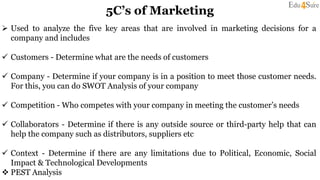
5C’s of Marketing
 Used to analyze the five key areas that are involved in marketing decisions for a
company and includes
 Customers - Determine what are the needs of customers
 Company - Determine if your company is in a position to meet those customer needs.
For this, you can do SWOT Analysis of your company
 Competition - Who competes with your company in meeting the customer’s needs
 Collaborators - Determine if there is any outside source or third-party help that can
help the company such as distributors, suppliers etc
 Context - Determine if there are any limitations due to Political, Economic, Social
Impact & Technological Developments
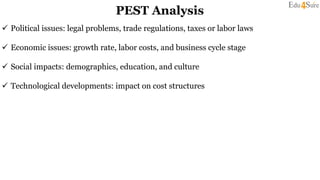
 PEST Analysis
PEST Analysis
 Political issues: legal problems, trade regulations, taxes or labor laws
 Economic issues: growth rate, labor costs, and business cycle stage
 Social impacts: demographics, education, and culture
 Technological developments: impact on cost structures
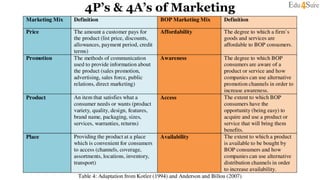
4P’s & 4A’s of Marketing
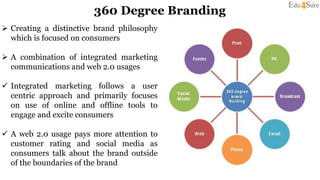
360 Degree Branding
 Creating a distinctive brand philosophy
which is focused on consumers
 A combination of integrated marketing
communications and web 2.0 usages
 Integrated marketing follows a user
centric approach and primarily focuses
on use of online and offline tools to
engage and excite consumers
 A web 2.0 usage pays more attention to
customer rating and social media as
consumers talk about the brand outside
of the boundaries of the brand
Active Marketing
 Proactive actions on the part of the marketer to connect and engage with potential
customers in order to build relationship and trust and to create a following
 Also called outbound marketing
 Online Activities
 Offline Activities
 when the product is categorized as a ‘want’ and not ‘need’
 When customers do not know the existence of your product/service
 When the sale cycle is long then marketers need to look out for potential customers,
educate them on the after sale services, discounts, benefits, other offerings and
convince them
A/B Testing
 Which variation or features in your website/application are increasing your
conversion rate and hence should be adopted
 Color
 Font
 Button Position
 Ads Position & Size
Email Marketing
A - Best Online Training Company
B – Save Ria from your company
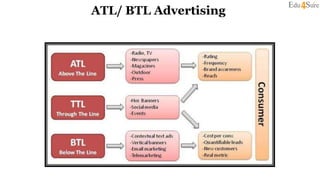
ATL/ BTL Advertising
B2B
 Cotton -> spinning -> weaving -> tailoring -> distribution -> shirt
 B2B marketers are more rational
 B2B products are more complex
 Limited number of buyers
 Behavioural and needs based segmentation is less in number
 Maintaining personal relationships
 long term buyers
 The innovation levels in B2B markets are less as compared to consumer markets
 These rely less on packaging and other external appearances
 Sub-brands are not that effective in B2B zone
 Examples: Automobil, Pharma, Coffee Maker
B2C/ B2B2C
 Examples: Schools
BCG Matrix
 Performance measurement tool for the products of a company
 Bruce Henderson of Boston Consulting Group in the early 1970s
 strategic tool to analyse a business’s portfolio on the basis of relative market share
and industry growth rate
 a 2x2 matrix bifurcating products based on high and low growth rate and market share
 Relative market share= SBU Sales/ Leading competitors sales
 Market growth rate=Industry sales this year/Industry sales last year
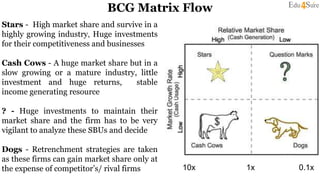
BCG Matrix Flow
10x 1x 0.1x
Stars - High market share and survive in a
highly growing industry, Huge investments
for their competitiveness and businesses
Cash Cows - A huge market share but in a
slow growing or a mature industry, little
investment and huge returns, stable
income generating resource
? - Huge investments to maintain their
market share and the firm has to be very
vigilant to analyze these SBUs and decide
Dogs - Retrenchment strategies are taken
as these firms can gain market share only at
the expense of competitor’s/ rival firms
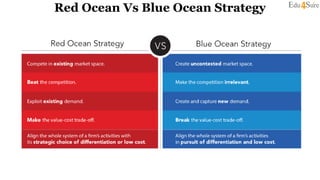
Red Ocean Vs Blue Ocean Strategy
Market Segmentation
 A process of dividing the entire market population into multiple meaningful segments
based on marketing variables like demographics (age, gender etc), geographic,
psychographics (lifestyle, behavior) etc.
 A set of homogeneous segments having similar needs, properties & demands
Brand
 Perception
 Trust
 Loyalty
 Royalty
 A different name or Logo helps (Can be identified by Logo, Tagline or Jingle)
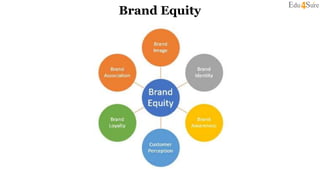
Brand Equity
 A qualitative measure of the brand’s positive recognition or goodwill in the minds of
the consumers considering the brand as an independent entity
 Brand Equity is kind of power that the brand has over its competitors or the generic
brands and is developed over time
 +ve Brand Equity - Garnier beauty product
 -ve Brand Equity – Tata Nano fire incidence
Brand Equity

Marketing concepts

  • 1.
    Marketing & StrategyKnowledge Concepts
  • 2.
  • 3.
    7Ps – MarketingMix  Booms & Bitner – Suggested 3 More P’s while marketing services  People – Interaction  Physical evidence – Certificates on the wall, Interior design, Presentation  Process – Duration, Activities for Customer experience etc.
  • 4.
    4R’s of Marketing 4P’s being more impractical to apply in real world due to the proliferation of marketing channels, shift in consumer behavior, marketing strategy etc  4R’s  Recognition - Customer should recognize your product, should be aware of its features and clearly identifiable by the target group  Relevance - Should have something which your customer can actually use  Reward - Some kind of reward for the customer for purchasing your product  Relationship – Connect between customer and product so that customer buys again
  • 5.
    5C’s of Marketing Used to analyze the five key areas that are involved in marketing decisions for a company and includes  Customers - Determine what are the needs of customers  Company - Determine if your company is in a position to meet those customer needs. For this, you can do SWOT Analysis of your company  Competition - Who competes with your company in meeting the customer’s needs  Collaborators - Determine if there is any outside source or third-party help that can help the company such as distributors, suppliers etc  Context - Determine if there are any limitations due to Political, Economic, Social Impact & Technological Developments  PEST Analysis
  • 6.
    PEST Analysis  Politicalissues: legal problems, trade regulations, taxes or labor laws  Economic issues: growth rate, labor costs, and business cycle stage  Social impacts: demographics, education, and culture  Technological developments: impact on cost structures
  • 7.
    4P’s & 4A’sof Marketing
  • 8.
    360 Degree Branding Creating a distinctive brand philosophy which is focused on consumers  A combination of integrated marketing communications and web 2.0 usages  Integrated marketing follows a user centric approach and primarily focuses on use of online and offline tools to engage and excite consumers  A web 2.0 usage pays more attention to customer rating and social media as consumers talk about the brand outside of the boundaries of the brand
  • 9.
    Active Marketing  Proactiveactions on the part of the marketer to connect and engage with potential customers in order to build relationship and trust and to create a following  Also called outbound marketing  Online Activities  Offline Activities  when the product is categorized as a ‘want’ and not ‘need’  When customers do not know the existence of your product/service  When the sale cycle is long then marketers need to look out for potential customers, educate them on the after sale services, discounts, benefits, other offerings and convince them
  • 10.
    A/B Testing  Whichvariation or features in your website/application are increasing your conversion rate and hence should be adopted  Color  Font  Button Position  Ads Position & Size Email Marketing A - Best Online Training Company B – Save Ria from your company
  • 11.
  • 12.
    B2B  Cotton ->spinning -> weaving -> tailoring -> distribution -> shirt  B2B marketers are more rational  B2B products are more complex  Limited number of buyers  Behavioural and needs based segmentation is less in number  Maintaining personal relationships  long term buyers  The innovation levels in B2B markets are less as compared to consumer markets  These rely less on packaging and other external appearances  Sub-brands are not that effective in B2B zone  Examples: Automobil, Pharma, Coffee Maker
  • 13.
  • 14.
    BCG Matrix  Performancemeasurement tool for the products of a company  Bruce Henderson of Boston Consulting Group in the early 1970s  strategic tool to analyse a business’s portfolio on the basis of relative market share and industry growth rate  a 2x2 matrix bifurcating products based on high and low growth rate and market share  Relative market share= SBU Sales/ Leading competitors sales  Market growth rate=Industry sales this year/Industry sales last year
  • 15.
    BCG Matrix Flow 10x1x 0.1x Stars - High market share and survive in a highly growing industry, Huge investments for their competitiveness and businesses Cash Cows - A huge market share but in a slow growing or a mature industry, little investment and huge returns, stable income generating resource ? - Huge investments to maintain their market share and the firm has to be very vigilant to analyze these SBUs and decide Dogs - Retrenchment strategies are taken as these firms can gain market share only at the expense of competitor’s/ rival firms
  • 16.
    Red Ocean VsBlue Ocean Strategy
  • 17.
    Market Segmentation  Aprocess of dividing the entire market population into multiple meaningful segments based on marketing variables like demographics (age, gender etc), geographic, psychographics (lifestyle, behavior) etc.  A set of homogeneous segments having similar needs, properties & demands
  • 18.
    Brand  Perception  Trust Loyalty  Royalty  A different name or Logo helps (Can be identified by Logo, Tagline or Jingle)
  • 19.
    Brand Equity  Aqualitative measure of the brand’s positive recognition or goodwill in the minds of the consumers considering the brand as an independent entity  Brand Equity is kind of power that the brand has over its competitors or the generic brands and is developed over time  +ve Brand Equity - Garnier beauty product  -ve Brand Equity – Tata Nano fire incidence
  • 20.

Editor's Notes

  • #8 BOP – Bottom of Pyramid (Underprivileged Poor Consumer)