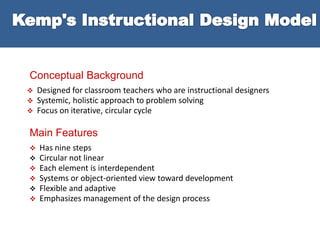
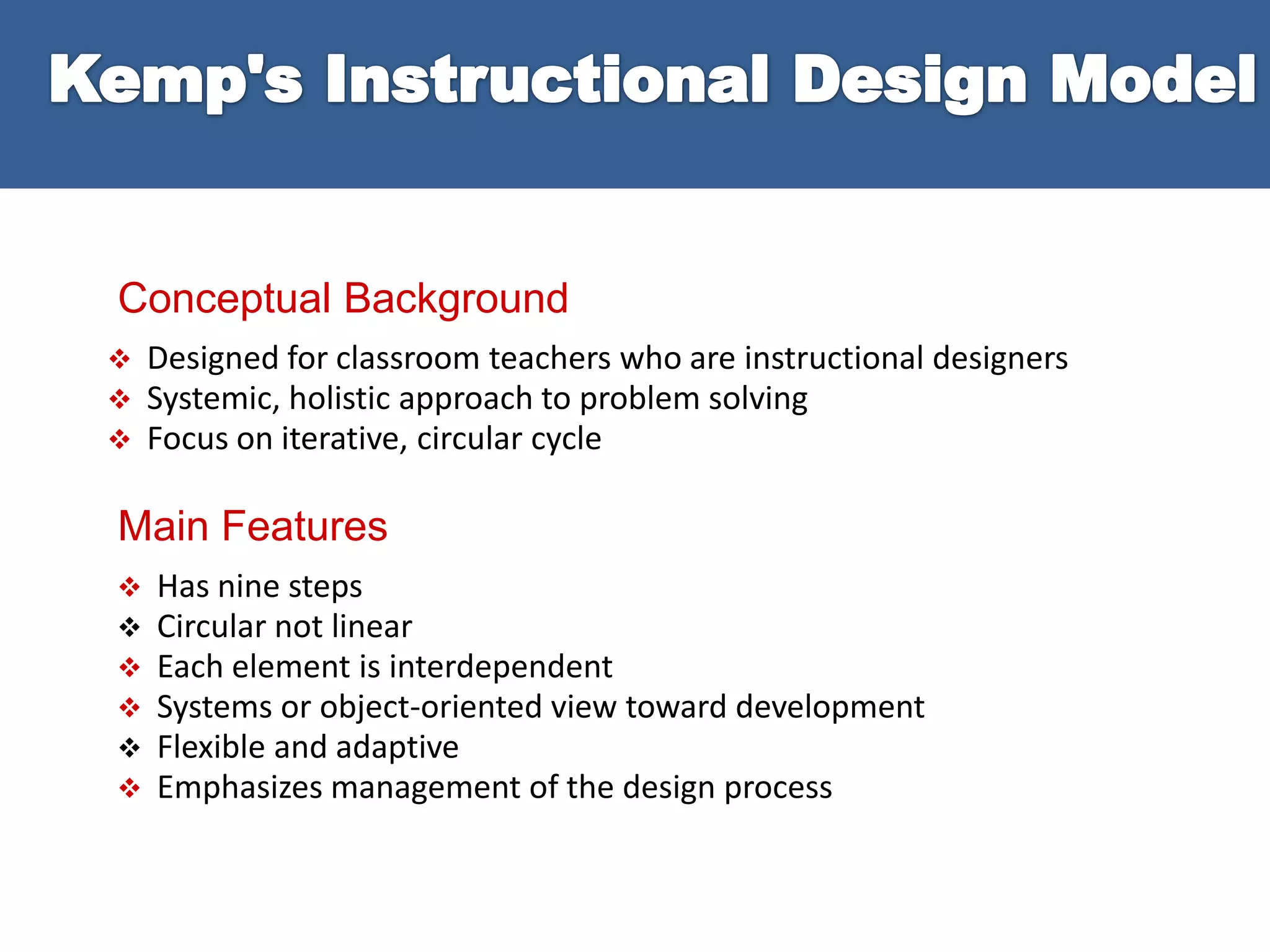
 Designed for classroom teachers who are instructional designers
 Systemic, holistic approach to problem solving
 Focus on iterative, circular cycle
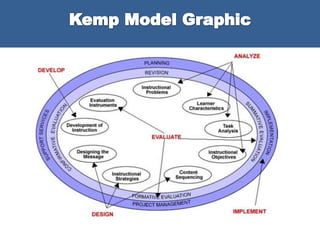
 Has nine steps
 Circular not linear
 Each element is interdependent
 Systems or object-oriented view toward development
 Flexible and adaptive
 Emphasizes management of the design process
Conceptual Background
Main Features
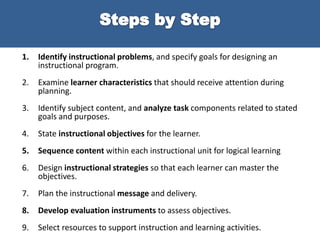
1. Identify instructional problems, and specify goals for designing an
instructional program.
2. Examine learner characteristics that should receive attention during
planning.
3. Identify subject content, and analyze task components related to stated
goals and purposes.
4. State instructional objectives for the learner.
5. Sequence content within each instructional unit for logical learning
6. Design instructional strategies so that each learner can master the
objectives.
7. Plan the instructional message and delivery.
8. Develop evaluation instruments to assess objectives.
9. Select resources to support instruction and learning activities.
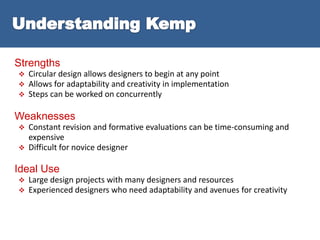
Strengths
 Circular design allows designers to begin at any point
 Allows for adaptability and creativity in implementation
 Steps can be worked on concurrently
Weaknesses
 Constant revision and formative evaluations can be time-consuming and
expensive
 Difficult for novice designer
Ideal Use
 Large design projects with many designers and resources
 Experienced designers who need adaptability and avenues for creativity

kemp-Instructional Design Model

  • 1.
     Designed forclassroom teachers who are instructional designers  Systemic, holistic approach to problem solving  Focus on iterative, circular cycle  Has nine steps  Circular not linear  Each element is interdependent  Systems or object-oriented view toward development  Flexible and adaptive  Emphasizes management of the design process Conceptual Background Main Features
  • 3.
    1. Identify instructionalproblems, and specify goals for designing an instructional program. 2. Examine learner characteristics that should receive attention during planning. 3. Identify subject content, and analyze task components related to stated goals and purposes. 4. State instructional objectives for the learner. 5. Sequence content within each instructional unit for logical learning 6. Design instructional strategies so that each learner can master the objectives. 7. Plan the instructional message and delivery. 8. Develop evaluation instruments to assess objectives. 9. Select resources to support instruction and learning activities.
  • 4.
    Strengths  Circular designallows designers to begin at any point  Allows for adaptability and creativity in implementation  Steps can be worked on concurrently Weaknesses  Constant revision and formative evaluations can be time-consuming and expensive  Difficult for novice designer Ideal Use  Large design projects with many designers and resources  Experienced designers who need adaptability and avenues for creativity