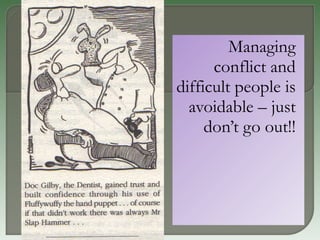
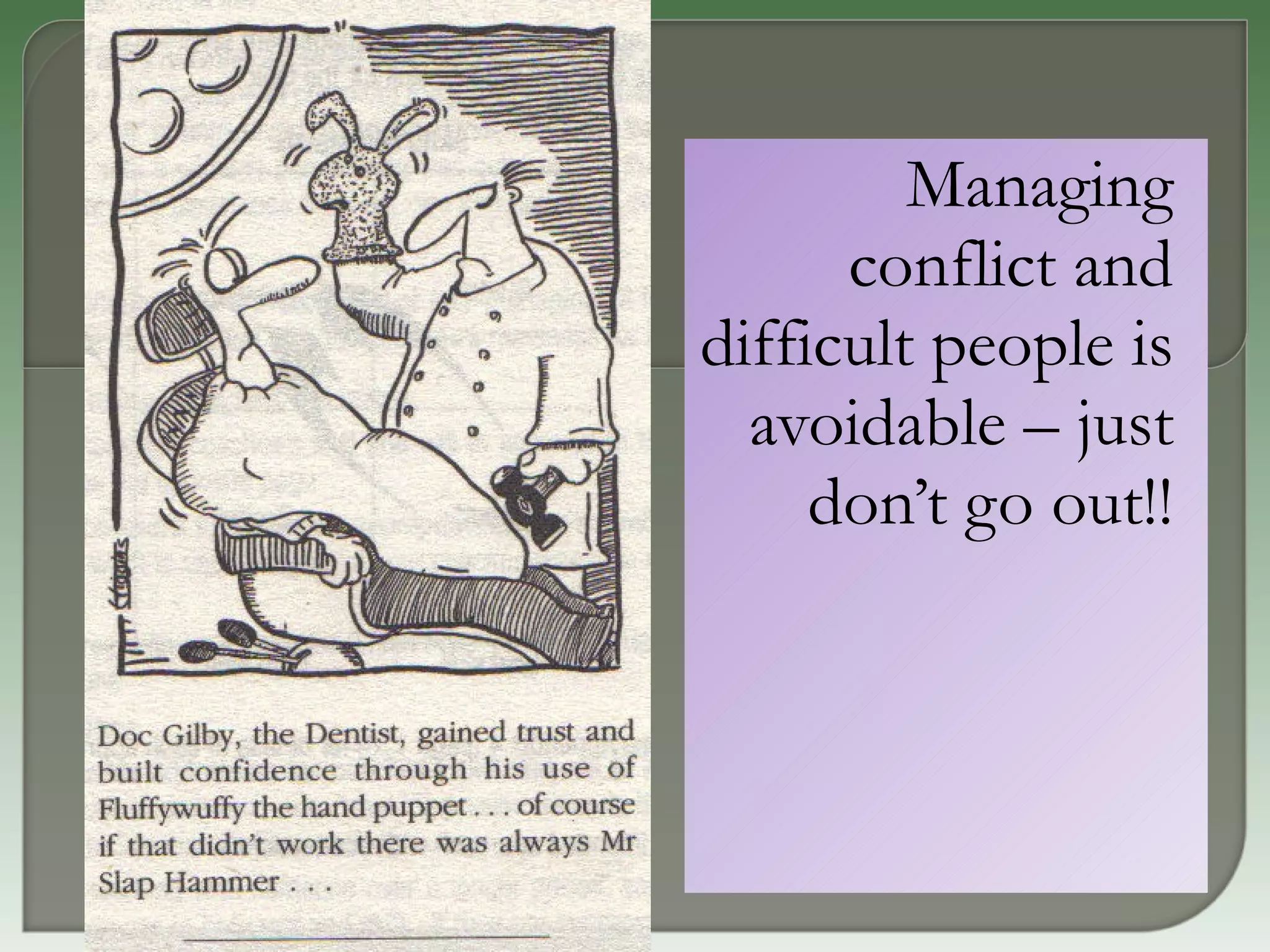
Managing conflict and difficult people is avoidable – just don’t go out!!
10. Are we going to finish on time? 9.  When is the coffee break? 8.  Will I have to do role- play? 7  It’s hard to change the way I respond isn’t it?  6.  Do I have to use this? 5.  How much do I have to note down?  4.  Can I use these materials? 3.  I do everything you are going to tell me, can I go? 2.  Yes but, that won’t work in real life will it? 1.  Can you really hypnotise me?  Top ten questions trainers are asked
How can you  help  someone else  take something from this session? How can I   help him,  help me  take something from this session? If you are going to spend the time here -   How can you  help  yourself   take something from this session?
 
 
“ We are all somebody’s difficult person sometimes” If we can control our natural urge to criticise we will remain more in control of the situation. “ If we are expecting change in others, we have to look to change ourselves first.”  Nelson Mandela
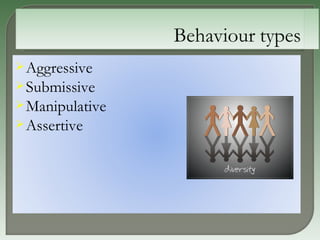
Aggressive  Submissive Manipulative  Assertive
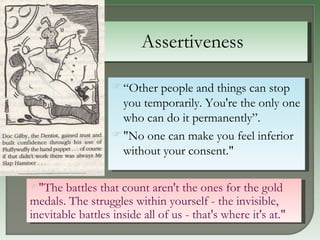
Assertiveness “ Other people and things can stop you temporarily. You're the only one who can do it permanently”.  "No one can make you feel inferior without your consent."  "The battles that count aren't the ones for the gold medals. The struggles within yourself - the invisible, inevitable battles inside all of us - that's where it's at."
Assertiveness is…. A kind of behaviour   A style of communication  An attitude/approach/philosophy  It’s about……. Expressing yourself with confidence without using passive, aggressive or manipulative behaviour.   Taking more control of your life Being clear and straightforward with others  Respecting yours and others needs & rights
Choosing your behaviour  Any change in behaviour requires a degree of self-awareness   Once we become aware of our behaviour we then have a choice in whether we continue to use it or choose to change.
Types of assertion   Basic   This is a straightforward statement where you stand up for your rights   Empathetic   This assertion contains the element of empathy as well as a statement of your needs or wants.  Discrepancy   This is where you point out a discrepancy between what has previously been agreed and what is actually happening
Types of assertion Negative feelings   Here you are making a statement that draws the attention of another person to the undesirable effect their behaviour  Consequences   This technique informs the other person of the future consequences for them of not changing their behaviour.  Responsive   The emphasis of this method is about finding out where the other party or person stands
 
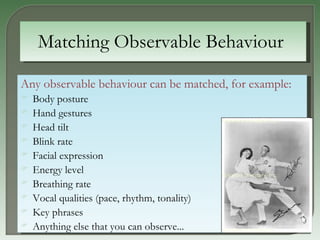
Matching Observable Behaviour   Any observable behaviour can be matched, for example:   Body posture Hand gestures Head tilt Blink rate Facial expression Energy level Breathing rate Vocal qualities (pace, rhythm, tonality) Key phrases Anything else that you can observe...
Solving problems with RADAR  R ealise  – that problems do occur and some are regular A ssess   – no boundaries of solutions  D ecide  – what to action A ct  – what will you do, when, how?  R eview   – did it make a difference?
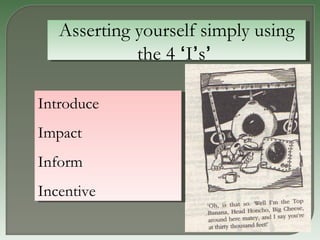
Asserting yourself simply using the 4  ‘ I ’ s ’   Introduce Impact Inform Incentive
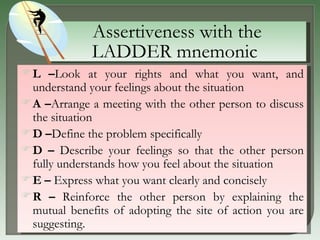
Assertiveness with the LADDER mnemonic   L – Look at your rights and what you want, and understand your feelings about the situation A – Arrange a meeting with the other person to discuss the situation D – Define the problem specifically D –  Describe your feelings so that the other person fully understands how you feel about the situation E –  Express what you want clearly and concisely R –  Reinforce the other person by explaining the mutual benefits of adopting the site of action you are suggesting.
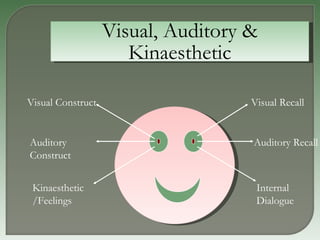
Visual, Auditory & Kinaesthetic Visual Recall Auditory Recall Internal Dialogue  Visual Construct Auditory Construct  Kinaesthetic /Feelings
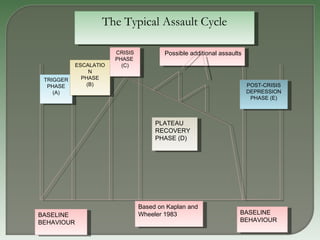
The Typical Assault Cycle Based on Kaplan and  Wheeler 1983 Possible additional assaults BASELINE BEHAVIOUR BASELINE BEHAVIOUR TRIGGER PHASE (A) ESCALATION PHASE (B) CRISIS PHASE  (C) PLATEAU RECOVERY PHASE (D) POST-CRISIS DEPRESSION PHASE (E)
The S.A.L.V.A.G.E. Strategy  S mile  A nticipate their anger  L isten to them  V erify that you have understood  A ttend to their needs  G uarantee that something will be done  E ncourage them to change direction  Remember to give people choices
Disarming Anger Listen first.   Maintain rapport in body and voice   Feedback what you hear   Change what the person is focused on   Make empathetic statements   Number items   Get solution orientated   Eliminate potential anger statements (such as?)   “ You don’t need to make them right, but don’t make them wrong”
Levels of Listening  At Level 1  our attention is on ourselves, it is self-directed and self -absorbed.  We listen to the words of the other person but the focus is on what it means to us.  At level 2  there is a sharp focus on the other person.  You hear the other speak. You hear the words but hear much more: the tone, the pace, the feeling expressed.  At level 3  you listen at 360 degrees. You listen as if you and the speaker were at the centre of the universe receiving information from everywhere at once.
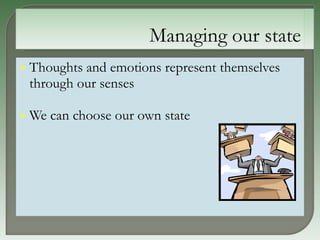
Thoughts and emotions represent themselves through our senses We can choose our own state

Managing conflict and dealing with difficult people

  • 1.
    Managing conflict anddifficult people is avoidable – just don’t go out!!
  • 2.
    10. Are wegoing to finish on time? 9. When is the coffee break? 8. Will I have to do role- play? 7 It’s hard to change the way I respond isn’t it? 6. Do I have to use this? 5. How much do I have to note down? 4. Can I use these materials? 3. I do everything you are going to tell me, can I go? 2. Yes but, that won’t work in real life will it? 1. Can you really hypnotise me? Top ten questions trainers are asked
  • 3.
    How can you help someone else take something from this session? How can I help him, help me take something from this session? If you are going to spend the time here - How can you help yourself take something from this session?
  • 4.
  • 5.
  • 6.
    “ We areall somebody’s difficult person sometimes” If we can control our natural urge to criticise we will remain more in control of the situation. “ If we are expecting change in others, we have to look to change ourselves first.” Nelson Mandela
  • 7.
    Aggressive SubmissiveManipulative Assertive
  • 8.
    Assertiveness “ Otherpeople and things can stop you temporarily. You're the only one who can do it permanently”. "No one can make you feel inferior without your consent." "The battles that count aren't the ones for the gold medals. The struggles within yourself - the invisible, inevitable battles inside all of us - that's where it's at."
  • 9.
    Assertiveness is…. Akind of behaviour A style of communication An attitude/approach/philosophy It’s about……. Expressing yourself with confidence without using passive, aggressive or manipulative behaviour. Taking more control of your life Being clear and straightforward with others Respecting yours and others needs & rights
  • 10.
    Choosing your behaviour Any change in behaviour requires a degree of self-awareness   Once we become aware of our behaviour we then have a choice in whether we continue to use it or choose to change.
  • 11.
    Types of assertion Basic This is a straightforward statement where you stand up for your rights Empathetic This assertion contains the element of empathy as well as a statement of your needs or wants. Discrepancy This is where you point out a discrepancy between what has previously been agreed and what is actually happening
  • 12.
    Types of assertionNegative feelings Here you are making a statement that draws the attention of another person to the undesirable effect their behaviour Consequences This technique informs the other person of the future consequences for them of not changing their behaviour. Responsive The emphasis of this method is about finding out where the other party or person stands
  • 13.
  • 14.
    Matching Observable Behaviour Any observable behaviour can be matched, for example: Body posture Hand gestures Head tilt Blink rate Facial expression Energy level Breathing rate Vocal qualities (pace, rhythm, tonality) Key phrases Anything else that you can observe...
  • 15.
    Solving problems withRADAR R ealise – that problems do occur and some are regular A ssess – no boundaries of solutions D ecide – what to action A ct – what will you do, when, how? R eview – did it make a difference?
  • 16.
    Asserting yourself simplyusing the 4 ‘ I ’ s ’ Introduce Impact Inform Incentive
  • 17.
    Assertiveness with theLADDER mnemonic L – Look at your rights and what you want, and understand your feelings about the situation A – Arrange a meeting with the other person to discuss the situation D – Define the problem specifically D – Describe your feelings so that the other person fully understands how you feel about the situation E – Express what you want clearly and concisely R – Reinforce the other person by explaining the mutual benefits of adopting the site of action you are suggesting.
  • 18.
    Visual, Auditory &Kinaesthetic Visual Recall Auditory Recall Internal Dialogue Visual Construct Auditory Construct Kinaesthetic /Feelings
  • 19.
    The Typical AssaultCycle Based on Kaplan and Wheeler 1983 Possible additional assaults BASELINE BEHAVIOUR BASELINE BEHAVIOUR TRIGGER PHASE (A) ESCALATION PHASE (B) CRISIS PHASE (C) PLATEAU RECOVERY PHASE (D) POST-CRISIS DEPRESSION PHASE (E)
  • 20.
    The S.A.L.V.A.G.E. Strategy S mile A nticipate their anger L isten to them V erify that you have understood A ttend to their needs G uarantee that something will be done E ncourage them to change direction Remember to give people choices
  • 21.
    Disarming Anger Listenfirst. Maintain rapport in body and voice Feedback what you hear Change what the person is focused on Make empathetic statements Number items Get solution orientated Eliminate potential anger statements (such as?) “ You don’t need to make them right, but don’t make them wrong”
  • 22.
    Levels of Listening At Level 1 our attention is on ourselves, it is self-directed and self -absorbed. We listen to the words of the other person but the focus is on what it means to us. At level 2 there is a sharp focus on the other person. You hear the other speak. You hear the words but hear much more: the tone, the pace, the feeling expressed. At level 3 you listen at 360 degrees. You listen as if you and the speaker were at the centre of the universe receiving information from everywhere at once.
  • 23.
    Thoughts and emotionsrepresent themselves through our senses We can choose our own state

Editor's Notes

  • #2 *Intro - from me *Metaphor – Your dog can’t swim *Questions
  • #5 *Activity – Values - What will be different when you are dealing even more effectively/assertively with others? What will it do or get for you being able to do this? *Activity - How would you describe a ‘difficult person’? What are their behaviours? *Activity - How else could they be described? – reframe
  • #7 *Activity – What are your own responses to difficult people. *Process – Think of the last time you encountered someone ‘difficult’. What did you notice about your response. Internal and external. Is this the same each time?
  • #8 *Activity – What sort of behaviour falls under these headings? *Activity – personality card sort – types of behaviours under headings
  • #10 *Point – Model someone who is assertive *Metaphor – Bob coaching
  • #11 *Activity – Times and places of assertiveness – Chart on page 17 to identify when and with whom you are assertive or not. What do you do differently? *Activity – Identify What behaviour/language etc causes you to become less assertive?
  • #13 *Activity – Using the scenarios on page 11, what could we do instead (assertiveness)?
  • #16 *Activity – Identify an ongoing situation and carry through the RADAR model in pairs
  • #17 Introduce - Introduce - be specific and simple, describe actions without using accusing statements, ensure you are clear about the issue under discussion  Impact - Impact - state what has happened, the effect of the actions  Inform - Inform - state the consequences of the action and what may happen in the future  Incentive - Incentive - state the benefits of coming to a mutually successful conclusion in resolving the issue *Activity - Could have 2 with an objective observer. *Activity - Give scenario – A member of staff is consistently arriving late for work . Carry out the 4 ‘I’s to resolve the issue.
  • #19 * Activity demonstration – in pairs, watch the eyes
  • #21 *Activity – Tips page on 33 – what could you do more of?
  • #23 *Activity – Back to back drawing shape *Activity – Questionnaire on page 41 (what interferes with listening) *Activity – Anchoring positive states and ridding ourselves of conflict residue