 Established in Karachi in 1978
 It currently has 195 Schools in 54 cities
 60,000 students and 8000 employees
 O and A Level examinations.
 Purpose-built Campuses
 Classrooms
 Laboratories
 Computer Labs
 Libraries
 Music
 Art
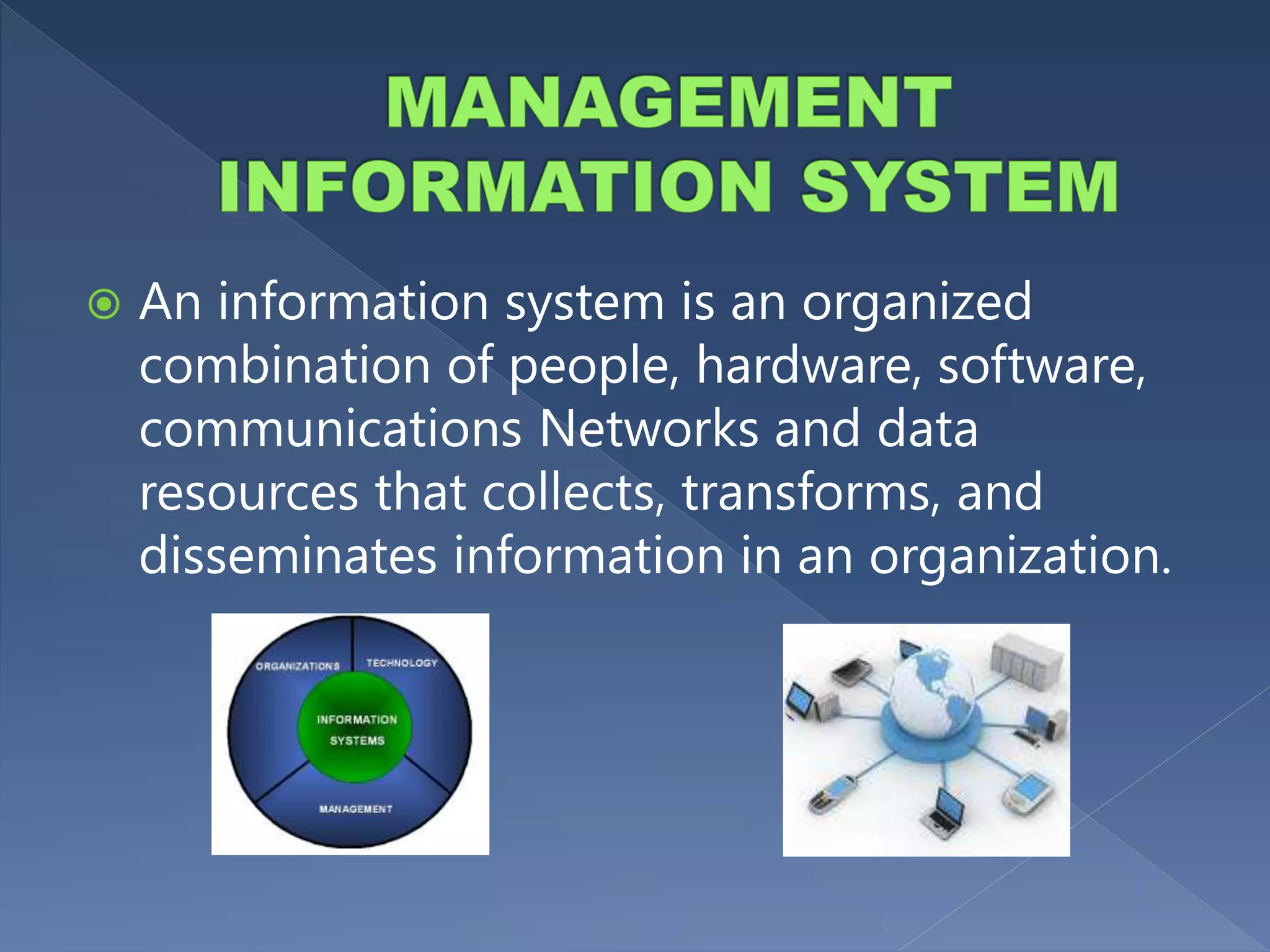
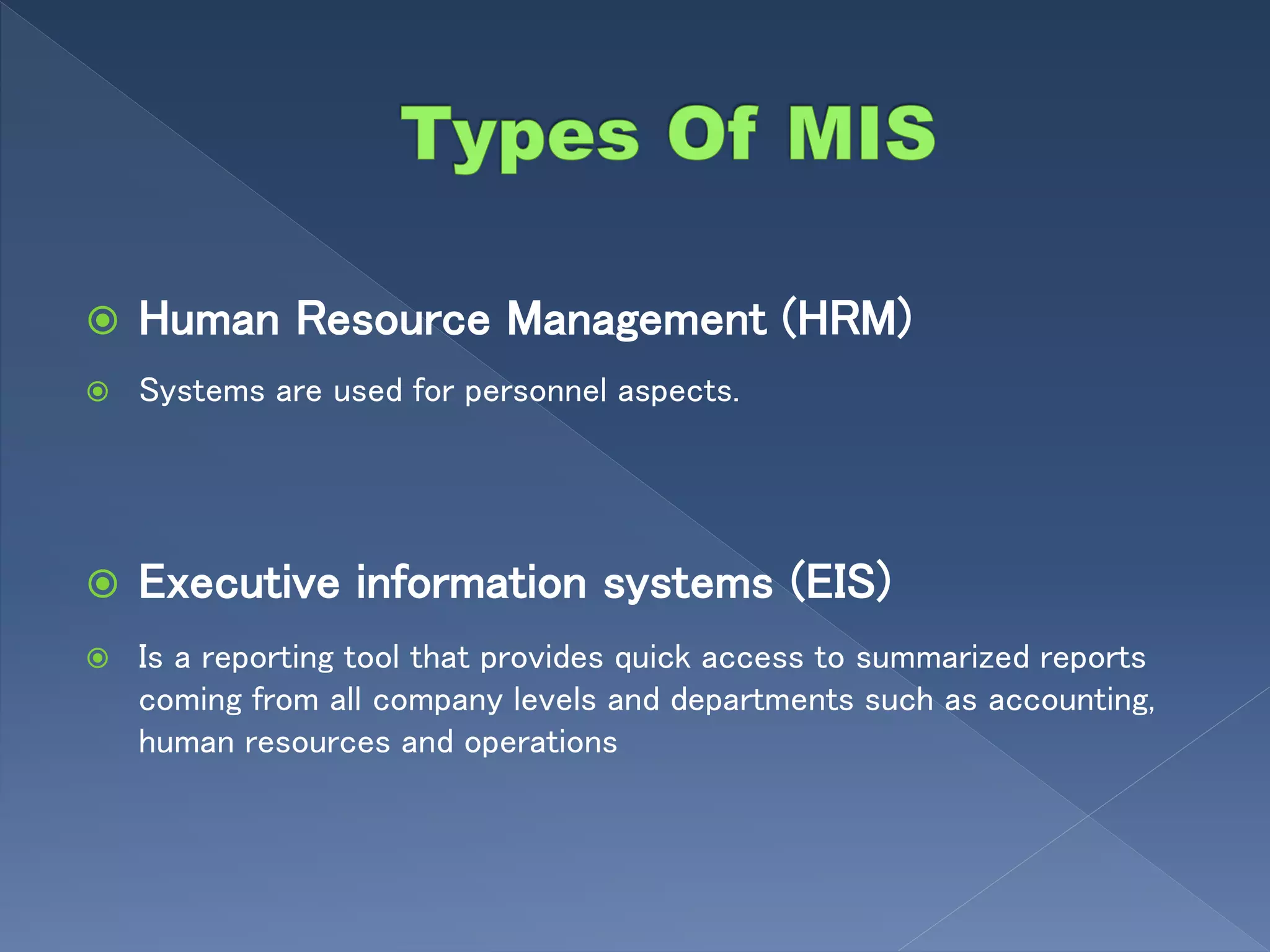
 An information system is an organized
combination of people, hardware, software,
communications Networks and data
resources that collects, transforms, and
disseminates information in an organization.
MIS is the system, which makes available the
right information to the:
 Right Person
 At Right Place
 At right time
 In the right format/form
 At right cost.
 Transaction processing systems:(TPS)
 These systems process a large volume of routine, recurring transactions.
 Decision support systems: (DSS)
 These systems help mangers with the necessary information to make
intelligent decisions.
 School Information Management Systems (SIMS):
 cover school administration, and often including teaching and learning
materials.
 Human Resource Management (HRM)
 Systems are used for personnel aspects.
 Executive information systems (EIS)
 Is a reporting tool that provides quick access to summarized reports
coming from all company levels and departments such as accounting,
human resources and operations
 SIMPLIFY SCHOOL ACTIVITIES:
1)Registration and Admission
2) Administration
3) Fee management
4)Accounting
5)Attendance management
6)Examination management
7)Time management
8)Library management
9)Transport management
 Generating regular reports.
 Verifying the status of query.
 Taking better decisions
(a) Registration Form
(b) Report
(c )Admission Summary
a) Fee collection
b) Update/Cancel Fee slip
c) Fee Reports
a) Today's Fee collection
b) List of Cheques Received
c) Unpaid Fee Report
d) List of cash payments
a) Time Table
b) Search Teacher
c) Teacher Scheduling
a) Reports
b) Salary Payment
c) Employee Information
 It improves the quality of work
 Giving an overall picture of the Organization.
 Organizations are able to identify their strengths
and weaknesses
 MIS can help the Organization to align its business
processes according to the needs of its customers.
 MISs can help a company gain a competitive
advantage.
 Expensive
 Maintenance
 Unemployment
 Privacy
 Lack of job security
Management Information System

Management Information System

  • 3.
     Established inKarachi in 1978  It currently has 195 Schools in 54 cities  60,000 students and 8000 employees  O and A Level examinations.
  • 4.
     Purpose-built Campuses Classrooms  Laboratories  Computer Labs  Libraries  Music  Art
  • 5.
     An informationsystem is an organized combination of people, hardware, software, communications Networks and data resources that collects, transforms, and disseminates information in an organization.
  • 6.
    MIS is thesystem, which makes available the right information to the:  Right Person  At Right Place  At right time  In the right format/form  At right cost.
  • 7.
     Transaction processingsystems:(TPS)  These systems process a large volume of routine, recurring transactions.  Decision support systems: (DSS)  These systems help mangers with the necessary information to make intelligent decisions.  School Information Management Systems (SIMS):  cover school administration, and often including teaching and learning materials.
  • 8.
     Human ResourceManagement (HRM)  Systems are used for personnel aspects.  Executive information systems (EIS)  Is a reporting tool that provides quick access to summarized reports coming from all company levels and departments such as accounting, human resources and operations
  • 10.
     SIMPLIFY SCHOOLACTIVITIES: 1)Registration and Admission 2) Administration 3) Fee management 4)Accounting 5)Attendance management 6)Examination management 7)Time management 8)Library management 9)Transport management
  • 11.
     Generating regularreports.  Verifying the status of query.  Taking better decisions
  • 12.
    (a) Registration Form (b)Report (c )Admission Summary
  • 16.
    a) Fee collection b)Update/Cancel Fee slip c) Fee Reports
  • 20.
    a) Today's Feecollection b) List of Cheques Received c) Unpaid Fee Report d) List of cash payments
  • 24.
    a) Time Table b)Search Teacher c) Teacher Scheduling
  • 28.
    a) Reports b) SalaryPayment c) Employee Information
  • 35.
     It improvesthe quality of work  Giving an overall picture of the Organization.  Organizations are able to identify their strengths and weaknesses  MIS can help the Organization to align its business processes according to the needs of its customers.  MISs can help a company gain a competitive advantage.
  • 36.
     Expensive  Maintenance Unemployment  Privacy  Lack of job security