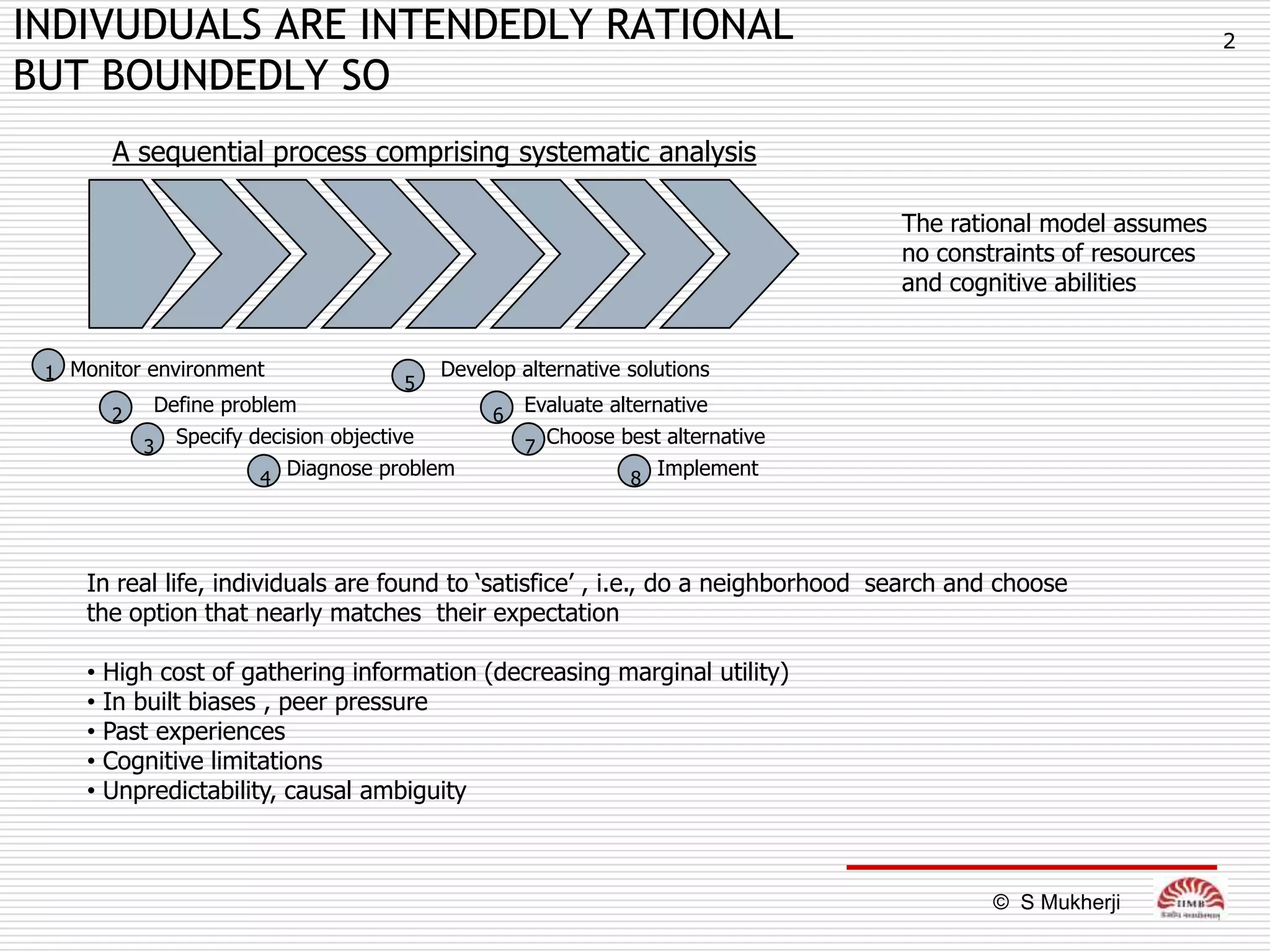
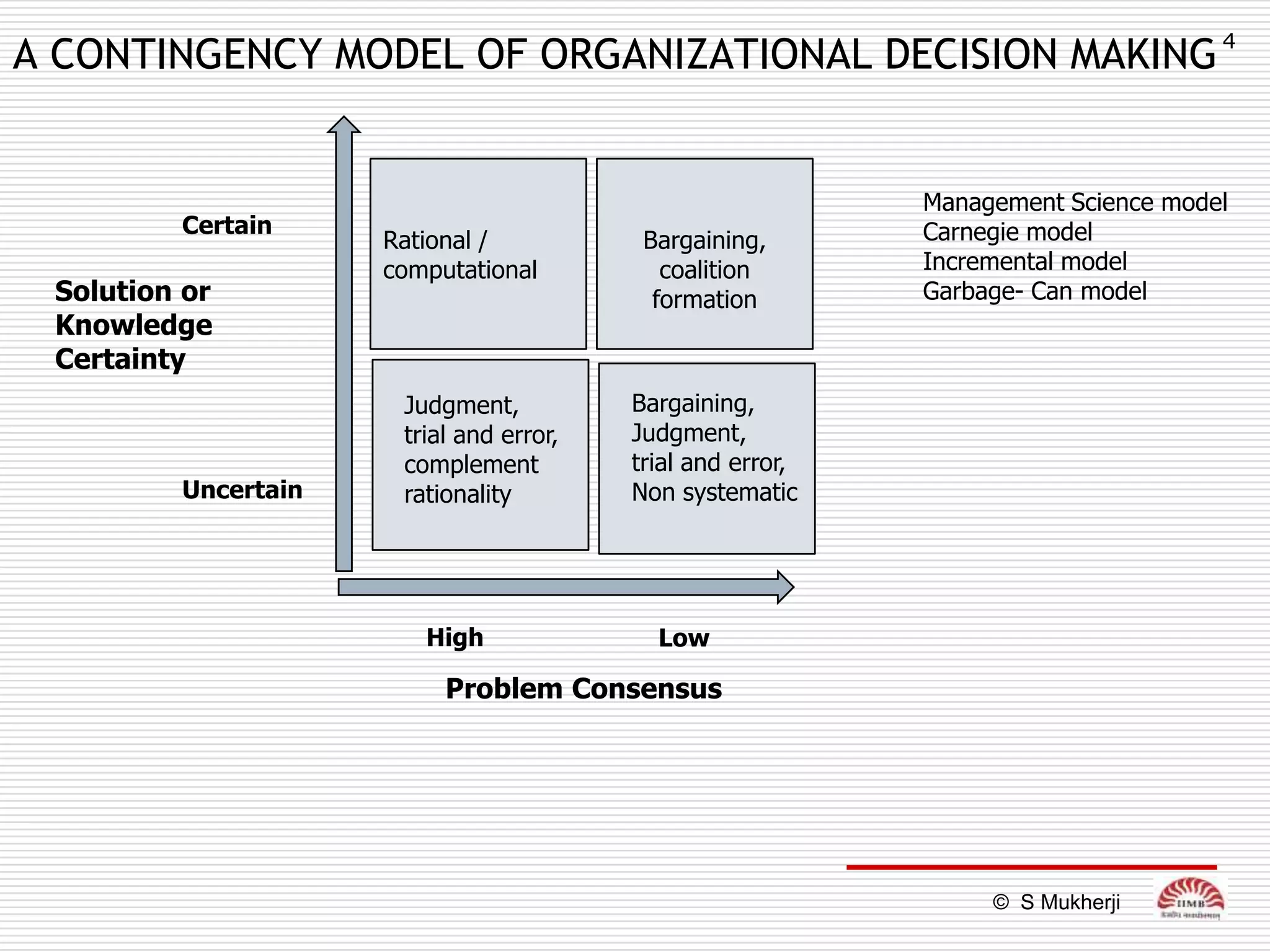
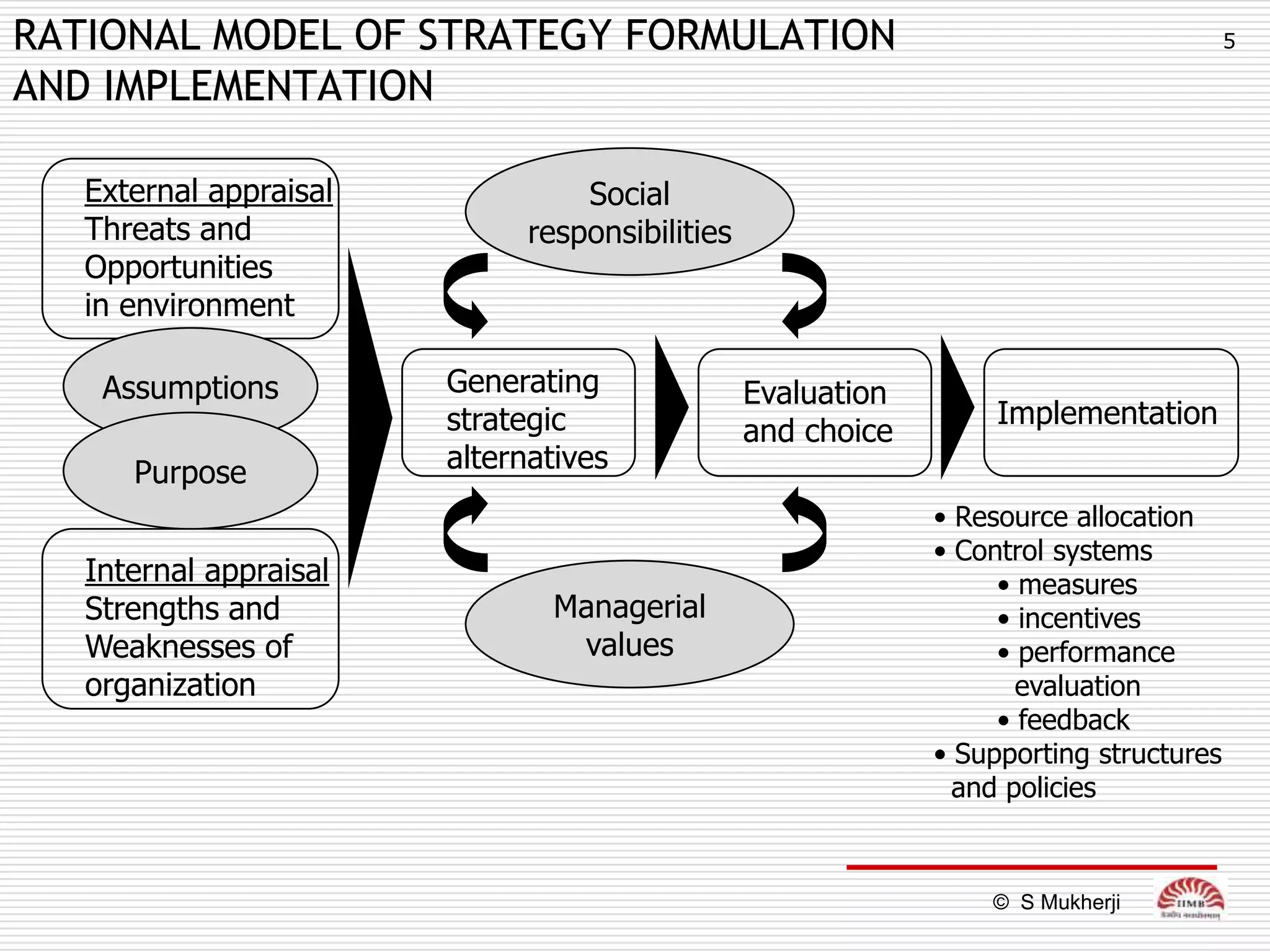
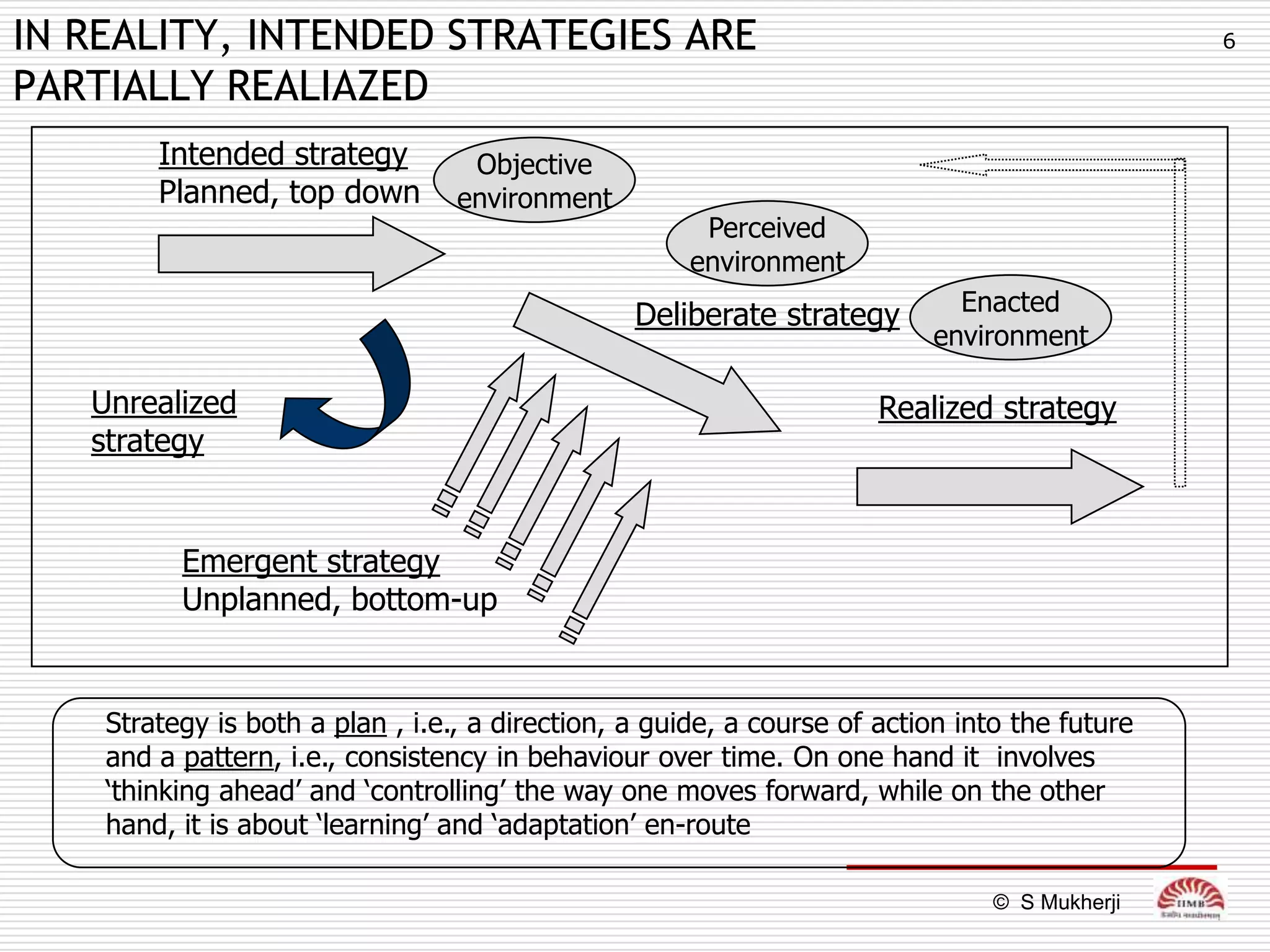
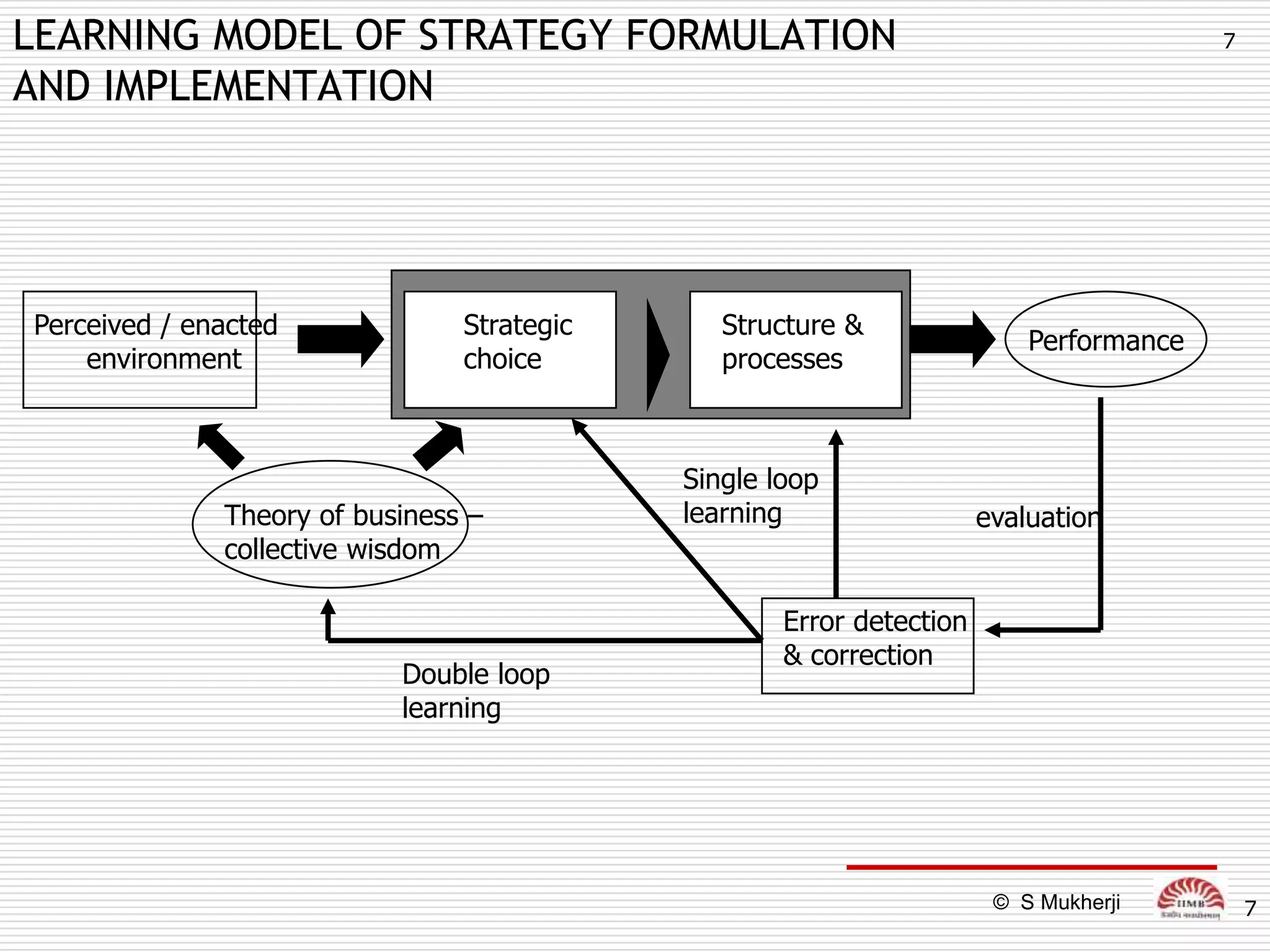
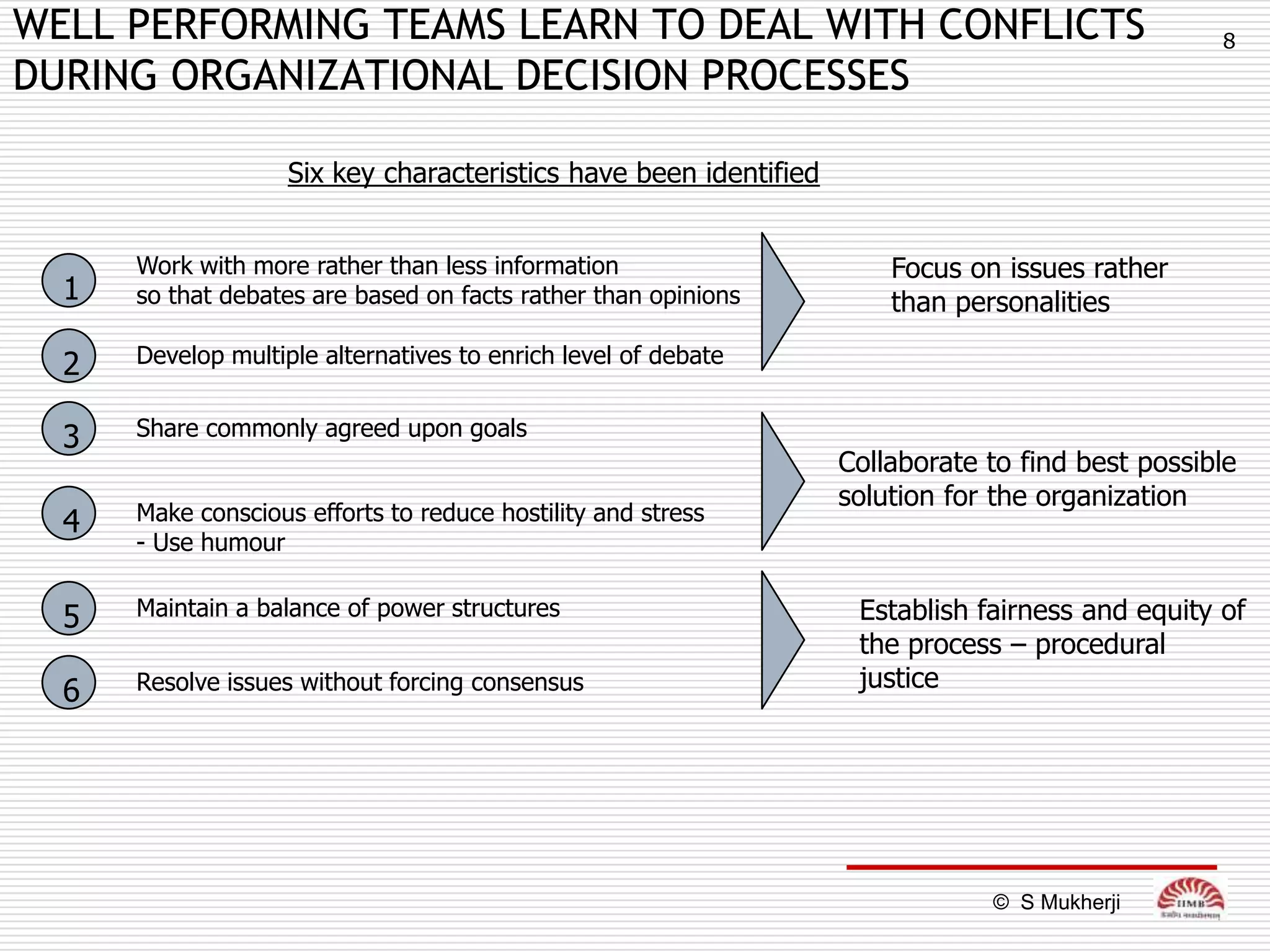
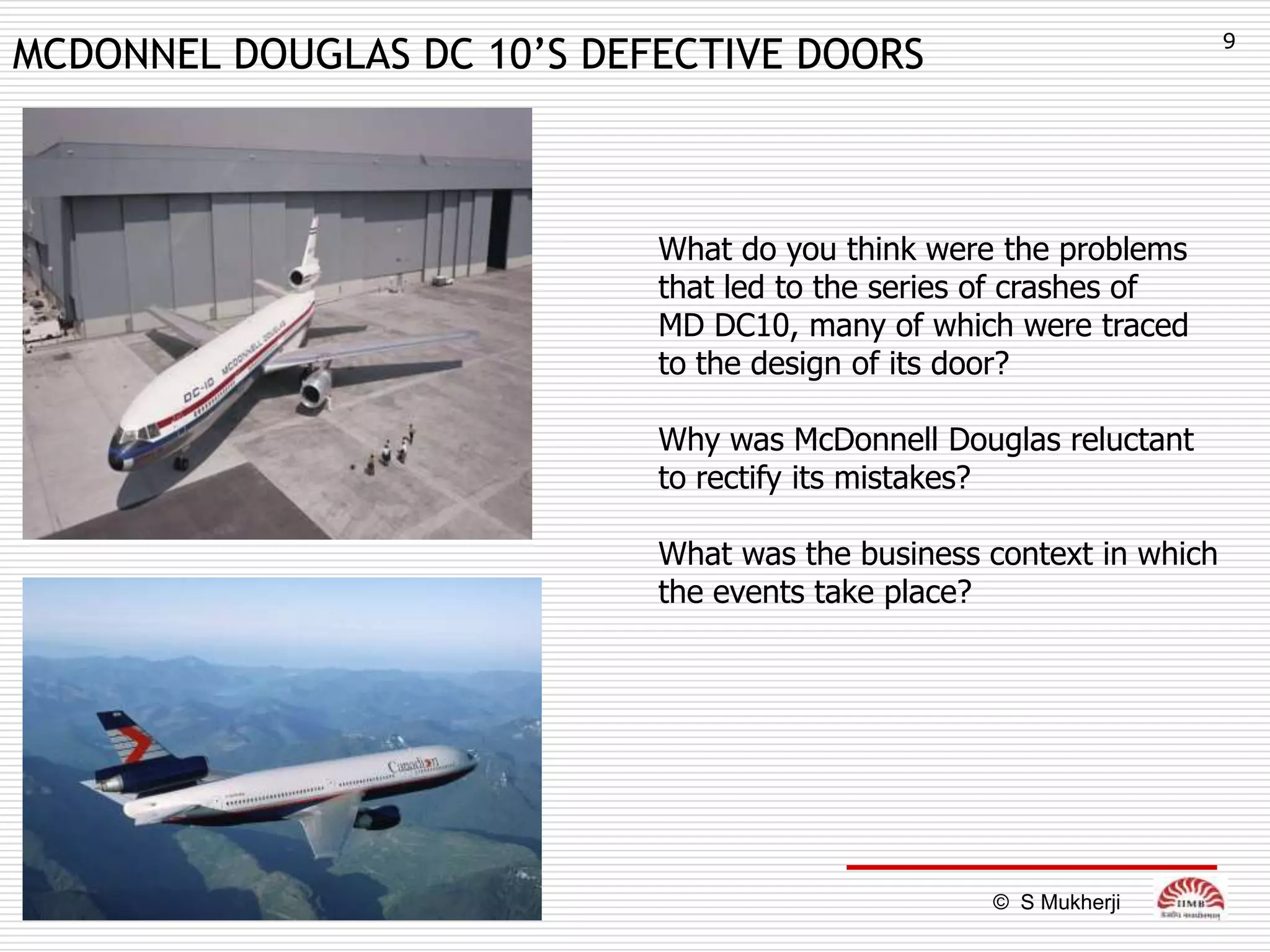
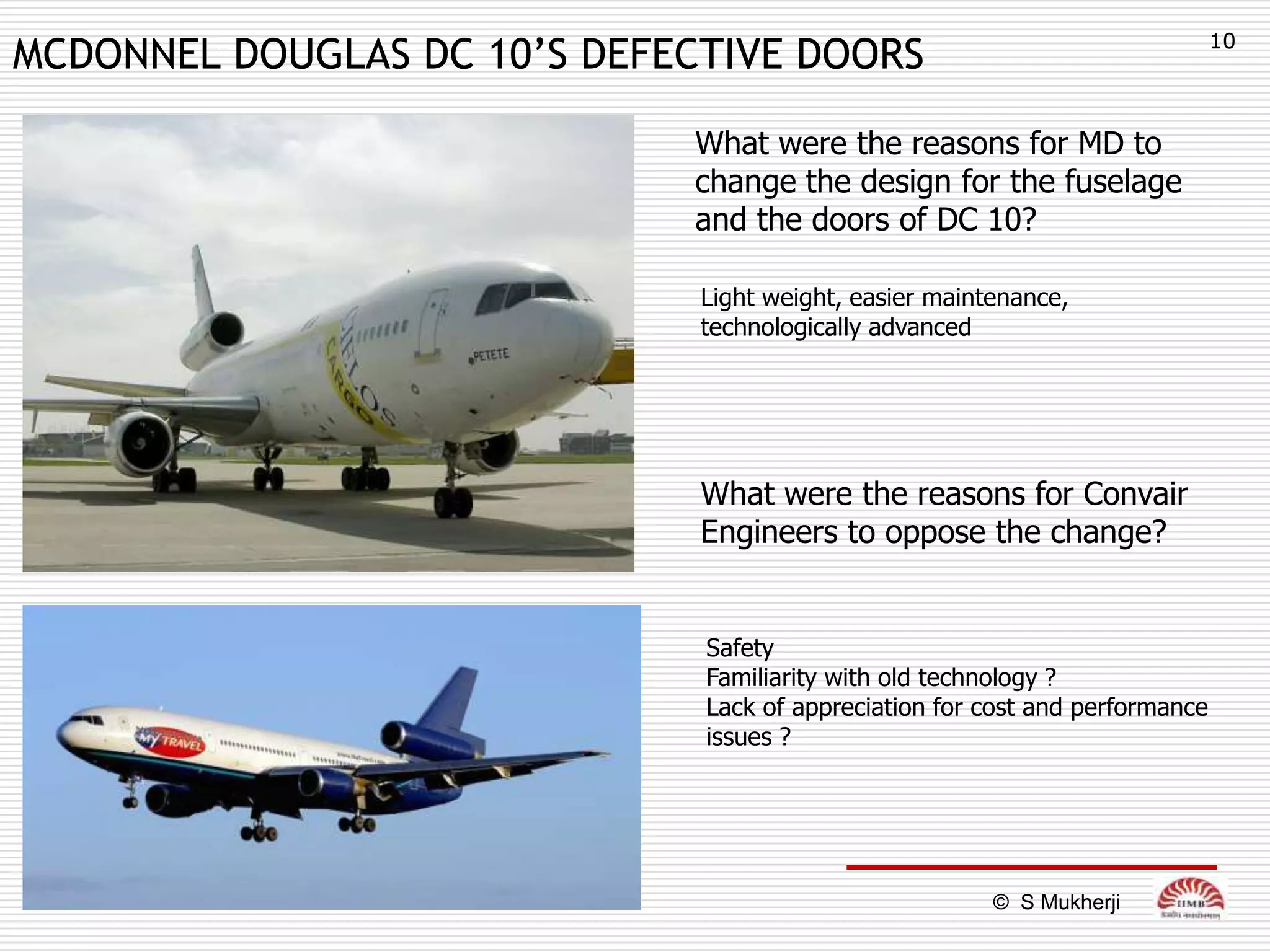
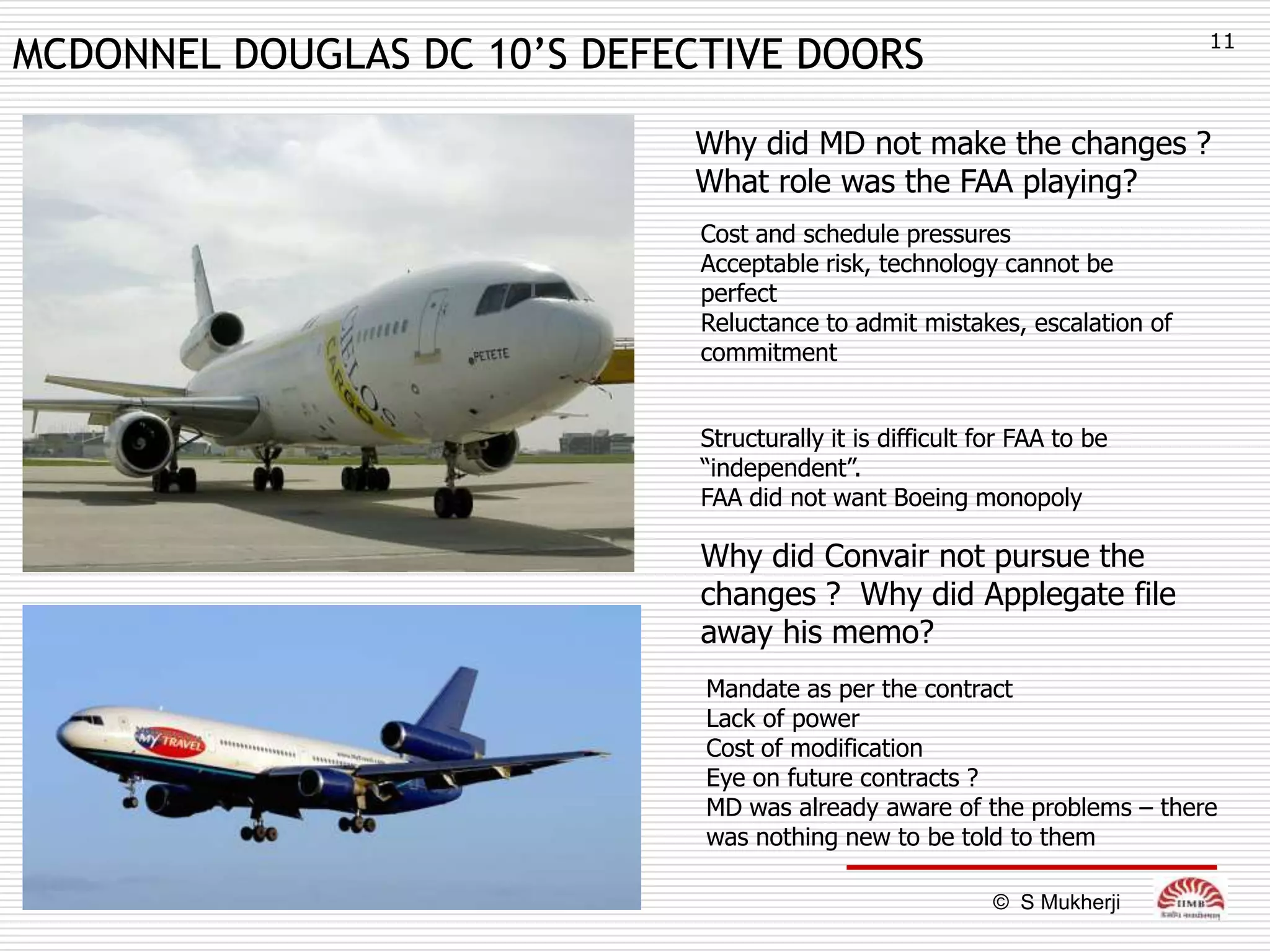
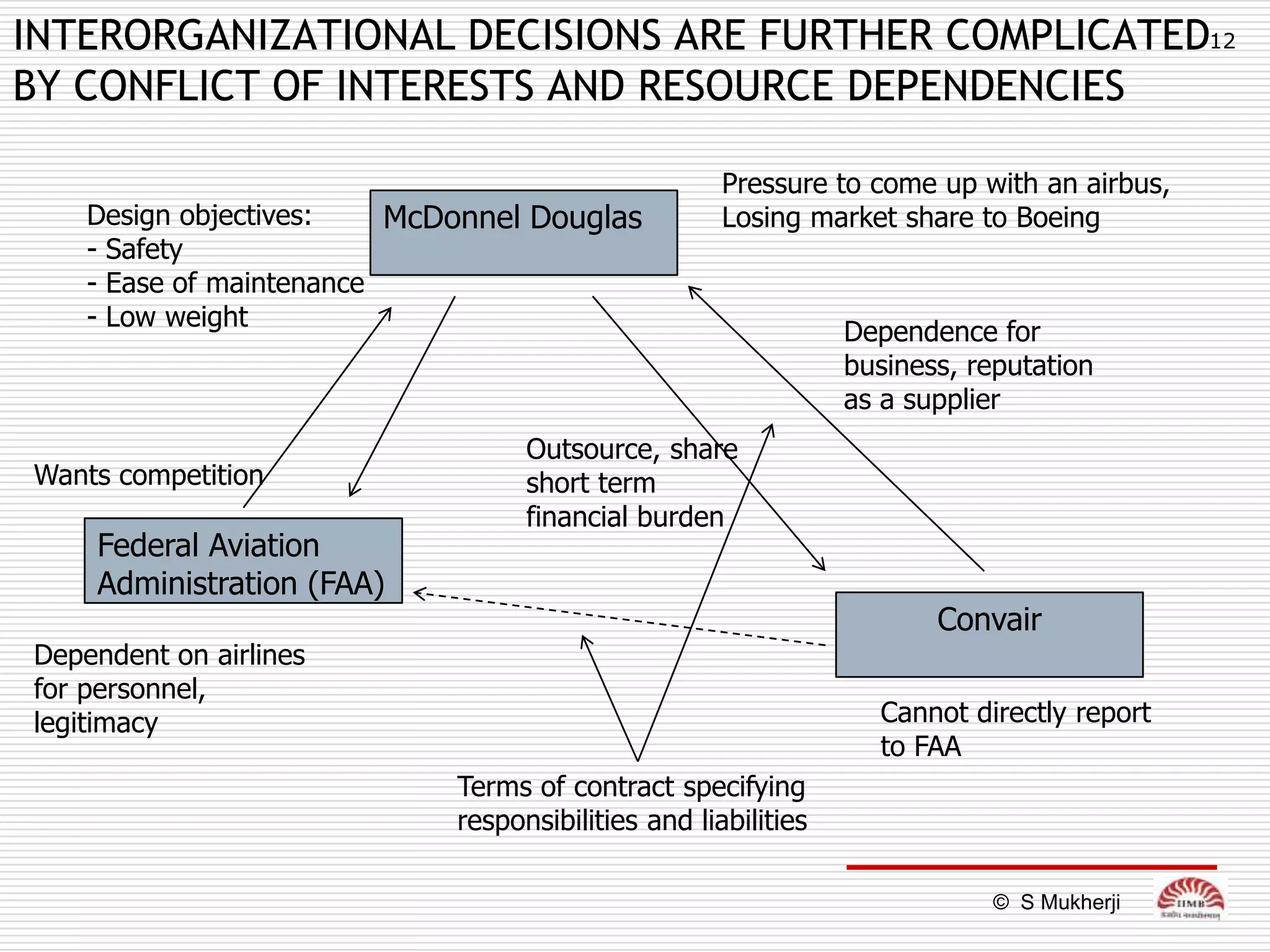
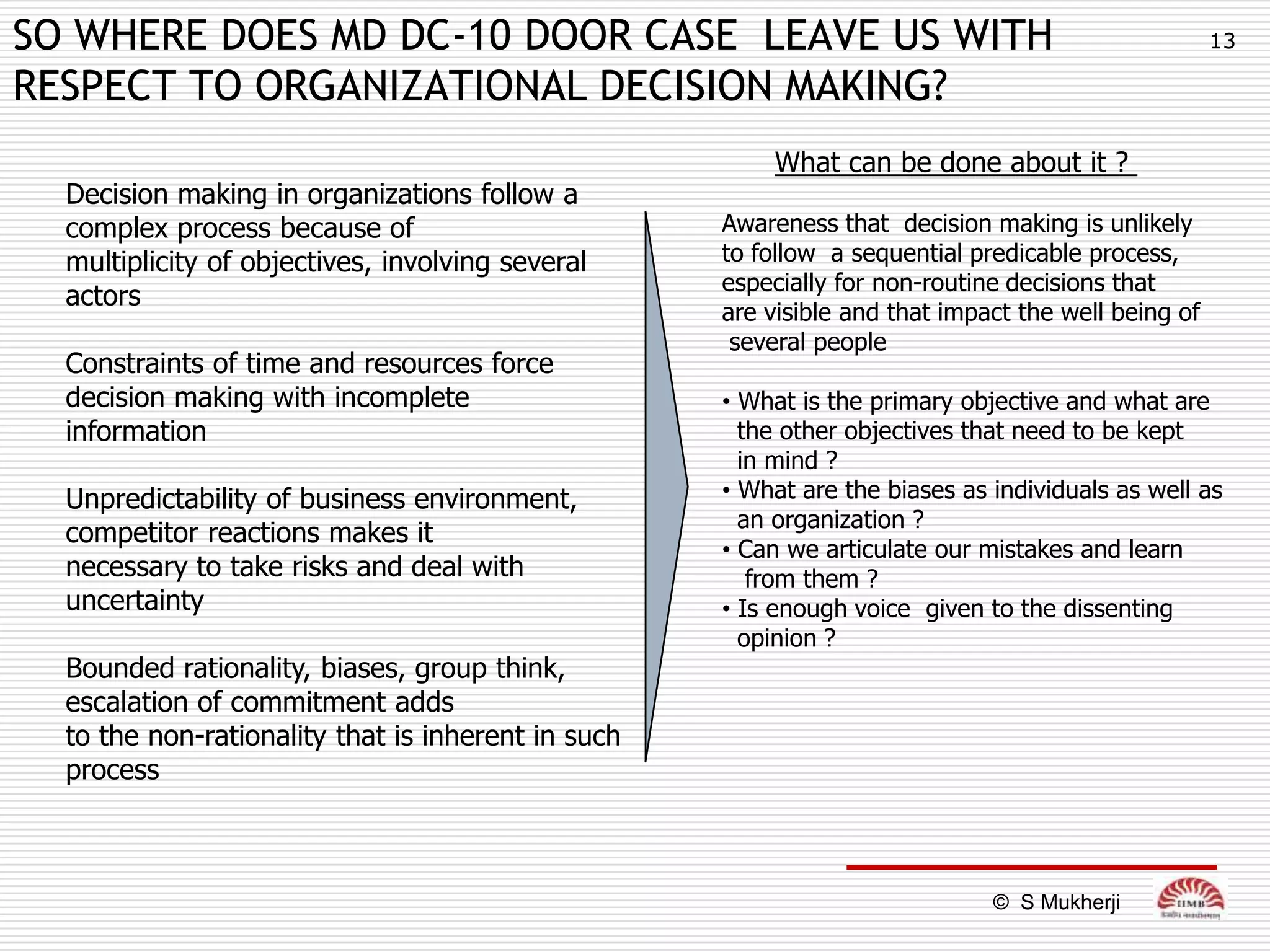
This document discusses organizational decision making. It begins by noting that while rational decision making models assume no constraints, in reality individuals and organizations are boundedly rational due to limited resources, cognitive abilities, and other factors. Decision making processes in organizations are further complicated by multiple objectives, actors with different interests, and interdependencies. The case of McDonnell Douglas DC-10's defective doors is presented to illustrate how organizational decisions can go wrong due to these complexities. Key lessons are the need for awareness of non-rational factors in decision making and giving consideration to alternative viewpoints and potential mistakes.