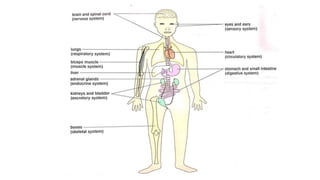
Major organ systems
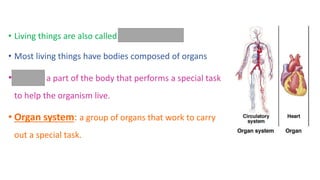
• Living things are also called living organisms
• Most living things have bodies composed of organs
• Organ: a part of the body that performs a special task
to help the organism live.
• Organ system: a group of organs that work to carry
out a special task.
Skeleton and muscles
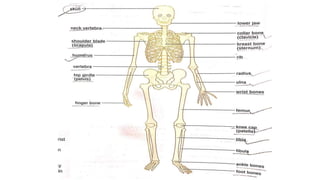
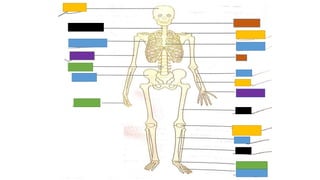
• There are 206 bones in the human skeleton
• Each arm and hand have 30 bones
• Each leg and foot together have 29 bones
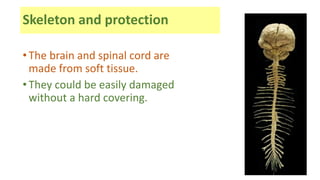
Skeleton and protection
•The brain and spinal cord are
made from soft tissue.
•They could be easily damaged
without a hard covering.
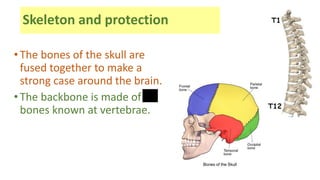
• The bones of the skull are
fused together to make a
strong case around the brain.
• The backbone is made of 33
bones known at vertebrae.
Skeleton and protection
•The ribs and backbone form
a protective structure
around the lungs and heart
Skeleton and protection
Skeleton and support
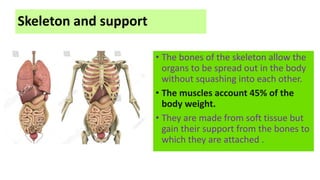
• The bones of the skeleton allow the
organs to be spread out in the body
without squashing into each other.
• The muscles account 45% of the
body weight.
• They are made from soft tissue but
gain their support from the bones to
which they are attached .
Skeleton and movement
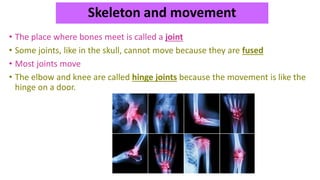
• The place where bones meet is called a joint
• Some joints, like in the skull, cannot move because they are fused
• Most joints move
• The elbow and knee are called hinge joints because the movement is like the
hinge on a door.
• The bones are held together by fibers called
ligaments
It stops the bones coming apart when they
move.
• Parts of the bones in the joint are covered with
cartilage
It stops them rub over each other.
It is hard and slippery that reduces friction and
allows the bones to move over each other
Skeleton and movement
• In some joints, where there is a lot of
movement
There is synovial membrane make a
liquid called synovial fluid.
• the fluid acts like oil, reducing friction
and wear
Skeleton and movement
H.W
Q1 p. 2
Q3 p. 4, 5
Q6 p. 8
C.W
Q2 p. 3
Q4 p. 6,7
Q5 p. 7
Q7 p. 9
• It is made from tissue that has the power to
move
• It can contract to become shorter,
• When the muscle gets shorter it exerts a pulling
force
• The muscle cannot lengthen or extend itself.
• It needs a pulling force to stretch it again.
• This force is provided by the other muscle when
it contracts
• The movement of the muscle in the opposite way is called antagonistic
muscle pair.
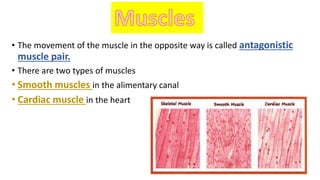
• There are two types of muscles
• Smooth muscles in the alimentary canal
• Cardiac muscle in the heart
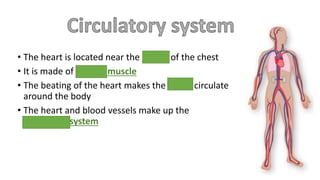
• The heart is located near the center of the chest
• It is made of cardiac muscle
• The beating of the heart makes the blood circulate
around the body
• The heart and blood vessels make up the
circulatory system
If you put your hands below your ribs,
You will feel your hands moving in and out.
They are being pushed by a muscle called
diaphragm
This helps us to breathe.
If you place your hands on your ribs
You will feel the ribs moving
They also help you to breathe
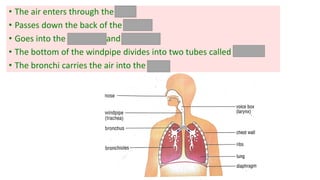
• The air enters through the nose
• Passes down the back of the mouth
• Goes into the voice box and windpipe
• The bottom of the windpipe divides into two tubes called bronchi
• The bronchi carries the air into the lungs
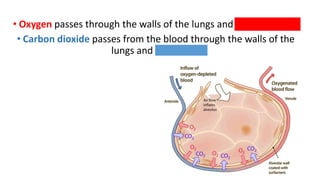
• Oxygen passes through the walls of the lungs and into the blood
• Carbon dioxide passes from the blood through the walls of the
lungs and into the air.
The main part of the digestive system is a tube that runs
through the body is called alimentary canal
• It takes between 24 and 48 hours for the food to travel along the alimentary
canal.
• A meal of boiled rice only stays in the stomach for up to two hours
• Roast chicken may stay for up to seven hours
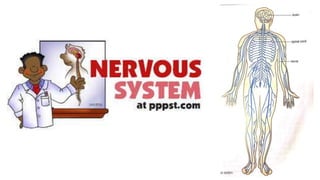
• It contains the brain, spinal cord and
nerves
• The brain is enclosed in the skull
• The spinal cord is enclosed in vertebrae
• Nerves connect the brain to the eyes,
ears, tongue, nose and skin
• Messages travel through the nervous system as tiny electrical signals.
• The sense organs send signals to the spinal cord and the brain
• If the brain decides that the body should move, it sends signals to the
muscles
The waste produced by the body gets collected in
the blood.
As the blood passes through the kidney.
A waste called urea is filtered
from the blood with some water.
Water and urea are called urine
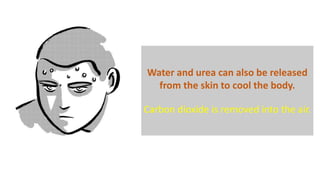
Water and urea can also be released
from the skin to cool the body.
Carbon dioxide is removed into the air.
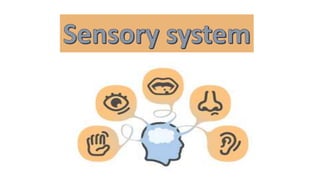
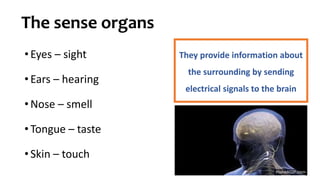
The sense organs
• Eyes – sight
• Ears – hearing
• Nose – smell
• Tongue – taste
• Skin – touch
They provide information about
the surrounding by sending
electrical signals to the brain
• It is made of glands which releases
hormones into the blood.
• Example : adrenal gland releases a
hormone called adrenaline.
• It is found just above the kidney.
• You can feel the adrenaline when you
act in front of a large audience or take
part in athletics.
• This makes your heart beat faster
and direct more blood to your
muscles.
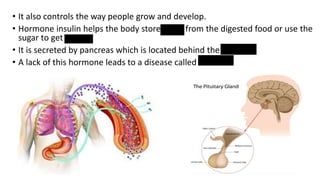
• It also controls the way people grow and develop.
• Hormone insulin helps the body store sugar from the digested food or use the
sugar to get energy.
• It is secreted by pancreas which is located behind the stomach.
• A lack of this hormone leads to a disease called diabetes.
Organ systems of a human body
• Skeletal system
• Muscular system
• Circulatory system
• Respiratory system
• Digestive system
• Nervous system
• Excretory system
• Sensory system
• Endocrine system
Major organ systems (3)

Major organ systems (3)

  • 1.
  • 2.
    • Living thingsare also called living organisms • Most living things have bodies composed of organs • Organ: a part of the body that performs a special task to help the organism live. • Organ system: a group of organs that work to carry out a special task.
  • 3.
    Skeleton and muscles •There are 206 bones in the human skeleton • Each arm and hand have 30 bones • Each leg and foot together have 29 bones
  • 7.
    Skeleton and protection •Thebrain and spinal cord are made from soft tissue. •They could be easily damaged without a hard covering.
  • 8.
    • The bonesof the skull are fused together to make a strong case around the brain. • The backbone is made of 33 bones known at vertebrae. Skeleton and protection
  • 9.
    •The ribs andbackbone form a protective structure around the lungs and heart Skeleton and protection
  • 10.
    Skeleton and support •The bones of the skeleton allow the organs to be spread out in the body without squashing into each other. • The muscles account 45% of the body weight. • They are made from soft tissue but gain their support from the bones to which they are attached .
  • 11.
    Skeleton and movement •The place where bones meet is called a joint • Some joints, like in the skull, cannot move because they are fused • Most joints move • The elbow and knee are called hinge joints because the movement is like the hinge on a door.
  • 12.
    • The bonesare held together by fibers called ligaments It stops the bones coming apart when they move. • Parts of the bones in the joint are covered with cartilage It stops them rub over each other. It is hard and slippery that reduces friction and allows the bones to move over each other Skeleton and movement
  • 13.
    • In somejoints, where there is a lot of movement There is synovial membrane make a liquid called synovial fluid. • the fluid acts like oil, reducing friction and wear Skeleton and movement
  • 14.
    H.W Q1 p. 2 Q3p. 4, 5 Q6 p. 8
  • 15.
    C.W Q2 p. 3 Q4p. 6,7 Q5 p. 7 Q7 p. 9
  • 16.
    • It ismade from tissue that has the power to move • It can contract to become shorter, • When the muscle gets shorter it exerts a pulling force • The muscle cannot lengthen or extend itself. • It needs a pulling force to stretch it again. • This force is provided by the other muscle when it contracts
  • 17.
    • The movementof the muscle in the opposite way is called antagonistic muscle pair. • There are two types of muscles • Smooth muscles in the alimentary canal • Cardiac muscle in the heart
  • 18.
    • The heartis located near the center of the chest • It is made of cardiac muscle • The beating of the heart makes the blood circulate around the body • The heart and blood vessels make up the circulatory system
  • 20.
    If you putyour hands below your ribs, You will feel your hands moving in and out. They are being pushed by a muscle called diaphragm This helps us to breathe. If you place your hands on your ribs You will feel the ribs moving They also help you to breathe
  • 21.
    • The airenters through the nose • Passes down the back of the mouth • Goes into the voice box and windpipe • The bottom of the windpipe divides into two tubes called bronchi • The bronchi carries the air into the lungs
  • 22.
    • Oxygen passesthrough the walls of the lungs and into the blood • Carbon dioxide passes from the blood through the walls of the lungs and into the air.
  • 24.
    The main partof the digestive system is a tube that runs through the body is called alimentary canal
  • 25.
    • It takesbetween 24 and 48 hours for the food to travel along the alimentary canal. • A meal of boiled rice only stays in the stomach for up to two hours • Roast chicken may stay for up to seven hours
  • 27.
    • It containsthe brain, spinal cord and nerves • The brain is enclosed in the skull • The spinal cord is enclosed in vertebrae • Nerves connect the brain to the eyes, ears, tongue, nose and skin • Messages travel through the nervous system as tiny electrical signals. • The sense organs send signals to the spinal cord and the brain • If the brain decides that the body should move, it sends signals to the muscles
  • 29.
    The waste producedby the body gets collected in the blood. As the blood passes through the kidney. A waste called urea is filtered from the blood with some water. Water and urea are called urine
  • 30.
    Water and ureacan also be released from the skin to cool the body. Carbon dioxide is removed into the air.
  • 32.
    The sense organs •Eyes – sight • Ears – hearing • Nose – smell • Tongue – taste • Skin – touch They provide information about the surrounding by sending electrical signals to the brain
  • 34.
    • It ismade of glands which releases hormones into the blood. • Example : adrenal gland releases a hormone called adrenaline. • It is found just above the kidney. • You can feel the adrenaline when you act in front of a large audience or take part in athletics. • This makes your heart beat faster and direct more blood to your muscles.
  • 35.
    • It alsocontrols the way people grow and develop. • Hormone insulin helps the body store sugar from the digested food or use the sugar to get energy. • It is secreted by pancreas which is located behind the stomach. • A lack of this hormone leads to a disease called diabetes.
  • 36.
    Organ systems ofa human body • Skeletal system • Muscular system • Circulatory system • Respiratory system • Digestive system • Nervous system • Excretory system • Sensory system • Endocrine system