FORCES AND
MOTION
Physics
Chapter 14.
(Week 1)
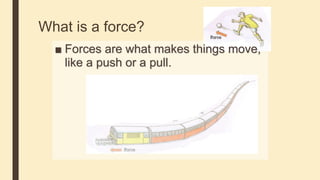
What is a force?
■ Forces are what makes things move,
like a push or a pull.
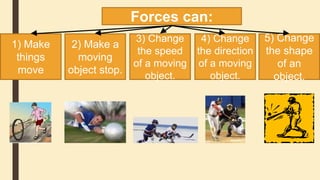
Forces can:
1) Make
things
move
2) Make a
moving
object stop.
3) Change
the speed
of a moving
object.
4) Change
the direction
of a moving
object.
5) Change
the shape
of an
object.
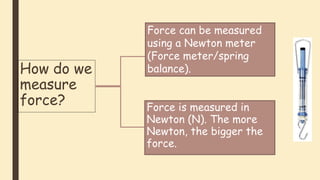
Force is measured in
Newton (N). The more
Newton, the bigger the
force.
How do we
measure
force?
Force can be measured
using a Newton meter
(Force meter/spring
balance).
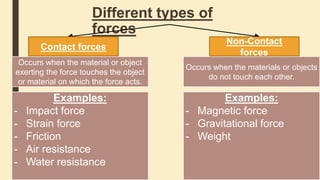
Different types of
forces
Contact forces
Non-Contact
forces
Occurs when the material or object
exerting the force touches the object
or material on which the force acts.
Occurs when the materials or objects
do not touch each other.
Examples:
- Impact force
- Strain force
- Friction
- Air resistance
- Water resistance
Examples:
- Magnetic force
- Gravitational force
- Weight
Contact forces
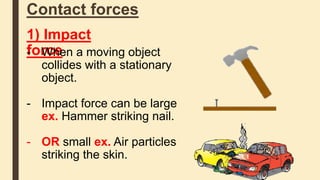
1) Impact
force- When a moving object
collides with a stationary
object.
- Impact force can be large
ex. Hammer striking nail.
- OR small ex. Air particles
striking the skin.
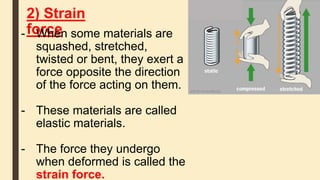
2) Strain
force- When some materials are
squashed, stretched,
twisted or bent, they exert a
force opposite the direction
of the force acting on them.
- These materials are called
elastic materials.
- The force they undergo
when deformed is called the
strain force.
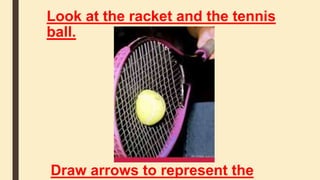
Look at the racket and the tennis
ball.
Draw arrows to represent the
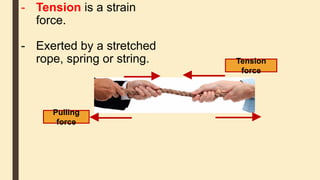
- Tension is a strain
force.
- Exerted by a stretched
rope, spring or string.
Pulling
force
Tension
force
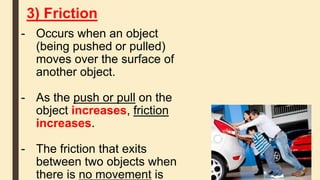
3) Friction
- Occurs when an object
(being pushed or pulled)
moves over the surface of
another object.
- As the push or pull on the
object increases, friction
increases.
- The friction that exits
between two objects when
there is no movement is
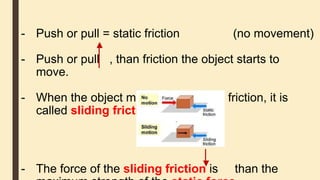
- Push or pull = static friction (no movement)
- Push or pull , than friction the object starts to
move.
- When the object moves there is still friction, it is
called sliding friction.
- The force of the sliding friction is than the
A closer look at friction
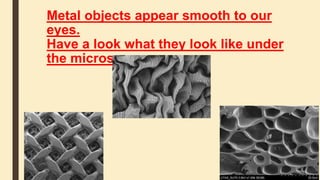
- The surfaces of objects are not
completely smooth.
- Under the microscope it can be
seen that they have tiny
projections with hollows between
them.
Metal objects appear smooth to our
eyes.
Have a look what they look like under
the microscope.
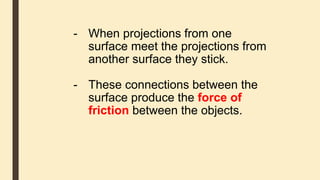
- When projections from one
surface meet the projections from
another surface they stick.
- These connections between the
surface produce the force of
friction between the objects.
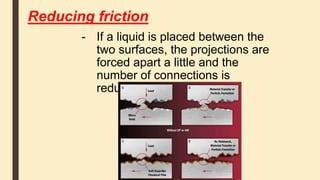
Reducing friction
- If a liquid is placed between the
two surfaces, the projections are
forced apart a little and the
number of connections is
reduced.
- Reducing connections means
reducing friction.
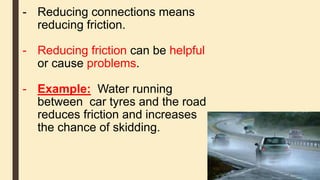
- Reducing friction can be helpful
or cause problems.
- Example: Water running
between car tyres and the road
reduces friction and increases
the chance of skidding.
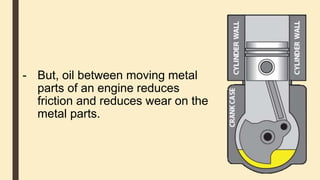
- But, oil between moving metal
parts of an engine reduces
friction and reduces wear on the
metal parts.
Increasing friction
- To increase friction between 2
surfaces we should press the
surfaces together more strongly.
- This makes the projections press
against each other more and
increases the connections
between the surfaces.
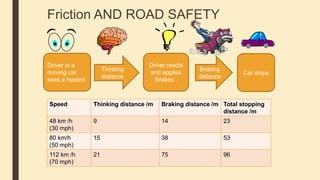
Friction AND ROAD SAFETY
Driver in a
moving car
sees a hazard
Driver reacts
and applies
Brakes .
Car stops
Thinking
distance
Braking
distance
Speed Thinking distance /m Braking distance /m Total stopping
distance /m
48 km /h
(30 mph)
9 14 23
80 km/h
(50 mph)
15 38 53
112 km /h
(70 mph)
21 75 96
Thinking and braking distance
■ Thinking distance
■ The distance travelled by the car before the driver reacts
and applies the brakes.
■ Braking distance
■ The distance covered by the car after the brakes are
applied and before the car stops.
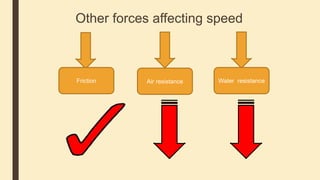
Other forces affecting speed
Friction Air resistance Water resistance
Air resistance
When an object moves through air it pushes air out of the
way.
Air moves over the object sides and pushes back on the
object.
This push on the object is called air resistance or DRAG.
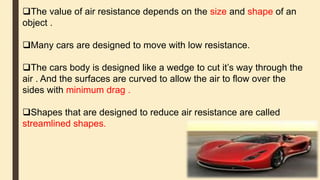
The value of air resistance depends on the size and shape of an
object .
Many cars are designed to move with low resistance.
The cars body is designed like a wedge to cut it’s way through the
air . And the surfaces are curved to allow the air to flow over the
sides with minimum drag .
Shapes that are designed to reduce air resistance are called
streamlined shapes.
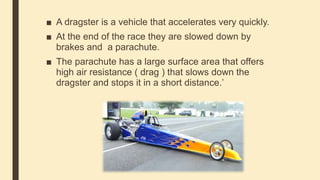
■ A dragster is a vehicle that accelerates very quickly.
■ At the end of the race they are slowed down by
brakes and a parachute.
■ The parachute has a large surface area that offers
high air resistance ( drag ) that slows down the
dragster and stops it in a short distance.’
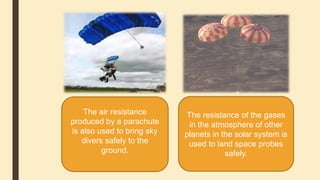
The air resistance
produced by a parachute
is also used to bring sky
divers safely to the
ground.
The resistance of the gases
in the atmosphere of other
planets in the solar system is
used to land space probes
safely.
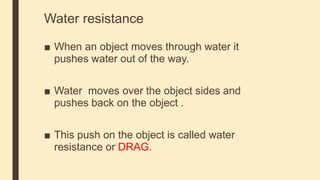
Water resistance
■ When an object moves through water it
pushes water out of the way.
■ Water moves over the object sides and
pushes back on the object .
■ This push on the object is called water
resistance or DRAG.
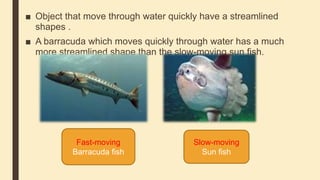
■ Object that move through water quickly have a streamlined
shapes .
■ A barracuda which moves quickly through water has a much
more streamlined shape than the slow-moving sun fish.
Fast-moving
Barracuda fish
Slow-moving
Sun fish
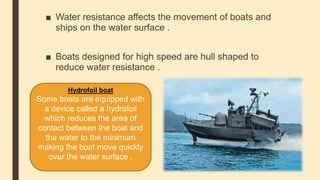
■ Water resistance affects the movement of boats and
ships on the water surface .
■ Boats designed for high speed are hull shaped to
reduce water resistance .
Hydrofoil boat
Some boats are equipped with
a device called a hydrofoil
which reduces the area of
contact between the boat and
the water to the minimum
making the boat move quickly
over the water surface .

Ch.14.forces and motion 1

  • 1.
  • 2.
    What is aforce? ■ Forces are what makes things move, like a push or a pull.
  • 3.
    Forces can: 1) Make things move 2)Make a moving object stop. 3) Change the speed of a moving object. 4) Change the direction of a moving object. 5) Change the shape of an object.
  • 4.
    Force is measuredin Newton (N). The more Newton, the bigger the force. How do we measure force? Force can be measured using a Newton meter (Force meter/spring balance).
  • 5.
    Different types of forces Contactforces Non-Contact forces Occurs when the material or object exerting the force touches the object or material on which the force acts. Occurs when the materials or objects do not touch each other. Examples: - Impact force - Strain force - Friction - Air resistance - Water resistance Examples: - Magnetic force - Gravitational force - Weight
  • 6.
    Contact forces 1) Impact force-When a moving object collides with a stationary object. - Impact force can be large ex. Hammer striking nail. - OR small ex. Air particles striking the skin.
  • 7.
    2) Strain force- Whensome materials are squashed, stretched, twisted or bent, they exert a force opposite the direction of the force acting on them. - These materials are called elastic materials. - The force they undergo when deformed is called the strain force.
  • 8.
    Look at theracket and the tennis ball. Draw arrows to represent the
  • 9.
    - Tension isa strain force. - Exerted by a stretched rope, spring or string. Pulling force Tension force
  • 10.
    3) Friction - Occurswhen an object (being pushed or pulled) moves over the surface of another object. - As the push or pull on the object increases, friction increases. - The friction that exits between two objects when there is no movement is
  • 11.
    - Push orpull = static friction (no movement) - Push or pull , than friction the object starts to move. - When the object moves there is still friction, it is called sliding friction. - The force of the sliding friction is than the
  • 12.
    A closer lookat friction - The surfaces of objects are not completely smooth. - Under the microscope it can be seen that they have tiny projections with hollows between them.
  • 13.
    Metal objects appearsmooth to our eyes. Have a look what they look like under the microscope.
  • 14.
    - When projectionsfrom one surface meet the projections from another surface they stick. - These connections between the surface produce the force of friction between the objects.
  • 15.
    Reducing friction - Ifa liquid is placed between the two surfaces, the projections are forced apart a little and the number of connections is reduced.
  • 16.
    - Reducing connectionsmeans reducing friction. - Reducing friction can be helpful or cause problems. - Example: Water running between car tyres and the road reduces friction and increases the chance of skidding.
  • 17.
    - But, oilbetween moving metal parts of an engine reduces friction and reduces wear on the metal parts.
  • 18.
    Increasing friction - Toincrease friction between 2 surfaces we should press the surfaces together more strongly. - This makes the projections press against each other more and increases the connections between the surfaces.
  • 19.
    Friction AND ROADSAFETY Driver in a moving car sees a hazard Driver reacts and applies Brakes . Car stops Thinking distance Braking distance Speed Thinking distance /m Braking distance /m Total stopping distance /m 48 km /h (30 mph) 9 14 23 80 km/h (50 mph) 15 38 53 112 km /h (70 mph) 21 75 96
  • 20.
    Thinking and brakingdistance ■ Thinking distance ■ The distance travelled by the car before the driver reacts and applies the brakes. ■ Braking distance ■ The distance covered by the car after the brakes are applied and before the car stops.
  • 21.
    Other forces affectingspeed Friction Air resistance Water resistance
  • 22.
    Air resistance When anobject moves through air it pushes air out of the way. Air moves over the object sides and pushes back on the object. This push on the object is called air resistance or DRAG.
  • 23.
    The value ofair resistance depends on the size and shape of an object . Many cars are designed to move with low resistance. The cars body is designed like a wedge to cut it’s way through the air . And the surfaces are curved to allow the air to flow over the sides with minimum drag . Shapes that are designed to reduce air resistance are called streamlined shapes.
  • 24.
    ■ A dragsteris a vehicle that accelerates very quickly. ■ At the end of the race they are slowed down by brakes and a parachute. ■ The parachute has a large surface area that offers high air resistance ( drag ) that slows down the dragster and stops it in a short distance.’
  • 25.
    The air resistance producedby a parachute is also used to bring sky divers safely to the ground. The resistance of the gases in the atmosphere of other planets in the solar system is used to land space probes safely.
  • 26.
    Water resistance ■ Whenan object moves through water it pushes water out of the way. ■ Water moves over the object sides and pushes back on the object . ■ This push on the object is called water resistance or DRAG.
  • 27.
    ■ Object thatmove through water quickly have a streamlined shapes . ■ A barracuda which moves quickly through water has a much more streamlined shape than the slow-moving sun fish. Fast-moving Barracuda fish Slow-moving Sun fish
  • 28.
    ■ Water resistanceaffects the movement of boats and ships on the water surface . ■ Boats designed for high speed are hull shaped to reduce water resistance . Hydrofoil boat Some boats are equipped with a device called a hydrofoil which reduces the area of contact between the boat and the water to the minimum making the boat move quickly over the water surface .