


CONTENT OUTLINE:
-Definition of Developing Countries.
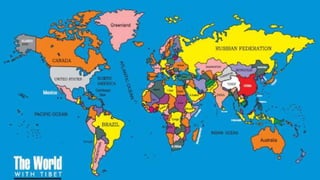
-Map/Location of Developing countries.
-Main population problem in Developing countries.
-Case study on High Birth Rate: China
-Case study on High Unemployment Rate: Zimbabwe
-Case study on Poverty: Thailand
-Case Study on Malnutrition: India
-References
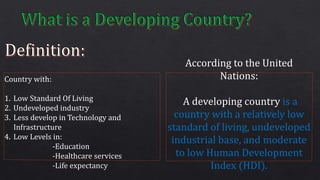
According to the United
Nations:
A developing country is a
country with a relatively low
standard of living, undeveloped
industrial base, and moderate
to low Human Development
Index (HDI).
Country with:
1. Low Standard Of Living
2. Undeveloped industry
3. Less develop in Technology and
Infrastructure
4. Low Levels in:
-Education
-Healthcare services
-Life expectancy
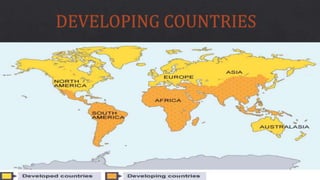
DEVELOPING COUNTRIES
High Birth Rate
Reasons for High Birth Rate:
1. Most of the parents expect
babies die early.
2. Children are a valuable source of
labour and income for a family.
3. The children will look after
them when they are sick.
4. Lack of education
Case study on Birth Rate (overpopulation): CHINA
- China has the largest population in the world, with a
shocking number of 1.3 billion people and growing by
the minute.
- In 2012, its fertility rate was 1.66 per woman.
- Overpopulation in China began after the World War II in
1949, where the Chinese were advised and encouraged to
have as many children as possible.
Reason: in hopes of bringing more money to the country,
building a better army, and producing more food.
- Many Chinese people died before the year of 1949 due
to civil wars and World War II.
- In 1949 (after the world war II), China rapidly
modernized and improved their standard of living causing
their life expectancy to dramatically improved.
- In 1950, the average Life expectancy for Men
was 39, for women was 42.
- In 1998, the average Life Expectancy for men
was 69, for women was 71.
- When they live longer, the population started
to increased and hence, population explosion.
- In 1950, the population in china increased by
1.4 percent of its total population which was
562,579,779. (increased by approximately
7.8 million in a year)
China Average Life Expectancy
(Male + Female)
- The overpopulation was such a problem that in 1979,
the Chinese’s Government introduced one-child
policy, which allowed each family in China to only
have one child.
- More than 1 child, the parents will be ‘punish’ such as:
i. Both parents lose their Job
ii. They will be fined
iii. the 'illegal' child would not be given a
'household register' which was necessary for
school enrolment and applying for jobs.
- Benefits who follow the rule include:
i. increased access to education for all
ii. Childcare
iii. healthcare offered to families
iv. Allowances and maternity leave for the
parents
Was it a success or a failure?
It was a SUCCESS however, there are a few drawbacks
arise.
SUCCESS
1. China’s population reduced by approximately 300
millions.
2. By the end of 1990s, the birth rate has fallen from 31 to
19 over 20 years.
DRAWBACK
1. Since the birth rate are declining, there are not enough babies to
cover, balance and maintain the population.
2. The male to female ratio lies at 117:100 which results in the
difficulty for the men to find wife.
Dong Min and his 72 year old mother
Qin Yin Luan in his home village in a
poor rural area of China
High Unemployment Rate
Reasons for High
unemployment Rate:
1. High Population, less job
Opportunities.
2. Poor education
Poverty
Reasons for Poverty:
1. History of colonialism
2. War and political instability
3. National Debt
4. Discrimination and social
Inequality.
5. Vulnerability to natural
Disasters.
!MALNOURISHED!
Malnourished
Reasons for Malnourished:
1. Poverty
2. Lack of access to food
3. Conflicts
4. Climate change
5. Lack of clean water
Case study on Malnutrition: INDIA
- According to WHO, the biggest contributor to
Child Mortality is MALNUTRITION
- There are 2.2 million child death per year.
- The prevalence of under-weight children in India
is among the highest in the world.
- In India, Madhya Pradesh recording the highest
rate with 55% whereas Kerala was the lowest with
approximately 27%.
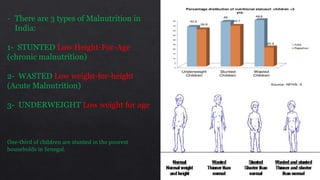
- There are 3 types of Malnutrition in
India:
1- STUNTED Low Height-For-Age
(chronic malnutrition)
2- WASTED Low weight-for-height
(Acute Malnutrition)
3- UNDERWEIGHT Low weight for age
One-third of children are stunted in the poorest
households in Senegal.
- Nutrition Education for the Mothers
- Medical solutions to the problem of malnutrition include
de-worming and nutritional supplements
- Under National Health Mission of Ministry of Health &
Family Welfare, the remedial steps taken are as follows:
1. Promotion of appropriate infant and young child feeding practices that
include early initiation of breastfeeding, exclusive breastfeeding till 6
months of age
2. Treatment of children with severe acute malnutrition
3. Specific program to prevent and combat micronutrient deficiencies of
Vitamin A and Iron & Folic Acid
Was it a success or a failure?
 the prevalence of stunting among children under-three years of age has declined
from 51 per cent to 44.9percent.
 The number of stunted children in Senegal has decreased dramatically over the last
20 years, dropping from one-third of children under 5 in 1993 to about one-sixth of
children today.
 These stunting levels are much lower than neighboring countries with similar
income levels in West Africa such as Mali or Guinea, both with 39 percent of
children stunted.
Conclusion
Developing countries might have different problems depending on the
Situation of the country.
Even though there are several measures that have been done to
at least minimize the problem, those problems still cannot vanish
Completely.
But problems such as high birth rate, malnutrition, poverty and unemployment
can be solved if both the government and the people are firmly United and make an effort
To improve it.
THANK YOU 
𝑅𝐸𝐹𝐸𝑅𝐸𝑁𝐶𝐸𝑆
- Underlying causes of malnutrition. Action Against Hunger. Retrieved from:
http://actioncontrelafaim.ca/what-is-acute-malnutrition/underlying-causes-of-malnutrition/
- What is a developing country?. Retrieved from: http://www.educationalpathwaysinternational.org/?page_id=97
- Verrill, C. (2016, March 31). Mesmerizing photographs of China's crushing overpopulation. Business Insider.
Retrieved from: http://www.businessinsider.com/chinas-over-crowded-population-2016-3
- How did China become so overpopulated? Retrieved from:
https://www.reference.com/world-view/did-china-become-overpopulated-b1de28b047ec86c9#
- Prakarsh Singh. 2013, September 02, How can India tackle child malnutrition?. Live Mint.
http://www.livemint.com/Opinion/ZZfy4EMWxjftmkHU8yMfhO/How-can-India-tackle-child-malnutrition.html
- Initiatives taken to reduce Malnutrition. Retrieved from: http://pib.nic.in/newsite/PrintRelease.aspx?relid=113725
- Location of Zimbabwe. Retrieved from: http://www.mapsofworld.com/zimbabwe/zimbabwe-location-map.html
- Crime in Zimbabwe. Numbeo. Retrieved from: https://www.numbeo.com/crime/country_result.jsp?country=Zimbab
- Retrieved from: http://www.writework.com/essay/main-causes-high-unemployment-zimbabwe-serious-problem-la
main problems in developing countries and measures taken.

main problems in developing countries and measures taken.

  • 2.
    CONTENT OUTLINE: -Definition ofDeveloping Countries. -Map/Location of Developing countries. -Main population problem in Developing countries. -Case study on High Birth Rate: China -Case study on High Unemployment Rate: Zimbabwe -Case study on Poverty: Thailand -Case Study on Malnutrition: India -References
  • 3.
    According to theUnited Nations: A developing country is a country with a relatively low standard of living, undeveloped industrial base, and moderate to low Human Development Index (HDI). Country with: 1. Low Standard Of Living 2. Undeveloped industry 3. Less develop in Technology and Infrastructure 4. Low Levels in: -Education -Healthcare services -Life expectancy
  • 4.
  • 6.
    High Birth Rate Reasonsfor High Birth Rate: 1. Most of the parents expect babies die early. 2. Children are a valuable source of labour and income for a family. 3. The children will look after them when they are sick. 4. Lack of education
  • 7.
    Case study onBirth Rate (overpopulation): CHINA - China has the largest population in the world, with a shocking number of 1.3 billion people and growing by the minute. - In 2012, its fertility rate was 1.66 per woman. - Overpopulation in China began after the World War II in 1949, where the Chinese were advised and encouraged to have as many children as possible. Reason: in hopes of bringing more money to the country, building a better army, and producing more food. - Many Chinese people died before the year of 1949 due to civil wars and World War II. - In 1949 (after the world war II), China rapidly modernized and improved their standard of living causing their life expectancy to dramatically improved.
  • 8.
    - In 1950,the average Life expectancy for Men was 39, for women was 42. - In 1998, the average Life Expectancy for men was 69, for women was 71. - When they live longer, the population started to increased and hence, population explosion. - In 1950, the population in china increased by 1.4 percent of its total population which was 562,579,779. (increased by approximately 7.8 million in a year) China Average Life Expectancy (Male + Female)
  • 9.
    - The overpopulationwas such a problem that in 1979, the Chinese’s Government introduced one-child policy, which allowed each family in China to only have one child. - More than 1 child, the parents will be ‘punish’ such as: i. Both parents lose their Job ii. They will be fined iii. the 'illegal' child would not be given a 'household register' which was necessary for school enrolment and applying for jobs. - Benefits who follow the rule include: i. increased access to education for all ii. Childcare iii. healthcare offered to families iv. Allowances and maternity leave for the parents
  • 10.
    Was it asuccess or a failure? It was a SUCCESS however, there are a few drawbacks arise. SUCCESS 1. China’s population reduced by approximately 300 millions. 2. By the end of 1990s, the birth rate has fallen from 31 to 19 over 20 years.
  • 11.
    DRAWBACK 1. Since thebirth rate are declining, there are not enough babies to cover, balance and maintain the population. 2. The male to female ratio lies at 117:100 which results in the difficulty for the men to find wife. Dong Min and his 72 year old mother Qin Yin Luan in his home village in a poor rural area of China
  • 12.
    High Unemployment Rate Reasonsfor High unemployment Rate: 1. High Population, less job Opportunities. 2. Poor education
  • 18.
    Poverty Reasons for Poverty: 1.History of colonialism 2. War and political instability 3. National Debt 4. Discrimination and social Inequality. 5. Vulnerability to natural Disasters. !MALNOURISHED!
  • 24.
    Malnourished Reasons for Malnourished: 1.Poverty 2. Lack of access to food 3. Conflicts 4. Climate change 5. Lack of clean water
  • 25.
    Case study onMalnutrition: INDIA - According to WHO, the biggest contributor to Child Mortality is MALNUTRITION - There are 2.2 million child death per year. - The prevalence of under-weight children in India is among the highest in the world. - In India, Madhya Pradesh recording the highest rate with 55% whereas Kerala was the lowest with approximately 27%.
  • 26.
    - There are3 types of Malnutrition in India: 1- STUNTED Low Height-For-Age (chronic malnutrition) 2- WASTED Low weight-for-height (Acute Malnutrition) 3- UNDERWEIGHT Low weight for age One-third of children are stunted in the poorest households in Senegal.
  • 27.
    - Nutrition Educationfor the Mothers - Medical solutions to the problem of malnutrition include de-worming and nutritional supplements - Under National Health Mission of Ministry of Health & Family Welfare, the remedial steps taken are as follows: 1. Promotion of appropriate infant and young child feeding practices that include early initiation of breastfeeding, exclusive breastfeeding till 6 months of age 2. Treatment of children with severe acute malnutrition 3. Specific program to prevent and combat micronutrient deficiencies of Vitamin A and Iron & Folic Acid
  • 28.
    Was it asuccess or a failure?  the prevalence of stunting among children under-three years of age has declined from 51 per cent to 44.9percent.  The number of stunted children in Senegal has decreased dramatically over the last 20 years, dropping from one-third of children under 5 in 1993 to about one-sixth of children today.  These stunting levels are much lower than neighboring countries with similar income levels in West Africa such as Mali or Guinea, both with 39 percent of children stunted.
  • 29.
    Conclusion Developing countries mighthave different problems depending on the Situation of the country. Even though there are several measures that have been done to at least minimize the problem, those problems still cannot vanish Completely. But problems such as high birth rate, malnutrition, poverty and unemployment can be solved if both the government and the people are firmly United and make an effort To improve it.
  • 30.
  • 31.
    𝑅𝐸𝐹𝐸𝑅𝐸𝑁𝐶𝐸𝑆 - Underlying causesof malnutrition. Action Against Hunger. Retrieved from: http://actioncontrelafaim.ca/what-is-acute-malnutrition/underlying-causes-of-malnutrition/ - What is a developing country?. Retrieved from: http://www.educationalpathwaysinternational.org/?page_id=97 - Verrill, C. (2016, March 31). Mesmerizing photographs of China's crushing overpopulation. Business Insider. Retrieved from: http://www.businessinsider.com/chinas-over-crowded-population-2016-3 - How did China become so overpopulated? Retrieved from: https://www.reference.com/world-view/did-china-become-overpopulated-b1de28b047ec86c9# - Prakarsh Singh. 2013, September 02, How can India tackle child malnutrition?. Live Mint. http://www.livemint.com/Opinion/ZZfy4EMWxjftmkHU8yMfhO/How-can-India-tackle-child-malnutrition.html - Initiatives taken to reduce Malnutrition. Retrieved from: http://pib.nic.in/newsite/PrintRelease.aspx?relid=113725 - Location of Zimbabwe. Retrieved from: http://www.mapsofworld.com/zimbabwe/zimbabwe-location-map.html - Crime in Zimbabwe. Numbeo. Retrieved from: https://www.numbeo.com/crime/country_result.jsp?country=Zimbab - Retrieved from: http://www.writework.com/essay/main-causes-high-unemployment-zimbabwe-serious-problem-la