PRESENTED TO
SIR SHAHID KHALIL
PRESENTED BY

SAMEED QADRI ( 11-ME-69)
M.ALI KIANI (11-ME-198)




Nuclear reactors are devices in which fissionable
elements such as uranium, thorium, or plutonium
are made to undergo a nuclear chain reaction.
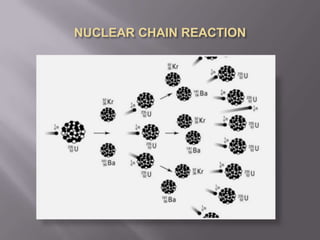
Neutrons are bombarded to Uranium nuclei. It
disintegrates into two smaller atoms ( Ba &
Kr), releasing neutrons and binding energy . One
of the neutron hits another Uranium-235
atom, thus furthur releasing neutrons and binding
energy. Thus , process continous if it is not
controlled. This is called chain reaction.
1)
2)
3)
4)
5)

6)

Fuel rods ( Packets of Uranium oxide
arranged in tubes to form rods )
Moderator
Control rods
Coolant
Pressure vessel
Steam generator
Containment


Magnox is short for Magnesium non-oxidising



It is basically an alloy mainly of magnesium with small amounts of aluminium
and other metals



It is used to clad the fuel rods inside the reactor.



This material has the advantage of a low
neutron capture cross-section, but has two major
disadvantages:



It limits the maximum temperature, and hence the thermal efficiency, of the plant.



It reacts with water, preventing long-term storage of spent fuel under water.




Magnox is an old type of nuclear power reactor
which was designed in the United
Kingdom, and was exported to other
countries, both as a power plant ( as a power
reactor ) and producer for plutonium ( as a
research reactor )
Wylfa Nuclear Generating Facility contains the
world's last operating Magnox reactor


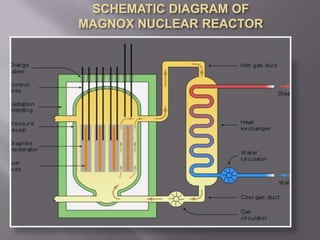
These are graphite moderated reactors and use
natural uranium as fuel & MAGNOX as fuel
cladding.



Working pressure varies from 6.9 to 19.35 bar


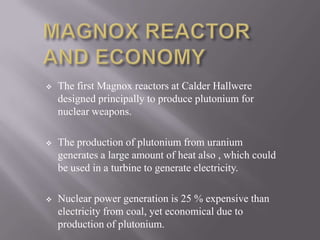
The first Magnox reactors at Calder Hallwere
designed principally to produce plutonium for
nuclear weapons.



The production of plutonium from uranium
generates a large amount of heat also , which could
be used in a turbine to generate electricity.



Nuclear power generation is 25 % expensive than
electricity from coal, yet economical due to
production of plutonium.
There are two nuclear fuel reprocessing plants at
Sellafield
1.
Advanced Gas-cooled Reactors (AGR)
2.
Light Water Reactors (LWR)

This all happens in the Fuel Handling Plant. The fuel is
then transferred to the Magnox Reprocessing Plant.


In early operation it was found that there was
significant oxidation of mild steel components by
the high temperature carbon dioxide
coolant, requiring a reduction in operating
temperature and power output.



For example the Latina reactor was derated in 1969
by 24%, from 210 MWe to 160 MWe, by the
reduction of operating temperature from 390 to 360
°C.


Magnox plants literally means magnox nuclear
reactor.



A small 5 MW experimental reactor at
Yongbyon, operated from 1986 to 1994, and
restarted in 2003. Plutonium from this reactor's
spent fuel has been used in the North Korea nuclear
weapons program.



A 200 MW reactor at taechon, construction of
which also halted in 1994.


This is the general term for all type of carbon
dioxide-cooled, graphite-moderated
reactors, including the Magnox.



The Magnox was replaced in the British power
station program by the Advanced gas-cooled reactor
or AGR.



A key feature of the AGR was the replacement of
magnox cladding to allow higher temperatures and
greater thermal efficiency.


The Magnox reactors were considered at the time to
have a considerable degree of inherent safety
because of their simple design, low power
density, and gas coolant.



Failure of the reactor shutdown system to rapidly
shut down the reactor, or failure of natural
circulation, was not considered in the design.
Magnox nuclear reactor

Magnox nuclear reactor

  • 1.
    PRESENTED TO SIR SHAHIDKHALIL PRESENTED BY SAMEED QADRI ( 11-ME-69) M.ALI KIANI (11-ME-198)
  • 2.
      Nuclear reactors aredevices in which fissionable elements such as uranium, thorium, or plutonium are made to undergo a nuclear chain reaction. Neutrons are bombarded to Uranium nuclei. It disintegrates into two smaller atoms ( Ba & Kr), releasing neutrons and binding energy . One of the neutron hits another Uranium-235 atom, thus furthur releasing neutrons and binding energy. Thus , process continous if it is not controlled. This is called chain reaction.
  • 4.
    1) 2) 3) 4) 5) 6) Fuel rods (Packets of Uranium oxide arranged in tubes to form rods ) Moderator Control rods Coolant Pressure vessel Steam generator Containment
  • 5.
     Magnox is shortfor Magnesium non-oxidising  It is basically an alloy mainly of magnesium with small amounts of aluminium and other metals  It is used to clad the fuel rods inside the reactor.  This material has the advantage of a low neutron capture cross-section, but has two major disadvantages:  It limits the maximum temperature, and hence the thermal efficiency, of the plant.  It reacts with water, preventing long-term storage of spent fuel under water.
  • 6.
      Magnox is anold type of nuclear power reactor which was designed in the United Kingdom, and was exported to other countries, both as a power plant ( as a power reactor ) and producer for plutonium ( as a research reactor ) Wylfa Nuclear Generating Facility contains the world's last operating Magnox reactor
  • 8.
     These are graphitemoderated reactors and use natural uranium as fuel & MAGNOX as fuel cladding.  Working pressure varies from 6.9 to 19.35 bar
  • 9.
     The first Magnoxreactors at Calder Hallwere designed principally to produce plutonium for nuclear weapons.  The production of plutonium from uranium generates a large amount of heat also , which could be used in a turbine to generate electricity.  Nuclear power generation is 25 % expensive than electricity from coal, yet economical due to production of plutonium.
  • 10.
    There are twonuclear fuel reprocessing plants at Sellafield 1. Advanced Gas-cooled Reactors (AGR) 2. Light Water Reactors (LWR) This all happens in the Fuel Handling Plant. The fuel is then transferred to the Magnox Reprocessing Plant.
  • 11.
     In early operationit was found that there was significant oxidation of mild steel components by the high temperature carbon dioxide coolant, requiring a reduction in operating temperature and power output.  For example the Latina reactor was derated in 1969 by 24%, from 210 MWe to 160 MWe, by the reduction of operating temperature from 390 to 360 °C.
  • 12.
     Magnox plants literallymeans magnox nuclear reactor.  A small 5 MW experimental reactor at Yongbyon, operated from 1986 to 1994, and restarted in 2003. Plutonium from this reactor's spent fuel has been used in the North Korea nuclear weapons program.  A 200 MW reactor at taechon, construction of which also halted in 1994.
  • 13.
     This is thegeneral term for all type of carbon dioxide-cooled, graphite-moderated reactors, including the Magnox.  The Magnox was replaced in the British power station program by the Advanced gas-cooled reactor or AGR.  A key feature of the AGR was the replacement of magnox cladding to allow higher temperatures and greater thermal efficiency.
  • 14.
     The Magnox reactorswere considered at the time to have a considerable degree of inherent safety because of their simple design, low power density, and gas coolant.  Failure of the reactor shutdown system to rapidly shut down the reactor, or failure of natural circulation, was not considered in the design.