By, Bejgam
Soujanya
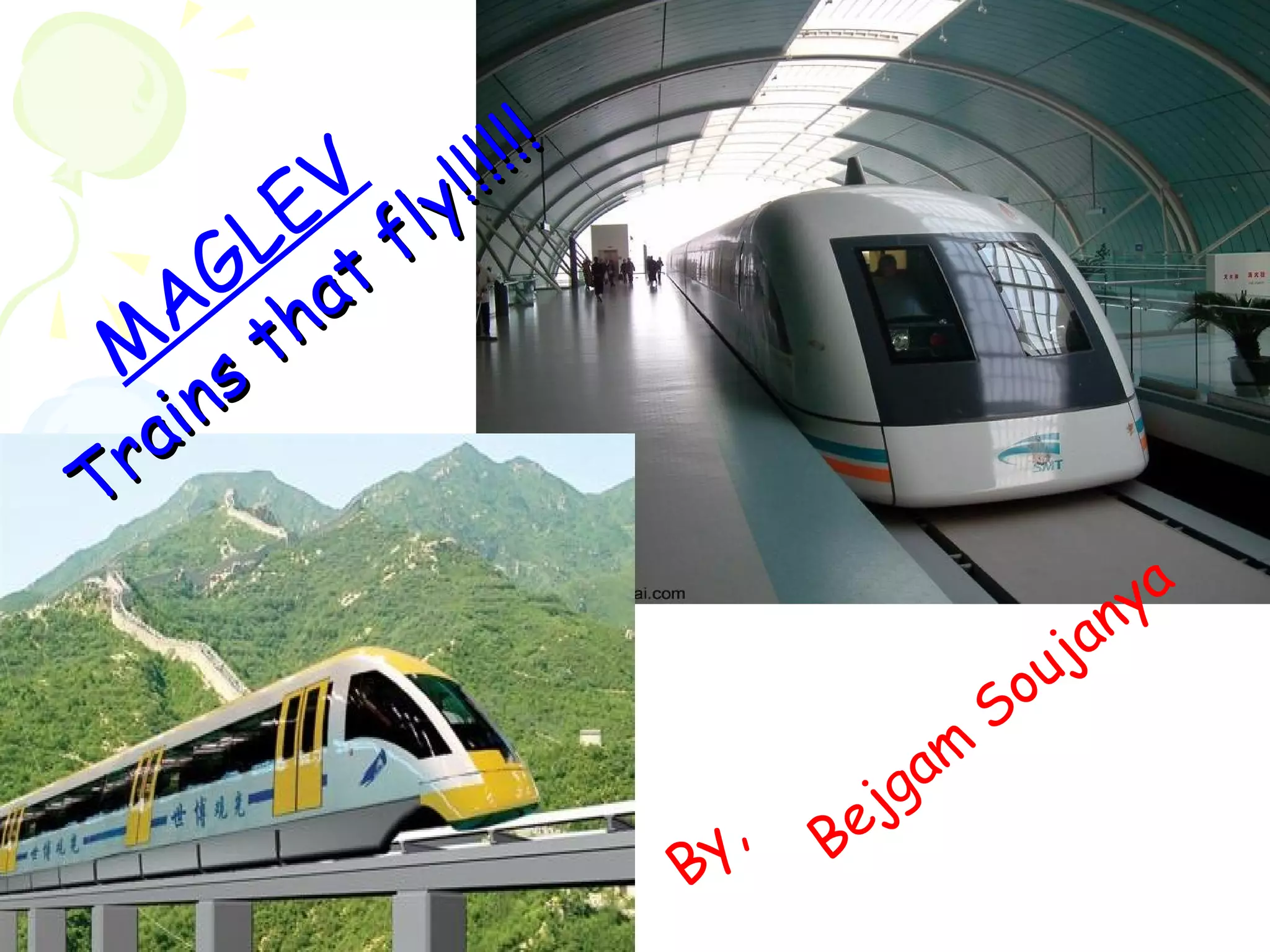
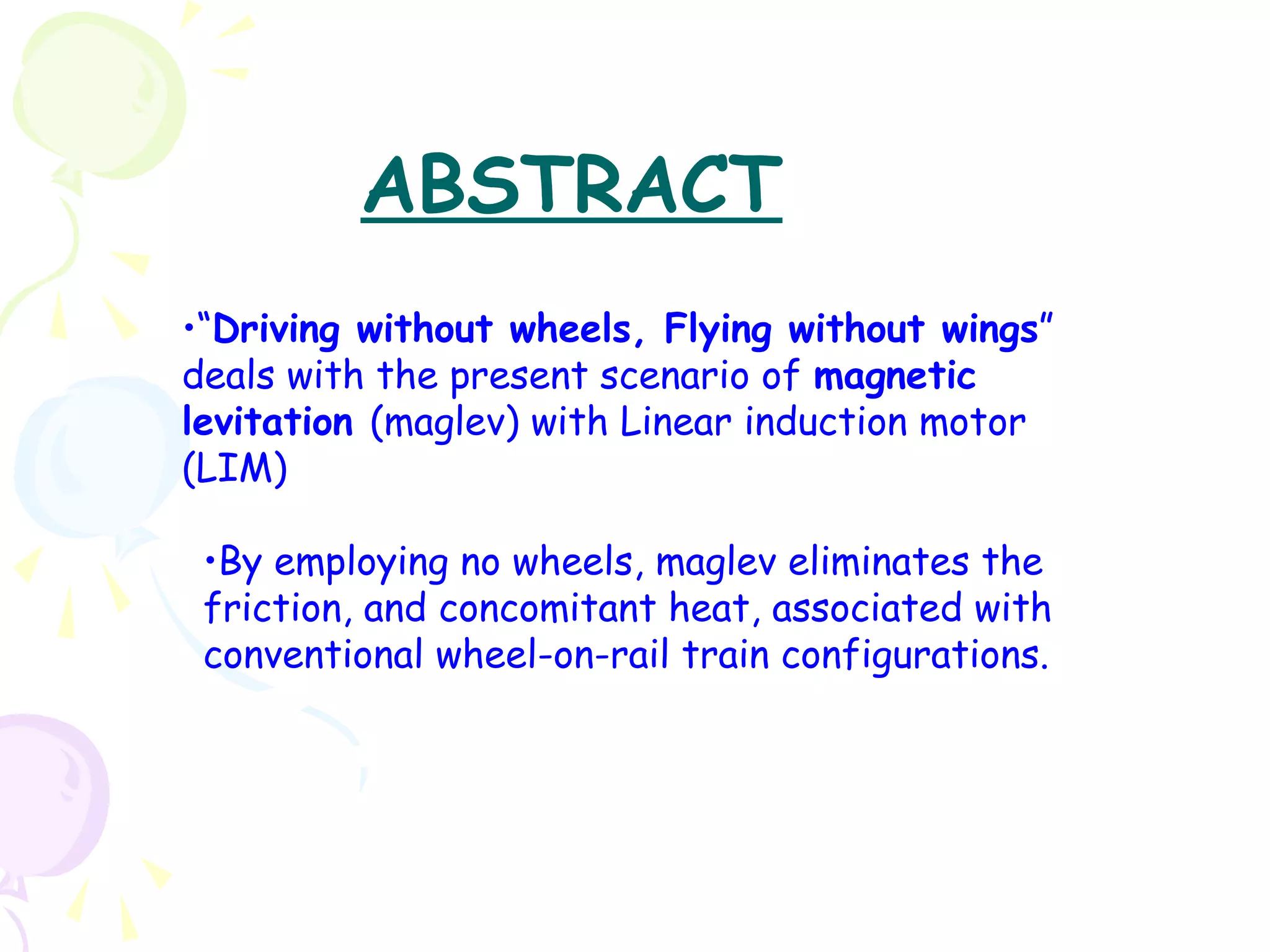
M
AGLEV
Trains
that fly!!!!!!
Trains
that fly!!!!!!
ABSTRACT
•By employing no wheels, maglev eliminates the
friction, and concomitant heat, associated with
conventional wheel-on-rail train configurations.
•“Driving without wheels, Flying without wings”
deals with the present scenario of magnetic
levitation (maglev) with Linear induction motor
(LIM)
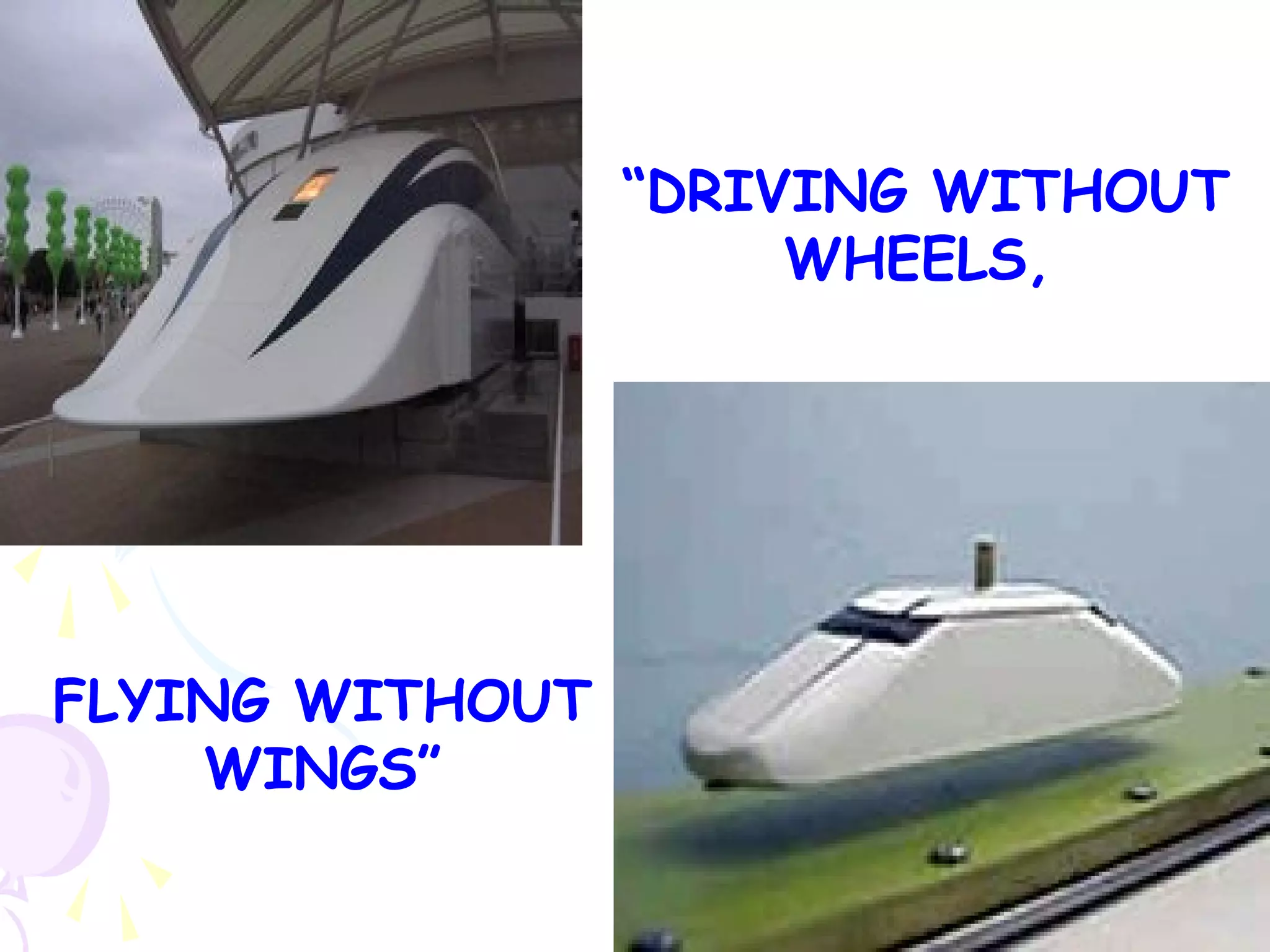
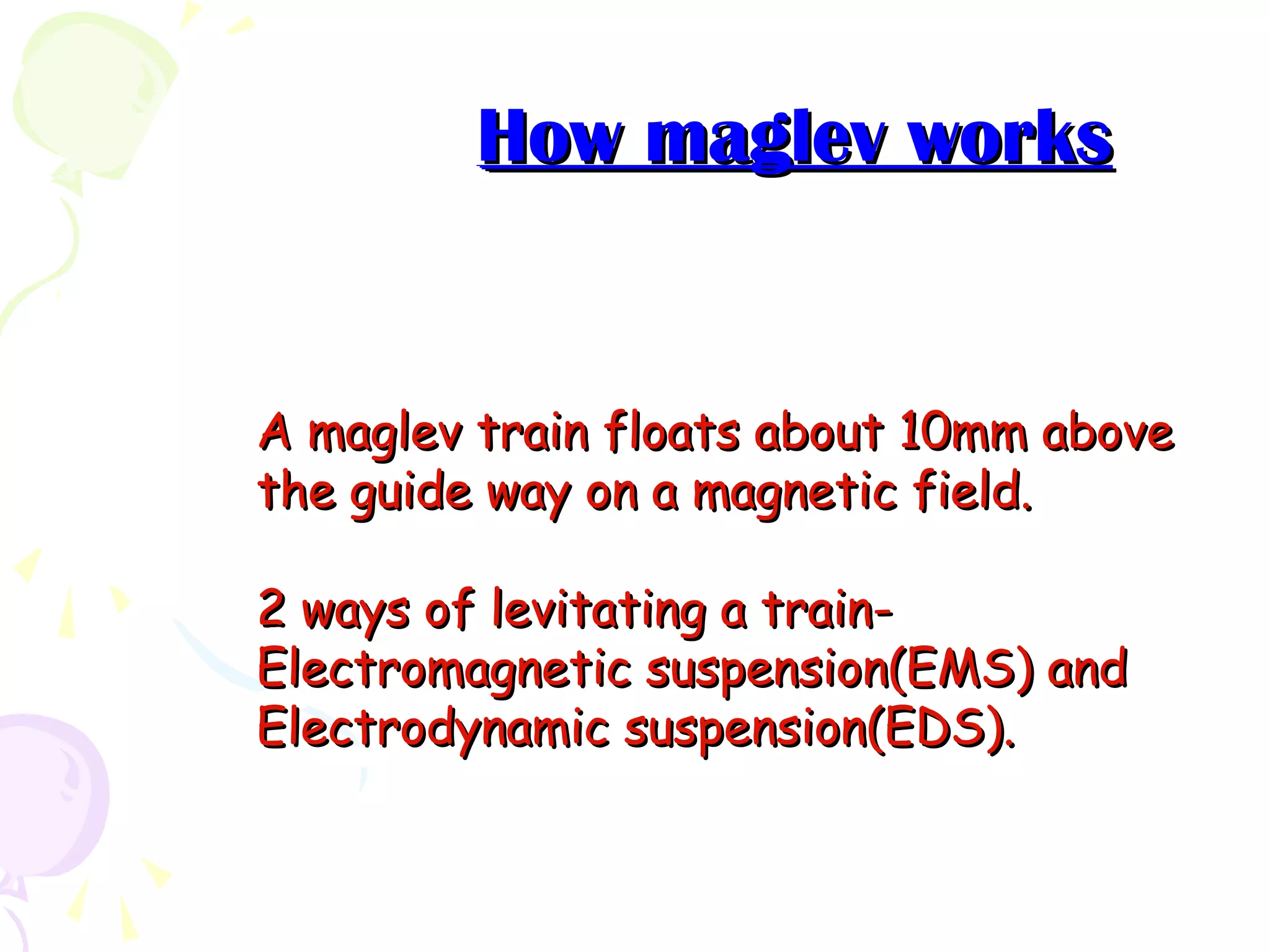
“DRIVING WITHOUT
WHEELS,
FLYING WITHOUT
WINGS”
• 1750 – John Mitchell
• 1900 – Robert and Emile Bachelet
• 1970 – German and Japanese engineers start
research and development towards their
versions of Maglev technology.
INTRODUTION
How maglev worksHow maglev works
A maglev train floats about 10mm aboveA maglev train floats about 10mm above
the guide way on a magnetic field.the guide way on a magnetic field.
2 ways of levitating a train-2 ways of levitating a train-
Electromagnetic suspension(EMS) andElectromagnetic suspension(EMS) and
Electrodynamic suspension(EDS).Electrodynamic suspension(EDS).
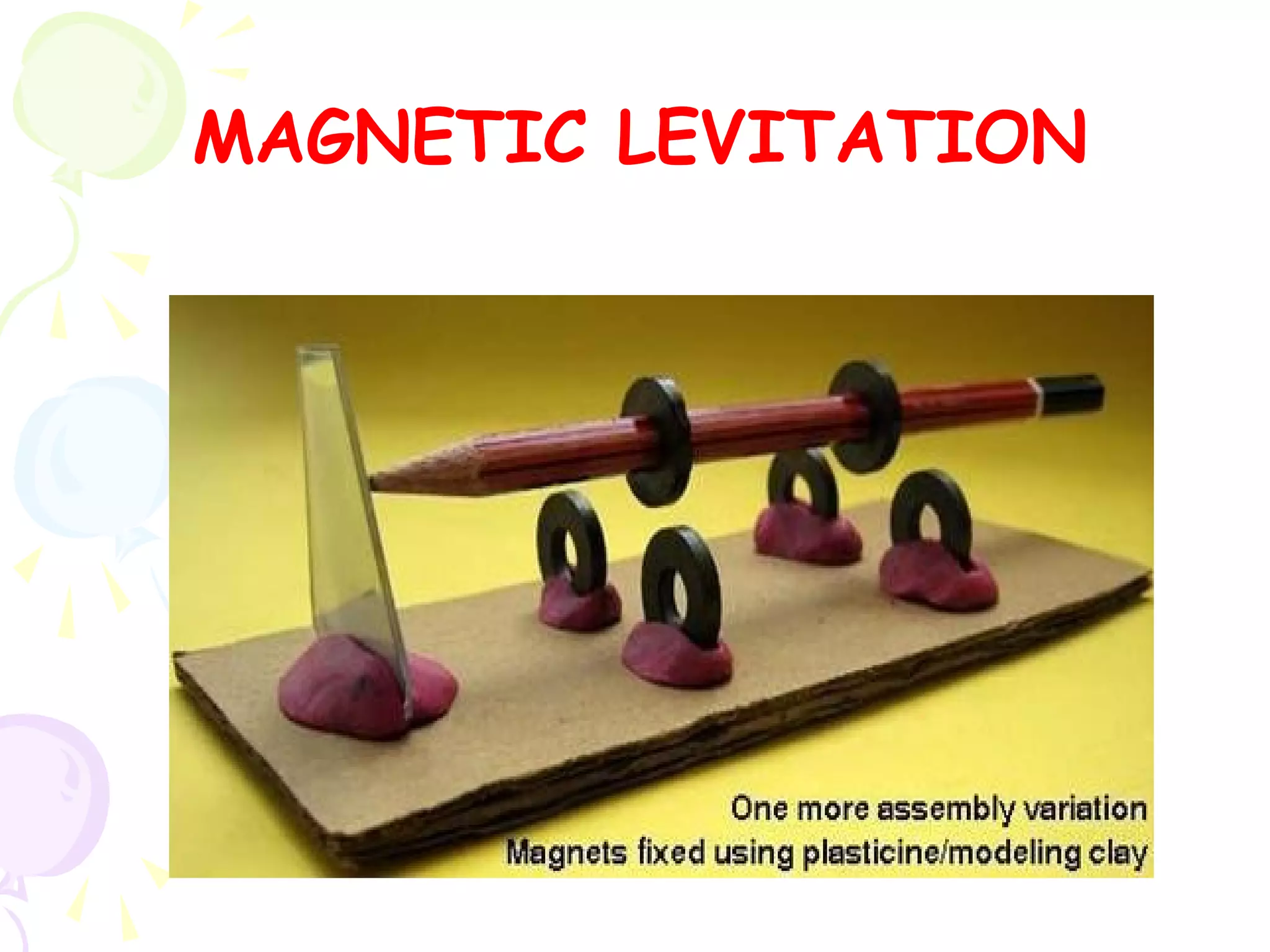
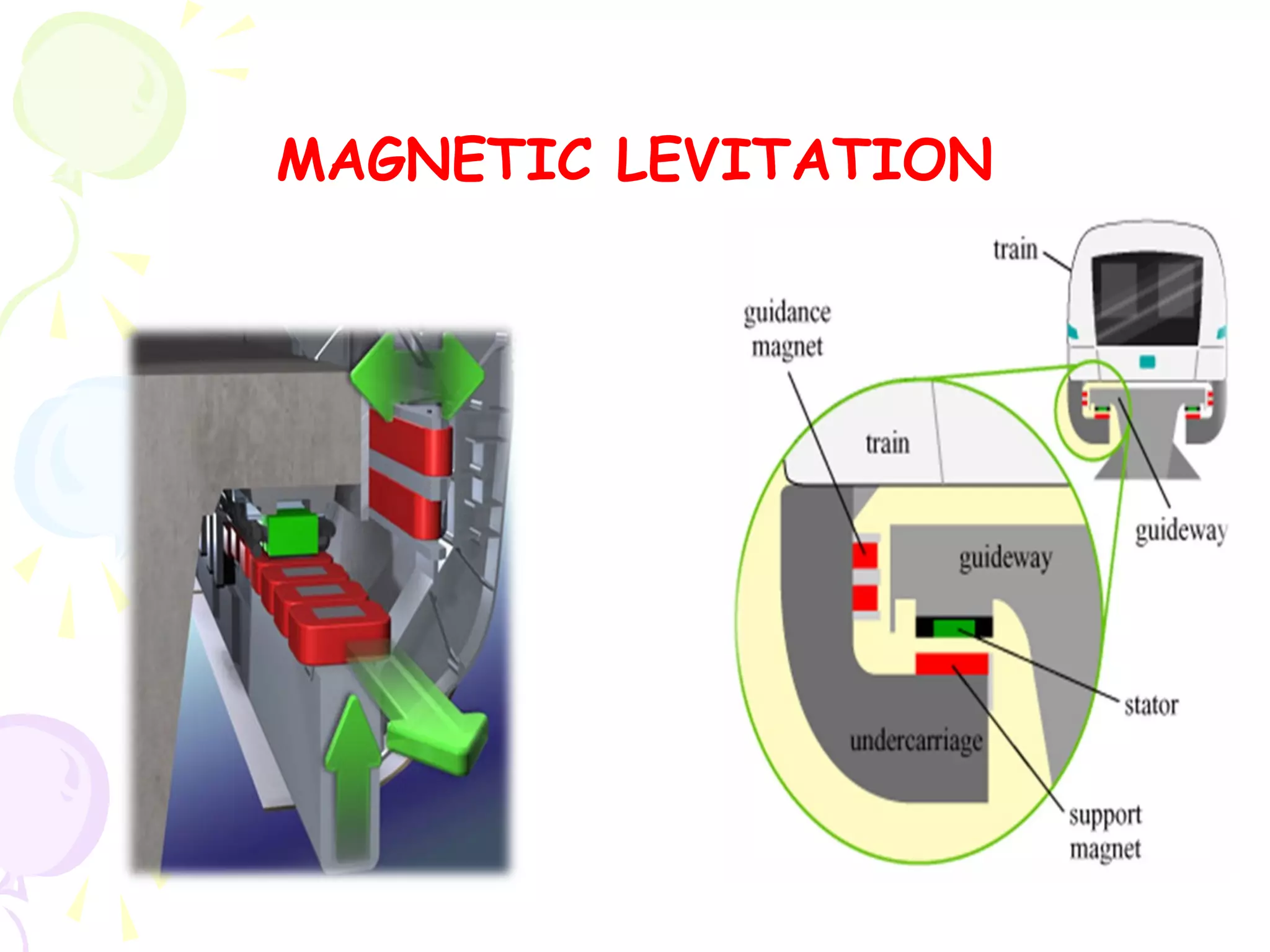
MAGNETIC LEVITATION
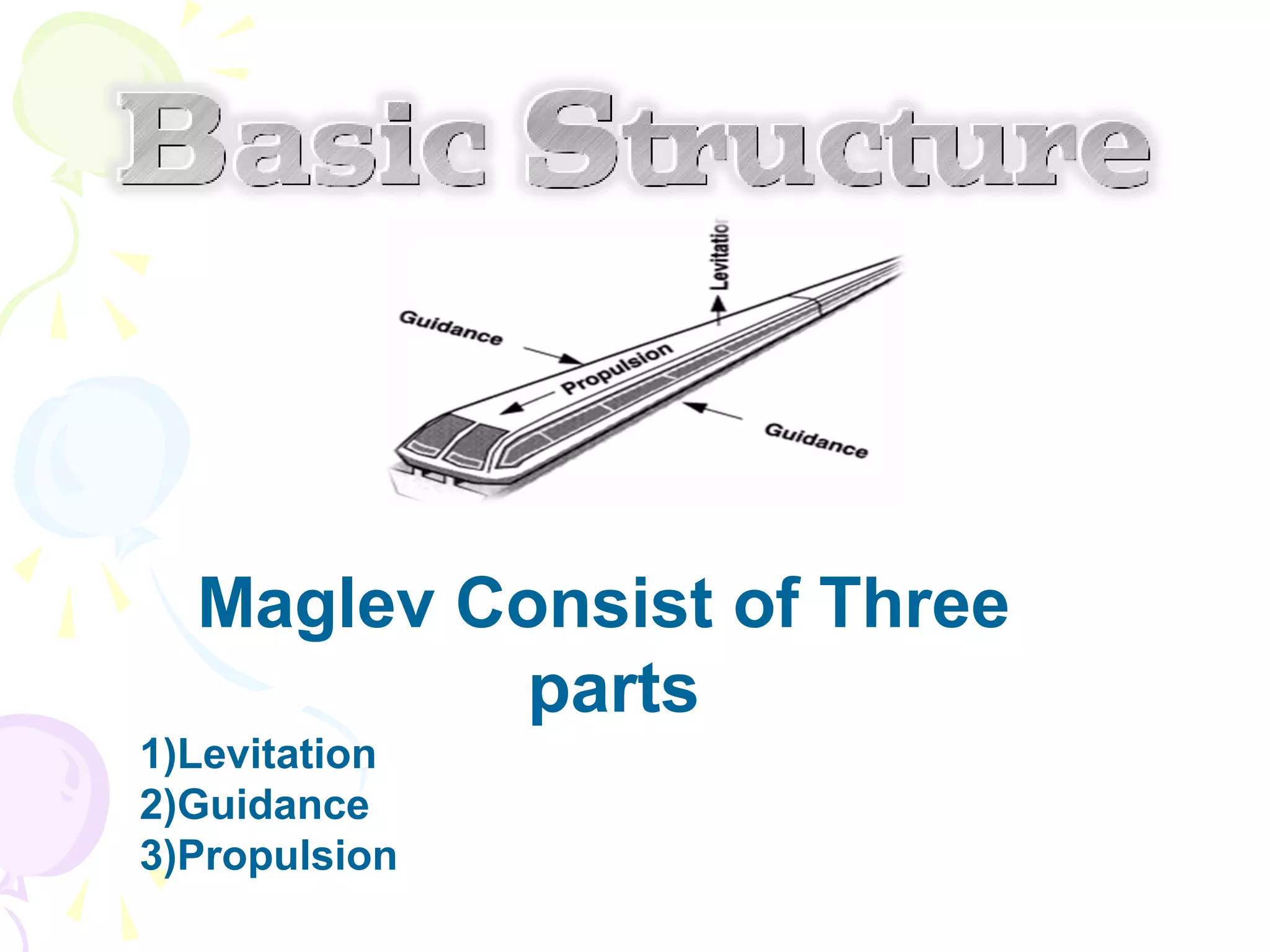
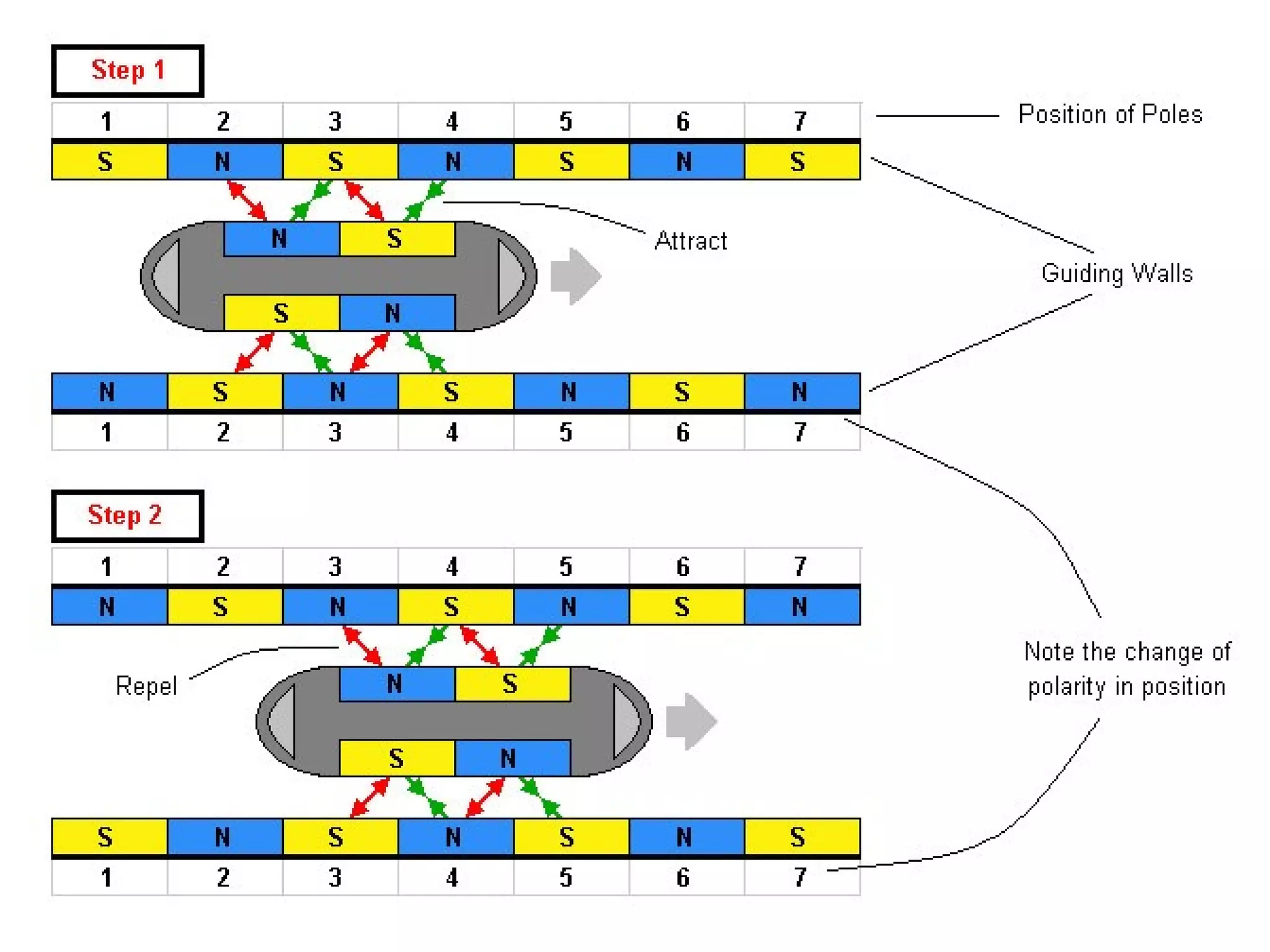
Maglev Consist of Three
parts
1)Levitation
2)Guidance
3)Propulsion
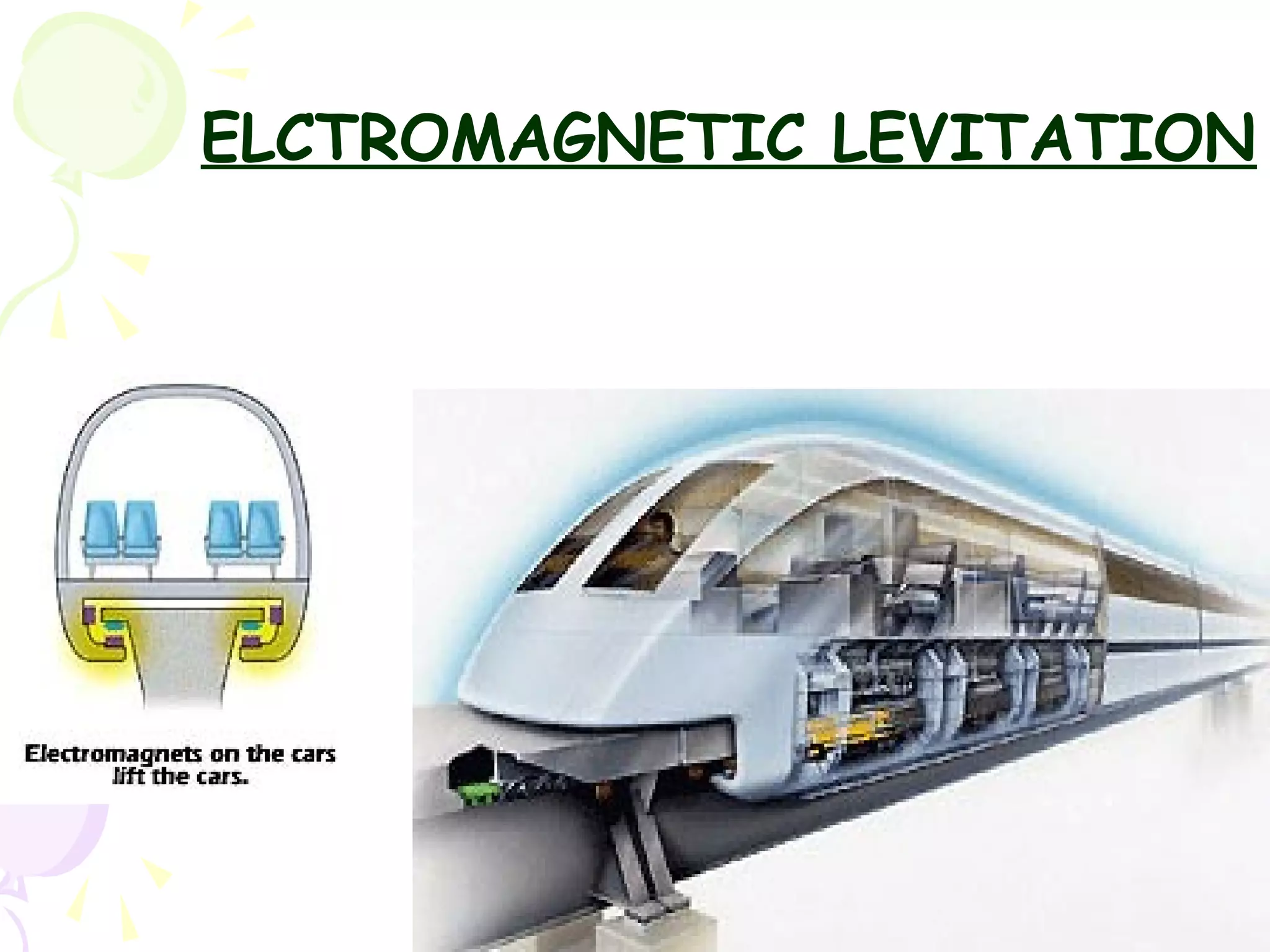
ELCTROMAGNETIC LEVITATION
MAGNETIC LEVITATION
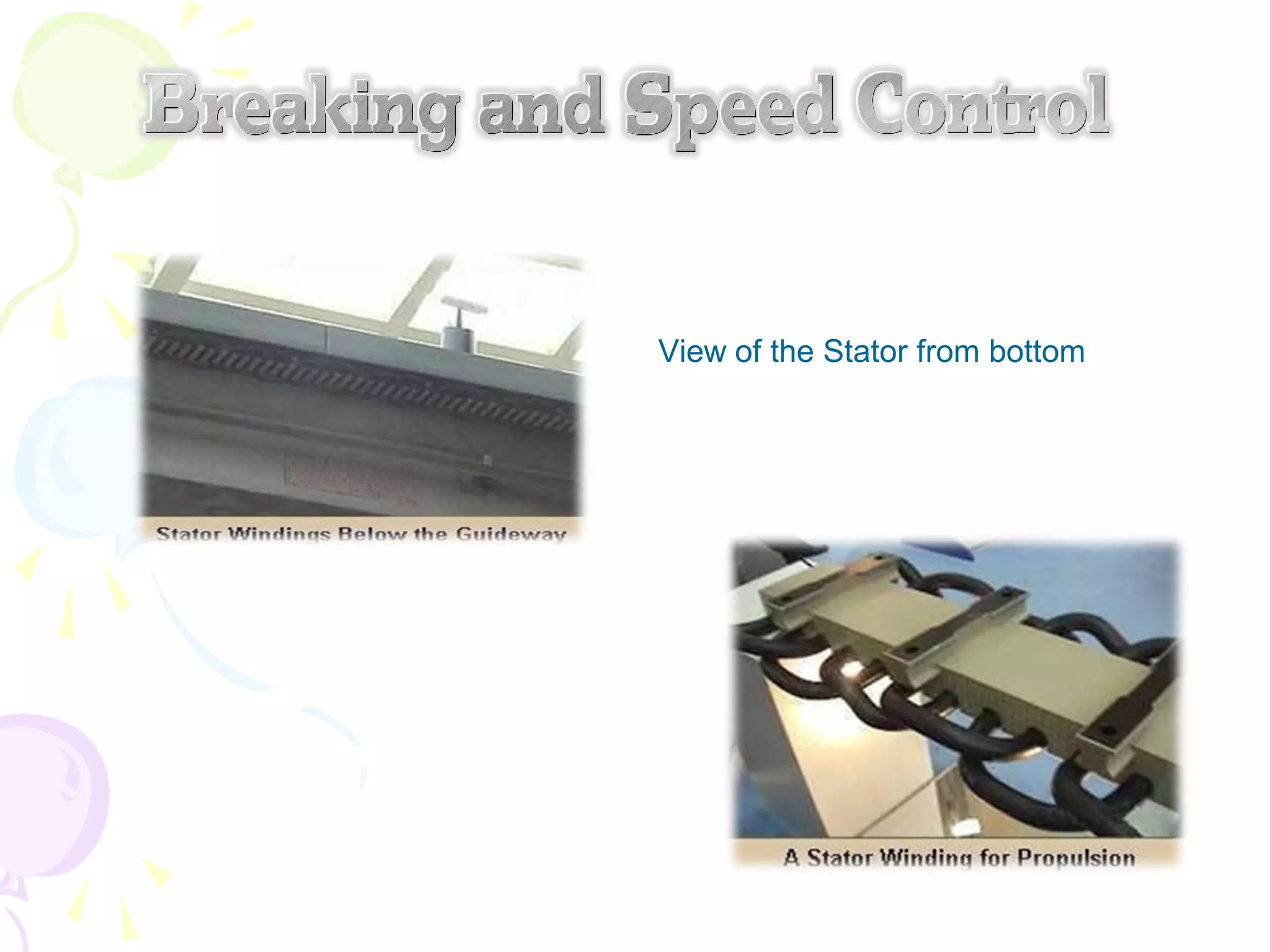
View of the Stator from bottom
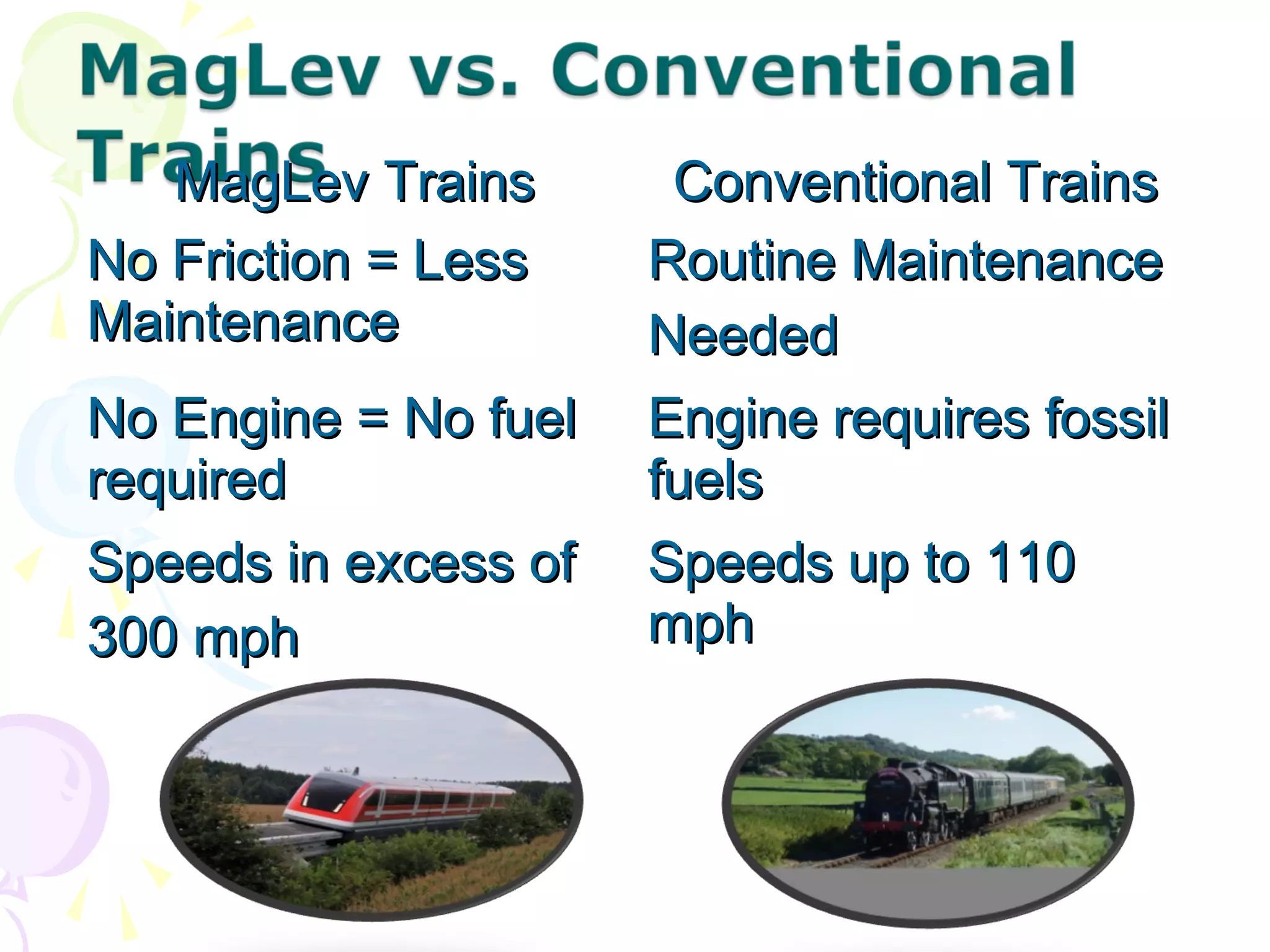
MagLev TrainsMagLev Trains Conventional TrainsConventional Trains
No Friction = LessNo Friction = Less
MaintenanceMaintenance
Routine MaintenanceRoutine Maintenance
NeededNeeded
No Engine = No fuelNo Engine = No fuel
requiredrequired
Engine requires fossilEngine requires fossil
fuelsfuels
Speeds in excess ofSpeeds in excess of
300 mph300 mph
Speeds up to 110Speeds up to 110
mphmph
• Less energy consumption because no rail-
track friction
• Requires no fossil fuel which can harm the
environment.
• Less noise pollution since the train never hits
the track
• MagLev guideways and trains take up less
space than conventional trains
AdvantagesAdvantages
• Because the train floats along there is noBecause the train floats along there is no
contact with the ground and therefore nocontact with the ground and therefore no
need for any moving parts.Hence there are noneed for any moving parts.Hence there are no
components that would wear out.components that would wear out.
• The trains can attain speeds uptoThe trains can attain speeds upto
330miles/hr which is not economically viable330miles/hr which is not economically viable
for commercial railwaysfor commercial railways
DisadvantageDisadvantage
The biggest problem is that it isThe biggest problem is that it is
much more costly than conventionalmuch more costly than conventional
track railways and governmentstrack railways and governments
around the world aren't willing toaround the world aren't willing to
invest so heavily in such a project.invest so heavily in such a project.
ApplicationsApplications
NASA plans to use magnetic levitation
for launching of space vehicles into low
earth orbit.
The mining industry will also benefit
from Maglev.
CONCLUSION
 Research on this ‘dream train’
has been going on for the last
30 odd years in various parts
of the world.
• www.wikipedia.org
• www.ieee.org
• Bonsor, Kevin. “How Maglev Trains Work”. 5 September, 2002.
<http://travel.howstuffworks.com/maglev-train.htm>.
• Keating, Oliver. “Maglevs (Magnetically Levitated Trains)”. 16
June, 2000. <http://www.okeating.com/hsr/maglev.htm>
• http://www.physics.ucla.edu/marty/levitron/spinstab.pdf
• http://www.superconductors.org/uses.htm
• http://www.popsci.com/popsci/how20/be199aa138b84010vgnvcm1
000004eecbccdrcrd.html
Maglev
Maglev

Maglev

  • 1.
  • 2.
    ABSTRACT •By employing nowheels, maglev eliminates the friction, and concomitant heat, associated with conventional wheel-on-rail train configurations. •“Driving without wheels, Flying without wings” deals with the present scenario of magnetic levitation (maglev) with Linear induction motor (LIM)
  • 3.
  • 4.
    • 1750 –John Mitchell • 1900 – Robert and Emile Bachelet • 1970 – German and Japanese engineers start research and development towards their versions of Maglev technology. INTRODUTION
  • 5.
    How maglev worksHowmaglev works A maglev train floats about 10mm aboveA maglev train floats about 10mm above the guide way on a magnetic field.the guide way on a magnetic field. 2 ways of levitating a train-2 ways of levitating a train- Electromagnetic suspension(EMS) andElectromagnetic suspension(EMS) and Electrodynamic suspension(EDS).Electrodynamic suspension(EDS).
  • 7.
  • 8.
    Maglev Consist ofThree parts 1)Levitation 2)Guidance 3)Propulsion
  • 9.
  • 10.
  • 12.
    View of theStator from bottom
  • 13.
    MagLev TrainsMagLev TrainsConventional TrainsConventional Trains No Friction = LessNo Friction = Less MaintenanceMaintenance Routine MaintenanceRoutine Maintenance NeededNeeded No Engine = No fuelNo Engine = No fuel requiredrequired Engine requires fossilEngine requires fossil fuelsfuels Speeds in excess ofSpeeds in excess of 300 mph300 mph Speeds up to 110Speeds up to 110 mphmph
  • 14.
    • Less energyconsumption because no rail- track friction • Requires no fossil fuel which can harm the environment. • Less noise pollution since the train never hits the track • MagLev guideways and trains take up less space than conventional trains
  • 15.
    AdvantagesAdvantages • Because thetrain floats along there is noBecause the train floats along there is no contact with the ground and therefore nocontact with the ground and therefore no need for any moving parts.Hence there are noneed for any moving parts.Hence there are no components that would wear out.components that would wear out. • The trains can attain speeds uptoThe trains can attain speeds upto 330miles/hr which is not economically viable330miles/hr which is not economically viable for commercial railwaysfor commercial railways
  • 16.
    DisadvantageDisadvantage The biggest problemis that it isThe biggest problem is that it is much more costly than conventionalmuch more costly than conventional track railways and governmentstrack railways and governments around the world aren't willing toaround the world aren't willing to invest so heavily in such a project.invest so heavily in such a project.
  • 17.
    ApplicationsApplications NASA plans touse magnetic levitation for launching of space vehicles into low earth orbit. The mining industry will also benefit from Maglev.
  • 19.
    CONCLUSION  Research onthis ‘dream train’ has been going on for the last 30 odd years in various parts of the world.
  • 20.
    • www.wikipedia.org • www.ieee.org •Bonsor, Kevin. “How Maglev Trains Work”. 5 September, 2002. <http://travel.howstuffworks.com/maglev-train.htm>. • Keating, Oliver. “Maglevs (Magnetically Levitated Trains)”. 16 June, 2000. <http://www.okeating.com/hsr/maglev.htm> • http://www.physics.ucla.edu/marty/levitron/spinstab.pdf • http://www.superconductors.org/uses.htm • http://www.popsci.com/popsci/how20/be199aa138b84010vgnvcm1 000004eecbccdrcrd.html